After I visited the 2010 Olympic Park northeast of Vancouver I drove further up the mountain road to get to Whistler. The town itself was renamed to Whistler after marmots found here, which have the unfortunate nickname “whistle pig” because of the warning sound they emit to warn others of predators, and because they can grow to be rather chubby. A marmot is the largest member of the squirrel family (squirrels, groundhogs, marmots, chipmunks, etc) and I will be sharing photos of some in other posts later. I posted photos of some marmots when I was in northeast Colorado a few years ago.
WhistlerBlackcomb is comprised of two large ski areas, one on Whistler Mountain and the other on Blackcomb Mountain. Almost all of the trails end up in Whistler Village. Together they form the largest ski resort in North America:
(Photo credit: SkiTDS.com)
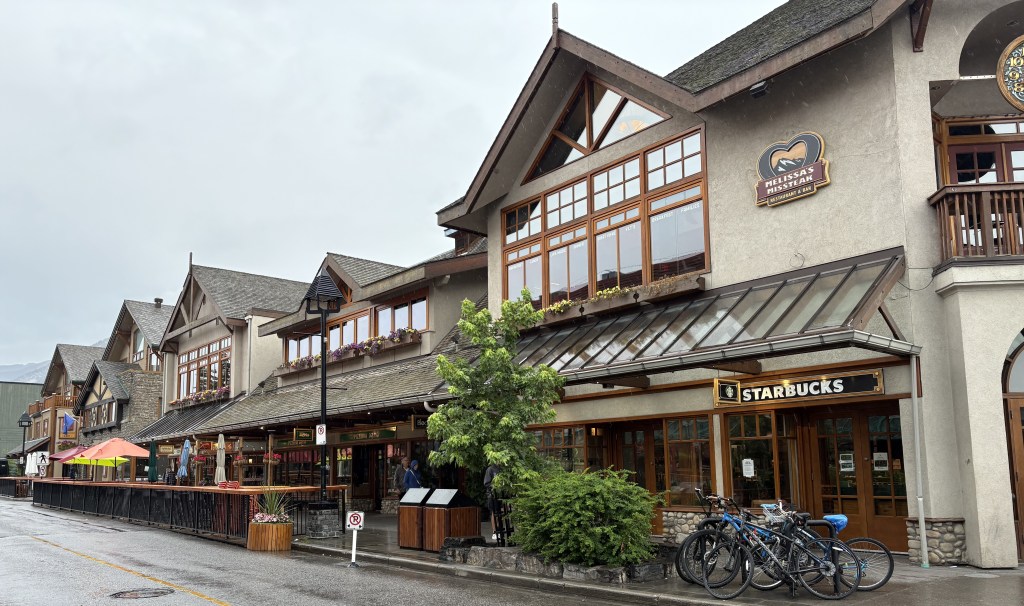
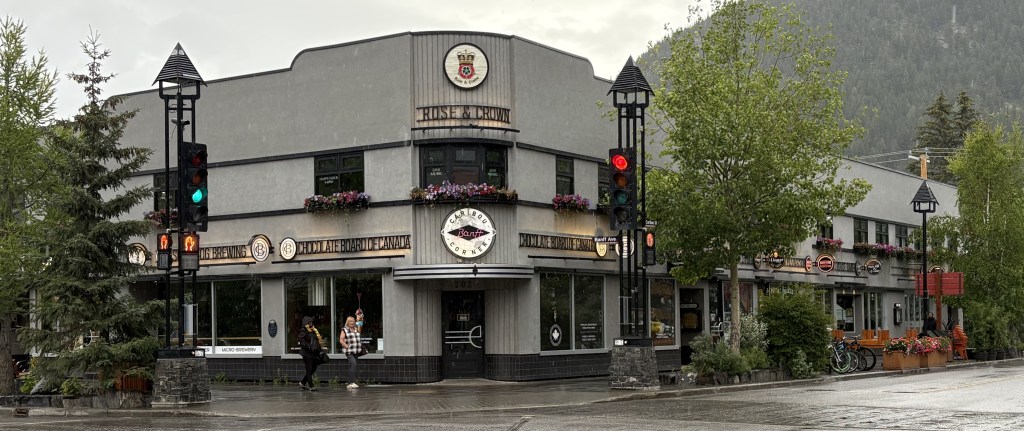
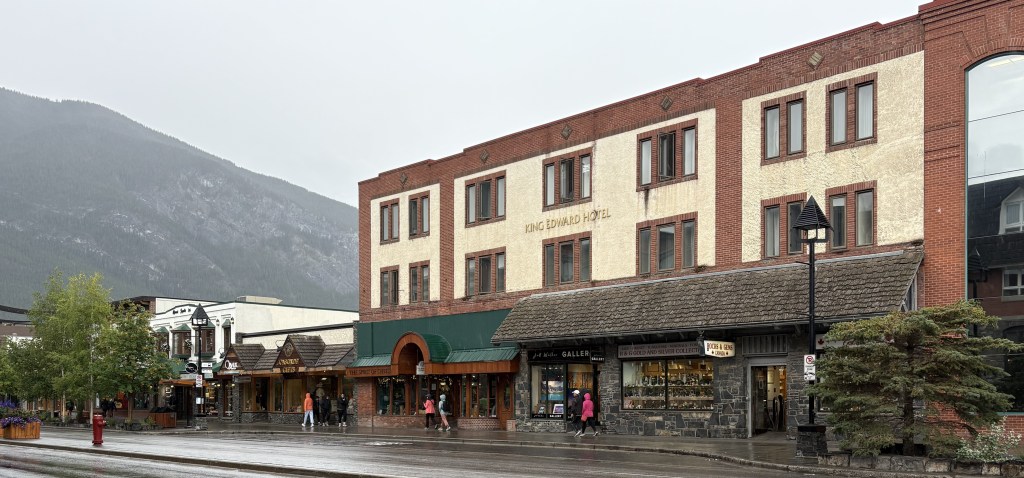
The Village is a very busy place! Lots of big hotels, restaurants and bars, shopping, and various activities in both winter and summer.
This is one of the chairlifts to the top of Blackcomb Mountain.
It was overcast with low clouds in the area the day I was here, which occasionally obscured the various mountain peaks. I hope to come back to Whistler later in my trip, hopefully on a nice, sunny day, and to visit a particular facility which was closed the day I was here.
In addition to the chairlifts, there are enclosed gondolas which go up the mountain from the Village. I also saw a gondola package advertised which brings people up TO the Village from the highway at the base of the mountain near Squamish, at the coast, many miles away!! It is a very expensive, multi hour affair which promises spectacular views (so long as you are not claustrophobic and/or afraid of heights).
There are large electronic signs which, in the winter, indicate the status of various lifts (e.g. you don’t need to ski all the way down and ride all the way back up).
Only two operate in the summer.
The day I was here, people were engaging in various activities other than skiing, and the village was quite busy. There is a large bike (bicycle, not motorbike) trail at the base of the ski lift, which seemed to be the most popular.
There weren’t riders on it as I took that photo but there were lots of young people with bikes queuing up to be released together.
There many more, not shown in the photos.
Canadians are very big on recycling everything. There was a place to put used, blown out tires and innertubes, and there were tools (tied down) to enable folks to work on their bikes.
People in another area were getting outfitted to ride the chairlift part way up the mountain and then zipline down.
There was also a place to rent a 4-wheeler or other ATV.
You see a small child, maybe 4 or 5 years old, riding his tiny bike towards the vehicles on the right side of the photo above. He dismounted, carefully leaned his bike against the rock wall and immediately climbed up on the 4-wheeler in the foreground. I told his mother “I guess you know what he wants for Christmas!” In a few years, maybe… I told the young man I really liked his helmet (which he still had on) and told him he was really smart to wear one. I always try to tell kids that when I see then wearing safety equipment.
As I mentioned, there are lots of big, fancy hotels in the Village, and in other areas nearby.
And lots of fancy restaurants:
There is also a Squamish Cultural Centre in town (the indigenous tribe on whose land all of this sits!):
As I was heading out of the Village to drive back down the mountain to Squamish and then on to my Airbnb in Maple Ridge, I noticed this sign on the traffic light at a big intersection. Space in the Village is really at a premium and there was no place to land a helicopter in an emergency – so they just stop traffic and it land on the street!!
I have never seen that done anywhere!
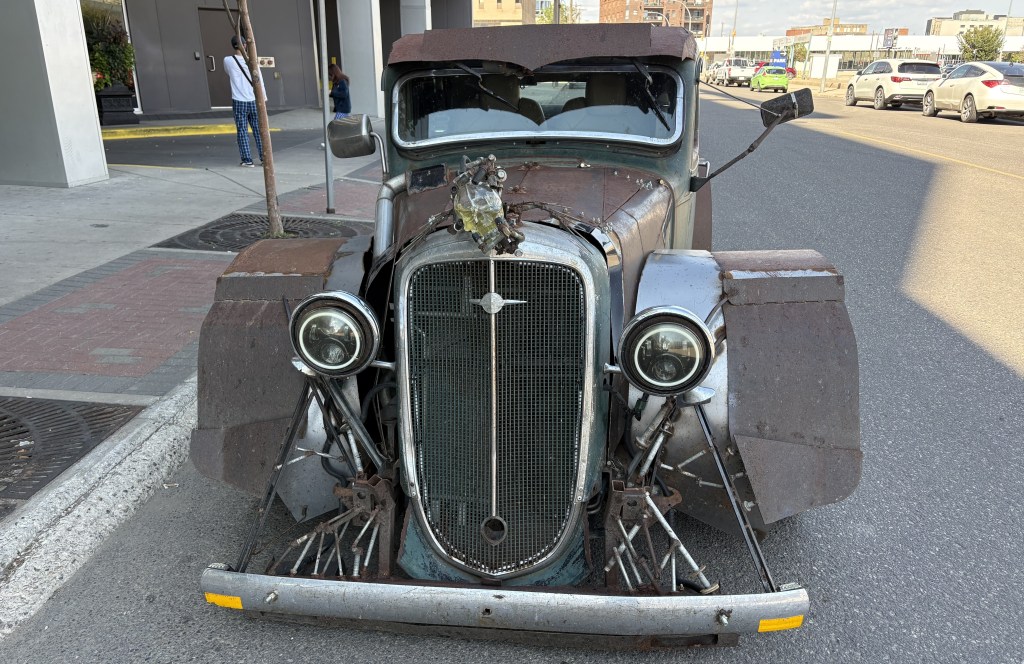
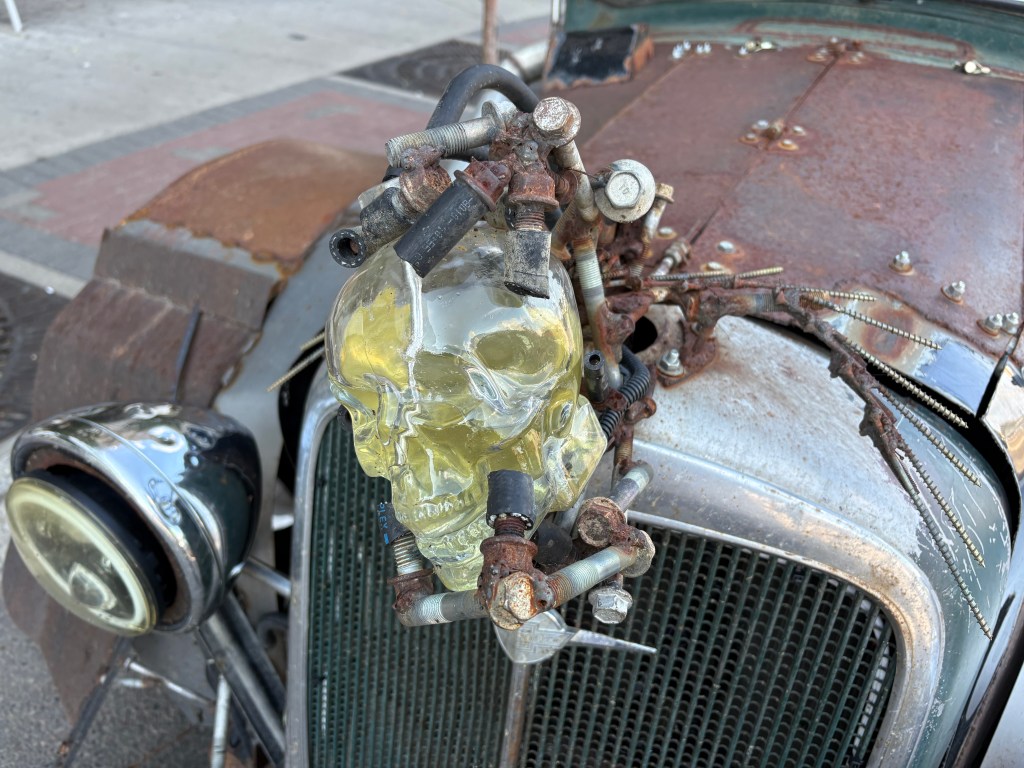
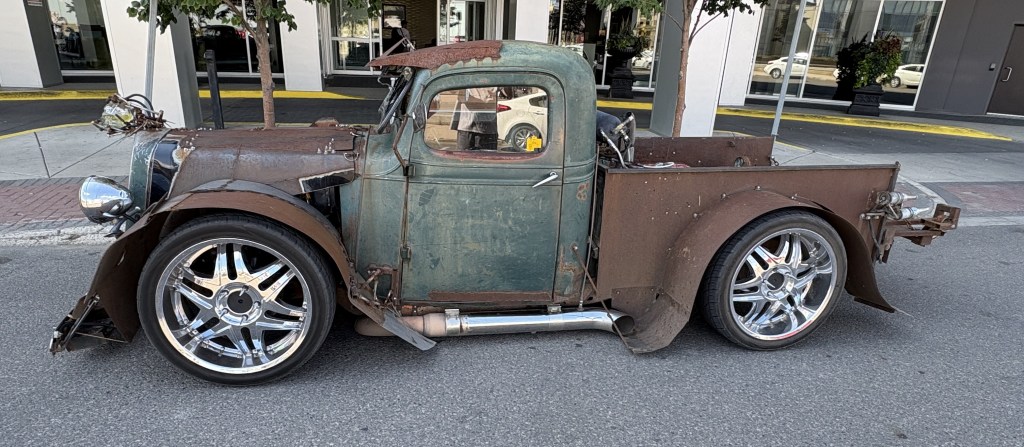
Finally, as I drove down the mountain I stopped to photograph this unusual vehicle I had seen as I arrived in the morning. It is used to catch your attention to promote a local business.
I know, it has been a week since I posted anything substantial, and that was from way back near Vancouver. As usual, I am way behind but can assure you I am accumulating LOTS of photos.
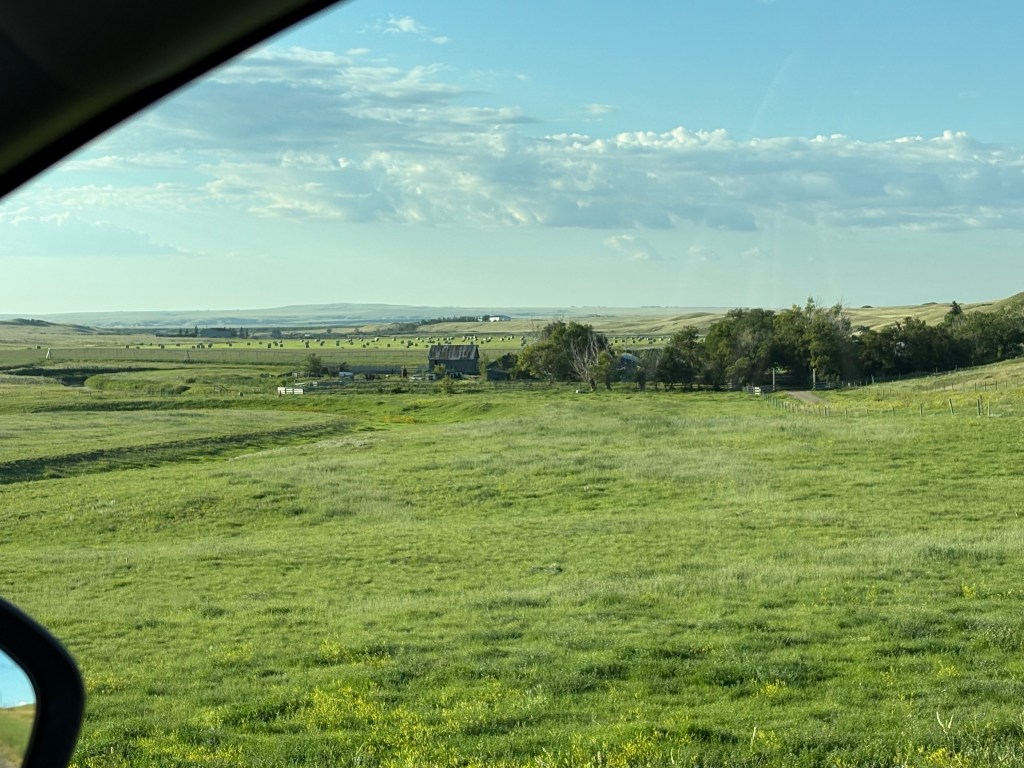
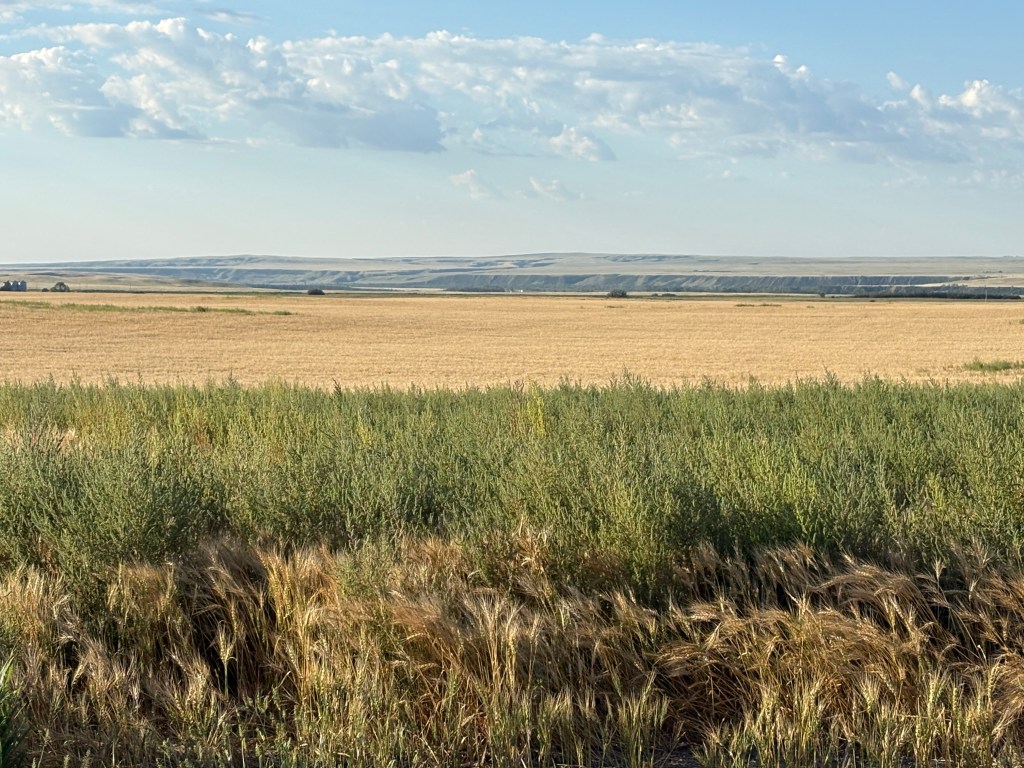
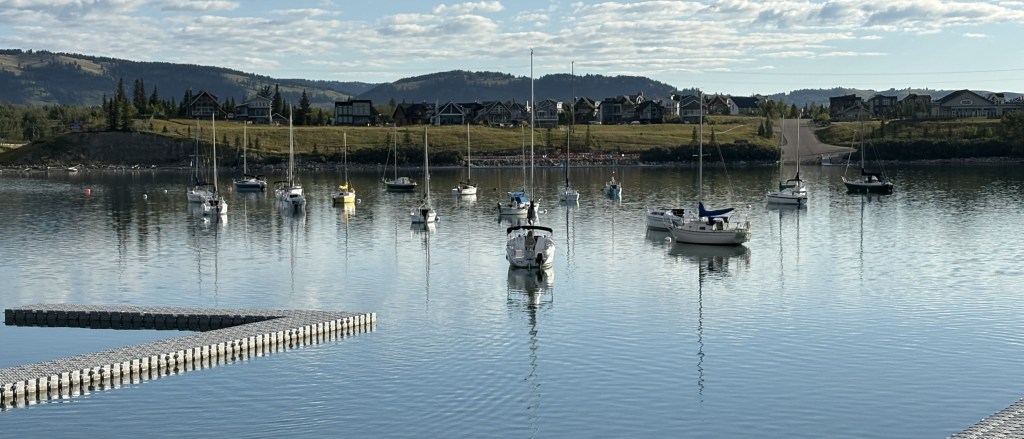
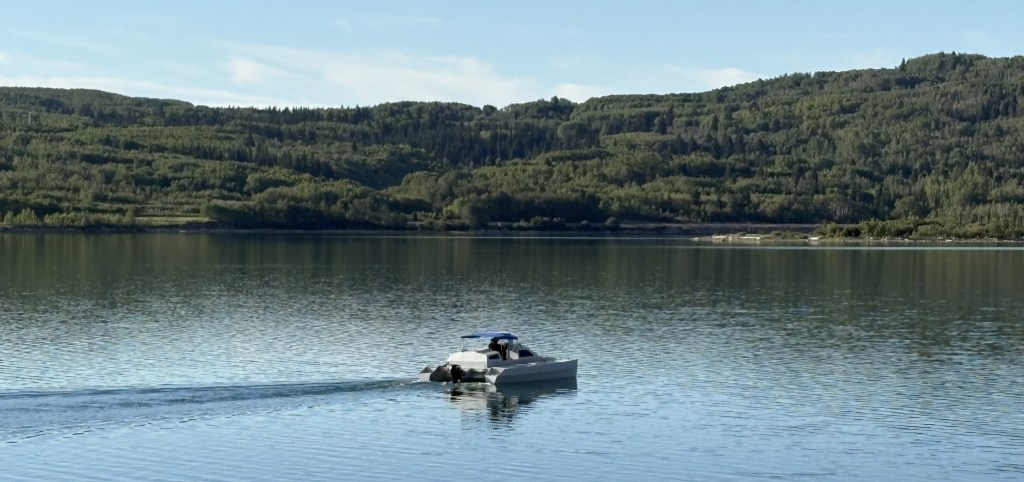
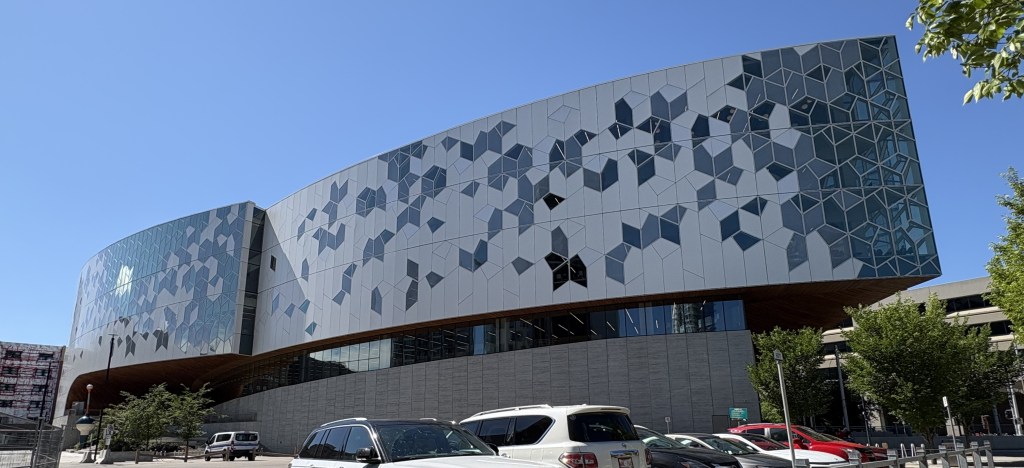
Driving across southern Alberta province a few days ago, on my way to Moose Jaw, I decided I would post a few photos from each city I have stayed in since leaving Vancouver Island to whet your appetite for what is still to come.
HOPE, BC – I didn’t stay there but it provided some excitement early in my loooong drive to Cranbrook from east of Vancouver. There was an electronic sign next to the Trans Canada Highway warning of a wildfire ahead and telling drivers NOT to stop along the roadway. Well, it turns out the fire was on a hillside above a gas station I was already planning to stop at, where Route 3 branches off from the TCH to take me east across southern British Columbia, very close to the US/Canadian border. So I didn’t stop along the roadway, I stopped at a gas station off the exit.
This fire had been burning for about a month (and still is as I write this). It is quite small by wildfire standards but is stubborn due to the steep terrain on the hillside. While I was getting gas, a helicopter arrived about every 4 minutes to dump a large bucket of water on the hotspots, then flew off to a nearby water source to bring more. Imagine the pilot(s), doing that all day, every day.
That particular drop hit right on the “sweet spot” where I could see visible flames.
This was as close as I ever need to get to a wildfire.
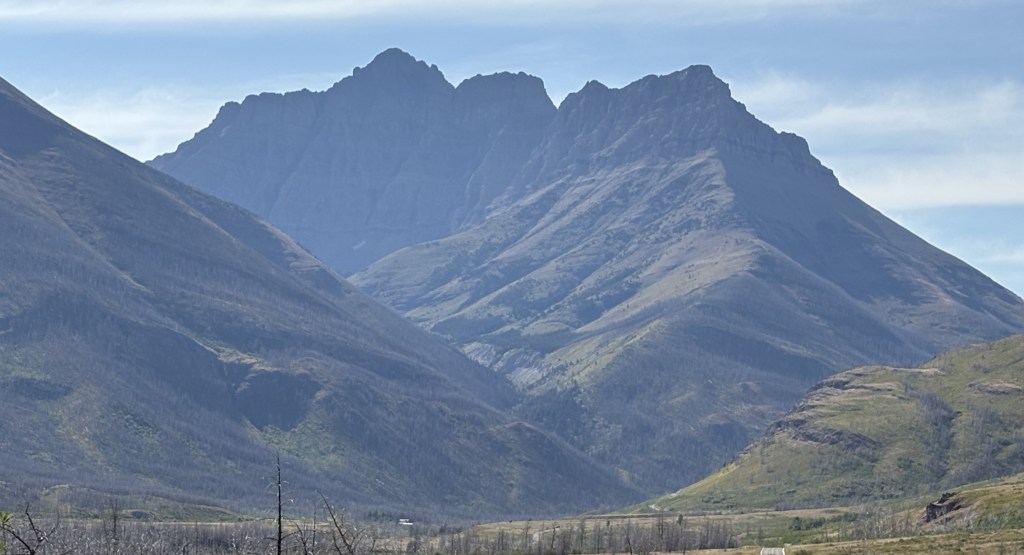
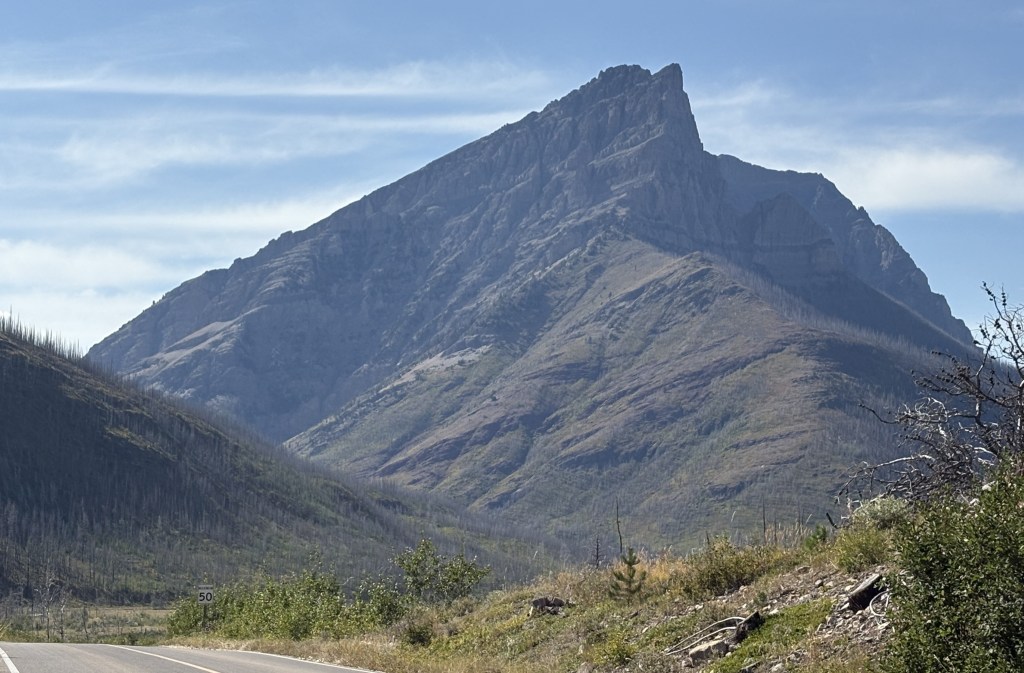
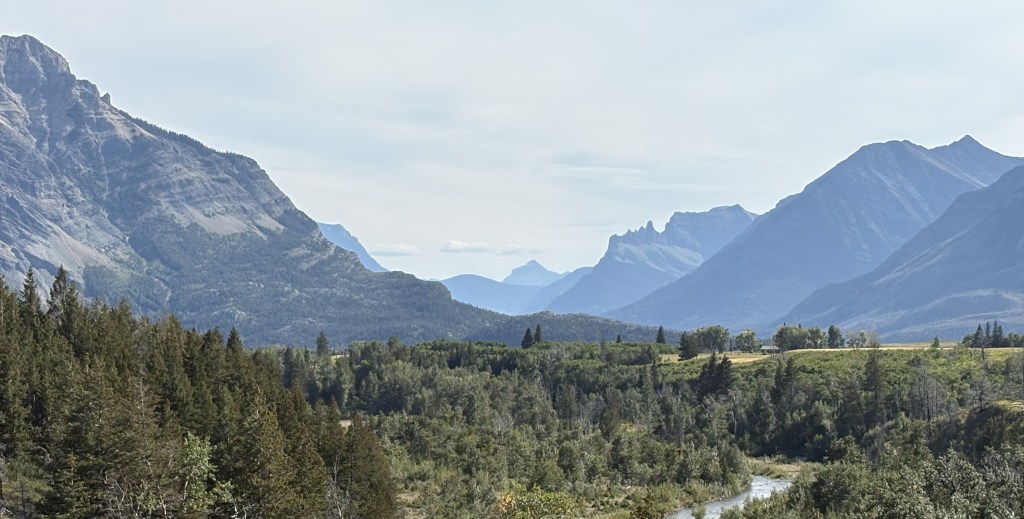
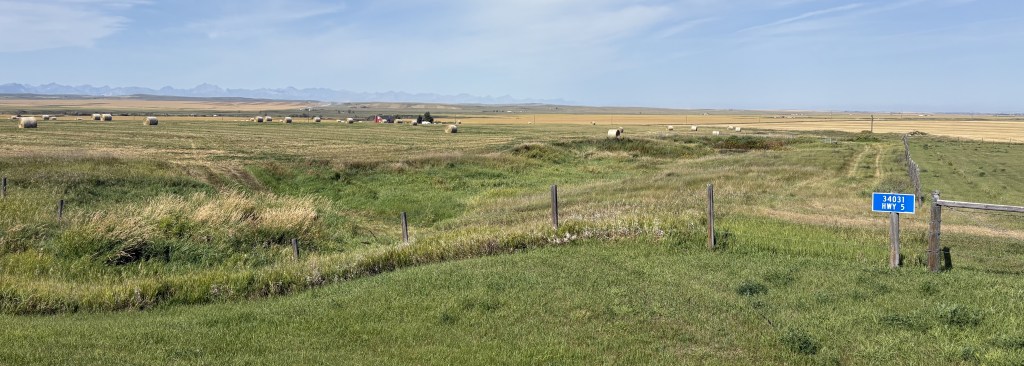
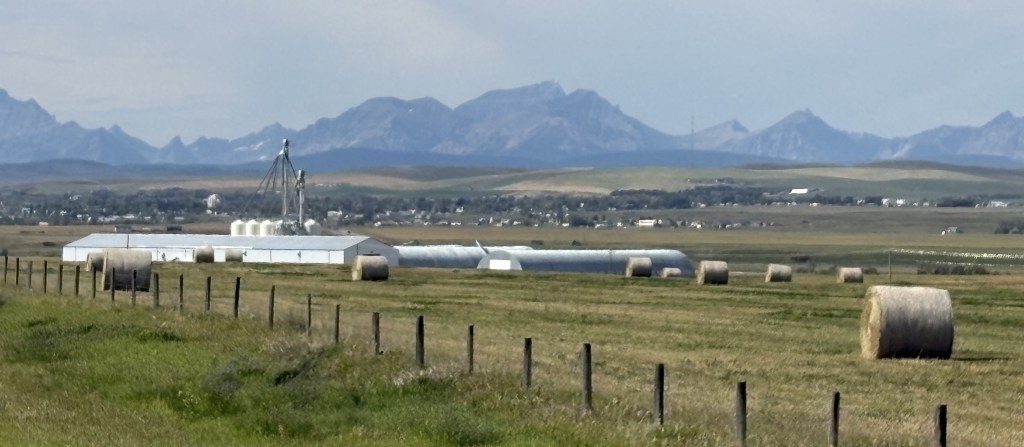
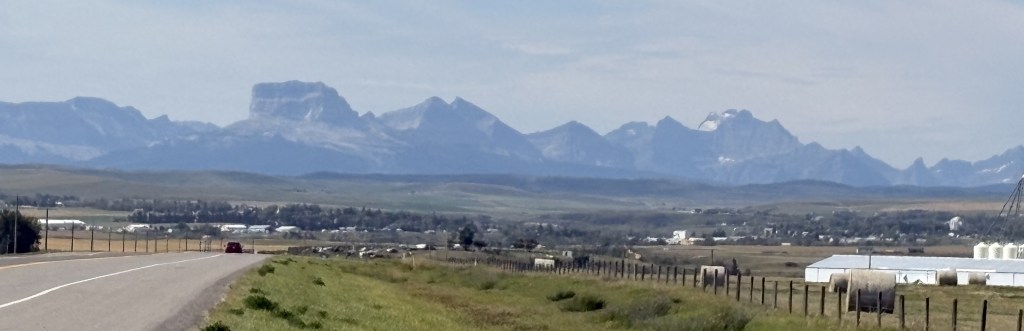
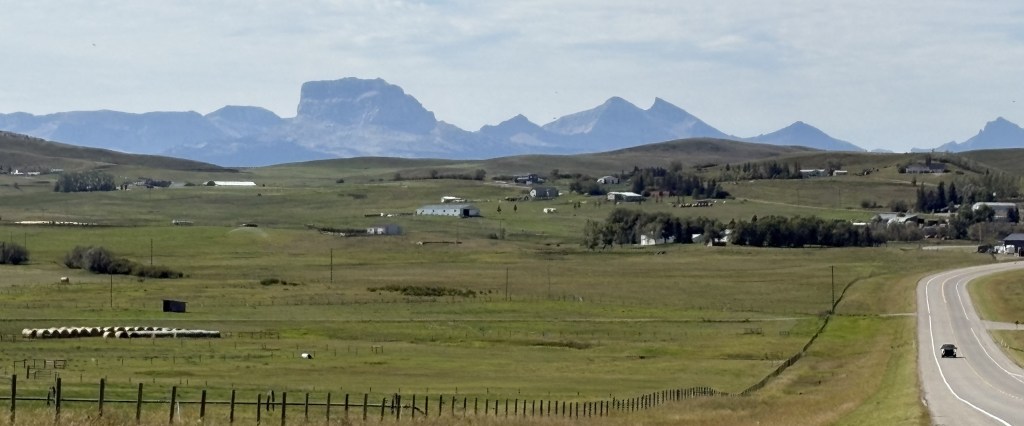
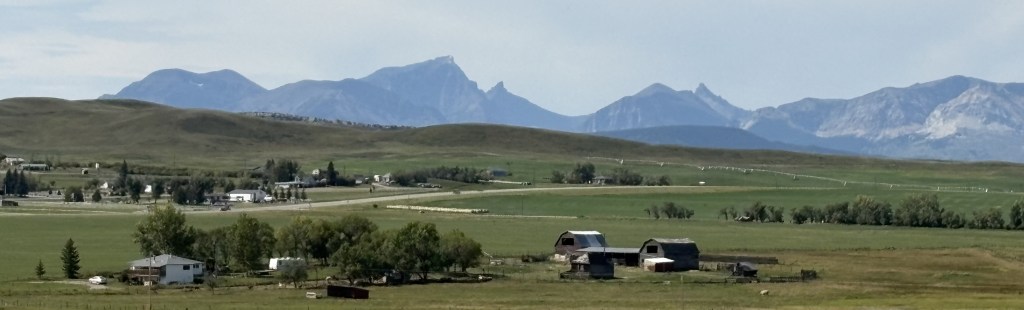
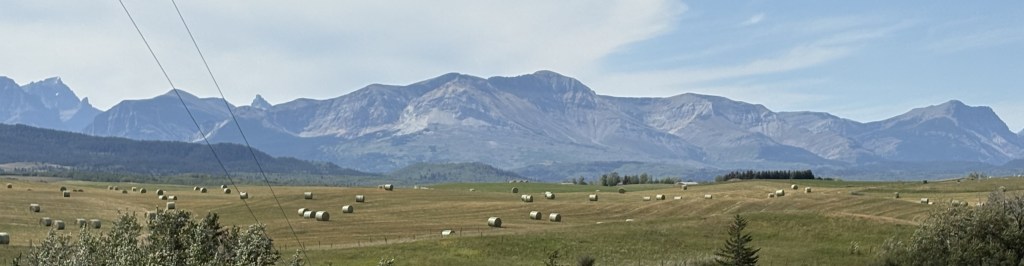
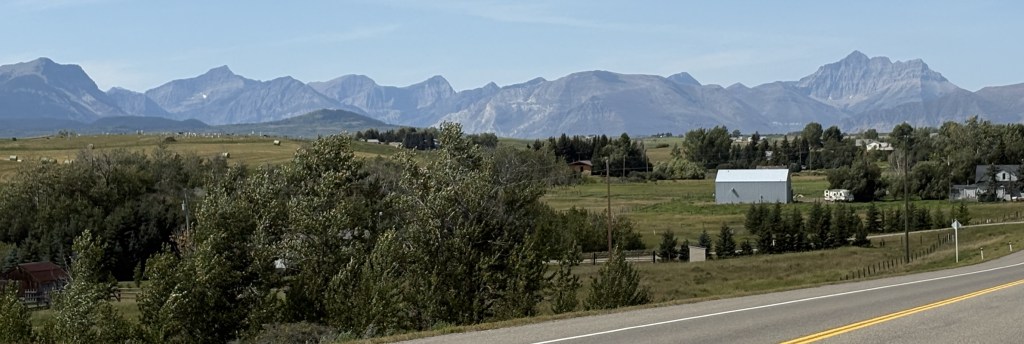
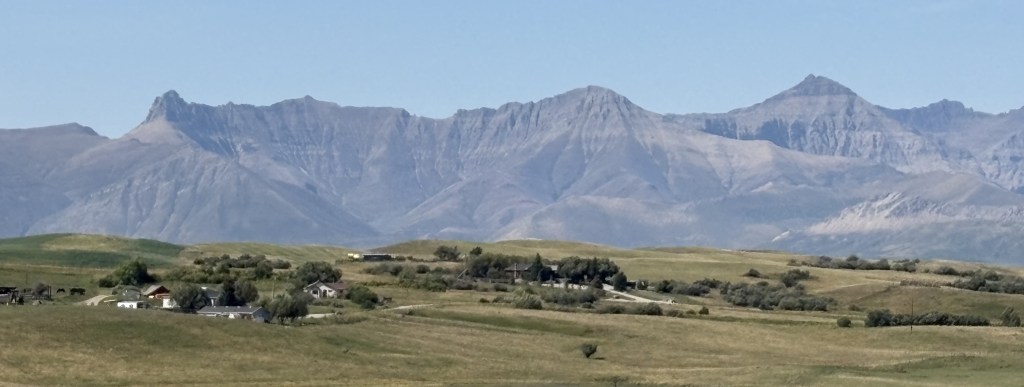
CRANBROOK – After 12 hours in the car (with stops) I approached Cranbrook and got my first look at the southernmost Canadian Rockies. The sun was just setting as I could see the very impressive mountains in the distance. By the time I found a place to stop with a fairly clear view only one set of mountains were still getting sunlight and the others were now in full shade.
There was a third set of mountains further north that I could see but I couldn’t get a clear shot at them from this vantage point.
GOLDEN, BC – After spending two nights in Cranbrook I headed north to spend 6 nights in Golden, from which I would visit 6 National Parks.
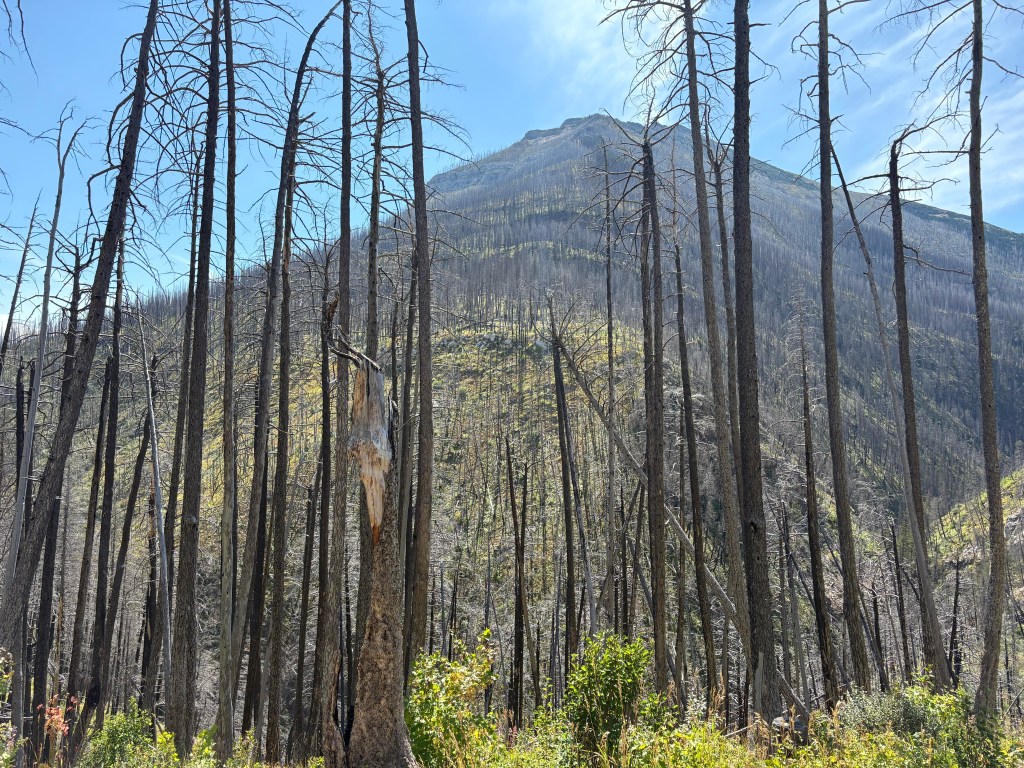
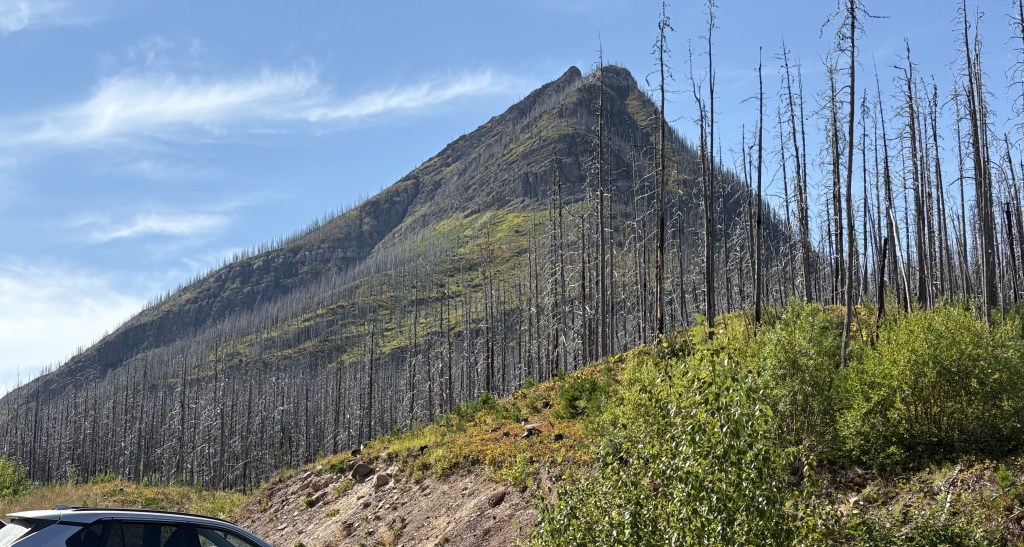
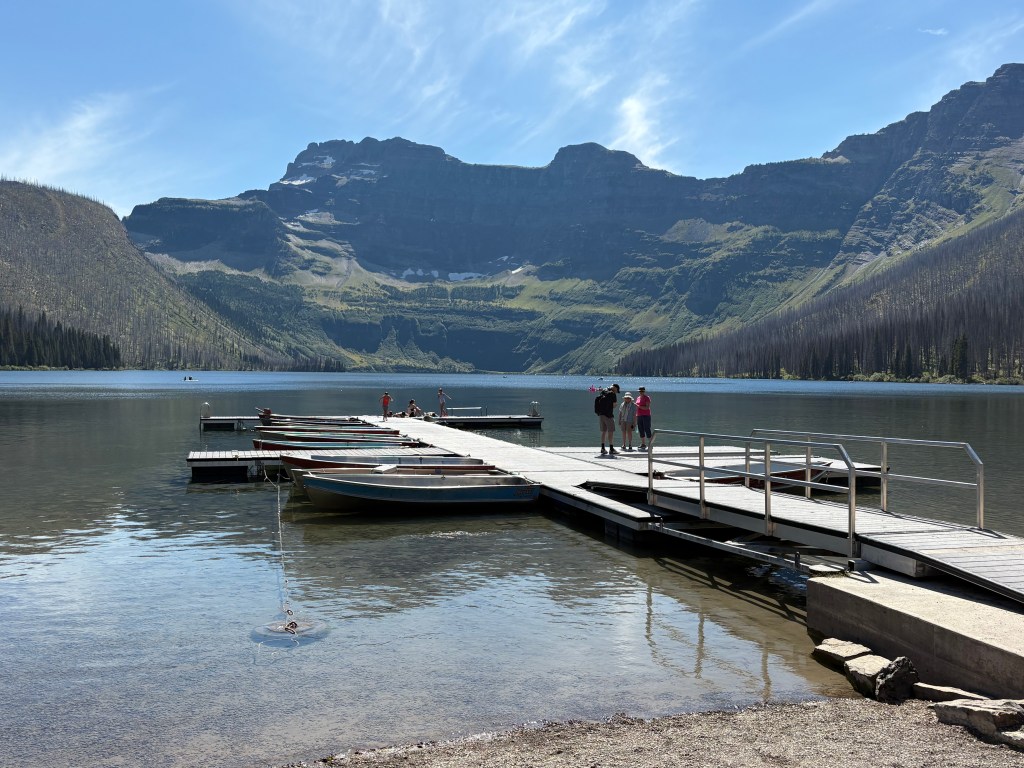
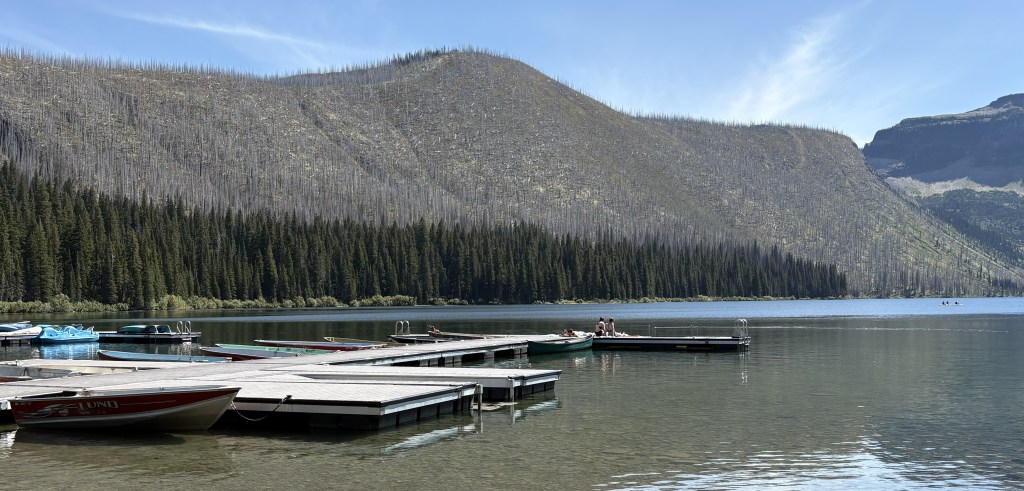
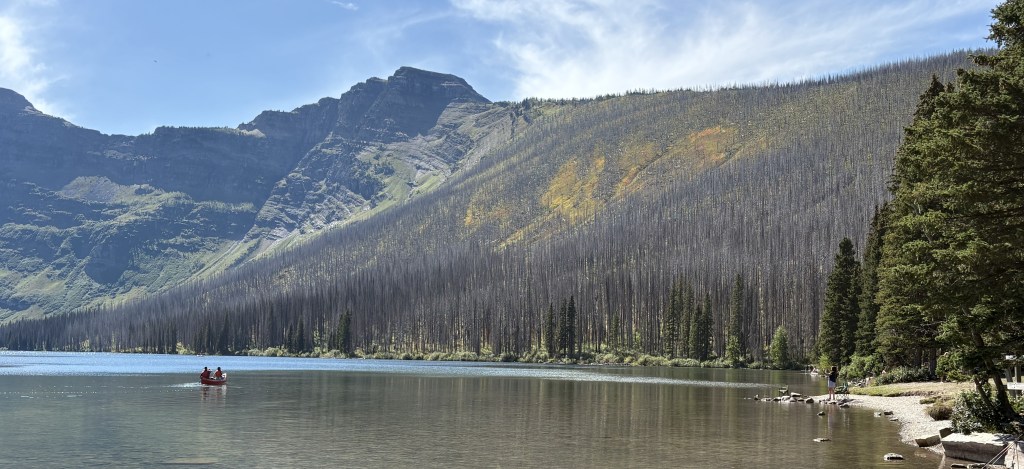
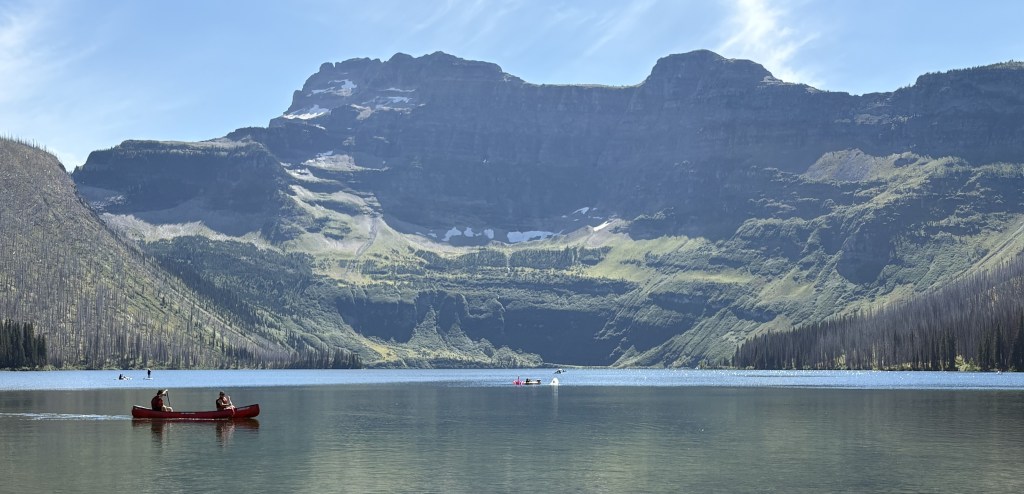
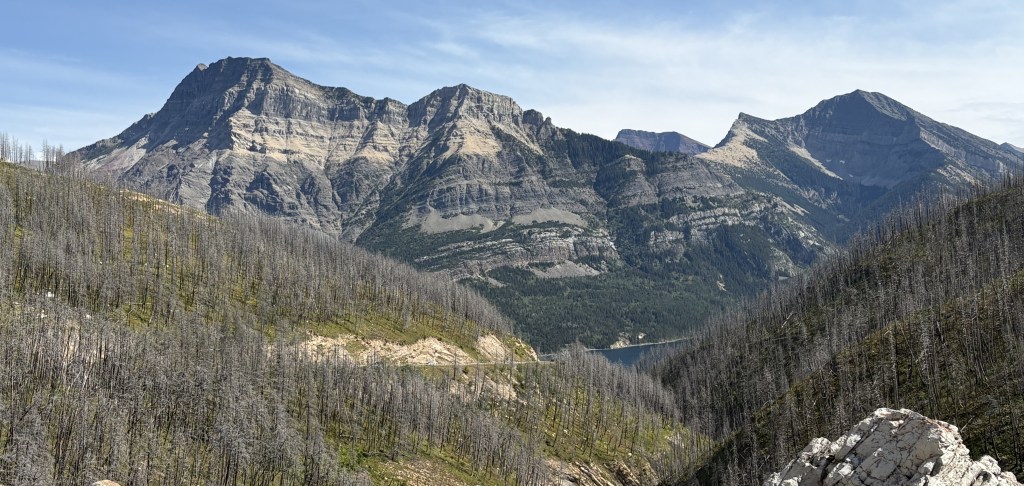
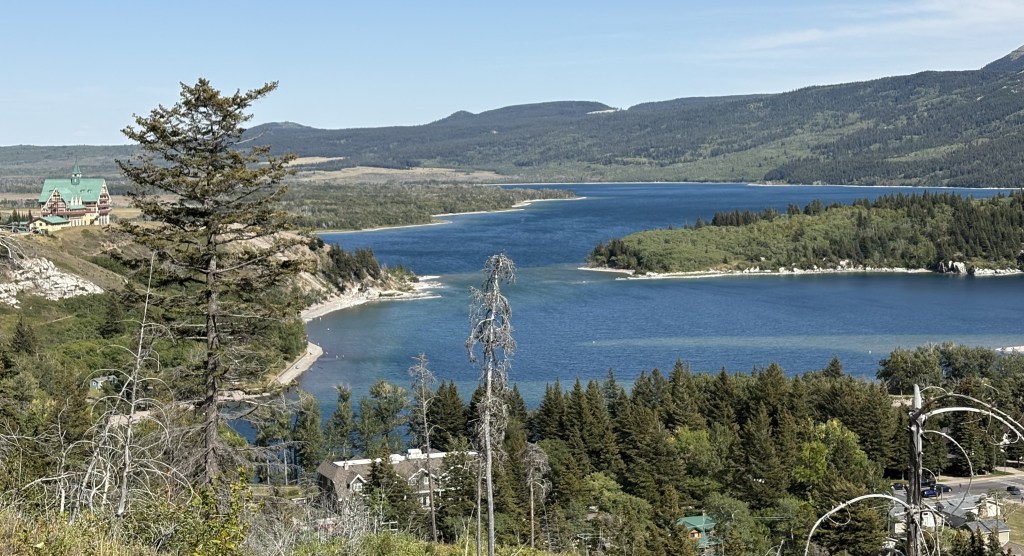
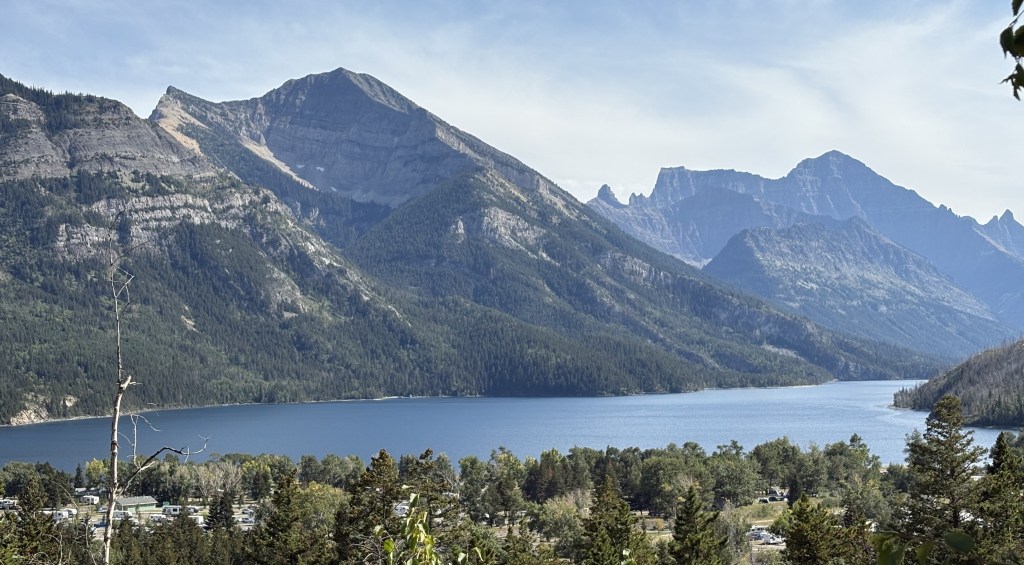
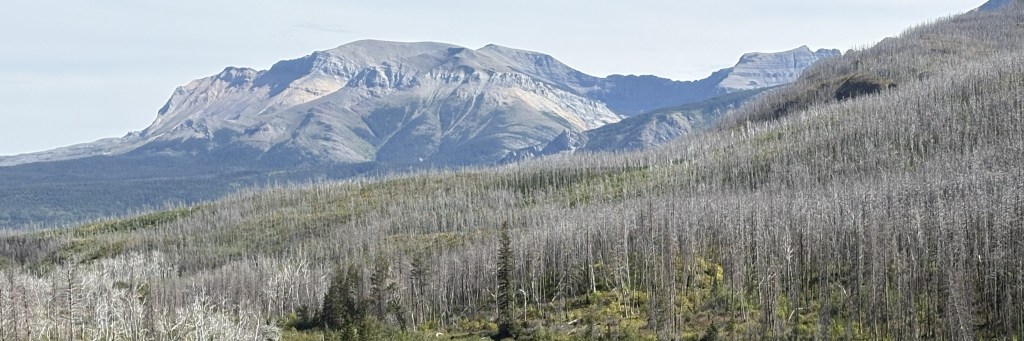
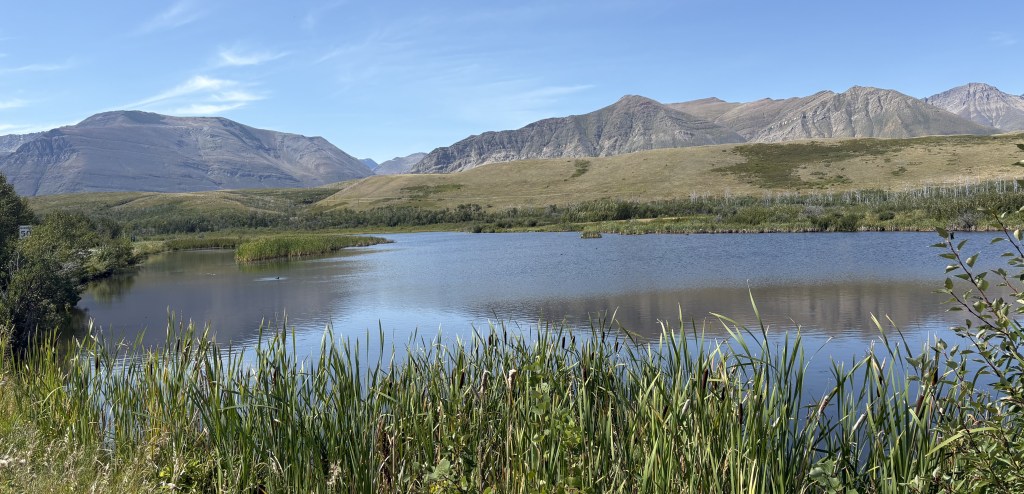
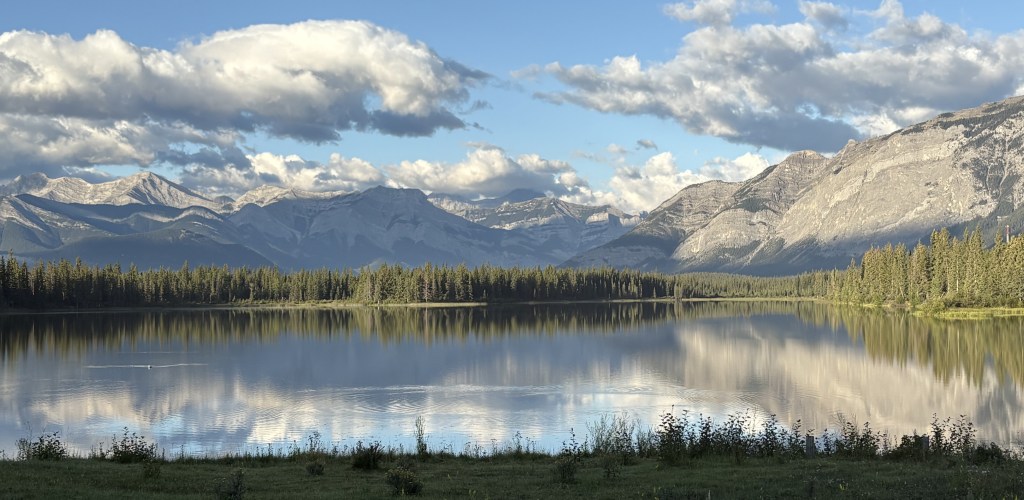
This was from the drive towards Jasper NP, a huge Park which suffered considerable damage from a large wildfire last year. I drove over 3 hours north on the Icefield Parkway, and stopped at these two lakes and saw LOTS of mountains along the way:
The next day I drove west from Golden through (the Canadian) Glacier NP.
I would also go through Kootenay, Yoho, Mount Revelstoke and Banff National Parks from my base in Golden.
CANMORE, BC – Rather than staying in Banff proper I went 22 kilometers south to spend 4 nights in Canmore which is a very nice little town without the massive crowds that Banff experiences. I did make two early morning stops in Banff before the tour buses and RV’s started to arrive in the late mornings, and will post those photos later.
From Canmore I drove a long way south one day in an area known as Kananaskis Country (pronounced can-a-NASS-kiss):
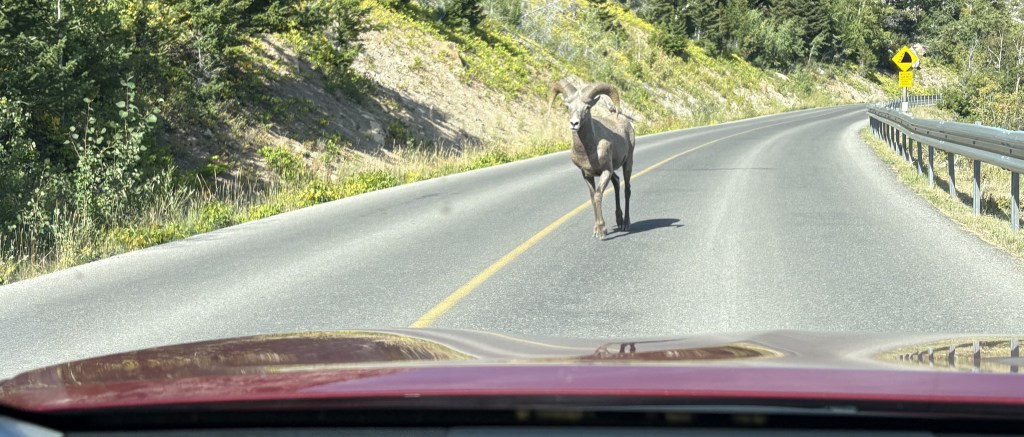
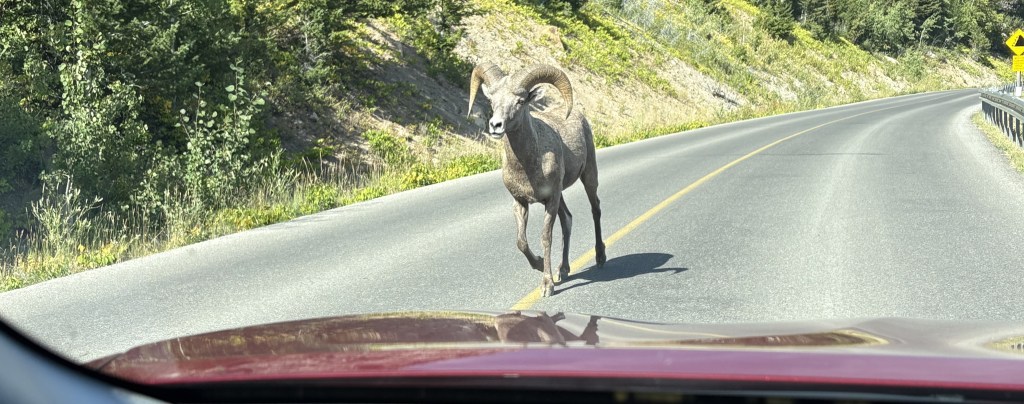
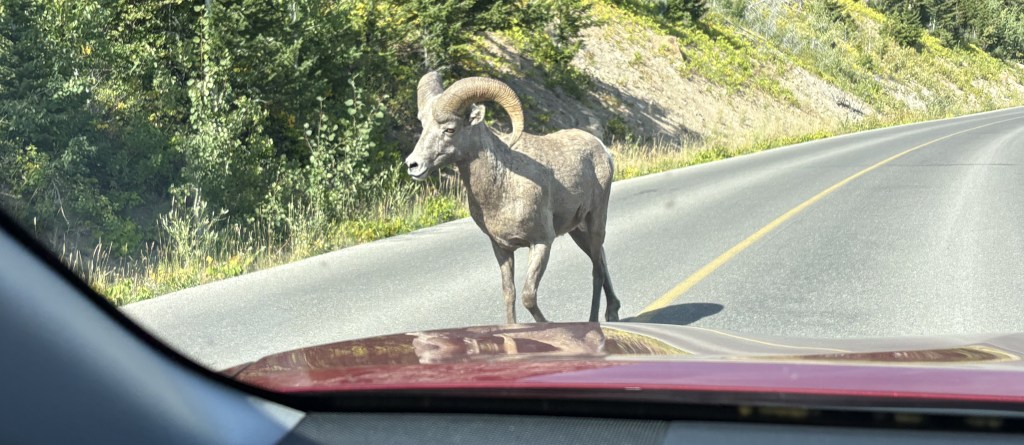
As I was driving home, there were two full grown Bighorn Sheep in the road and traffic was stopped. Note the Park Ranger’s truck approaching behind the black car which was stopped.
The Ranger lit up the emergency lights and started honking the horn as the truck swerved around the stopped car, scaring the sheep over the guardrail and off the road.
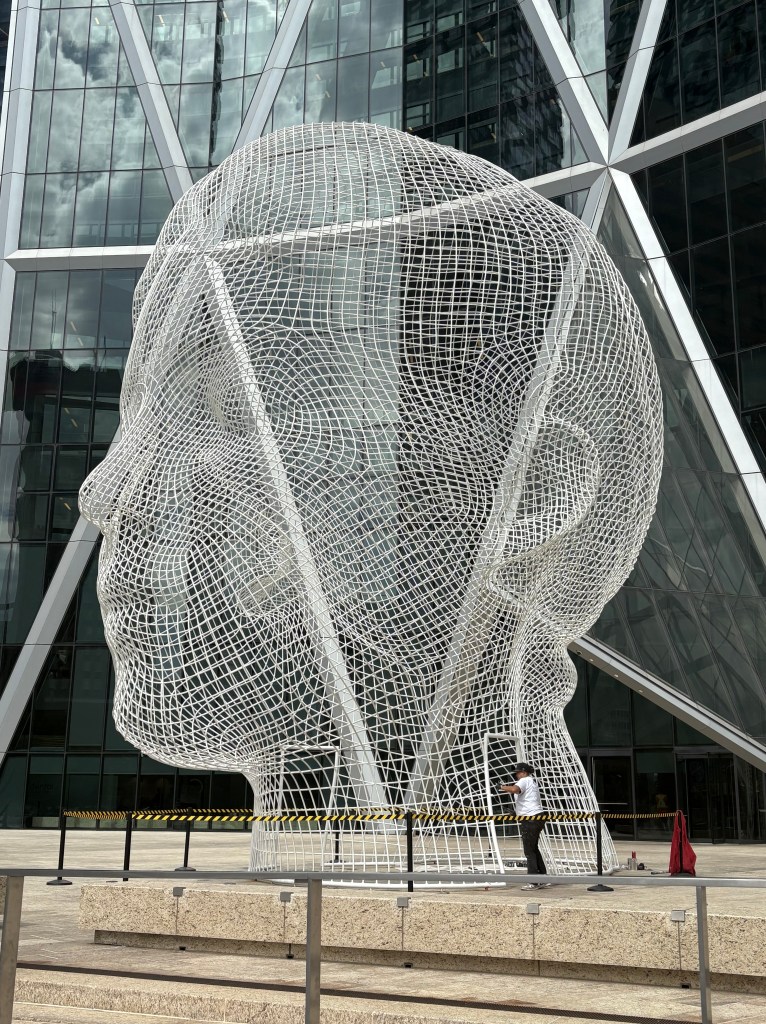
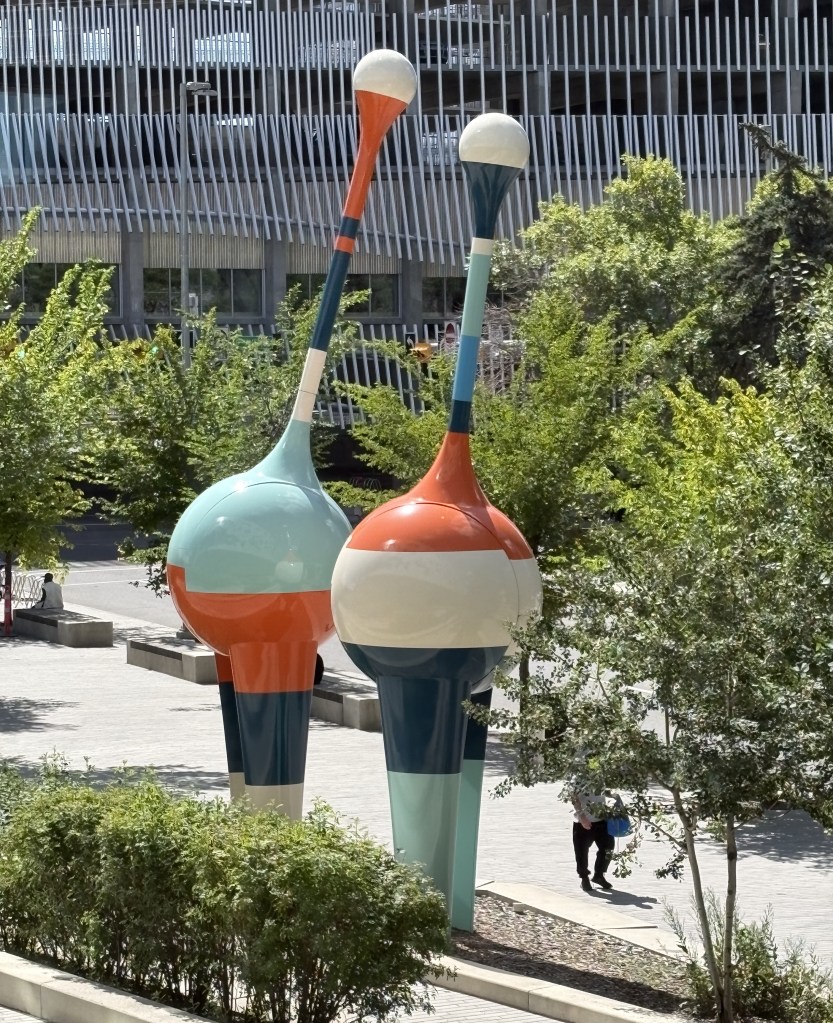
CALGARY, AB – After 10 nights total in the Canadian Rockies I went west from Canmore to Calgary, the provincial capital of Alberta. There I found the huge Wonderland sculpture in front of a building on a busy city street:
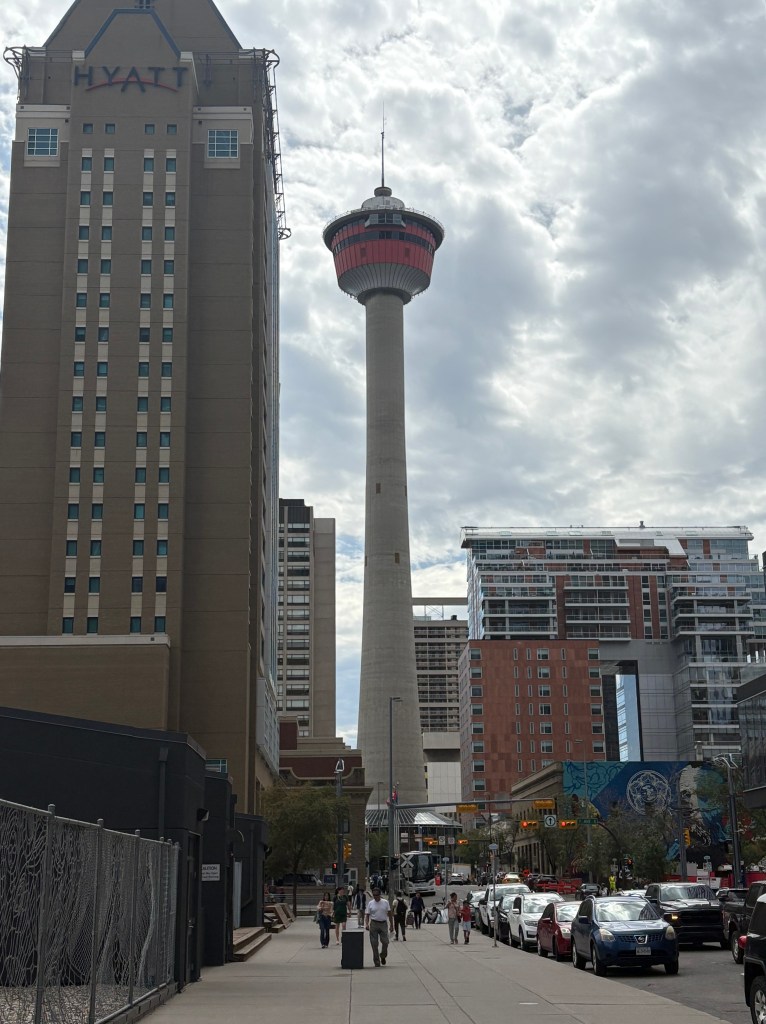
And the Calgary Tower, similar to the CN Tower in Toronto, but shorter and designed to look like the Olympic torch (Calgary is another Canadian city which has hosted the Winter Olympics):
The tower used to dominate the skyline but is now dwarfed by many of the new skyscrapers downtown.
I apparently haven’t downloaded some of the other photos I took in Calgary which I had planned to include here but will post them later.
MOOSE JAW, SK – Three days ago I drove due east from Calgary for about 7 hours, across southern Alberta and into western Saskatchewan, to a town I have wanted to visit for a very long time.
I give you Mac the Moose:
He stands proudly outside the Visitor Centre in Moose Jaw. Inside the Visitor Centre I found his sidekick, Cheese the cat:
Get it? Mac and Cheese?
Next to Mac there was a replica of one of the Canadian Snowbirds jets.
The Snowbirds are Canada’s precision flying team and are based at the military airfield just outside of Moose Jaw. I saw their support truck twice on the highways as I went from town to town, and they just recently put on an airshow in Nanaimo, where I took the ferry from when I sailed from Vancouver Island to Vancouver city at the beginning of this trip.
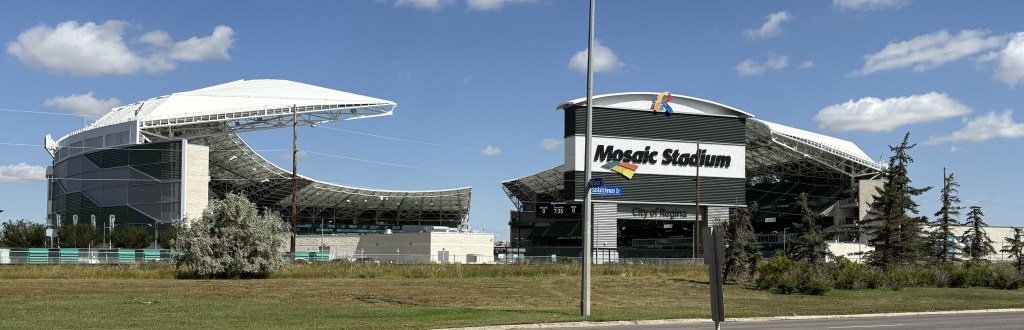
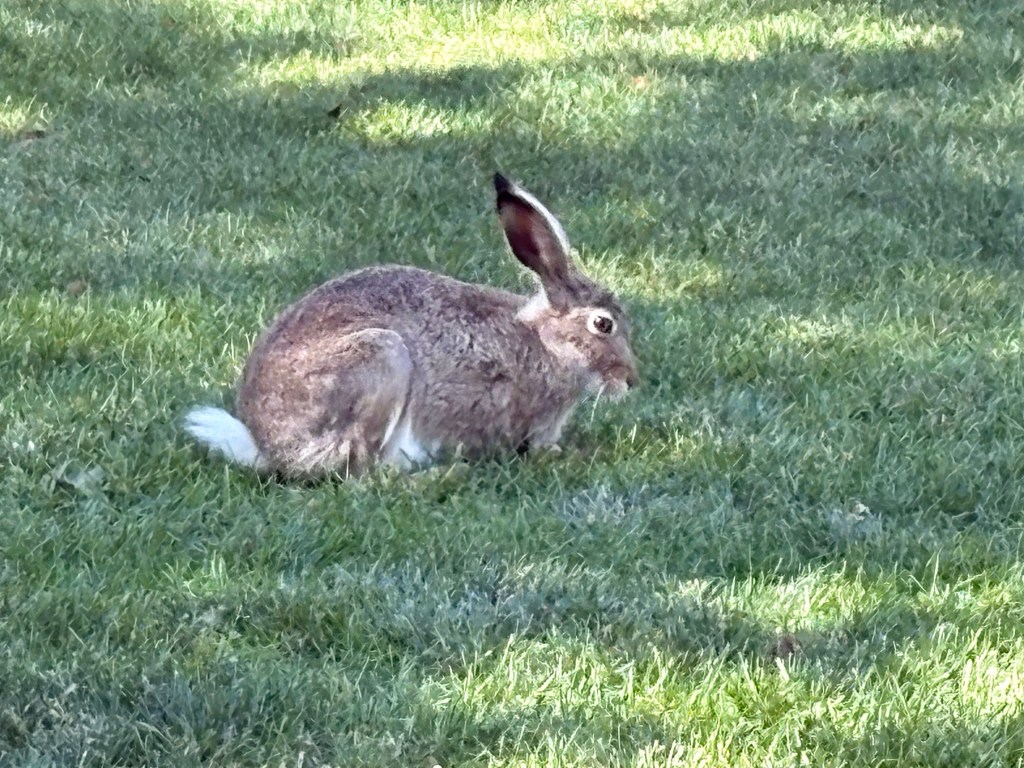
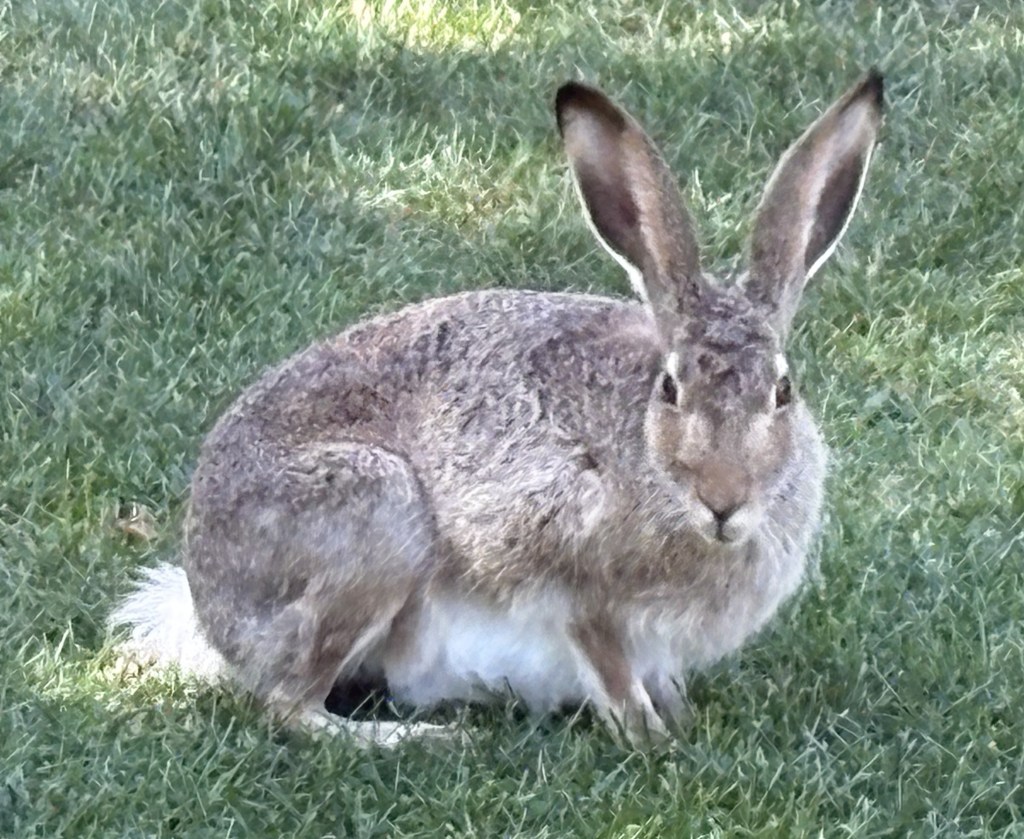
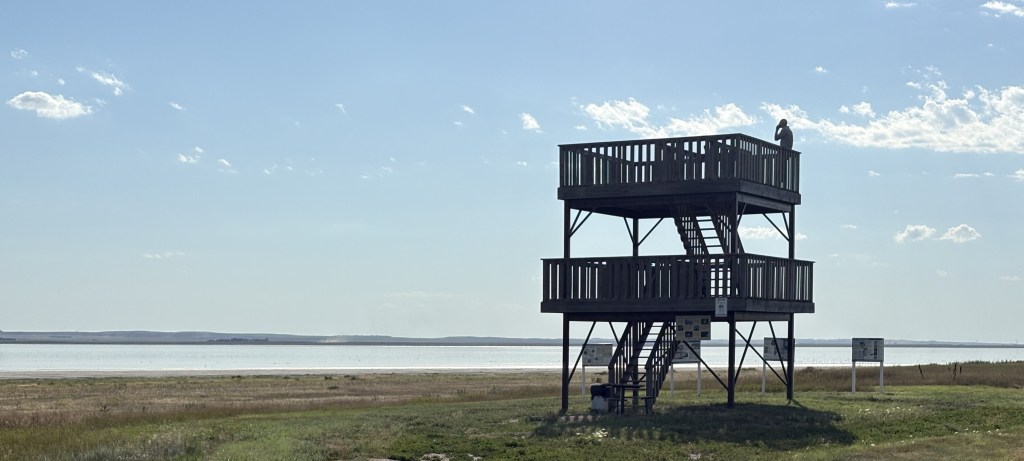
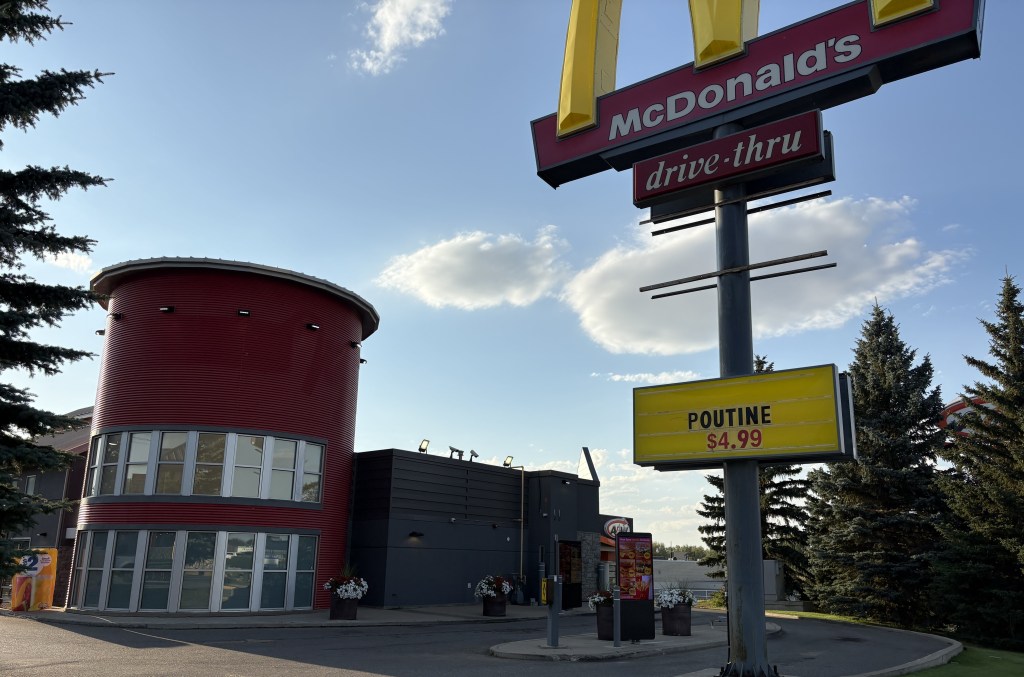
REGINA, SK – Which brings me to where I am tonight. I didn’t get into town until noon, and stopped at the Visitor Centre for maps and brochures to add to what I had already found elsewhere. I went to a series of sports arenas, all gathered on one part of town, and drove to several nice city parks to enjoy the cooler weather. In one of them I found this rabbit, casually eating grass:
It’s hard to tell from the photo but he is huge – every bit as large as my 16-pound cat (Bigfoot) that I had when I lived in Pennsylvania.
Unfortunately I scared him as I tried to get closer and he used his long legs to run off.
I haven’t had a chance to really explore the city but I will review my notes when I get up in the morning and make a full day of it.
I hope this will hold you over until I have time to review, crop and organize more photos from all of these places.
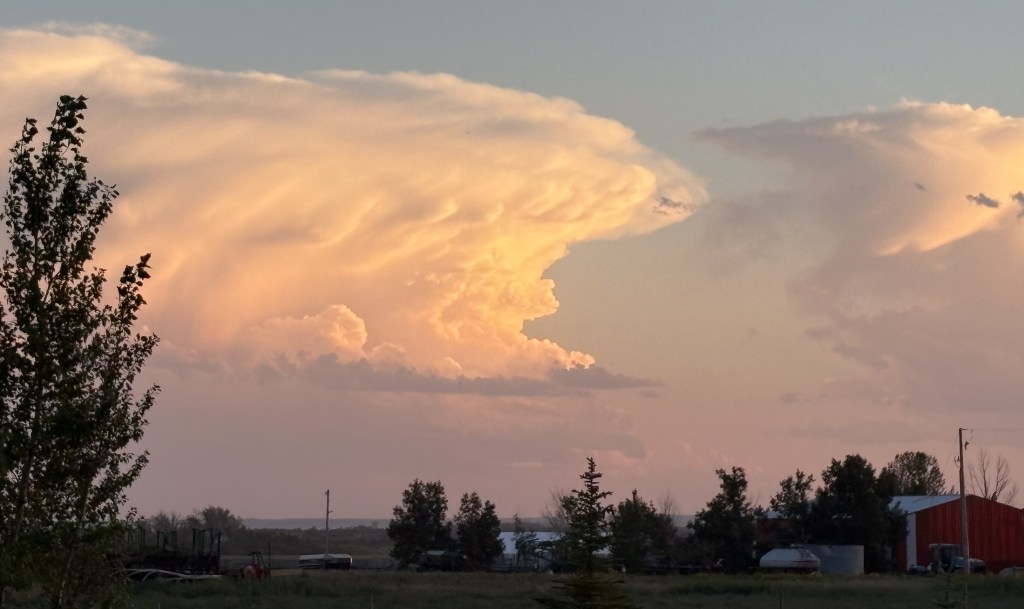
Today I arrived in Regina, Saskatchewan, the capital of the province.
I have confirmed that the locals pronounce it re-JYE-na (sounds like a sensitive part of the female anatomy). I worked with someone in Pennsylvania who pronounced it re-GEE-na. Today I was even presented with a conflict between Google Maps and my “sometimes trusty” GPS 4.0. The GPS unit correctly pronounced it as the people who live here do, whereas Google Maps used the other pronunciation. I didn’t even bother to put in my two cents since neither device pays any attention to what I tell them.
This is as far east as I will be going in Canada on this trip. Regina is just west of the Montana/North Dakota border vertically, and is due north of Cheyenne, Wyoming and Denver, Colorado. When I entered the province two days ago on my way to Moose Jaw (which I can confirm IS two words) I crossed into the Central Time Zone. Almost all of British Columbia is in the Pacific Time Zone, save for Golden and Cranbrook, two towns I stayed in, and a strip of land west of the southernmost Canadian Rockies, which slant from NW to SE. Alberta province is in the Mountain Time Zone, and Saskatchewan is in Central. I also learned today that Sask (as the locals call it) does not play the Daylight Savings Time game. I was confused the two days I was in Moose Jaw because the time on my phone never changed, which it normally does automatically when I am in the US. Lo and behold, I should have just left Mountain time alone and not told my car that I was in CDT. MDT = CST.
I will be in Regina two nights, then head northwest to Saskatoon for two nights. I almost eliminated Saskatchewan from my itinerary altogether due to air quality issues from the wildfires in the northern part of the province. I checked the numbers every day before committing to reserving my Airbnb’s past Banff. About two weeks ago the numbers dropped to safe levels in all of the towns I was planning to stay in except one, presumably because they received a fair amount of rain which washed the smoke particles out of the air. I haven’t noticed any of the smoke “haze” the three days I have been in the province.
The only casualty from my original schedule is Prince Albert National Park, which is pretty far north from Regina, and which was very close to the fires and had very bad air quality numbers. So I am adjusting my itinerary, eliminating multiple nights from many small towns, which will free up time to reallocate elsewhere.
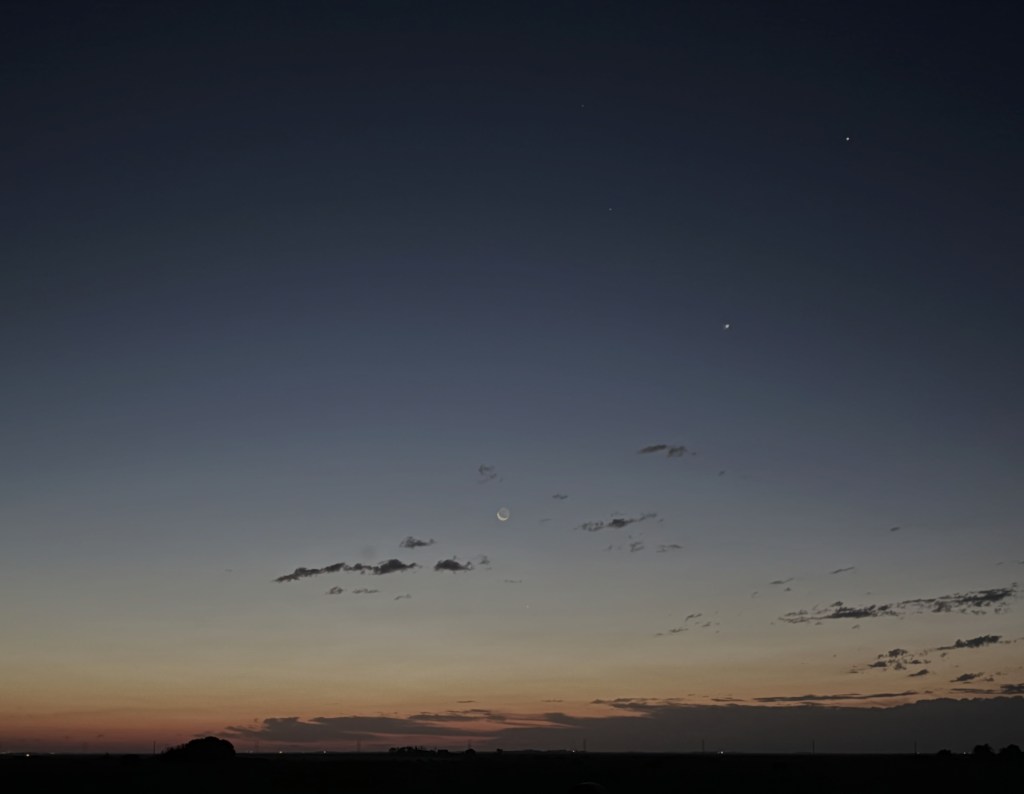
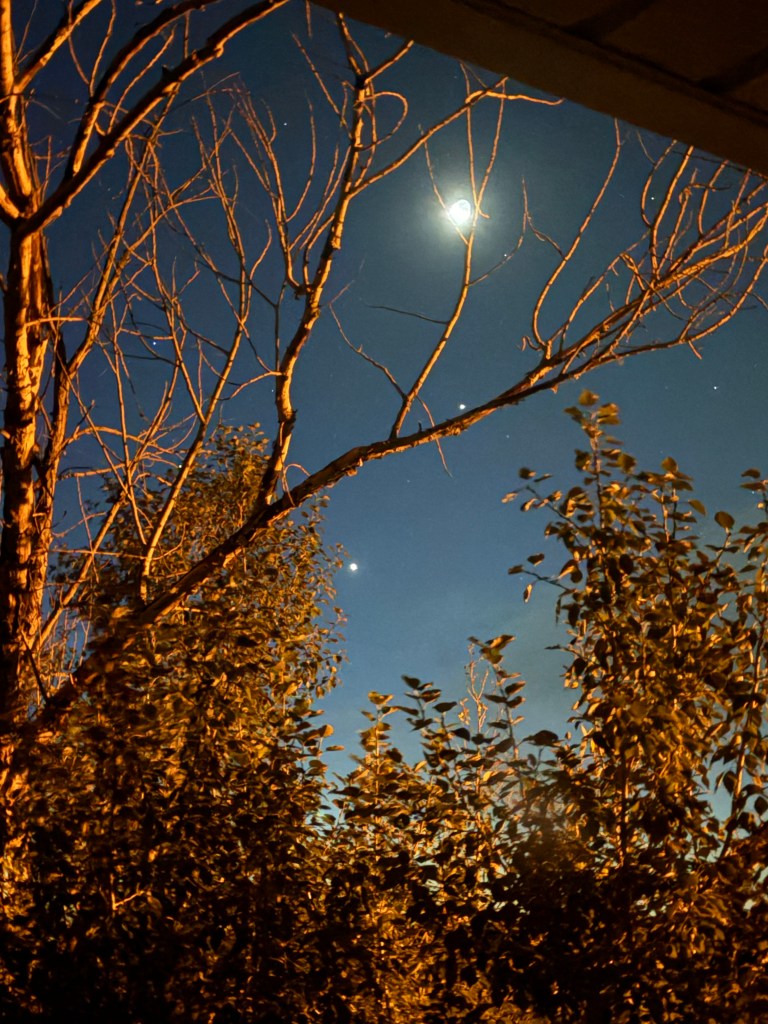
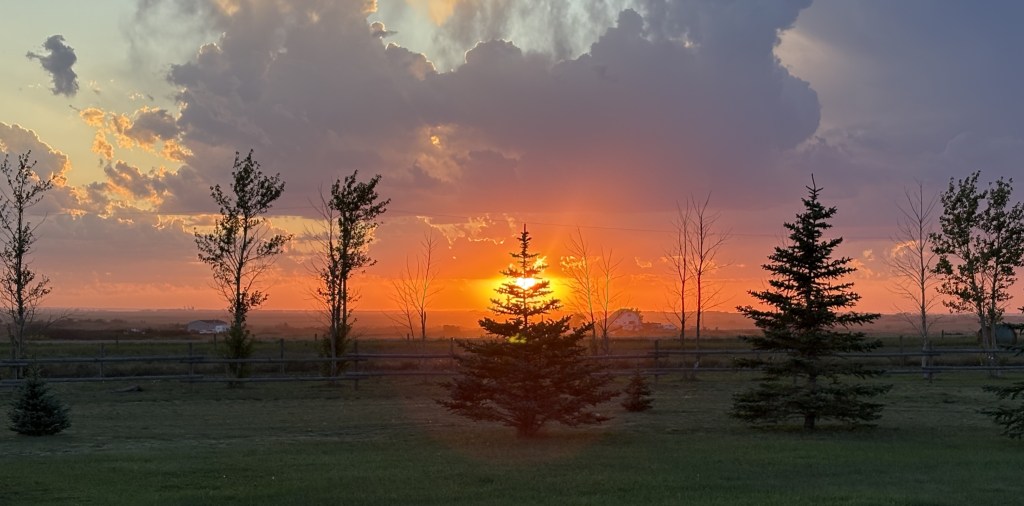
I will end this post with a photo I took from my bedroom window early this morning in Moose Jaw, SK. This was taken at 506 local time, about an hour before sunrise. The 3 bright spots in the photo are, the Moon (lower center), Venus (above it and to the right) and Saturn (further above and to the right). I darkened the photo a bit so it would look exactly like what I was seeing. The Moon appears as a thin crescent. It was really an amazing sight.
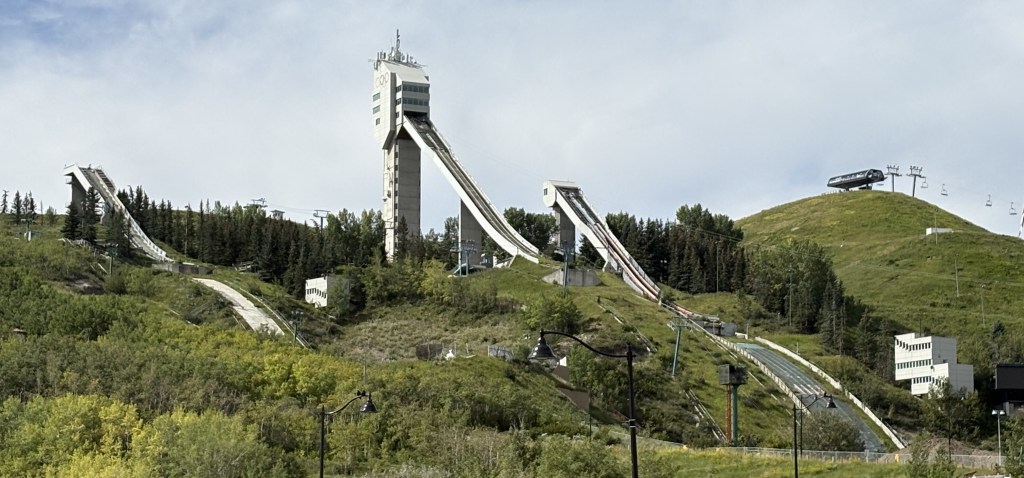
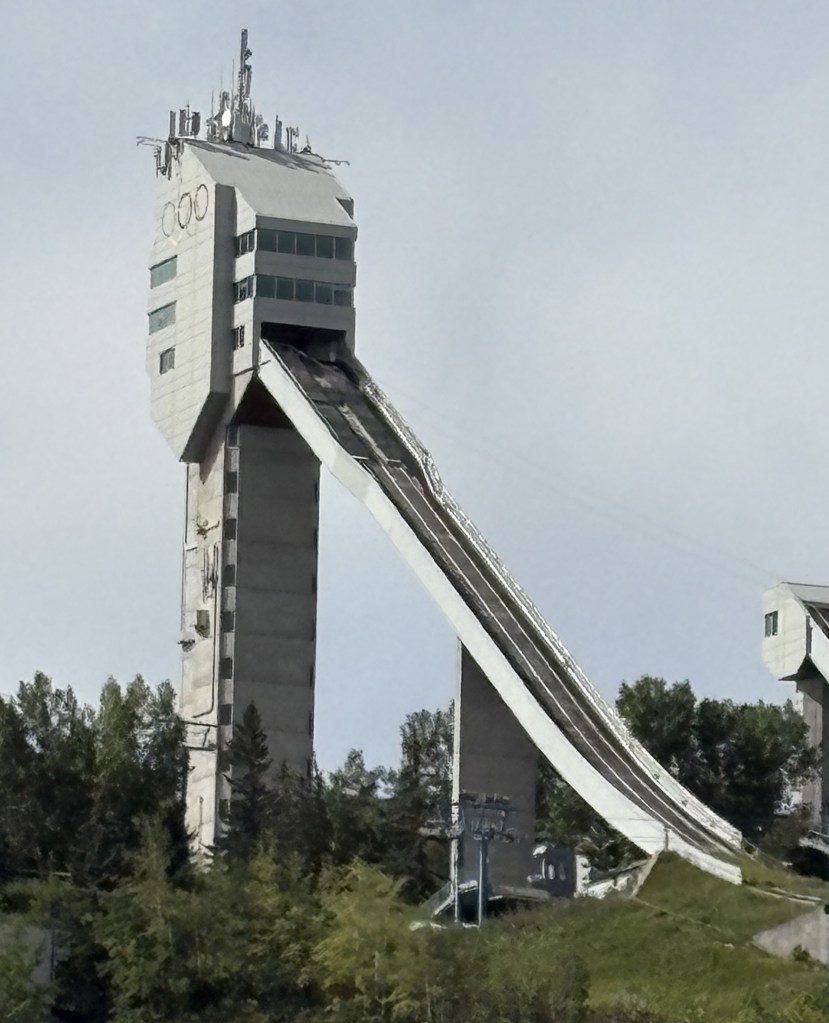
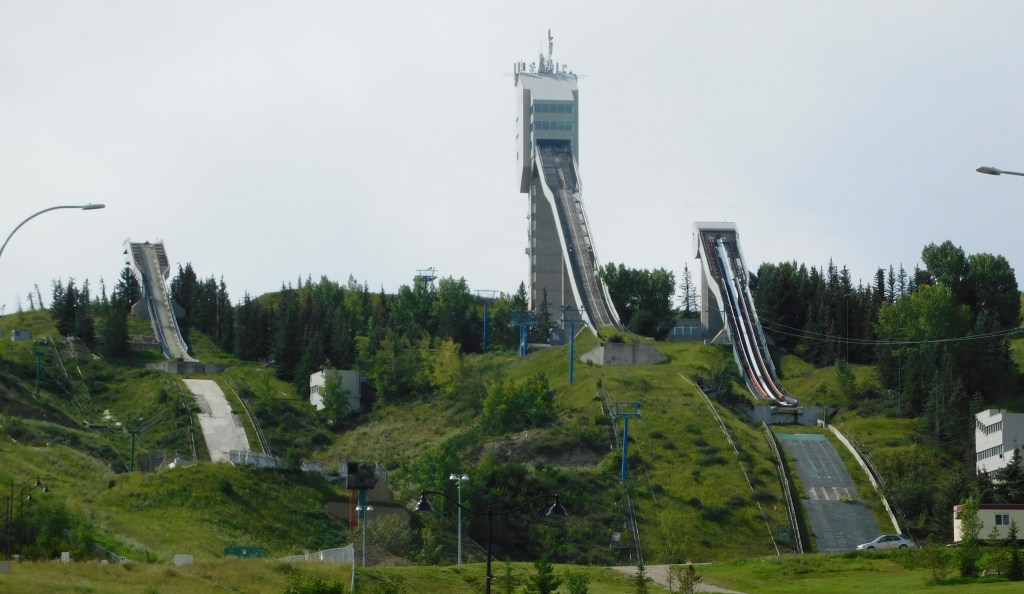
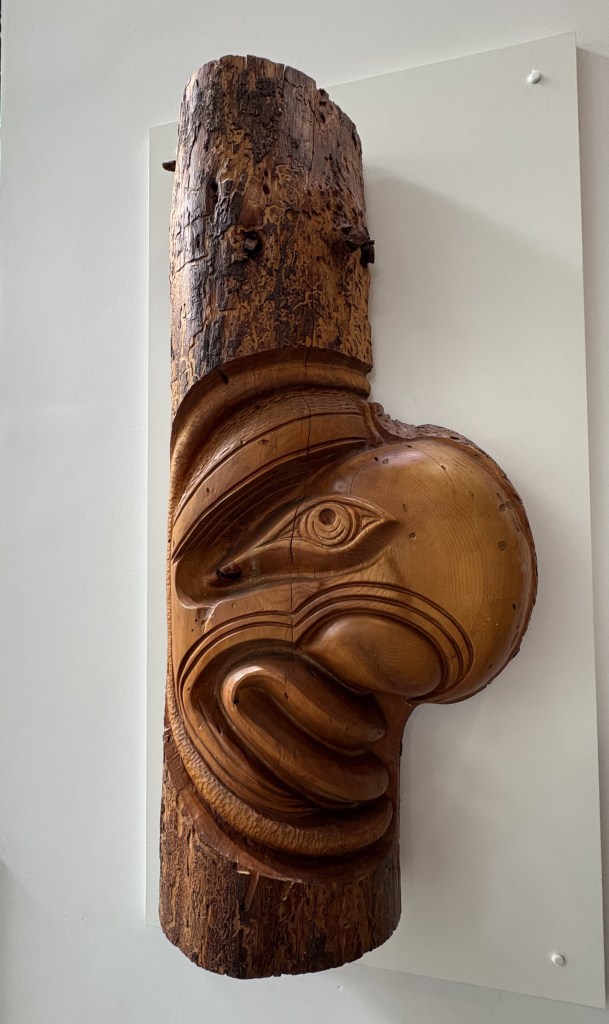
Here are a few photos I took of other things before I left the Olympic Park to head further up the mountain to Whistler Blackcomb ski resort.
These are two, relatively short (in my opinion), ski jumps. I am not a skier. My three brothers all skied but I never had any interest in it. My opinion of these ski jumps is based on others I have seen firsthand. Maybe my depth perception is skewed, but this is a training facility and perhaps they scaled things down for maximum “repeat time”.
You see – very compact.
There were ski areas in eastern Pennsylvania, where my family lived for many years. They were small by Rocky Mountain standards, but we were two hours from both New York City and Philadelphia so they were very popular with city folk. My older brother and his wife built a house after they got married, in a small resort town about 45 minutes away from where our families lived. They could see the slopes of Big Boulder ski area from their deck.
My youngest brother, who was born after we moved to Pennsylvania, lived in Salt Lake City, Utah for many years and when I would go out to visit, he and his wife would take me up to Park City, which has also hosted Winter Olympic games and has training facilities similar to these. The ski jumps we saw there seemed much bigger than these.
Here is something I noticed as I walked back to my car after having taken the photos above:
Once again, the electric bear fence.
Within walking distance of the ski jumps I found a large Inukshuk statue, perched high on a boulder:
This symbol has meaning the indigenous Inuit language, and was adopted as the logo of the 2010 Winter Olympic games.
As you can see of you look closely at the photo on the sandwich board above, the large Inukshuk has inspired many “Mini-Me’s,” constructed by visitors.
Some better than others…
I have a small, wooden Inukshuk keychain which I bought in Toronto when I was there in 2019.
My next posts will be of what I saw when I visited Whistler Blackcomb ski resort, just up the road from the Olympic Park. For now – a JohnBoy Travel Update. As I write this post I am in Canmore, Alberta, just south of Banff, in the Canadian Rockies. I drove down here yesterday from where I had been staying in Golden, British Columbia. From Golden, I drove through parts of six National Parks. I will be based here in Canmore for four nights before moving on to Calgary and points east.
I’ve been lots of places and seen lots of things between Whistler and Canmore, and I will be getting to those posts soon. Thank you for your continued patience. My days are filled with seeing new, amazing things and I am accumulating LOTS of photos and stories.
Before getting to the Whistler Blackcomb ski resort in Whistler I took a turnoff to drive back to the Olympic Park, built for the 2010 Winter Olympics which were held here in British Columbia. It isn’t just a dormant facility sitting here rotting. Many of the facilities are actively being used, even in the summer.
First a map of the general layout:
Next, a map of the campgrounds on site, and other details.
After I took that second photo I noticed something written off to the side (not in the photo)
Whoa! – that middle item really got my attention. Let’s have another look at that map but we’ll zoom in a bit:
Perimeter around the remote campground – check.
Perimeter around the primary RV sites and kid’s playground – double check.
Here is a door I found behind the Day Lodge (which contains a cafeteria, gift shop, washrooms and showers for the campers, and various support facilities for running the Park).
PLEASE remember to close & lock the door behind you!!
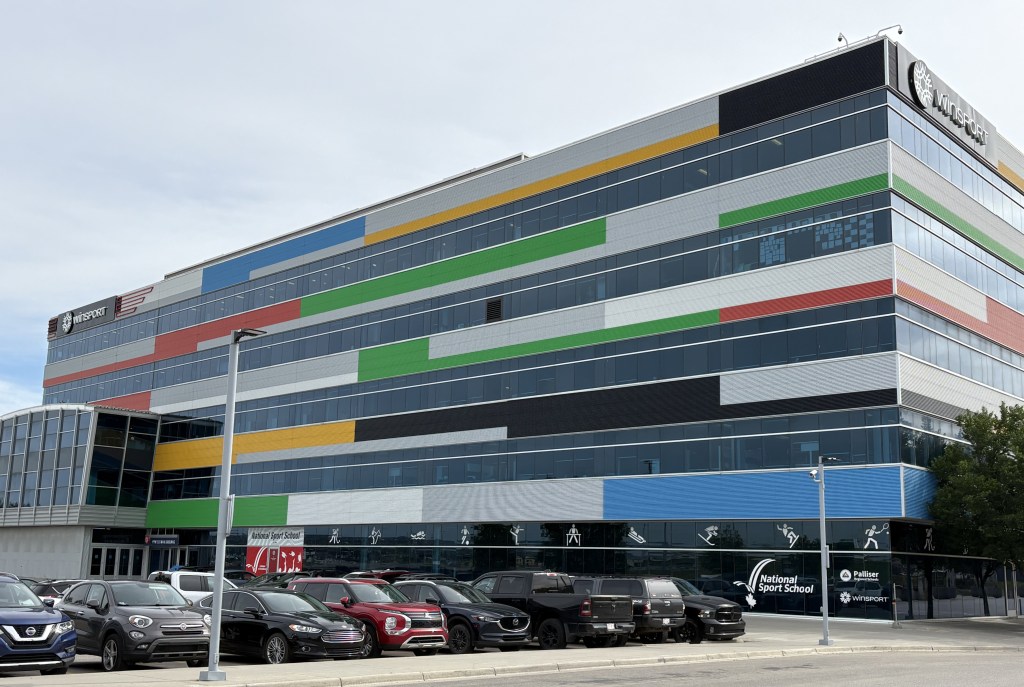
And here is a look at the Day Lodge itself:
The left side is the front entrance, the right side is the cafeteria and off camera to the left is the gift shop.
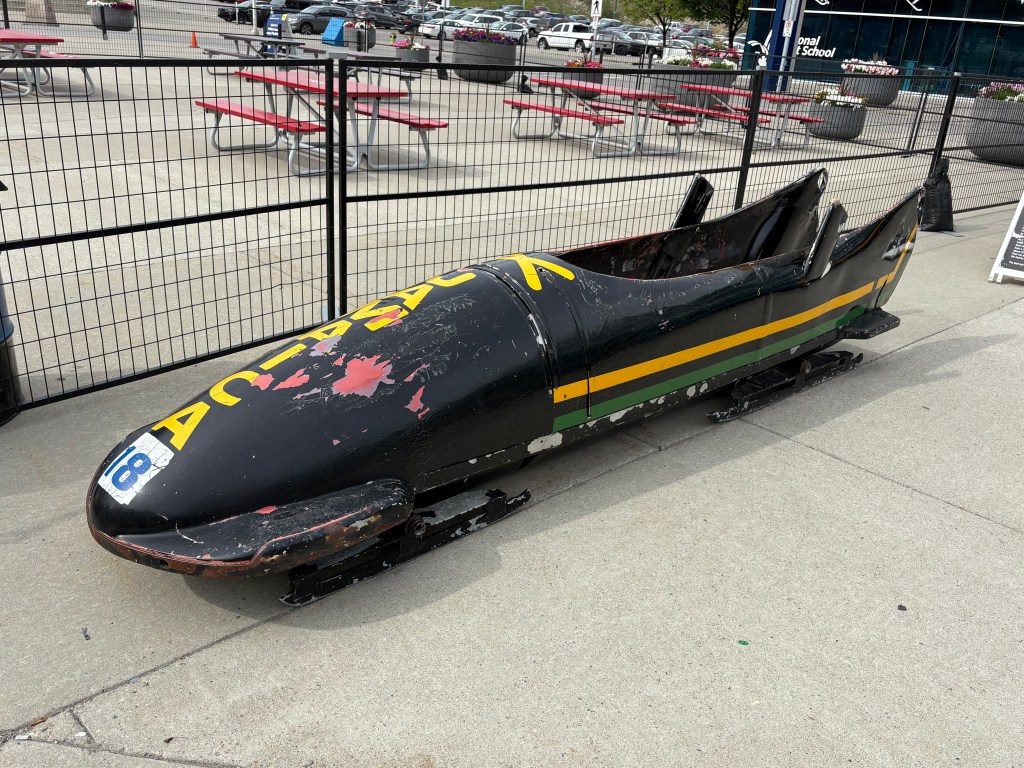
Also around back was this item promoting a nearby business. In the US we would call this a bobsled, but here in Canada it is a bobsleigh. And no, I didn’t get in it (after my experience in New Mexico where I got in a life size replica of an IndyCar outside a racing museum and for a few tense moments, couldn’t get out).
This is here to promote the Whistler Sliding Centre. That facility is located high on the mountain above the ski area, further up the road, but unfortunately the Sliding Centre wasn’t open the day I was here.
When my youngest brother and his family lived in Salt Lake City they took me to a similar Olympic Center up in Park City, where the 2002 Winter Olympics were held. We watched sleds some roaring down the track (outfitted for summer use). When they launched one from the top a voice on the loudspeakers would announce “Bob on track !” so those of us down below could get our cameras ready.
People can pay to ride with an experienced “driver” but we didn’t do that in Utah and I wouldn’t have here even if the facility had been open on Mondays.
Next I’ll show you what was happening at the Biathlon facility elsewhere on the property.
Monday I had scheduled a daytrip up to Whistler ski resort, northeast of Vancouver. I left Maple Ridge early in the morning so I could bypass the city westward on the Trans Canada Highway before morning rush hour.
Before I got to the road going up the mountain to Whistler I went through the coastal town of Squamish. It is the English name of an indigenous tribe on whose land Whistler resort, and many other towns, sits (their land consists of 2,600 square miles (NOT kilometers)). Most signs carry both the English and Indigenous spellings.
Those numbers are kilometers, not miles, by the way. Things up here are almost always expressed in metric measurements but when I discuss them on my blog I generally use the US system since that is what many of my followers can relate to.
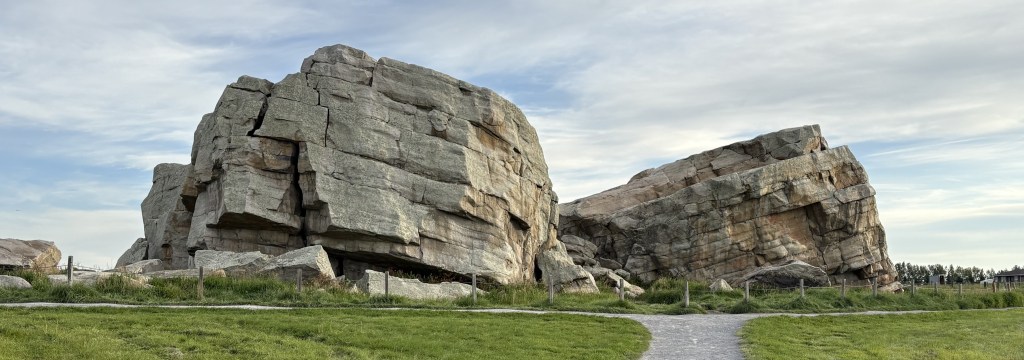
As I approached the town I could see a huge rock formation right by the highway in the distance:
Here is a photo of the rockface looking in right next to the formation (but from the other side of the highway):
And here is another photo which includes the parking lot below the formation. As you might guess, it is VERY popular with rock climbers, and there is a special parking area right below it for their vehicles, which are loaded with their climbing gear.
I didn’t see any climbers on the face either going by in the morning or later in the day as I was heading back to Maple Ridge, but I could see people resting in the afternoon from having climbed earlier in the day when it was cooler and without the sun beating on the face of the formation.
After taking photos here in the morning I continued on up the mountain towards Whistler.
Followed immediately by:
Many of you have perhaps seen a sign like this in your travels (even in the mountains and near the coast in North Carolina) and I think most people assume it only applies to black bears. Well, in places like Yellowstone National Park in the US and most places here in Canada, it also applies to another type of bear.
I was first warned about grizzly bears when I was at the north end of Vancouver Island earlier in my trip. Evidently young males from the mainland swim over to VI in search of new turf and perhaps a place to raise a family. They must have convinced some female grizzlies to tag along, as the grizzly bear population on the island is growing. I didn’t see any, but there were plenty of signs warning about them.
And my nephew, Sam, will be pleased to know that every day that I am near the woods and out of my car I am packing bear spray:
When I visited my brother and sister-in-law, and their son Sam, in Wyoming back in 2021, Sam invited me to the place where he worked, just outside of town. In the hills above the complex where he worked there are petroglyphs on the rock walls. When I got there he asked “where’s your bear spray?” I replied “in my backpack”. He told me “No, when you need bear spray you need it RIGHT NOW”. It comes with a carrying case which you can strap onto your belt. It should be worn at all times when you are in a place which may also be inhabited by bears.
I never needed the can I bought in Wyoming and while it may still work, the expiration date has passed. I still have it but I bought two new cans for this trip and wear one of them at all times when I am out of my car.
I had reserved four nights near Vancouver, hoping to explore the city and the many beautiful sites I’ve heard so much about. My visit got off on the wrong foot, as I documented in a previous post, with an Airbnb venue problem. That plus the fact that I hadn’t budgeted nearly enough time, plus the fact that the public transportation into the city wasn’t to my liking, plus the fact that I’ve read Vancouver is being overrun with tourists (and is already a very busy city), plus other factors, led me to ignore the city on this visit altogether!! I will come back better prepared at the end of this trip, especially since I now know I will be cutting back in other areas of the country due to air quality issues, etc. I would rather take the time to do better planning and give Vancouver the attention it deserves.
I already explained my disagreement with the Surrey Visitor Centre. Here is proof of the exorbitant parking fee I had to pay just to go in the building and find that they weren’t even there any more. I became even more upset this morning when I saw this photo as I was reviewing photos to post and saw that the city even added TAX to the parking fee!!
Fortunately I was easily distracted by something I had seen on my way there. My mind is always distracted by new “shiny objects,” and this one was indeed shiny.
THAT is a spiffy new Ford F-650 Crew Cab pickup truck, outfitted with a removeable camper called Bigfoot. I saw it parked in front of a house as I was driving on a city street, and after I passed it I turned around to go back and get a photo. I was alarmed when I saw it pulling out of where it had been parked and was prepared to pursue it (within reason). Fortunately the driver was only moving it across the street so he could get another vehicle out of his driveway.
My comparatively tiny Toyota Camry parked in front of it:
I spent a few minutes speaking with the owner, who proudly proclaimed the truck is one of only two in the area (camper sold separately). There was a sign in the back window indicating the owner is evidently in the septic system cleaning business, and clearly business is very good! Ironically (and I mean that in the very literal sense of the word) he was wearing a UNC Tarheels t-shirt! I pointed to it and asked if he had gone to school there (he was probably in his late 20’s). He replied no, he had bought it at local thrift shop for just a few bucks.
Those of you who know me are keenly aware of my obsession with buying unusual new t-shirts for only a few bucks at one of my favorite chain stores in the Mid-Atlantic states, so between the cool truck and the t-shirt story it helped make my day and get my mind off the goofy parking fee.
Another thing that impressed me during my brief stay near Vancouver were it’s many bridges. I will show you three of the ones I used personally. Most of these photos I found on the internet. Believe me I tried to find places where I could take my own photos but that quickly became a huge waste of time.
The first one I crossed was the Pattullo Bridge. As I crossed the old bridge I could see the ongoing construction of a much larger new bridge right next to it. For this one I have to resort to internet photos:
The old bridge, on the left, still in use:
(Photo credit: readsitenews.com)
You can see them beginning to build the concrete superstructure supports in the center of the photo above. They are much further along now than when that photo was taken.
The new bridge. The photo below is pretty much how it looked the day I drove over the old bridge:
(Photo credit: TI Corp)
And to prove my point about it being a waste of time trying to take my own photos, I went out of my way to go to a place called Bridgeview Park. This was all I got for that effort:
I tried.
Another bridge I crossed several times while I was in the area is the Port Mann bridge. Perseverance paid off as I was finally able to find a nearby city street where I could get a good photo of it:
And finally, the Golden Ears Bridge, which I probably crossed at least a dozen time while I was staying in Maple Ridge.
(Photo credit: hgcacoustics.com)
I’ve tried to enlarge that photo but don’t seem to be able to. I don’t know why it was so difficult to find a photo of this beautiful bridge. I want to get this post finished but will try to find a better photo later and replace the one above.
Two weeks in Canada and I have already seen so many amazing places. And I still have 6 weeks to go! I am going to wait a few more days to decide for sure but I believe I will be shortening some planned stops in Saskatchewan, and taking others off the to-do list completely, due to air quality from wildfire smoke in that province. I check the numbers every day, and they do fluctuate, but if they are anything other than low risk to my health I will probably pass.
The good news is that it will give me more time to revisit southwest British Columbia to do more things and revisit some of the places I’ve already been to. I didn’t budget enough time initially so now I’ll get another bite at the apple.
As I write this I am in Golden, BC, sitting at 3,303.33 feet elevation in the kitchen/dining area of the travel camper I am staying in for 6 nights.
I am near the base of a mountain north of Golden but it only takes me a few minutes to get down to the highway. The property is at the end of a dead-end road so it is remote and extremely quiet. The only thing I would change about it would be to put a huge net over it to keep the mosquitoes out! Not much my Airbnb host can do about that…
My first impressions of western Canada are all positive, mosquitoes notwithstanding. This is my first encounter with the pesky little insects this trip, but while I am out and about they really haven’t been a problem until this particular location.
People drive pretty fast in Canada, except people in RV’s who insist on driving the exact speed limit (or slower on inclines) and invariably have long queues behind them until they get to a passing zone. Can’t fault them for obeying the speed limit, though. Cities and towns have speed limits of 30, 40 or 50 km/h and the highways are generally 60 (in places with lots of curves), 80, 90 or 100 km/h, and the wide open road is often 110km/h. In National Parks the speed limit is never higher than 90 km/h, and in areas where people stop for viewpoints or to cross the road, much slower.
30km/h equates to 18.6 mph, 40 = 24.8, 50 = 31.1, 60 = 37.3, 70 = 43.5, 80 = 49.7, 90 = 55.9, 100 = 62.1, and top speed of 110 = 68.4 mph
So slower overall than we are used to in the US. I generally set my cruise control to around 5 or 6 km/h over the current limit and that keeps me pretty much in the regular flow of traffic. I finally switched my speedometer to metric because the conversions were driving me crazy. I had a cheat-sheet in my other car when I went to eastern Canada in 2019.
The roads have been in excellent condition, save for one I drove on my first day in-country which made me almost seasick. Fortunately that was the exception, not the rule. They may get a little worse the further north I go but I’ll just have to wait and see.
Drivers are very polite and there doesn’t seem to be any road rage up here.
The weather has been fantastic. The days often require only a t-shirt and shorts but the mornings and evenings cool down quite a bit so I may start and end the day with long pants and a sweatshirt, or at least a long-sleeved t-shirt. Now that I’m in the Canadian Rockies I wear long pants all the time but have layers for my upper body. Yesterday I was up at 6,300 feet elevation but mid-day it was very pleasant.
Thus far I have only traveled through the southern part of British Columbia, and now in Golden. I will be spending a few days in Alberta province starting in three days when I go down to Banff for 4 nights, and Calgary for one or two. I will then head further east to western Saskatchewan province, though as I mentioned above, some of those stops will likely be shortened or eliminated.
British Columbia badly needs rain but the Canadian Rockies have had a good bit so far this summer. East of the Rockies has also been dry, which is why they are having so many wildfires.
The scenery has been stunning. I am going to run out of superlatives to describe it. While planning this trip I noticed that the Canadian Rockies “weren’t that tall”. The highest points in the British Columbia and Alberta provinces are “only” 12,972 and 12,294 feet respectively. Colorado alone has 58 mountains taller than 14,000 feet. Well, now that I am here and looking at them with my own two eyes, I can say that the mountains in the Canadian Rockies, and elsewhere in western Canada that I have been to so far, are VERY IMPRESSIVE and many of them are unlike mountains I have seen elsewhere. I’ve taken lots of photos in the 6 National Parks I have been to, all within 4 hours of where I am now staying. I am staying “home” today to do laundry, wash my car, and download and review the photos I have taken the last few days and prep them for making additional posts.
Here is a tease of a Park I drove through yesterday:
Lots more where that came from, I assure you.
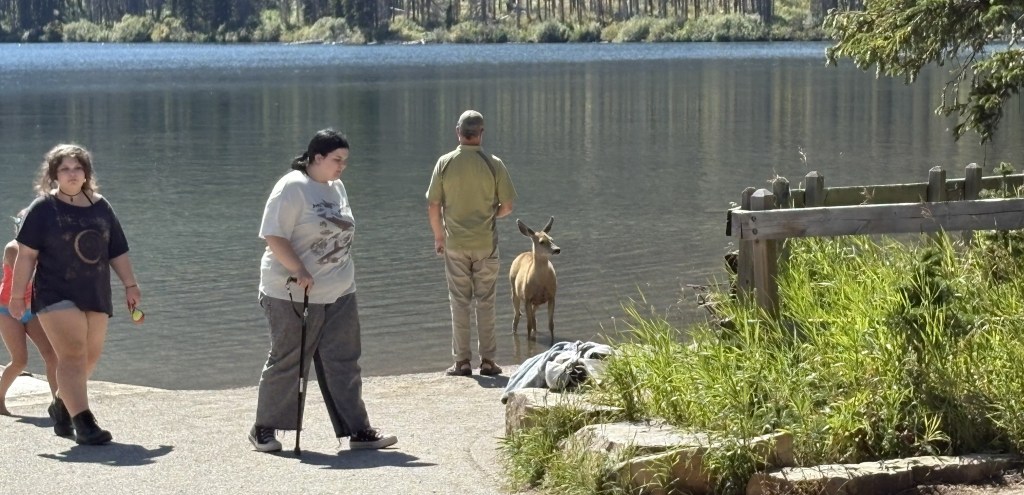
I haven’t seen nearly as many critters in these first two weeks as I expected to. I am always vigilant, especially when I am driving, and try to always have my digital camera within easy reach. I’ve only seen one black bear, a cub which ran across the road well ahead of me while I was in northeast Vancouver Island. I neglected to mention that in the post for that day. I saw a white-tail deer here in Golden, as I was driving down to the highway yesterday morning. It ran alongside the road to my left for a short distance and then stopped. I saw a moose cow (adult female) grazing just off the small road I was taking to get to a popular resort near Jasper, BC two days ago. I saw a herd of elk (thank you to my brother Steve for correcting me when I called them moose). I hadn’t looked at the photos on my computer yet and as you will see when I post the photos from Jasper they were all laying down and resting in a burnt-out wooded area just off a major highway, and just outside of town, so it wasn’t obvious exactly what they were. I have photos of a few birds of prey I have seen in various places. I am going to a Wolf Center just outside of Golden later this afternoon but that won’t count since they are in captivity.
I see warning signs for lots of things – deer, elk, bear (black and grizzly), moose, bison, mountain goats, and bighorn sheep (I still think they’re extinct – I have never had a confirmed sighting in all my travels in the US and now Canada). And yesterday I saw signs warning of frogs and salamanders on the road in a National Park west of here! I hope they’re not big enough to damage my car!!
No lions or tigers but they may be in Saskatchewan. I’ve heard they’re a pretty tough bunch over there…
I’ve driven just under 2,800 miles from when I crossed into Canada back on July 27 to last night when I filled my tank here in Golden. Gas prices are relatively high in Washington State and here in British Columbia. I expect them to drop in Alberta (once I get past Banff) and Saskatchewan provinces.
One thing I really like about traveling up here is that there are warning signs when you are about to go a considerable distance with no gas stations along the way. And there is no cell phone service across vast areas. Some days I go almost the whole day with no cell service. Verizon does make satellite texting for emergencies available when there is no cell service. If I start the day using Google Maps guidance on my smartphone for a specific destination it will work for quite a while but eventually stops if I’ve had no cell service for an extended period. This is why, for years, I’ve had a stand-alone GPS unit in my car. Even my new-to-me car doesn’t have a navigation system or GPS built in. Google Maps doesn’t always work.
I haven’t experienced any really bad crowds yet, but then I didn’t go into Vancouver or to a popular Garden destination in Victoria which probably would have been packed with people. The National Parks are so big it is fairly easy to get around within them, though at some of the popular stopping points the parking lots fill up pretty quickly, same as they do in the US. I do expect the city of Banff to be crowded, and I don’t know yet how many of the areas within the Park itself I can drive to. Jasper and Banff National Parks are both enormous, though some portions of Jasper are still closed due to the devastating wildfire they had last summer. I will give more specifics when I start posting photos from with each Park.
I was delighted to hear upon my arrival at the first National Park, where I planned to buy my senior annual pass, like I had in eastern Canada, that admission to all Canadian National Parks is free until September 2. Yay!
I feel like I’m forgetting something but when I think of it I’ll add it to another post.
This port is located down another road near Port Hardy. It is a very narrow, winding road and there were lots of logging roads which went off to the sides with big trucks driving very fast and kicking up lots of dust.
I drove for quite a while and finally arrived at a beautiful spot with lots of pickup trucks and other vehicles which had hauled boats on trailers to the water. I went in the office to ask some questions of the harbourmaster and as I was leaving I said “Thank you, I’m going to go take some photos of your lake”. She immediately responded “It’s the ocean”. Silly JohnBoy, that’s why it’s called a Port.
This body of water is the Neroutsos Inlet, named after Captain Cyril Demetrius Neroutsos.
Port Alice is in the lower right quadrant of the map above.
After taking my photos, and forgoing a side trip which the young ladies at the Visitor Center in Port McNeill told me about (on a long gravel and dirt road, too far off the paved road to attempt with all the logging trucks running around, to find the “Devil’s Bath”) I reversed course and headed back to Campbell River.
I came across this sign, which I had seen in another location not conducive to stopping to take a photo of it.
It reminded me of the many humorous road signs I saw when I traveled to Canada’s Maritime Provinces in 2019 (see multiple posts). I haven’t seen too many so far this trip but maybe I will when I start getting out into the countryside.
Shortly after I got home I went back out to take a photo of a helicopter I saw at the hospital the day I arrived in town, and saw this ominous cloud in the sky as I drove towards the highway. I knew it looked very different from other clouds in the sky that day.
Turns out it was the initial smoke plume from what became the Wesley Ridge Fire, further southeast down the island near Nanaimo. It was discovered around midnight the night before I took this photo and has grown steadily since then. It is near a small lake and many people have been evacuated from their homes. There was no visible smoke when I left early the next morning to drive to Nanaimo to take a ferry over to Vancouver but I could see the smoke at ground level once I got down there and could definitely smell it. Fortunately, no one has been injured fighting it.
After two nights in Victoria it was time to head northwest, up the eastern (inland) side of Vancouver Island. Shortly after leaving the city I immediately I started to see huge highway signs warning of Elk. Not deer. ELK.
Oh, they have deer too, mind you…
… but Elk are much larger and pose a greater risk to motorists. Oh, and they bears up here too. Black bears AND grizzly bears. I brought two cans of bear spray for this trip. A small black bear ran across the road well ahead of me the other day at about 10 in the morning. One must always be vigilant when driving.
Soon after leaving town I stopped as a rest area near Malahat. I didn’t need to rest, but wanted to take in the scenic view.
And for those of you with eagle eyes, yes, that is snow on the distant mountains in the upper right corner of the photo.
When I texted that photo to friends and family members I said that it was the mountains in the Olympic National Park in northwest Washington State. That is not correct. It is actually Mount Baker, and other mountains, still in northwest Washington but further inland, up near the Canadian land border, looking east from this vantage point, not south.
Another lake I could see from another scenic overlook just a little ways up the road:
I got back on the highway and soon arrived in the little town of Duncan. Duncan is known for it’s totem poles. There were lots of them scattered around town but the visitor center there wasn’t open yet and I needed a map to find them all. It was also early in the morning and the sun angle was not conducive to taking great photos.
Here are a few that I was able to find:
And I spotted this big guy across an intersection, in front a round office building.
It is called Cedar Man, and is the widest totem pole in the world, measuring 5 feet, eleven inches across. The carver is a man whose “English name” is Richard Hunt. He is a member of the Kwagu’l indigenous tribe and his given name is actually Gwe-la-y-gwe-la-gya-les. I got that information from the small sign at the base of the pole, which is present at each pole in town.
Indigenous words are all presented in a very elaborate font which I can’t replicate here, but when I start posting more photos of totem poles and their carvers after I have researched them in more detail I will show you photographic evidence of what I’m talking about.
A little further north of Duncan I turned off to head over to Mount Prevost, which promised fantastic views of the area.
I left the house in the photo to give viewers some reference of just how tall the mountain is (2,585 feet). I drove up the road towards the parking area but the road was closed before I got to it and I could tell it was still quite a climb to the top. I am not a hiker so I turned around and left. There is quite a view, though, based on photos I found online.
As I was driving back to the main highway I saw this sign which shows the current fire level risk in Vancouver Island.
I read this morning that the fires in Manitoba province are getting worse and even more have been detected in just the last week. They have already experienced three times the average amount of land loss to wildfires, and tens of thousands of people have been evacuated, mostly by air (not many roads up north). Think about that. Tens of thousands. There are still large, out of control fires in northern Saskatchewan province, too. All of them are producing dangerous smoke and there are health warnings in many areas well south of the actual fires.
This area has been under a huge high pressure dome the entire week I’ve been here. That’s good for me, nice clear days and pleasant temperatures, but bad for residents of those two provinces because high pressure keeps the smoke close to the ground. The weather forecast indicates that that situation is fixin’ to change here in a few days and hopefully that will help clear some of the smoke out.
I am going to resume booking my Airbnb’s along my original route and will make a bee line for Saskatchewan province and get that portion of the trip done so I can focus on Alberta and British Columbia. There are always new fires popping up and the situation can still change on short notice. Canada has excellent resources for monitoring all of the various fires so I will be well informed as to their status.