Please don’t pet the bears

Monday I had scheduled a daytrip up to Whistler ski resort, northeast of Vancouver. I left Maple Ridge early in the morning so I could bypass the city westward on the Trans Canada Highway before morning rush hour.

Before I got to the road going up the mountain to Whistler I went through the coastal town of Squamish. It is the English name of an indigenous tribe on whose land Whistler resort, and many other towns, sits (their land consists of 2,600 square miles (NOT kilometers)). Most signs carry both the English and Indigenous spellings.

Those numbers are kilometers, not miles, by the way. Things up here are almost always expressed in metric measurements but when I discuss them on my blog I generally use the US system since that is what many of my followers can relate to.

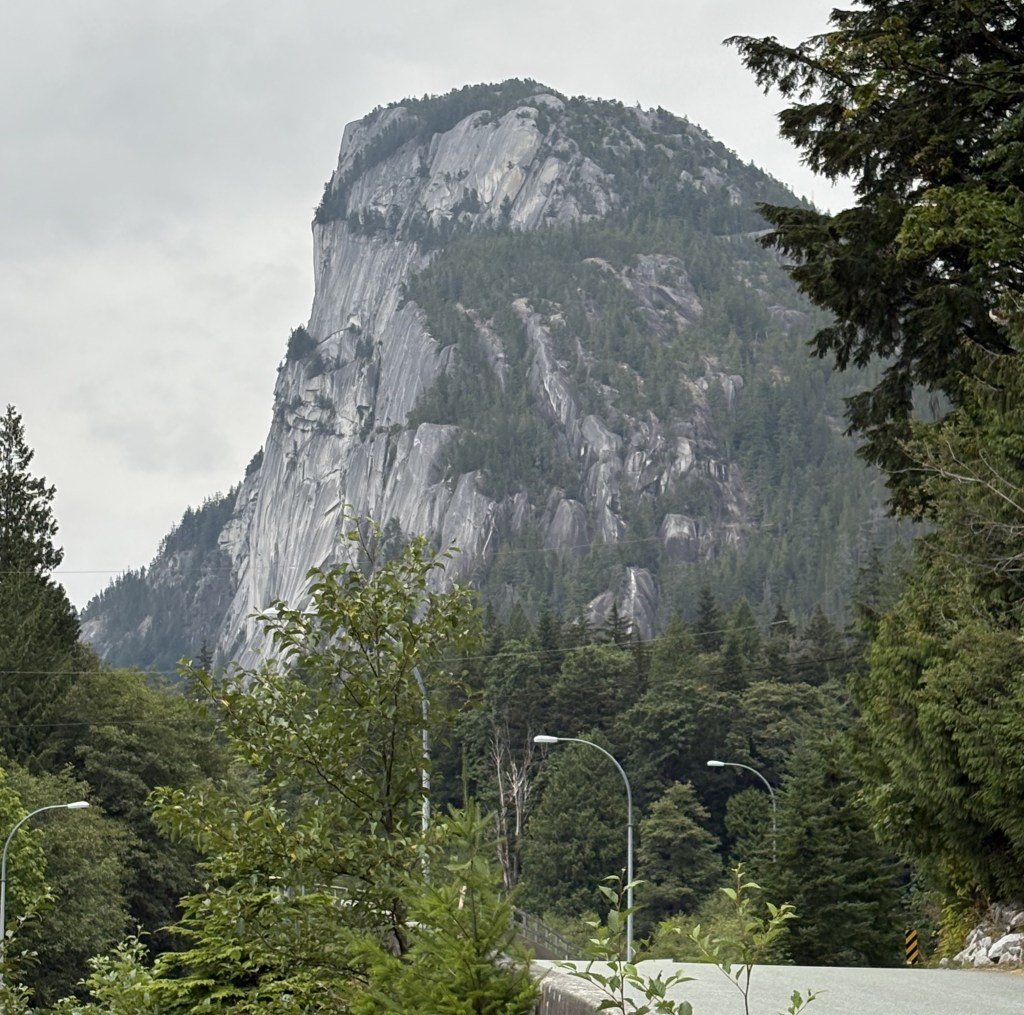
As I approached the town I could see a huge rock formation right by the highway in the distance:

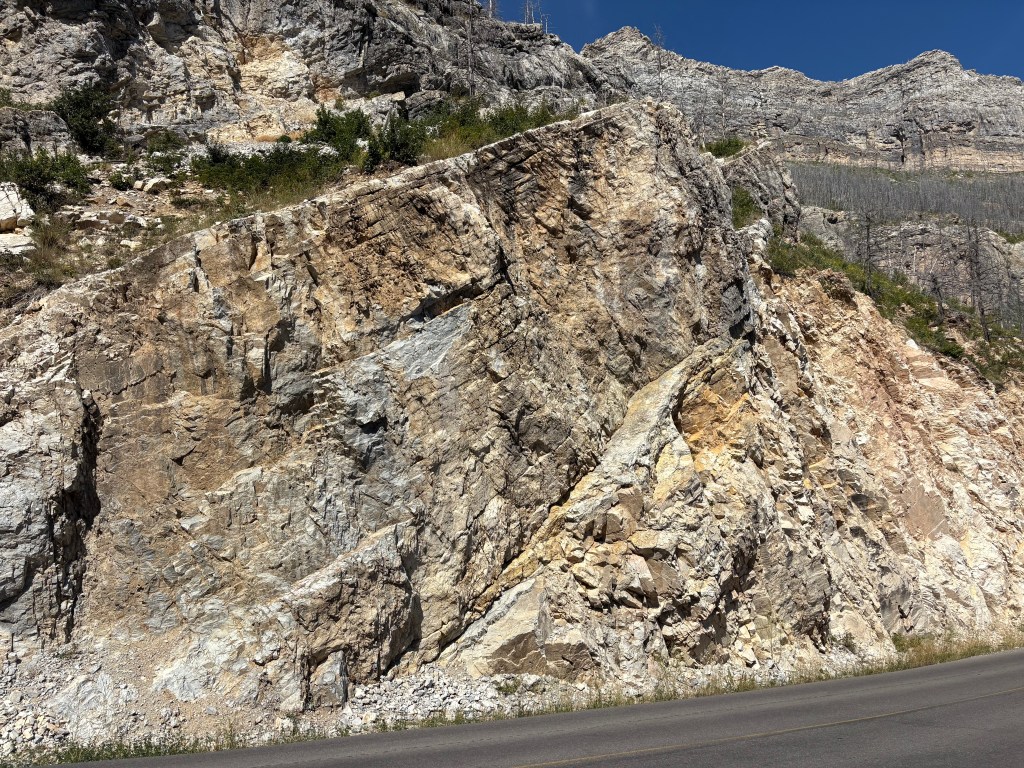
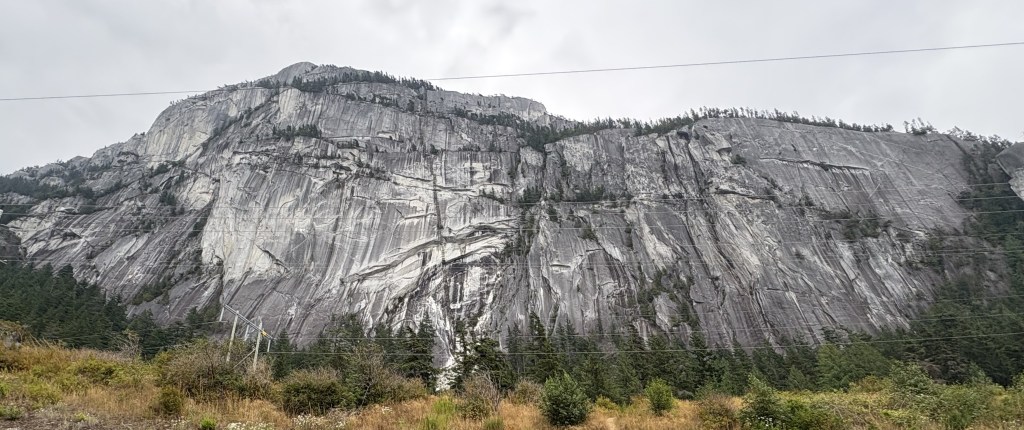
Here is a photo of the rockface looking in right next to the formation (but from the other side of the highway):

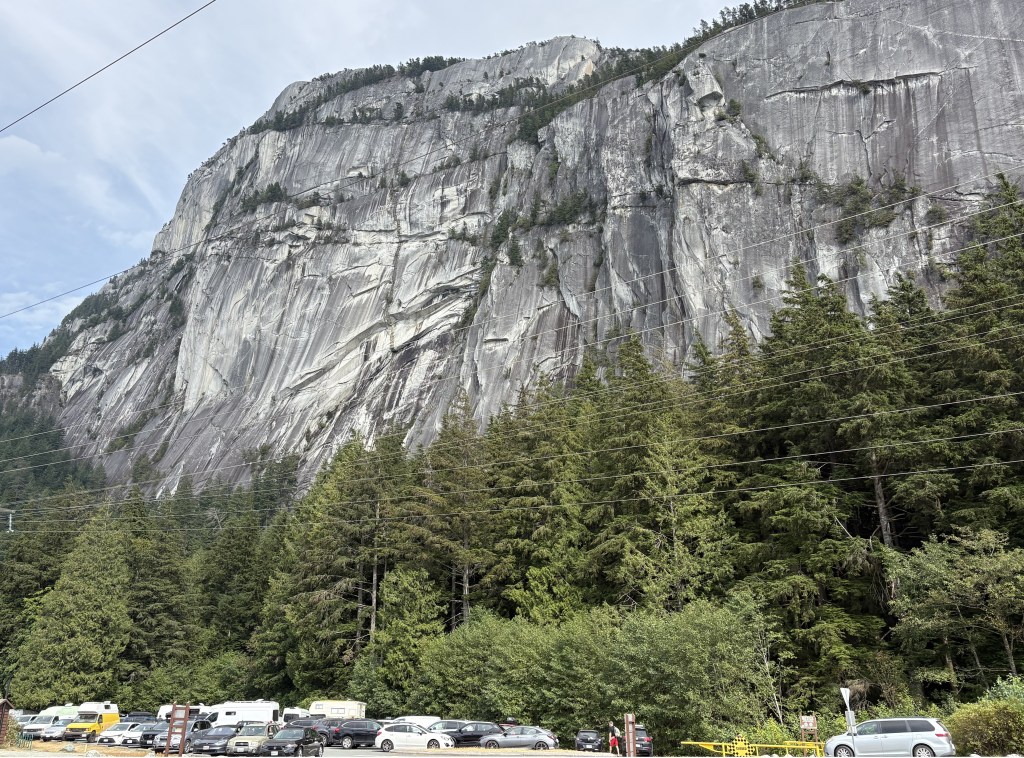
And here is another photo which includes the parking lot below the formation. As you might guess, it is VERY popular with rock climbers, and there is a special parking area right below it for their vehicles, which are loaded with their climbing gear.

I didn’t see any climbers on the face either going by in the morning or later in the day as I was heading back to Maple Ridge, but I could see people resting in the afternoon from having climbed earlier in the day when it was cooler and without the sun beating on the face of the formation.

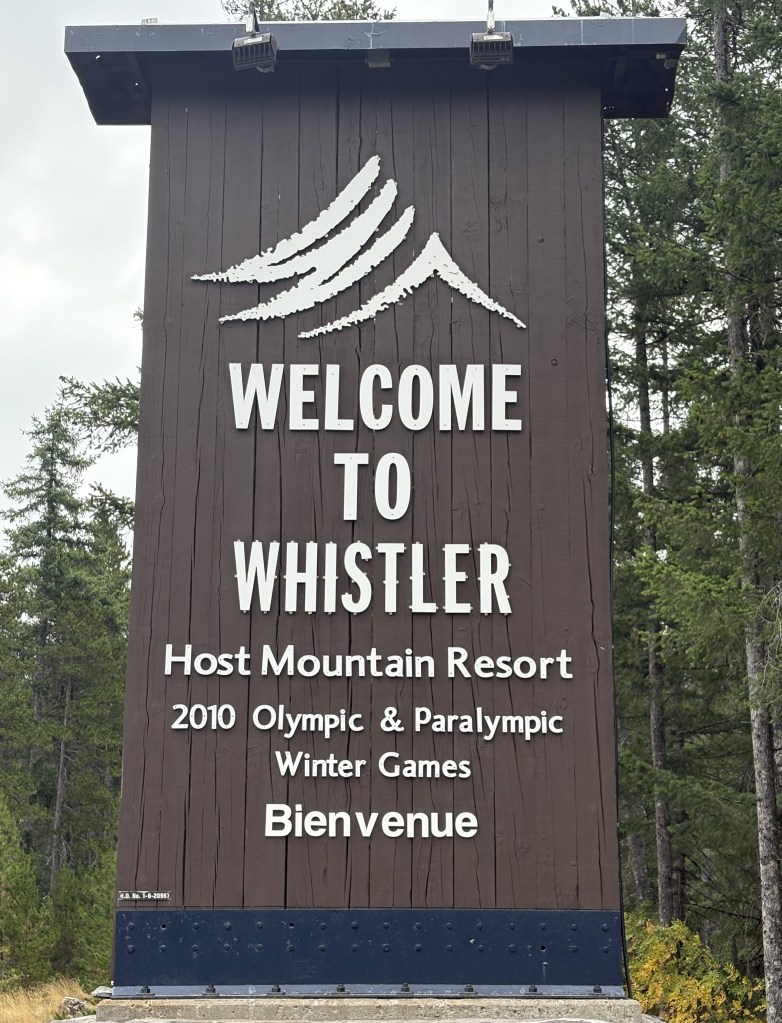
After taking photos here in the morning I continued on up the mountain towards Whistler.

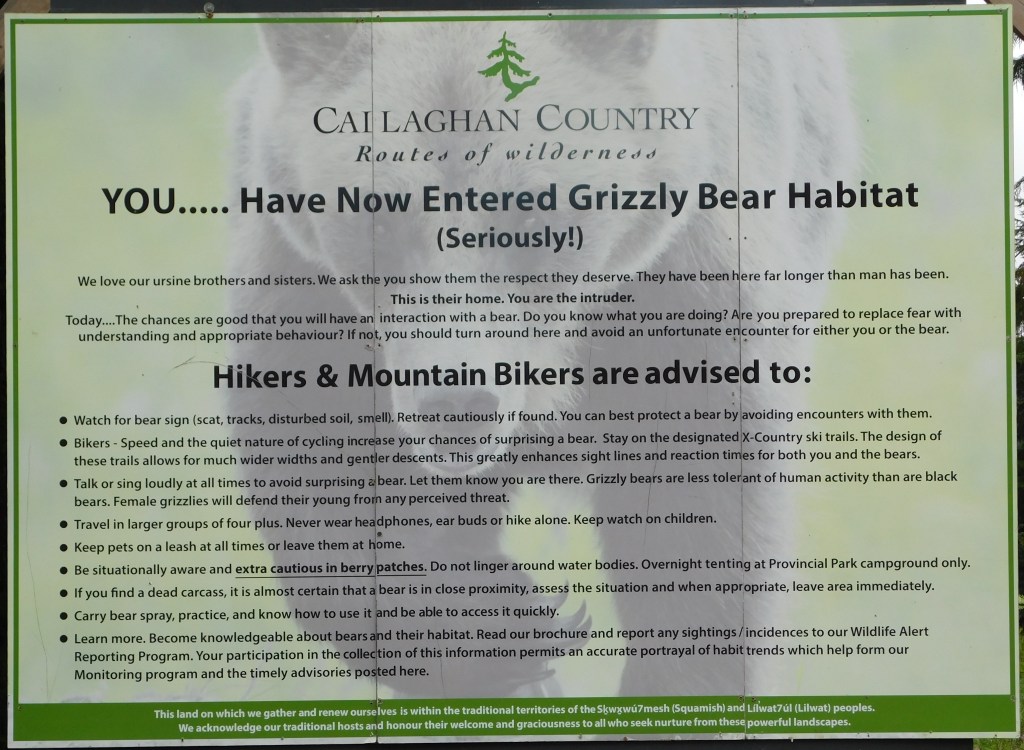
Followed immediately by:

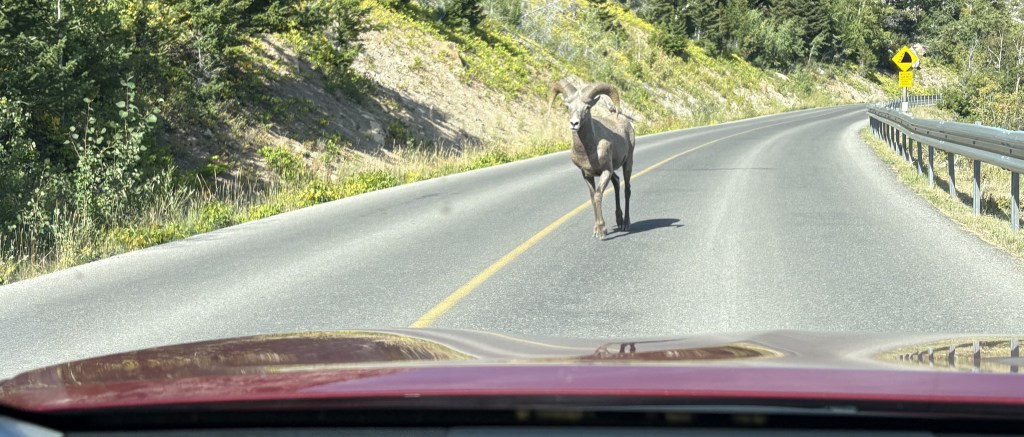
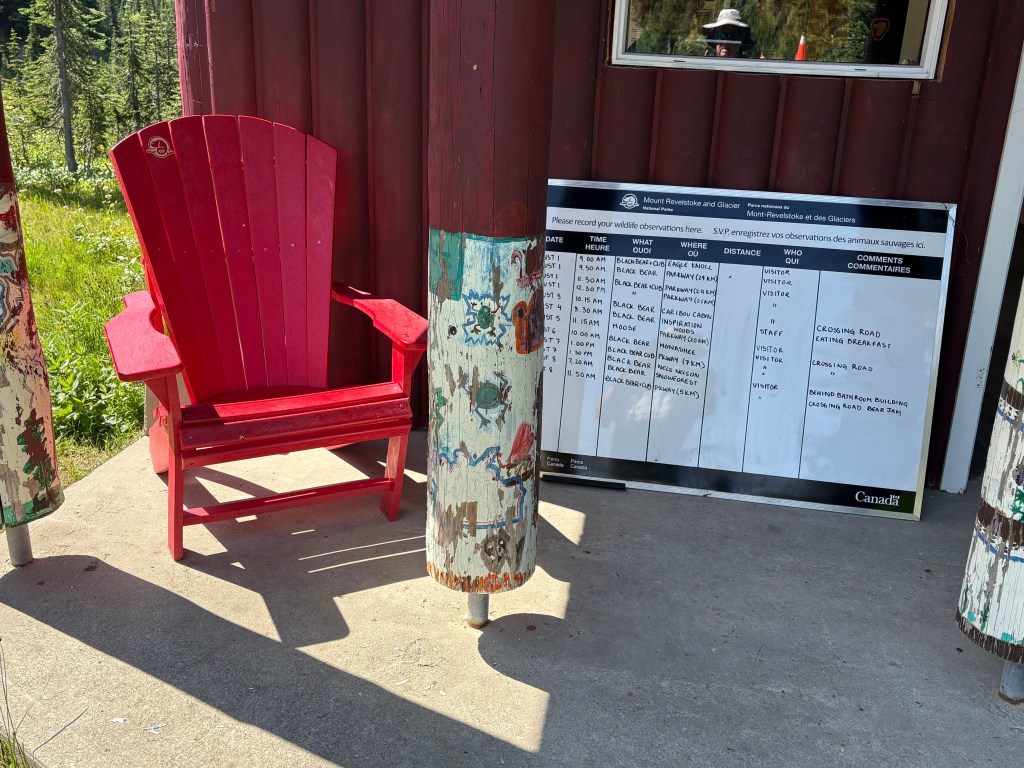
Many of you have perhaps seen a sign like this in your travels (even in the mountains and near the coast in North Carolina) and I think most people assume it only applies to black bears. Well, in places like Yellowstone National Park in the US and most places here in Canada, it also applies to another type of bear.

I was first warned about grizzly bears when I was at the north end of Vancouver Island earlier in my trip. Evidently young males from the mainland swim over to VI in search of new turf and perhaps a place to raise a family. They must have convinced some female grizzlies to tag along, as the grizzly bear population on the island is growing. I didn’t see any, but there were plenty of signs warning about them.

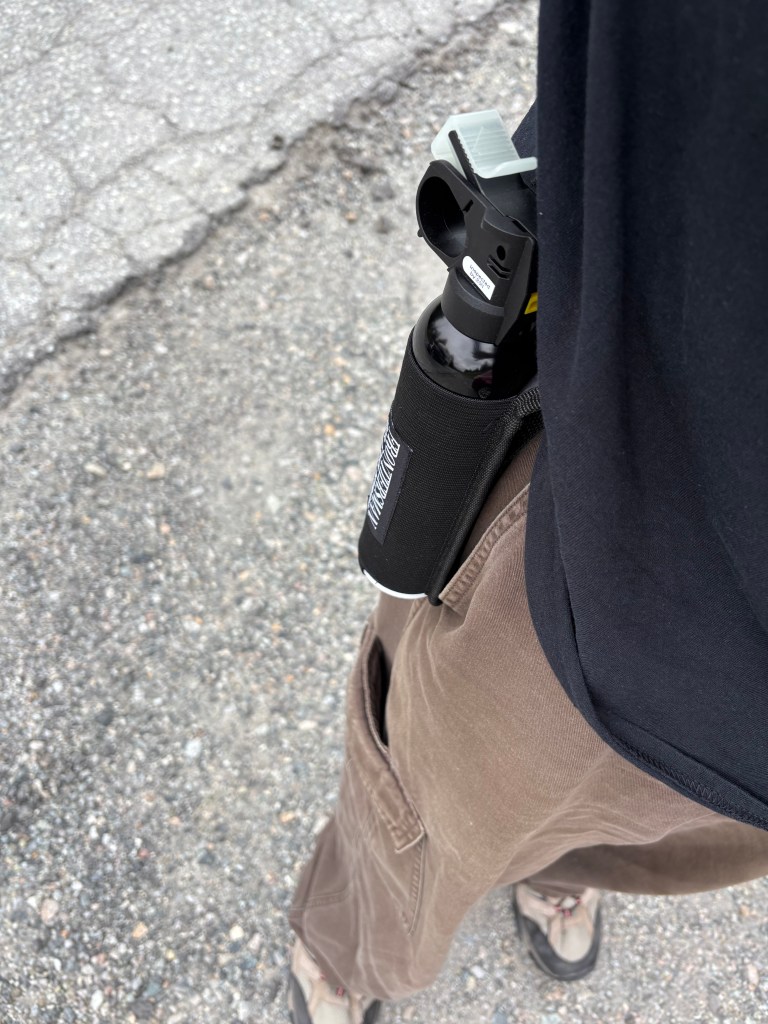
And my nephew, Sam, will be pleased to know that every day that I am near the woods and out of my car I am packing bear spray:

When I visited my brother and sister-in-law, and their son Sam, in Wyoming back in 2021, Sam invited me to the place where he worked, just outside of town. In the hills above the complex where he worked there are petroglyphs on the rock walls. When I got there he asked “where’s your bear spray?” I replied “in my backpack”. He told me “No, when you need bear spray you need it RIGHT NOW”. It comes with a carrying case which you can strap onto your belt. It should be worn at all times when you are in a place which may also be inhabited by bears.
I never needed the can I bought in Wyoming and while it may still work, the expiration date has passed. I still have it but I bought two new cans for this trip and wear one of them at all times when I am out of my car.

Elk Falls Suspension Bridge

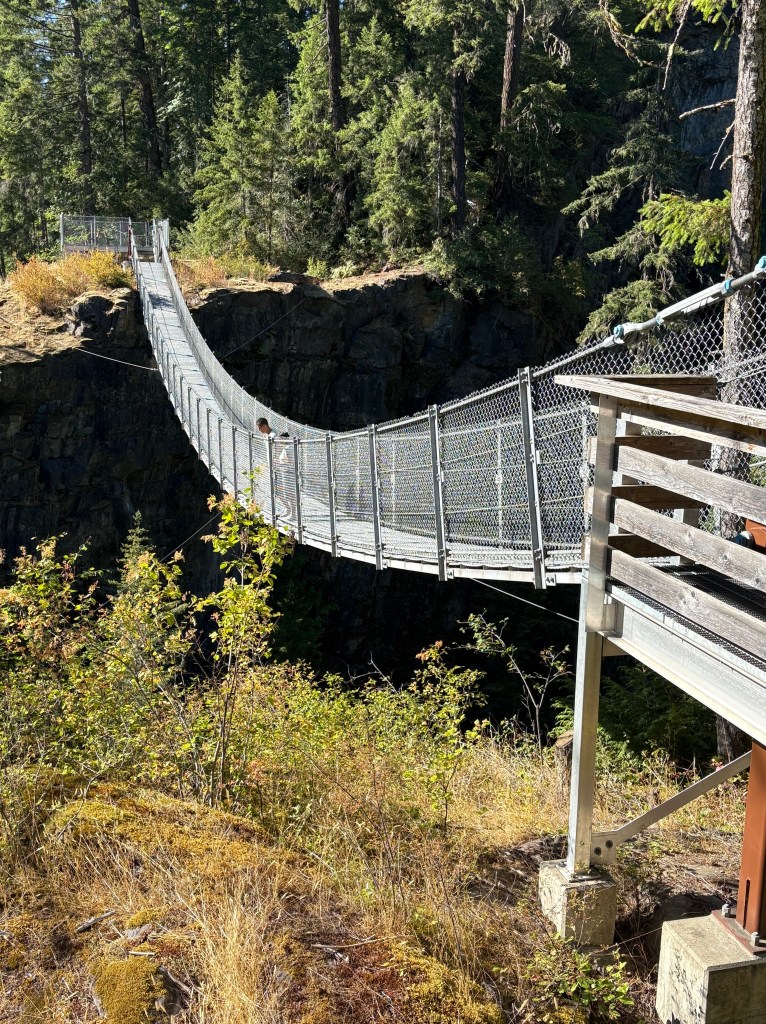
After spending a good, long while out on Discovery Pier, enjoying a beautiful summer afternoon after a busy driving day, I headed inland a few kilometers to check out this new bridge, built by BC Hydro, to allow visitors to walk down and get an up-close look at the powerful waterfall along the Elk River.

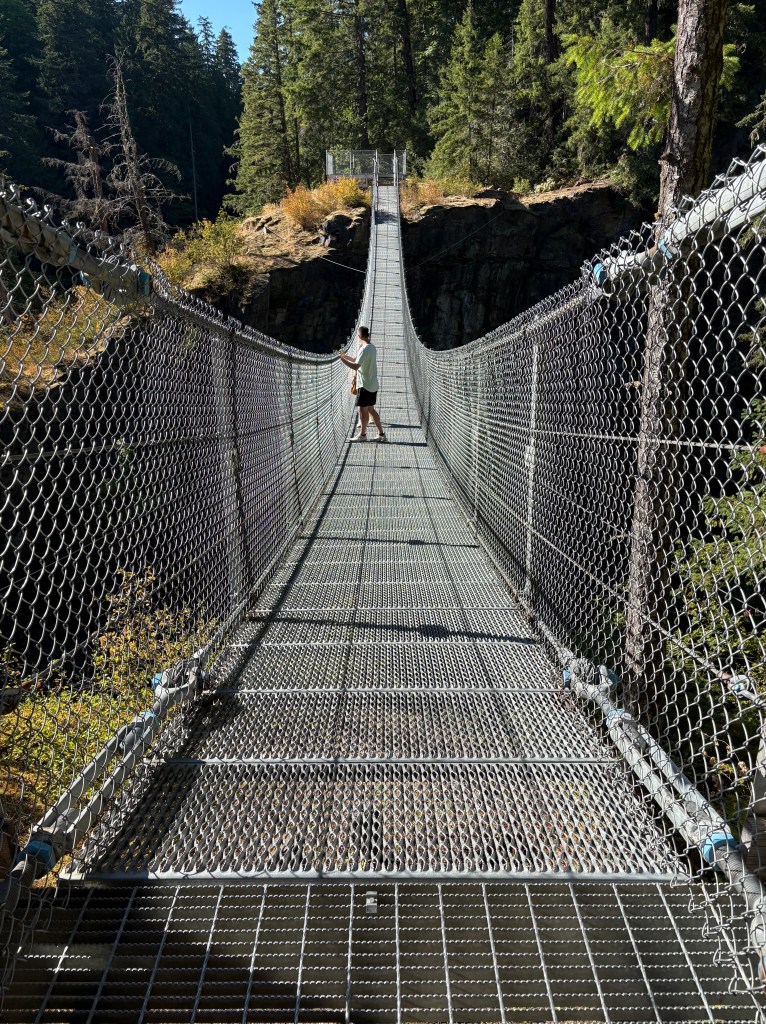
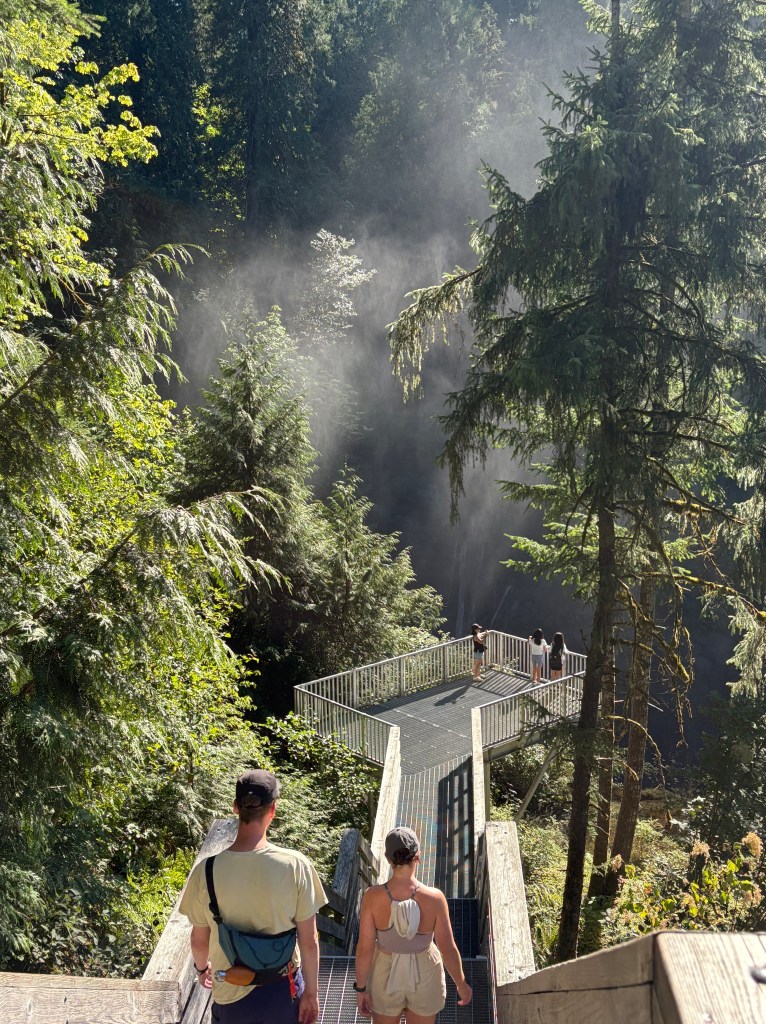
After following the well-marked path through the woods leading down to the bridge from the parking lot (the information center had closed for the day) I descended a long set of sturdy, metal stairs to arrive at the bridge.

From the platform on the other side of the bridge, this was the view looking left towards the river taking water to the main fall.

I then crossed back over the bridge and went down yet another set of sturdy, metal stairs to a viewing platform very close to the main fall. You can see the mist rising from the water after it dropped to the rocks below.

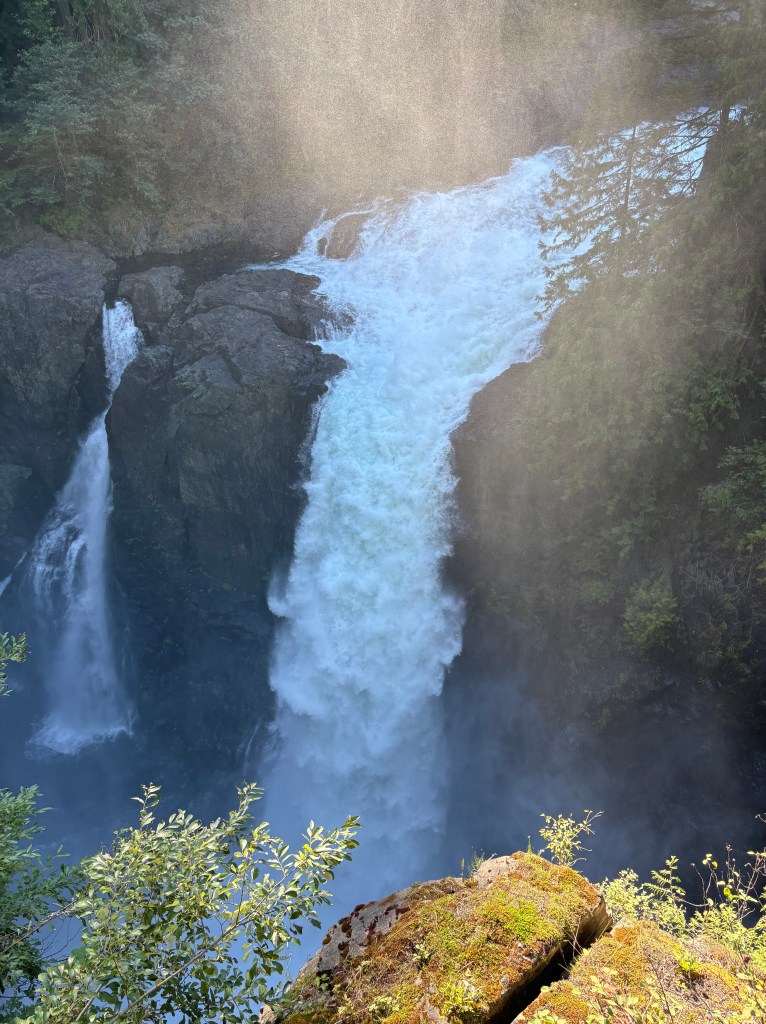
And the “natural” part of this attraction – the main fall itself.

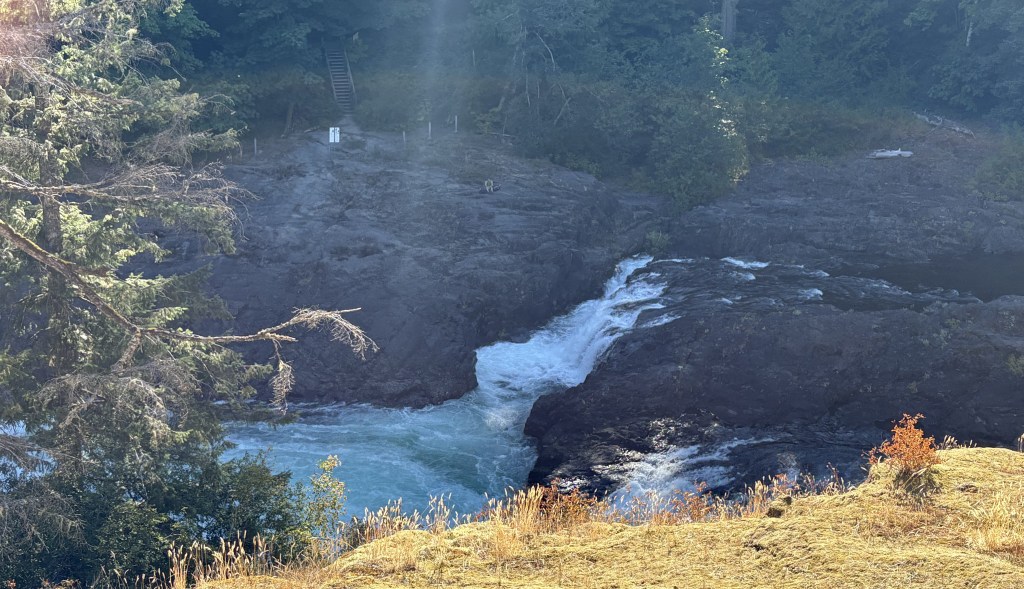
Once the water has fallen it travels on to its ultimate destination, as seen from the extension bridge:

When I walked back up to the parking lot I took this “photo of a photo” which was on an information board explaining the bridge project, and the ongoing construction of yet another dam to back-up the water supply to Campbell River. It shows everything I just described from high above.

(Photo credit: BC Hydro)

My Airbnb host in Campbell River explained that BC Hydro ran a new set of pipes VERY far underground to channel water to the town (and others, I’m sure). This whole area sits atop a major fault line which runs up and down the west coast and their house, built 8 years ago, had to meet strict earthquake-proof standards. The fear is that if an earthquake occurs, the current water supply may get cut off.

Victoria to Duncan, BC

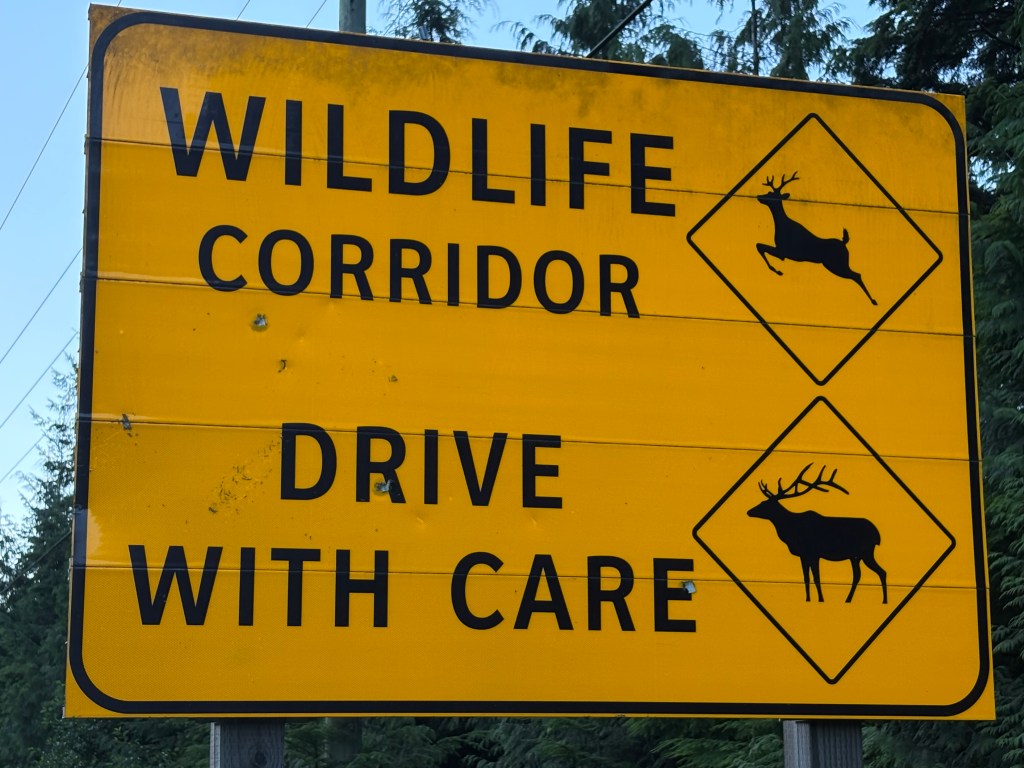
After two nights in Victoria it was time to head northwest, up the eastern (inland) side of Vancouver Island. Shortly after leaving the city I immediately I started to see huge highway signs warning of Elk. Not deer. ELK.

Oh, they have deer too, mind you…

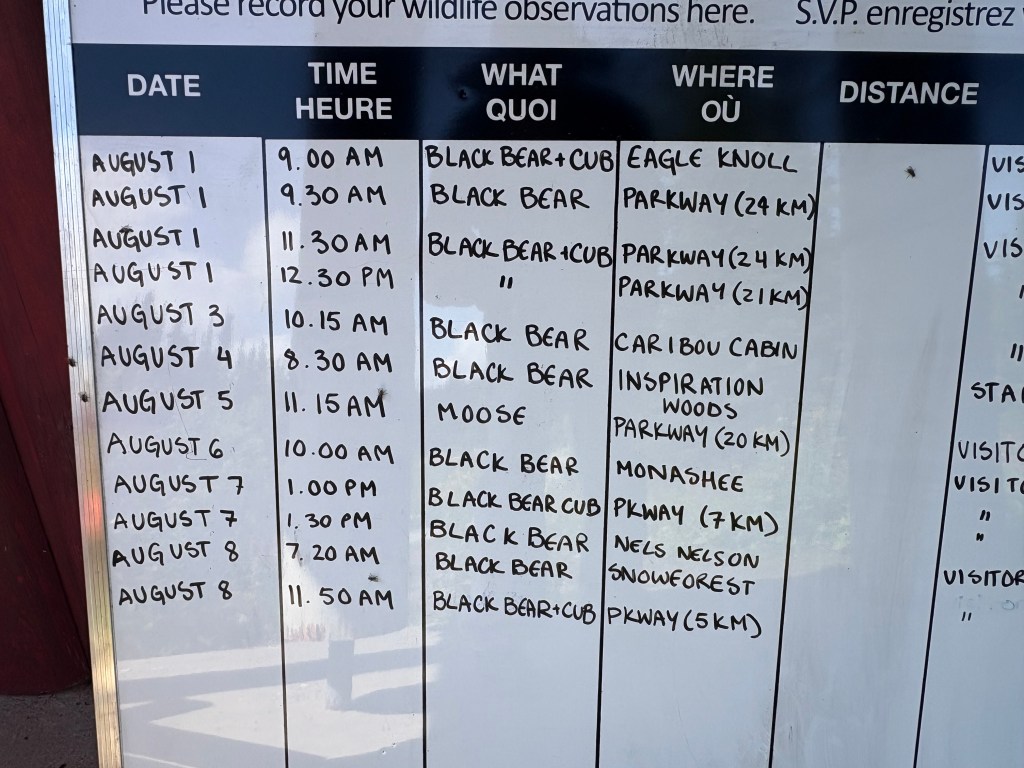
… but Elk are much larger and pose a greater risk to motorists. Oh, and they bears up here too. Black bears AND grizzly bears. I brought two cans of bear spray for this trip. A small black bear ran across the road well ahead of me the other day at about 10 in the morning. One must always be vigilant when driving.

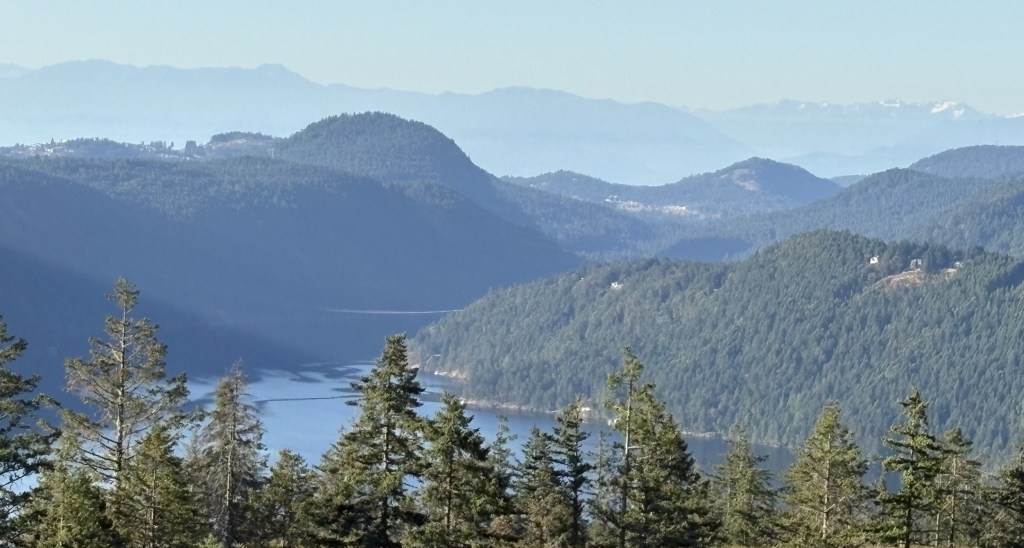
Soon after leaving town I stopped as a rest area near Malahat. I didn’t need to rest, but wanted to take in the scenic view.

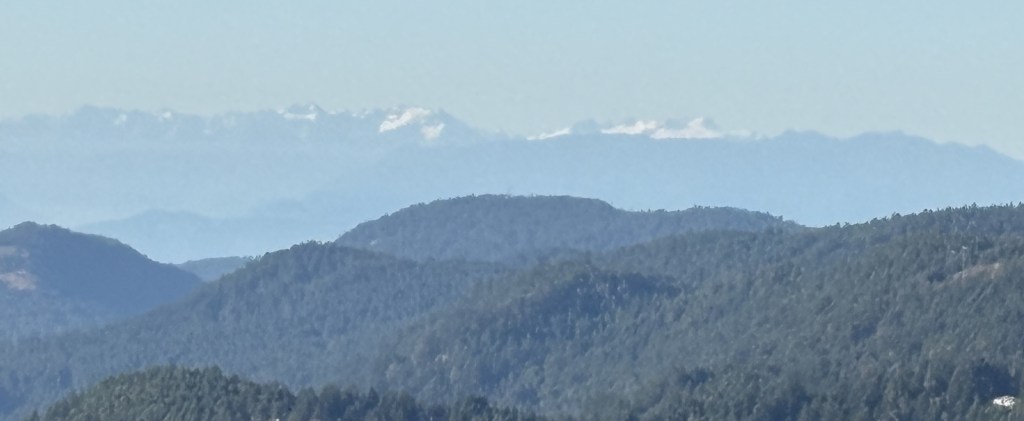
And for those of you with eagle eyes, yes, that is snow on the distant mountains in the upper right corner of the photo.

When I texted that photo to friends and family members I said that it was the mountains in the Olympic National Park in northwest Washington State. That is not correct. It is actually Mount Baker, and other mountains, still in northwest Washington but further inland, up near the Canadian land border, looking east from this vantage point, not south.

Another lake I could see from another scenic overlook just a little ways up the road:

I got back on the highway and soon arrived in the little town of Duncan. Duncan is known for it’s totem poles. There were lots of them scattered around town but the visitor center there wasn’t open yet and I needed a map to find them all. It was also early in the morning and the sun angle was not conducive to taking great photos.

Here are a few that I was able to find:

And I spotted this big guy across an intersection, in front a round office building.

It is called Cedar Man, and is the widest totem pole in the world, measuring 5 feet, eleven inches across. The carver is a man whose “English name” is Richard Hunt. He is a member of the Kwagu’l indigenous tribe and his given name is actually Gwe-la-y-gwe-la-gya-les. I got that information from the small sign at the base of the pole, which is present at each pole in town.

Indigenous words are all presented in a very elaborate font which I can’t replicate here, but when I start posting more photos of totem poles and their carvers after I have researched them in more detail I will show you photographic evidence of what I’m talking about.

A little further north of Duncan I turned off to head over to Mount Prevost, which promised fantastic views of the area.

I left the house in the photo to give viewers some reference of just how tall the mountain is (2,585 feet). I drove up the road towards the parking area but the road was closed before I got to it and I could tell it was still quite a climb to the top. I am not a hiker so I turned around and left. There is quite a view, though, based on photos I found online.

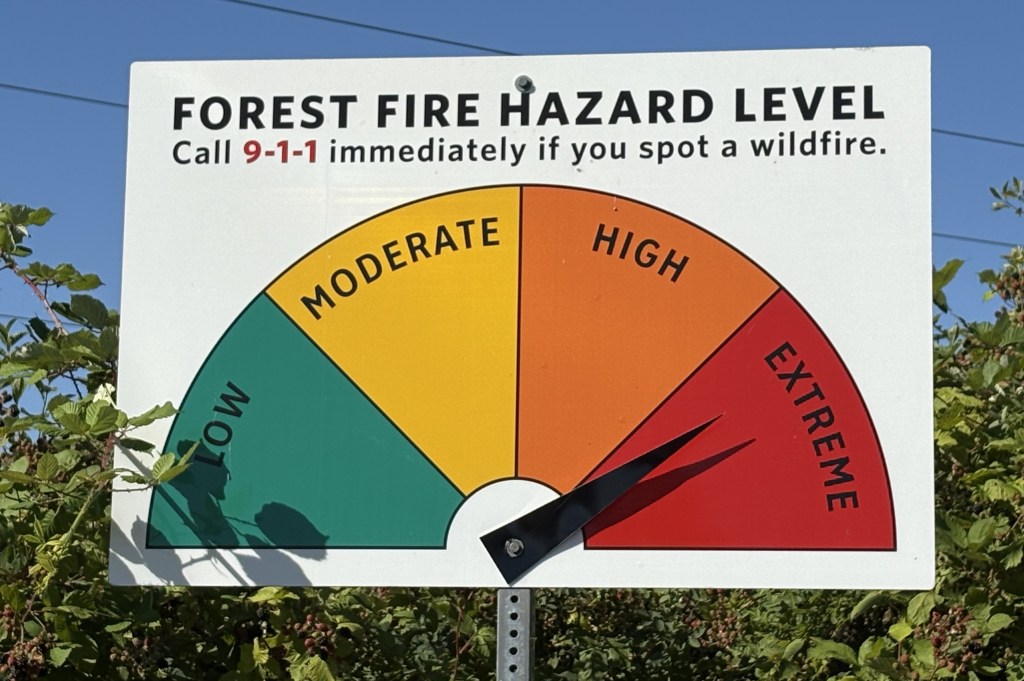
As I was driving back to the main highway I saw this sign which shows the current fire level risk in Vancouver Island.


I read this morning that the fires in Manitoba province are getting worse and even more have been detected in just the last week. They have already experienced three times the average amount of land loss to wildfires, and tens of thousands of people have been evacuated, mostly by air (not many roads up north). Think about that. Tens of thousands. There are still large, out of control fires in northern Saskatchewan province, too. All of them are producing dangerous smoke and there are health warnings in many areas well south of the actual fires.

This area has been under a huge high pressure dome the entire week I’ve been here. That’s good for me, nice clear days and pleasant temperatures, but bad for residents of those two provinces because high pressure keeps the smoke close to the ground. The weather forecast indicates that that situation is fixin’ to change here in a few days and hopefully that will help clear some of the smoke out.

I am going to resume booking my Airbnb’s along my original route and will make a bee line for Saskatchewan province and get that portion of the trip done so I can focus on Alberta and British Columbia. There are always new fires popping up and the situation can still change on short notice. Canada has excellent resources for monitoring all of the various fires so I will be well informed as to their status.