These photos illustrate how modern irrigation techniques are employed on many farms throughout the central and western US. What prompted me to stop driving and start taking photos was this tree in someone’s yard.

As you can see, the lawn in front of the house (lower left of photo) was a gorgeous, thick green mat which you often see in tv ads for fertilizer. Beyond the tree you can see fields with two different types of crops planted. Just to the right of the trunk of the tree I could hear water gurgling and next you will see what prompted me to walk over and check it out.
To the right of the driveway as I looked west from the road, was this long cascade of water flowing down from a slightly higher elevation.
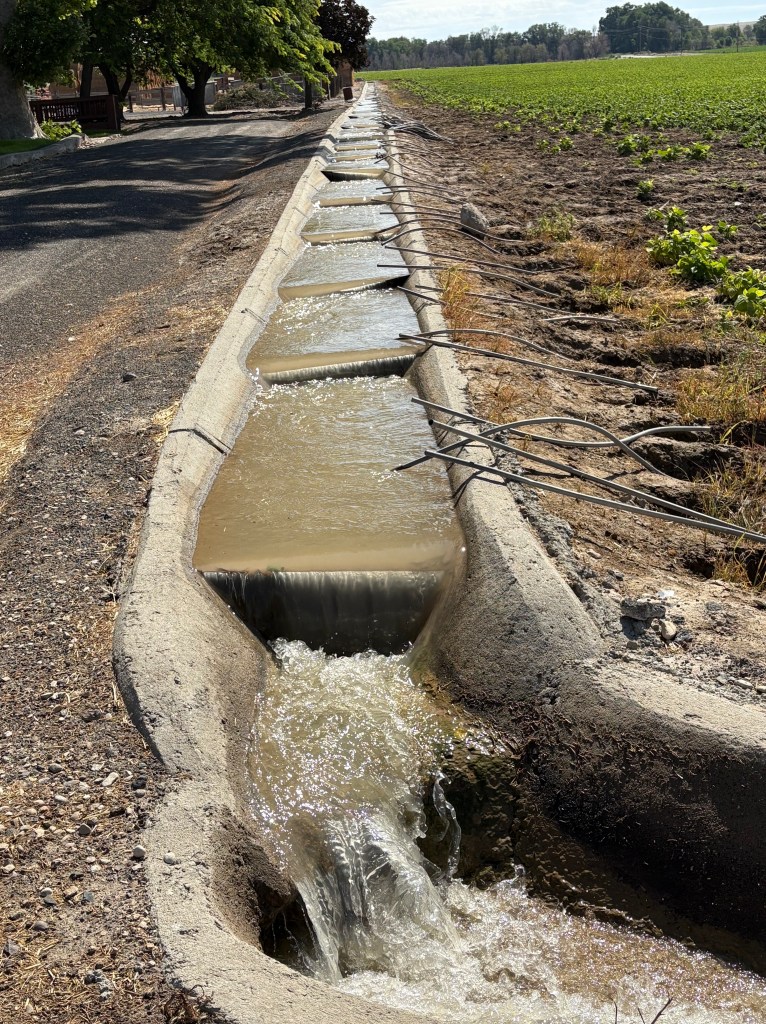
It then went down a drain next to the road – it’s destination not obvious at the time, but not a storm sewer I assure you. Water is a precious commodity and farmers use utilize every drop of it they can get access to.
Further up the road I saw what the next step in the process is. At strategic locations, a series of large pumps are located underground to bring the water coming in from elsewhere back up to the surface where it can continue to flow downward, thanks to gravity and water always seeking its lowest point. The surface of the ground raises and lowers as one drives on the roads and at some point the water needs to be boosted back up to the surface to continue its downwards trek.
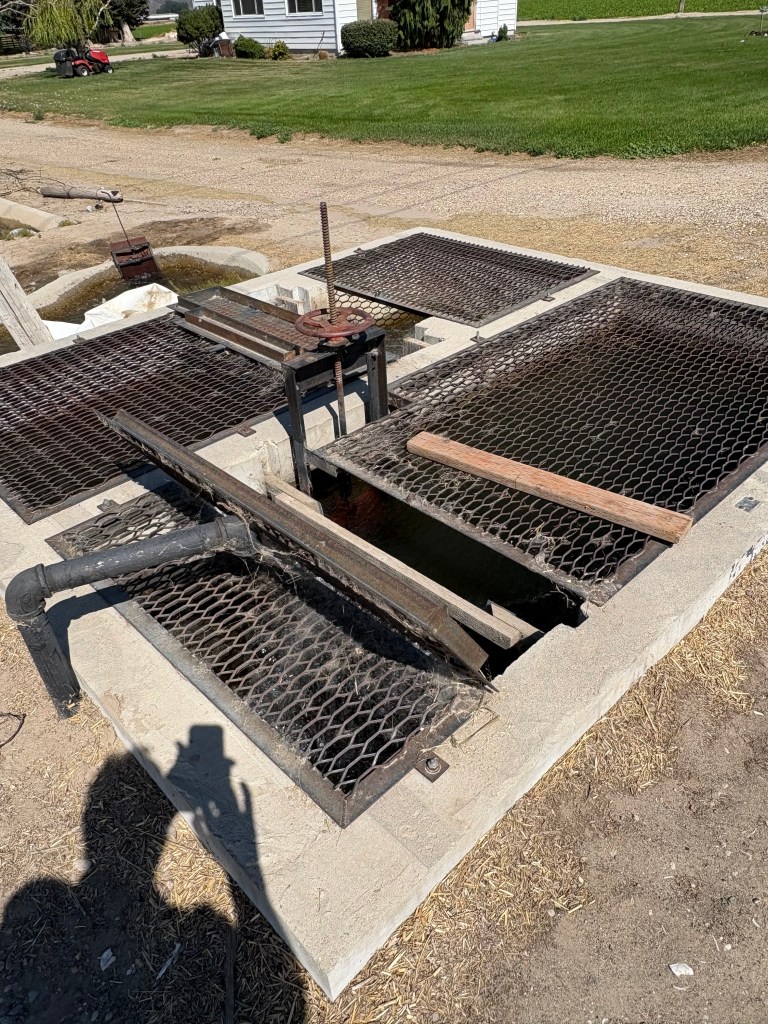
Looking away from the road, after having been pumped up from below, it flows downward, off in the distance:
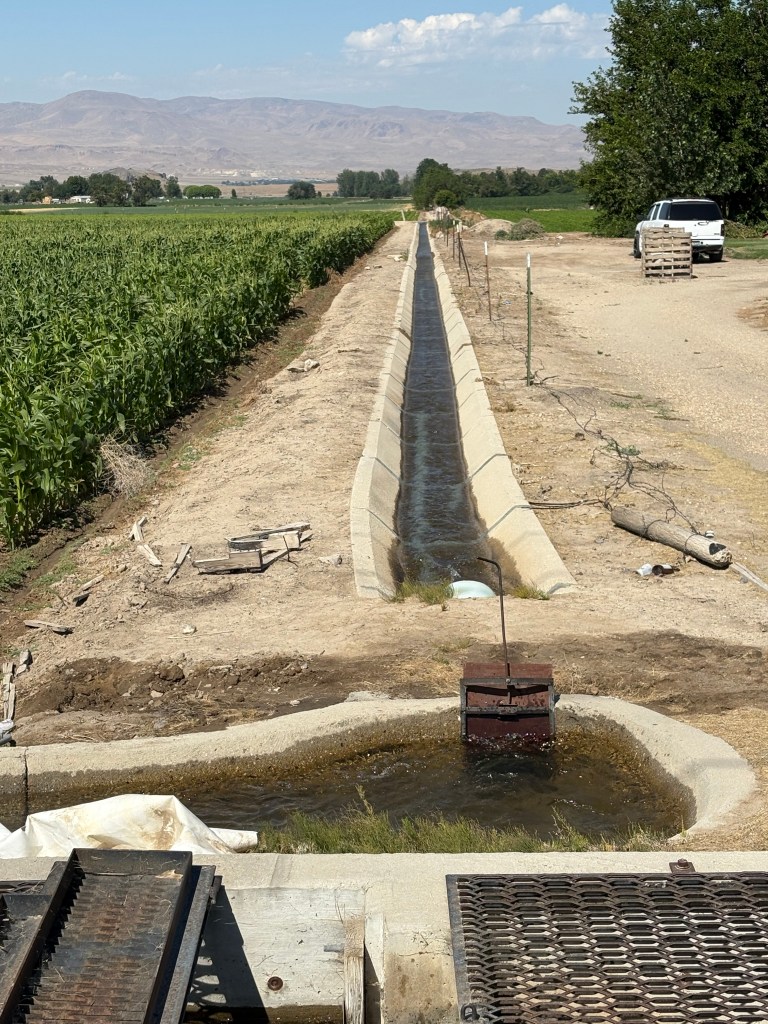
And looking left, down the road I had just driven up after taking photos of the lush lawn and beautiful tree further down the hill.

And if not from rain, how does the water get into the fields in the first place? It is pumped up through a series of pipes directly to a large sprinkler system (not shown) to move through the fields and spray water from above. It may also be siphoned off the flowing water to go through a series of pipes to be applied directly to the roots of the plants.

Actually, in the photo above you can see a thin white metal wheel (like an oversized bicycle tire rim) which is repeated down the road and rolls slowly through the field to the left, applying water to the roots of the plants. There are also much larger contraptions which pivot from a base to spray water from much higher up (for corn and such). I will take photos the next time I see some and add it to this post later.
I have also seen large holding tanks or collection ponds where water, having reached its lowest useful point, is stored to be pumped out into tanker trucks to be employed elsewhere.
Nothing wasted!
 johnboystravelblog