Tok to Anchorage – Part 2 of 4

September 14, 2025

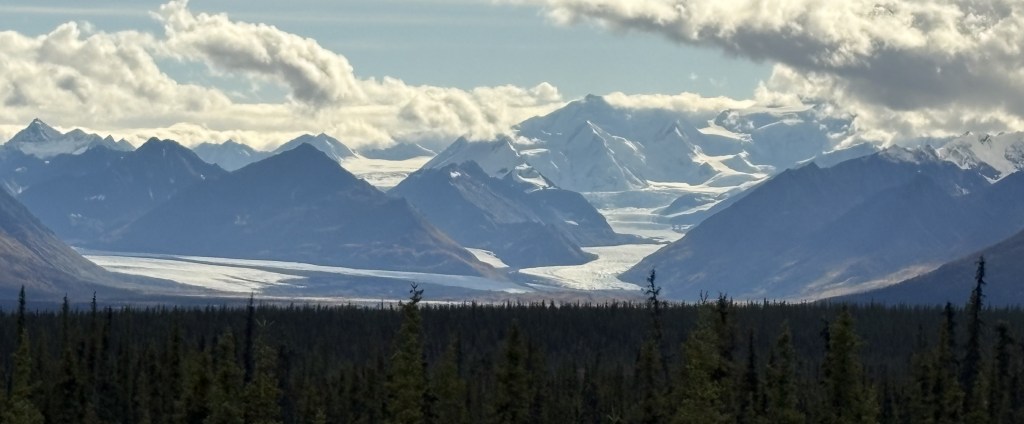
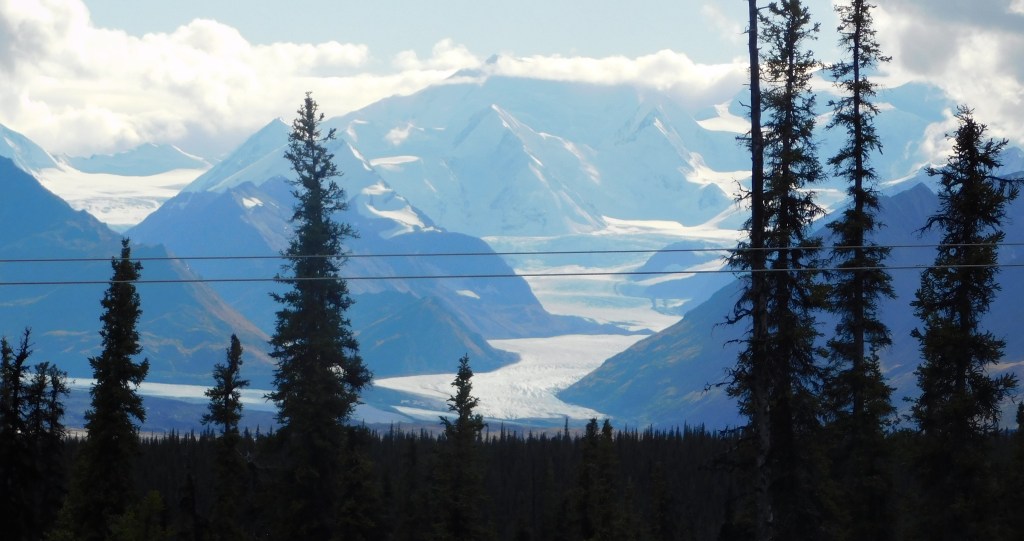
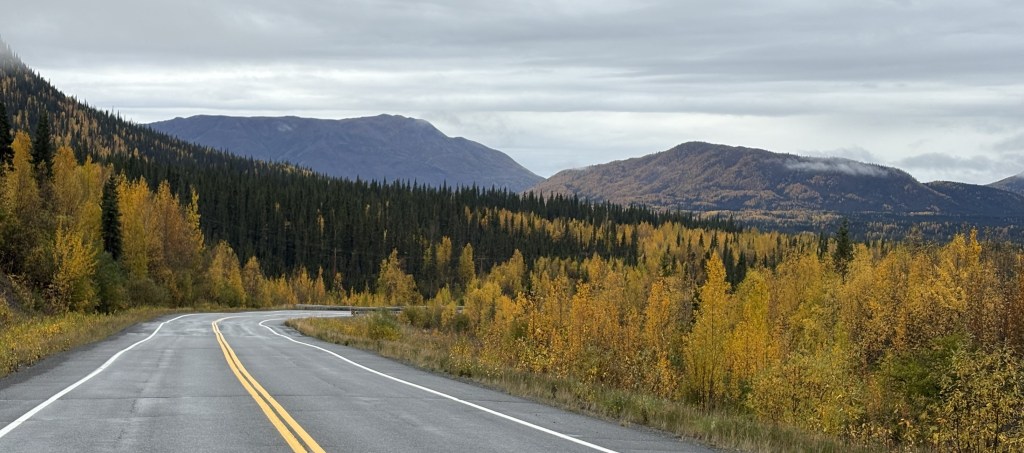
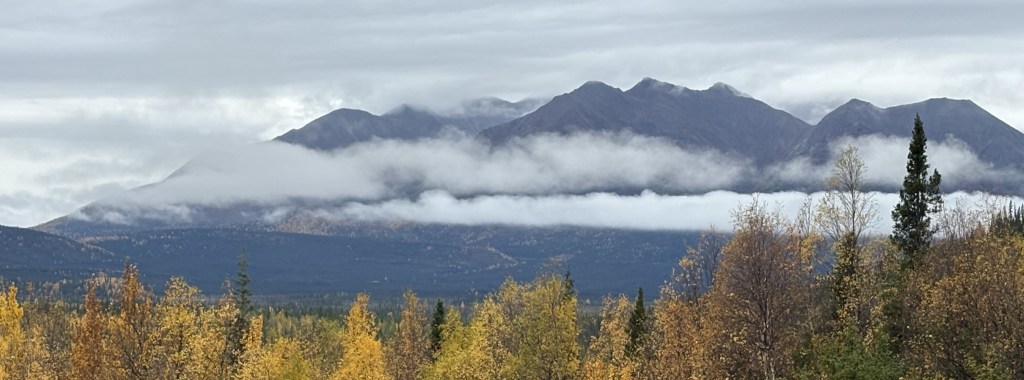
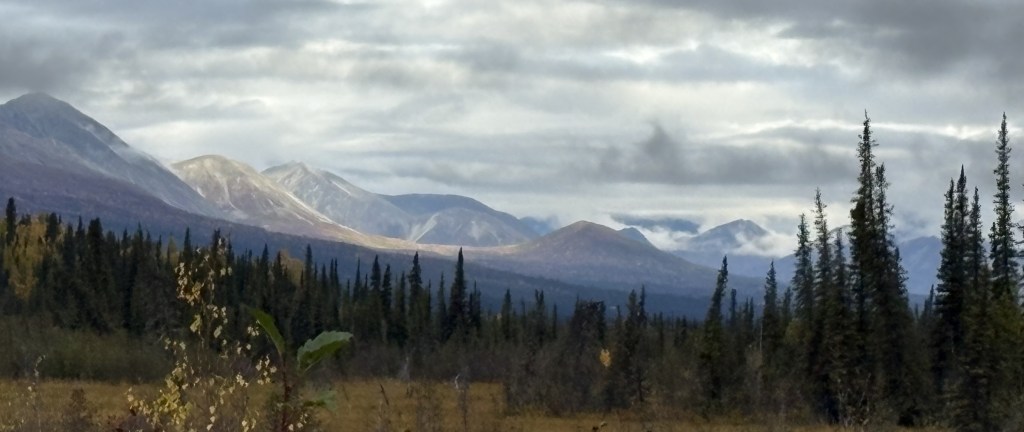
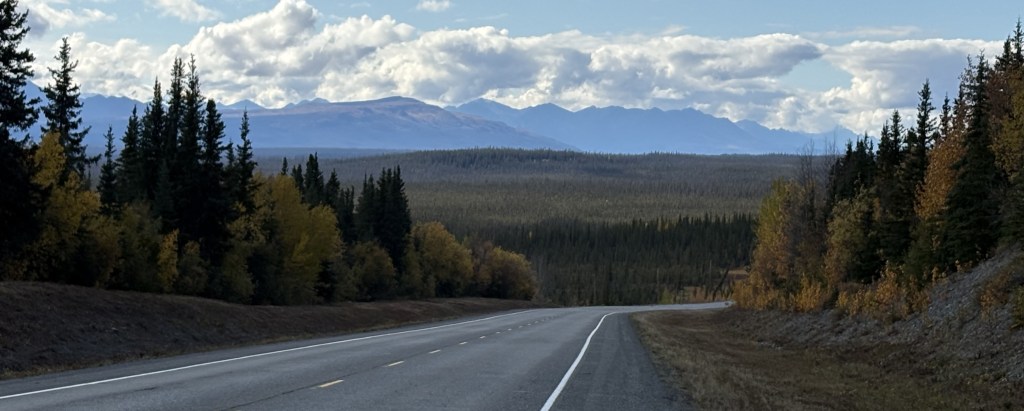
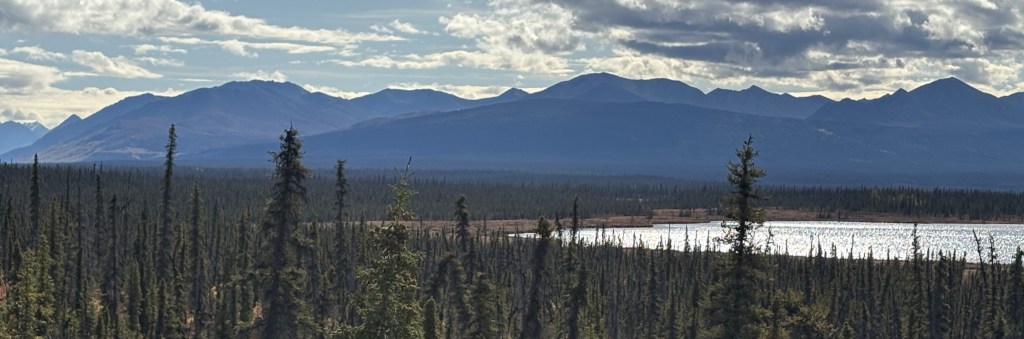
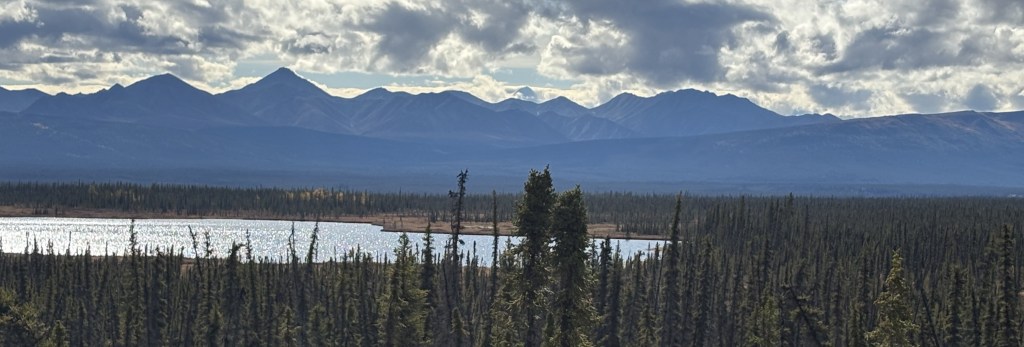
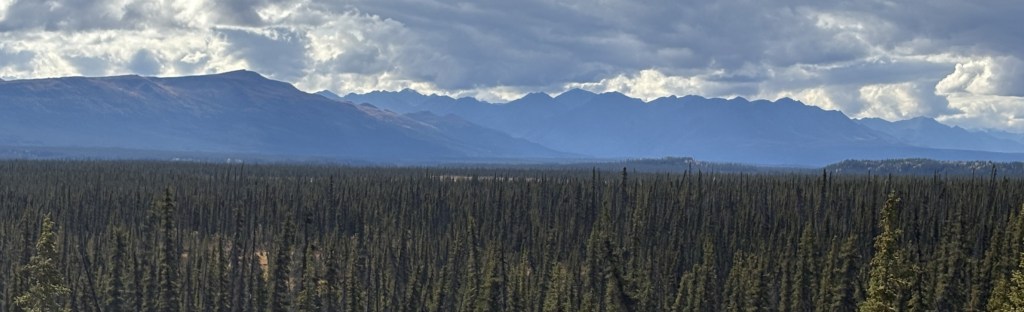
As I travel between Tok upstate and Anchorage near the water, the road would take me on a long open stretch between Glennallen and Palmer. A little short of halfway the road rises to an elevation of about 3,000′ (Tok and Glennallen are at around 1,500′). There was a constant string of mountains to the south and I started to see snow on some of them, and the telltale cloud cover which seems to occur if there is snow or a glacier at high elevation.
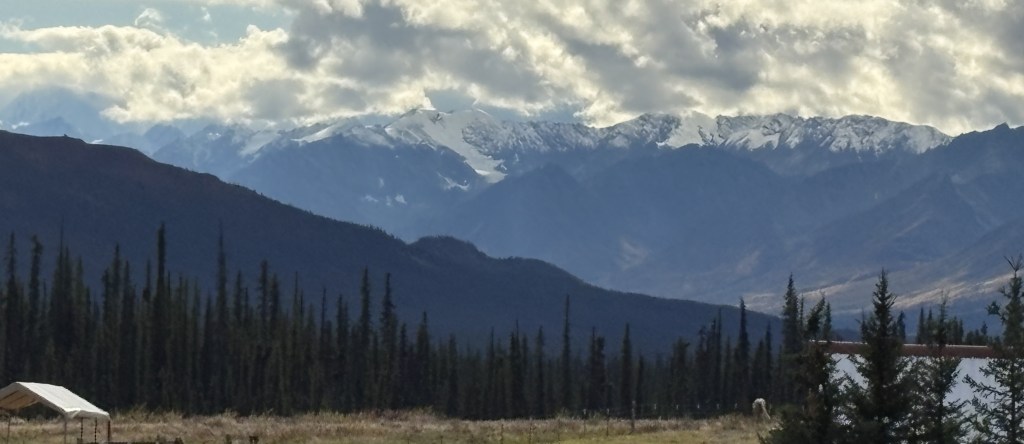
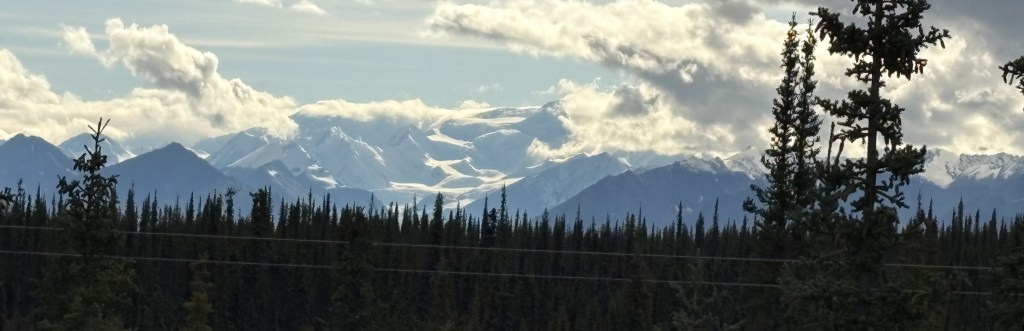
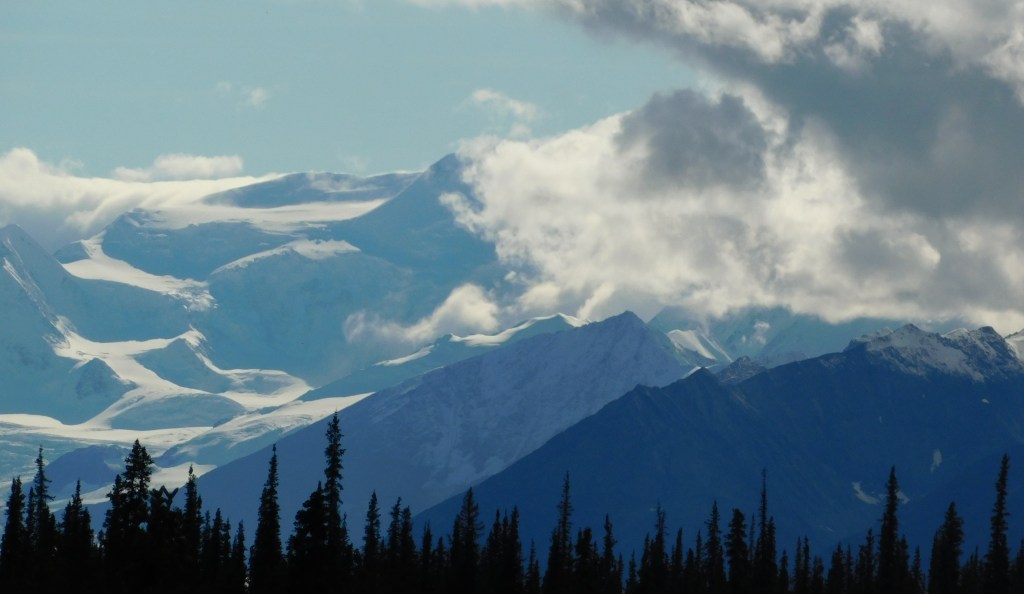
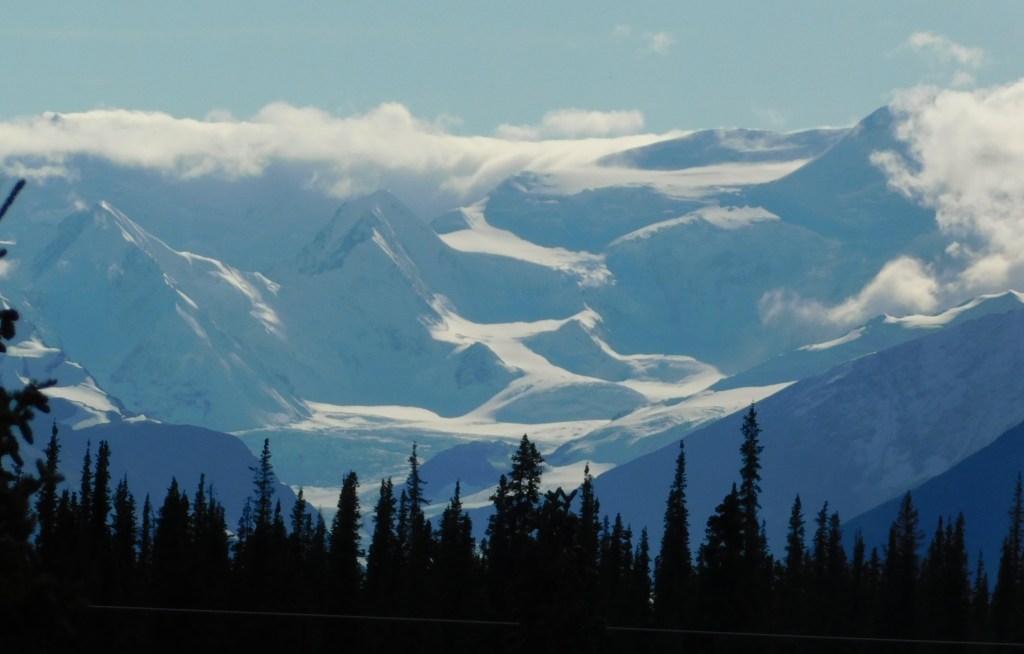
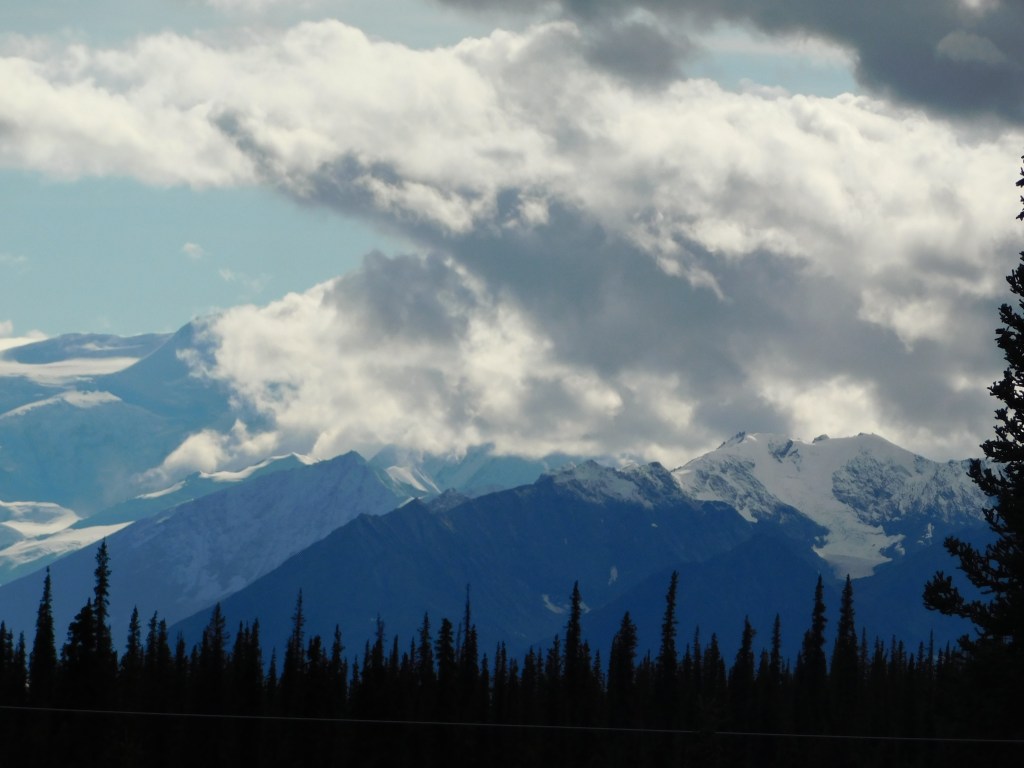
Some of the mountains shown above have a solid coating of snow. And before I had a chance to stop and get to a place to take those photos, I could tell that the clouds on the right hand side were obscuring an even taller peak covered in snow. I believe that tallest mountain is either Mount Witherspoon (12,012 feet elevation) or Mount Marcus Baker (13,176 feet elevation). And each of the peaks in the photo, snow covered or not, are separate mountains in that “small” area. When I got to Anchorage I asked if there was a map showing the locations of all the glaciers along the coast and was shocked to learn that there are over 100,000 glaciers in Alaska and there are no maps to make identification easy.

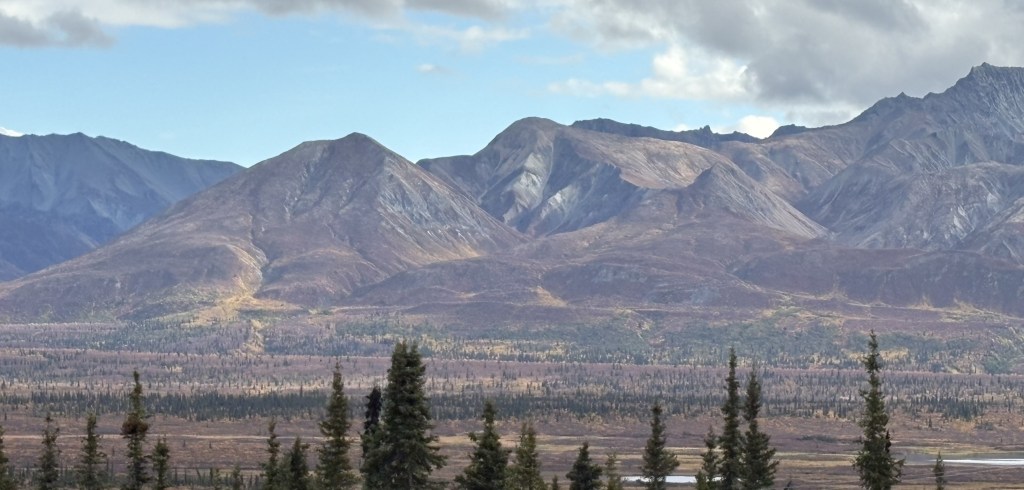
Here are a few shots I took with the digital camera and a zoom lens.
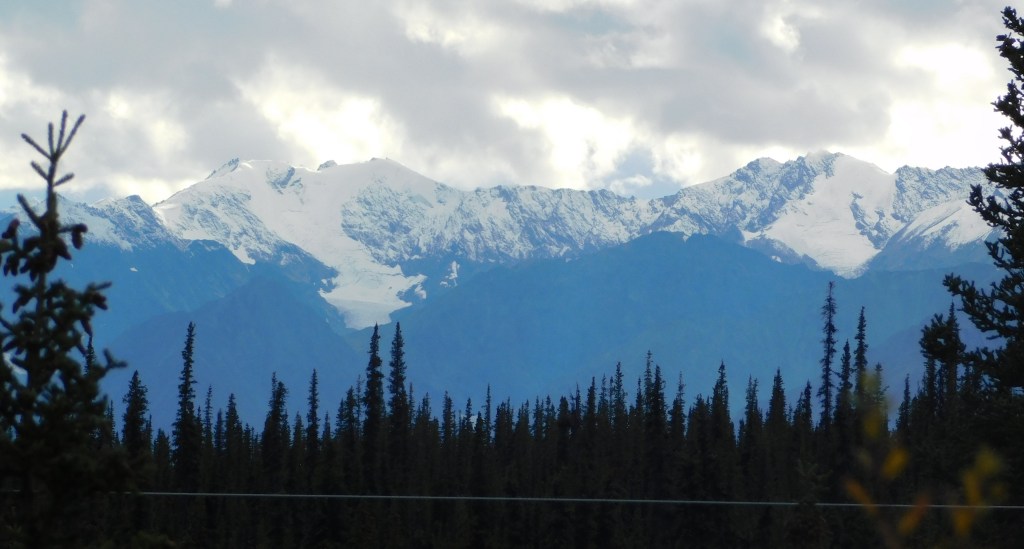

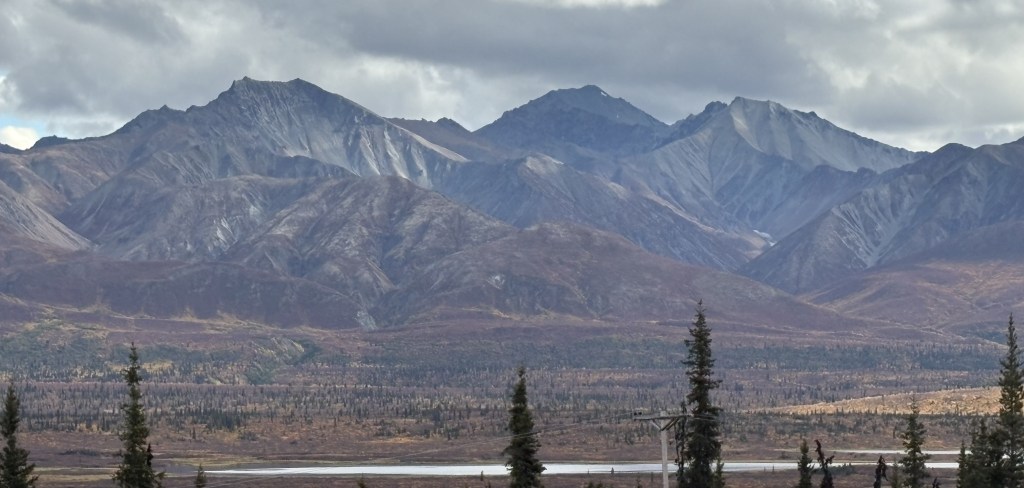
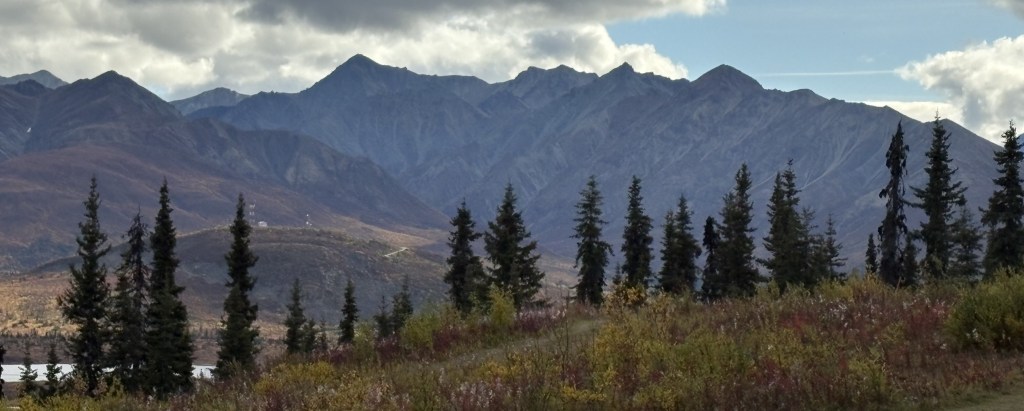
And back to my smartphone for the rest of this group as I continue driving towards Anchorage.
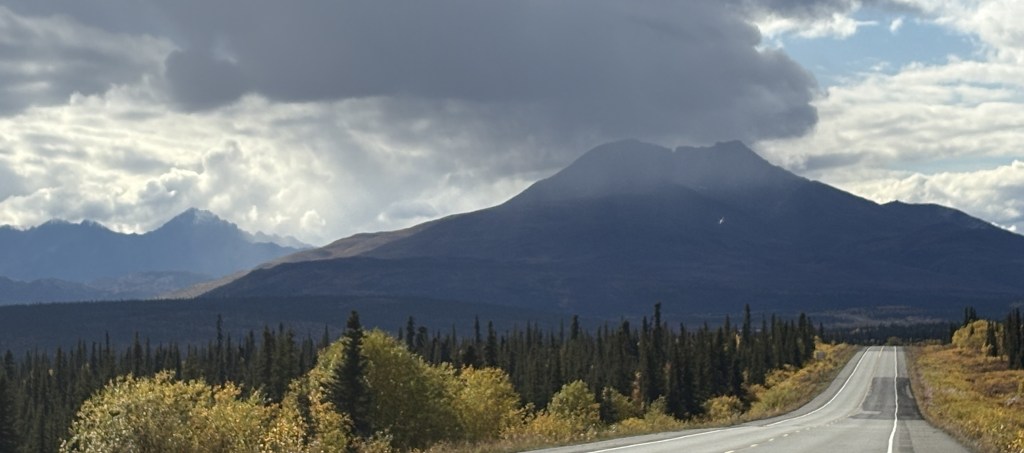
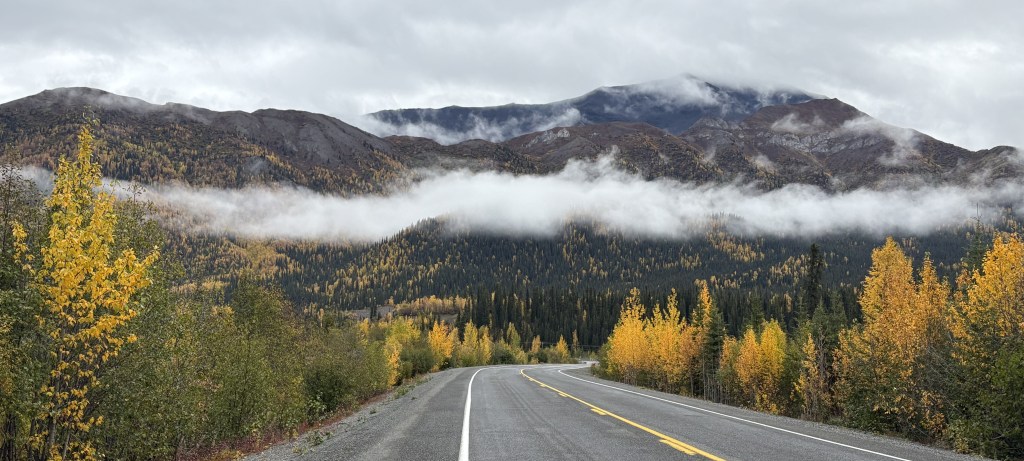
That mountain ahead of me had rain falling from the clouds above it. The next ones are what I call the “brown mountains” which appeared to be shorter and without snow on them.
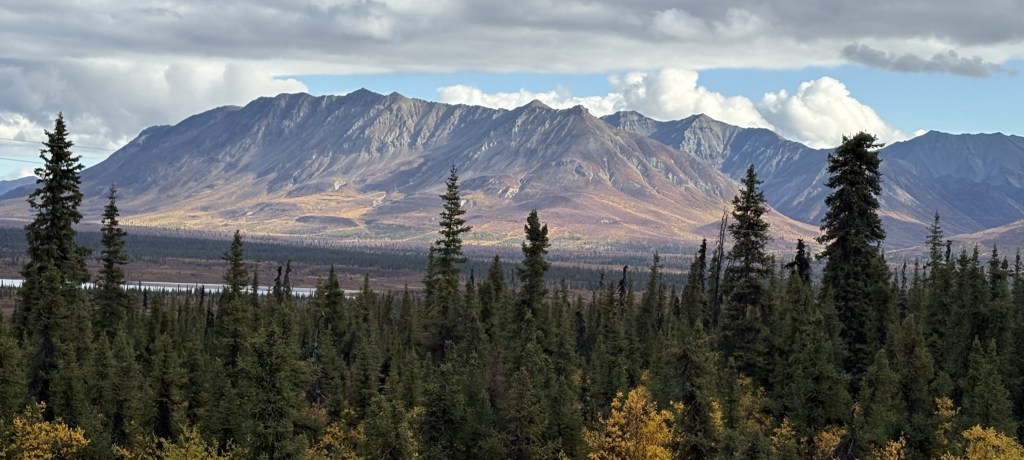
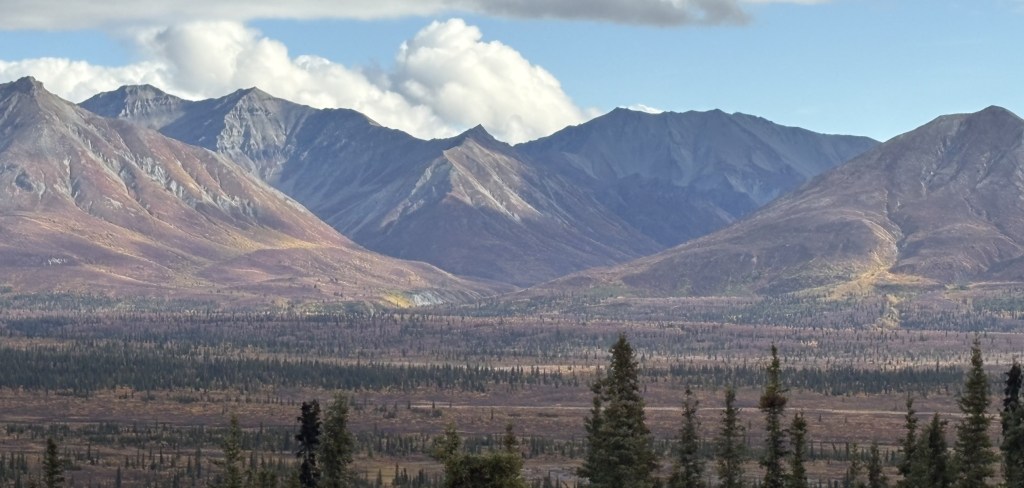
With clouds behind them, that group appeared to be closer to the highway I was on, and were perhaps obscuring the view of other mountains closer to the coast.

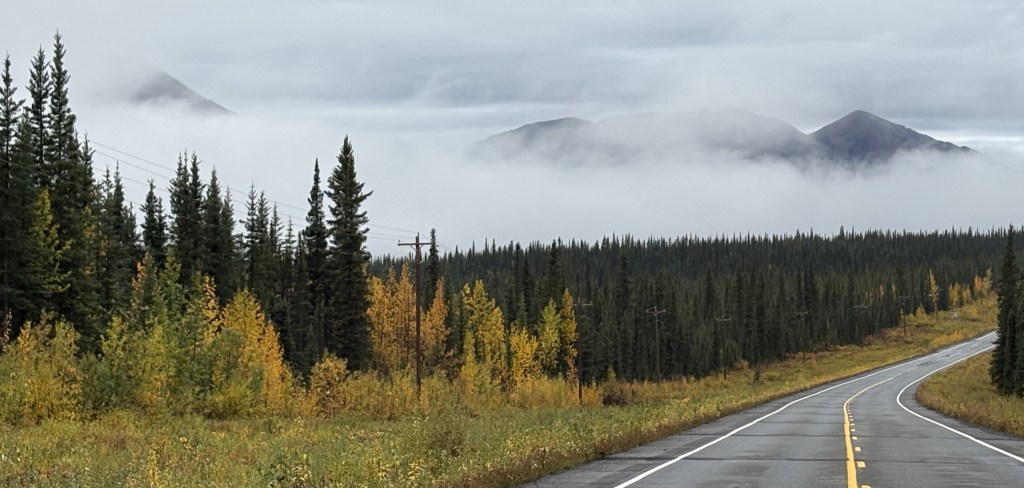
Once I got past Eureka Roadhouse the mountains would start to play hide and seek (in Part 3).
Tok to Anchorage – Part 1 of 4

September 14, 2025

My first full day in Alaska would involve a 318 mile drive on Alaska State Hwy 1, which Google Maps said would take 5 1/2 hours without stops (although I made many stops to take photos). My route would take me southwest to Glennallen, and then west-southwest to Anchorage.

Before I left town I drove from my Airbnb back to the closest gas station to fill my tank. When I went inside to get a cup of coffee I embarrassed myself by trying to pay with a Canadian 5 dollar bill. The clerk asked “Do you have any American money?” and I sheepishly replied “Oh yeah, I’m back in the Unted States now…”. The young man behind me offered to pay for my coffee and I thanked him profusely. I also thanked him for his service, for when he learned I was from North Carolina he informed me he had done some military training in my home state.

It had rained overnight and there were some low clouds when I started out but they soon lifted and it was a nice day to drive. Traffic was light and this stretch of road was in very good shape.

Most of the mountains were on my left, but the photo below was off to the right.

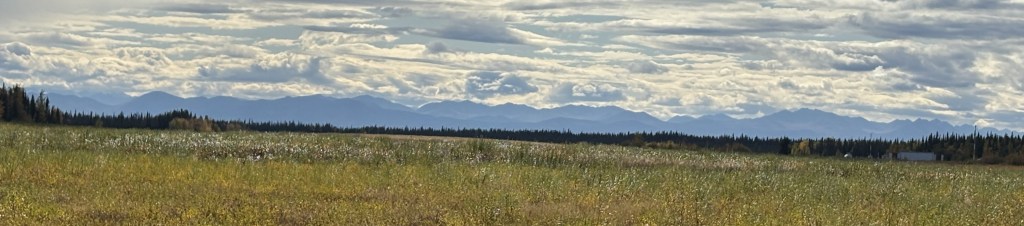
I realize the photo above is quite small but it shows the horizon far to the south to be lined with tall mountains. Wrangell-St. Elias National Park covers a large part of southeast Alaska, and backs up to Kluane National Park across the border in Canada, and between the two of them there are lots and lots of VERY big mountains. I believe the mountains you see above are in Wrangell-St. Elias NP. It is the largest National Park in the United States. Once I reach Glennallen and start driving more to the west towards Anchorage the large mountains you will see are mostly in the Chugach (pronounced CHEW-gatch) Range, which also have some very high peaks.

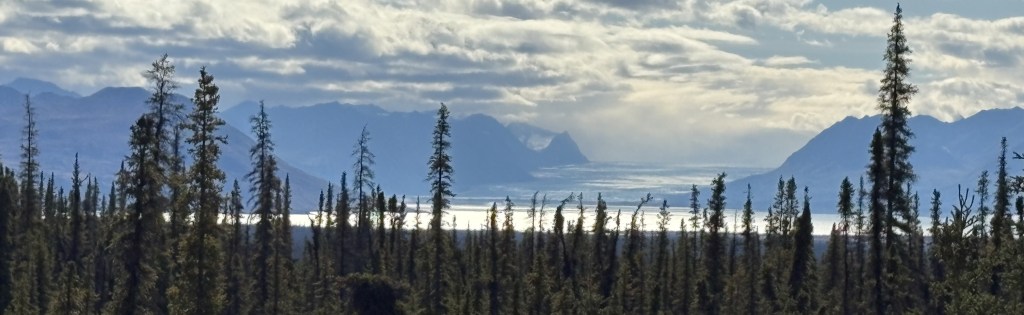
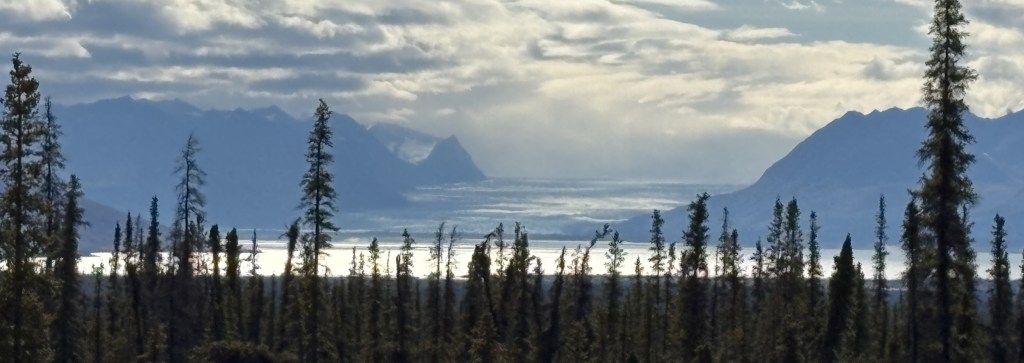
The gap in the mountains in the two photos above really piqued my interest. I think they may be down at the coast where Valdez is located. I will be going to Valdez later in my trip, but that seems to be the only spot on the map that would have a gap like that.

So while I started the day seeing mainly lower, tree covered mountains, the further I drive I will slowly get closer to the coast and have a slightly better view of those larger mountains. The next part of this post will cover the section of road near a place called Eureka Roadhouse and the types of mountains I was seeing would change slightly.

Highways in Alaska

September 13, 2025

I’ve referenced THE Alaska Highway quite a bit the past few days, but this is a discussion about the highways within the state. They are technically intrastate and not interstate highways because they do not connect to another US state.

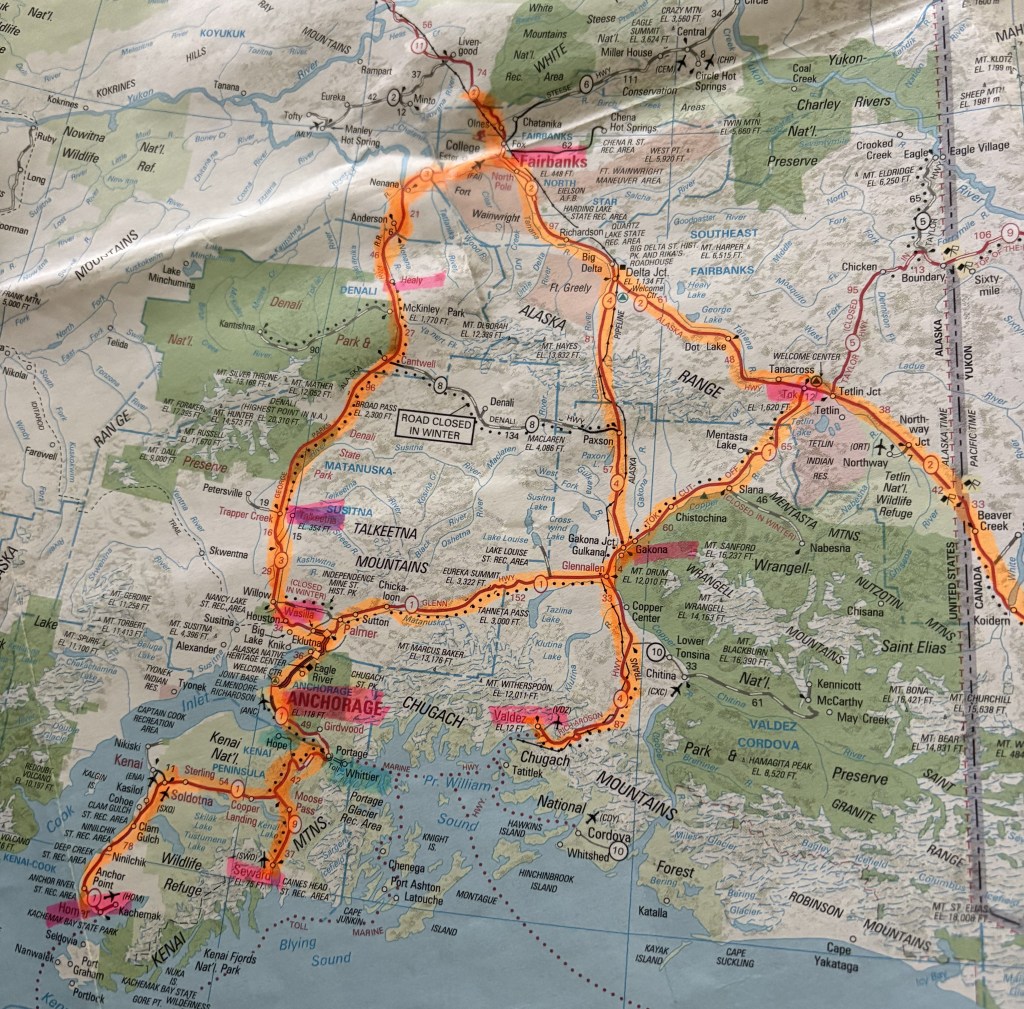
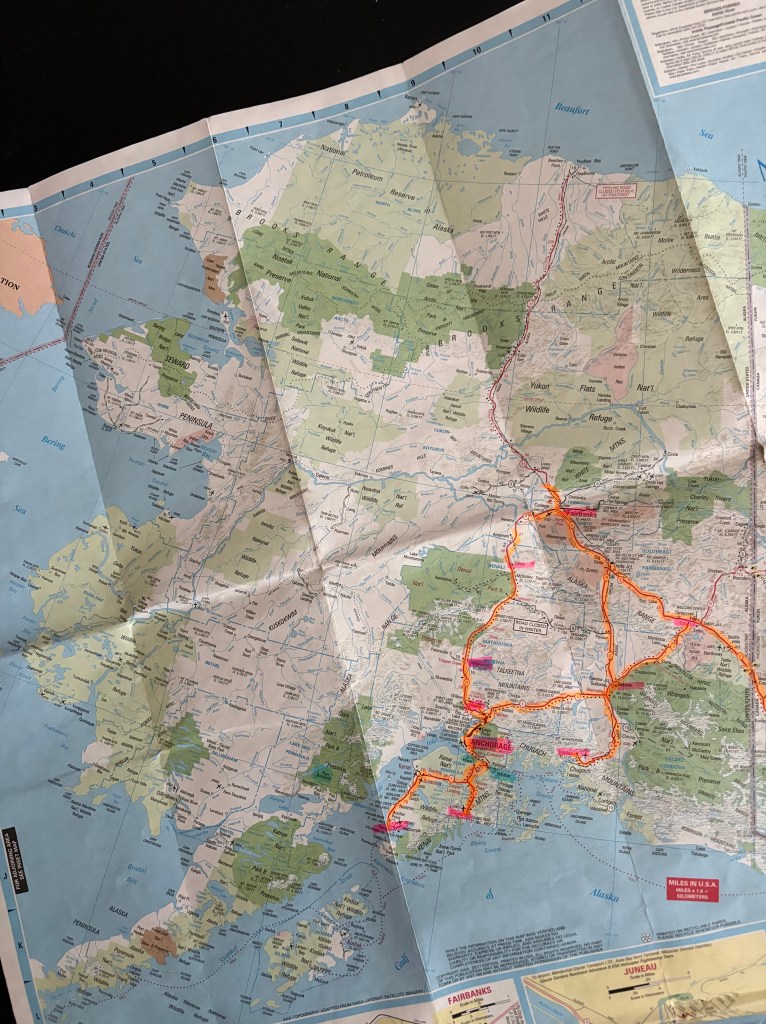
I made a post in real-time shortly after arriving in Anchorage about the highway system. I will repeat part of it again and add a photo of my AAA map on which I’ve highlighted all I roads I actually drove on.

(Photo credit: AAA.com Alaska Map)

There are 4 major highways in Alaska, not surprisingly numbered 1, 2, 3 and 4. Yes, there are other, smaller ones I’ll talk about in a minute.

1 – Runs from Tok, southwest through Glennallen, west through Anchorage and south to Homer. 538 miles, 9 hrs 38 min (per Google).

2 – Runs from the Canadian border with Yukon, northwest through Tok, Delta Junction, and Fairbanks plus a few more miles to Livengood. 624 miles, 7 hrs 34 min. The part that runs from the border to Delta Junction is the westernmost part of THE Alaska Highway.

3 – Runs from Palmer north to Fairbanks. 327 miles, 5 hrs 36 min.

4 – Runs from Delta Junction, south through Glennallen to Valdez. 268 miles, 4 hrs 37 min.

I have driven on almost all parts of the those four, and several of the others (to Homer, Seward and Valdez). The picture I posted above does not include the two short roads I drove on in the Alaska panhandle – going south to Haines and then north from Skagway. I took a ferry between the two towns which saved quite a bit of driving by not having to go back up to the Alaska Highway to get to Skagway.

Yes, there are some shorter stretches of highway with different numbers:

11 – The “Dalton Highway” north from Livengood to Prudhoe Bay, a dangerous stretch of road not for the faint of heart and not considered a major highway. I did NOT drive on it.

9 – Which branches off from 1 to run south to Seward.

5 – Which branches off from 2 to run northeast to Chicken. I did NOT drive on it as I was told by one of my Airbnb hosts in Tok that it is either unpaved or not in good shape.

8 – I had not listed this one previously. It runs west to east in the center of the map above between Cantwell and Paxson. The reason I didn’t include it (or drive on it) is that it is a seasonal road and is closed in the winter. It may or may not have even been open while I was there in mid to late September, but I had read numerous places that if you rent a vehicle in Alaska the rental company will likely forbid you to drive on it. I heard stories that it is very rough, and that flat tires are common.

After studying various maps more closely I have discovered a few other very short roads, but my trip focused solely on the 4 primary highways plus ones that would get me to the coastal towns I wanted to visit.

I also mentioned in my original highway post that these primary roads are located in the southeast part of what I call the “mainland” – excluding the Aleutian Islands and the panhandle. Here is another photo of the AAA map illustrating that point.

(Photo credit AAA.com Alaska Map)