John, the future paleontologist

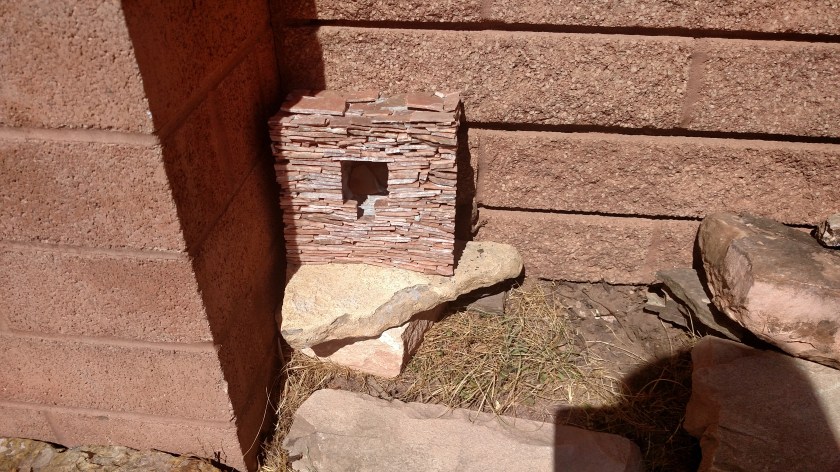
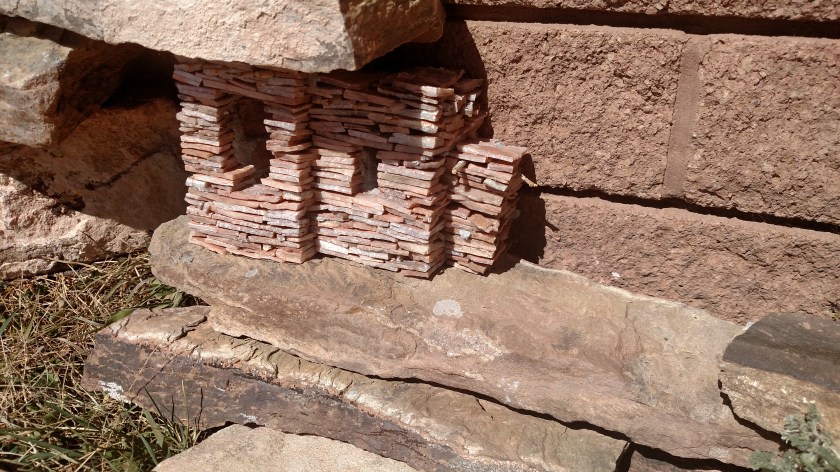
There was a fund-raising bicycle rally being held at the Park and there were several rest stop/refreshment stations at various places.  At one of the scenic overlooks there was a canopy set up for that purpose and on a nearby ledge I noticed these dinosaur figures.  I said “Oh, I need to get a picture of this for my blog” and took this photo.

IMG_20170916_120415879

Well, a kid who had volunteered to work at this particular refreshment station said “Well, if you want to get a picture for your blog let me show you this…” and went to his stuff and brought back a cast of the skull (I think that’s what he said it was) of a young Coelophysis, a dinosaur which is known to have lived in this area millions of years ago.

IMG_20170916_120339835

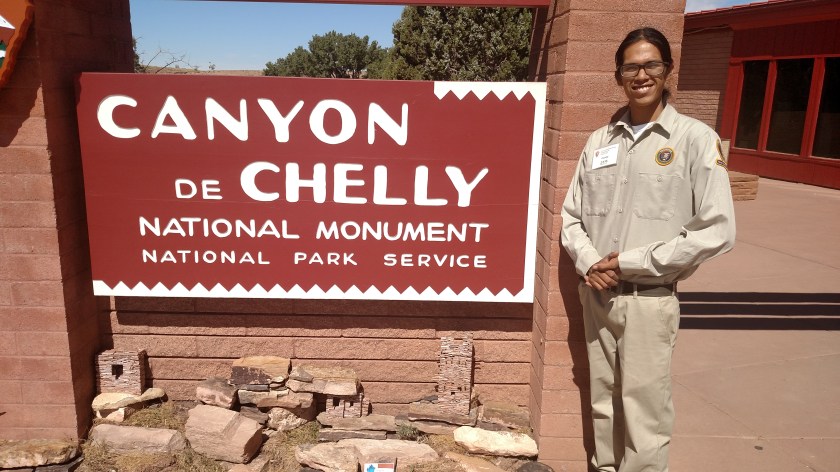
Meet John, a local 15-year old who, I would bet money, will grow up to be a paleontologist.

IMG_20170916_121629358

John got a book he had brought with him (I am going to order a copy on Amazon when I get home) and spoke very intelligently and enthusiastically about various dinosaurs and non-dinosaurs, something he is obviously very passionate about. He pointed out the two dinosaurs which were known to have lived in this region (the first and third images).

IMG_20170916_121344266His t-shirt even showed an image of the dinosaur skeleton, the type of which was the fossil he showed me.

IMG_20170916_120311753

He suggested I visit the “Ghost Ranch” shown on his shirt when I am in New Mexico in a few days (it isn’t far from Taos, where I’ll be staying), and also suggested a science museum to visit when I am in Albuquerque.  I told him about The Mammoth Site, which I visited very early in this trip when I was in South Dakota, and suggested he go there some day.  A woman who was also working at the refreshment stop with John also produced a dinosaur figure and of course John knew exactly what it was and described to me how it searched for food.
IMG_20170916_120410538

John is a bright young man and I hope he continues to pursue his area of interest.


Summer Solstice marker

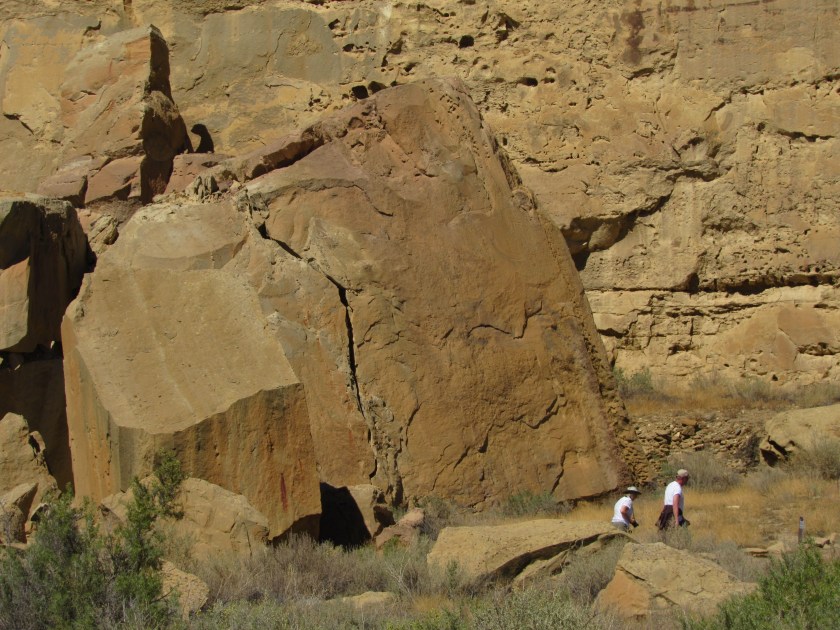
One of the neat things I read about when researching places I planned to visit on this trip was the Summer Solstice marker found here.  There is a large rock with a natural cleft in it, which was evidently “placed” here by nature.  Nearby is another darker rock which has a swirl mark, which looks kind of like an @ symbol, carved in it by man (I should have gone back to the car for the digital camera so I could zoom in on it.  Trust me, it’s there.).

IMG_20170916_140632432

IMG_20170916_140638660

On June 20, the normal date for the summer solstice, the morning sun will shine through the crack in the large rock and create a white streak on the dark rock.  At approximately 905am, voila, the white streak will reach the center of the symbol, marking the summer solstice.  Pretty cool, eh?

IMG_20170916_140607262_HDR

IMG_20170916_140622066

Various birds in flight – My photos

I should have posted these after the next post (professional photos) not before.  Some of these turned out better than I thought but are still not quite what I was hoping for.  Following and maintaining focus on a moving target is harder than you might think, especially when they change speed or direction.

IMG_7316

IMG_7329

IMG_7330

IMG_7496

IMG_7501

IMG_7549

IMG_7553

These next two are my favorites of this group:

IMG_7722

IMG_7558

Grand Canyon – The Birds

The days I was at the Grand Canyon the thing that impressed me the most (after getting accustomed to the spectacular view) was watching the birds.  Although there are many other players, the main attraction generally consisted of ravens, red-tailed hawks, turkey vultures and the ultimate vulture, the California Condor.

I tried and tried to get photos of these birds in flight but became increasingly frustrated at my inability to get acceptable photos which were blogworthy.  I finally decided to just enjoy what I was seeing and resort to internet research to share what other, more talented, photographers were able to capture.  I do have some raven pictures, some taken as recently as today in eastern Arizona, but the others you will see I found online.

The ravens were the most prevalent and put on the best “show” as far as entertainment was concerned.  Yes, then would often just cruise by at various altitudes but would also chase other types of birds, chase each other, come to an almost screeching halt in mid air, only to tuck in their wings and dive-bomb nearly straight down and perhaps the most fascinating thing was when they would twist and turn while flying at high speed, ending up upside-down and then change course downward.  I simply stood and watched them for extended periods of time.  Because of their often rapid flight and sudden course changes, it was almost impossible to zoom in for a decent picture.  Even getting a good shot while they soared by beneath you with the canyon in the background was a seemingly impossible task.

All types of birds would be like gliders, riding the thermals of warm air radiating off the canyon floor and walls, changing altitude on a whim and cruising for extending periods without needing to flap their wings.  Simply amazing to watch.

A seemingly simple picture, but one which eluded me. A raven cruising below observation point-level:

Raven GC judyrobinsondesigns

(Photo credit: judyrobinsondesigns.wordpress.com)

A raven who suddenly used his wings as a parachute to virtually stop forward motion in flight, and would then often tuck in his wings and drop nearly straight down.

Raven GrandCanyon patokallio

(Photo credit: patokallio.com)

The ravens would sometimes fly by at my eye-level, only a few arms-lengths away while I was standing at the railing of one of the many overlooks.  I never felt like they were getting uncomfortably close and certainly never witnessed any behavior where they seemed to be attacking any people.  I think they have just gotten comfortable with people being around and know they zip by unscathed.

Ravens are beautiful birds.  All black, but if you see them in the right light there are traces of blue and green which somehow reflect off their wings.  They are larger than crows, but are of the same family.  The main distinction other than their size is their larger beak, which also has a pronounced curve.  I will post my photos separately.  I posted one or two the other day of two ravens on the ground in one of the overlook areas.

Next up, the red-tailed hawk.  Stunningly beautiful in flight or even perched on the ground.  The hawks would normally just cruise through the air, sometimes relatively slowly, but always twitching their heads while scanning the ground for their next tasty morsel.  Even when lazily flying they often changed course unpredictably making it difficult to get a good closeup.

RedTailedHawk bendbulletin

(Photo credit: bendbulletin.com)

Red-tailed-Hawk ndow.org

(Photo credit: ndow.org) Nebraska Dept. of Wildlife

RedTailedHawk pinimg

(Photo credit: i.pinimg.com)

red-tailed-hawk-flying natgeo

(Photo credit: kids.nationalgeographic.com)

When locating photos of the two types of vultures I noticed they are strikingly similar in appearance while in flight.  Condors are much larger, however.  A common turkey vulture (in the east people often call them buzzards) has a wingspan of “only” about 5 feet.  Condors, however, can have a wingspan of up to 9 1/2 feet and are the largest bird in North America.

Condors almost became extinct back in the late 80’s.  According to Wikipedia, their number dwindled to only 27 and the United States government launched an effort to capture the birds and keep them in captivity while breeding new batchs (condors can live up to 60 years).  They slowly released more and more into the wild and in Dec 2016 their number was estimated to be almost 450.  They are found mainly in California, Arizona and southern Utah.  Some of the photos you will see online show tags on the leading edge of their wings to help identify them and track their movements.

Over the course of several days I saw lots of turkey vultures and did see a few which seemed unusually large, which I assume were condors.

While not very attractive when perched on the ground, vultures are graceful and beautiful in flight.  They often fly too high to see the coloration on the underside of their wings.

turkeyvultureflying pestkilled

(Photo credit: pestkilled.com)

Turkey Vulture (Cathartes aura)

(Photo credit: Mike Baird)

California Condors:

condor mediad

(Photo credit: mediad.publicbroadcasting.net)

CaliforniaCondor media.npr

(Photo credit: media.npr.org)


Taliesin West (1/2)

I spent the morning Friday traversing a series of scenic roads from Flagstaff, south through Sedona and Payson to Scottsdale, a northeastern suburb of Phoenix.  There I visited Taliesin West, the winter home and workplace of architect Frank Lloyd Wright.

Wright bought approximately 800 acres of land here (before it became the sprawling suburb it is today) in 1937 for $3.50/acre, which was considered a high price back in those days, and Taliesin West was built soon after that.  Two years ago I visited Taliesin (pronounced tally-ESS-en), his summer home in southwest Wisconsin.

For having been designed and built in the late 30’s it is typical Wright, contemporary even by today’s standards, with a low profile and materials to blend in with it’s surroundings, incorporating natural light throughout and with every detail having a purpose.  He lived and worked here, and had his many apprentices living on site, literally in tents or other basic structures.  The site is still used today by students who live and work here year-round.  The only place we visited on our tour where photographs were not allowed was the huge design studio where, although students now use computers, plotters and 3-D printers, they are working on drafting tables and other furniture used by Wright and his minions back in the day.  It is a magnificent facility.
I also need to mention that a woman from Chattanooga, Tennessee saved the blog when she discovered my digital camera laying next to the guest registration book at the gift shop and turned it in at the tour desk.  I had set it down to write my information in the goofy book and forgot all about it (evidently I need to get a strap and tie it to my body, which may also help keep Mr. Butterfingers JohnBoy from dropping it into a canyon somewhere…).
IMG_20170915_111806835_HDR

IMG_20170915_113217374_HDR

IMG_20170915_113350481_HDR

IMG_20170915_113542529_HDR

IMG_20170915_111643472_HDR

IMG_20170915_113831318_HDR

IMG_20170915_113834445

IMG_20170915_113917190

IMG_20170915_113921606

IMG_20170915_114655604

Taliesin West (2/2)

IMG_20170915_115437112_HDR

IMG_20170915_114933223_HDR

IMG_20170915_114907350_HDR

IMG_20170915_115502288_HDR

This metal dragon sculpture is hooked up to a propane tank and literally becomes a fire-breathing dragon at night.

IMG_20170915_121433257

IMG_20170915_121438941_HDR

IMG_20170915_123139583

Behind the red doors in the photo below is a huge dining room where Wright and his 3rd wife (Mr. Wright had a rather, shall we say, colorful life) would entertain guests.  It was designed on a gently declining level, similar to but not as drastic as stadium seating in modern day theatres, and, in fact, doubled as a movie theatre for guests when not being used for formal dinners.

IMG_20170915_123516455

IMG_20170915_123728482

Even the gate at the entry to the property was designed by Wright.

IMG_20170915_131012329

IMG_20170915_131021872

The only feature which I have seen at many Wright-designed (for clients) properties which I did not see here was the use of stained glass windows.  I didn’t think to ask our guide why that was, but it is a beautiful and remarkable property regardless.

Mr. Wright lived and worked here (winters) from when he had it built in the late 1930’s until his death in 1959 at the age of 91.  It is still used today by students of his work.

After touring the property (the scheduled 1 1/2 hour tour took almost 2 1/2 hours!) I tried, without success, to locate a good friend from when I used to live in Pennsylvania (a radiologist client of the accounting firm I worked for who raced cars as a hobby.  I was his “pit crew” for about a year and traveled with him to races throughout the eastern US) who now lives in Scottsdale.  I had no way to contact him before I got here and there was apparently no one home when I arrived at the entrance to the gated community (I left a message via the intercom).

After waiting a short time to see if perhaps someone would show up I headed east on another series of scenic roads to the little town of Lakeside in the eastern part of Arizona where I will spend the next 3 nights before moving on to northern New Mexico.


Grand Canyon Day 2 (1/2)

On Wednesday I went back to the Grand Canyon for the second day.  I drove north from Flagstaff and went in the East entrance.  This took me to several overlooks I could access with my own car before parking at the Visitor Center and taking the Orange Route buses to parts of the Park I hadn’t seen yet.  Approaching from the east I started the day with different vantage points than I had the day before, and had the sun at my back.

Rain was moving in to the area (and arrived earlier than they had forecast) but I was able to get a few hours in before things got windy and wet.  I would have loved to have parked at the airport, just south of the Main entrance, to watch the many helicopters taking off and landing but the storm looked pretty nasty (it was) so I passed and headed back to Flagstaff before it reached the Park.

These were all taken with my smartphone camera.  I will post closeups, taken with the digital camera, in future posts.  As noted before, colors become more pronounced as the day progresses.

IMG_20170913_091104009_HDR

IMG_20170913_091110822

IMG_20170913_091119804

IMG_20170913_092426781IMG_20170913_092504862_HDR

IMG_20170913_092517584_HDR

IMG_20170913_092803559

IMG_20170913_100034337_HDR

IMG_20170913_100048359

IMG_20170913_100052973

IMG_20170913_101444927

IMG_20170913_101452530_HDR

IMG_20170913_101500079_HDR

IMG_20170913_101547447