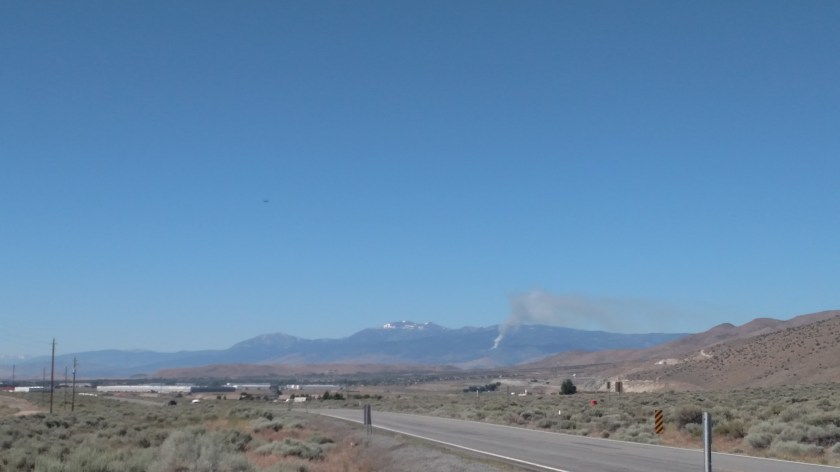
This is how it starts…

I took this photo shortly after 930 this morning, looking back towards Reno.

This is now the Evans Fire (at or near Evans Canyon) Southwest of Reno, Nevada. A news report 2 hours ago had it at 20 acres and an hour ago at 35-80. I don’t know how official either of those reports are.

I am posting this with my phone while parked by the side of the road (Shawn) and will post better pictures taken with the digital camera later today when I get home.

UPDATE:  442pm Pacific Time – Corrected location to Evans Canyon, not Ranch.  Fire started approximately 8am local time.  As of an hour and 20 minutes ago, InciWeb website has it at 60 acres and only 5% contained.  I will be making a new post with additional photos shortly.

Sunday update

Oops – I initially titled this post Saturday update.  For me now, every day is Saturday!

I am now in Sparks, Nevada – just outside of Reno.  I am leaving shortly for two scenic drives which should only take a few hours.  The internet connection here is excellent and my photos are uploading very quickly.  I got caught up on sleep last night so when I get back to the house this afternoon I will post some of my picture backlog.

Monday I plan to go down and drive a lap around Lake Tahoe, which isn’t far from here.  Traffic may be heavy due to the upcoming July 4th holiday but hopefully I’ll get back in time to post even more before I head to San Rafael, just north of San Francisco, on Tuesday.  I’ll be there a whole week and have LOTS planned.

Hetch Hetchy Reservoir

Friday I drove back to Yosemite National Park one last time, with the intention of seeing three things I hadn’t been to yet.  One was the Ahwahnee Hotel (which now has a different name due to legal issues) which is the largest hotel in the Yosemite Valley.  The main reason I wanted to see it was that the lobby and interior was the inspiration for the set constructed for the original movie “The Shining,” starring Jack Nicholson and Shelley Duvall.  When I visited the two hotels (one in Oregon and the other in Colorado) which had been used for exterior scenes last year I did some research before posting those photos to the blog and thought I had read that the Ahwahnee had burned, but it is quite intact.  Well, because of a later than expected start Friday, and noticeably more traffic in the Park, I decided not to go and may post pictures I can find online later.

The second thing I wanted to do was exit the Park on Route 140 and drive south, through the little town of El Portal and continue down to Mariposa.  Well, El Portal was not exactly what I had been led to believe it was (a quaint little mountain town) and I only drove about 12 miles south before deciding that the scenery was not unlike something I could see in the mountains of North Carolina, so I turned around and went back into the Park.

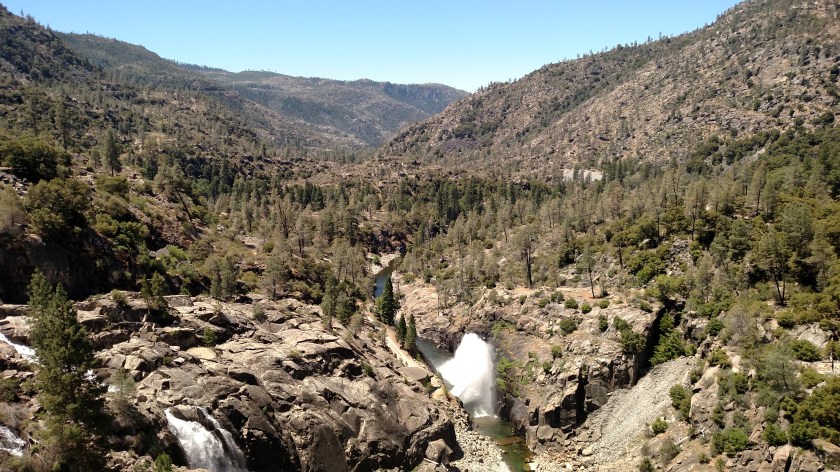
Item 3 – I then turned left and exited the Park on the road I had been using most of the week and drove a short distance where I turned right on the road to Hetch Hetchy, a 16-mile road which ends at the reservoir.  About 2/3 of the way up that road I entered the Park again (my mother would say “make up your mind, are you in or out??”) and was rewarded with some magnificent scenery.  While the forest along much of the road up to Hetch Hetchy had burned years ago the reservoir area itself was worth the trip.

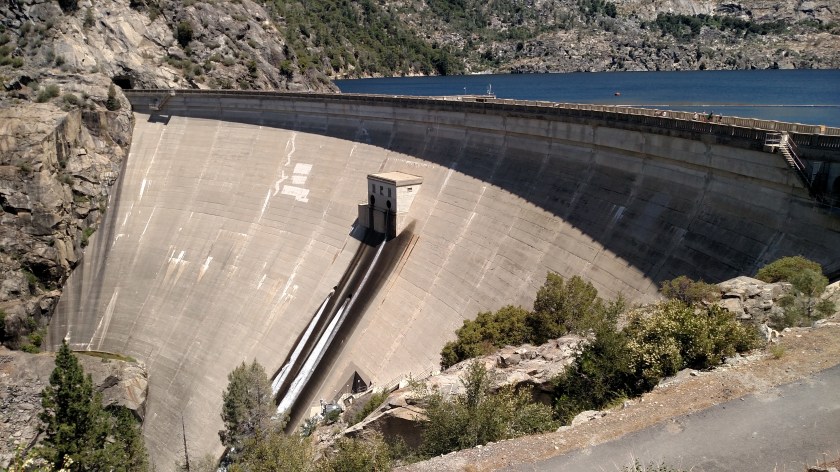
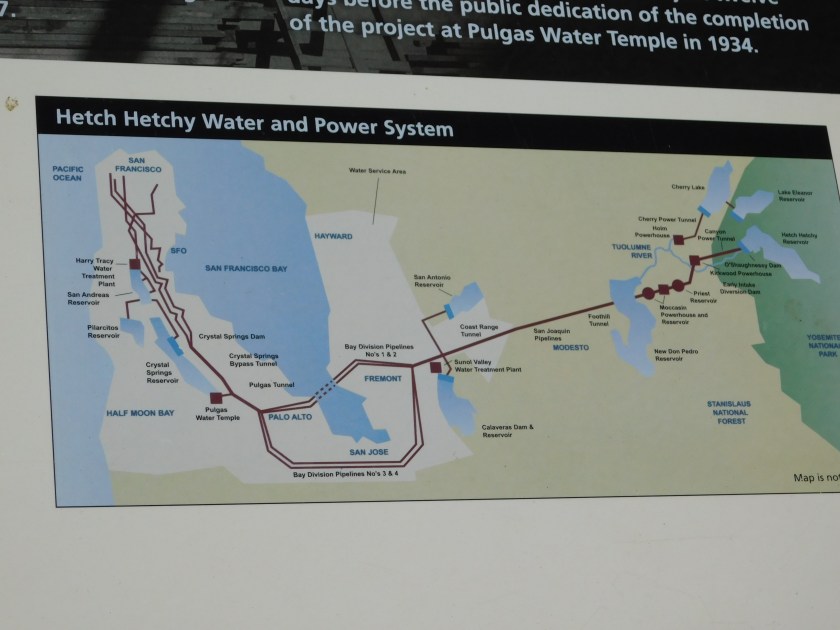
The reservoir was created by the construction of the O’Shaughnessy Dam, named for the engineer who designed it and supervised it’s construction, and sadly died just 12 days before the public dedication. After the devastating earthquake in 1906 which destroyed the water system in San Francisco (along with much of the city) a plan was devised, after heated debate with conservationists who wanted to preserve the natural beauty of the valley, to construct this dam and create a reservoir to provide water to the San Francisco Bay area.
IMG_20180629_114518991

It took 20 years to design and build a series of pipes and tunnels to transport water from here, west to San Francisco – a distance of 167 miles.  The system was designed to transport the water completely by the force of gravity, and no pumps are utilized!
DSCN2469

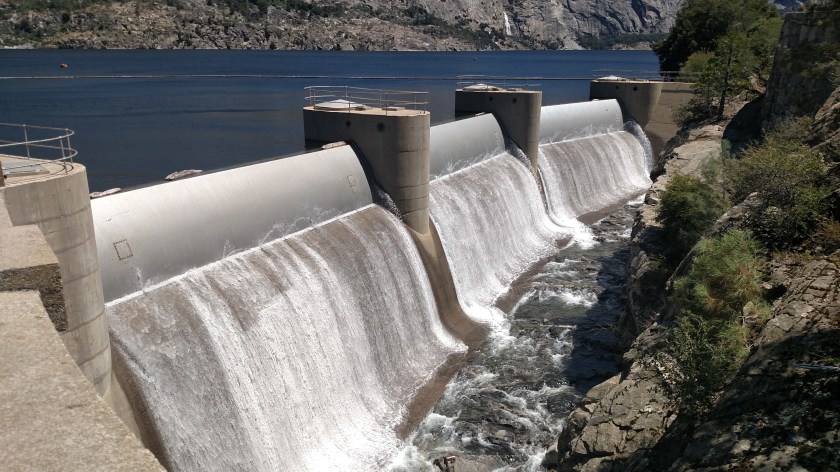
Some of the water is released downstream by a series of gates, located to the right of the dam as seen in the photo above.
IMG_20180629_114622804

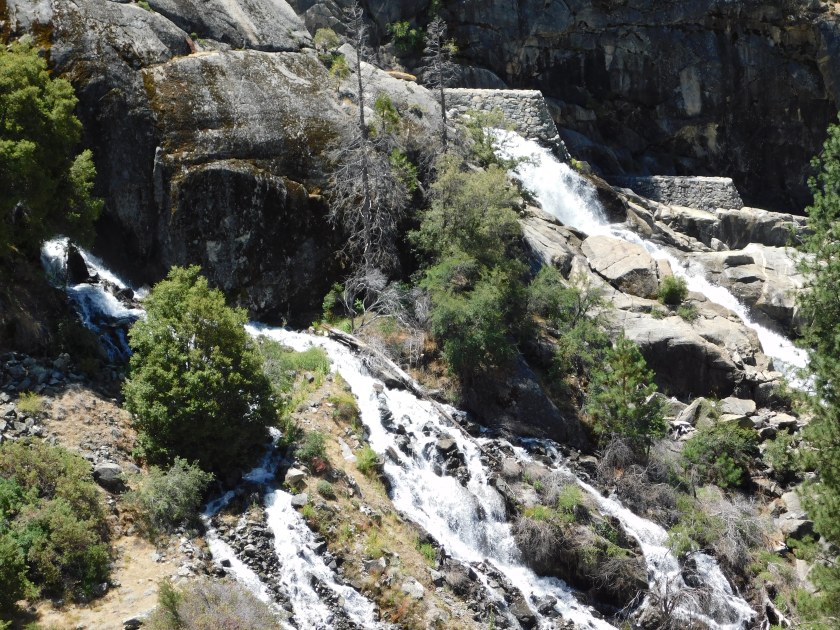
This, then, creates a series of small waterfalls on the “dry” side of the dam.
DSCN2459

DSCN2462

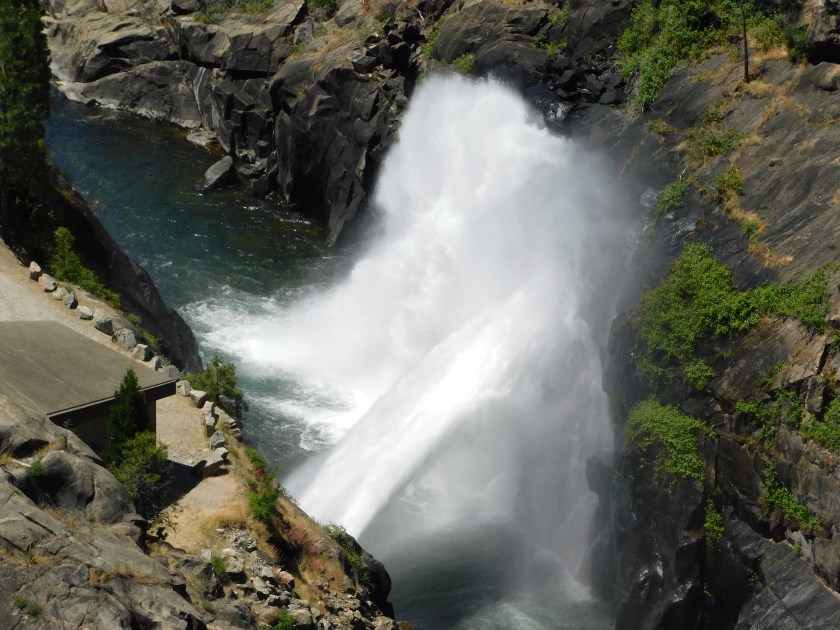
Though the bulk of the water released through the dam is by way of a large jet of water which crashes against a rock wall before falling into what is now the Touloumne River, headed for the coast.
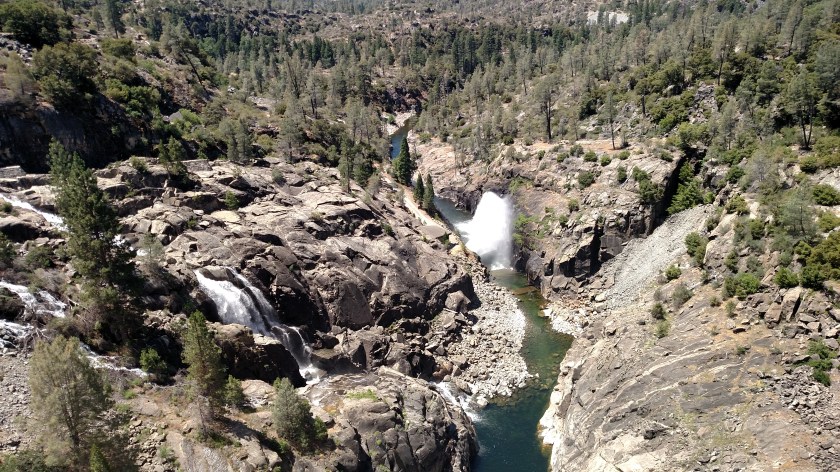
DSCN2465

IMG_20180629_115635657

IMG_20180629_115735622

The dam itself creates the huge Hetch Hetchy Reservoir.

IMG_20180629_115058819

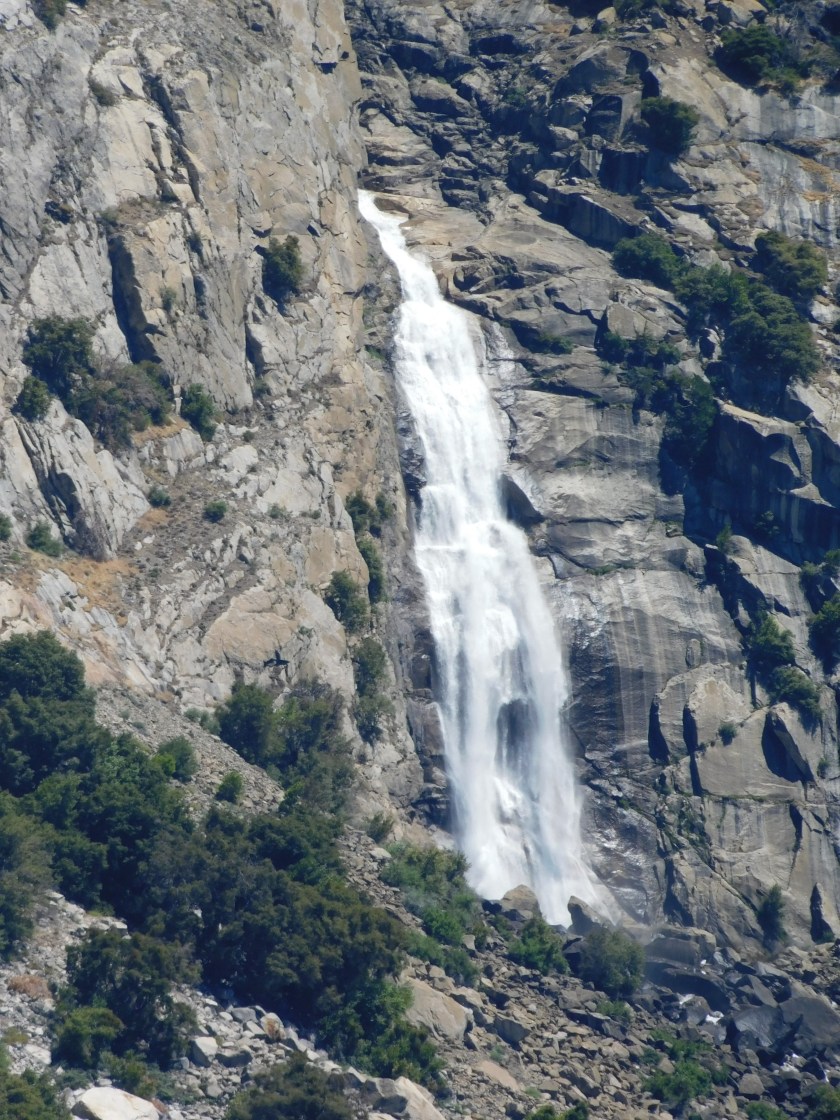
And although it is hard to spot in the photo above there are normally two waterfalls a little left of the center of the photo above (only one the day I was there).  The one which is flowing is the Wapama Fall, down near the water’s surface.
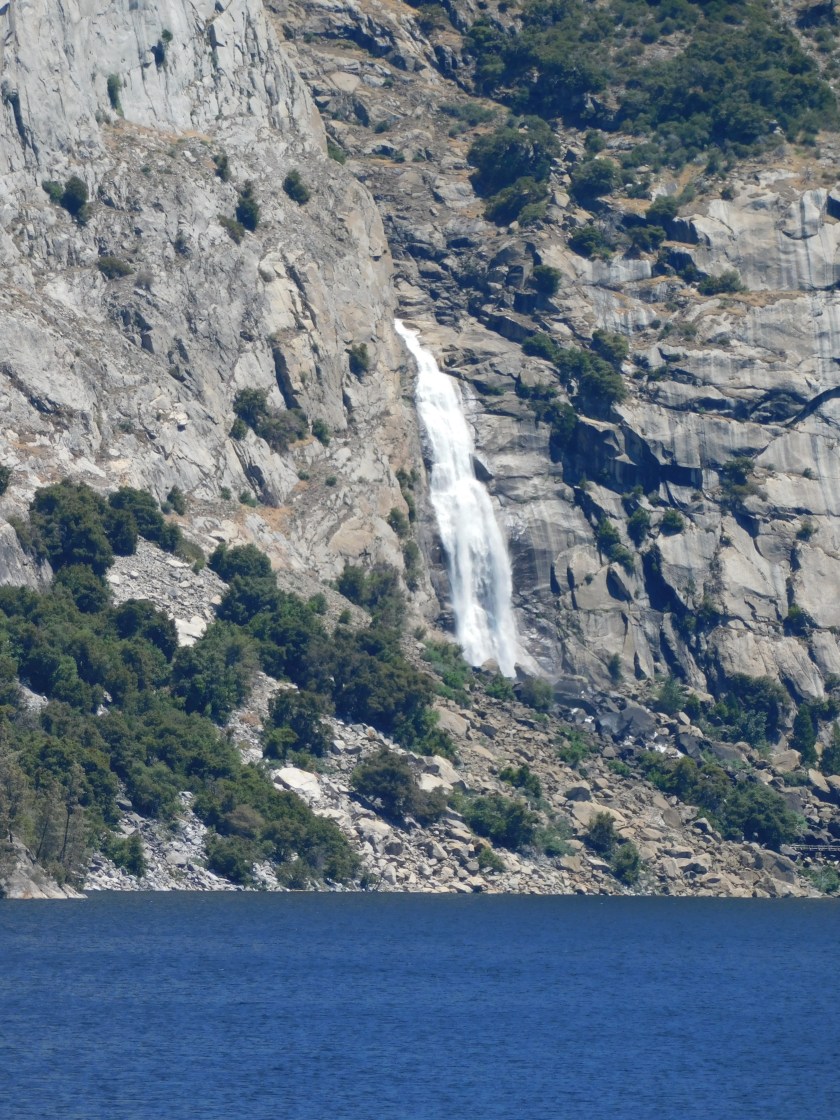
DSCN2453

DSCN2455

Earlier in the year, when there is more snowmelt, there is a much higher fall, the Tueeulala, which drops from the top of the high point just left of Wapama Fall, but there was no water falling from there on Friday.

After walking across the dam I went through a short tunnel…
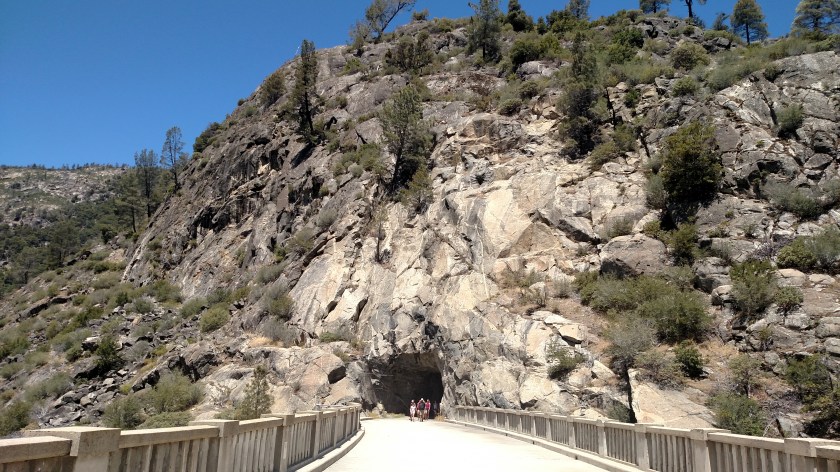
IMG_20180629_120133034

IMG_20180629_120250866

… and got to see another perspective of the reservoir.
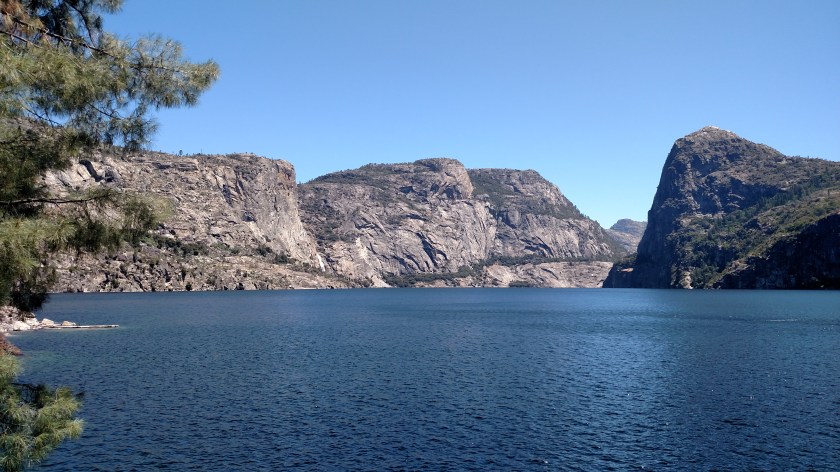
IMG_20180629_120630204

This was a great way to finish my time on Yosemite.
 

Travel Day

No photo.

Today (Saturday) is a travel day when I leave where I have been staying all week in Sonora, California and head up towards Reno, Nevada.  Although Reno is northeast of Sonora I am actually driving north on the continuation of Route 49 and will turn east when I get further north than Reno and loop back.  Route 49 is the “Gold Rush Trail”.

Sonora is in the heart of Gold Rush country.  Gold was discovered in this area back in 1849 and triggered a huge influx of people who hoped to literally strike it rich.  In fact, many of the businesses in the Sonora area include the term “Mother Lode” in their name.  The area is rich (pun intended) in gold mining history.  The people who came to this area became known as “49ers” (because of the discovery year) and the Trail was designated as California Route 49.  I now know why the San Francisco 49ers football team is called that, and why gold is part of their team’s color scheme.

Today I will be heading north of Sonora through the towns of Angels Camp, San Andreas (don’t ever try to blame anything on the people who live there, as they’ll say it’s never their fault.  Get it??  San Andreas??  Fault??) and Jackson, which I have been through already, and continue on through Plymouth, Placerville, Auburn and Nevada City before arching over to the east to where the road ends in little Vinton.  I will then double back a short ways and take another scenic road south to the dreaded interstate west of Reno and head east into Nevada.

Although I have plans to do several things while I’m up in that area for three days I will hopefully have some time (and a faster internet connection) to try and get caught up on some picture posting.

Calaveras Big Trees State Park

Last Sunday, my first full day in this area, I decided to forego returning to Yosemite National Park because it was so crazy the day before (the 3rd Saturday in June) and instead drove on two of the beautiful scenic roads north of where I am staying in Sonora.  There are actually three such roads, Routes 88, 4 and 108, each about 80 miles in length.  I would drive all three at least twice during the coming week, and will post pictures of some of the beautiful things I saw in subsequent posts.

This post focuses on one destination which is located along Route 4, just north of the little town of Arnold, California.  Although I had just been to see some Giant Sequoias a week ago when I was staying in Visalia, this Park was still impressive.

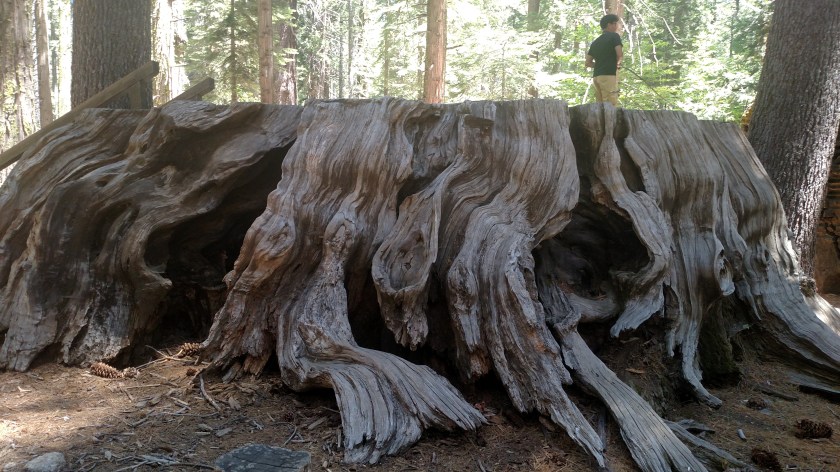
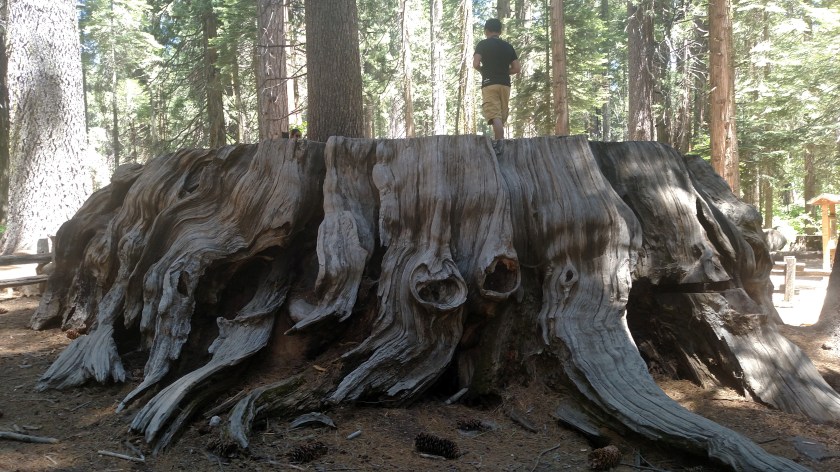
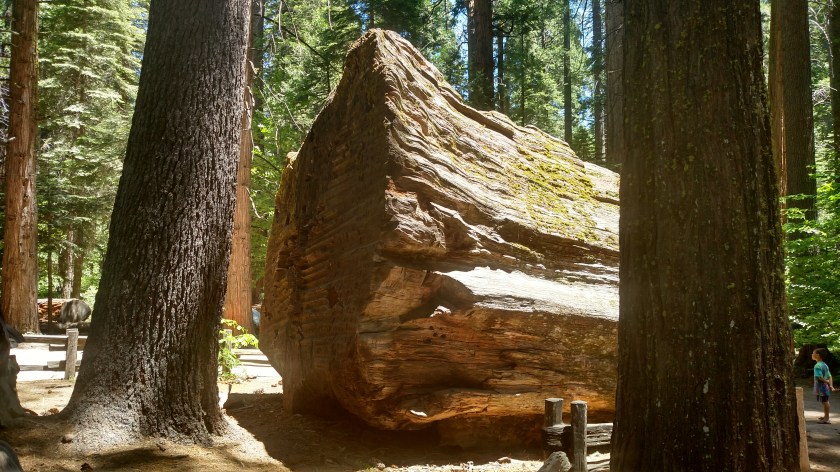
This is what’s left of the Discovery Tree, a Giant Sequoia which fell in 1853 – and took 3 weeks to cut up and remove (with the technology available at that time).  The cut surface, where the man is standing, is so big it once served as a dance floor!

IMG_20180624_122109010

IMG_20180624_122121053

Here is a portion of the trunk.  If you look closely you’ll see a young child on the far right.

IMG_20180624_122140329_HDR

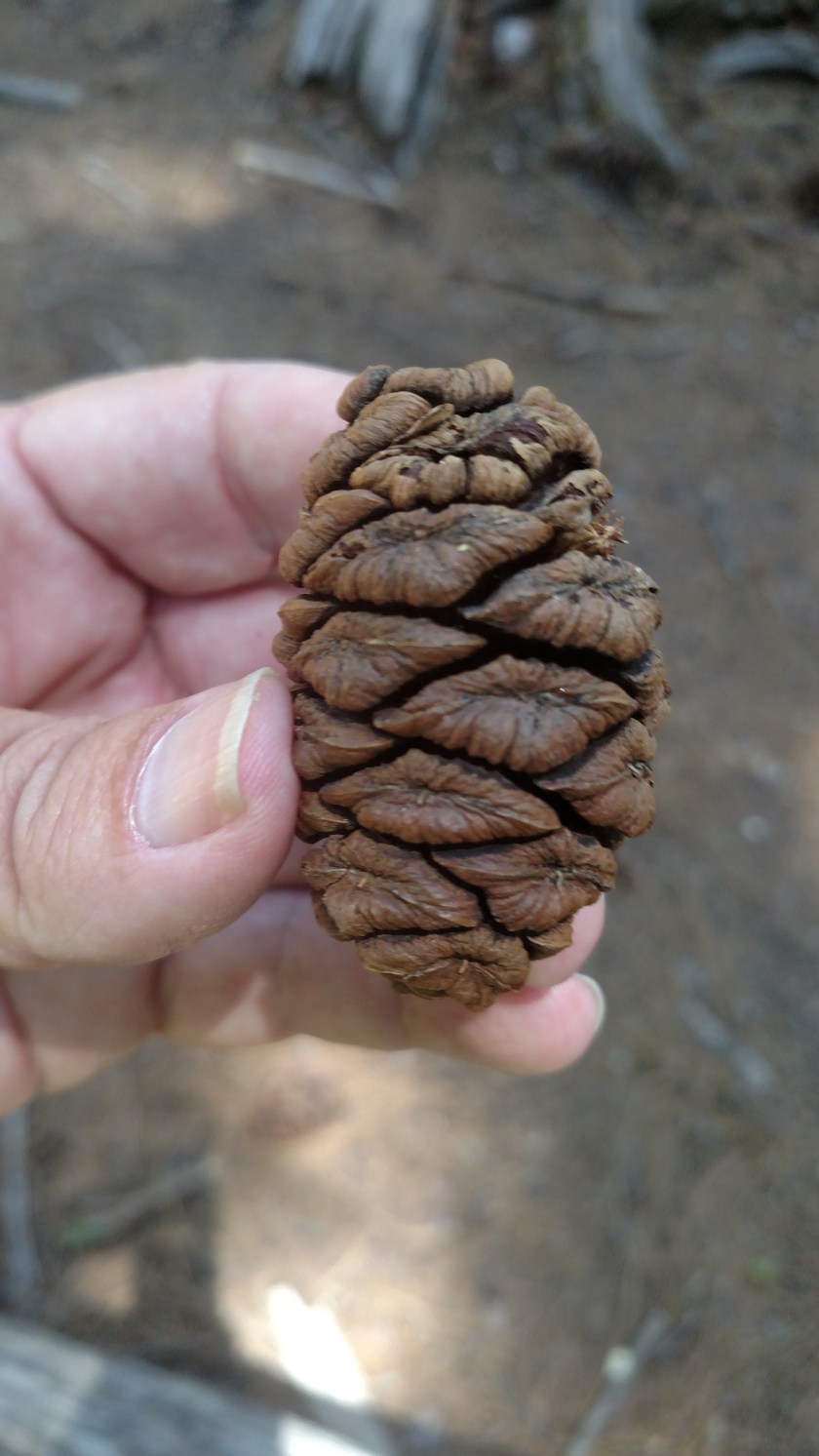
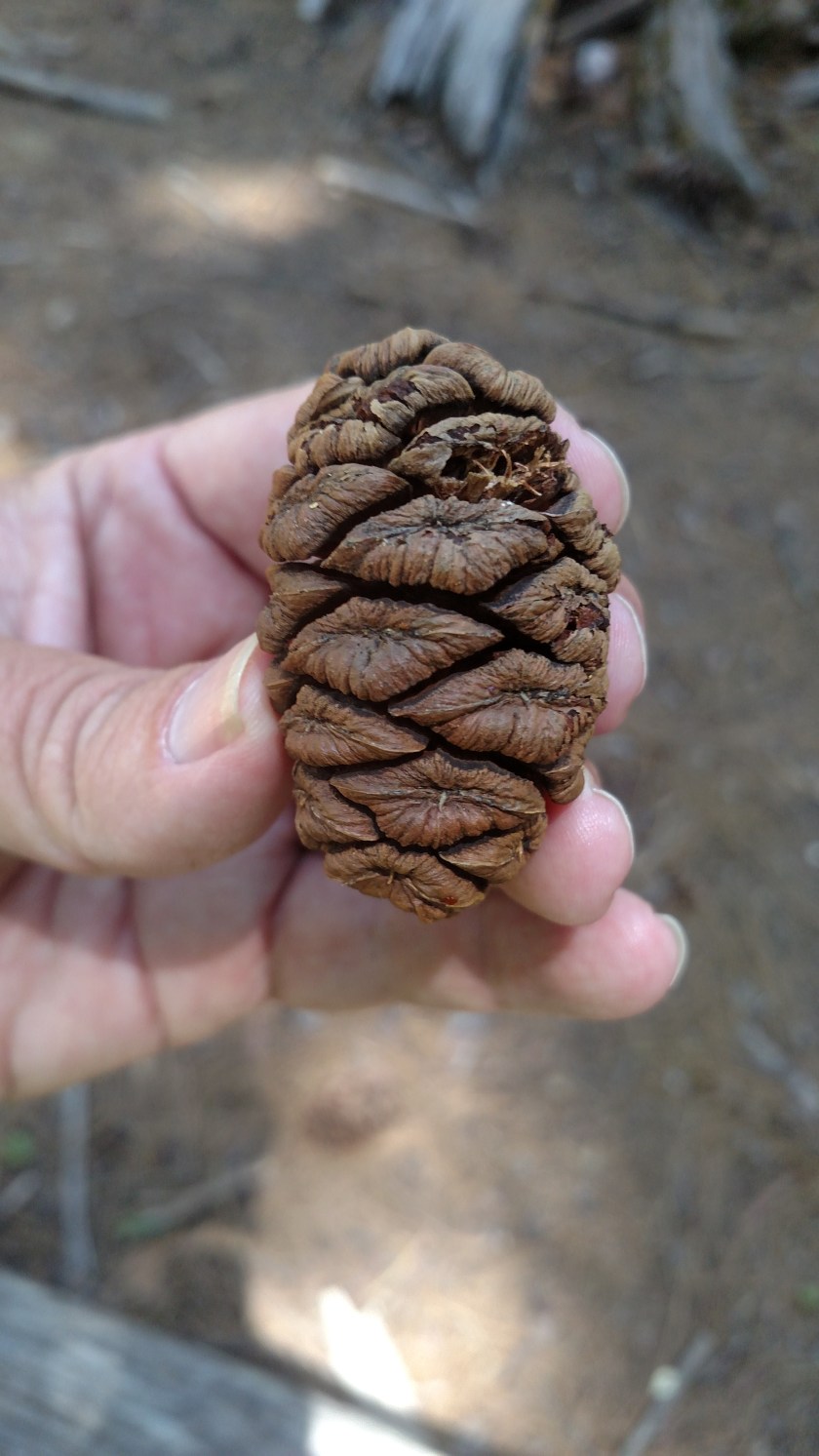
And believe it or not, this is all the bigger a cone of a Giant Sequoia is:

IMG_20180624_122211452

IMG_20180624_122216895

According to the information in the Visitor Center, these cones only grow to be 1.5 to 3 inches in length.  Unlike most pine cones, these are “closed” and require intense heat from a fire to open and release the seeds inside.

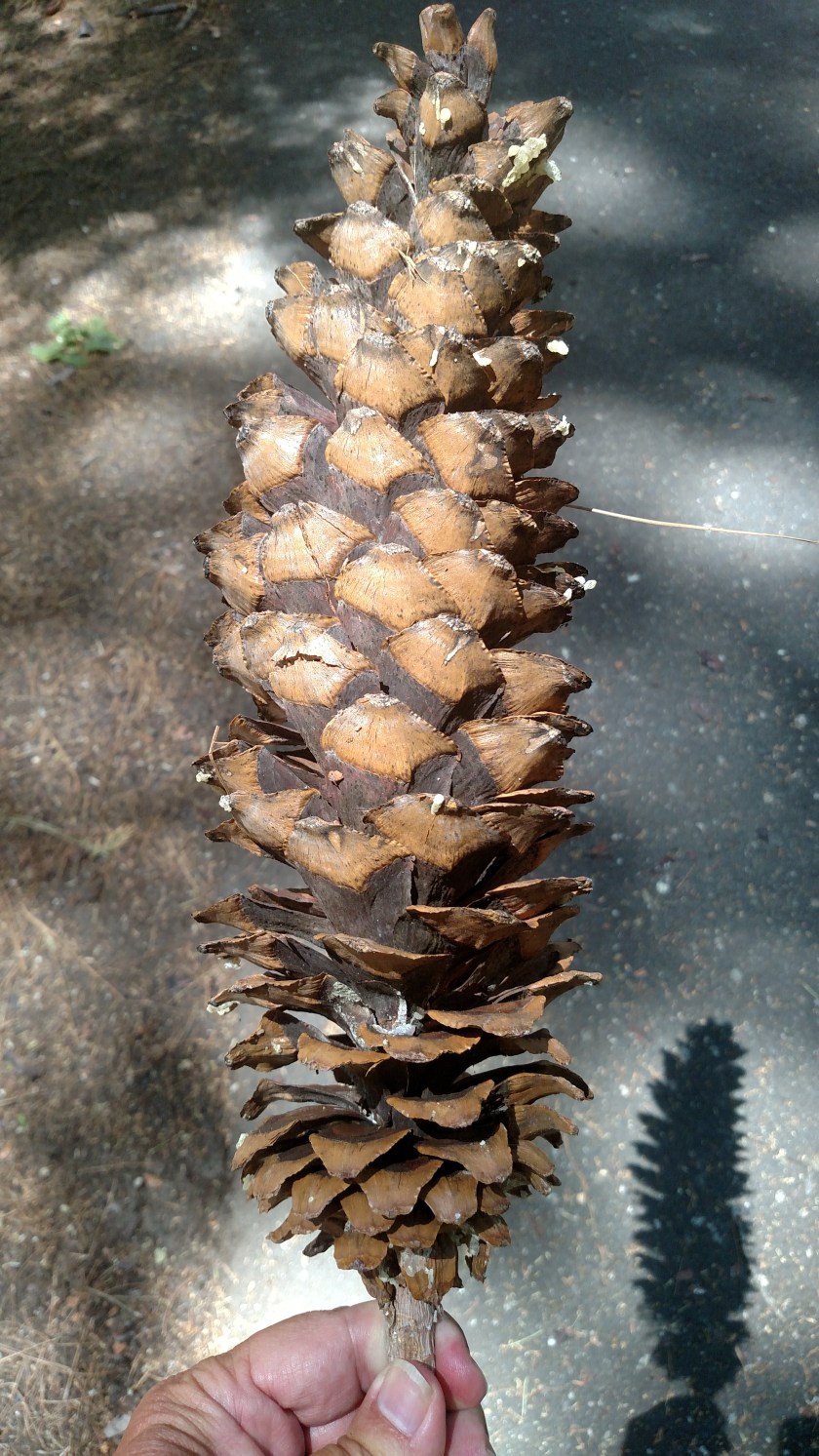
On the other hand (actually still in my left hand but you know what I mean – Eric) this is the cone of a Sugar Pine which can grow to 22 inches in length:

IMG_20180624_122316163

IMG_20180624_122322344

El Capitan – Morning Pictures

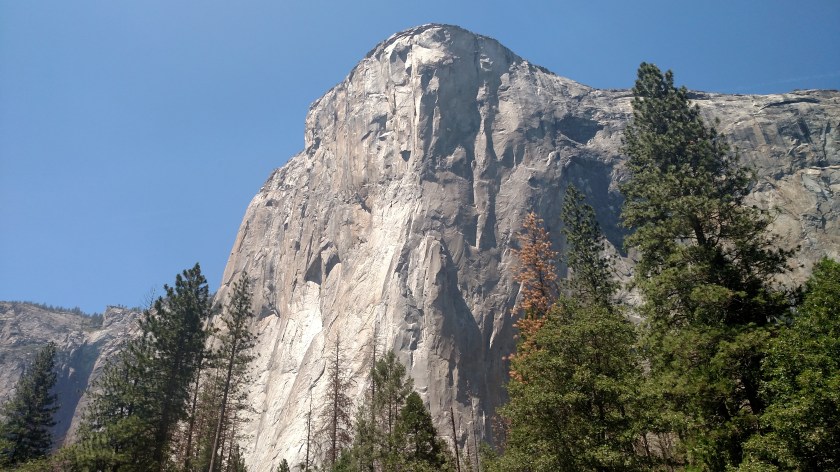
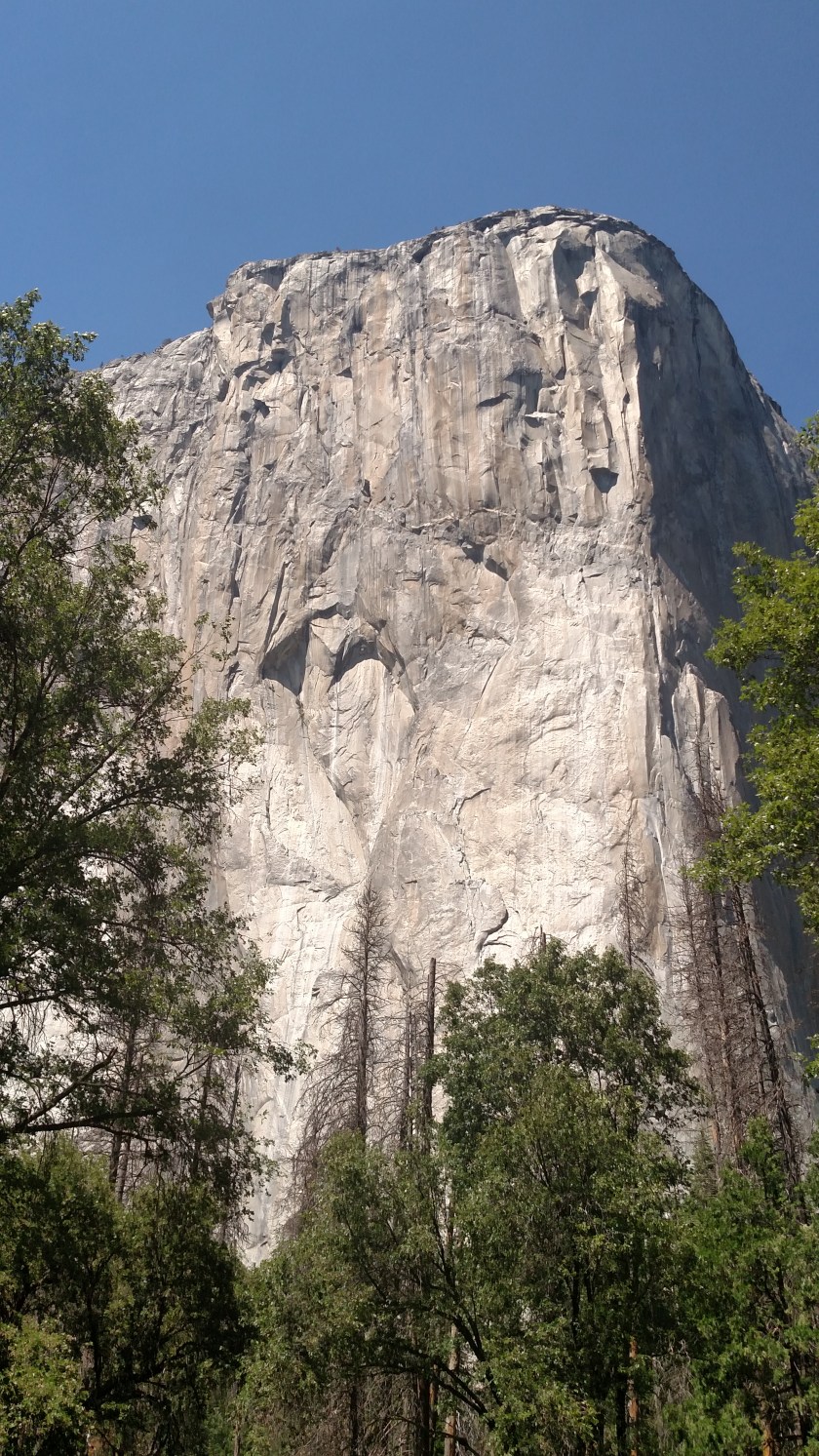
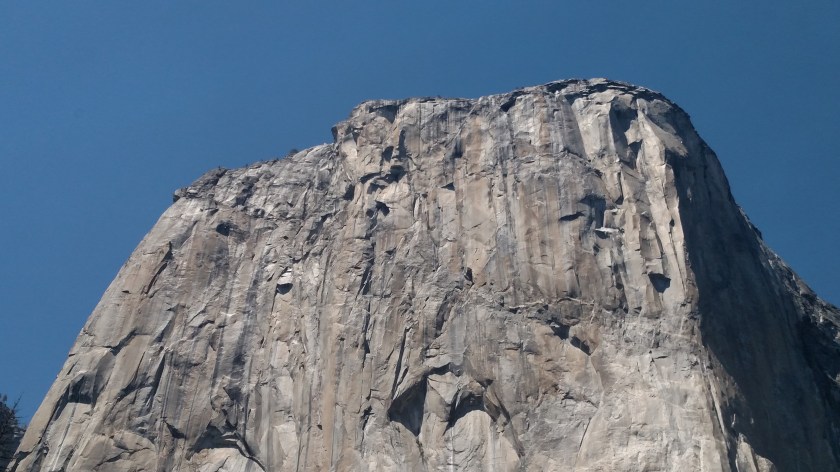
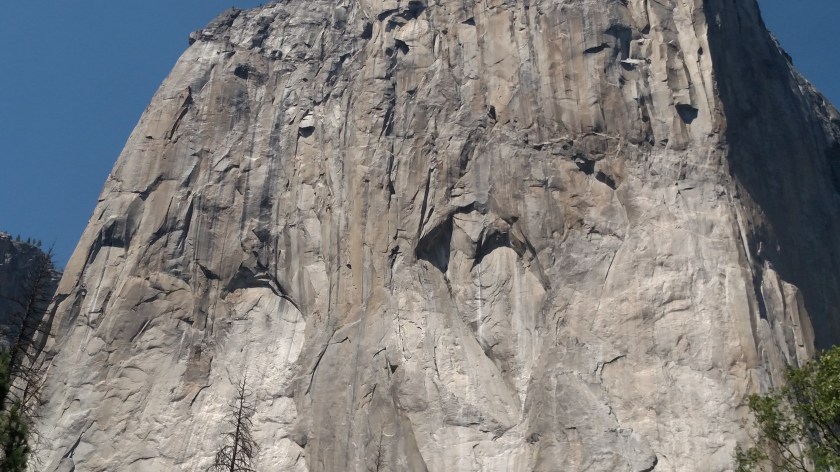
These were taken Monday and Wednesday mornings using my smartphone camera.

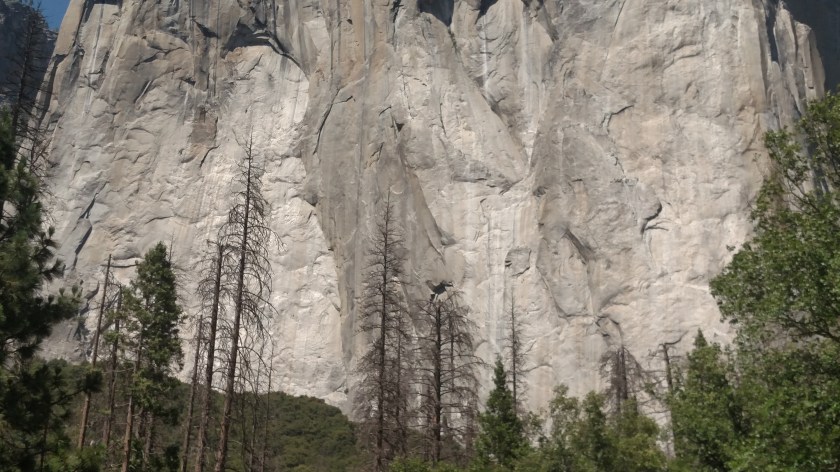
The “nose” of El Capitan faces south so the southwest exposure is shaded in the morning:

IMG_20180625_084930397_HDR

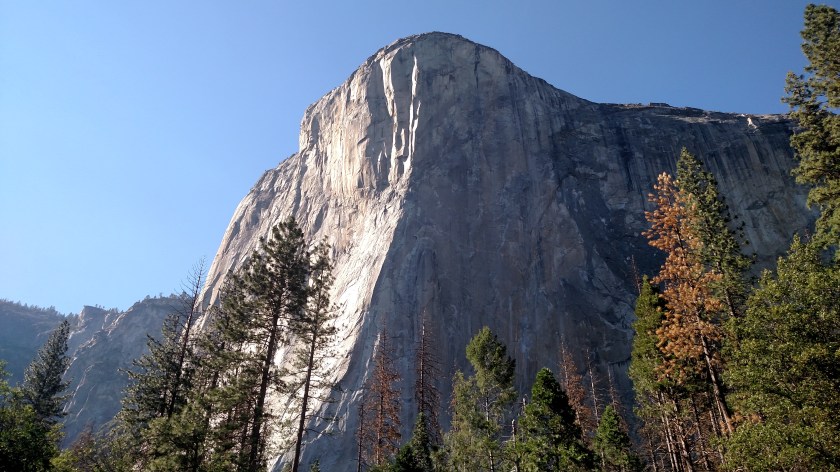
As I move further east along the one-way road leading in to the Valley I start to see more of the southeast exposure (to the right of the “nose” from this vantage point).  It was also hard to position myself to get clear shots looking through the trees.

IMG_20180625_085804909_HDR

IMG_20180627_093505261

IMG_20180627_093521443

IMG_20180627_094622440_HDR

You will see slightly closer, slightly fuller views of the southeast exposure in the early afternoon pictures in the next post.

El Capitan – Afternoon Pictures

These were all taken Wednesday afternoon using my smartphone camera.  I will be posting pictures taken with the digital camera later.

The “nose” of El Capitan faces south so pictures in the morning highlight the southeastern face of the formation.  These were taken in the afternoon, so the first two (taken around 2 o’clock) have both the southeast (right side of photo) and southwest (left side of photo) getting sunshine.

IMG_20180627_140605427

IMG_20180627_140700225

These next shots were taken around 230 pm so as the sun moves west across the sky the southeast exposure falls into shade.

IMG_20180627_143754778

IMG_20180627_143950711

Here is a three-shot panorama, top to bottom, of the southwest face which is now getting more direct sunlight:

IMG_20180627_144014548

IMG_20180627_144017743

IMG_20180627_144020796

And before leaving the Park for the day, here are the final two pictures, taken around 5 o’clock.

IMG_20180627_165116512

IMG_20180627_165647808


Half Dome – Morning Pictures

This post contains pictures taken Wednesday morning.  You may want to print a map of Yosemite Valley to follow along at home with the references I will be making in this post and the next one (Half Dome – Afternoon Pictures).  To print the map, Google “NPS Yosemite Map” then click on “Official Map for Yosemite Valley”.

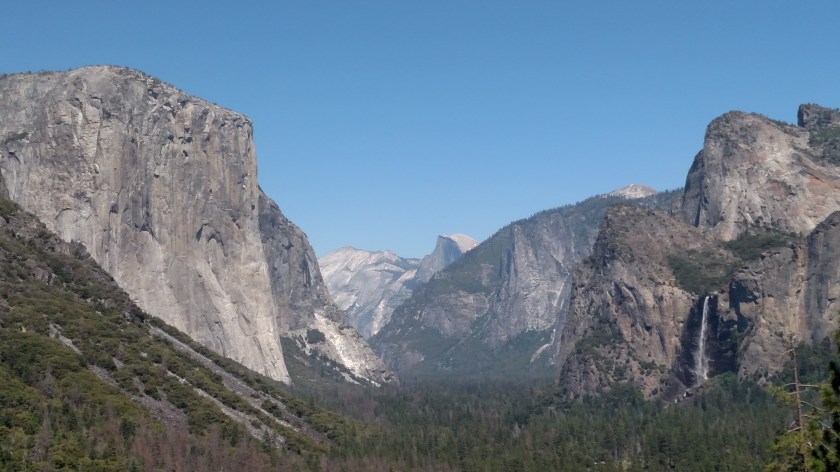
But before I post Wednesday’s photos let me revisit the first picture I posted of Yosemite which I took from the Tunnel View vantage point.  This was taken Saturday afternoon around 230 but I want to use it to put distances in perspective.

IMG_20180623_143633632

In the photo above, Bridal Veil Fall (on the right) is only about 2 1/3 miles away as the crow flies.  El Capitan (on the left) is about 3 1/2 miles away and Half Dome (in the center) is a whopping 9 1/2 miles away – well beyond the Yosemite Valley.

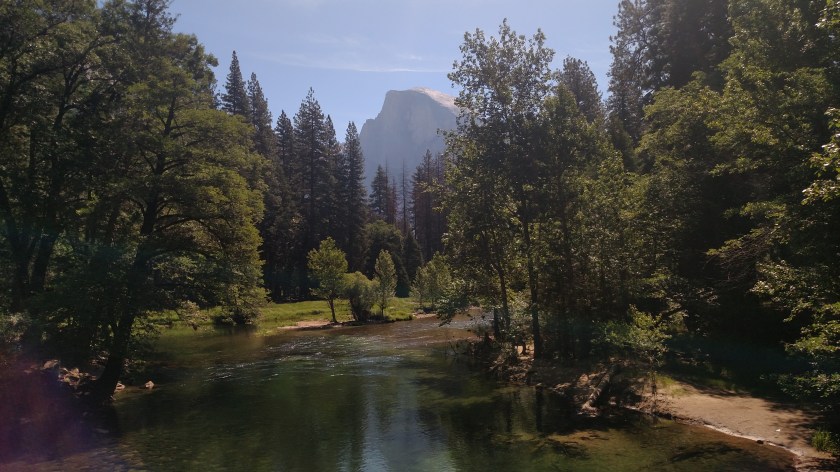
I didn’t go deep enough into the Valley on Saturday to see Half Dome again.  On Monday, when I was riding the Shuttle Bus around the Valley, I learned that I could see Half Dome from the middle of the Sentinel Bridge, though I never returned there that day to get any pictures.  Well the next picture is from that bridge on Wednesday morning, around 1030.  The sun is still behind Half Dome so you can’t see it very well because of the fact I was shooting from sunlight into shadows, but at least it gives you a slightly closer look.  Half Dome is now about 4 miles away.  I will be posting pictures taken with the digital camera later.

IMG_20180627_102712847

These next two shots are taken from the area around Mirror Lake, which is the closest I ever got to Half Dome.  For me, Mirror Lake was a big disappointment.  On Monday I got off the bus at the Mirror Lake stop when the driver said it was an easy hike of about a mile with not much elevation change, which in my opinion was wrong and wrong.  It is actually about a mile and a quarter (and not being a hiker that added a half mile to the round trip) and it started off easy and relatively flat but became rocky and steeper, about 100 feet of elevation change and, again, for “not in very good shape” JohnBoy, now walking at 4,000 feet elevation, that was more than I was expecting.  Well, when I got up there I learned much to my dismay that I was on the wrong side of the damn lake to get the “mirror” effect of seeing Half Dome in the lake’s reflection!  There was no way to get to the other side other than to go way around (and I mean WAY around) on that trail, or go back down and walk back up on the other side.  I can’t believe they don’t tell you which way to go to see the reflection when you get off the bus.

This is a small lake I got to just before Mirror Lake.  Wednesday, having learned from my mistake on Monday, I walked up the PAVED ROAD on the west side of Tenaya Creek which ends with a short, level trail which put me on the correct side for seeing reflections.  Well, kinda sortof.

IMG_20180627_114208061

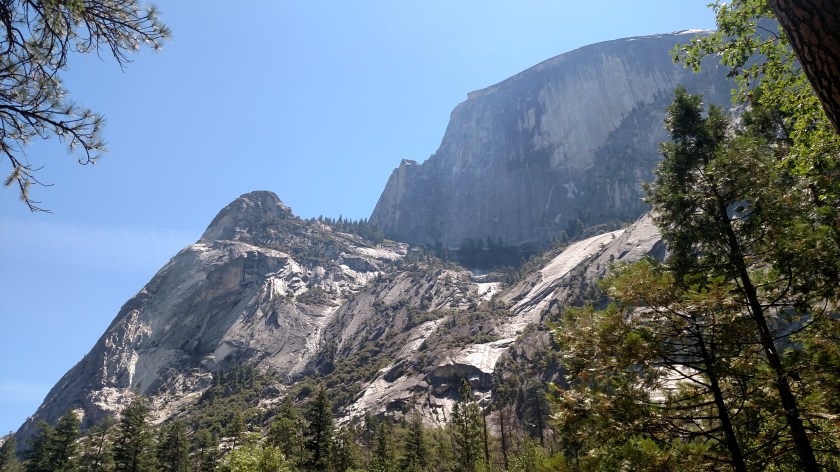
Here is a shot looking up at Half Dome from the little lake shown above (it had another name on the sign up there but I don’t remember what it was and can’t seem to find it online).  Mirror Lake itself is supposedly just beyond this one.  From the vantage point of the photo above Half Dome can now be seen by looking up and to the right.  It is still over a mile away and you are looking up (into the midday sun) from around 4,000 feet elevation near the lake toward the 8,836 foot peak.

IMG_20180627_115257933

Well, we (I had joined a group of fellow travelers for my walk up to the lake, and I told everyone getting off the bus to take the road, NOT the trail closest to the bus stop) started walking further back to see the reflection in the “real” Mirror Lake only to be told that the Park’s new credo is to let nature take it’s course and rather than maintaining the much touted Mirror Lake as a lake they are letting it drain and return to being a meadow through which Tenaya Creek will run, in effect, undammed.  So no reflection today for Mr. “I walked up here twice and I’m not doing it again” JohnBoy.

You’ll see more pictures of Half Dome, taken in the afternoon, in the next post.


Half Dome – Afternoon Pictures

These first two photos were taken Wednesday afternoon from Sentinel Bridge with the Merced River in the foreground, in the heart of the Yosemite Valley.  The sun had now moved far enough west in the sky to start illuminating the flat portion of Half Dome.  From the bridge Half Dome is about 4 miles due east.

IMG_20180627_134826058

IMG_20180627_134908102

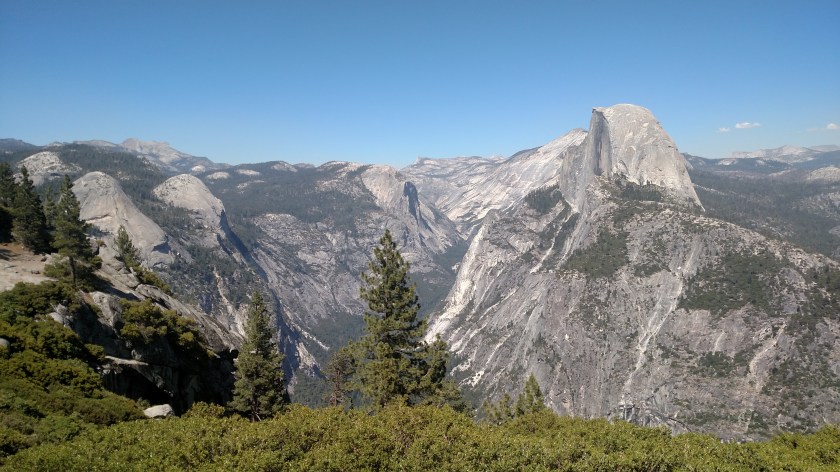
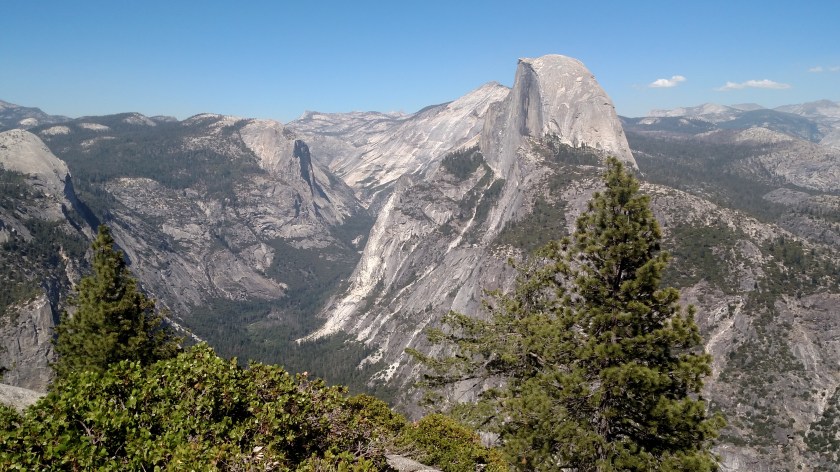
These next 4 photos were taken from Glacier Point.  Getting there takes about an hour from the Valley floor and involves driving west then south on Route 41, the road I came in to the Park on initially last Saturday, then driving up another road to where it ends at the Point.  Glacier Point is at 7,214 feet elevation and you are now looking East/Northeast at Half Dome which tops out at 8,836 feet.  These 4 pictures were taken within about 6 minutes of each other, all with the smartphone camera, zoomed in a little bit more each shot. From this vantage point Half Dome is about 3 1/4 miles away as the crow flies.

IMG_20180627_153500574

IMG_20180627_154058003

IMG_20180627_153524001

IMG_20180627_154110516

And this last photo is from Washburn Point as I started driving back down Glacier Point Road, and really illustrates how Half Dome got it’s name.  You are now look Northeast at Half Dome which is about 3 2/3 miles away.

IMG_20180627_160021720

‘Tis the season…

No photos (and hopefully none forthcoming).

Wildfires are starting to appear on the maps and I will be keeping a close eye on them. There is one right now in the Ansel Adams Wilderness, on the opposite side of Yosemite from where I am. There is also the Pawnee Fire up near Ukiah CA, where I have an Airbnb reservation in about two weeks (although right now it isn’t very close to town). It started only a few days ago and is already over 13,000 acres. It is being shown on the news and the Weather Channel because it has grown so quickly and has already destroyed numerous structures.

I see CalFire, Forest Service and Park Service fire trucks everywhere (not firetrucks like you would see in your home town but pickup or utility trucks owned by those agencies), and when I have been driving on the three scenic routes just north of where I am staying I often see Rangers at overlooks, from which you can see across wide areas, scanning the landscape with binoculars.

I will be closer to the coast after I leave here, except when I go to northeastern California to visit Lassen Volcanic National Park although, as the people who live near the coast near Montecito CA will tell you, that doesn’t guarantee you are immune from the fire danger.

And with the upcoming July 4 holiday looming there are signs everywhere advising that fireworks are not legal and should not be used EVER.