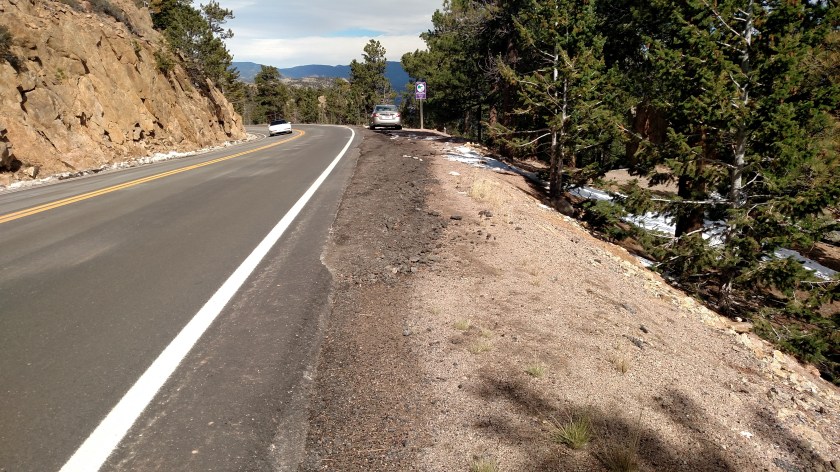
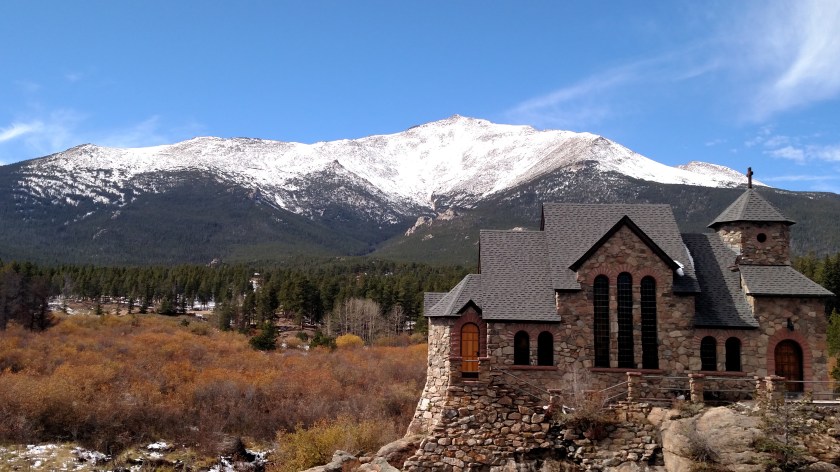
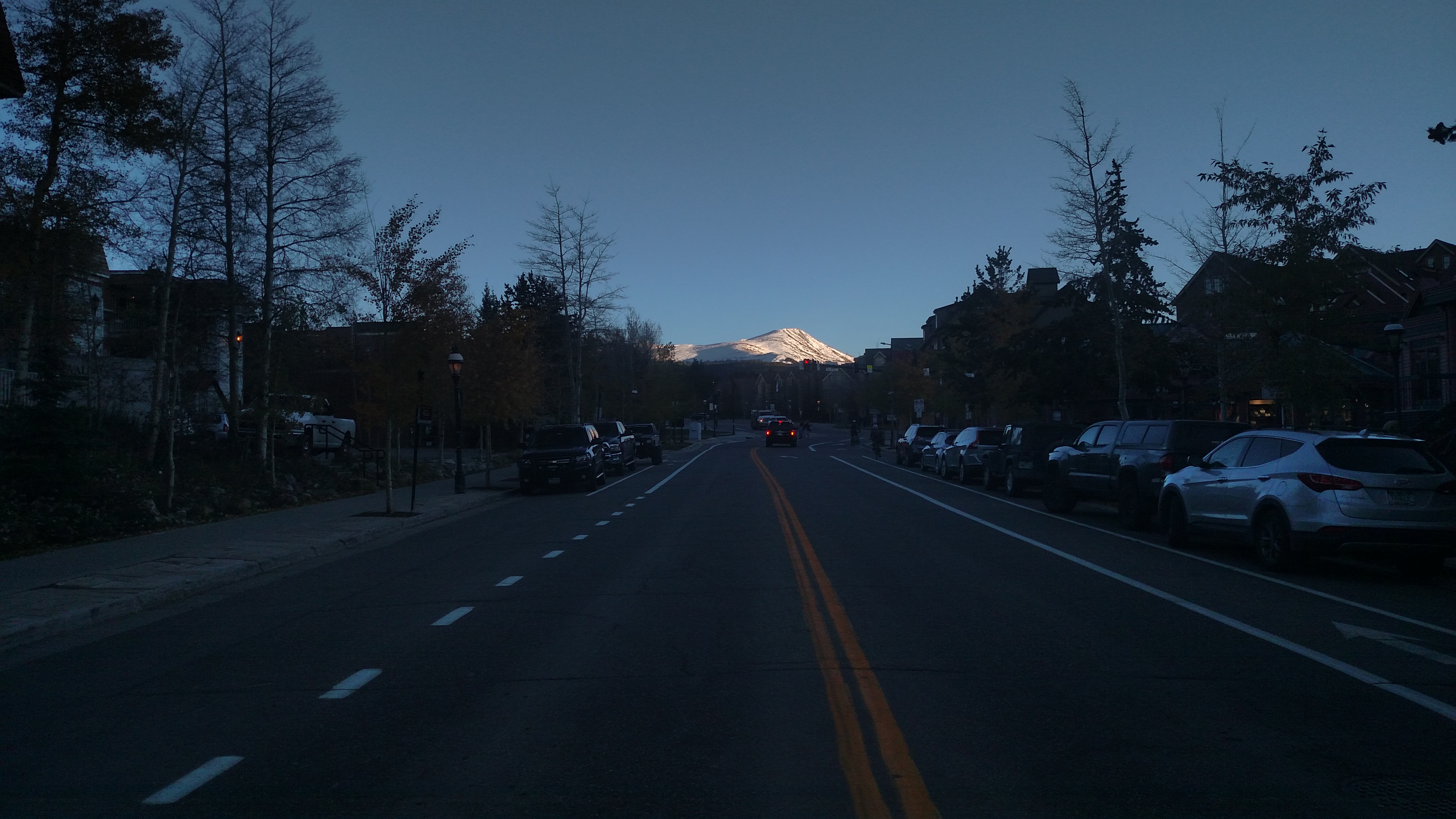
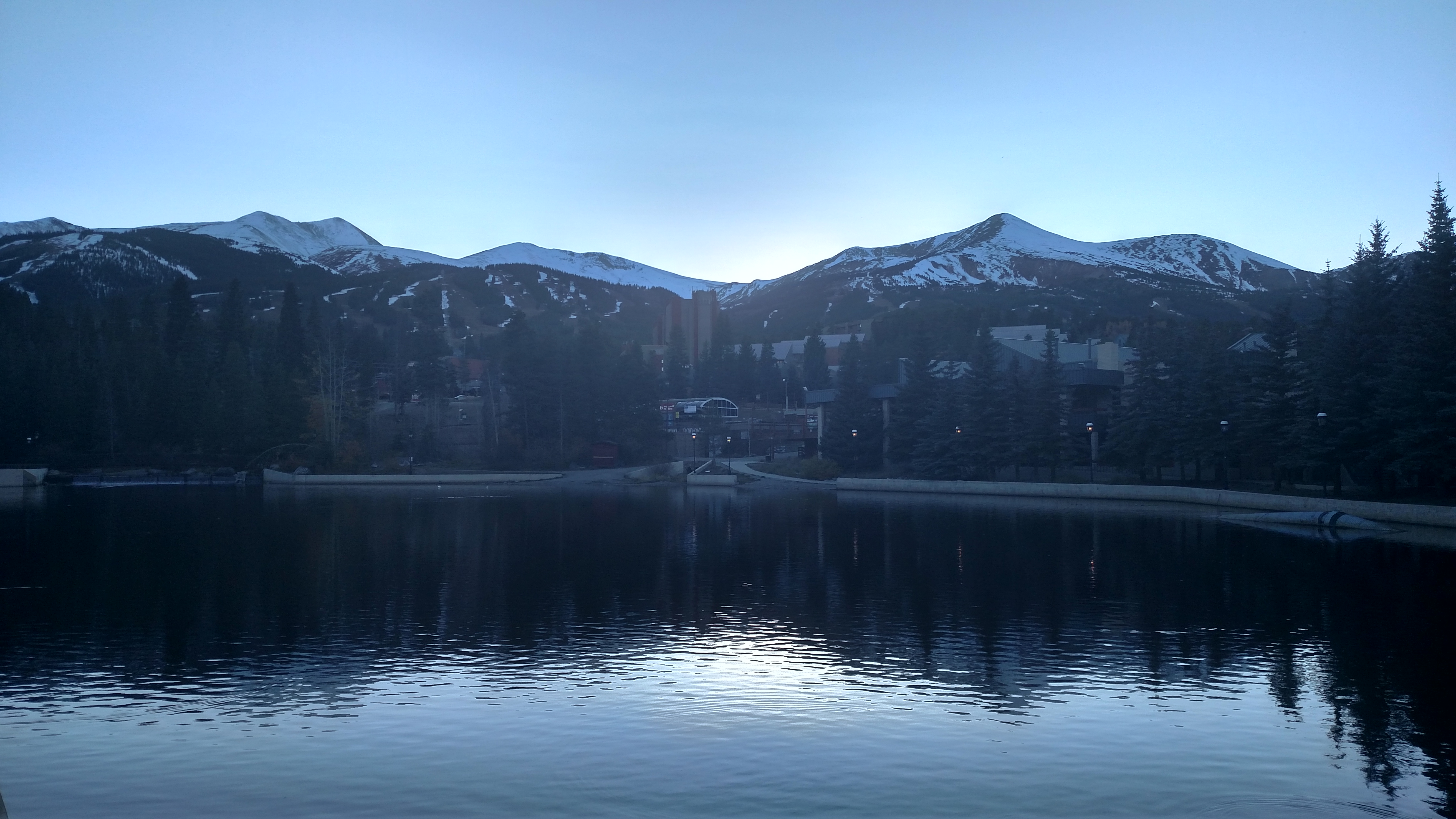
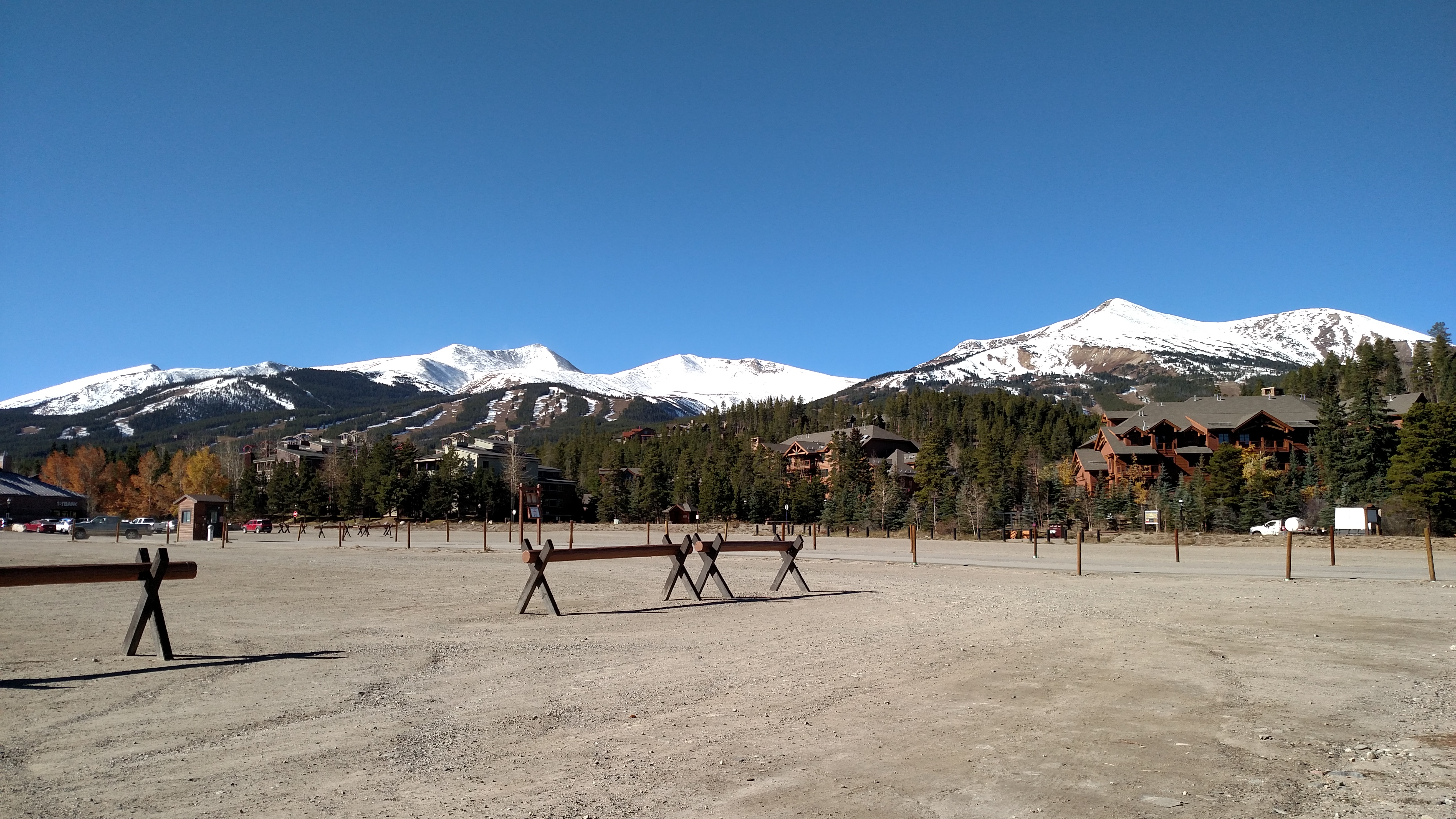
I just took these looking out my bedroom window. Thursday morning, Sept 28, 740am local time. That chilly rain yesterday brought more snow to the higher elevations.


I just took these looking out my bedroom window. Thursday morning, Sept 28, 740am local time. That chilly rain yesterday brought more snow to the higher elevations.


I apologize for the one day delay in posting. After visiting this venue on Tuesday and getting back to Durango I was exhausted and went to bed shortly after I arrived just before sunset. I slept 6 straight hours, unusual for me, and when I woke up around 2am I realized how cold the house was – not bad for sleeping, but not good for downloading pictures and blogging for 4 hours. I got back under the nice warm blankets and went back to sleep. Yesterday morning I was shocked to learn that there was not room on my computer to download the 735 pictures I had taken on Tuesday! I spent much of the morning making more backups and deleting things to make room for more. I’ll need to do some serious off-loading when I get back to Durham. I also needed to tend to some other chores (laundry, ordering new tires for the car, getting the oil & filter changed, arranging a wheel alignment, cleaning and organizing things in my car, getting out warmer clothes, etc) and the day became full very quickly. It started raining around noon and never got above 60 degrees so it was a good day to be indoors anyway. Turns out I cut one of my tires on the nasty road in to Chaco Canyon on Monday (imagine that!!) and the left front keeps losing air. I was planning to get new tires here anyway but now I don’t want to drive any distance until they arrive and I get them installed.
As I write this I am bundled up in a sweatshirt and have an extra blanket on my legs (I get cranky if my knees get cold). I kicked the thermostat up a few degrees before I started downloading pictures and will lobby to set it higher the remaining nights I am here.
There was a light dusting of snow the night before on some of the higher mountain peaks, as there was down in Taos. After the rain moved out this afternoon I see there is now substantially more snow on the mountains north of Durango. Things could start getting interesting during the next two weeks here in Colorado, as I’ll only be going further north. I may even see snow when I take the train ride from Durango to Silverton on Monday, the only upcoming day during my stay when there is zero chance of rain in the forecast.
********
On Tuesday I drove from Cortez, Colorado down to Canyon de Chelly National Monument in northeast Arizona (keep in mind, I am very close to “Four Corners,” where Colorado, Utah, Arizona and New Mexico meet, so it doesn’t take long to get from one state to the other). I approached the Canyon (whose name is pronounced de SHAY) from the northeast, on a series of scenic, paved “Indian Roads”. When I got to the first series of overlooks I did not yet have a map, so I didn’t know exactly what I was looking at, or that there were some small cliff dwellings scattered amongst the cliffs (I still haven’t had time to scrutinize the photos in detail to see if I happened to photograph any of them).
Now THIS is a canyon!….
These were all taken with my smartphone camera. Close-ups, taken with the digital camera, will be posted later. I’ll obviously point out if there are any cliff dwellings.


If you look at the right side of the photo below you’ll see a white pickup truck on the dirt road.


These are more photos taken on Tuesday at Canyon de Chelly (pronounced de SHAY) National Monument in northeast Arizona. These were all taken with my smartphone camera. Close-ups, taken with the digital camera, will be posted later.


Note the sign in the photo below warning people not to throw children or pets down into the canyon (we don’t want the farmers working below to be in therapy the rest of their lives).

In all seriousness, this was one of only a very few “built up” observation areas. In the vast majority of places you could walk right up to the edge. If you kept going you MIGHT be lucky enough to have a rock ledge not far below which would catch you, but in many, many places you would not be so fortunate.


When I got to the Visitor Center I noticed three miniature versions similar in appearance to the ruins I had seen the day before at Chaco Canyon.


There was also a sign indicating the name of the person who had designed and built these miniatures. When I went inside to show my Senior Pass and ID I was planning to ask if that person happened to work here, as I wanted to tell them how impressed I was with their work. Turns out the creator was the young man working behind the counter!
Meet Casey, a volunteer at the facility. He is contemplating his future (college, the Marines, and perhaps becoming a Park Ranger). He had a book on the local subject matter and was studying when there were no customers (he gives out maps and answers questions about the facility). I asked if I could take his picture for the blog and he happily agreed. Here he is out by the Welcome sign. If you look below the sign you’ll see the three miniatures shown above.

When we got back inside (there is no entrance fee, by the way, only fees for special permits like camping, wedding or commercial photography, etc) he showed me another miniature he created. The upper 1/4 (with grass thatching) would appear above ground level, whereas the remainder (below the black line seen on the left) would be below ground. I took another photo showing more of the interior but the camera decided to focus on the background and not the main object, so it is too fuzzy to post.

Casey also showed me another item he made. This is part of a part of moccasins, made with native grasses, which is what would have been worn here back in the day.

Casey is very talented and I think he will do well, regardless of which career path he chooses. I told him he should get a job with a TV or movie studio creating miniatures for use in filming.
These are more photos taken on Tuesday at Canyon de Chelly (pronounced de SHAY) National Monument in northeast Arizona. These were all taken with my smartphone camera. Close-ups, taken with the digital camera, will be posted later.


These are more photos taken on Tuesday at Canyon de Chelly (pronounced de SHAY) National Monument in northeast Arizona. These were all taken with my smartphone camera. Close-ups, taken with the digital camera, will be posted later.


These are more photos taken on Tuesday at Canyon de Chelly (pronounced de SHAY) National Monument in northeast Arizona. These were all taken with my smartphone camera. Close-ups, taken with the digital camera, will be posted later.


Monday I left Taos and headed west. Most of the day was spent in New Mexico, on Route 64. I went over the Rio Grande Gorge Bridge, past the Earthship Biotecture community and off into the desert. It was 39 degrees when I got in my car at around 630am local time (light enough to safely drive). It had dropped to 35 when I bought gas before getting on the road and got down to freezing or below once I got up to 9 and 10,000 feet. I don’t think it ever made it above 70 today, although it was a beautiful, sunny day.
I drove past Chama, where my train ride originated a few days ago, and west to Bloomfield, where I arrived around 1130. I had lunch, spent some time texting and sending emails, then headed south on Route 550 towards Chaco Canyon.
The proper name of the venue is Chaco Culture National Historical Park, although everyone seems to call it Chaco Canyon. It is one of the few World Heritage Sites located in the United States (we lag behind other countries which have existed longer and have richer cultural history). This site has undergone intense scrutiny by historical scholars and efforts are being made to preserve it in it’s natural state (although Trump, and the “fracking” industry have other ideas). The US does excel in “natural” World Heritage sites because of our vast network of National Parks and naturally beautiful places. This venue was first recommended to me by other Airbnb guests when I was staying in Flagstaff and visiting the Grand Canyon. My hosts at the next Airbnb stop, in eastern Arizona, seconded the motion and highly recommended I get here. Chaco isn’t the easiest place to get to. I actually tried to get here from Albuquerque but spent so much time stopping to take pictures along the way, and having a rare sit-down lunch, that I determined that by the time I got here I’d have to turn around and leave. Today I finally made it.
Chaco sits out in the desert, far removed from pretty much everything. It was an hour-long drive south on Route 550, but then took almost 45 minutes to go in the, mostly unpaved, series of state access roads which only covered 21 miles but were in HORRIBLE condition. I thought there was a shortcut I could take on the way out but learned that it is closed, apparently in even worse condition. There were two places on the road where there were stern warning signs that traversing them should not be attempted if there was ANY water on the roadway. That makes it easy to get stranded here if a sudden thunderstorm develops while you are in the Park.
I didn’t arrive at the Visitor Center until almost 130pm and determined that I could only be there for about 2 hours so I could make it to Cortez, Colorado before dark. I was given a map and when I told the ranger I only had time to see a few of the sites she told me which ones to focus my attention on.
Most of the drive west from Taos was out in open country, and it was a very pleasant day. When I got about an hour away from Bloomfield things started getting rocky again. This formation caught my eye, but the rest were pretty much more of what we’ve seem plenty of already.


At the Visitor Center there was a huge relief map on the wall, showing the Park and the elevation changes, paved road and hiking paths. It was way too big to get in one picture. I’m only posting the portion which shows the paved road.


The area is lined with rock walls which are tall, but not as tall as many of the places I’ve seen recently. I wouldn’t have been inclined to call it a canyon but technically I suppose it is.


You’ll see photos in subsequent posts illustrating just how big these chunks of dislodged rock are.


The canyon is wide and shallow, which is another reason why it didn’t really feel like a canyon. There is a shallow gorge carved through the central area which probably contains water after the monsoon rains but was dry today.


The ranger at the Visitor Center suggested I focus my attention on two sites, Pueblo Bonito and Casa Rinconada. I was able to squeeze in two others, Hungo Pavi and Chetro Ketl (which wasn’t very big and I’m not posting any pictures of).
This is Hungo Pavi:


This is some of the dislodged rock from the canyon wall:


This is Pueblo Bonito, which had the largest footprint and was the most complex of the ruins in the Park, and the only one you could walk through. You’ll see an illustration later of what it might have looked like in it’s glory days:


And here is some more dislodged rock, with people in the picture to give you some idea of how big the chunks are.

More of Pueblo Bonito:


And it’s not all squares and rectangles. There are lots of round rooms, too. Each had a purpose, largely ceremonial.