5 weeks in – a JohnBoy travel update

Sunday, August 31 marked the end of 5 of my planned 8 weeks in western Canada. So far everything is going exceptionally well. I am behind with posting photos which means every day is filled with new adventures. I am prepared to post my photos of the first National Park I visited in the Canadian Rockies but can’t find my Park maps on which I made many notes which I need to reference. The back seat of my car looks like a bomb went off, and I need to root through it and find them. Of course, they aren’t where I thought they were…

As I write this I am in Red Deer, Alberta – finishing the first of 3 nights here. I was in for a shock yesterday morning as I drove up here from High River, AB, south of Calgary. After I bypassed Calgary to the east on Highway 2, a major north/south route, I continued north towards Red Deer (about halfway between Calgary and Edmonton) where I was greeted by a very noticeable low brown cloud of haze. It didn’t smell like smoke, and I wasn’t aware of anything going on in the immediate vicinity, but there it was. I drove a little past Red Deer and it seemed to improve somewhat so I just chalked it up to smog, even though Red Deer only has a population of about 113,000 people.

Overall visibility after I left Castlegar and drove east of the Canadian Rockies Sunday morning was not that great and I thought maybe it was just high pressure keeping whatever was in the air close to the ground. Well, this morning I learned that an air quality alert of over 10 (they call it 10+ on a scale of 1 to 10!) has been issued for little Red Deer. It seems that smoke from a massive wildfire up in the Northwest Territories (a large province due north of Alberta and Saskatchewan) has made its way south. In the last day or two I had read about a big wildfire up in Yellowknife (in the NWT) but didn’t pay much attention because it is 1,000 miles north of here and I wasn’t going much further north than Edmonton. Well, nature works in mysterious ways…

Environment Canada says it is supposed to clear out of here in the next day or two. Today I am planning to drive about 50 miles west to “The Cowboy Highway,” Route 22, the southern part of which I had driven on to get to High River on Sunday. Route 22 has been on my list of scenic roads here and I am sticking with that plan. Other than photo ops I will be in the car with the A/C on “recirculate” so hopefully whatever is in the air won’t bother me. I am tempted to just hunker down and stay inside for the day but I figure one day won’t kill me… If I start out this morning and the haze has gotten any worse I will retreat to my Airbnb and prepare more photos for posting. When I leave Red Deer Thursday morning, I will be driving much further west and should be away from the NWT and the smoke for good. Everything on my route going forward looks fine.

The other travel news is that I am moving my trip to Alaska UP by a week and will start heading north Wednesday of next week! I have decided to hightail it up there and get it in sooner rather than later and then retreat in a more leisurely fashion and finish my time in British Columbia on my way back to the US. I had already booked things through Prince George, BC and will drive north and west from there. I don’t have the itinerary set yet but am hoping to be in Alaska 4 or 5 weeks depending on the weather. I am still on the original overall plan, just rearranging the order in which I’m doing things.


So as of Sunday, 5 weeks in to my original plan, I have driven 6,225 miles in Canada, and a total of 10,825 miles since leaving Durham the morning of July 1.

I just had my oil and filters changed and had the tires rotated so I am all set for the next 10,000 miles! Bring it on!

2010 Winter Olympic Park

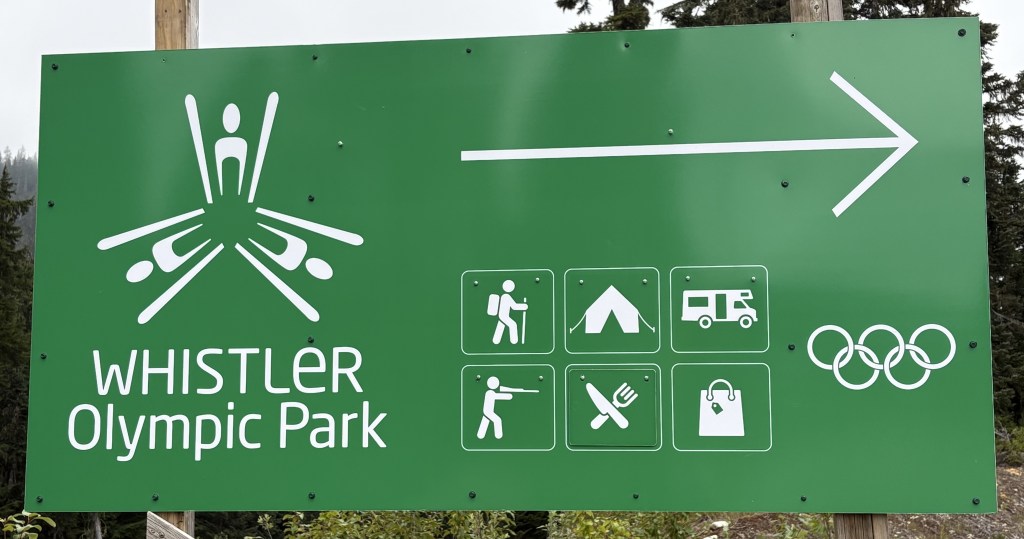
Before getting to the Whistler Blackcomb ski resort in Whistler I took a turnoff to drive back to the Olympic Park, built for the 2010 Winter Olympics which were held here in British Columbia. It isn’t just a dormant facility sitting here rotting. Many of the facilities are actively being used, even in the summer.

First a map of the general layout:

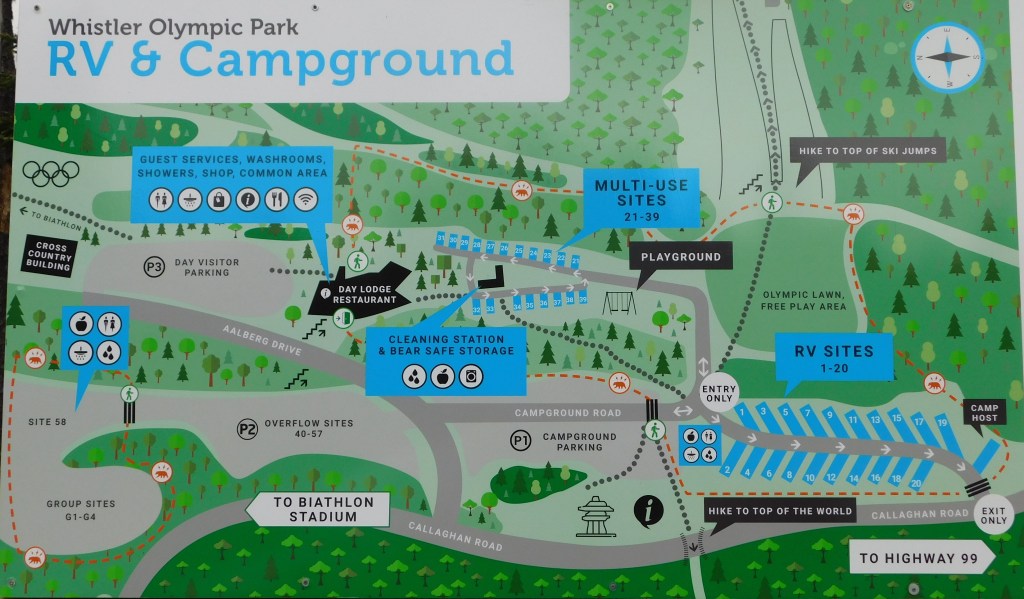
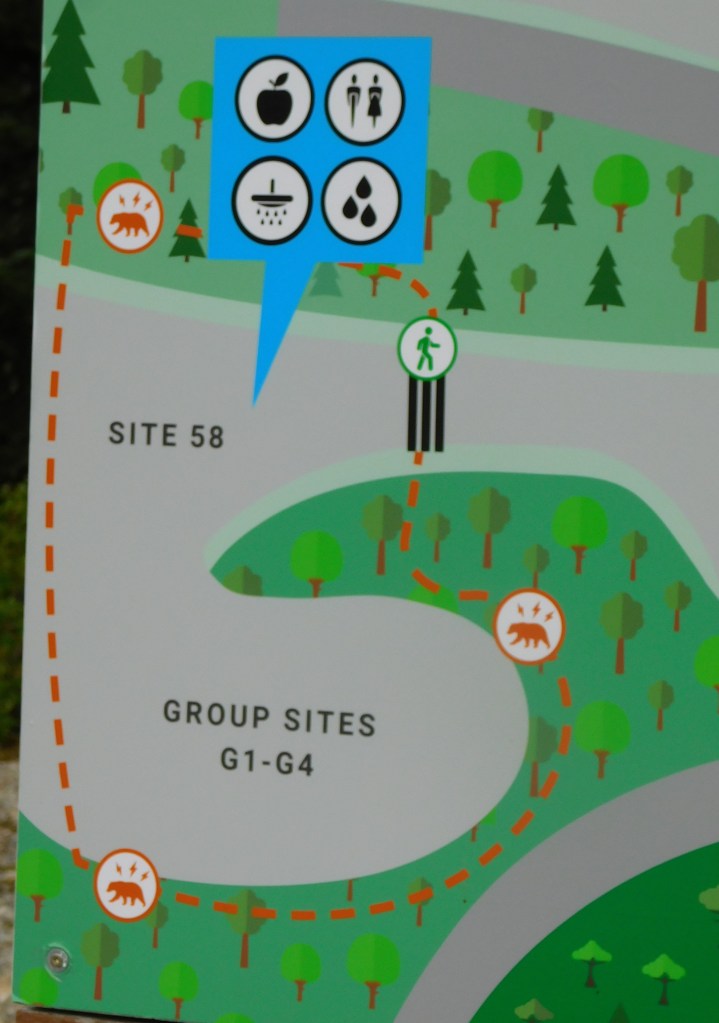
Next, a map of the campgrounds on site, and other details.

After I took that second photo I noticed something written off to the side (not in the photo)

Whoa! – that middle item really got my attention. Let’s have another look at that map but we’ll zoom in a bit:

Perimeter around the remote campground – check.

Perimeter around the primary RV sites and kid’s playground – double check.

Here is a door I found behind the Day Lodge (which contains a cafeteria, gift shop, washrooms and showers for the campers, and various support facilities for running the Park).

PLEASE remember to close & lock the door behind you!!

And here is a look at the Day Lodge itself:

The left side is the front entrance, the right side is the cafeteria and off camera to the left is the gift shop.

Also around back was this item promoting a nearby business. In the US we would call this a bobsled, but here in Canada it is a bobsleigh. And no, I didn’t get in it (after my experience in New Mexico where I got in a life size replica of an IndyCar outside a racing museum and for a few tense moments, couldn’t get out).

This is here to promote the Whistler Sliding Centre. That facility is located high on the mountain above the ski area, further up the road, but unfortunately the Sliding Centre wasn’t open the day I was here.

When my youngest brother and his family lived in Salt Lake City they took me to a similar Olympic Center up in Park City, where the 2002 Winter Olympics were held. We watched sleds some roaring down the track (outfitted for summer use). When they launched one from the top a voice on the loudspeakers would announce “Bob on track !” so those of us down below could get our cameras ready.

People can pay to ride with an experienced “driver” but we didn’t do that in Utah and I wouldn’t have here even if the facility had been open on Mondays.

Next I’ll show you what was happening at the Biathlon facility elsewhere on the property.

Please don’t pet the bears

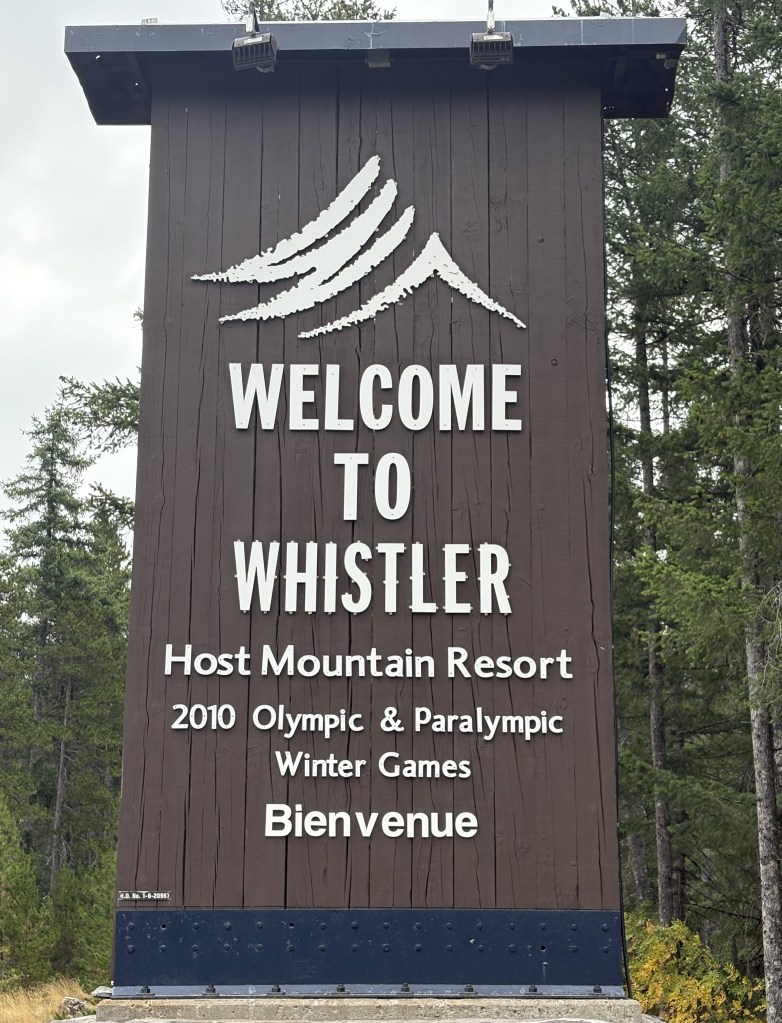
Monday I had scheduled a daytrip up to Whistler ski resort, northeast of Vancouver. I left Maple Ridge early in the morning so I could bypass the city westward on the Trans Canada Highway before morning rush hour.

Before I got to the road going up the mountain to Whistler I went through the coastal town of Squamish. It is the English name of an indigenous tribe on whose land Whistler resort, and many other towns, sits (their land consists of 2,600 square miles (NOT kilometers)). Most signs carry both the English and Indigenous spellings.

Those numbers are kilometers, not miles, by the way. Things up here are almost always expressed in metric measurements but when I discuss them on my blog I generally use the US system since that is what many of my followers can relate to.

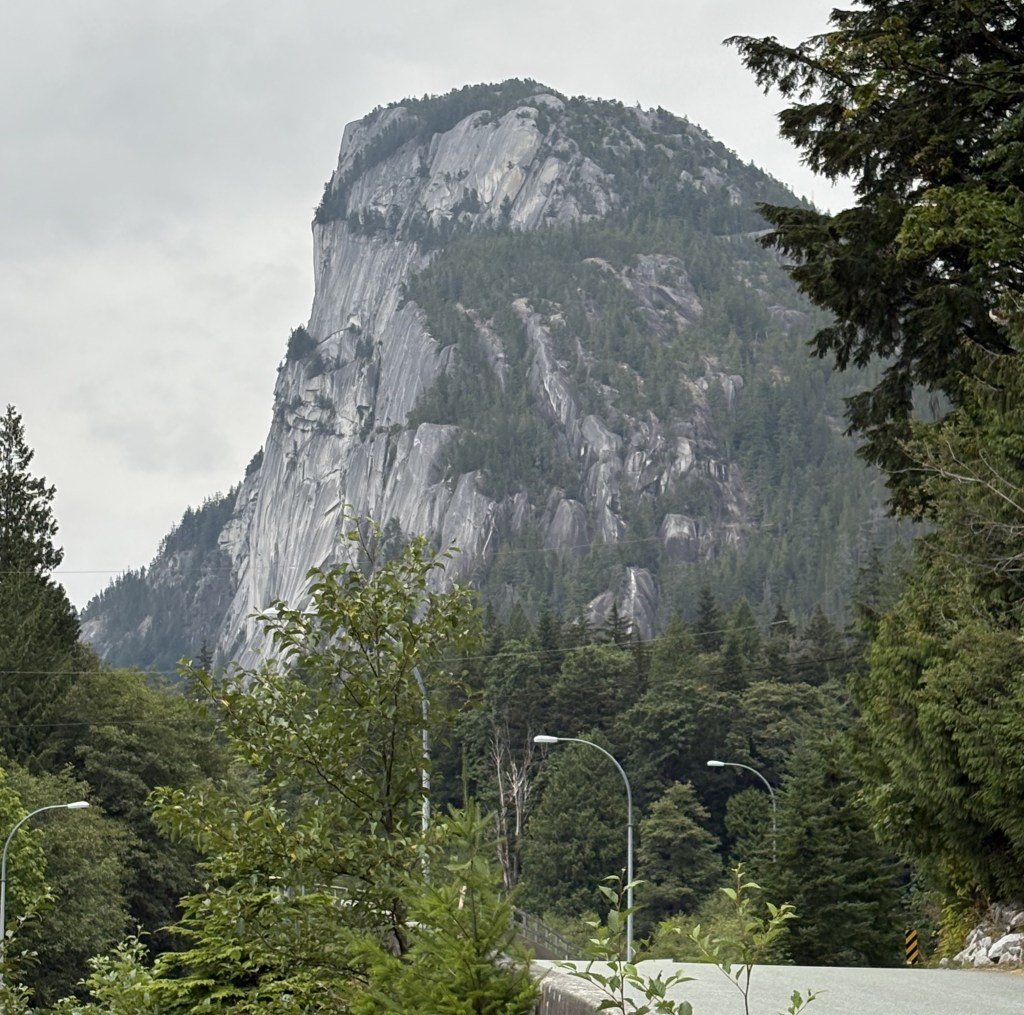
As I approached the town I could see a huge rock formation right by the highway in the distance:

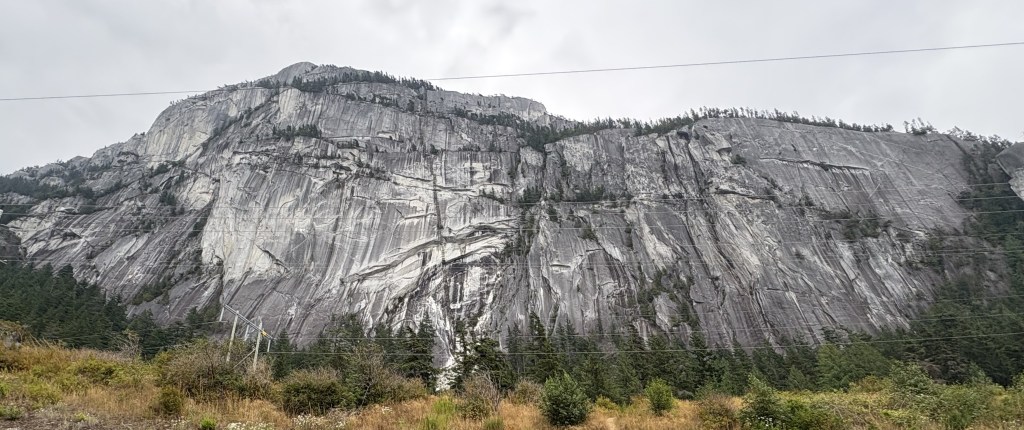
Here is a photo of the rockface looking in right next to the formation (but from the other side of the highway):

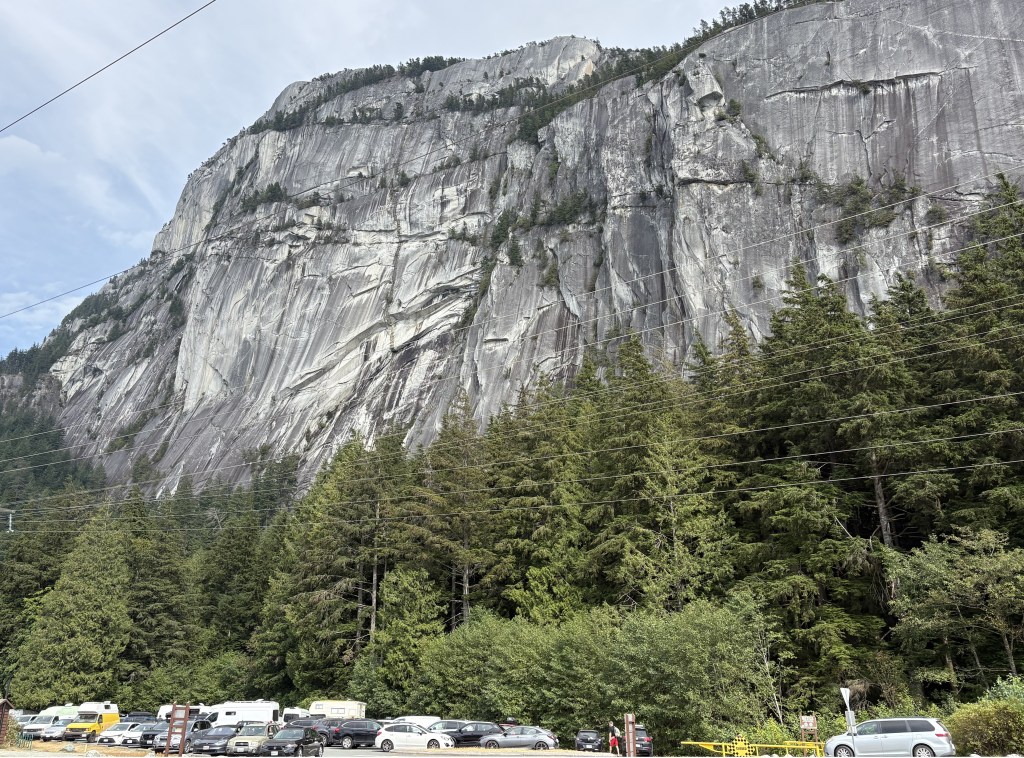
And here is another photo which includes the parking lot below the formation. As you might guess, it is VERY popular with rock climbers, and there is a special parking area right below it for their vehicles, which are loaded with their climbing gear.

I didn’t see any climbers on the face either going by in the morning or later in the day as I was heading back to Maple Ridge, but I could see people resting in the afternoon from having climbed earlier in the day when it was cooler and without the sun beating on the face of the formation.

After taking photos here in the morning I continued on up the mountain towards Whistler.

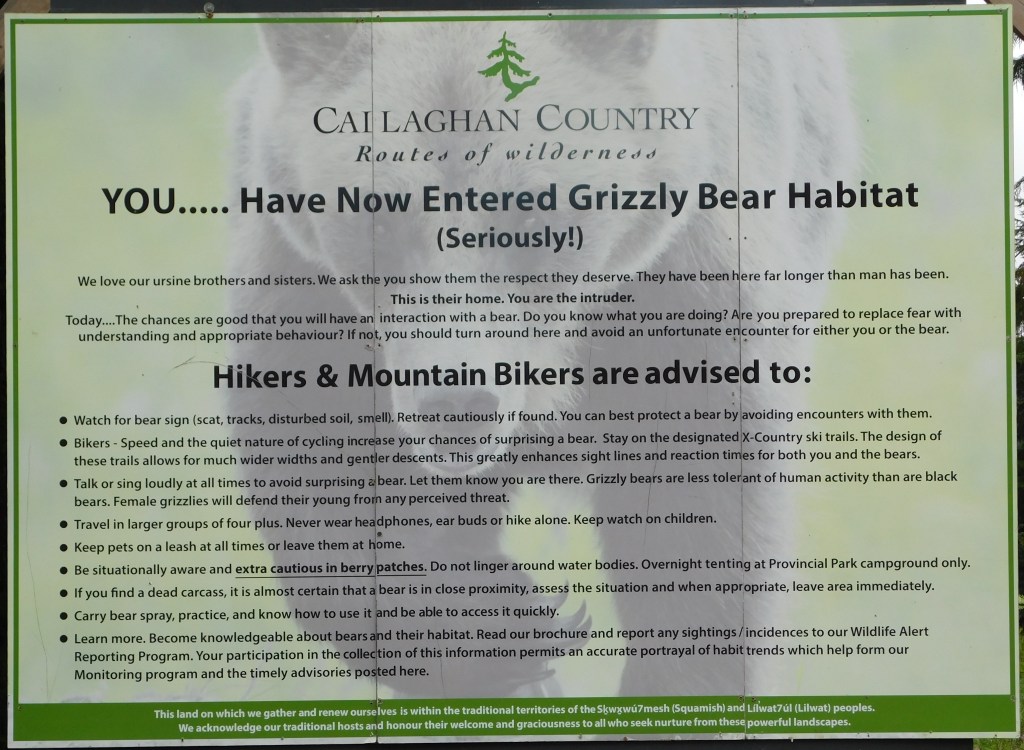
Followed immediately by:

Many of you have perhaps seen a sign like this in your travels (even in the mountains and near the coast in North Carolina) and I think most people assume it only applies to black bears. Well, in places like Yellowstone National Park in the US and most places here in Canada, it also applies to another type of bear.

I was first warned about grizzly bears when I was at the north end of Vancouver Island earlier in my trip. Evidently young males from the mainland swim over to VI in search of new turf and perhaps a place to raise a family. They must have convinced some female grizzlies to tag along, as the grizzly bear population on the island is growing. I didn’t see any, but there were plenty of signs warning about them.

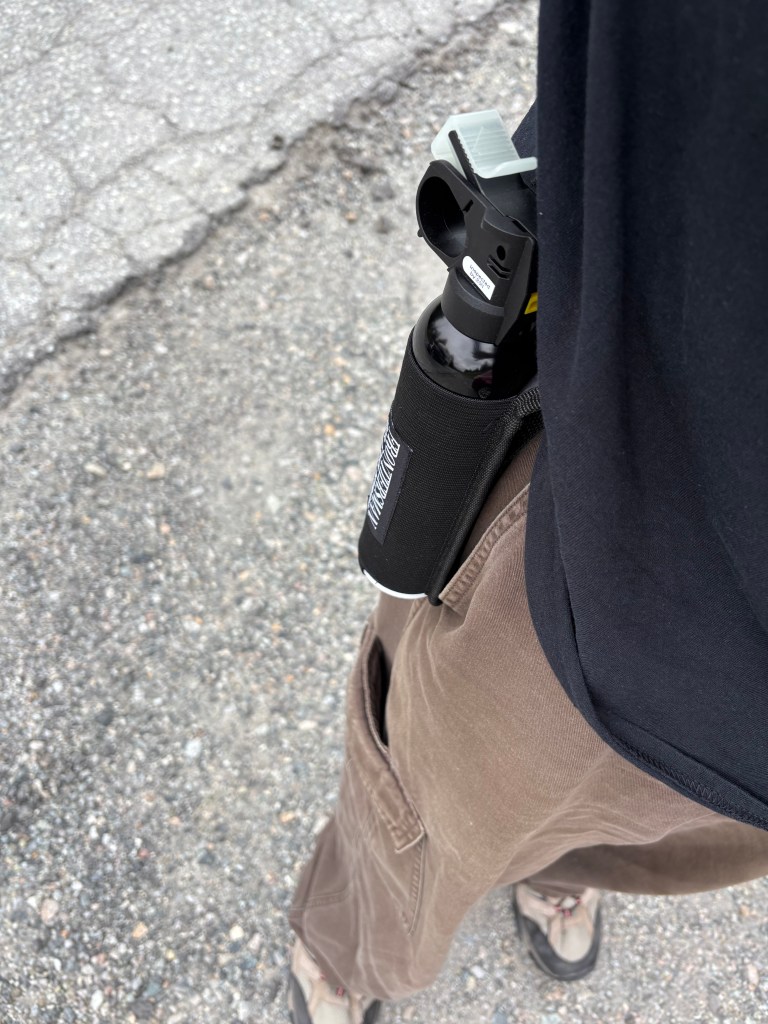
And my nephew, Sam, will be pleased to know that every day that I am near the woods and out of my car I am packing bear spray:

When I visited my brother and sister-in-law, and their son Sam, in Wyoming back in 2021, Sam invited me to the place where he worked, just outside of town. In the hills above the complex where he worked there are petroglyphs on the rock walls. When I got there he asked “where’s your bear spray?” I replied “in my backpack”. He told me “No, when you need bear spray you need it RIGHT NOW”. It comes with a carrying case which you can strap onto your belt. It should be worn at all times when you are in a place which may also be inhabited by bears.

I never needed the can I bought in Wyoming and while it may still work, the expiration date has passed. I still have it but I bought two new cans for this trip and wear one of them at all times when I am out of my car.

Victoria to Duncan, BC

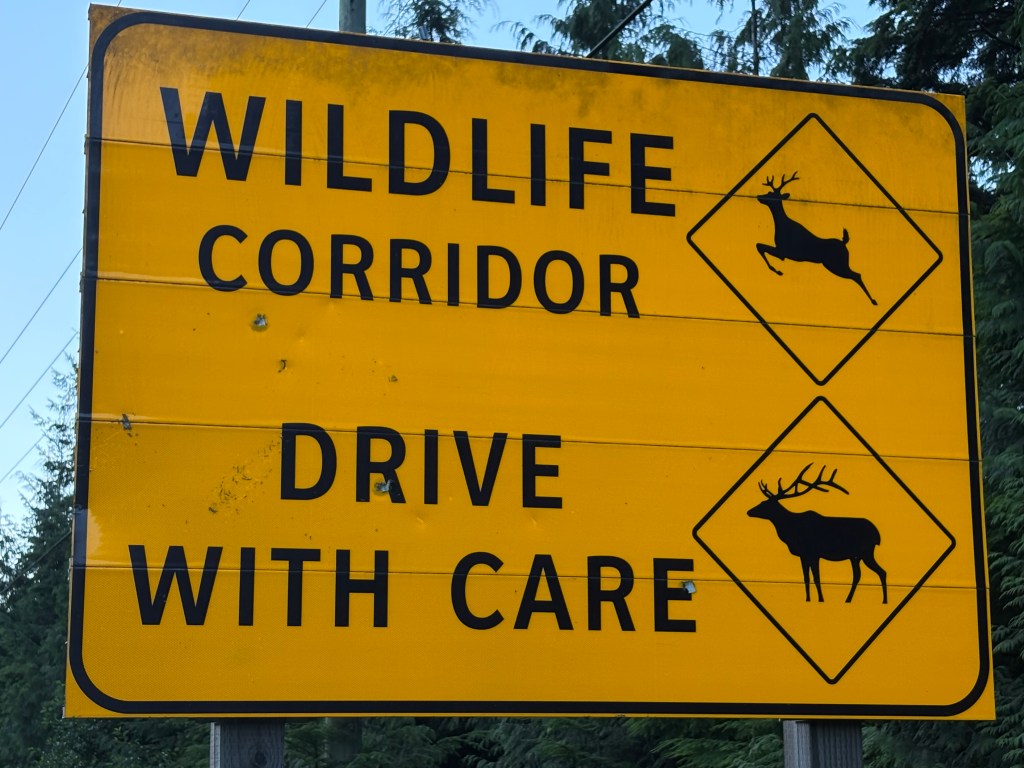
After two nights in Victoria it was time to head northwest, up the eastern (inland) side of Vancouver Island. Shortly after leaving the city I immediately I started to see huge highway signs warning of Elk. Not deer. ELK.

Oh, they have deer too, mind you…

… but Elk are much larger and pose a greater risk to motorists. Oh, and they bears up here too. Black bears AND grizzly bears. I brought two cans of bear spray for this trip. A small black bear ran across the road well ahead of me the other day at about 10 in the morning. One must always be vigilant when driving.

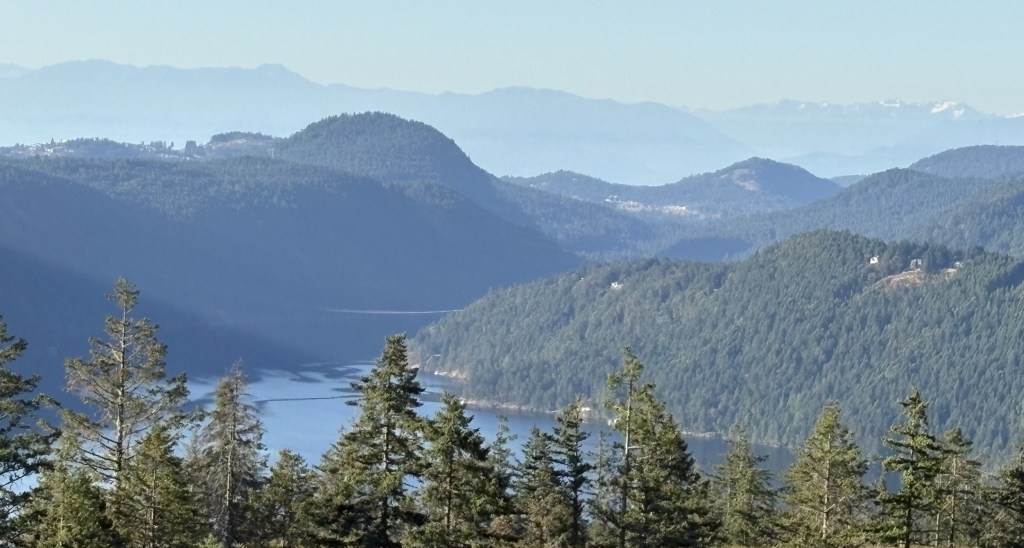
Soon after leaving town I stopped as a rest area near Malahat. I didn’t need to rest, but wanted to take in the scenic view.

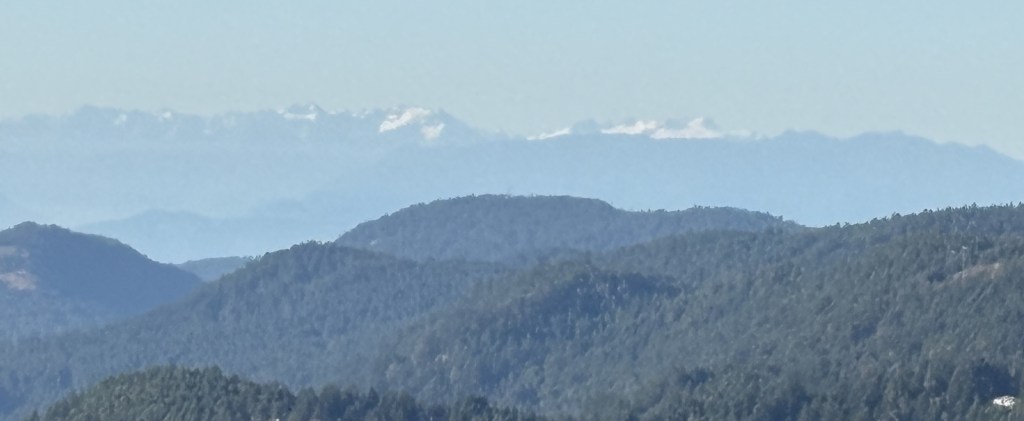
And for those of you with eagle eyes, yes, that is snow on the distant mountains in the upper right corner of the photo.

When I texted that photo to friends and family members I said that it was the mountains in the Olympic National Park in northwest Washington State. That is not correct. It is actually Mount Baker, and other mountains, still in northwest Washington but further inland, up near the Canadian land border, looking east from this vantage point, not south.

Another lake I could see from another scenic overlook just a little ways up the road:

I got back on the highway and soon arrived in the little town of Duncan. Duncan is known for it’s totem poles. There were lots of them scattered around town but the visitor center there wasn’t open yet and I needed a map to find them all. It was also early in the morning and the sun angle was not conducive to taking great photos.

Here are a few that I was able to find:

And I spotted this big guy across an intersection, in front a round office building.

It is called Cedar Man, and is the widest totem pole in the world, measuring 5 feet, eleven inches across. The carver is a man whose “English name” is Richard Hunt. He is a member of the Kwagu’l indigenous tribe and his given name is actually Gwe-la-y-gwe-la-gya-les. I got that information from the small sign at the base of the pole, which is present at each pole in town.

Indigenous words are all presented in a very elaborate font which I can’t replicate here, but when I start posting more photos of totem poles and their carvers after I have researched them in more detail I will show you photographic evidence of what I’m talking about.

A little further north of Duncan I turned off to head over to Mount Prevost, which promised fantastic views of the area.

I left the house in the photo to give viewers some reference of just how tall the mountain is (2,585 feet). I drove up the road towards the parking area but the road was closed before I got to it and I could tell it was still quite a climb to the top. I am not a hiker so I turned around and left. There is quite a view, though, based on photos I found online.

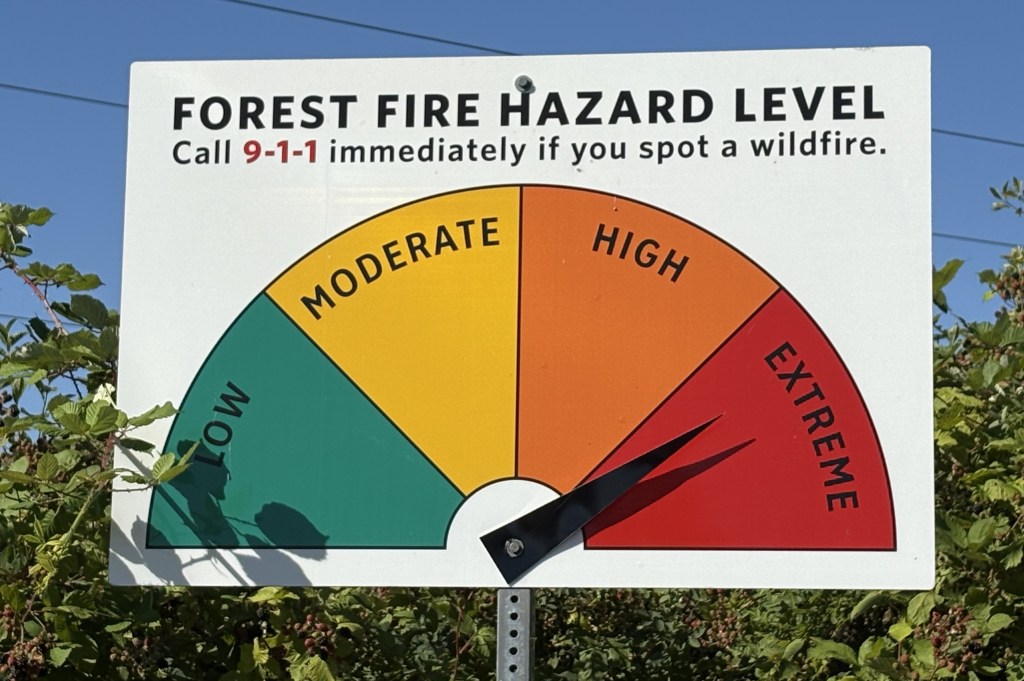
As I was driving back to the main highway I saw this sign which shows the current fire level risk in Vancouver Island.


I read this morning that the fires in Manitoba province are getting worse and even more have been detected in just the last week. They have already experienced three times the average amount of land loss to wildfires, and tens of thousands of people have been evacuated, mostly by air (not many roads up north). Think about that. Tens of thousands. There are still large, out of control fires in northern Saskatchewan province, too. All of them are producing dangerous smoke and there are health warnings in many areas well south of the actual fires.

This area has been under a huge high pressure dome the entire week I’ve been here. That’s good for me, nice clear days and pleasant temperatures, but bad for residents of those two provinces because high pressure keeps the smoke close to the ground. The weather forecast indicates that that situation is fixin’ to change here in a few days and hopefully that will help clear some of the smoke out.

I am going to resume booking my Airbnb’s along my original route and will make a bee line for Saskatchewan province and get that portion of the trip done so I can focus on Alberta and British Columbia. There are always new fires popping up and the situation can still change on short notice. Canada has excellent resources for monitoring all of the various fires so I will be well informed as to their status.

My first afternoon on Vancouver Island

The ferry from Port Angeles, Washington State dropped us off in the harbour in Victoria mid-afternoon. I had a scenic drive which would take two hours each way planned so I decided to go ahead and get it checked off the list since I didn’t know my way around the city. It was easy to get on Route 1 (the Trans-Canada Highway) from the ferry terminal and then I hopped on Route 14 which would take me around the bottom of the island to the southwest and then follow the Strait of Juan de Fuca which separates Vancouver Island from Washington State.

I passed through little towns like Langford, Sooke, Shirley and Jordan River. The road eventually turned inland and climbed up into the San Juan Ridge of mountains. Ultimately the road would end at Port Renfrew. I never made it that far. Once the road started climbing up into the woods, a) the drive became like something I could do in North Carolina or Virginia – driving through a tunnel of trees, but more importantly, b) the road had lots of curves, but more distressing were the severe undulations which often caused the car to almost bottom out if I went too fast. I now drive a Toyota Camry which, when loaded with all my stuff, sits pretty low to the ground (and I bought it with low profile tires on it compared to what I normally buy). I finally said “enough” and turned around. I was getting carsick on land!

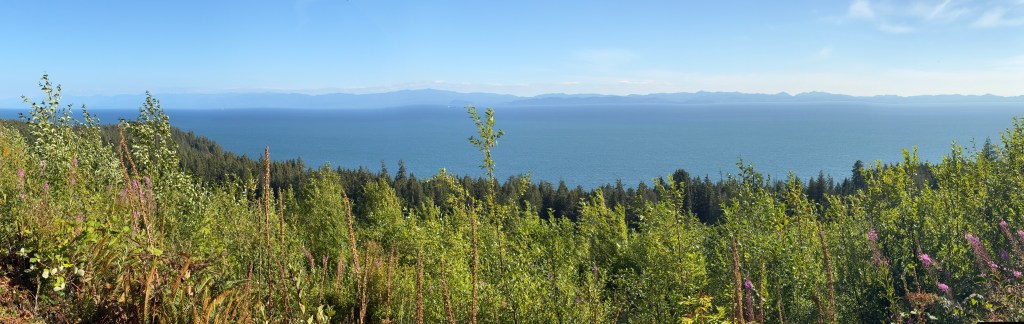
Here are some panoramas looking west towards Washington State. The photos make them look tiny, especially using the panorama format, but actually looking at the mountains of Olympic National Park was very impressive, even from a distance.

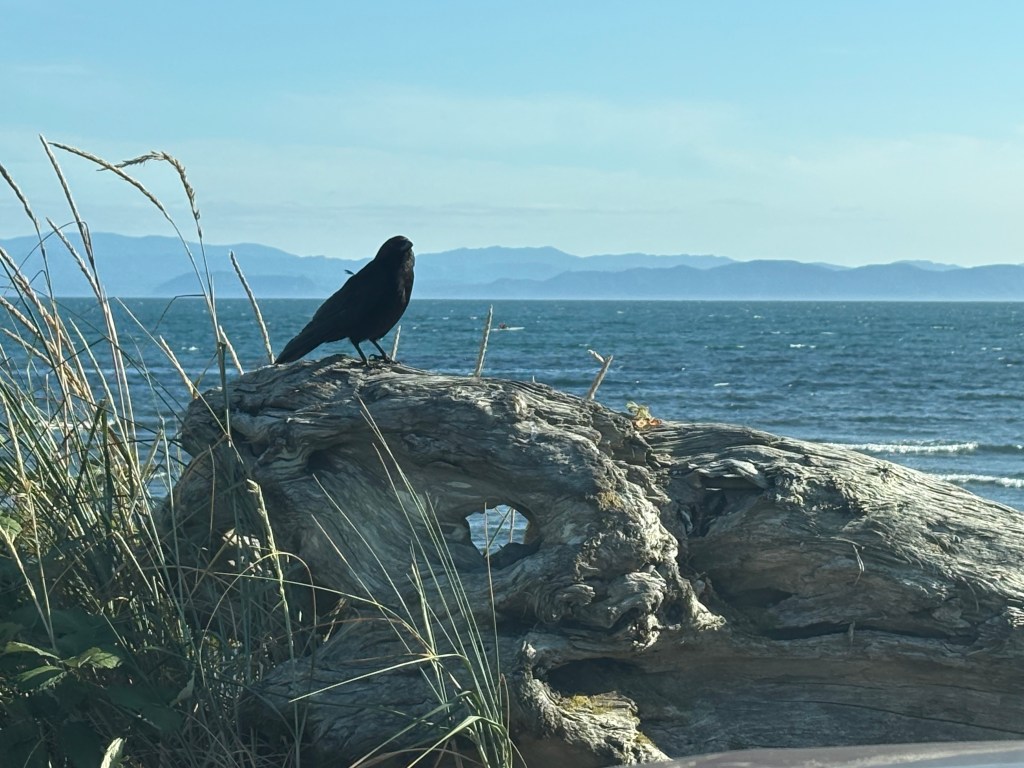
This crow landed on the rock in front of me as I was getting ready to back out from my parking place by the beach.

That photo was taken at Jordan River and from there it would take me about an hour to get to my Airbnb for the next two nights.