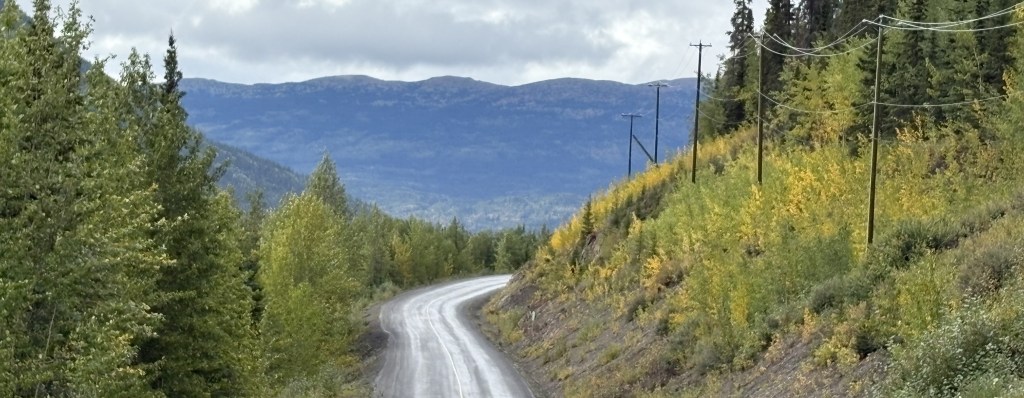
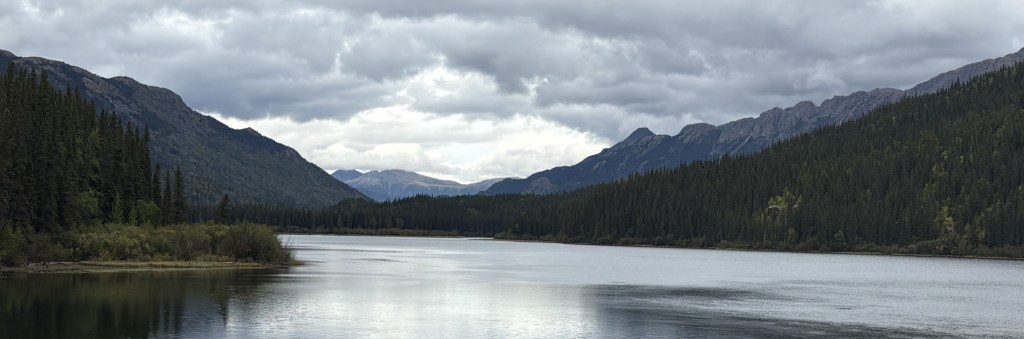
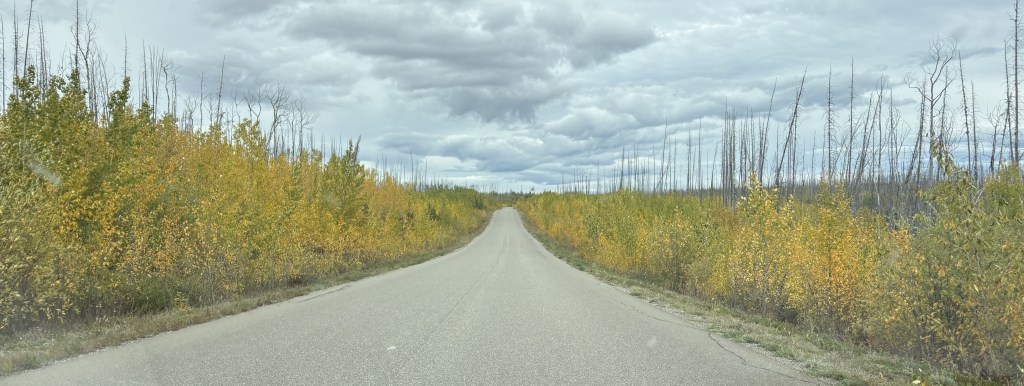
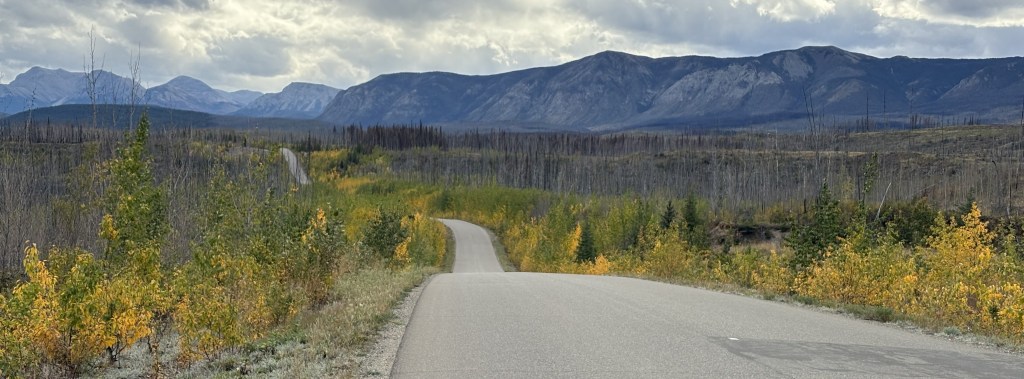
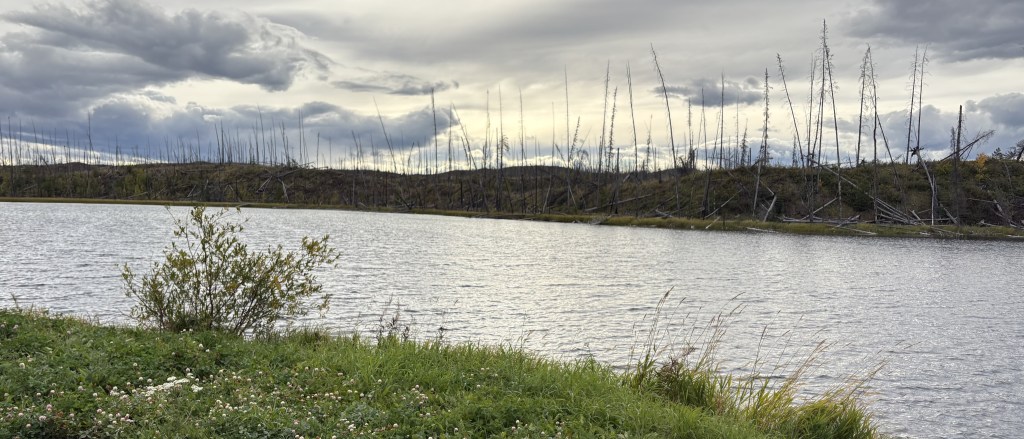
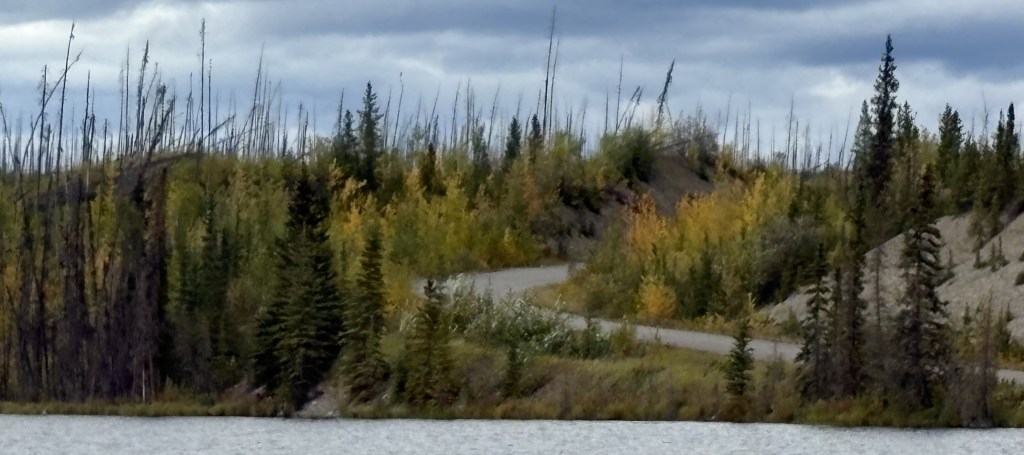
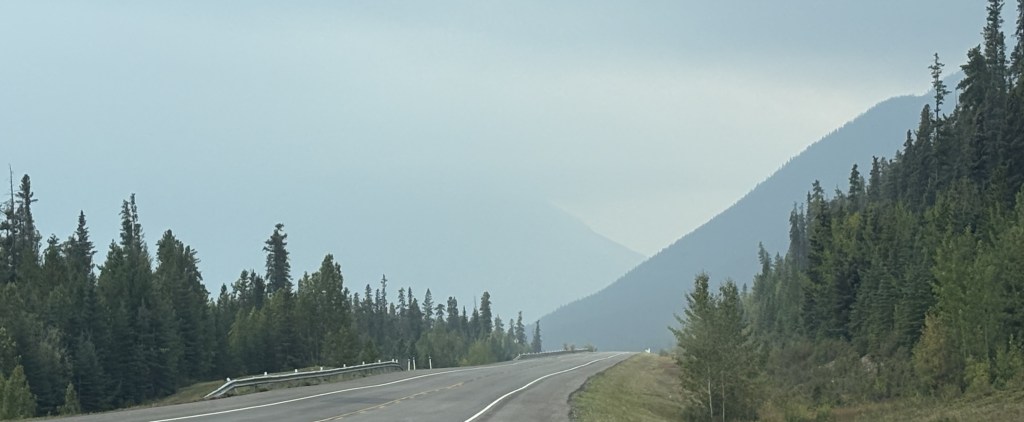
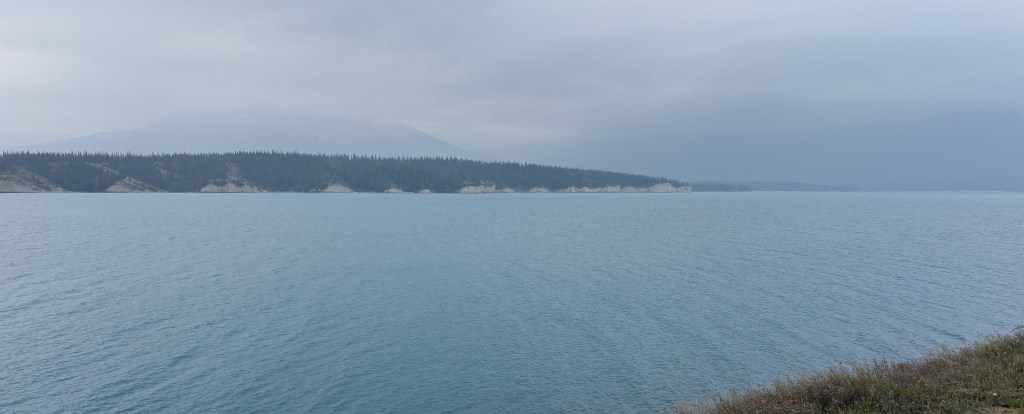
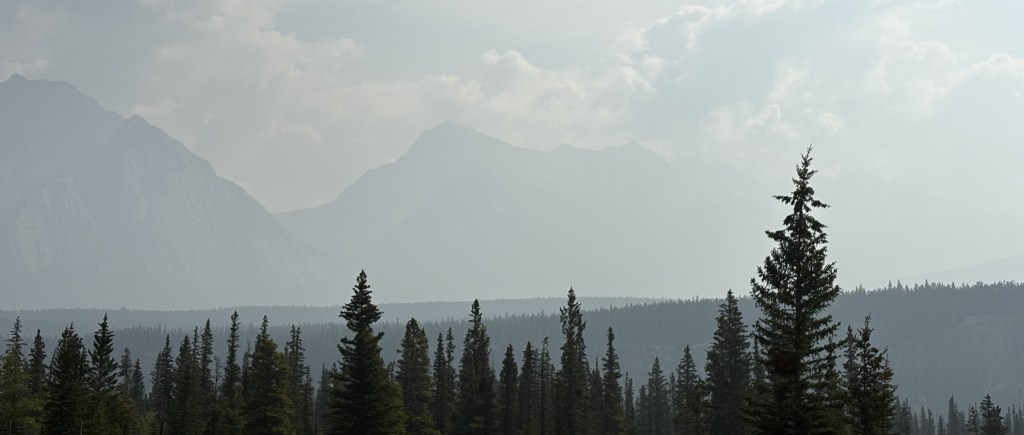
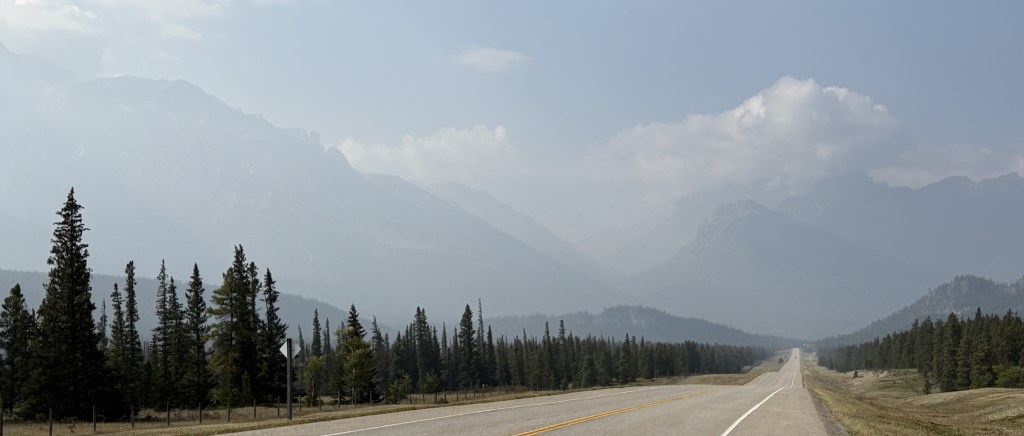
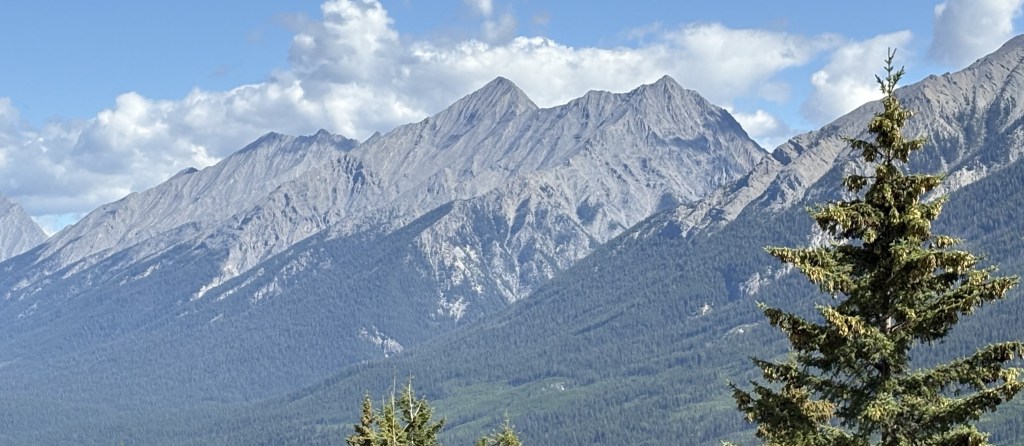
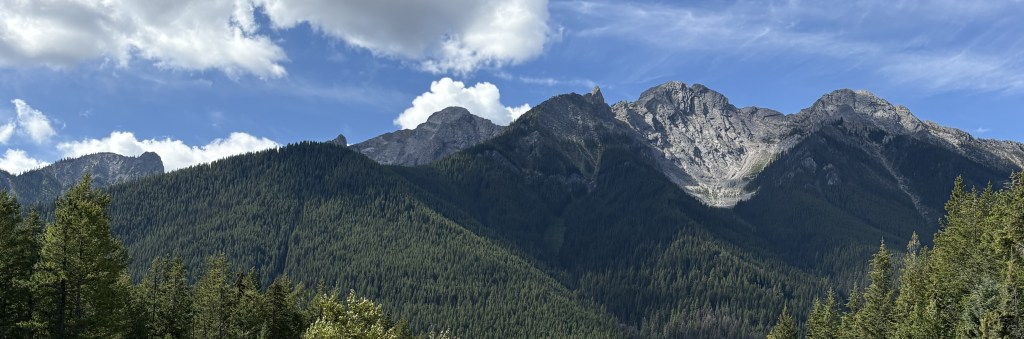
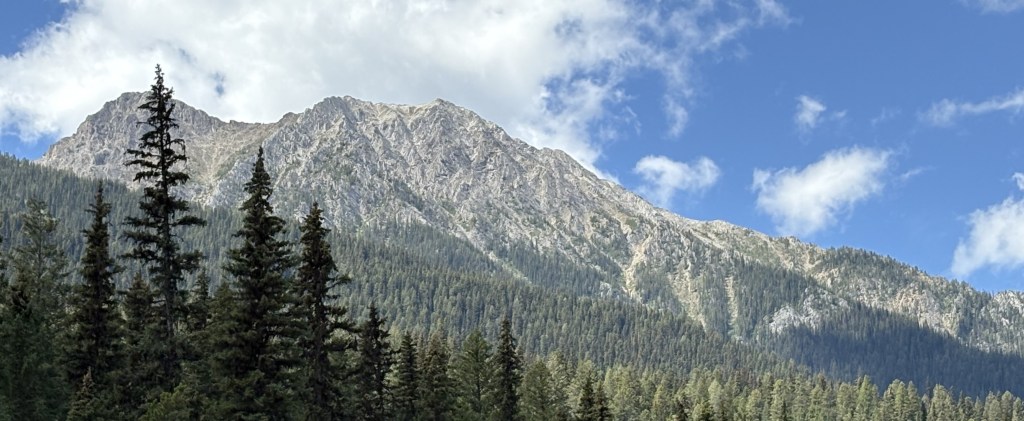
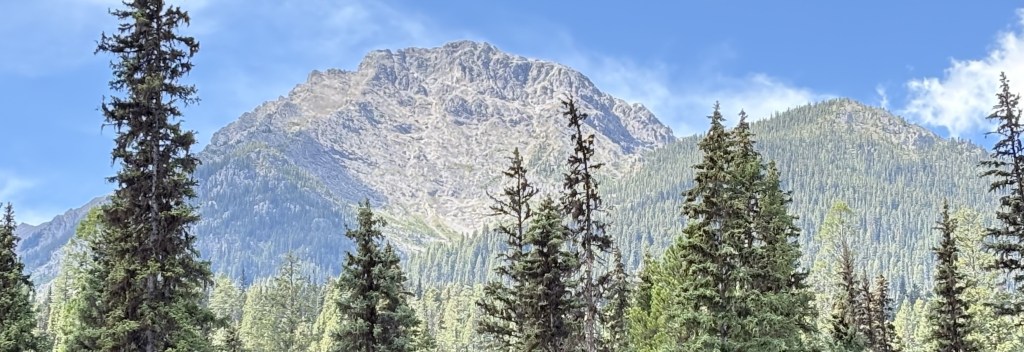
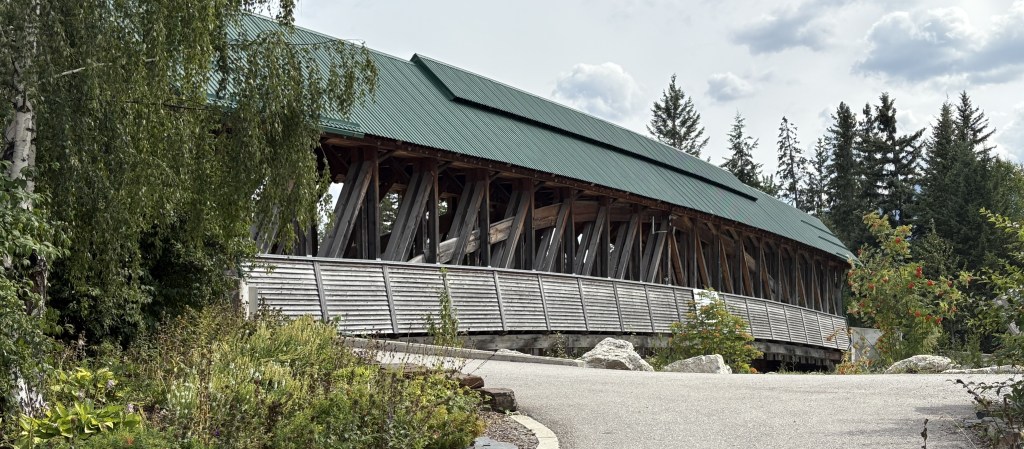
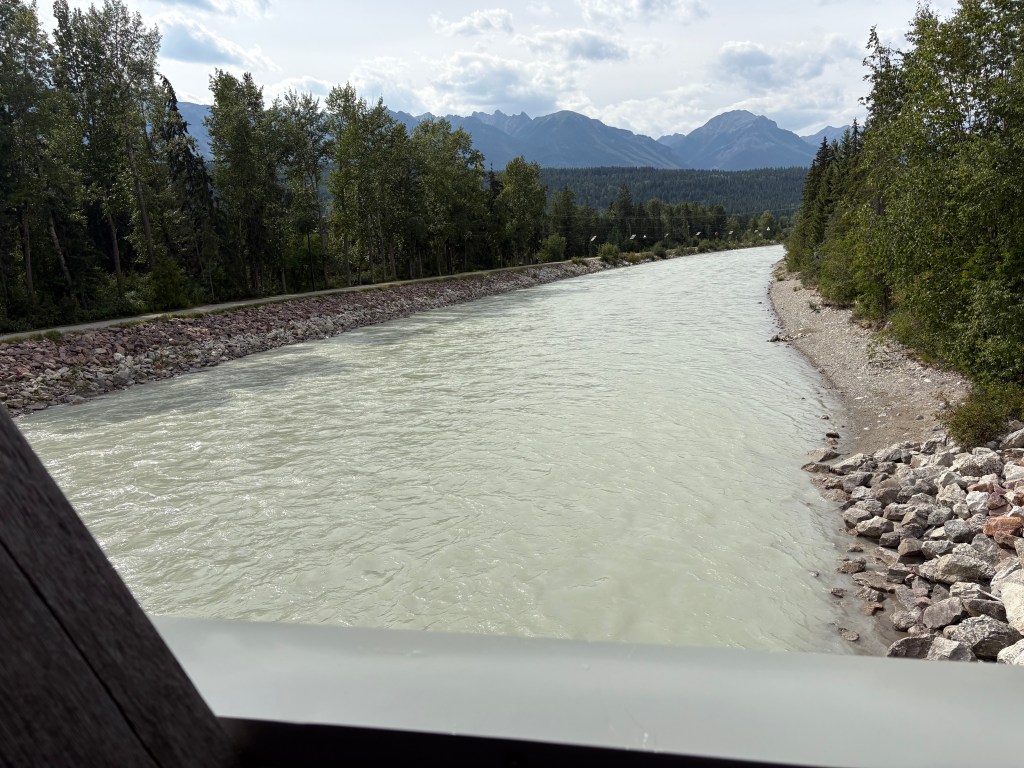
Rest Stop between Banff & Yoho NP’s!!

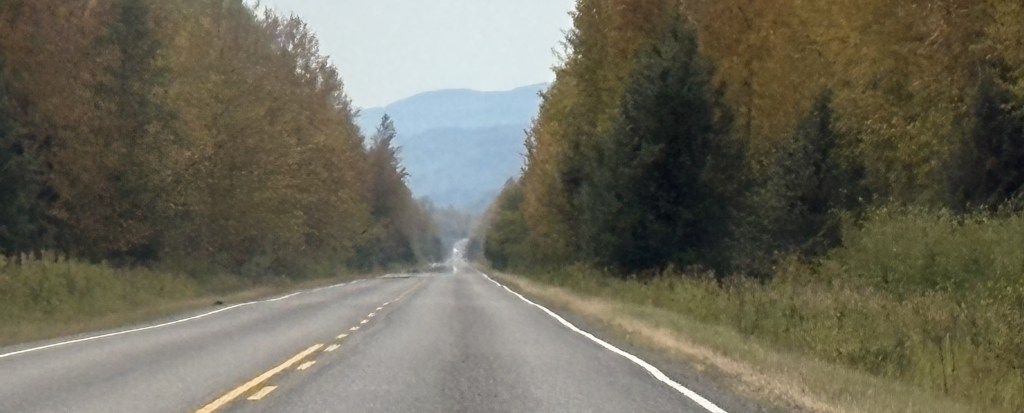
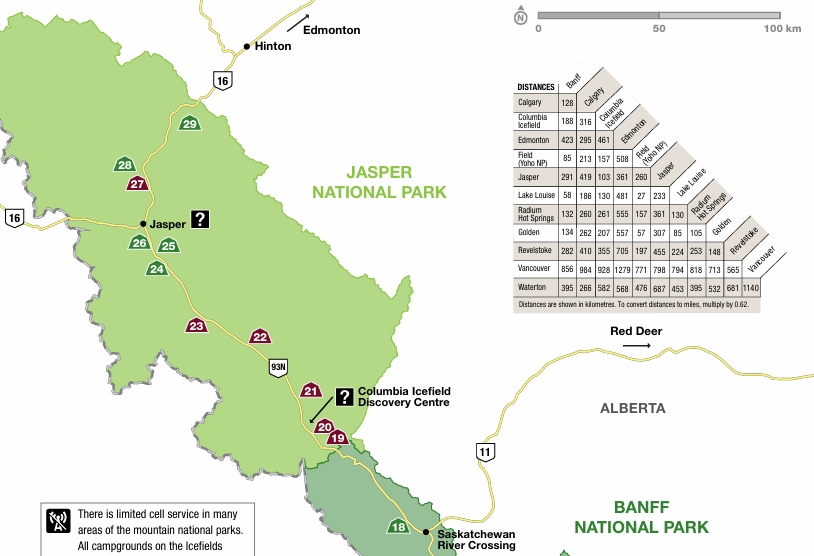
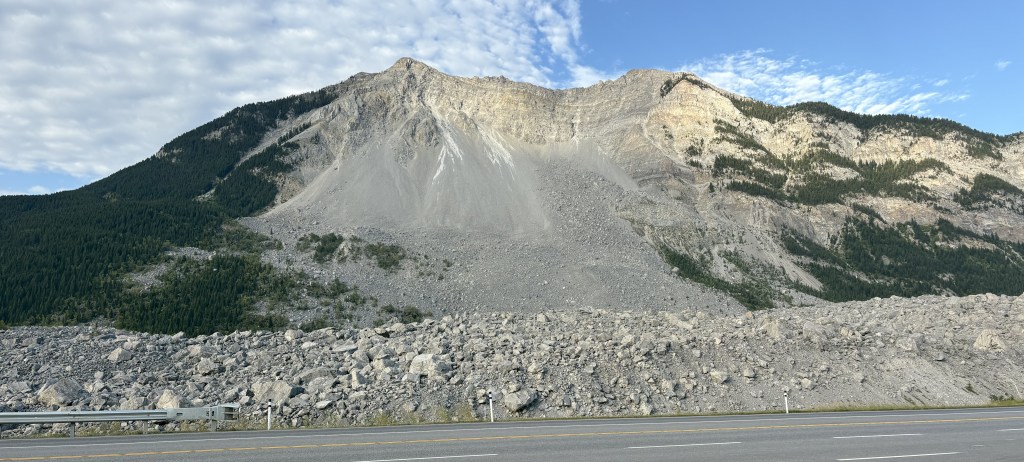
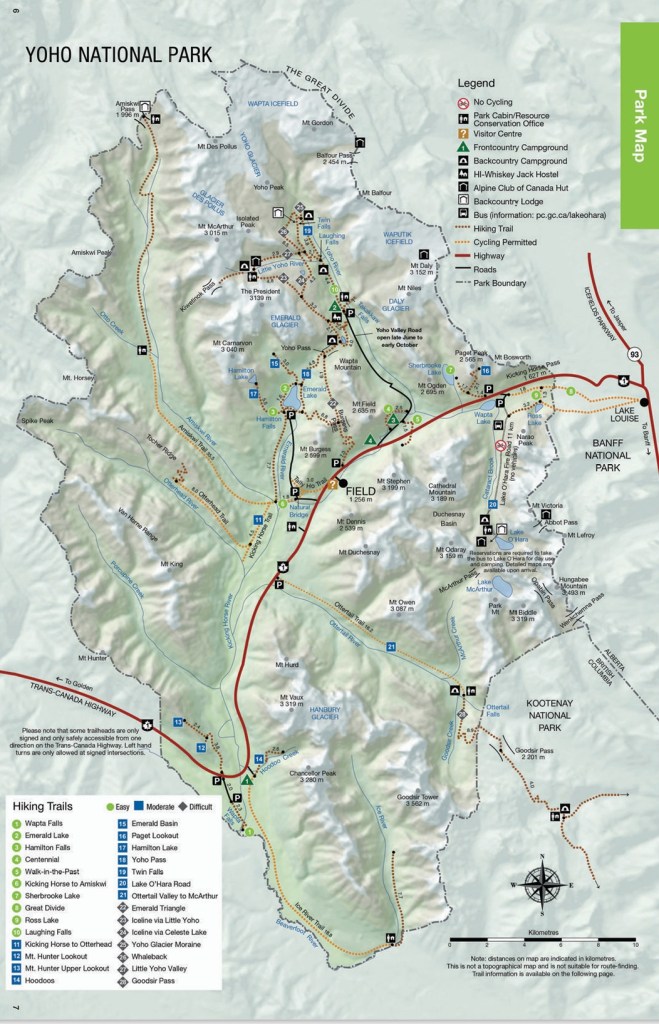
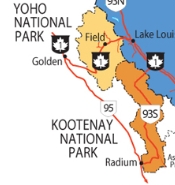
After I had driven through Kootenay National Park the first time (pass #1) I entered Banff National Park and I turned left on the Trans Canada Highway and started heading northwest towards my next stop in Golden, British Columbia. I drove several miles on the TCH (still in Banff NP) and pulled into a rest stop at the border between Banff NP and Yoho NP. That border also represents transitioning from Alberta province (Banff) to British Columbia province (Yoho). One of the more bizarre half-hours I have spent on the road – in three National Parks, two time zones and two provisional border crossings.

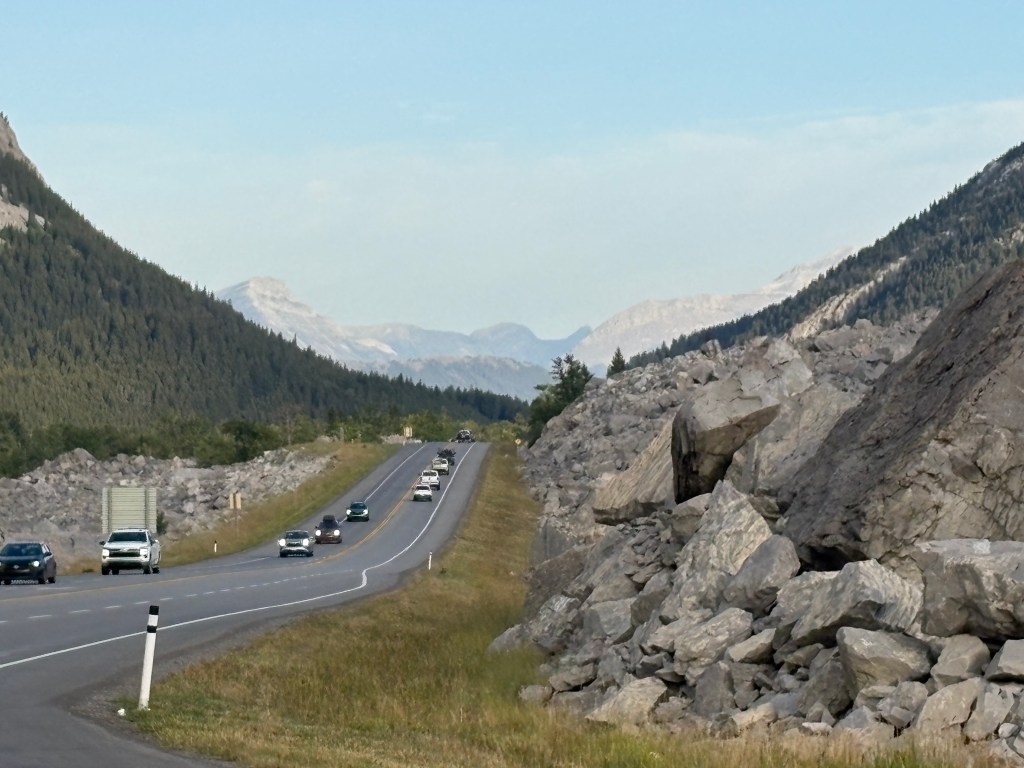
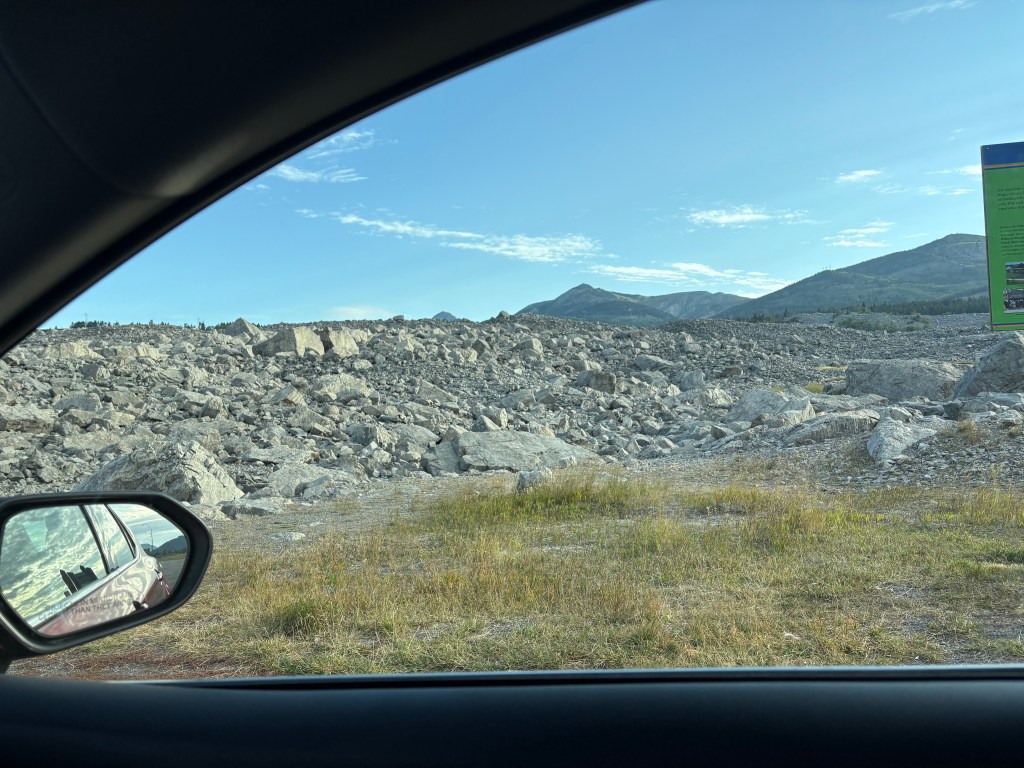
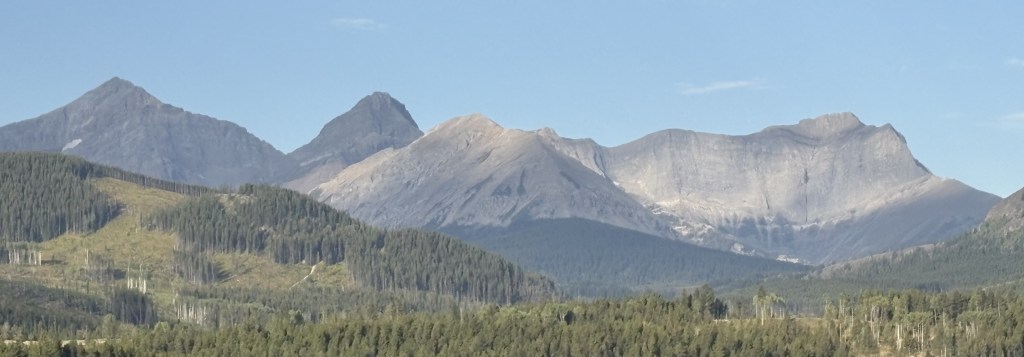
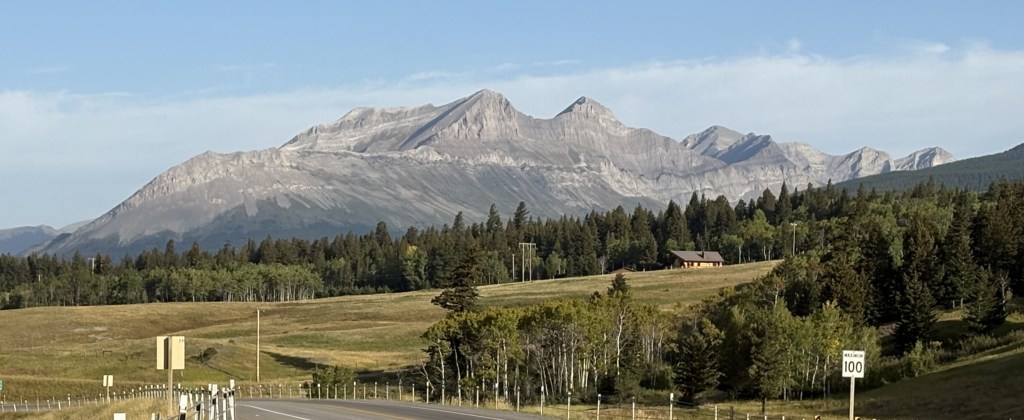
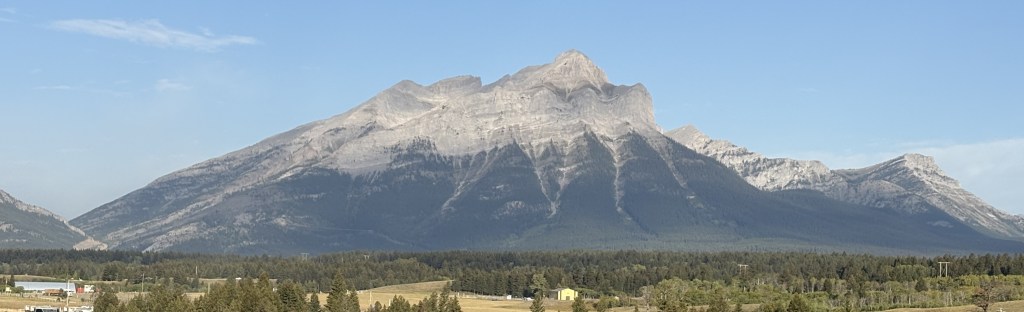
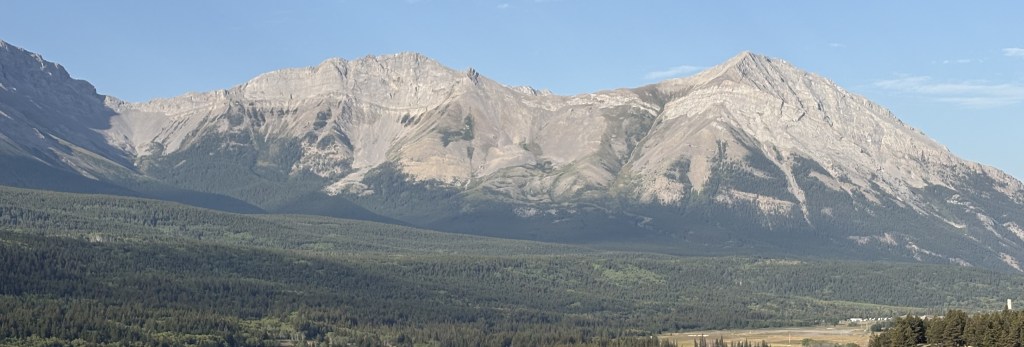
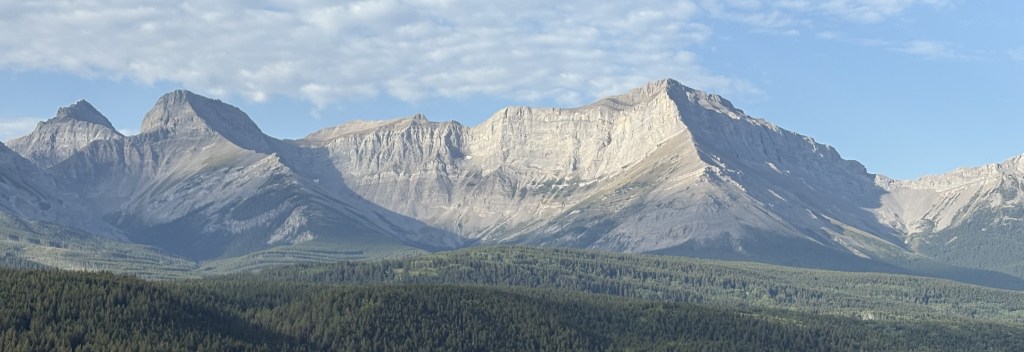
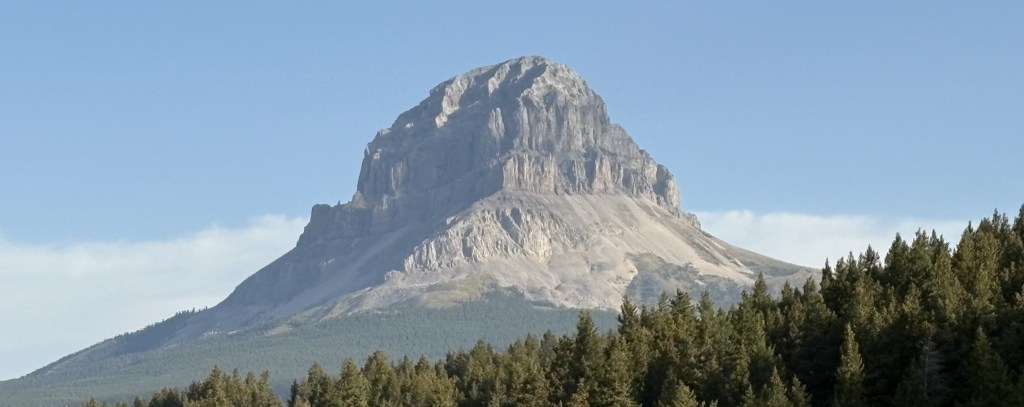
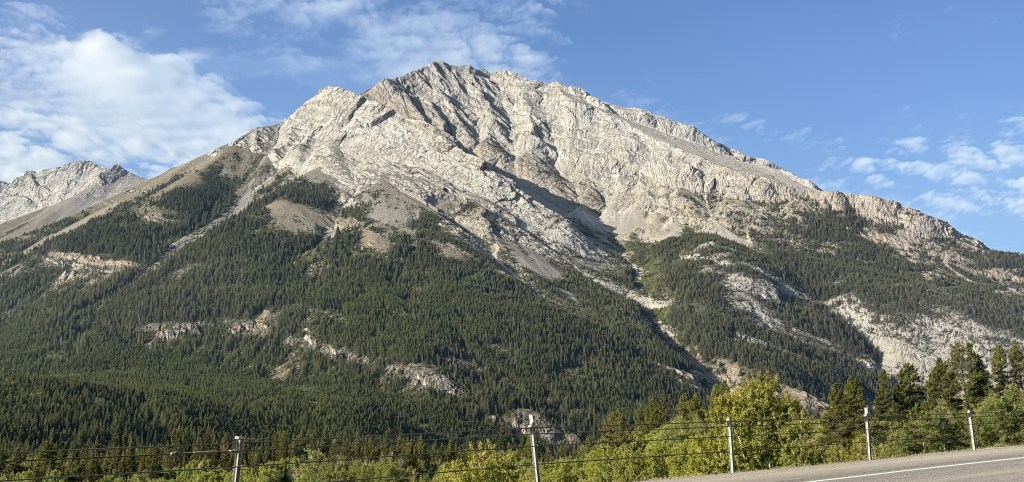
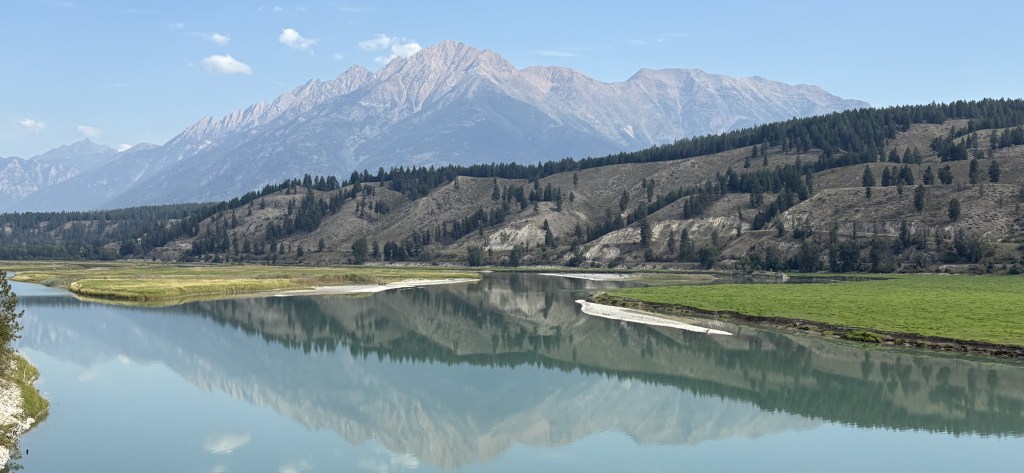
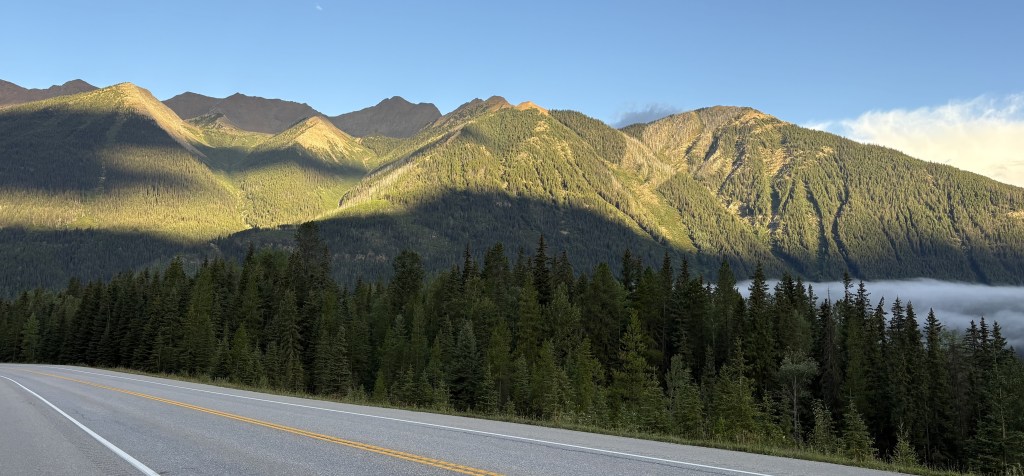
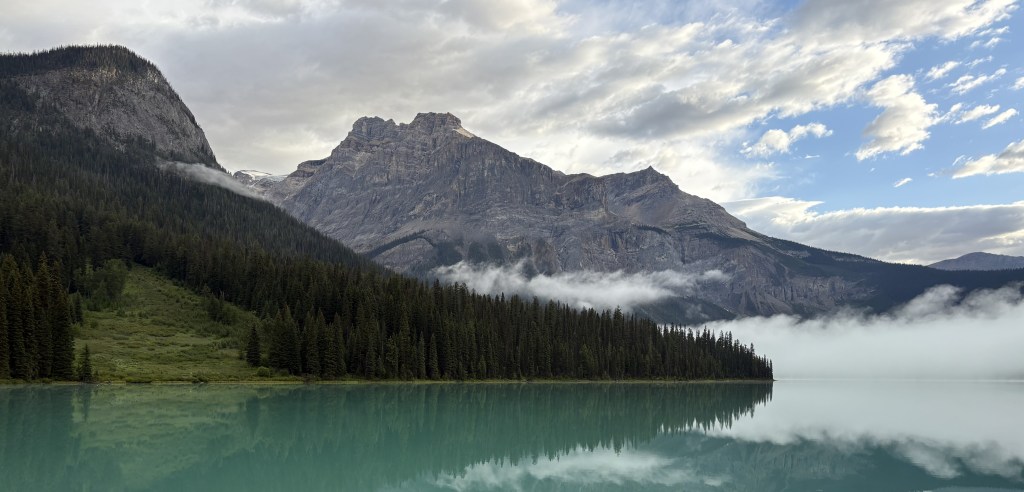
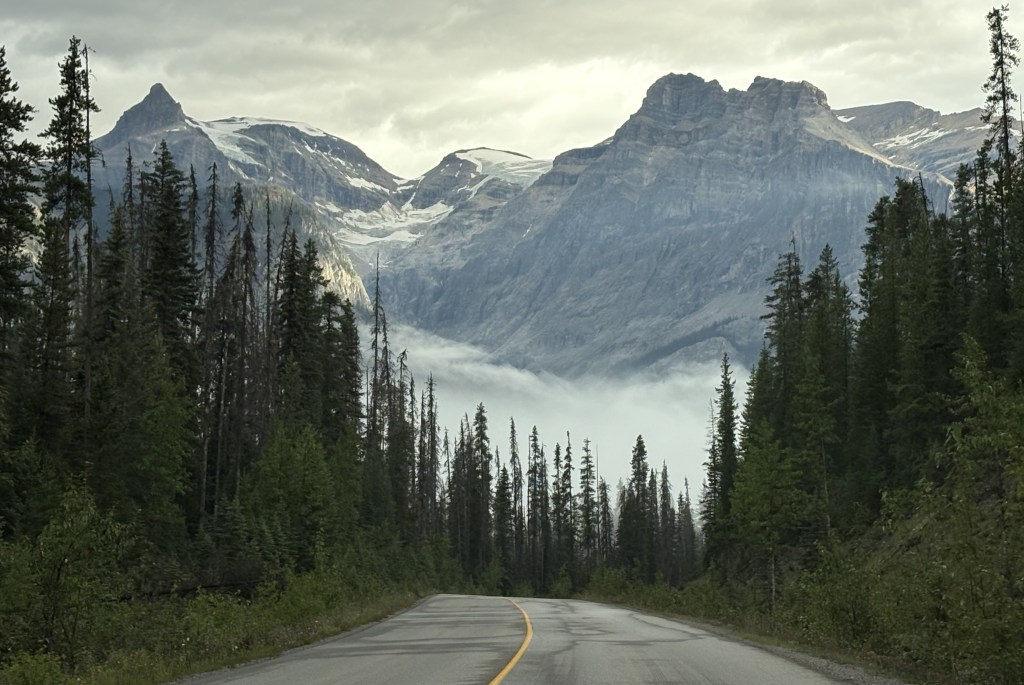
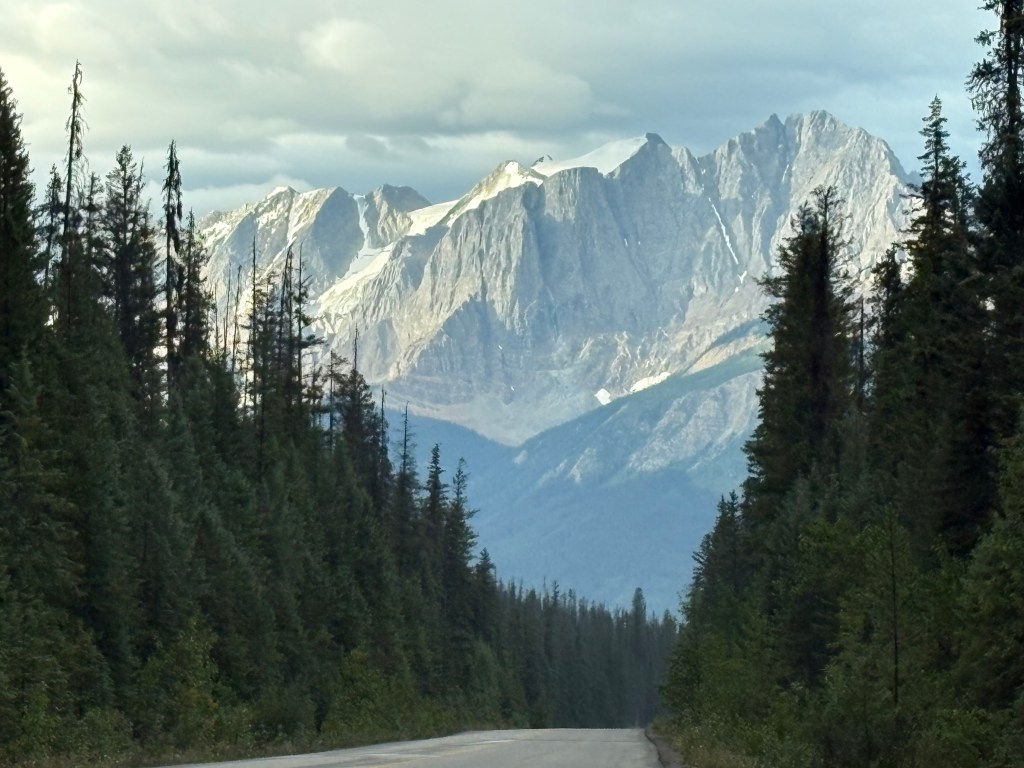
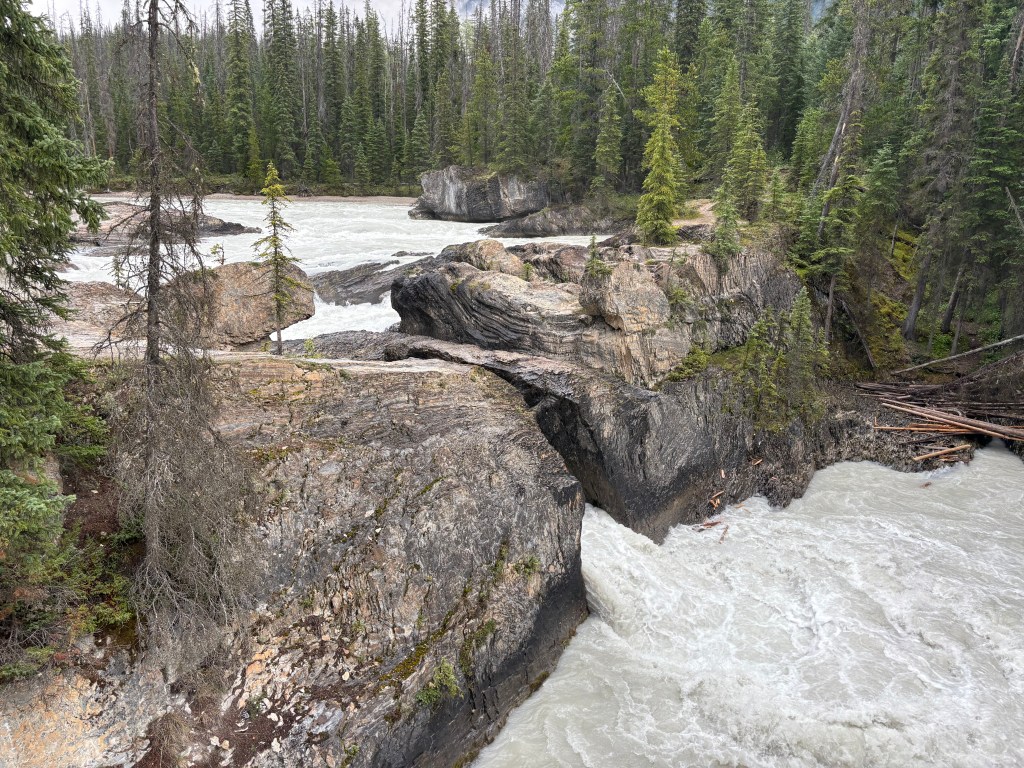
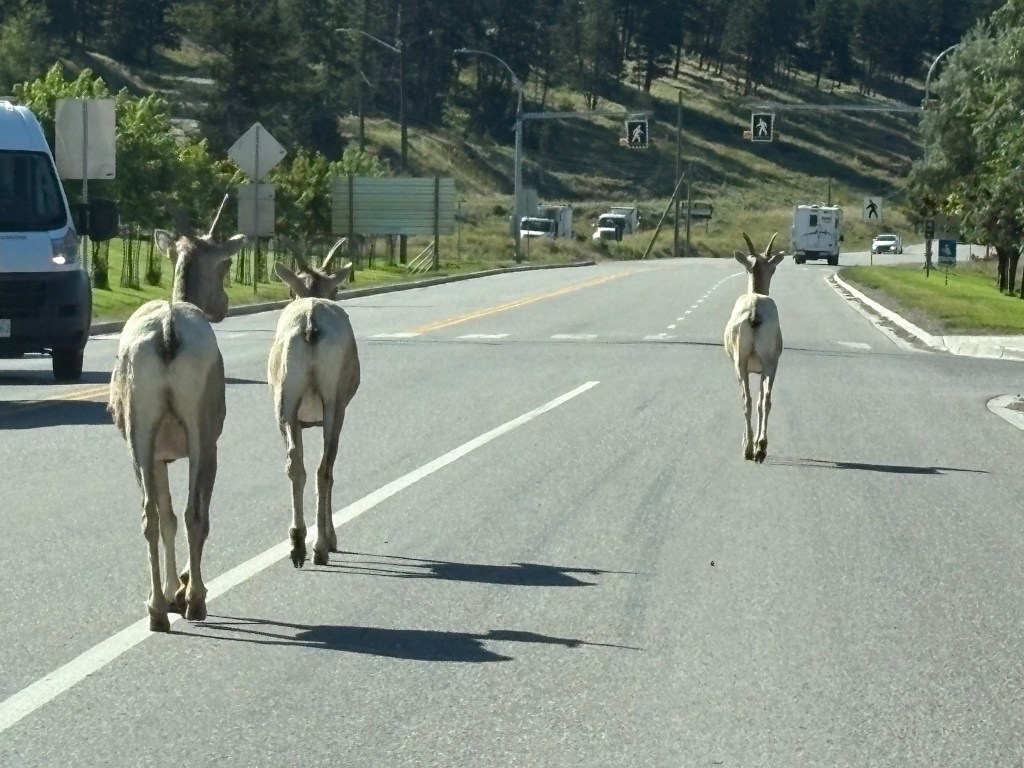
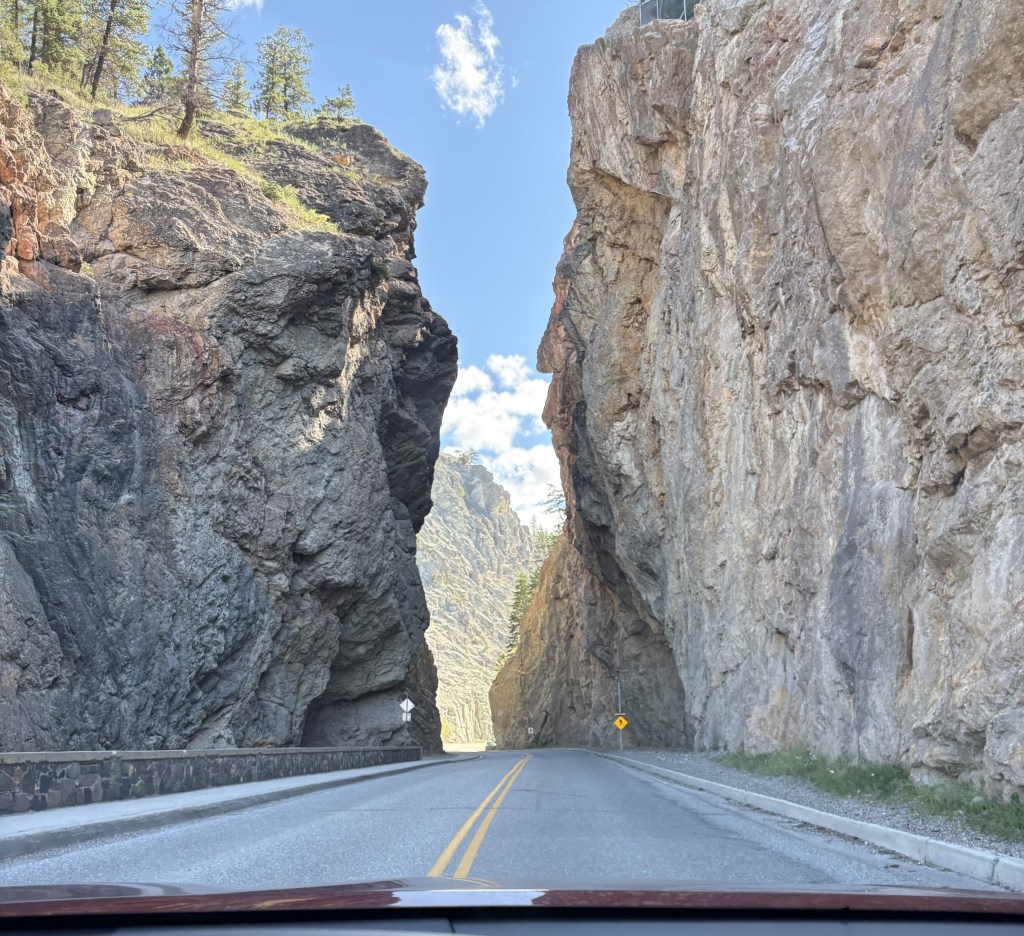
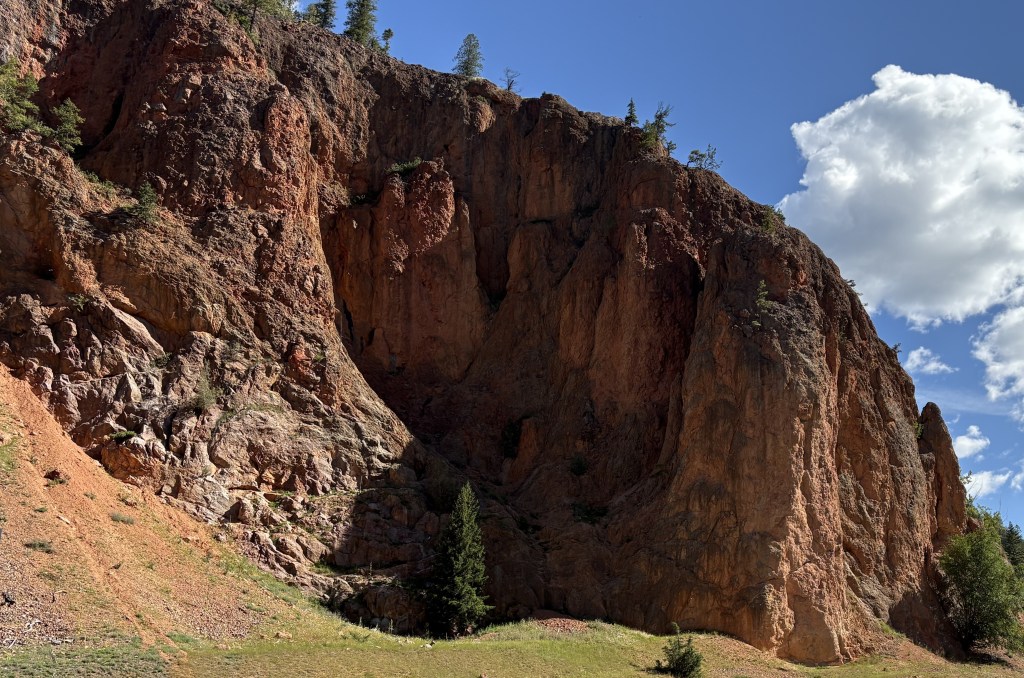
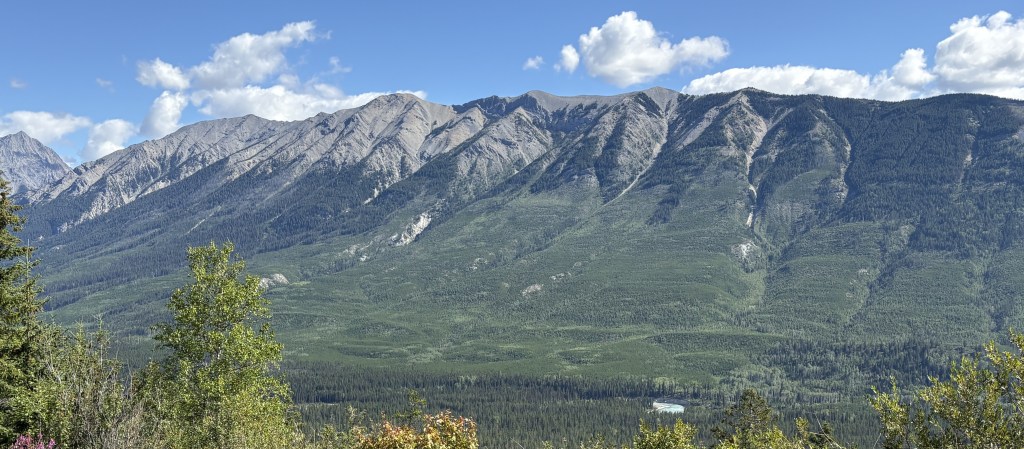
And it got even stranger. I ended up parked in that rest stop for almost an hour, which the following photos, all taken there, will help explain.

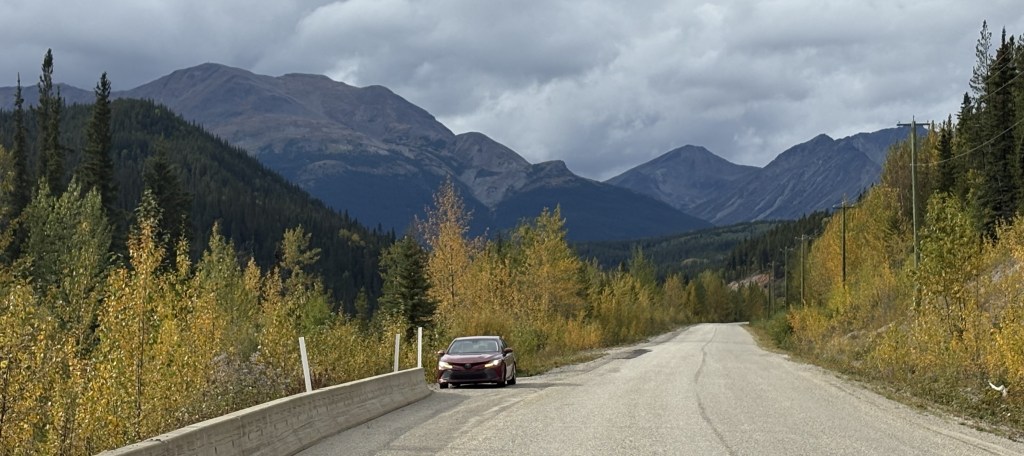
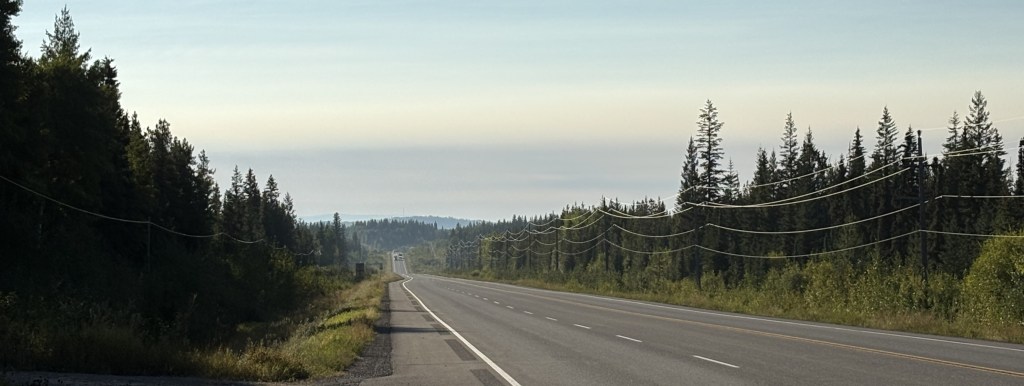
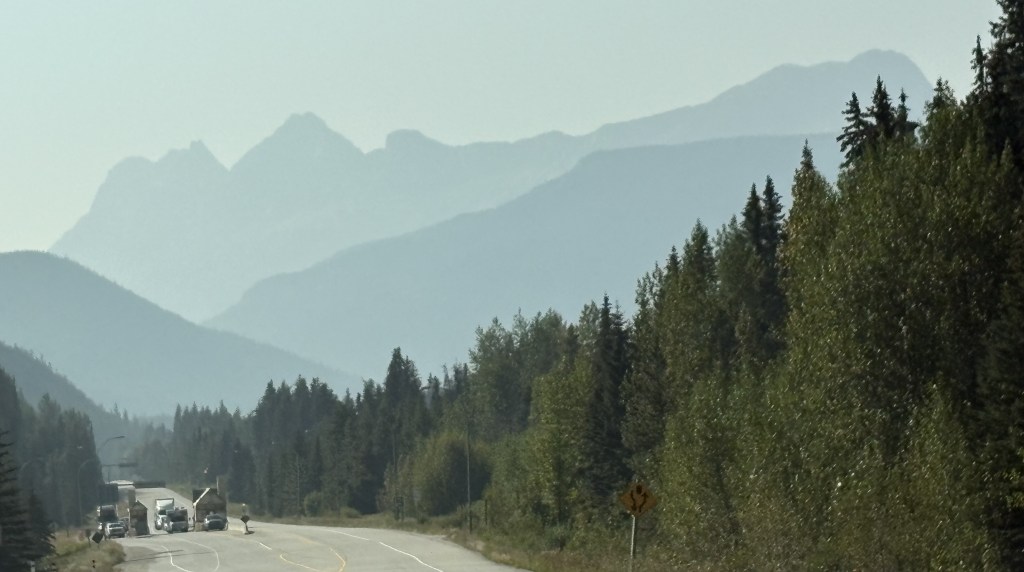
This shot above is looking across the TCH and the vehicle you see is traveling northeast and about to enter Alberta. If you are paying close attention to what I just described it adds to the bizarre nature of what just happened. Before crossing back into British Columbia the TCH also turned left (for my direction of travel) and whereas I started out driving NW on it I was now heading SW. I’m sure glad my GPS knew what the hell was going on!

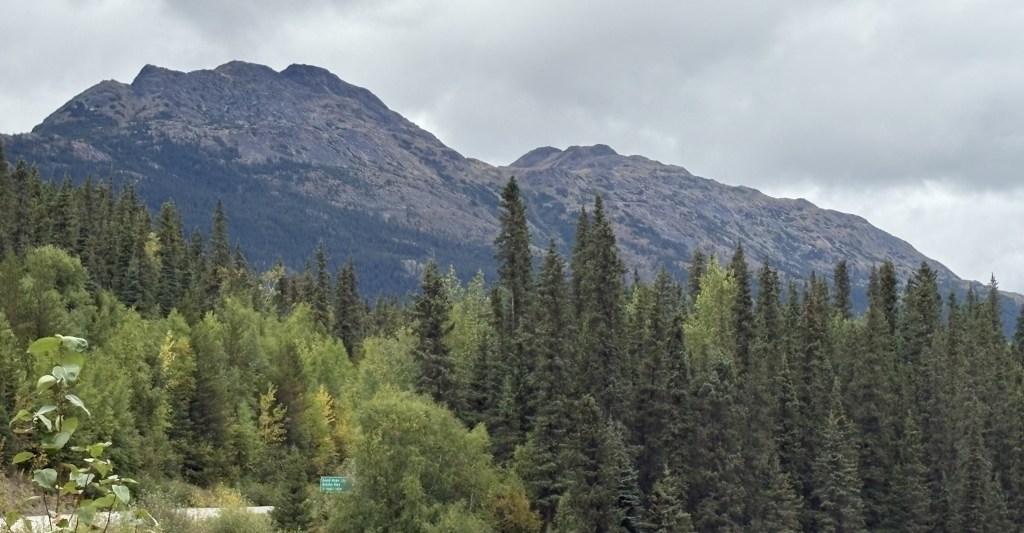
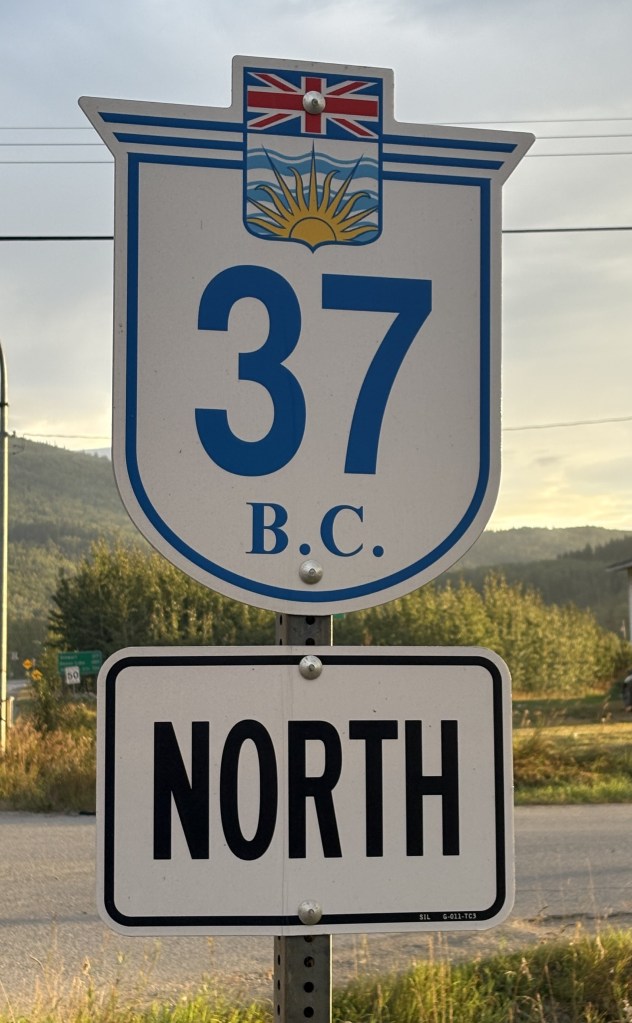
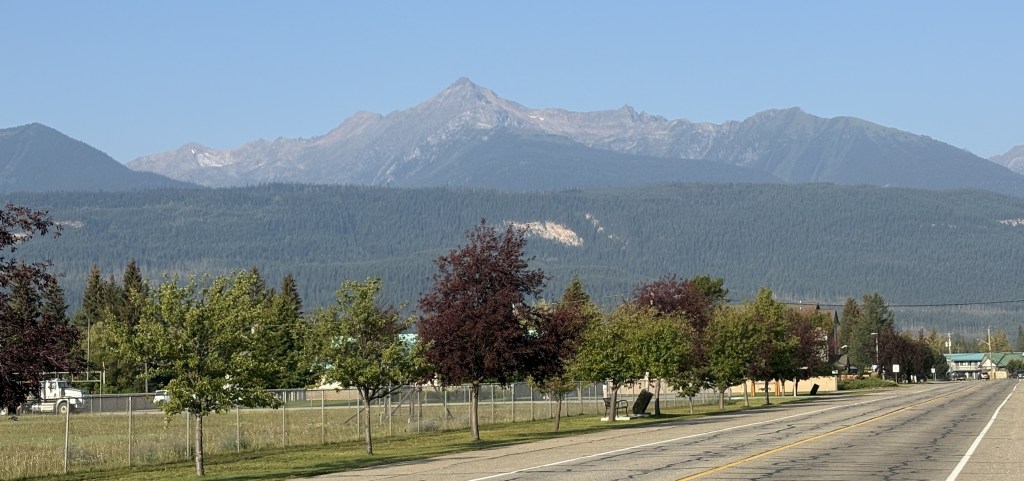
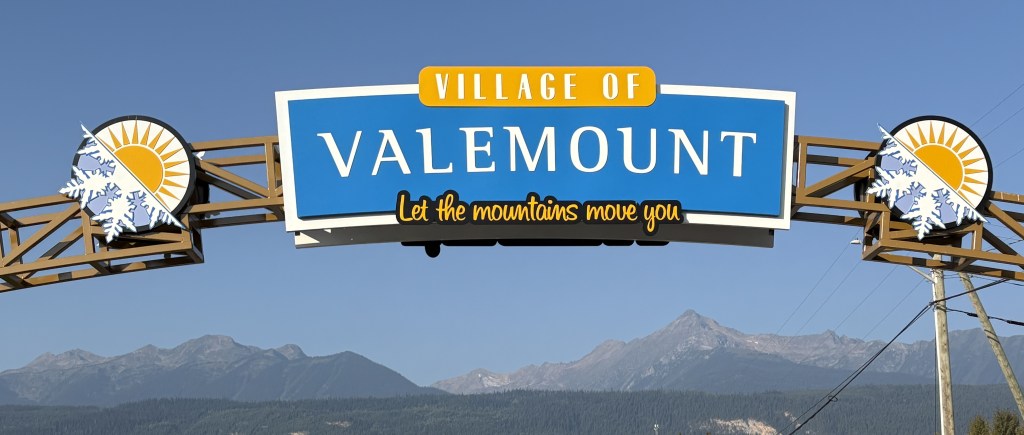
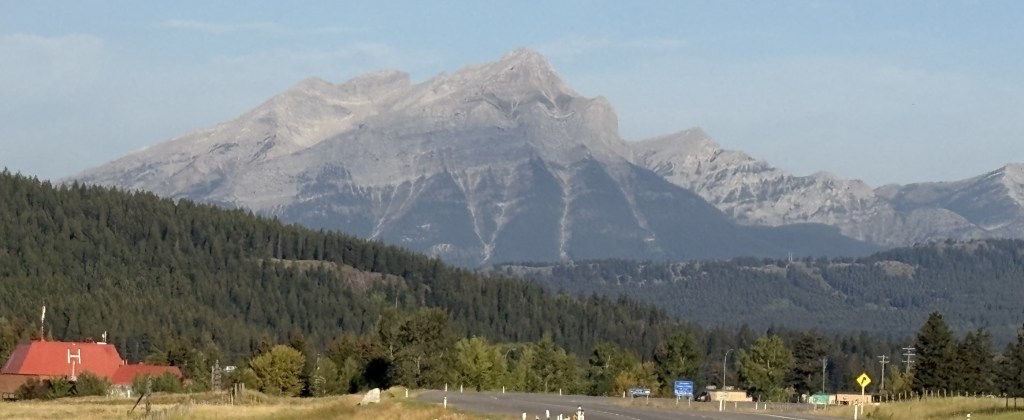
Here is a photo of the exit from the rest stop, with the sign welcoming me to British Columbia.

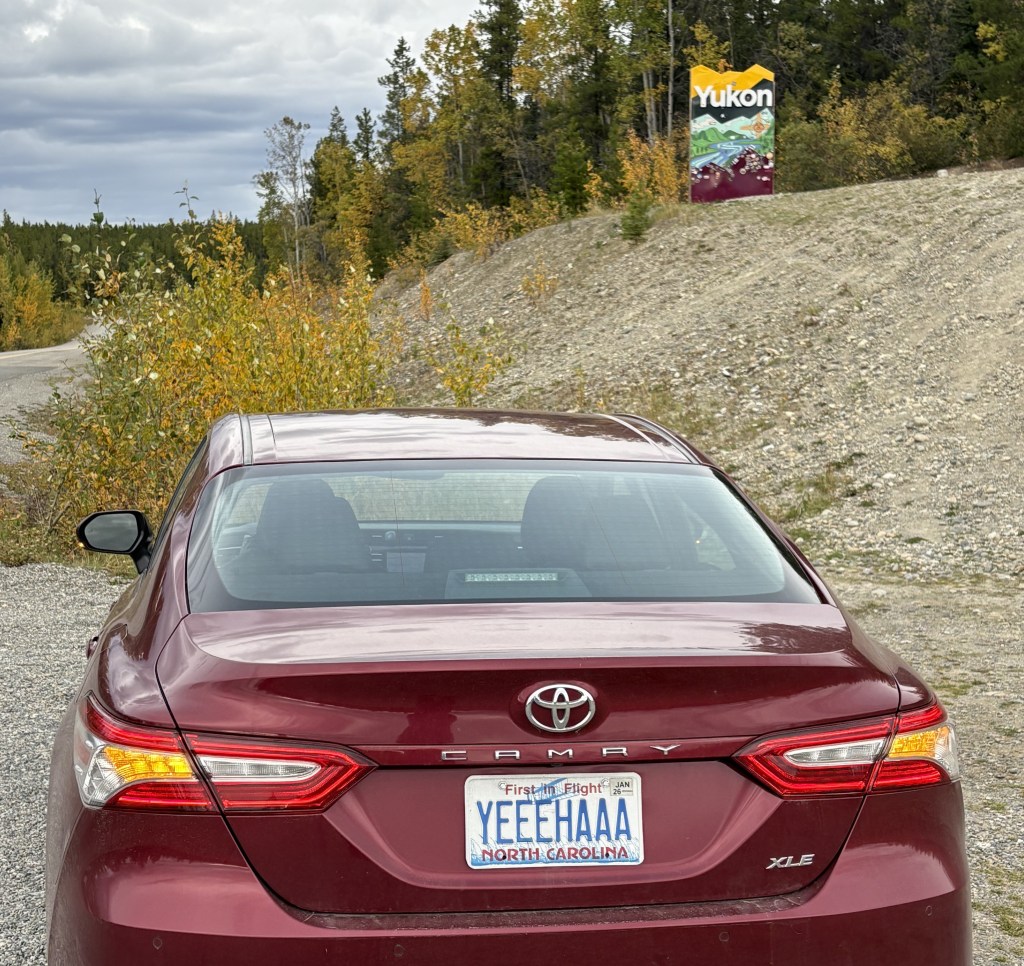
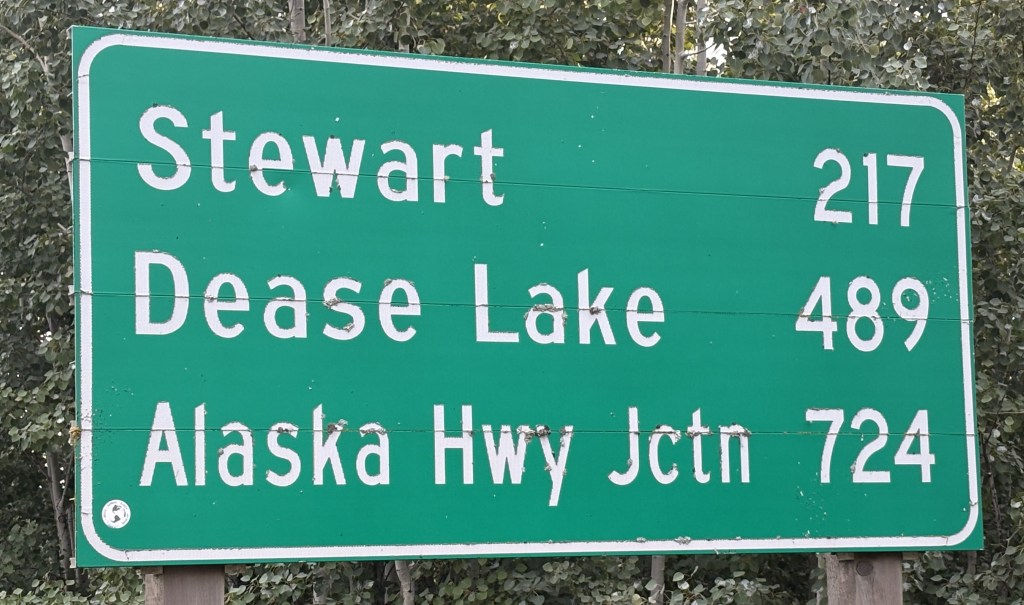
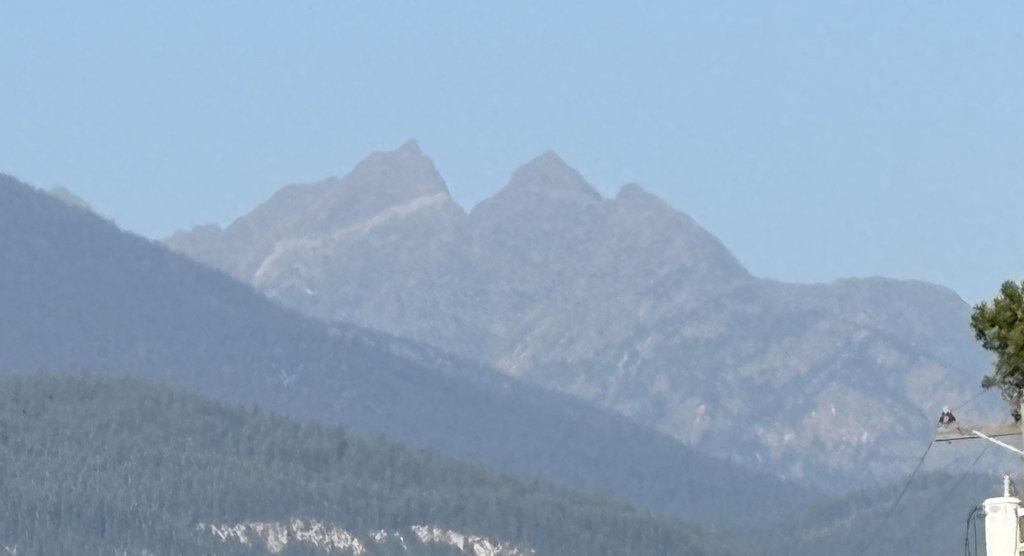
And further back in the rest stop, where my car was parked, a sign welcoming me to Yoho National Park.

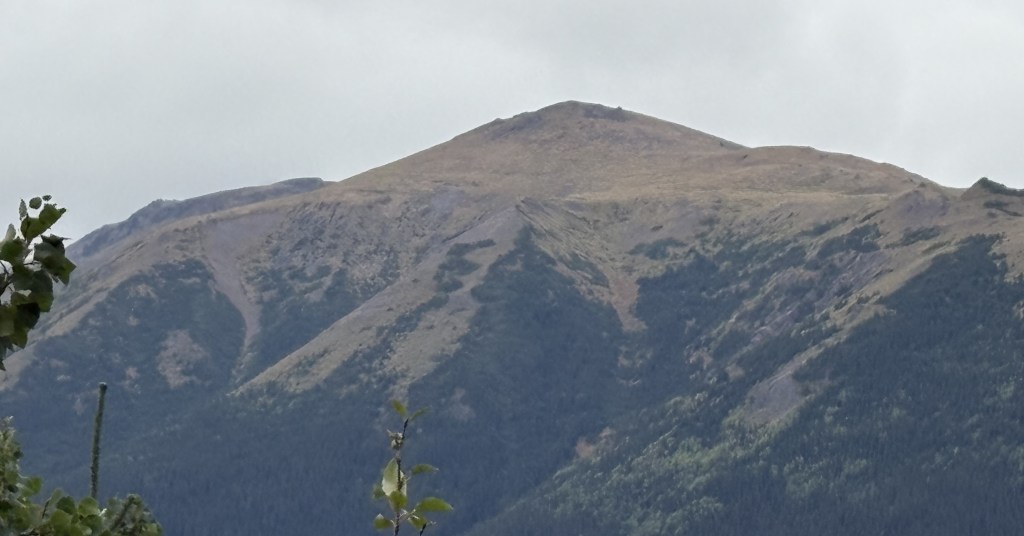
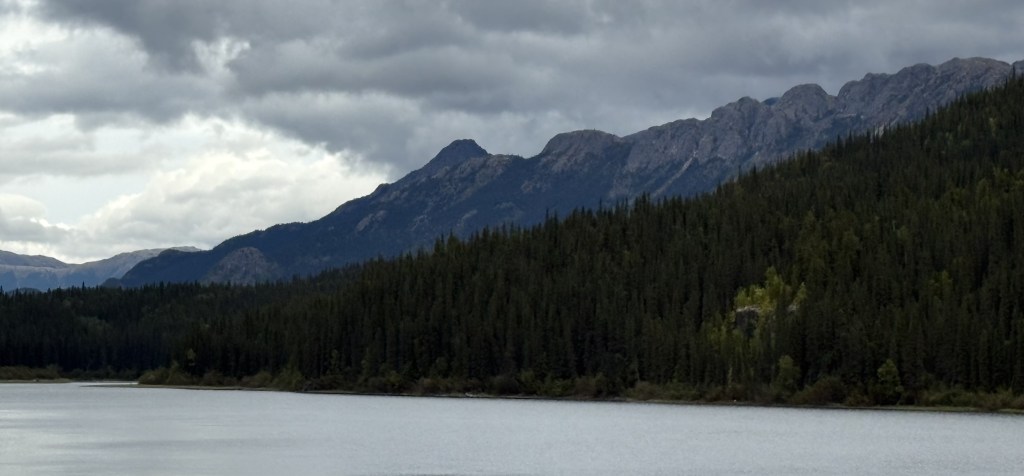
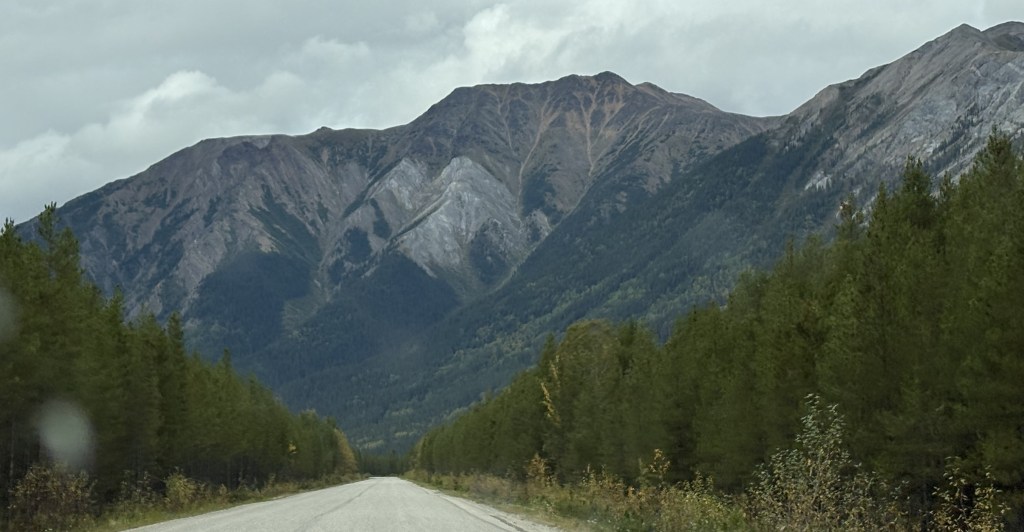
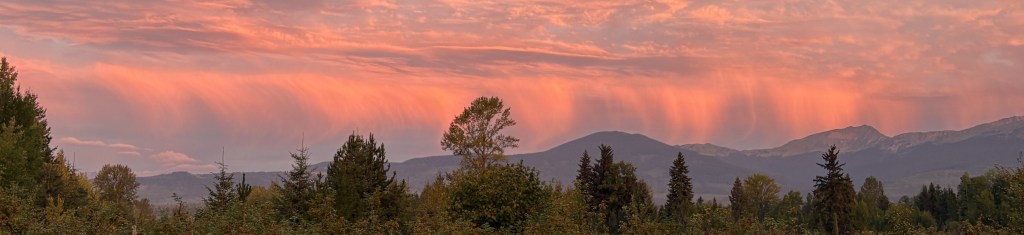
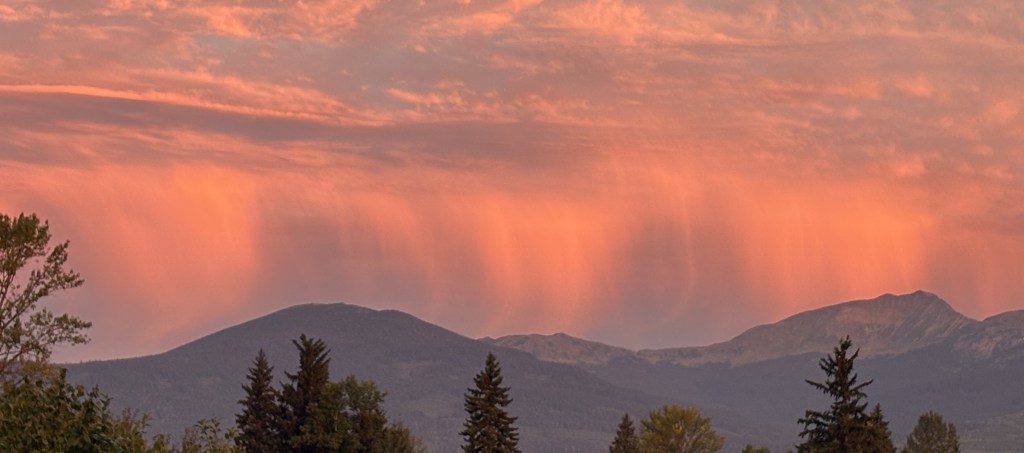
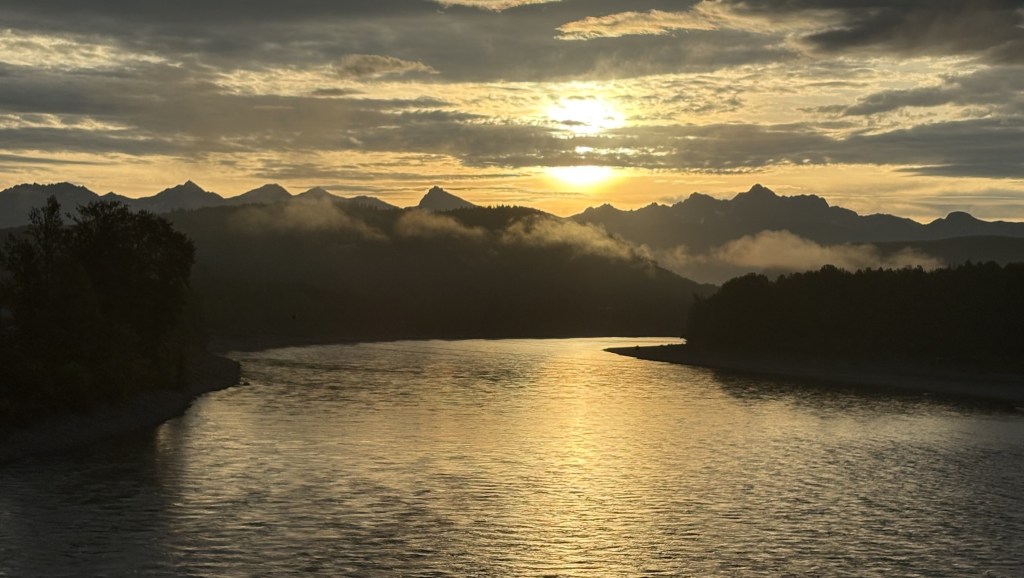
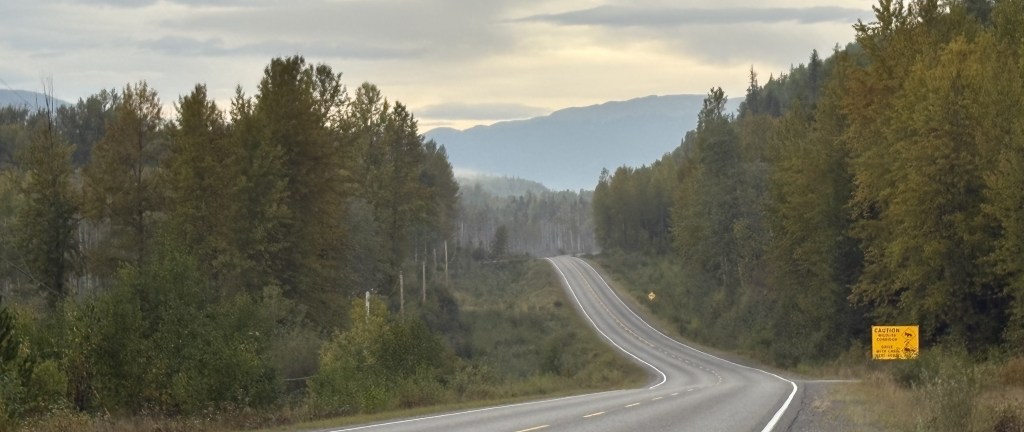
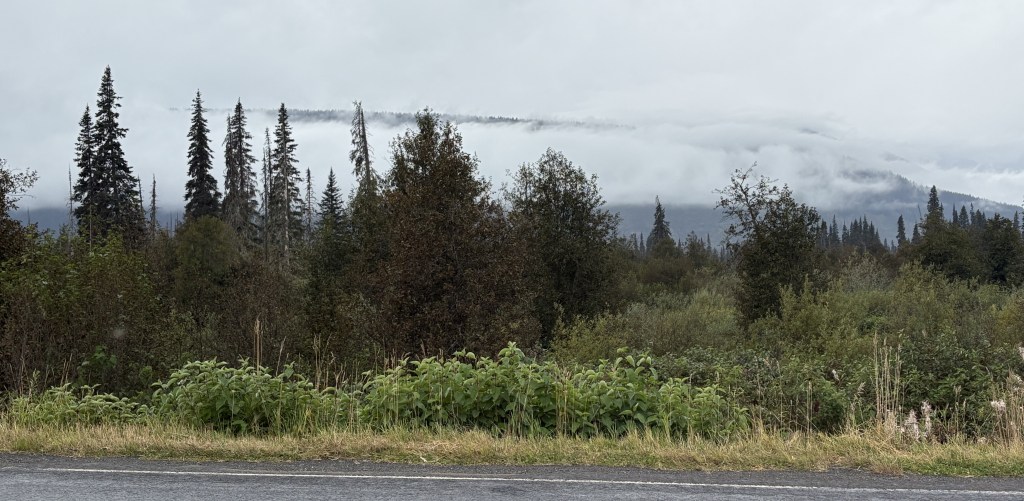
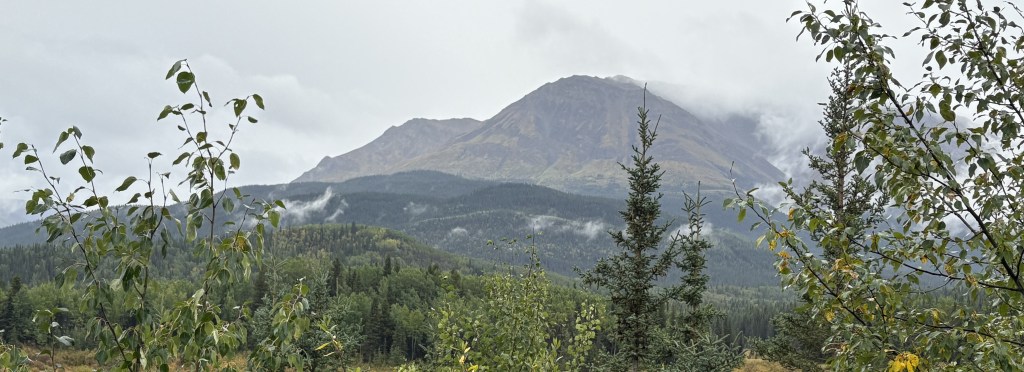
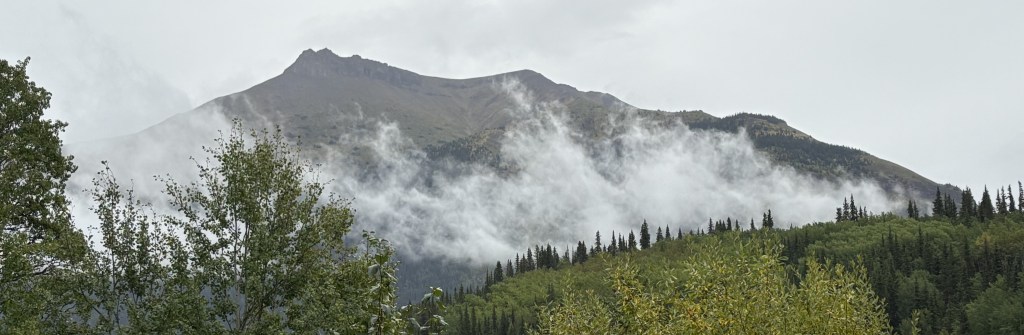
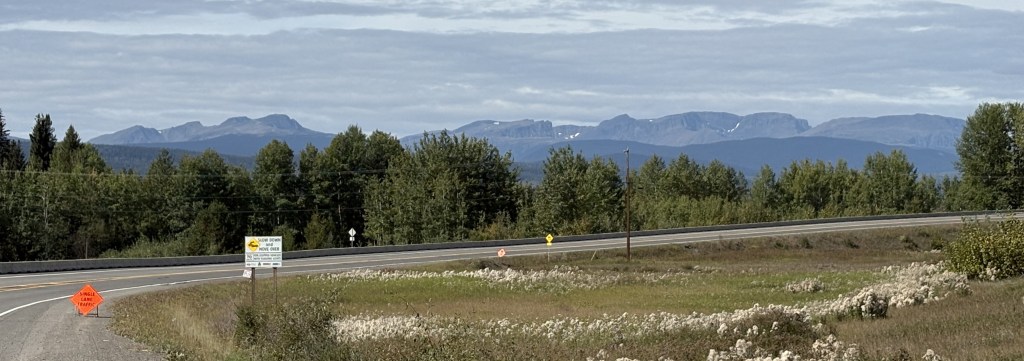
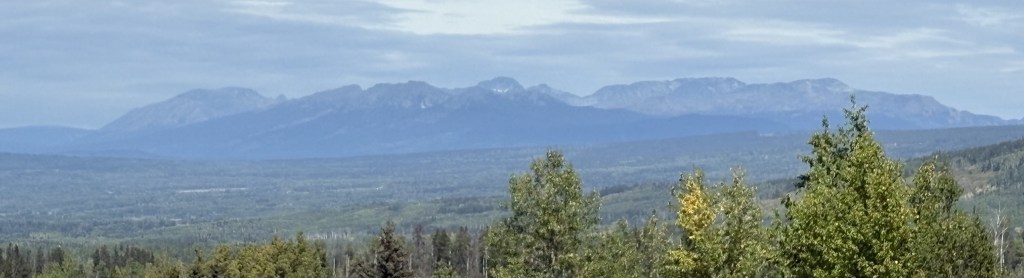
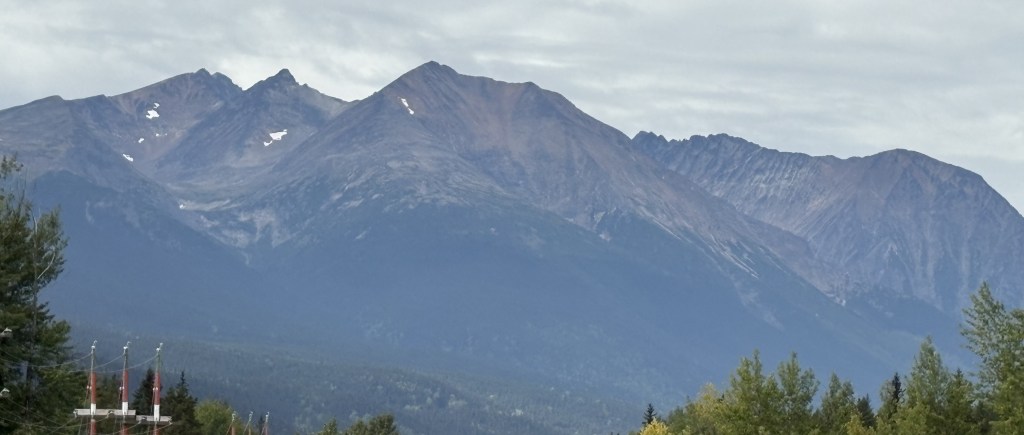
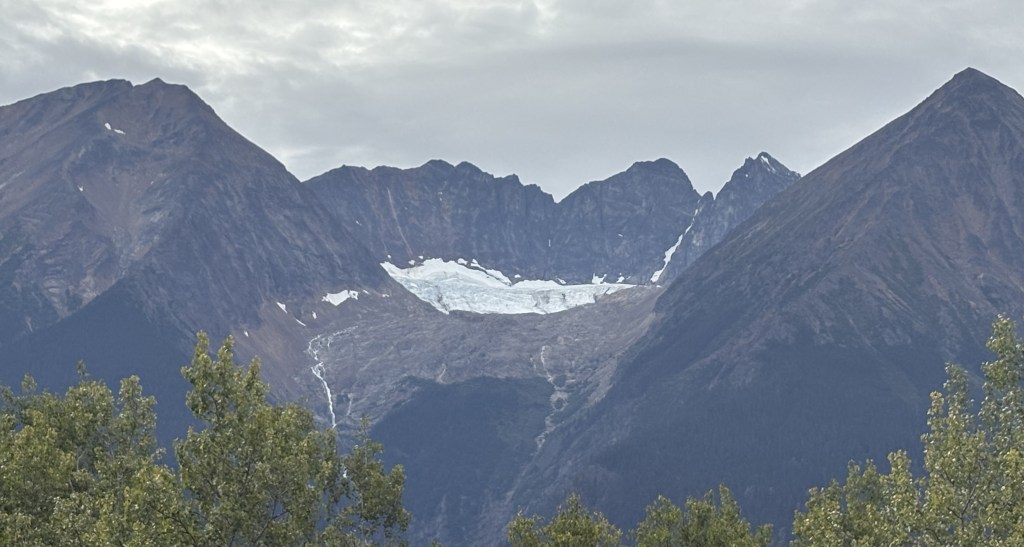
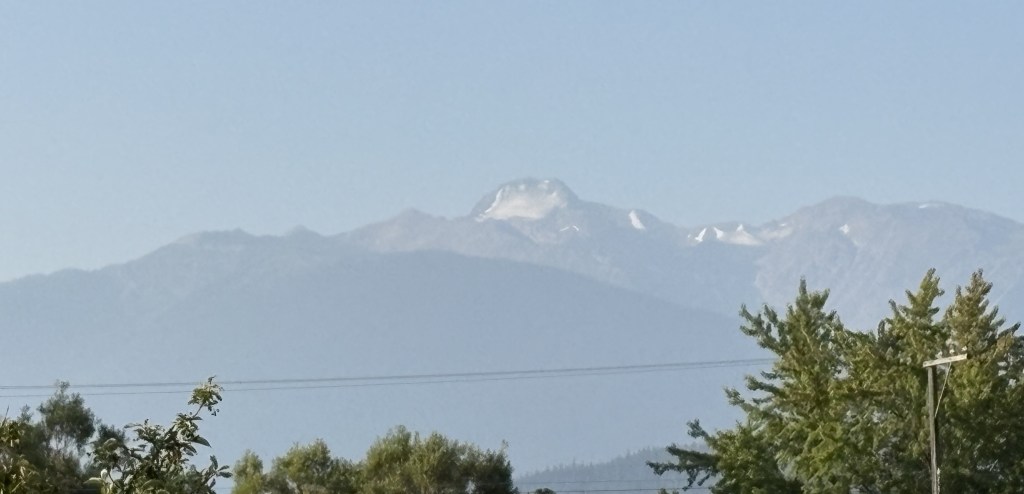
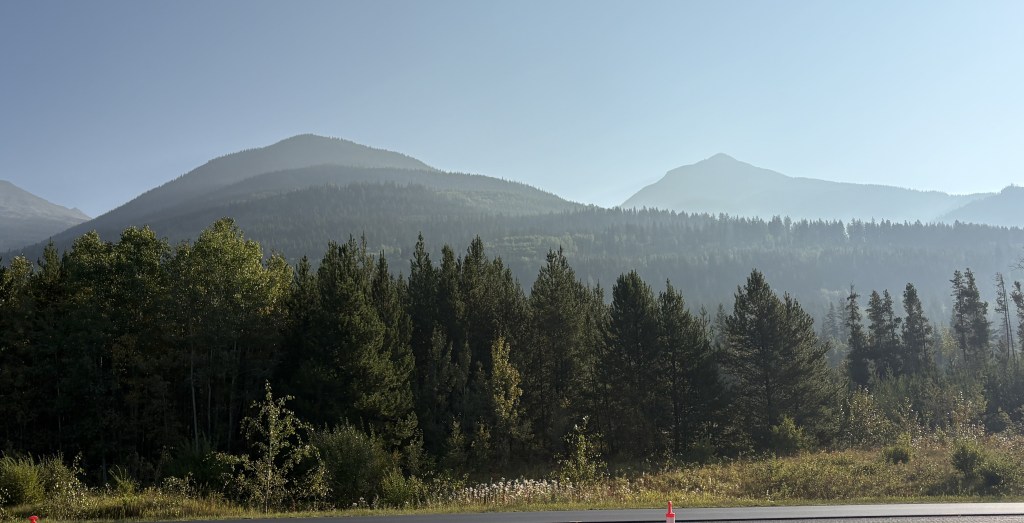
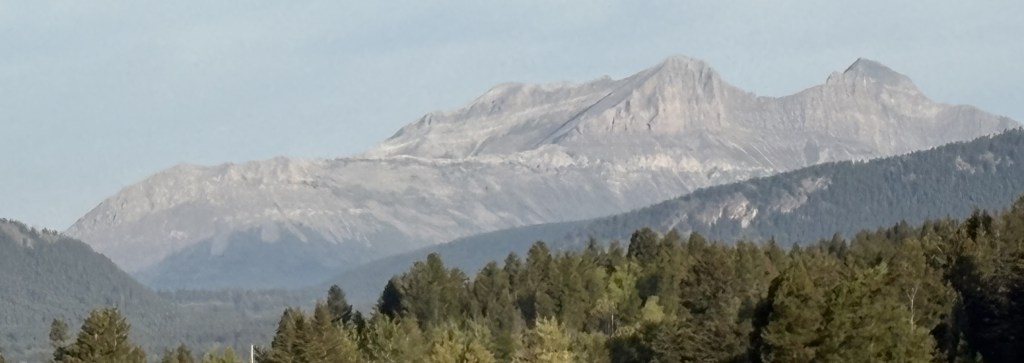
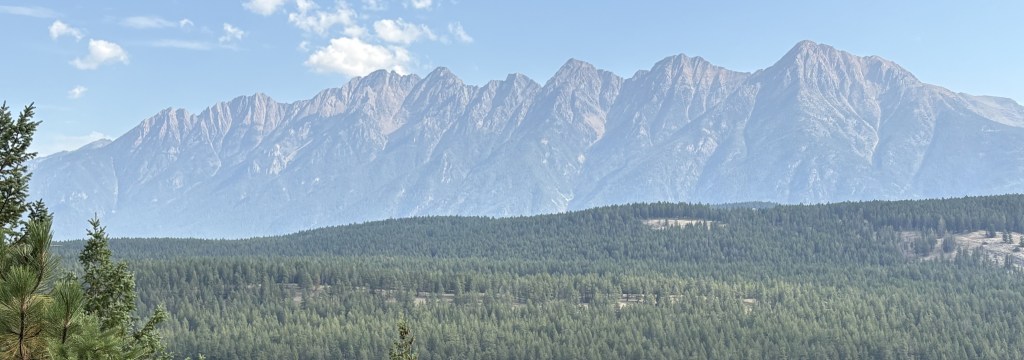
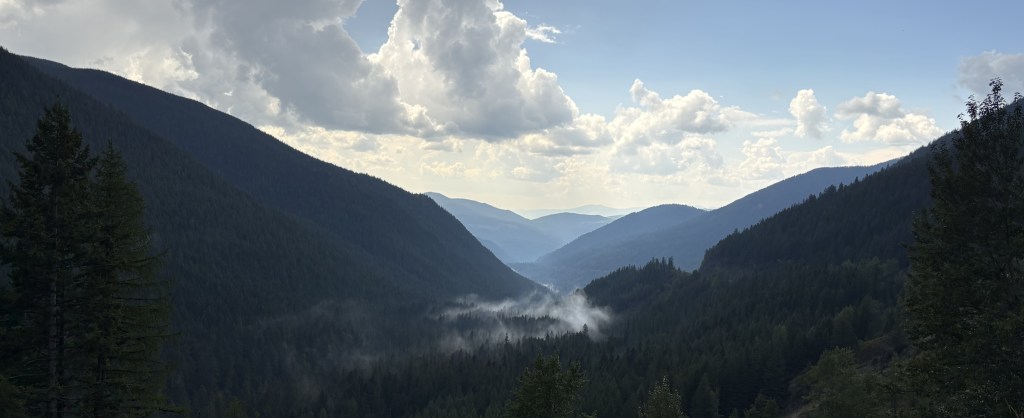
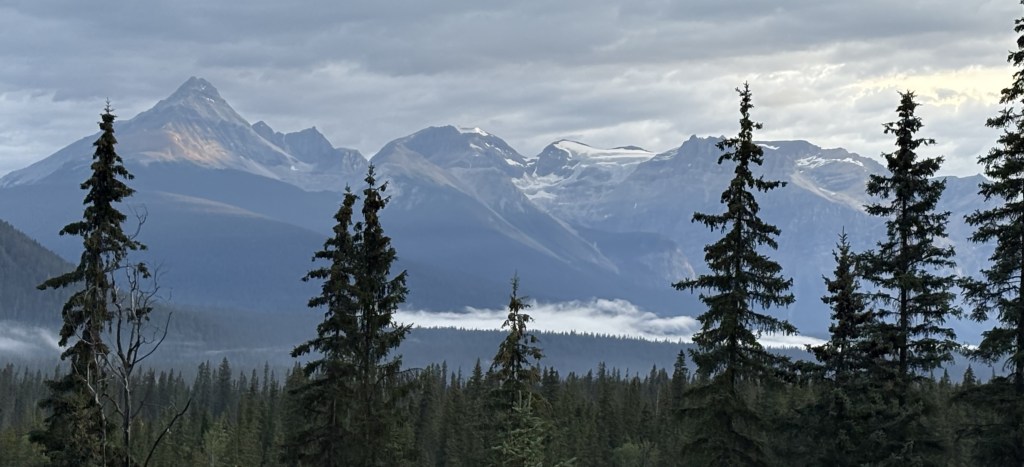
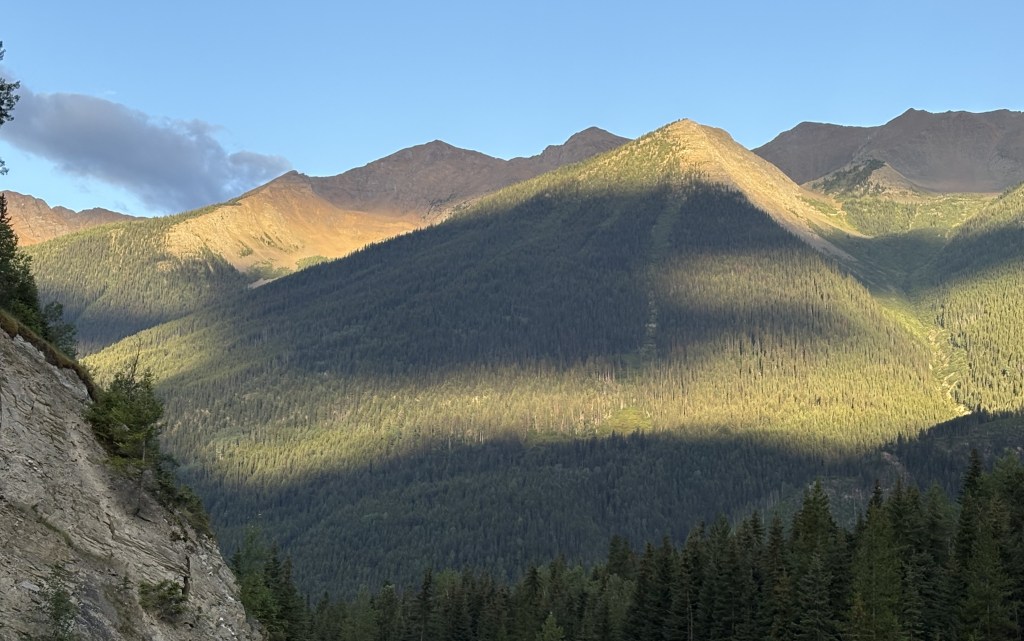
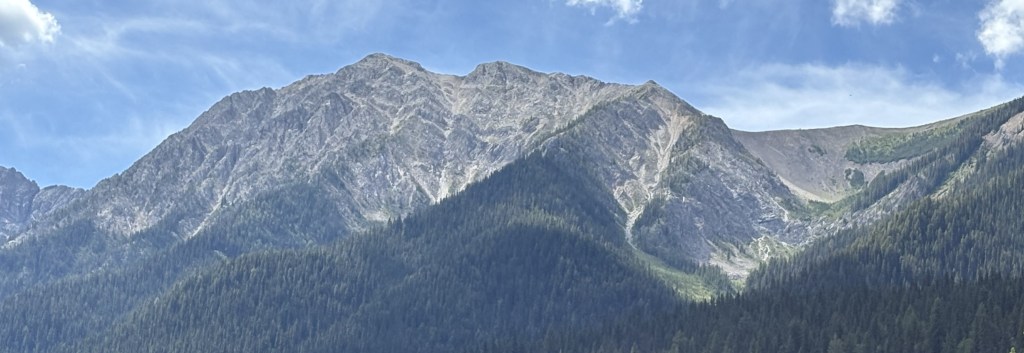
Now, if you look at the middle photo above you will see what was happening that caused me to stay right where I was for a while. The tops of many of the mountains I seen thus far today were partially obscured by clouds. No big deal. Well, and I sat in my car watching, the mountains ahead of me were being overtaken by more clouds, and what appeared to be precipitation falling from them. And whatever it was appeared to be coming towards where I was parked.

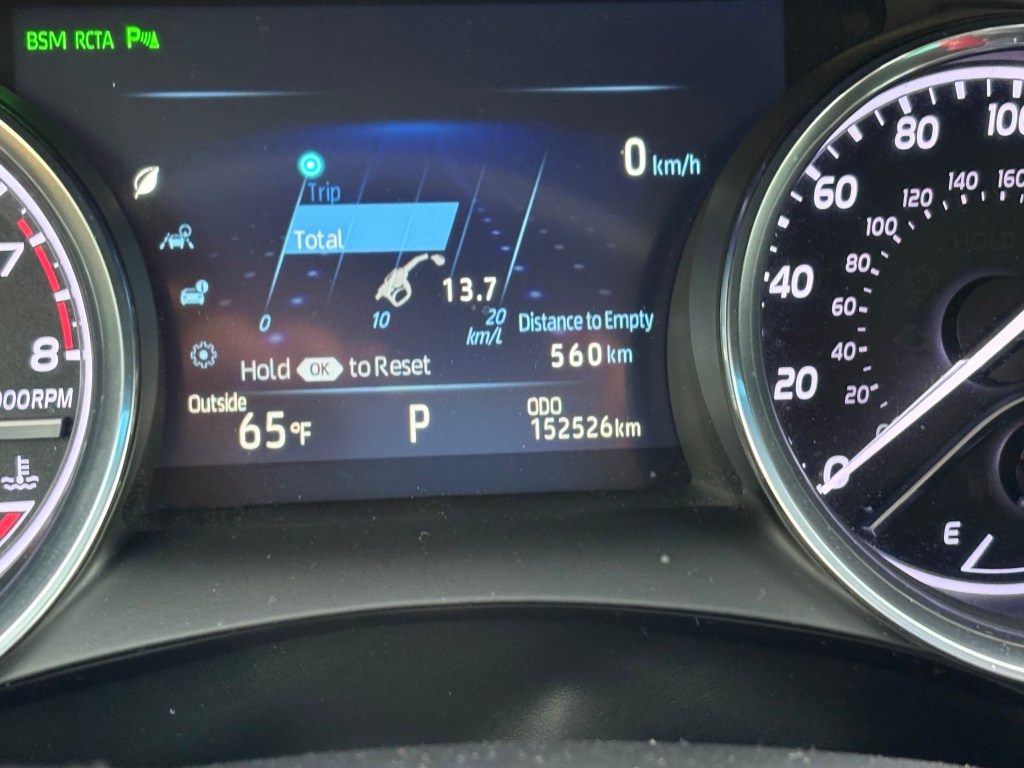
I was parked at about 5,400 feet elevation and the air temperature was 56 degrees Fahrenheit. I wasn’t sure if the temperature was going to plummet and snow or sleet might start falling so I opted just to stay right where I was.

Well, it never did anything where I was and the clouds and whatever form of precipitation was falling from them never reached me. Once the clouds dissipated I went on my way and drove through Yoho NP to Golden.

I will make a separate post about what types of things can be found in Yoho, as I passed through it several times over the next few days.


As I post this early on Wednesday, September 3 I have just made my Airbnb reservations which will take me from Prince George, BC on the morning of September 10 to arrive in Anchorage, Alaska in the afternoon of Sunday, September 14. I will share the specifics of that trip in another post, and will start planning my itinerary while I am in Alaska. I’m sure I will spend 2 or 3 days in Anchorage getting acclimated and finding out what things are open full time and what things have adjusted to a seasonal schedule.

Maple Ridge (Vancouver) to Cranbrook, British Columbia

I got my first loooong driving day in Canada out of the way early in the trip. I had only been in Canada a little over a week and I needed to drive the majority of the way across southern British Columbia to the town of Cranbrook. Mapquest indicated point-to-point between my two Airbnb’s was about 500 miles and would take a little over 9 hours. I would drive east a short distance on the Trans Canada Highway (which hasn’t given me a reason yet to call it “the dreaded TCH”), before turning right on BC Highway 3, the “Crowsnest Highway” to continue east. I would be on it the rest of the way, and it continues all the way to Alberta province.
I recently posted a few photos in the “tease” post of the small wildfire I saw as soon as I exited the TCH near the town of Hope. I had stopped at a gas station (previously planned), and the fire was burning on a steep hillside behind the gas station and on the opposite side of the exit I had just taken. I stayed there a little while to watch a helicopter come and go, about every 4 minutes, to drop a large “bucket” of water on specific spots. I have no idea how much water was dropped on each trip but given the size of the helicopter I’m guessing it may only be about a third the size of my car.

The folks inside the gas station said the fire had been burning about a month and hadn’t gotten better or worse during that time. It was still classified as “out of control” the day I was there, and is STILL smoldering as I write this about another month later, but is now classified as “being held”. British Columbia as a whole is still bone dry and the fire danger is extreme. Parks Canada just implemented fire restrictions in Jasper and Banff National Parks, in the Canadian Rockies, which had been low risk but are now on the extreme list along with all of BC.

Here are some of the things I saw as I drove east towards Cranbrook:

There was a fairly substantial overcast to start the day but it would clear up and be a rather pleasant drive.

Route 3 kind of weaved between lots of large mountains but I only experienced a significant elevation change a handful of times. I also started seeing warning signs about various animals I would rather not hit with my car – bears, deer and elk, moose and even these guys:

Canada frequently covers several bases with a LARGE sign showing images of three or four animals, something I have not seen done in the US.

There was a small river which ran alongside the highway various places and at one point I saw this unusual watercraft on a pedestal just off the roadway:

Further up the road there were several cars pulled over and people were milling about with their cameras. I stopped, grabbed my cameras, and joined them – thinking it was an animal sighting. I was mistaken. It was an unusual lake which has significance to the indigenous people of the area.

I’m guessing the largest circles are probably 10-12 feet across.

I have other photos of the signage explaining the significance of the lake but have not had time to read them or research the issue further. I was near the Okanagan (pronounced oak-uh-NOGGIN) Valley, known for large farms and fruit groves, among other things, and will be spending more time there later in the trip when I stop in Kamloops. I did drive past some farm stands after taking these photos.

There is a pronounced indigenous presence in various places throughout the western US but nothing like it is up here. Indigenous tribes are EVERYWHERE in western Canada, and make their presence known. They sometimes pool their resources with other local tribes to help protect the greater good and provide resources for their people. Many large commercial Canadian ventures (like WhistlerBlackcomb ski resort, northeast of Vancouver) sit on indigenous land.

At one point when the highway did climb to a fairly high elevation we had to stop for a one-lane section of the roadway due to construction. I was stopped behind this truck, a support vehicle for the Snowbirds, Canada’s precision flying team, which has been putting on airshows throughout the country during the summer.

I recently posted a photo in the “tease” post of one of their jets atop a pedestal outside the Moose Jaw, Saskatchewan, Visitor Information Center. The Snowbirds are based at a military base just south of Moose Jaw.

I soon came to the town of Osoyoos (pronounced oh-SUE-yuss, NOT oh-SOY-yoos as it appears). I became interested in Osoyoos because of a billboard I saw advertising a business there and decided I would stop in town for lunch.

Another climb to elevation and there was a scenic overlook (they call them Viewpoints up here) which showed a rather expansive town with two large lakes.

I would have guessed this was the west side of town, because of my direction of travel, but looking at the map I realize this is the north side – significant for a reason I will explain shortly.

While I was in town I stopped at the business I saw advertised as I approached town. It is a Paintball facility, and I really like their logo. I found the place but it didn’t seem to be open. The owner pulled up just as I was about to leave. Unfortunately he didn’t have any t-shirts in my size, so I left empty-handed. Here is their logo, on their sign next to the highway.

I climbed another big hill as I was leaving town and had a great view of the south lake.

This is significant because the majority of the south lake is in the United States! The town of Osoyoos, between the two lakes, is only a very short distance from the border.

Further east on the Crowsnest Highway, at the town of Almond Gardens, I turned right at one of the many signs I had seen during my drive indicating “turn right to US Border.” I forget the exact distance but it was probably less than a mile:

I turned right around and headed back to Highway 3 and my journey east. Not feeling homesick yet – by any stretch of the imagination!
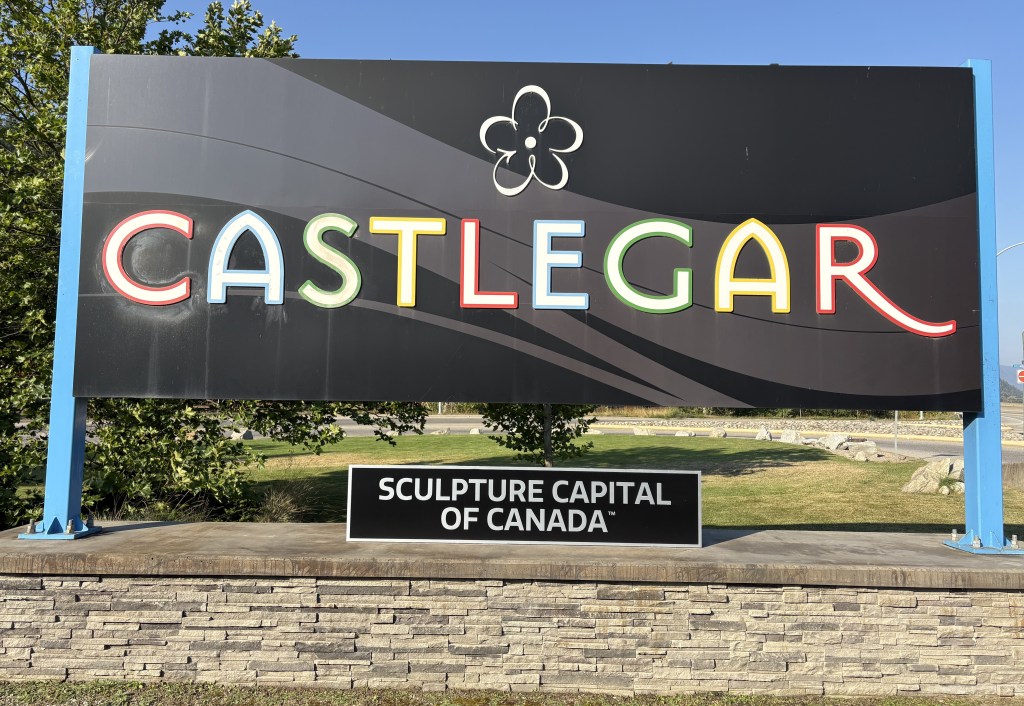
I stopped in the little town of Castlegar, which had been highly recommended by one of the folks in the Campbell River Visitor Center. I spoke with a young man at the Visitor Center there, picked up maps and brochures, but was already “on the clock” to make it to Cranbrook before dark so I told him I would probably return there someday. Someday is today. I am sitting in my Airbnb in Castlegar as I make this post, and the area has exceeded my expectations. I will save the photos I took yesterday when I arrived and today while I was out and about. They will have to wait their turn and be posted in sequence, but they will be worth waiting for.
The remainder of my drive to Cranbrook went without incident. I posted photos in the “tease” post of the amazing sight of a portion of the southern Canadian Rockies which I took just as the sun was setting. I was hoping for a repeat performance the next night, but low clouds spoiled it. It doesn’t look like I will get another bite at that apple this trip.

It ended up being just over 12 hours in the car because of all the stops I made, but it was a very enjoyable day.

So how’s it goin’, eh?

Two weeks in Canada and I have already seen so many amazing places. And I still have 6 weeks to go! I am going to wait a few more days to decide for sure but I believe I will be shortening some planned stops in Saskatchewan, and taking others off the to-do list completely, due to air quality from wildfire smoke in that province. I check the numbers every day, and they do fluctuate, but if they are anything other than low risk to my health I will probably pass.

The good news is that it will give me more time to revisit southwest British Columbia to do more things and revisit some of the places I’ve already been to. I didn’t budget enough time initially so now I’ll get another bite at the apple.

As I write this I am in Golden, BC, sitting at 3,303.33 feet elevation in the kitchen/dining area of the travel camper I am staying in for 6 nights.

I am near the base of a mountain north of Golden but it only takes me a few minutes to get down to the highway. The property is at the end of a dead-end road so it is remote and extremely quiet. The only thing I would change about it would be to put a huge net over it to keep the mosquitoes out! Not much my Airbnb host can do about that…

My first impressions of western Canada are all positive, mosquitoes notwithstanding. This is my first encounter with the pesky little insects this trip, but while I am out and about they really haven’t been a problem until this particular location.

People drive pretty fast in Canada, except people in RV’s who insist on driving the exact speed limit (or slower on inclines) and invariably have long queues behind them until they get to a passing zone. Can’t fault them for obeying the speed limit, though. Cities and towns have speed limits of 30, 40 or 50 km/h and the highways are generally 60 (in places with lots of curves), 80, 90 or 100 km/h, and the wide open road is often 110km/h. In National Parks the speed limit is never higher than 90 km/h, and in areas where people stop for viewpoints or to cross the road, much slower.

30km/h equates to 18.6 mph, 40 = 24.8, 50 = 31.1, 60 = 37.3, 70 = 43.5, 80 = 49.7, 90 = 55.9, 100 = 62.1, and top speed of 110 = 68.4 mph

So slower overall than we are used to in the US. I generally set my cruise control to around 5 or 6 km/h over the current limit and that keeps me pretty much in the regular flow of traffic. I finally switched my speedometer to metric because the conversions were driving me crazy. I had a cheat-sheet in my other car when I went to eastern Canada in 2019.

The roads have been in excellent condition, save for one I drove on my first day in-country which made me almost seasick. Fortunately that was the exception, not the rule. They may get a little worse the further north I go but I’ll just have to wait and see.

Drivers are very polite and there doesn’t seem to be any road rage up here.

The weather has been fantastic. The days often require only a t-shirt and shorts but the mornings and evenings cool down quite a bit so I may start and end the day with long pants and a sweatshirt, or at least a long-sleeved t-shirt. Now that I’m in the Canadian Rockies I wear long pants all the time but have layers for my upper body. Yesterday I was up at 6,300 feet elevation but mid-day it was very pleasant.

Thus far I have only traveled through the southern part of British Columbia, and now in Golden. I will be spending a few days in Alberta province starting in three days when I go down to Banff for 4 nights, and Calgary for one or two. I will then head further east to western Saskatchewan province, though as I mentioned above, some of those stops will likely be shortened or eliminated.

British Columbia badly needs rain but the Canadian Rockies have had a good bit so far this summer. East of the Rockies has also been dry, which is why they are having so many wildfires.

The scenery has been stunning. I am going to run out of superlatives to describe it. While planning this trip I noticed that the Canadian Rockies “weren’t that tall”. The highest points in the British Columbia and Alberta provinces are “only” 12,972 and 12,294 feet respectively. Colorado alone has 58 mountains taller than 14,000 feet. Well, now that I am here and looking at them with my own two eyes, I can say that the mountains in the Canadian Rockies, and elsewhere in western Canada that I have been to so far, are VERY IMPRESSIVE and many of them are unlike mountains I have seen elsewhere. I’ve taken lots of photos in the 6 National Parks I have been to, all within 4 hours of where I am now staying. I am staying “home” today to do laundry, wash my car, and download and review the photos I have taken the last few days and prep them for making additional posts.

Here is a tease of a Park I drove through yesterday:

Lots more where that came from, I assure you.

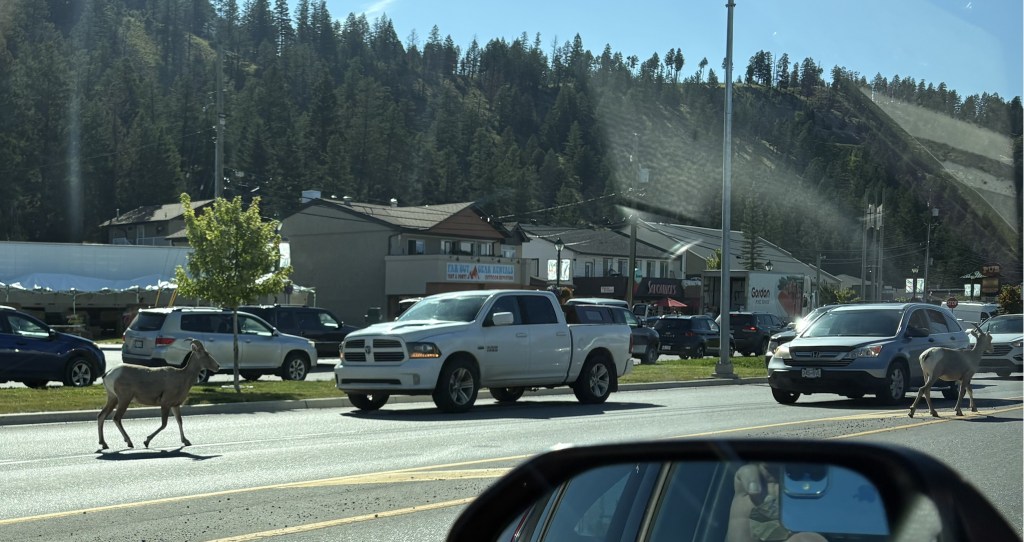
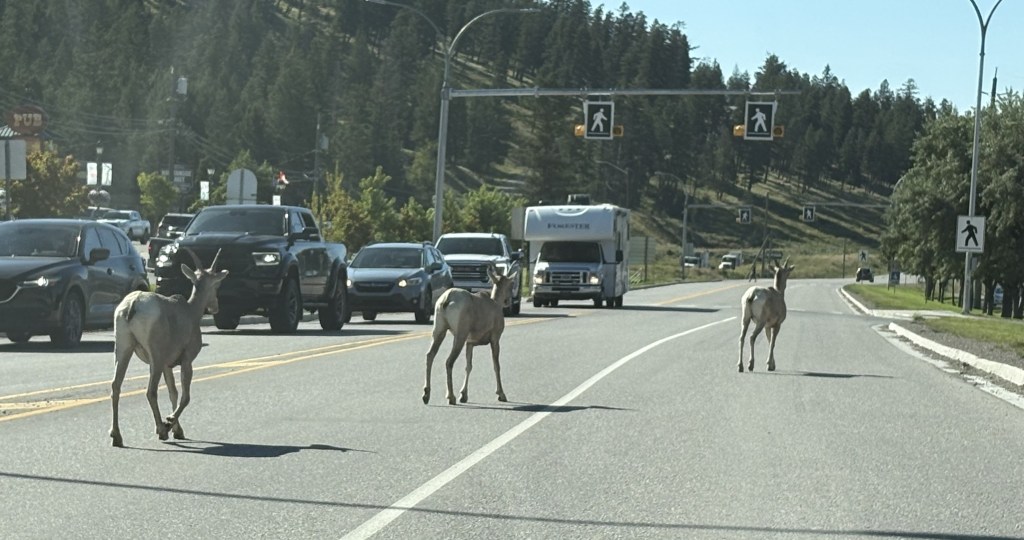
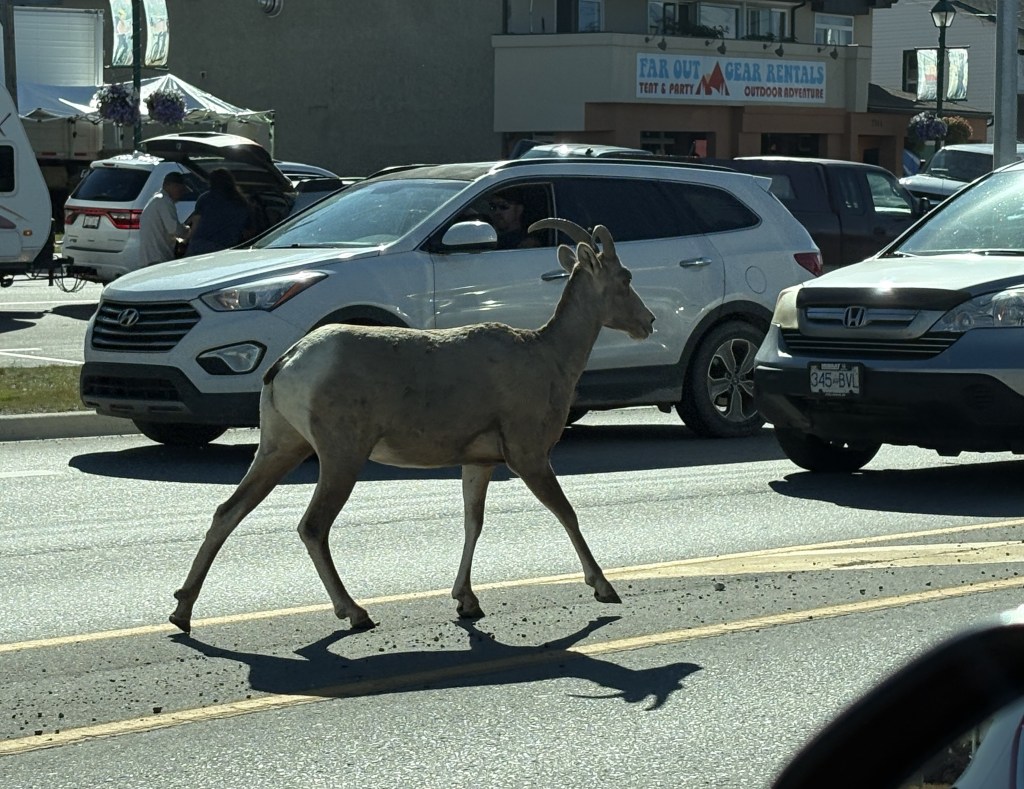
I haven’t seen nearly as many critters in these first two weeks as I expected to. I am always vigilant, especially when I am driving, and try to always have my digital camera within easy reach. I’ve only seen one black bear, a cub which ran across the road well ahead of me while I was in northeast Vancouver Island. I neglected to mention that in the post for that day. I saw a white-tail deer here in Golden, as I was driving down to the highway yesterday morning. It ran alongside the road to my left for a short distance and then stopped. I saw a moose cow (adult female) grazing just off the small road I was taking to get to a popular resort near Jasper, BC two days ago. I saw a herd of elk (thank you to my brother Steve for correcting me when I called them moose). I hadn’t looked at the photos on my computer yet and as you will see when I post the photos from Jasper they were all laying down and resting in a burnt-out wooded area just off a major highway, and just outside of town, so it wasn’t obvious exactly what they were. I have photos of a few birds of prey I have seen in various places. I am going to a Wolf Center just outside of Golden later this afternoon but that won’t count since they are in captivity.

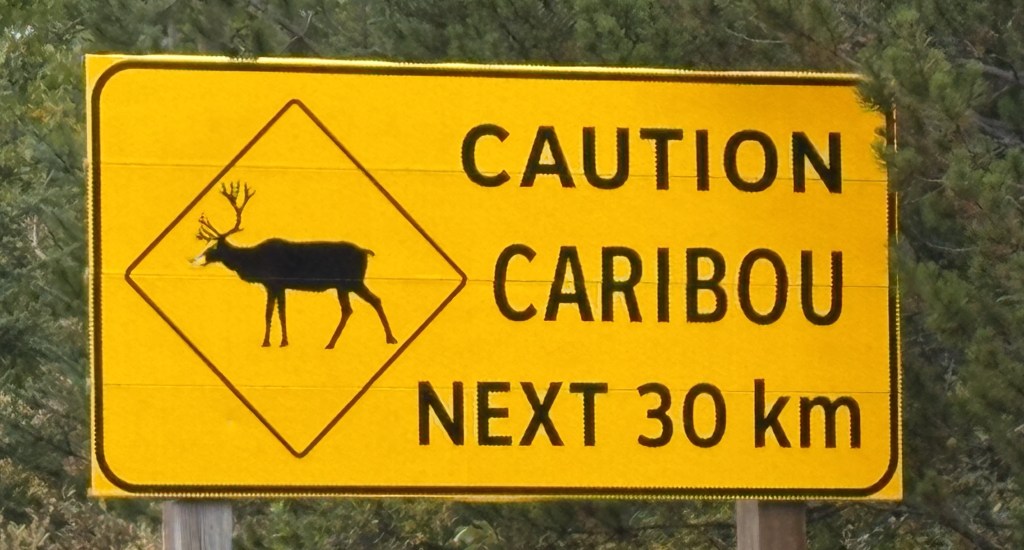
I see warning signs for lots of things – deer, elk, bear (black and grizzly), moose, bison, mountain goats, and bighorn sheep (I still think they’re extinct – I have never had a confirmed sighting in all my travels in the US and now Canada). And yesterday I saw signs warning of frogs and salamanders on the road in a National Park west of here! I hope they’re not big enough to damage my car!!

No lions or tigers but they may be in Saskatchewan. I’ve heard they’re a pretty tough bunch over there…

I’ve driven just under 2,800 miles from when I crossed into Canada back on July 27 to last night when I filled my tank here in Golden. Gas prices are relatively high in Washington State and here in British Columbia. I expect them to drop in Alberta (once I get past Banff) and Saskatchewan provinces.

One thing I really like about traveling up here is that there are warning signs when you are about to go a considerable distance with no gas stations along the way. And there is no cell phone service across vast areas. Some days I go almost the whole day with no cell service. Verizon does make satellite texting for emergencies available when there is no cell service. If I start the day using Google Maps guidance on my smartphone for a specific destination it will work for quite a while but eventually stops if I’ve had no cell service for an extended period. This is why, for years, I’ve had a stand-alone GPS unit in my car. Even my new-to-me car doesn’t have a navigation system or GPS built in. Google Maps doesn’t always work.

I haven’t experienced any really bad crowds yet, but then I didn’t go into Vancouver or to a popular Garden destination in Victoria which probably would have been packed with people. The National Parks are so big it is fairly easy to get around within them, though at some of the popular stopping points the parking lots fill up pretty quickly, same as they do in the US. I do expect the city of Banff to be crowded, and I don’t know yet how many of the areas within the Park itself I can drive to. Jasper and Banff National Parks are both enormous, though some portions of Jasper are still closed due to the devastating wildfire they had last summer. I will give more specifics when I start posting photos from with each Park.

I was delighted to hear upon my arrival at the first National Park, where I planned to buy my senior annual pass, like I had in eastern Canada, that admission to all Canadian National Parks is free until September 2. Yay!

I feel like I’m forgetting something but when I think of it I’ll add it to another post.
Port Hardy

After making a few stops on the way up from Campbell River I arrived in Port Hardy around lunchtime. I bought some fast food at an establishment in town and took it down by the water to enjoy it in a small city park, under a shelter.

There was a pretty heavy marine layer (clouds close to the ground near the water) when I arrived. I could see there were some small islands out there but I waited a while for them to become a little more visible.

After I ate and enjoyed the solitude for a while I was going to start exploring the town. Just before I left to do that I saw a man standing not far from where I was, staring up into a tree. I walked around to take a look and saw this large hawk, hidden in the tree’s branches.

It didn’t take him long to spot me.

I left soon after that and drove around the little town. Not much to see, frankly, but there was a small park with some interesting items in it – like this:

Yes, that’s a 10-foot tall wooden carrot (which is located in Carrot Park). I will explain the significance of it in a moment.
I also saw a seaplane taking off from the water:

I came across this short, squat totem pole with its hand out. Not sure what the significance of that is but I will soon be doing some research on totem poles and hope to find out what the symbolism of the various portrayals are.
There was a nice memorial to soldiers from the town who lost their lives in various conflicts. I thought I had taken a photo of it but don’t see it in either camera.

I spotted this vehicle in town, getting ready to back out of the parking space it was in. Looks like they came prepared to have fun.

So now, the mystery of the carrot:

Remind me of someone in the US who is also referred to by the color that doesn’t rhyme with any other word.

As I was leaving town to head to my next destination I saw this bald eagle way up in the top of a tree by the city street I was on:

Campbell River to Port Hardy

My last full day on Vancouver Island would take me to the northernmost tip of the island. Port Hardy is 145 miles northwest (the island slants from NW to SE) of my current base of Campbell River, and Google Maps said it would take 2 1/2 hours to get there. My goal when I planned this trip was to drive on ALL the major roads on the island (there aren’t many). Mission accomplished, save for the road out to Tofino which I skipped because of the alleged tsunami threat. There are several small towns along the Strait of Juan de Fuca on that route which are all along the coast, and facing that direction they might have experienced the full force of a tsunami had it held together, so I opted to listen to the authorities and stay inland that day. I will just have to wait and visit Tofino when I come back! From my pre-trip research it sounded like it had some interesting stops.

It was a beautiful morning when I started driving towards Port Hardy. I should have mentioned this earlier but as I have driven northwest from Victoria the entire time I have been on Vancouver Island I’ve encountered more and more mountains, not so much that I had to drive on since most of the main roads skirt both coasts (the exception being the ones I did yesterday, and the road out to Tofino) but every day I seemed to see more, and taller mountains.

Curiously I never saw the tallest mountain on the island, but it was probably obscured by smaller mountains, or trees, adjacent to the roads I was driving on. As I mentioned in an earlier post, it may well have been the mountain with the most snow on it which I could see from many other locations, but for all I know that mountain could have also be on the British Columbian mainland.

Before I got to Port Hardy I saw a sign for Alert Bay, which indicated it was the location of the world’s tallest totem pole, and well as a reference to a killer whale which was lost on me.

When I got to that point on the highway I turned right and drove a short distance to Port McNeill. There I found a small harbour, and there was a small ferry just getting ready to dock.

There were also some boats anchored out in the main waterway.

I’d like the one on the extreme right, please.

There is also a marine research facility out on one of the islands in Alert Bay and this is one of the boats used by their scientists.

As I mentioned, a small ferry which transports vehicles and people to some of the numerous small islands off the coast was just getting ready to dock:

And as I was leaving the dock to head downtown to the Visitor Center I saw this timely sign, given the events of the past few days:

As usual, the young ladies in the Visitor Center were extremely helpful in pointing out various things I could see and do as I continued north to Port Hardy, some of which were on my list but others, not. They also told me that getting out to Alert Bay to see the totem pole was a pleasant, but time consuming task. Yes, a short ferry ride out there, but the big blue sign didn’t mention that in order to get back to Port McNeill one had to ride the ferry to several other islands in the vicinity, and that would take more time than I had today. Add that to the to-do list when I come back.

I bid Port McNeill a fond adieu and drove back to the main road to continue my trek northwest.

Future plans & Mt. Washington, BC

After my morning road trip towards Gold River I returned to Campbell River to speak with someone who works at the Visitor Center but who wasn’t working the day before. She used to live in Stewart, Alaska, which borders northwest British Columbia, so is very knowledgeable about the roads up that way. I initially thought I would fly to Alaska but now I am pondering the long drive up and back. I had spoken with some young people near the original Starbucks when I was in Seattle and they had just driven down from Alaska via the southern edge of the Yukon Province and then south all the way through British Columbia!

The young lady at the Visitor Center gave me some great ideas on places to stop to see some unique scenery and wildlife, making an already long drive even longer, but hey, I’ve come this far…

I am still reviewing how and when I will get to Alaska, depending largely on exactly how long I am in Canada. I just read today that authorities are keeping an eye on a possible volcanic eruption due west (not very far by Alaska standards) of Anchorage AK, perhaps triggered by the rash of recent earthquakes, so that gives me one more thing to keep track of…


After speaking with her I had lunch in town, then headed to my next stop – Mount Washington Alpine Resort ski area. My Airbnb host was working there today (he is retired but helps out at the ski area a few days a week). I thought I would surprise him by showing up at the chair lift he was operating. I stopped for gas in Courtenay, then headed for the mountain.

Mt Washington Alpine Resort has year-round activities and there were a fair number of people up there. I chatted briefly with my host but he was working so I let him get back to it. I wandered around and took some photos, then headed back to Campbell River as I would have an even longer driving day tomorrow before taking a ferry from Nanaimo to Vancouver the day after.

Here are some of the things I saw up on Mt. Washington. The base elevation there is 3,558 feet so there were some pretty good views looking back towards Discovery Passage near Campbell River, and south towards Nanaimo. They get an average of 38 feet of snow each winter, which apparently is a pretty big deal and draws lots of skiers.

One of the more popular attractions during the summer is an extensive series of bike trails (bicycle, not motor bike). There was a canopy set up and a young man seemed to have his hands full with repairs on tires and such. Here are two lists of bike trails and the experience level needed to ride each.

I kind of dropped the ball on this one, folks. I didn’t realize at the time how big of a role the Bike Park had so the photos above weren’t straight on shots and I didn’t even take a photo of the canopy or ongoing bike repairs.

Here are some of the other activities available to folks at the resort:

Zip line training, to hone your skills before going big time much further off the ground. At the center of the photos is a kid kind of dangling from the zip line, and others with their helmets on waiting their turn.

A Water Tube, which didn’t seem to be in use the day I was there. I threw in a panorama shots while I was at it. And don’t forget, you can right click on any photos I took to save them to your computer. Then open them up on the biggest screen available. This is especially true with panorama shots.

I drove down to the Nordic Center on the advice of my Airbnb host but they were having a private event and the sign asked people to be respectful and not even proceed past it, so I left. There were lots of vehicles so it must have been a pretty big deal, whatever it was.

I went back to main lodge and took some photos of the views. This was the main road going in (which they are in the process of repaving)

This is looking towards Campbell River, I believe. The water you see in these photos is the Strait of Georgia, which separates Vancouver Island from the British Columbian mainland (and narrows to become Discovery Passage up near Campbell River):

And this is looking further south, towards Courtenay and Nanaimo:

Campbell River, BC

After leaving Victoria my next three nights would be spent in Campbell River, about halfway up the eastern (inland) side of Vancouver Island. My first stop after I rolled into town? You guessed it – the Visitor Center. Once again, the young staff members were extremely helpful answering my questions and even suggested I return the next day to speak with another staff member who used to live in Alaska about some of the questions I had about roads up that way. I am now thinking about driving up to the top of British Columbia and passing into the extreme southern edge of the Yukon Province, then proceeding west to Alaska rather than flying.

This was a part of a totem pole, or perhaps a ship, which was just outside the entrance to the Visitor Center (located on the lower floor of a museum). I guess I should have read the sign!

When I walked back to my car before heading out on Discovery Pier, located behind the museum and adjacent to the city’s harbour, I saw this on the dashboard of a car which was also parked in the free parking lot.

I couldn’t determine by looking through the windshield who it was (I am still recovering from double cataract surgery right before I left home and have to wait another few weeks before getting new glasses to help my close vision) but I can only guess that it had to be Elvis.

This is Discovery Pier, so named because the body of water you see under it is Discovery Passage which runs between Vancouver Island and Quandra Island, which is the closer land mass you see on the other side (the mountains further away are on the British Columbian mainland).

This is the view from the walkway going out to the pier looking right (south).

This heron landed on the rocks just below the walkway as I was preparing to take the next photo.

This is the view looking from the pier to the left (north):

And turning further left you can see the masts of many of the boats docked in the harbour (from the walkway, close to the seawall and making it harder to see over it):

There was snow on the high mountains off in the distance looking northeast.

And these two ferries were crossing the Passage in opposite directions:

They built nice, sturdy chairs which are securely attached to the pier, for fishermen and women to use while they wait for their catch to take the bait.

They each had a plaque in memory of some of the people who loved to fish here.

There were free buckets (and be sure to take a lid!) next to the stand selling ice cream, sherbet and other treats to the public.

I enjoyed a double scoop of rainbow sherbet, which I haven’t had in years.

Nanaimo, British Columbia

After my stops in Duncan and Mount Prevost I arrived in Nanaimo (pronounced nuh-NIGH-mo). First stop, as it often is when I go to a town I haven’t been to before, was the Visitor Center. There were three very helpful young people working there and they gave me some great ideas of where to visit and where to have lunch (confirming my pre-trip research).

There was an amazing mural on the wall made from rocks! It was enormous, and must weigh a ton – literally.

My next stop was the marina next to the fashionable Nanaimo Yacht Club.

There was a large panel with an octopus on it as I walked towards the (public) dock:

The sign below it stated that it is an artwork depicting a Giant Pacific Octopus, which is found in nearby waters. The sign went on to say that this area has some of the best diving spots in the world, where divers may see this octopus, wolf eels (with a face only a mother could love), nudibranches (one of the most colorful fish I have ever seen, and available in MANY varieties), anemones and sea sponges.

Sometime when you’re bored Google “nudibranch” and look at the images. The variety will amaze you. But I digress. I’m here to take photos of the scenery.

Next stop – Pipers Lagoon.

I was born in Evanston, IL, the first suburb north of Chicago. As a kid growing up (we moved to Pennsylvania when I was 12) my parents would occasionally take me to a lagoon, located just off Lake Michigan. That is the only time I have ever seen or been to a lagoon until today, which is why I sought this one out.

This is the recently renamed Arrington Lagoon in Evanston, a great place to take young kids to feed the ducks or bring their toy boats.

(Photo credit: Businessyab.com)

(Photo credit: Karie Angell Luc)

THIS is Pipers Lagoon in Nanaimo:

A very different type of place because it is natural, not manmade. Of more interest to the locals is the beach, just out of frame to the right in the photo above.

And to rinse yourself or the kids off after having been in the water, this two-headed serpent:

And yes, I do have a strange obsession with taking photos of dead trees:

As I drove back towards town for lunch I caught this view as I was driving along a road at the top of a hill.

The restaurant I planned to go to was closed the day I was in town (that happens to me a lot). I was going to have REAL Ramen, not the $1 stuff college kids buy that is probably all salt. Instead, I went to the second place on my list and had a yummy bowl of Pho, along with two orders of spring rolls.

My first afternoon on Vancouver Island

The ferry from Port Angeles, Washington State dropped us off in the harbour in Victoria mid-afternoon. I had a scenic drive which would take two hours each way planned so I decided to go ahead and get it checked off the list since I didn’t know my way around the city. It was easy to get on Route 1 (the Trans-Canada Highway) from the ferry terminal and then I hopped on Route 14 which would take me around the bottom of the island to the southwest and then follow the Strait of Juan de Fuca which separates Vancouver Island from Washington State.

I passed through little towns like Langford, Sooke, Shirley and Jordan River. The road eventually turned inland and climbed up into the San Juan Ridge of mountains. Ultimately the road would end at Port Renfrew. I never made it that far. Once the road started climbing up into the woods, a) the drive became like something I could do in North Carolina or Virginia – driving through a tunnel of trees, but more importantly, b) the road had lots of curves, but more distressing were the severe undulations which often caused the car to almost bottom out if I went too fast. I now drive a Toyota Camry which, when loaded with all my stuff, sits pretty low to the ground (and I bought it with low profile tires on it compared to what I normally buy). I finally said “enough” and turned around. I was getting carsick on land!

Here are some panoramas looking west towards Washington State. The photos make them look tiny, especially using the panorama format, but actually looking at the mountains of Olympic National Park was very impressive, even from a distance.

This crow landed on the rock in front of me as I was getting ready to back out from my parking place by the beach.

That photo was taken at Jordan River and from there it would take me about an hour to get to my Airbnb for the next two nights.

Welcome to Canada, JohnBoy !!

I crossed from Port Angeles, Washington to Victoria, BC, Canada on Sunday, July 27.

We sailed aboard the MV Coho ferry:

It took about an hour and a half to traverse the Salish Sea in the Strait of Juan de Fuca before arriving in Victoria, British Columbia. Victoria is located at the southeastern end of Vancouver Island, a huge island about the size of Kansas. Vancouver Island is the 8th largest island in the world.

Some of the deckhands prepping our ship for docking:

Some of the things we saw as we approached the harbour (I’m in Canada now and have to talk the talk):

A dichotomy of speed:

The Air Traffic Control tower (well, building) for managing approaching and departing seaplanes. One of the photos above shows a buoy with a sign reading “Water Airport”

Part of the Canadian Coast Guard fleet:

And once I got on land I treated myself to a reward, confirming that I was actually in Canada!


I have been on the road 2 days shy of 4 weeks. When I arrived at the ferry terminal in Port Angeles, immediately before leaving the United States, I had driven exactly 4,600 miles since leaving Durham, 759 miles over my projection (which was point-to-point mileage between the towns I would be staying in and didn’t include side trips).