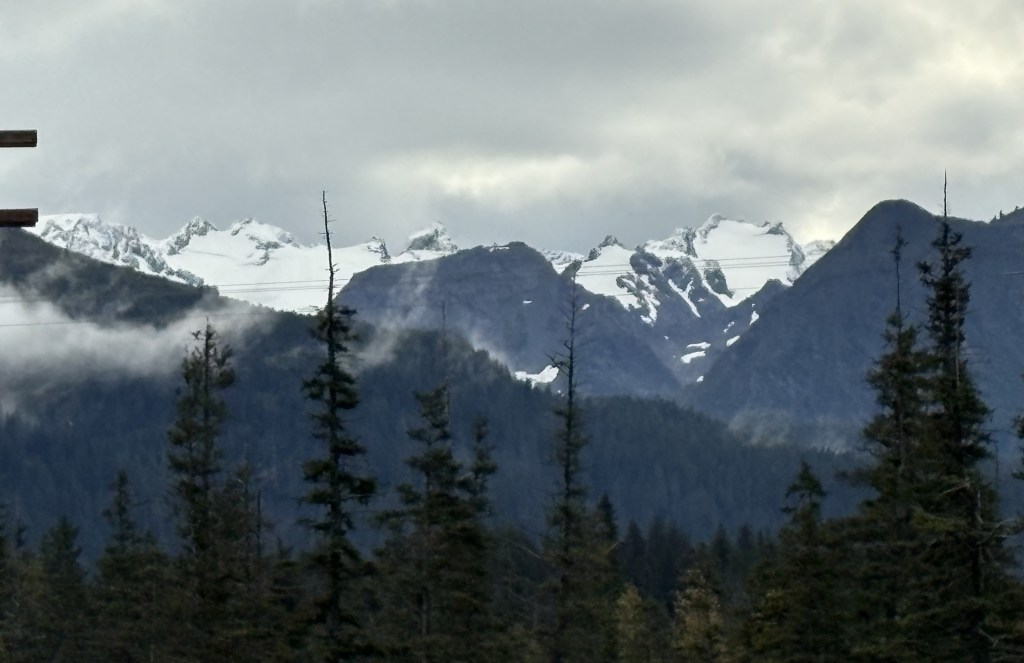
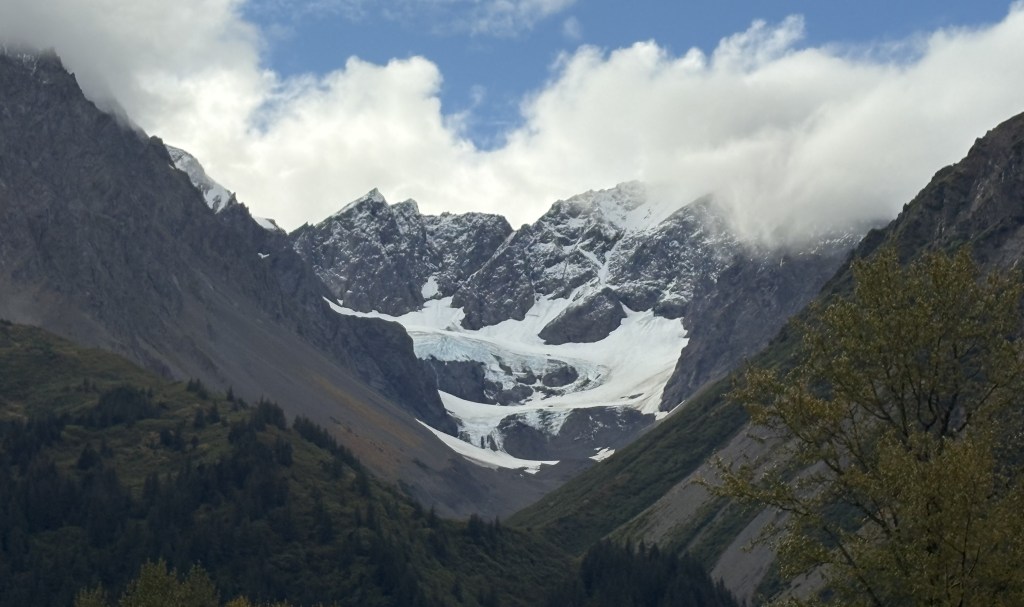
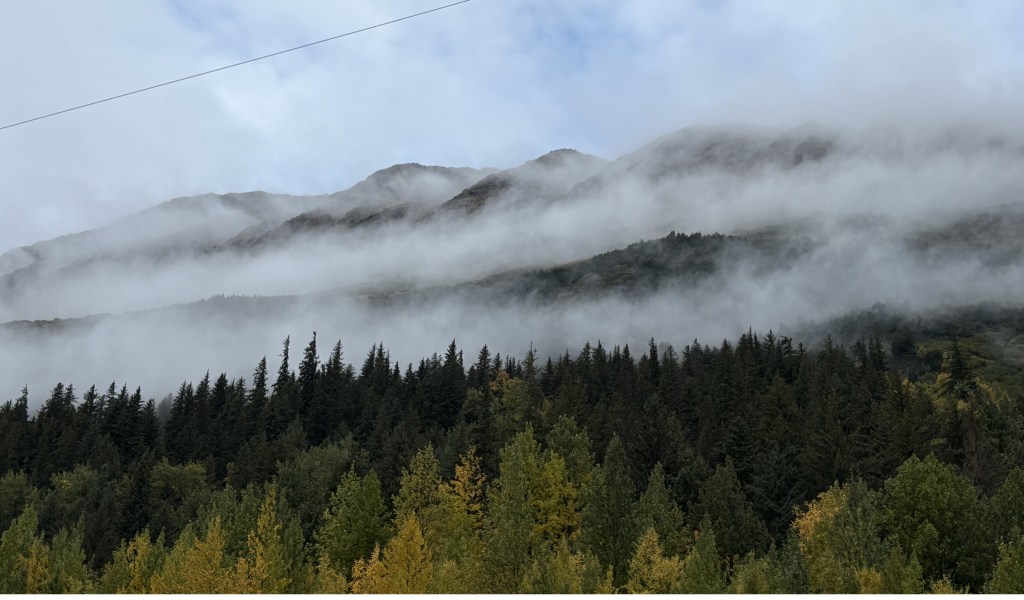
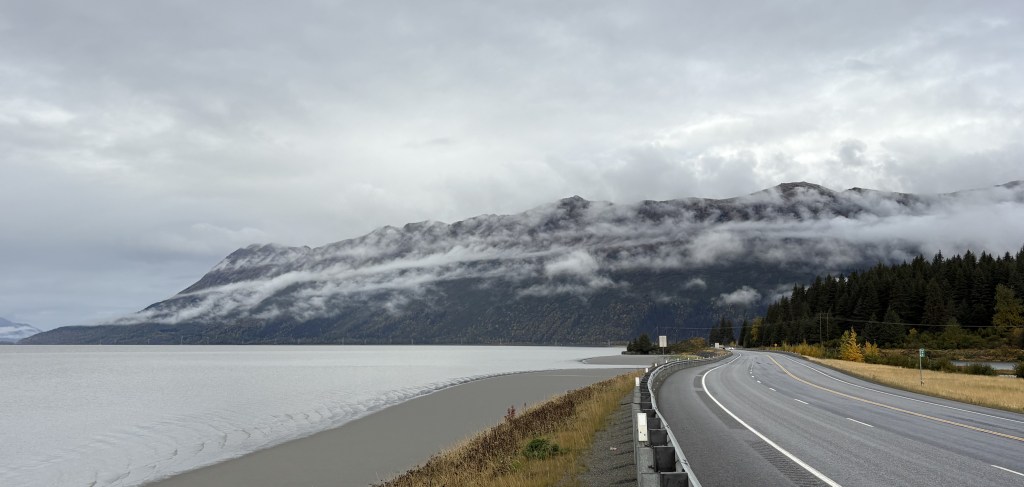
Wait. What??

September 28, 2025

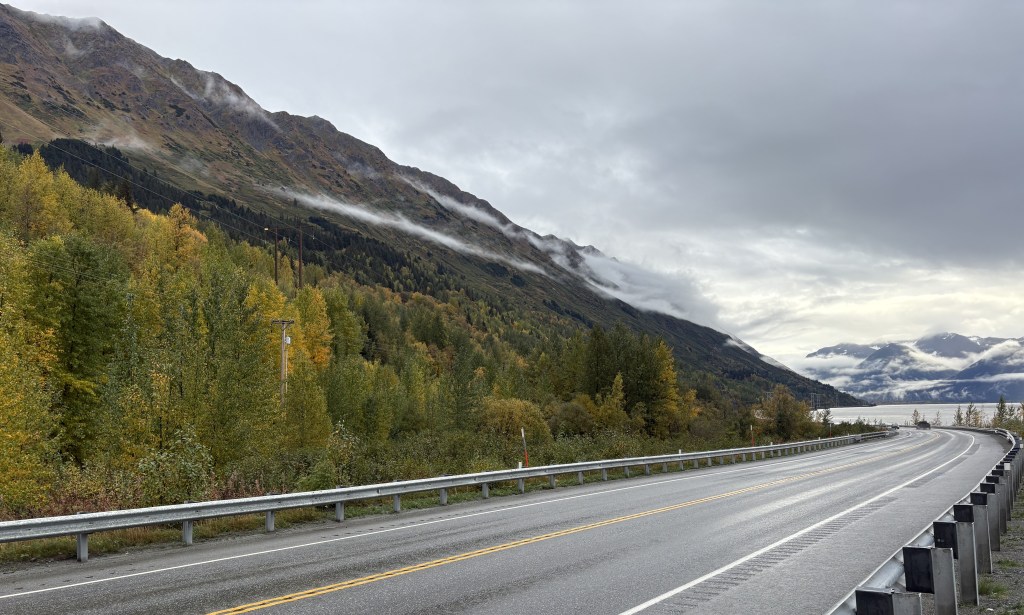
As I continued my drive from Seward to Homer I had now driven out of the mountains and wasn’t expecting to see any more until I got to Homer. There frankly wasn’t much to see, and when I got to the Kenai Wildlife Refuge (in prior post) I discovered that a large part of it had suffered a wildfire, and trees in that area were mostly bare.

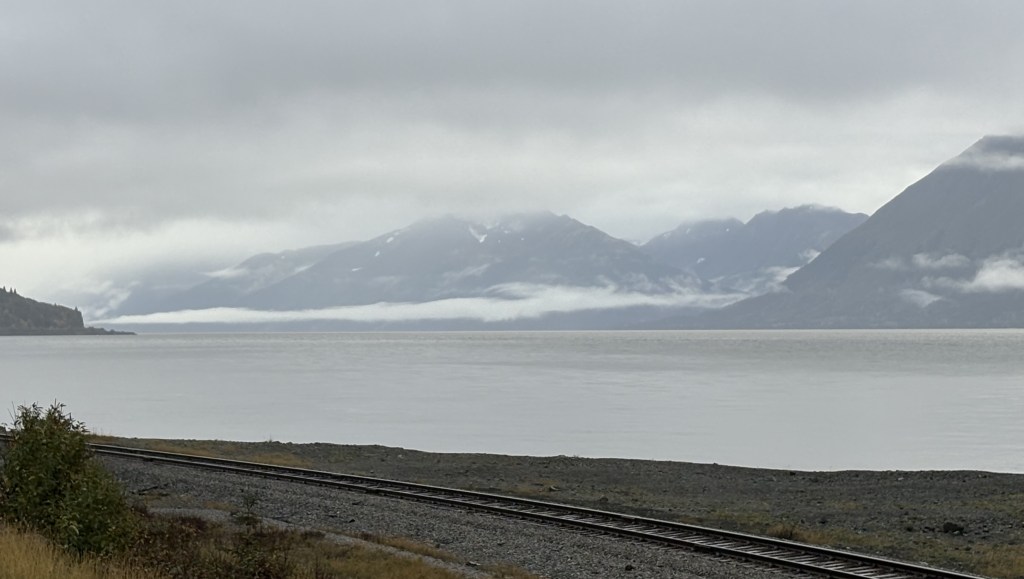
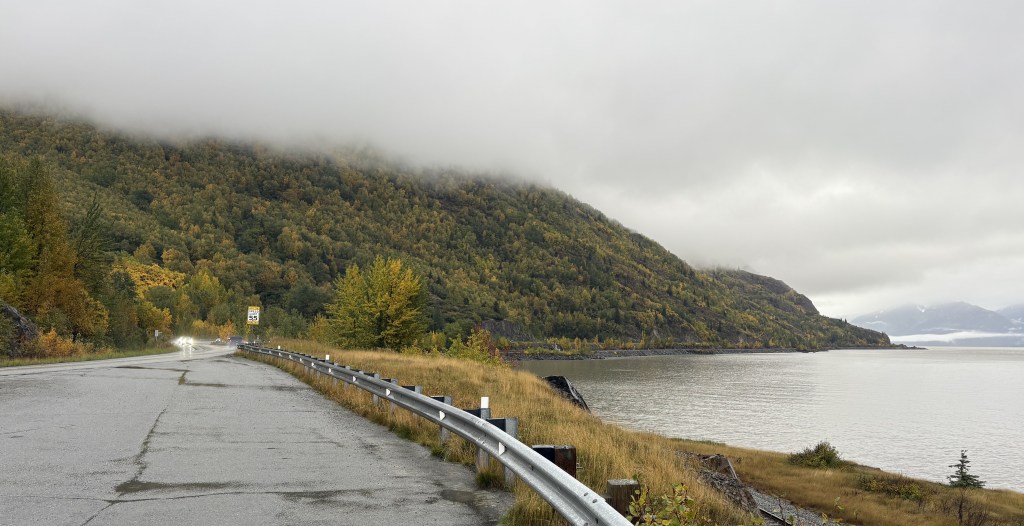
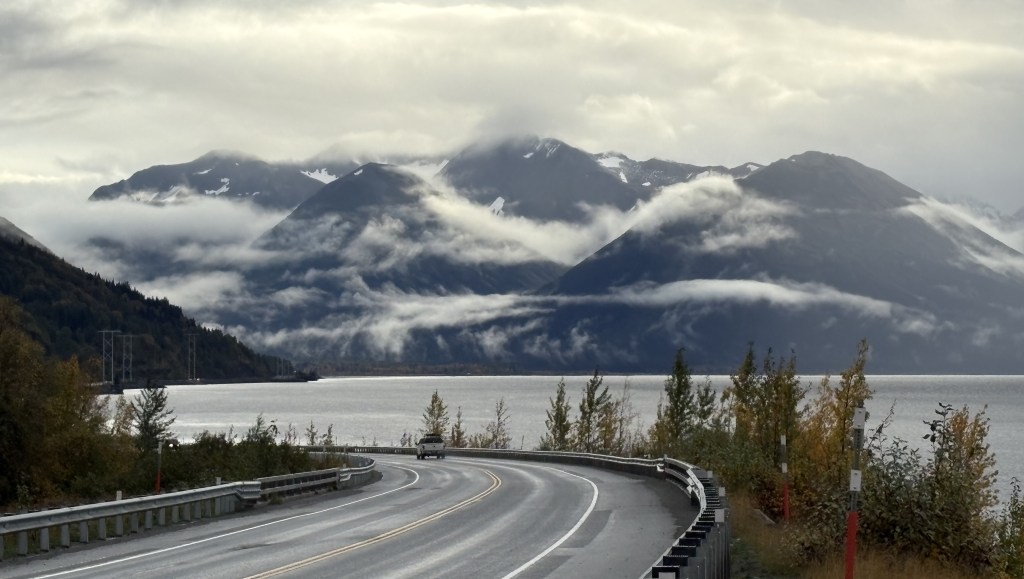
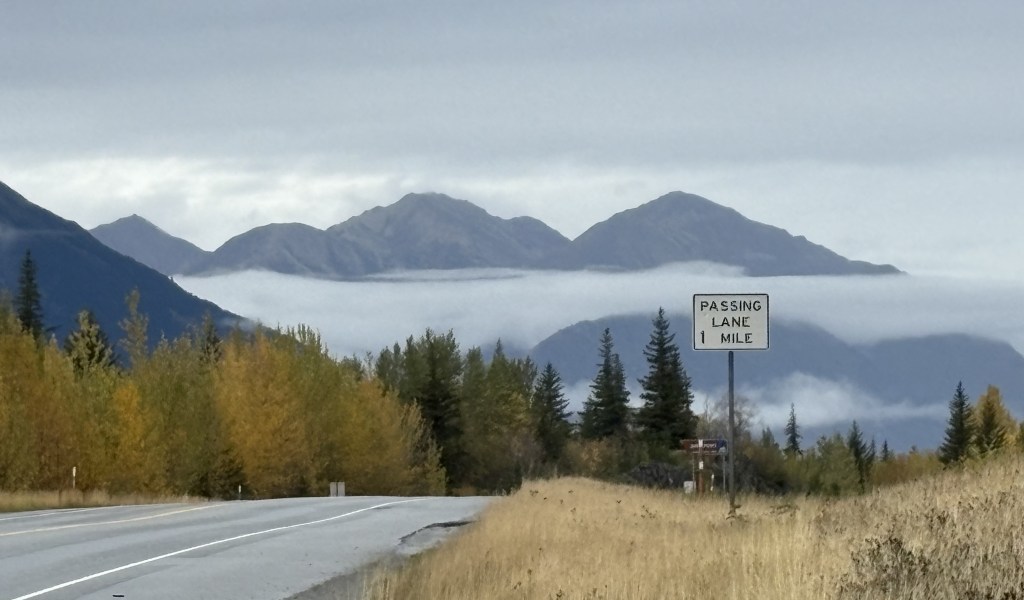
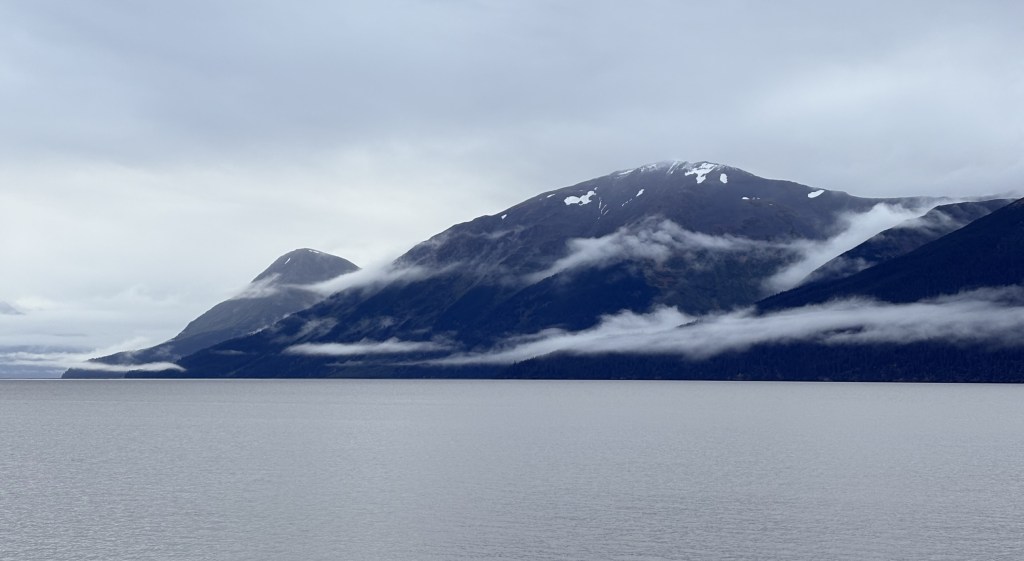
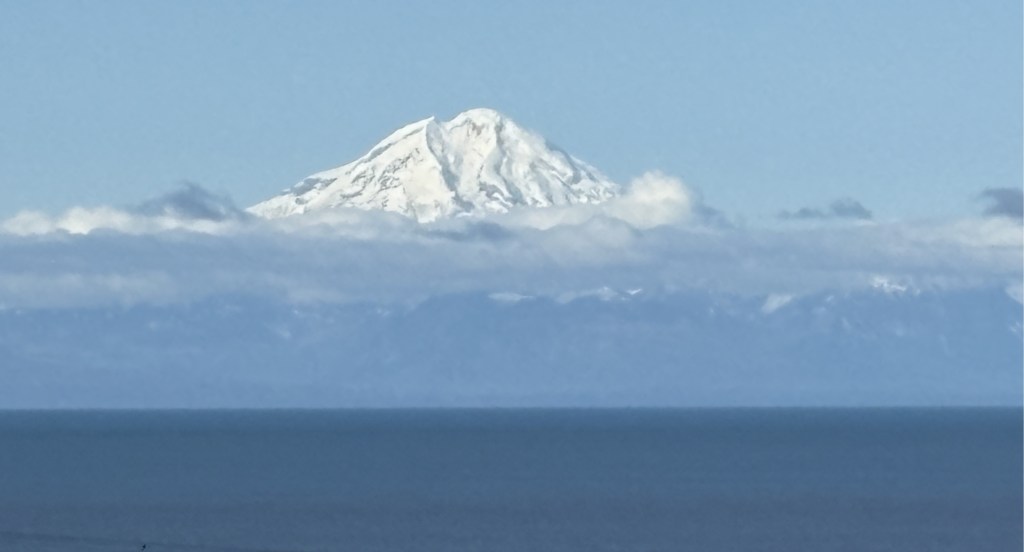
I was shocked when further down the road I saw this ahead of me:
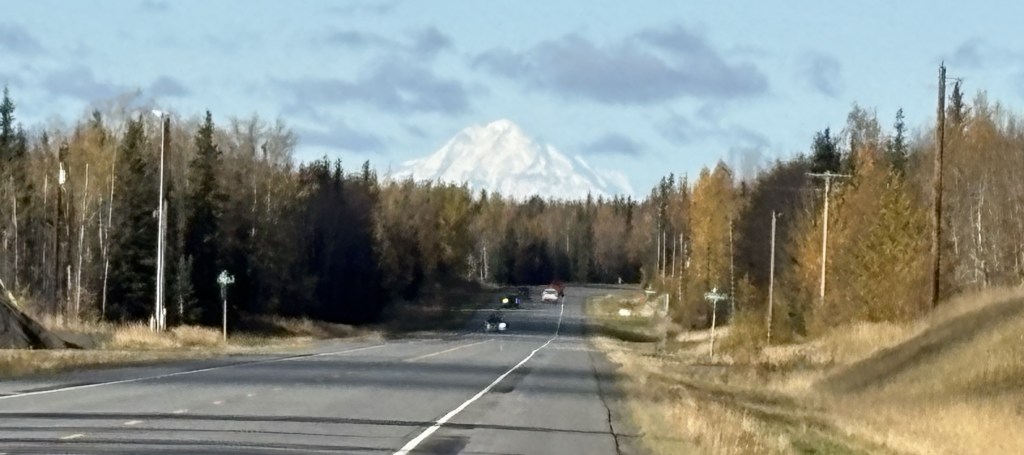
I stopped and texted that photo to some family and friends, expressing my surprise at seeing such a large mountain ahead of me. It didn’t dawn on me until almost two hours later exactly what I was seeing.

I had failed to grasp the fact that I was driving west for quite a while before turning south. What I was seeing was Mount Redoubt, a volcano, across Cook Inlet and in Lake Clark National Park, on the “mainland” of Alaska (I was now on the Kenai Peninsula). This became clearer as I drove south and could see it, and another large volcano, now on my right and across Cook Inlet.

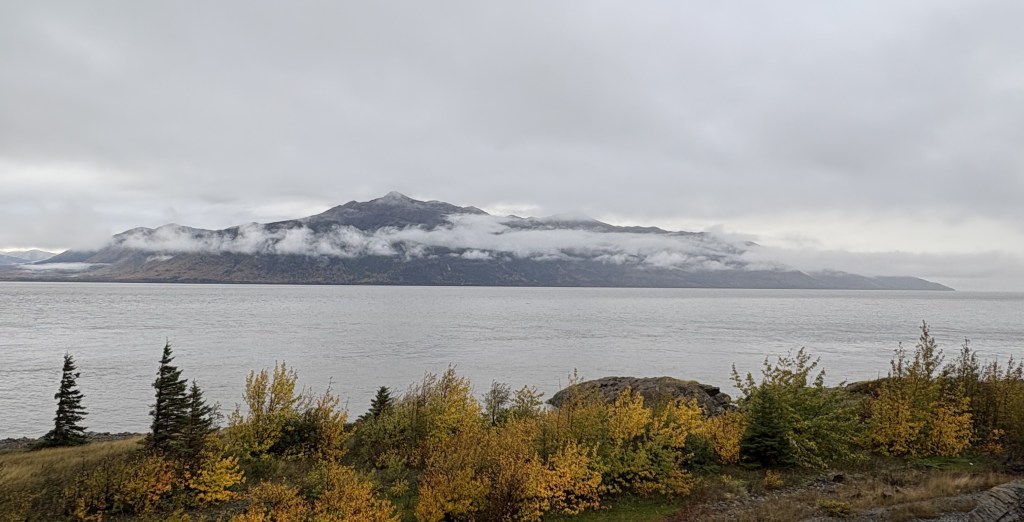
Once I got closer to Homer there was a pullout where I had a fairly good view.

This is another photo of Mount Redoubt, with Cook Inlet in the foreground:
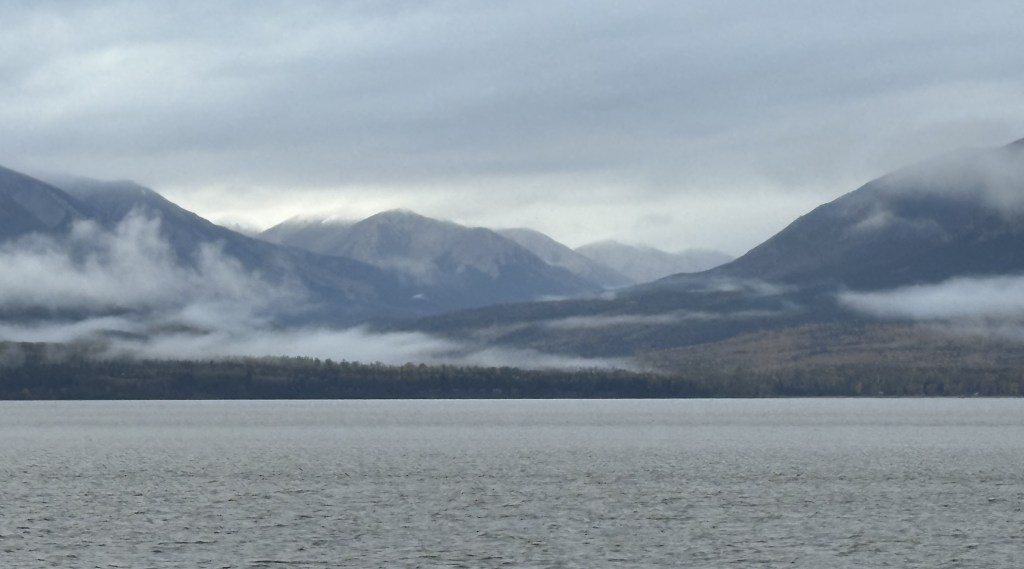
And here is a closeup using the digital camera with a zoom lens:
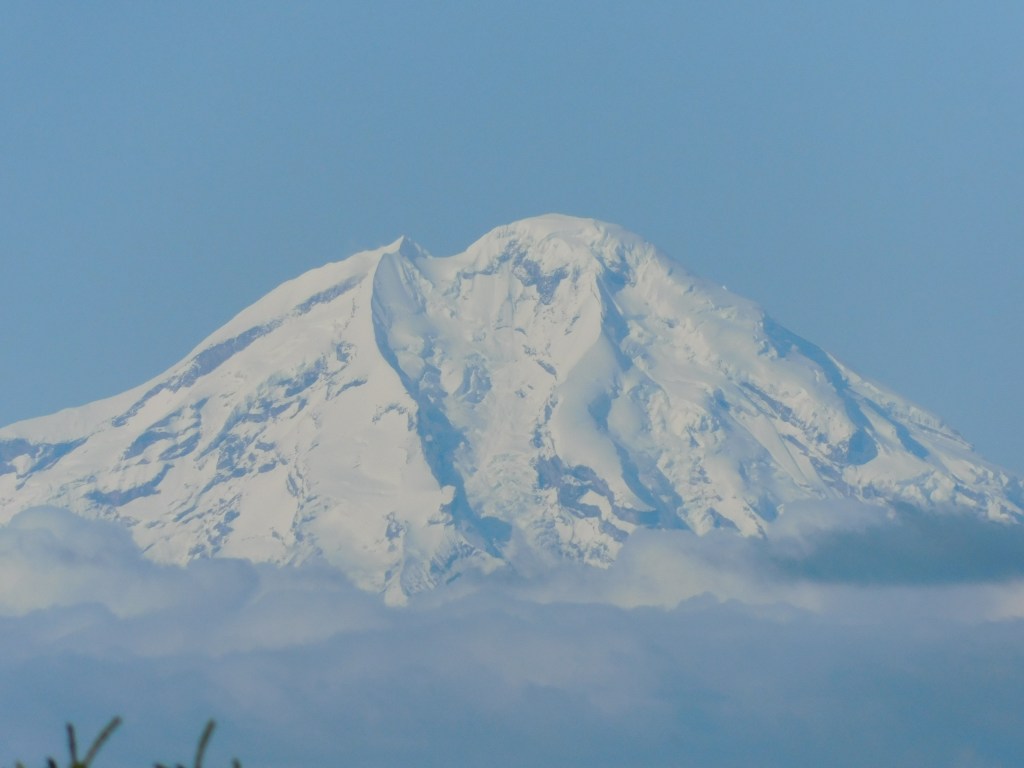
For some reason my digital camera makes snow look much darker than it is.

Mount Redoubt is 10,197 feet tall and is considered a highly active volcano, even though it wasn’t emitting steam or lava at the moment. The most recent eruption was in 2009.

To the south of Mount Redoubt I could also see Mount Iliamna, another active volcano. Again, you can see Cook Inlet beyond the brown grass in the foreground and, like Mount Denali, there is a range of shorter black mountains in front of the higher peaks.
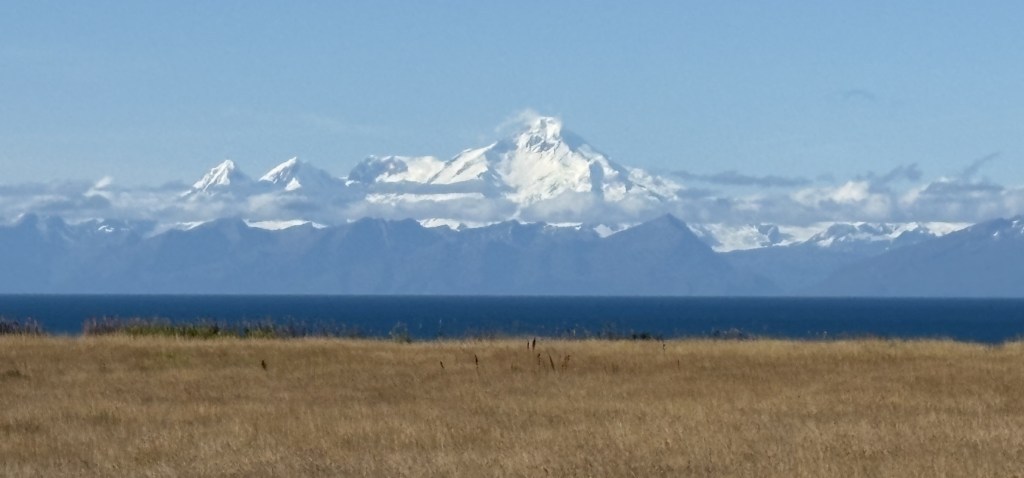
And a closeup of the main peak.
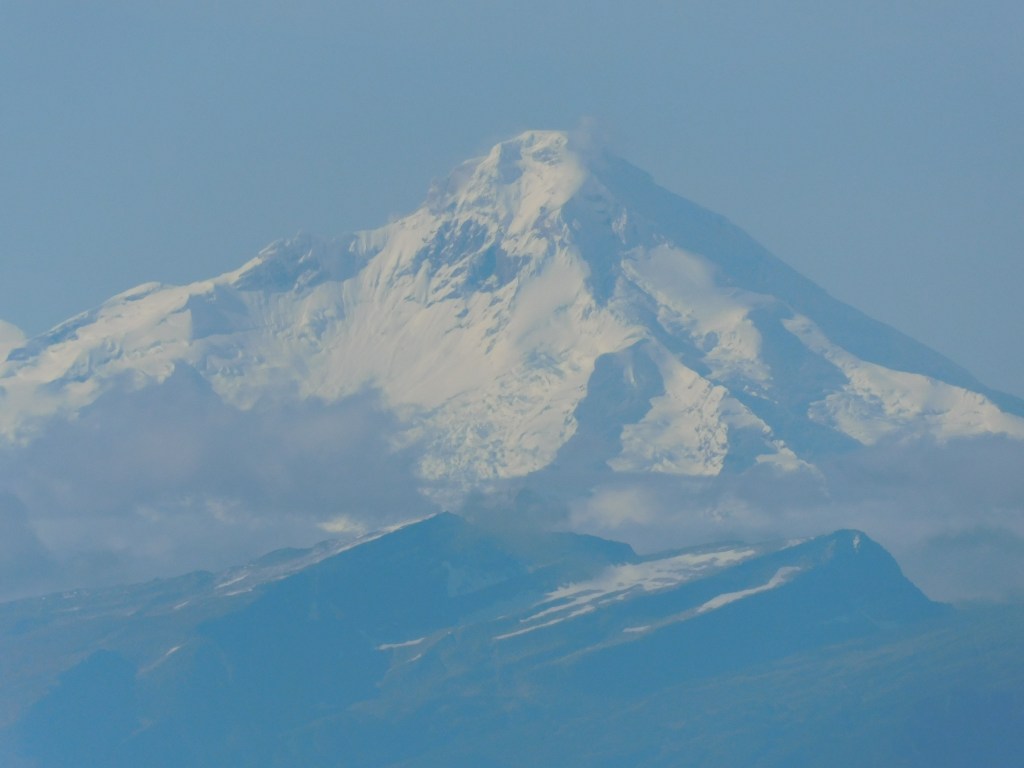
Mount Iliamna is 10,016 feet tall and is much less of a threat for a major eruption.

A third mountain I could see to the northwest may be Mount Spurr. It is located 80 miles due west of Anchorage and I was actually concerned about the possibility of it erupting during my trip.
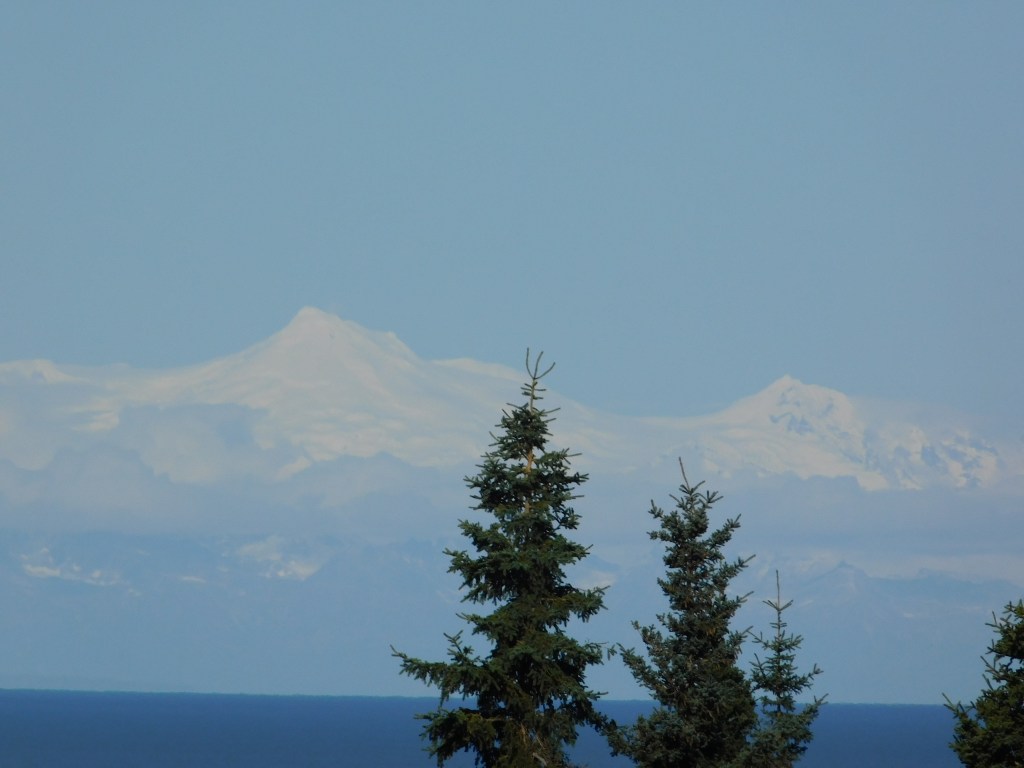
I showed that photo to someone in the Homer Visitor Center and she agreed that it is probably Mount Spurr. When I first arrived in Canada on this trip, and was out on Vancouver Island, there was a tsunami alert issued for coastal British Columbia and the northwest United States after a major earthquake in Russia. I actually altered my plans for the next day on Vancouver Island, though there were no significant waves reported. I did read, however, that Mount Spurr in Alaska showed some signs of life after the earthquake in Russia, although it calmed down a few days later.

Mount Spurr is roughly 80 miles due west of Anchorage. Scientists monitor it very closely as the last time there was even a minor eruption, the volcanic ash caused problems in and around Anchorage.

I will make another post with photos taken after my arrival in Homer.
Seward, Alaska – Day 2

September 27, 2025

After studying the materials I picked up at the Seward Visitor Center when I arrived yesterday, I discovered that there was another part of town I hadn’t seen yet. I thought I might go to the Aquarium, and on the map it was a few blocks south of where I had been yesterday. The person I spoke with had verified that they opened at 10am and that was when I arrived – to find it locked, with a sign indicating that it opened at noon!

I made a command decision to go on a road trip to a place I had hoped I might have stopped at on the way down from Anchorage yesterday, but with the poor visibility I passed it by. I stayed in Seward for about an hour and then headed off on my new plan.

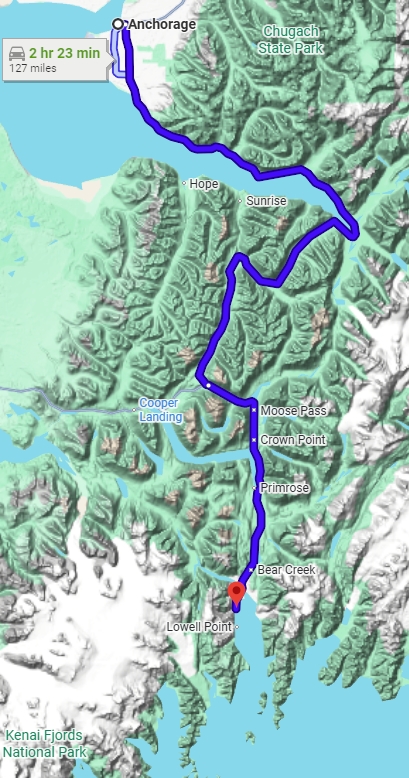
(Photo credit: Google Maps)

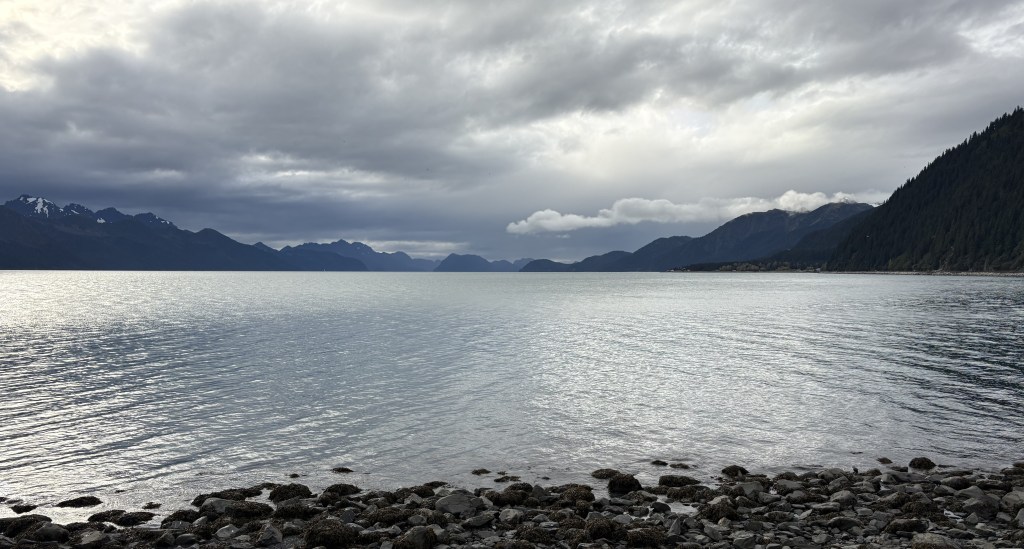
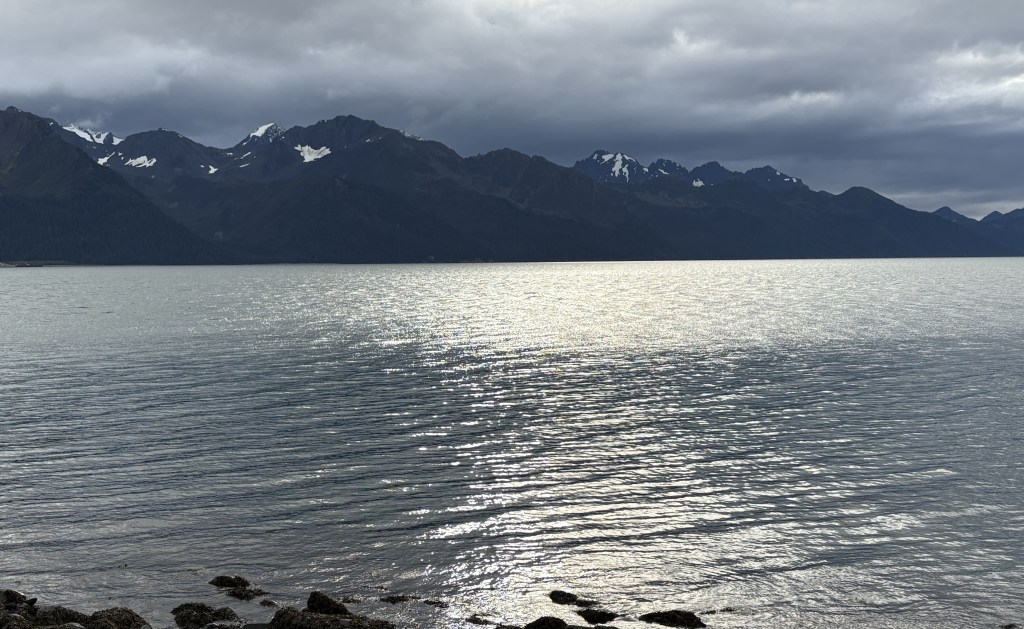
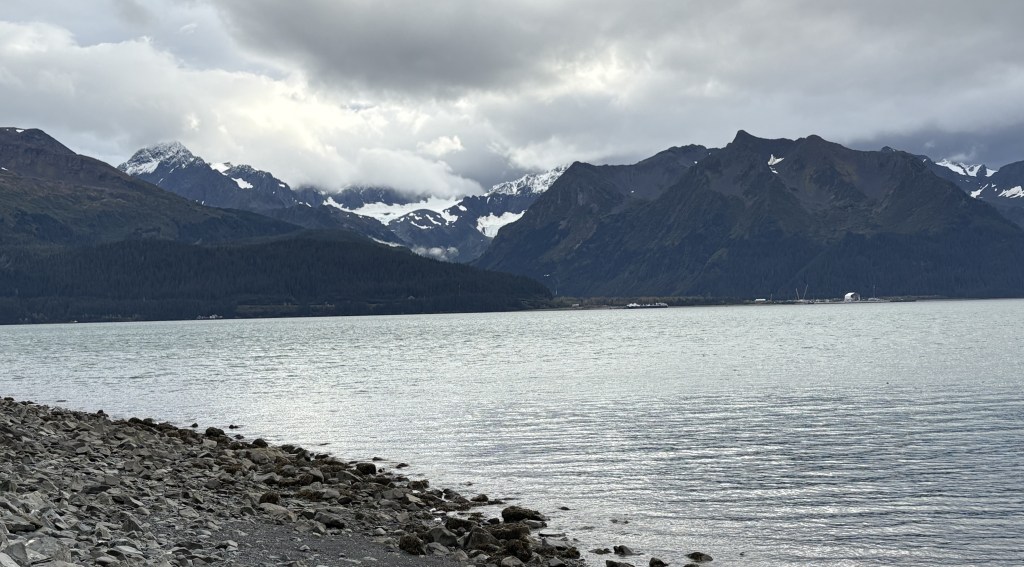
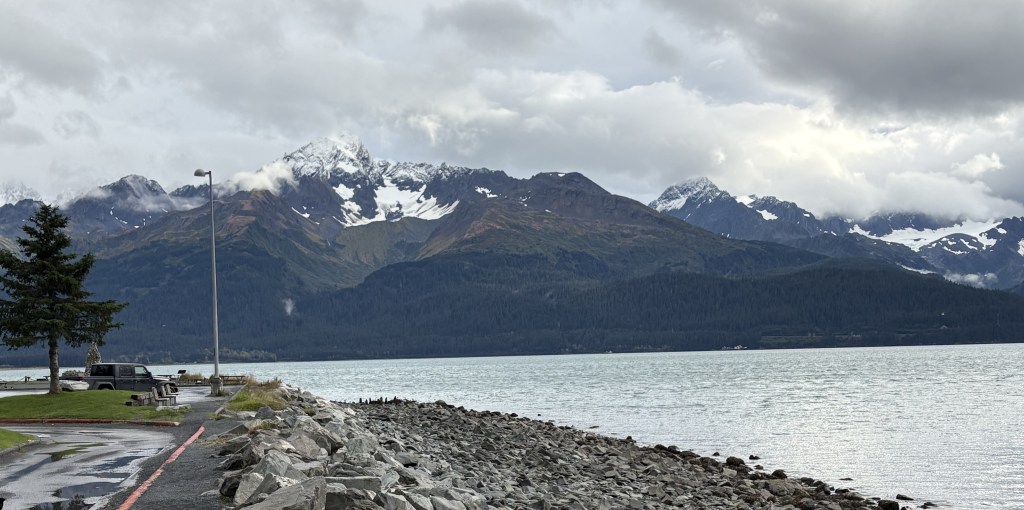
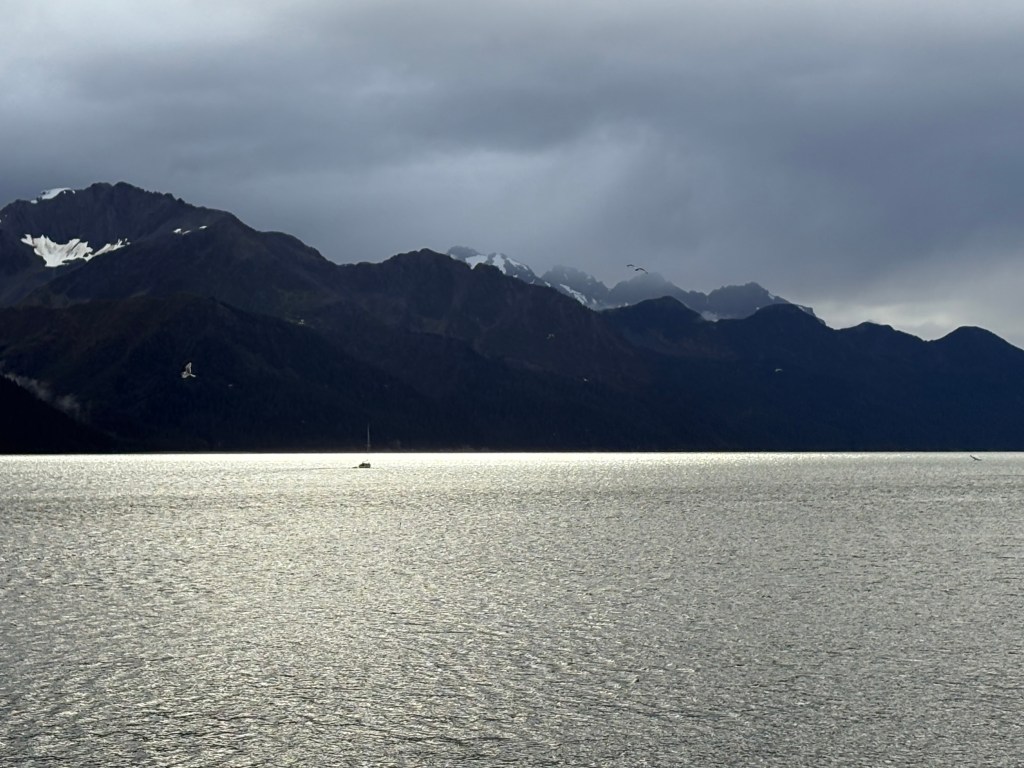
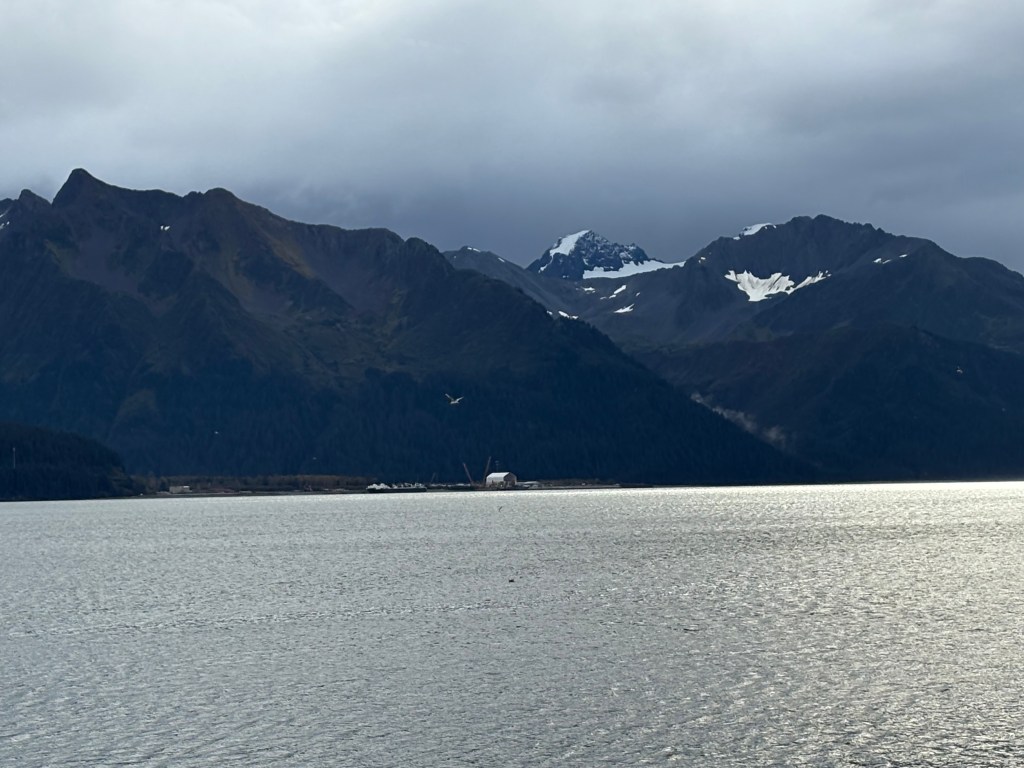
This is the view looking south at Resurrection Bay from the southernmost part of Seward.

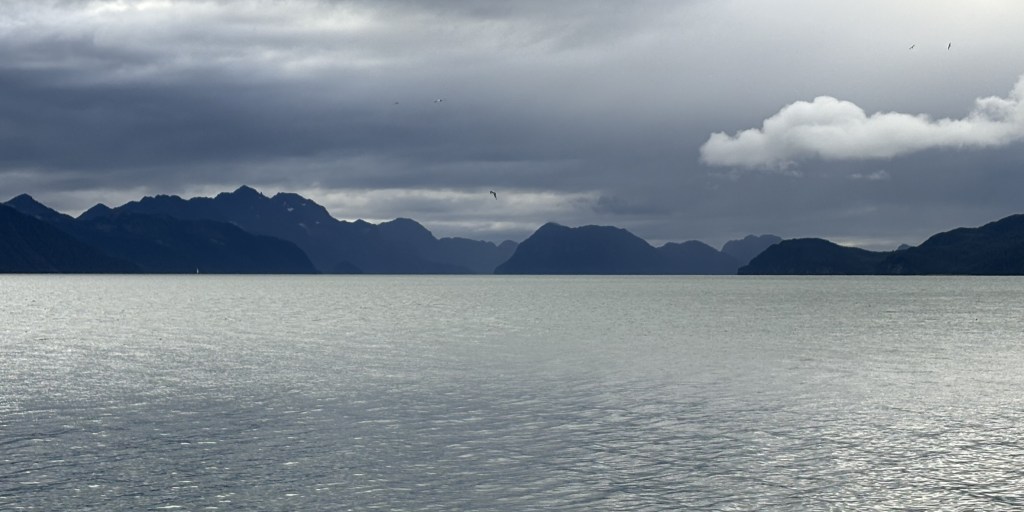
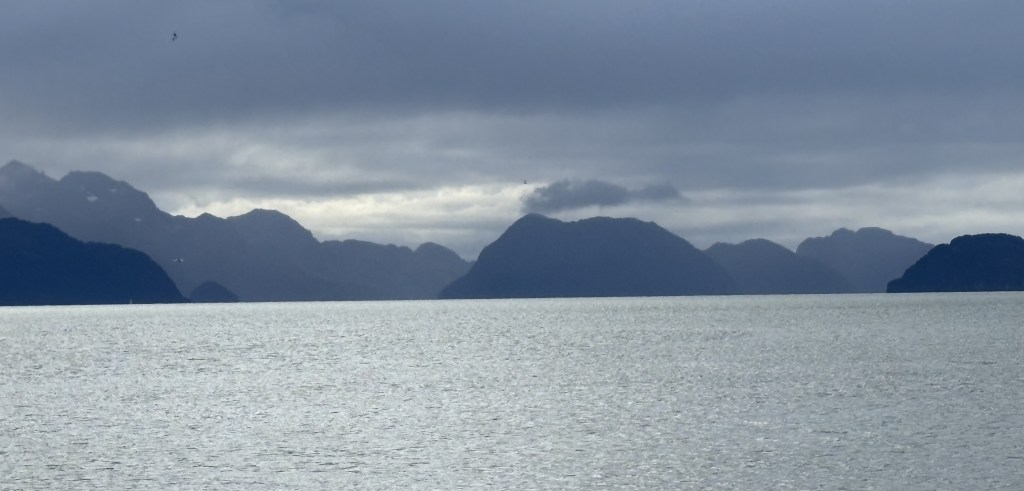
That is a wide view. Here are two shots zoomed in a bit:

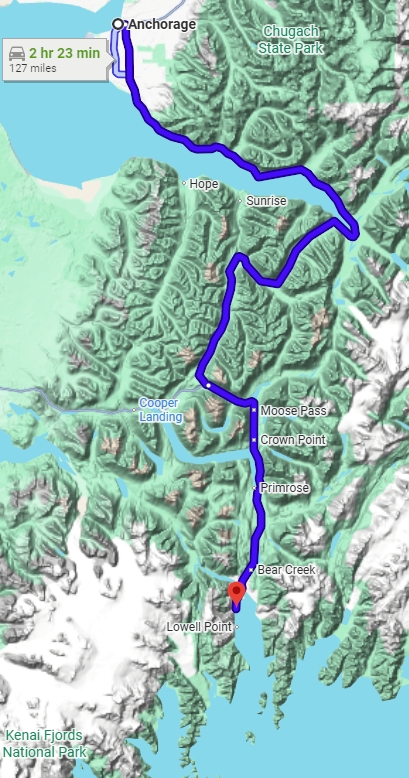
It looks like it is closed in by mountains. This is why I reposted the map showing my route down from Anchorage. As you can see at the bottom of the map above, there is a large opening out to the Pacific Ocean, but from town the view is looking southeast so some of the land masses you see are islands beyond the east side of the opening, and you can also see “mainland” mountains on either side of the Bay which close in a bit as they approach the opening.

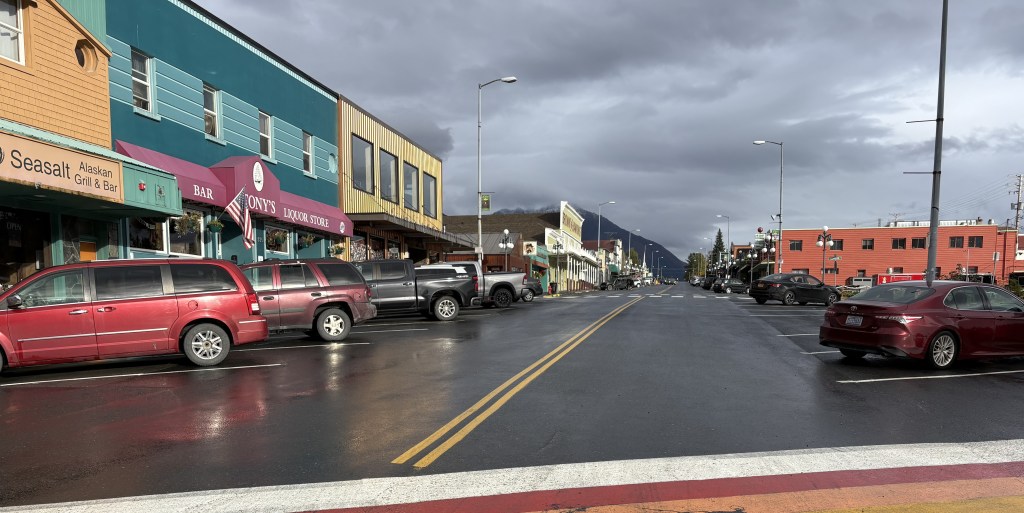
Here is a photo looking up “Main Street” (actually, 4th Avenue) from the Aquarium. It goes on for several blocks before reaching the area I was in yesterday. 3rd Avenue, one block to the left from this view, is Highway 9, locally known as the Seward Highway, which is Highway 1 from Anchorage as far south as Tern Lake, where Highway 9 turns off to come down here. The highway ends just south of the Aquarium.

There were lots of stores and gift shops, and more restaurants, down at this end than there were where I was yesterday. Most of these restaurants were still open and had not closed for the season.

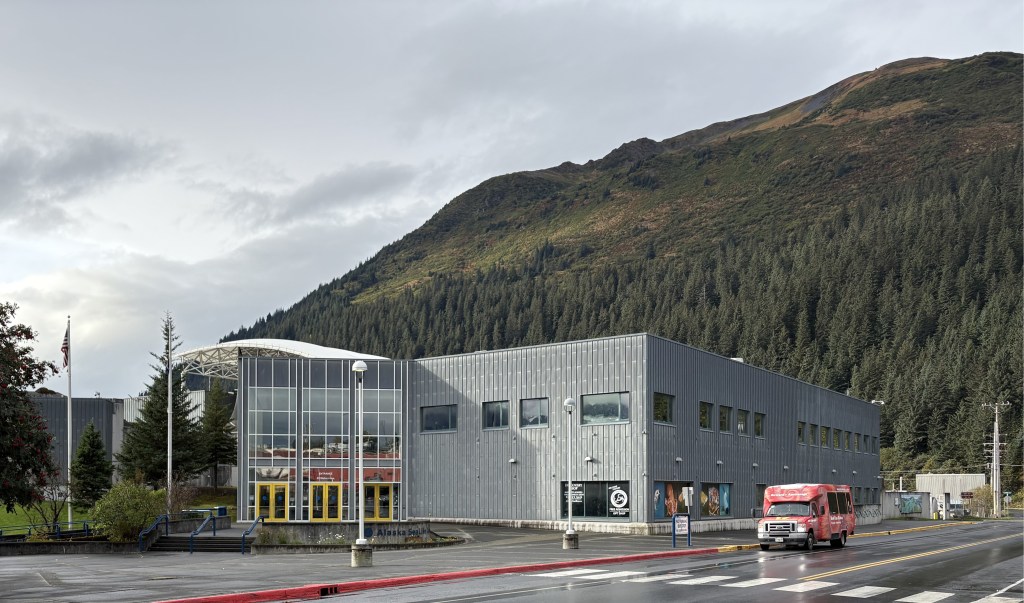
This is the “not-open-until-noon” Aquarium:

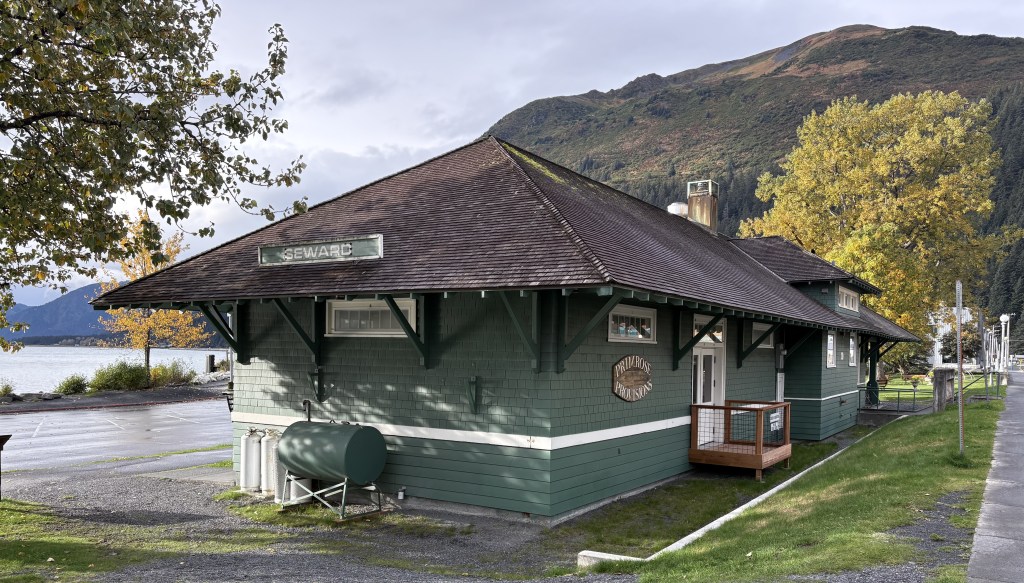
This is the original railroad station, located next to the Aquarium. It now houses some gift shops.

There was a large parking lot, and tables scattered about for tourists to relax and take in the views of the Bay. I could also see a bunch of mountains from down at this end of town, mainly going up the east side of the Bay.

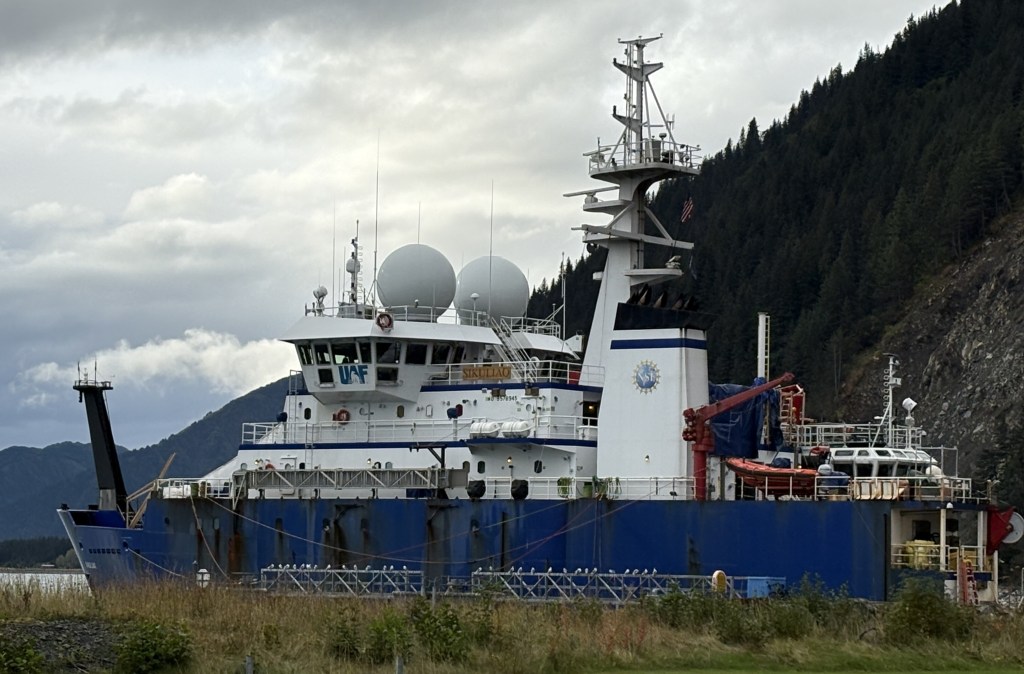
On the opposite side of the Aquarium was a large research ship operated by the University of Alaska – Fairbanks.

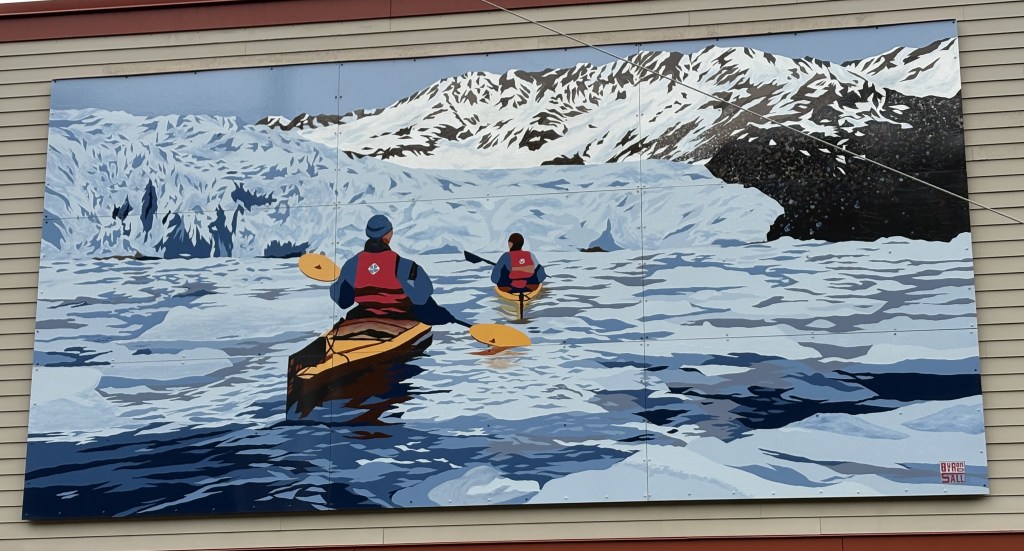
There was a mural on this side of town highlighting the recreation aspect of Seward.

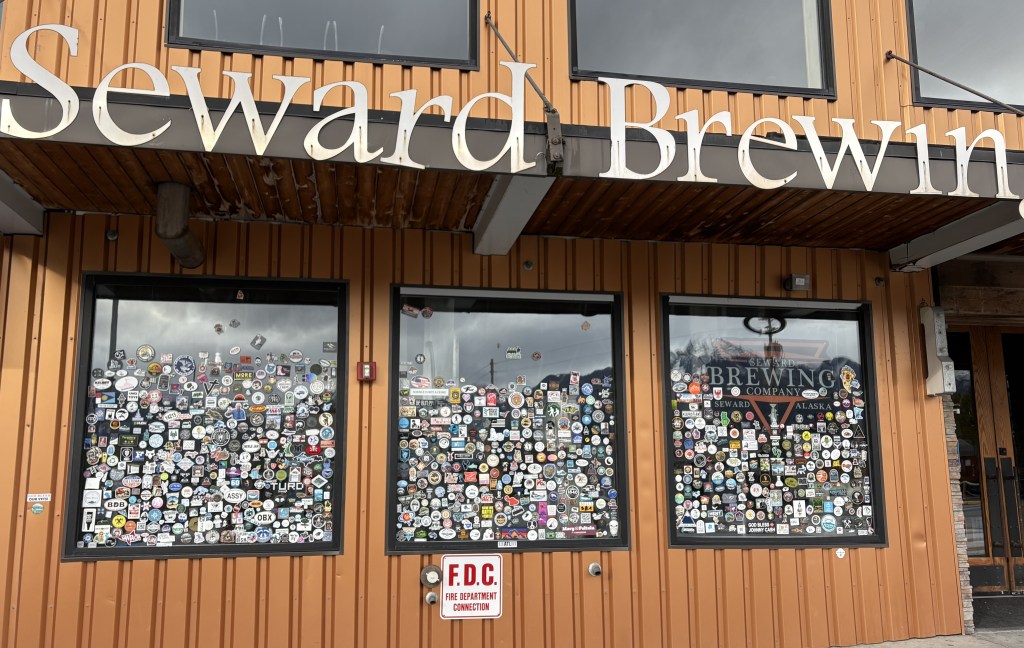
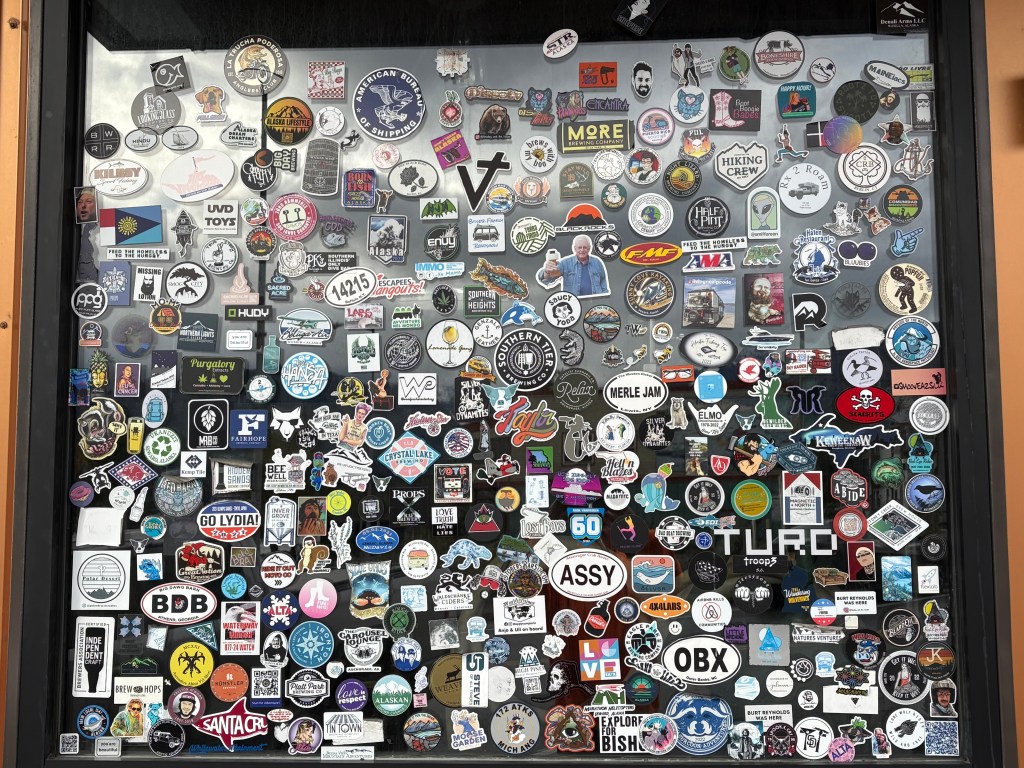
On 4th Avenue, the three windows of the Seward Brewing Company caught my eye because of the stickers plastered all over them:

You get the idea….

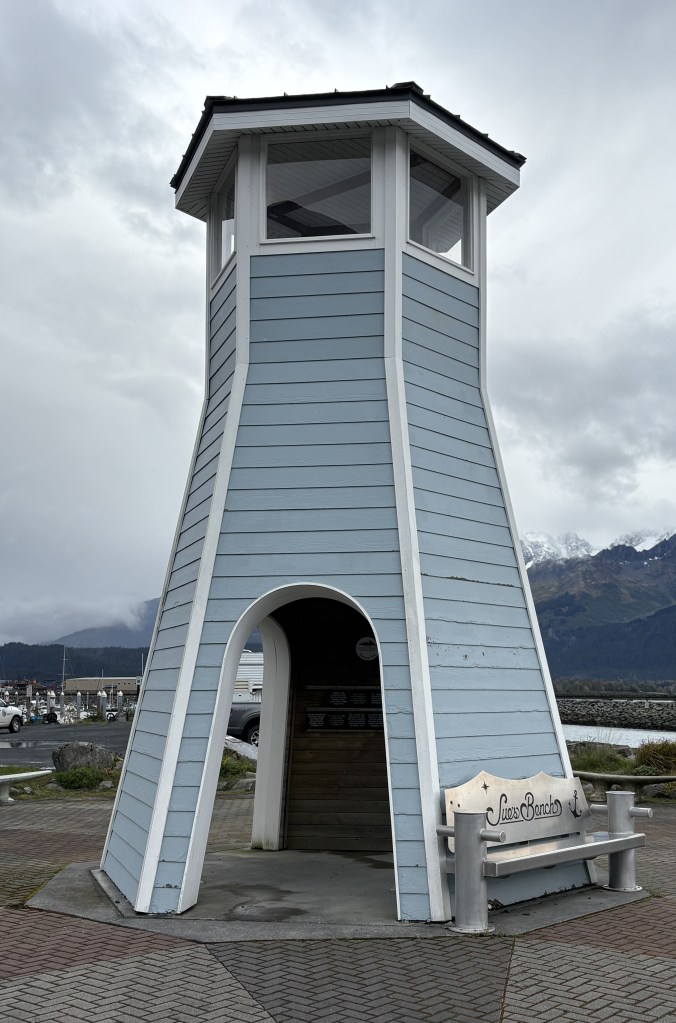
Closer to the harbor I found the Mariner’s Memorial.

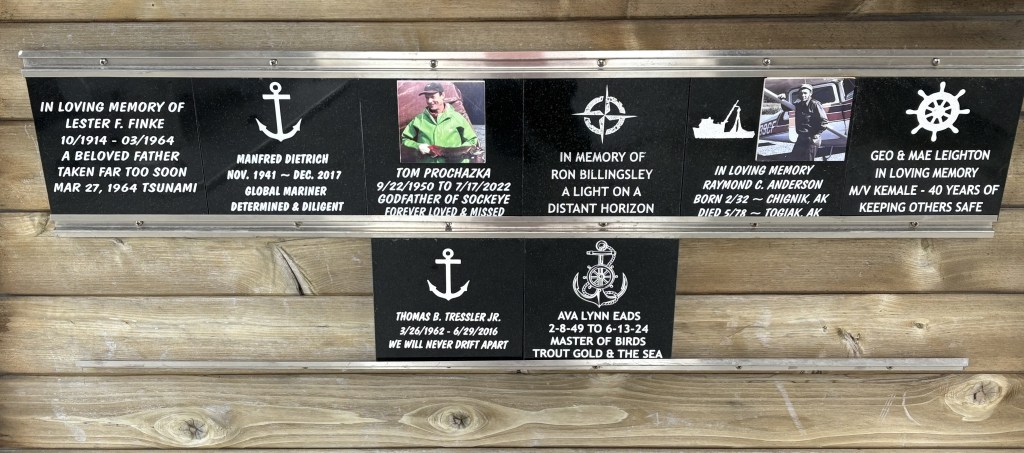
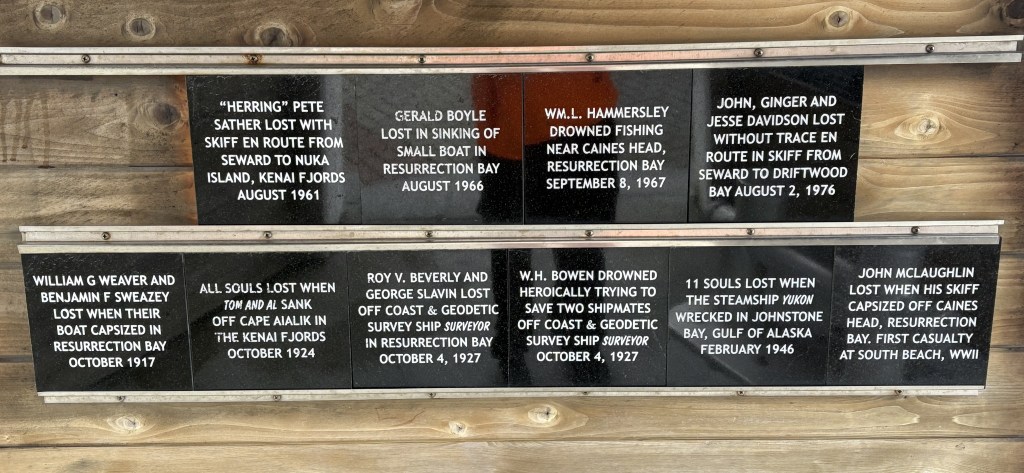
Inside were lots of memorials to people lost at sea. Here is a small portion.

There were many more, but I figured they’d be so small that you wouldn’t be able to read them.

Here are some other things I saw as I walked around the area on this side of town:

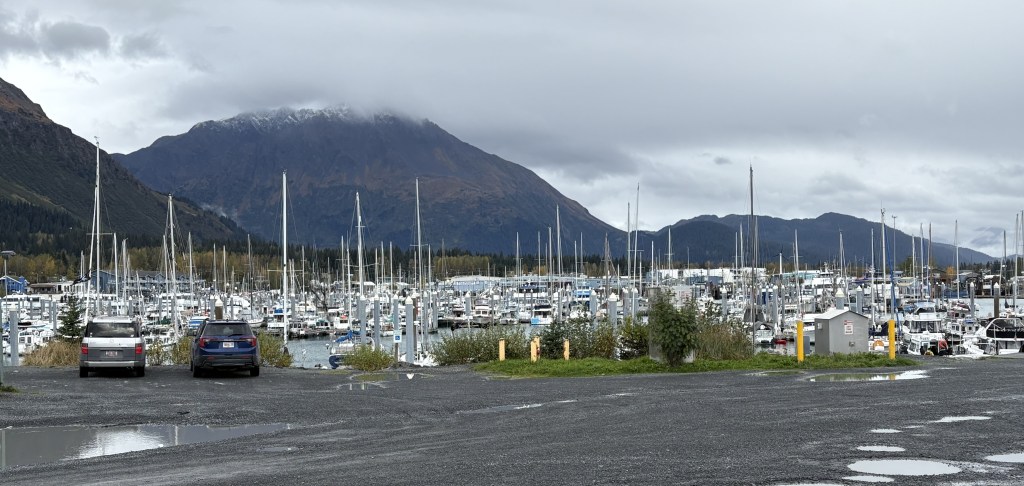
Here is another angle looking at the harbor from near the Mariner’s Memorial.

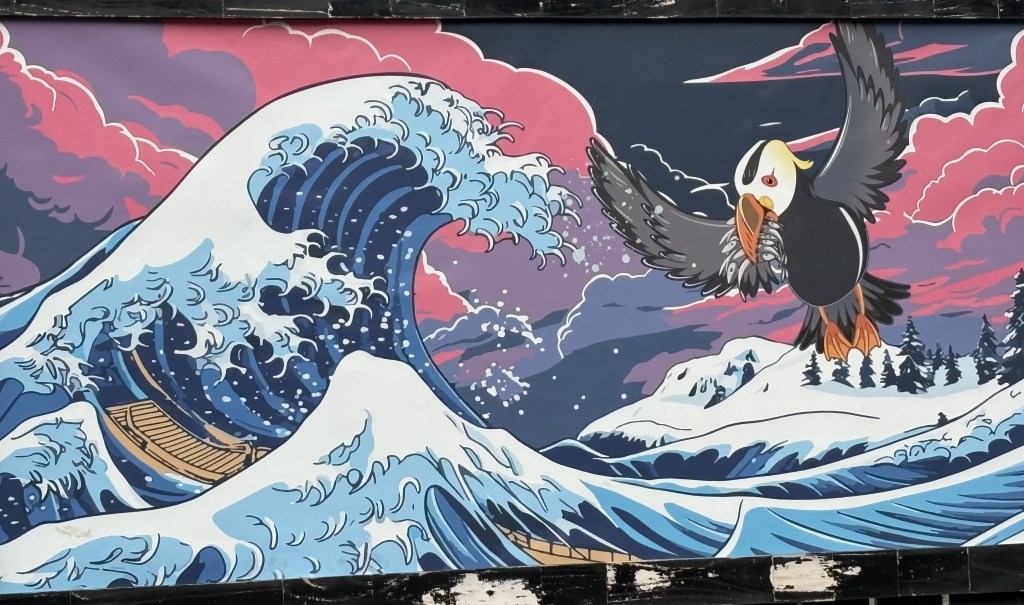
Here is a small mural on a cannibis dispensary called the Tufted Puffin:

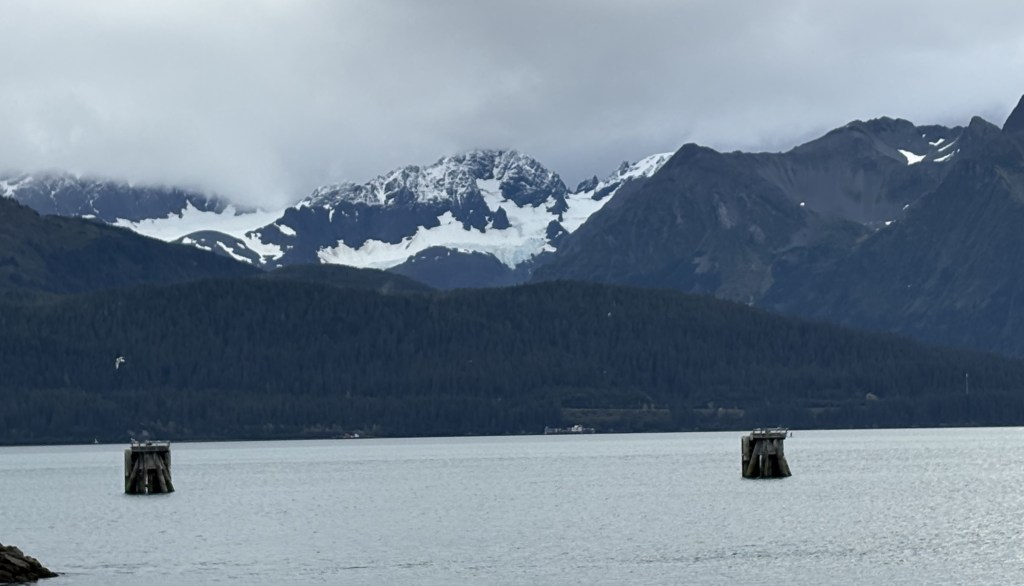
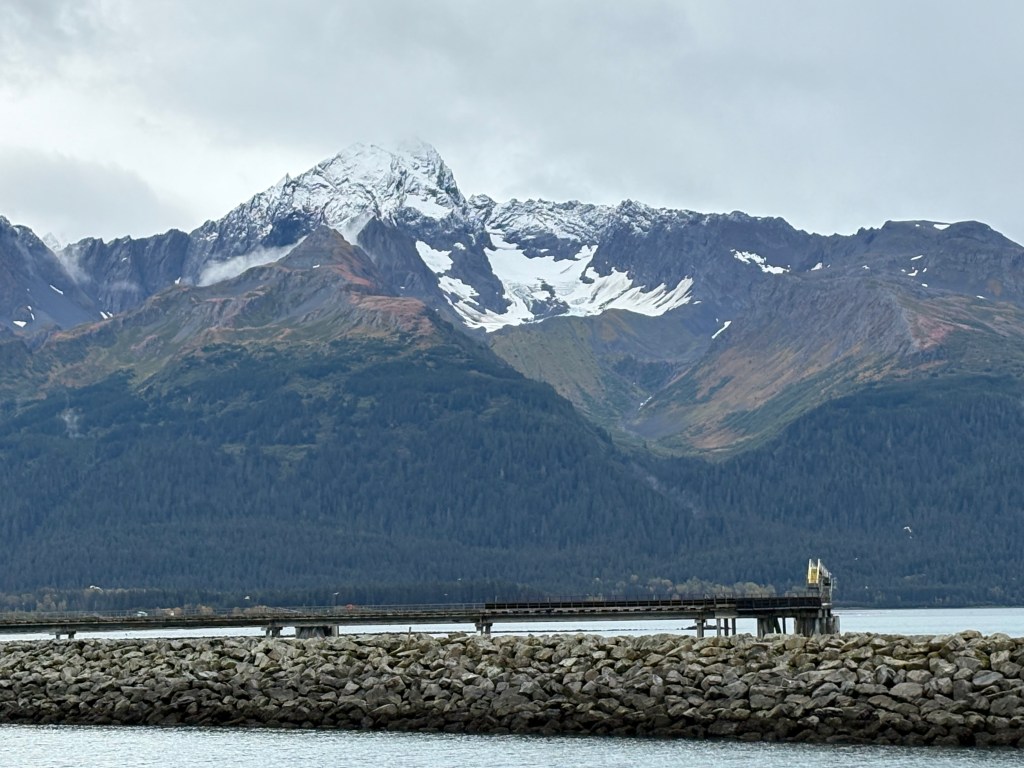
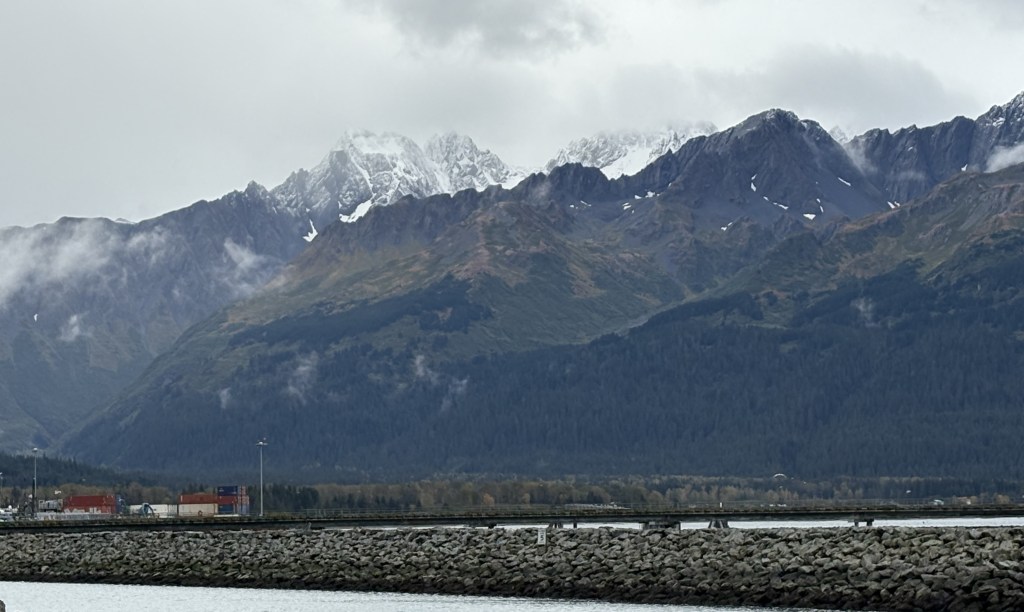
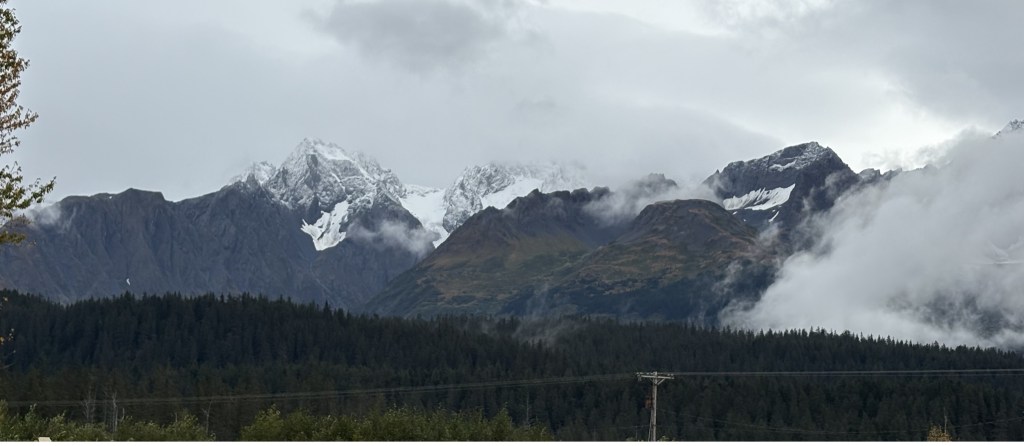
Here are two mountain views from north of town looking east, towards where my Airbnb was located.

I would have a long drive to get to my surprise destination, and will return to Seward for the night, but will have another set of mountain pictures from Seward taken before I leave tomorrow morning for Homer.
First look at Seward, Alaska

September 26, 2025

I arrived in Seward around 330 in the afternoon, having driven down from Anchorage. I will be here two nights before moving on to Homer.
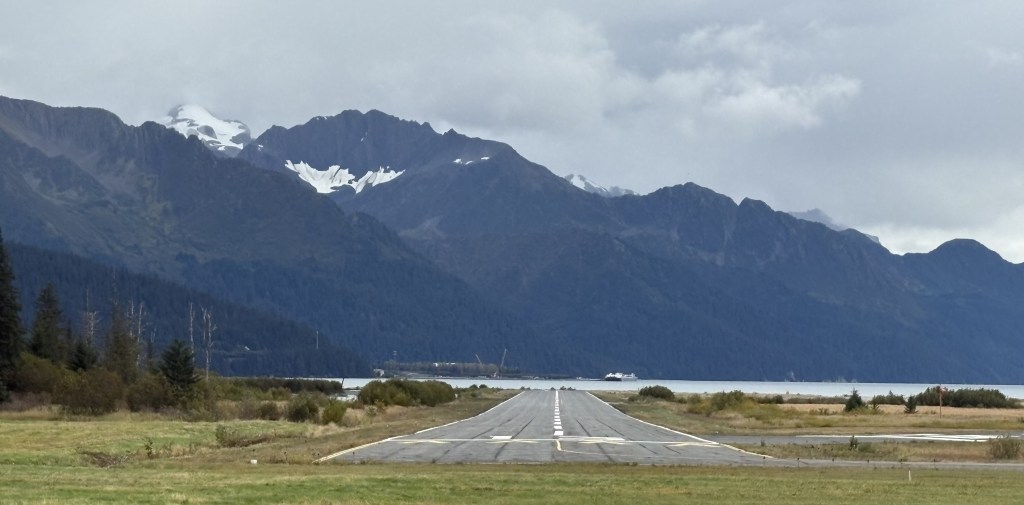
This is the main runway at the Seward airport, which I passed as I was approaching town. Seward lies alongside Resurrection Bay and there are lots of mountains with some snow and glaciers on them in just about every direction. The best mountain photos will be taken the morning that I leave but you will see some each day.

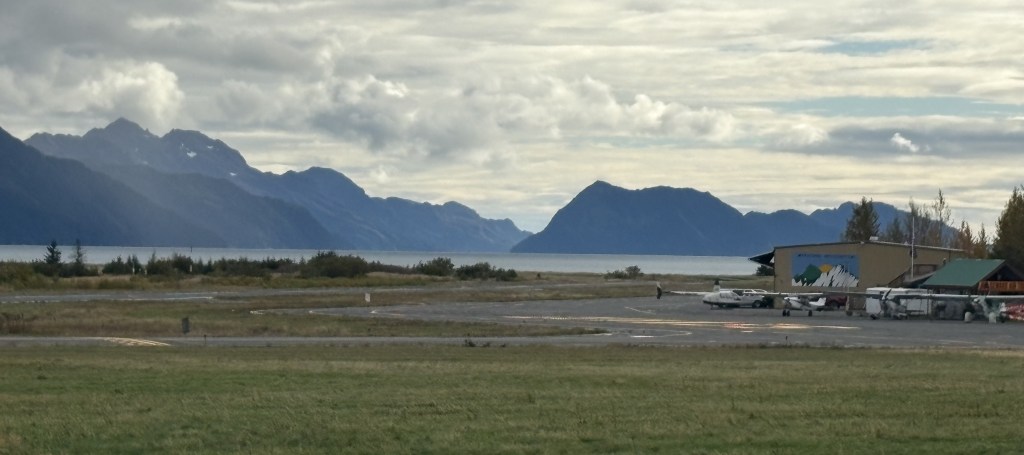
This next photo is looking a little to the right from the same spot.

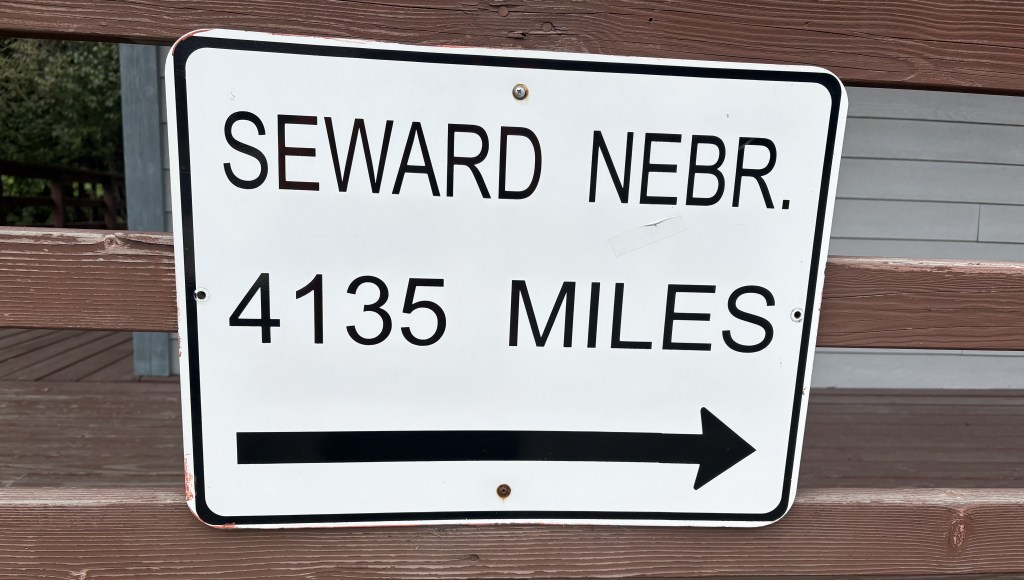
I chuckled when I saw this sign on the Visitor Center. It indicates that if you were headed to Seward, Nebraska you must have taken a wrong turn somewhere along the way.
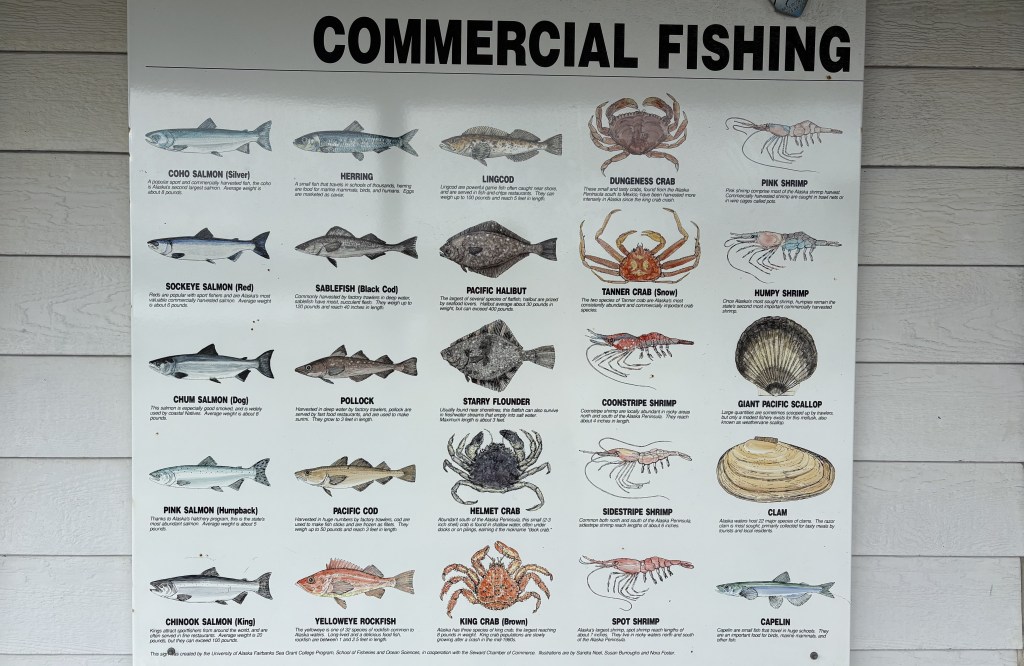
Fishing is the main occupation in Seward and this sign shows some of the many types of fish that are caught here. I would have Black Cod (Sablefish), which I had never heard of, for dinner.
Looking at the map it appeared that there is only one road in to Kenai Fjords National Park. I would have liked to learn more but as you can see, the visitor center was closed for the season. There are 8 National Parks in Alaska and this is one of only three which are accessible by car.
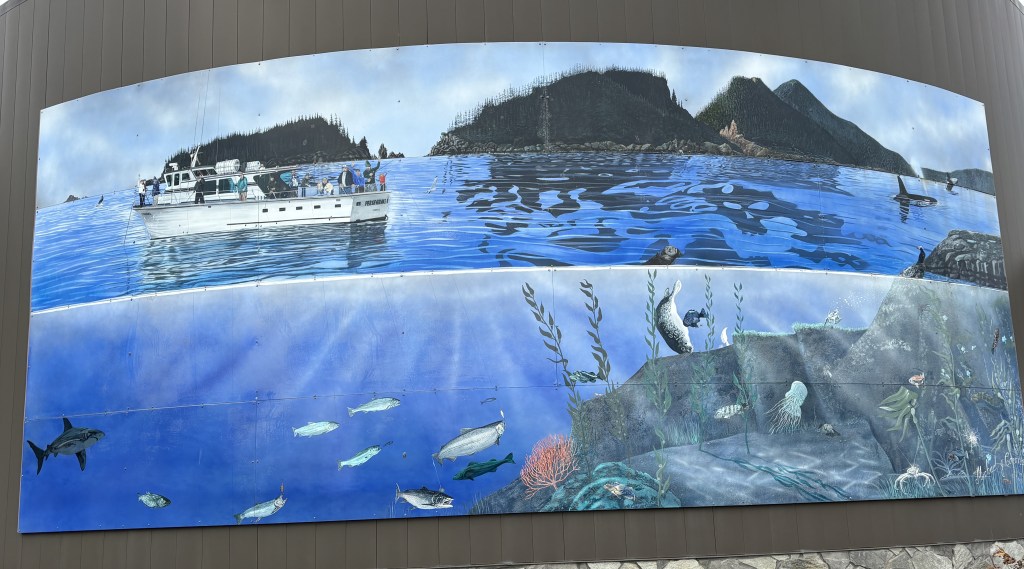
Seward has lots of murals scattered around town. This is one of the bigger ones, showcasing the local fishing industry.

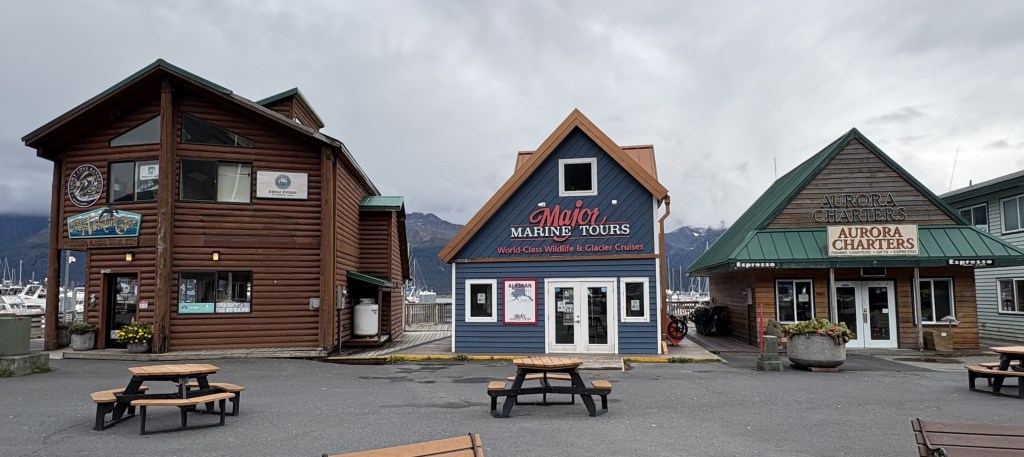
Being a fishing town, Seward also has a number of charter boat tours which go out on Resurrection Bay. Most were closed for the season, as were most of the restaurants in this part of town. There was a dock for cruise ships but that season had ended as well. The town was very quiet.

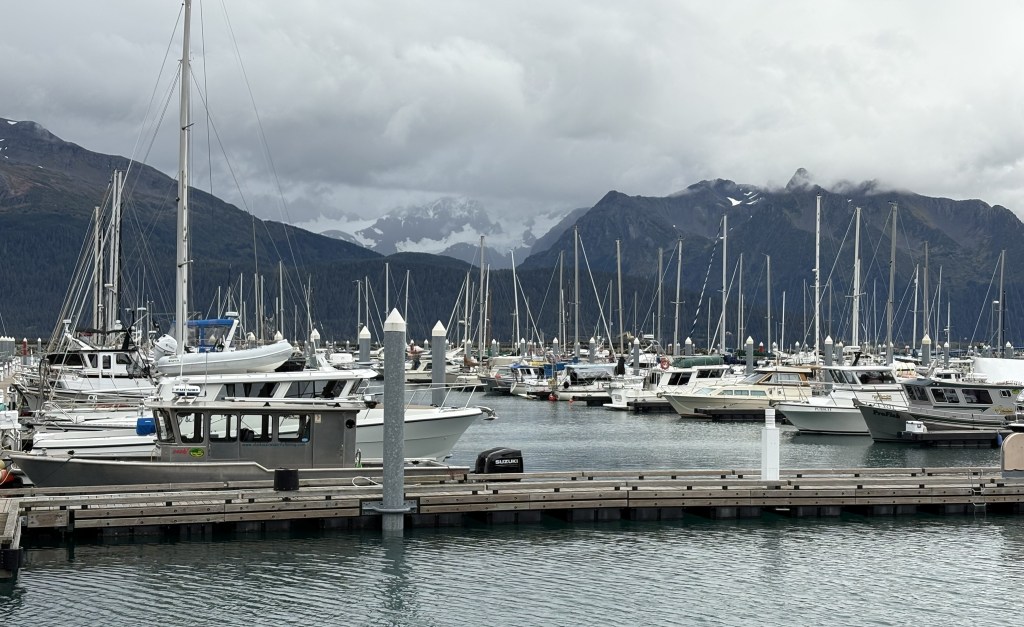
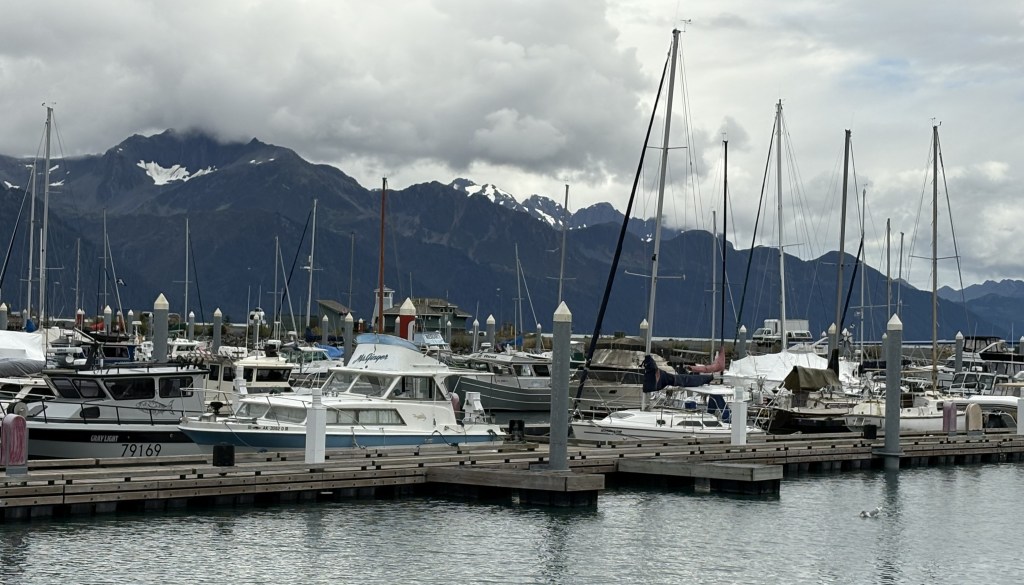
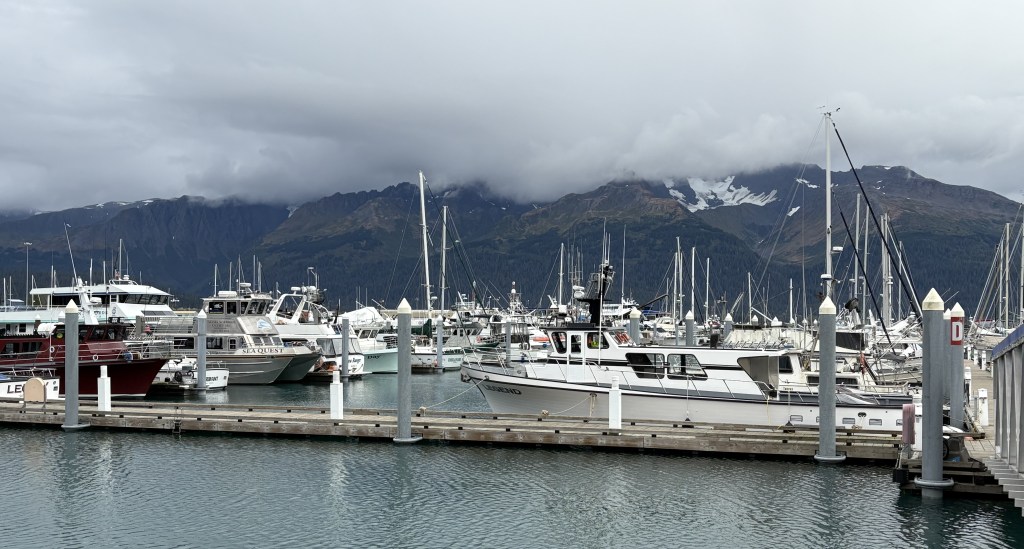
Here are some photos of the harbor:

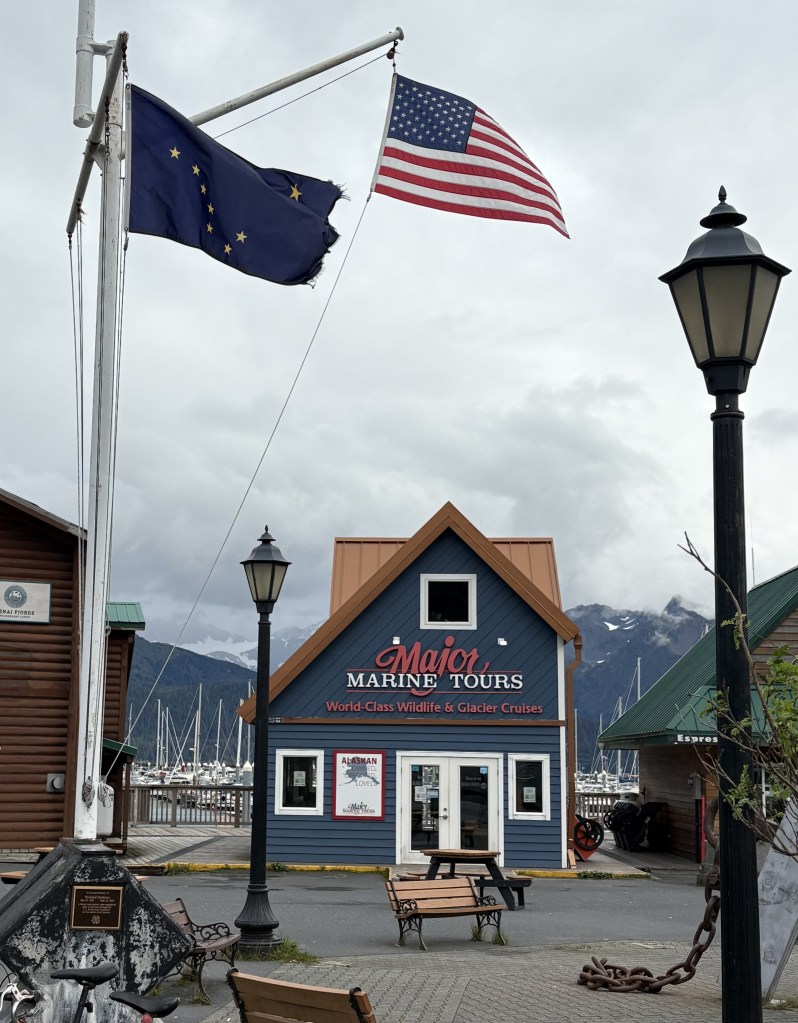
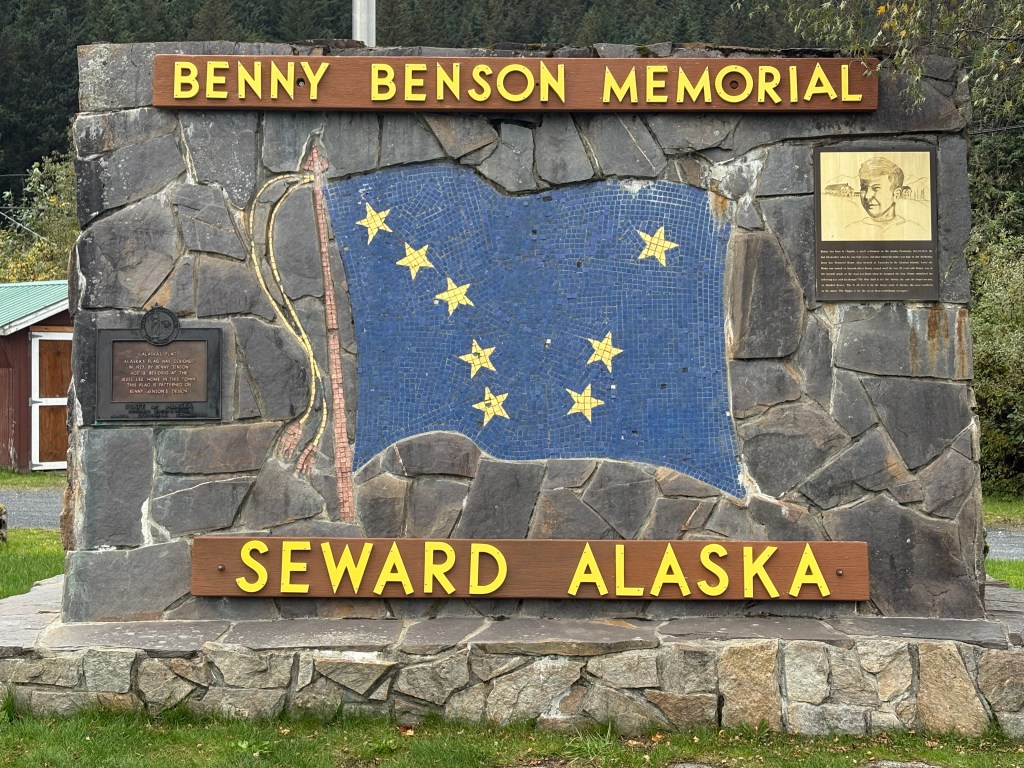
Below is a photo of the 1964 Earthquake Memorial, showing both the American and Alaskan flags. 13 people in Seward died as a result of the earthquake, and a portion of the water frontage slid into Resurrection Bay. Much of the fishing infrastructure was destroyed. I had seen a photo up in Anchorage of the severe damage to the railroad yards here in Seward.

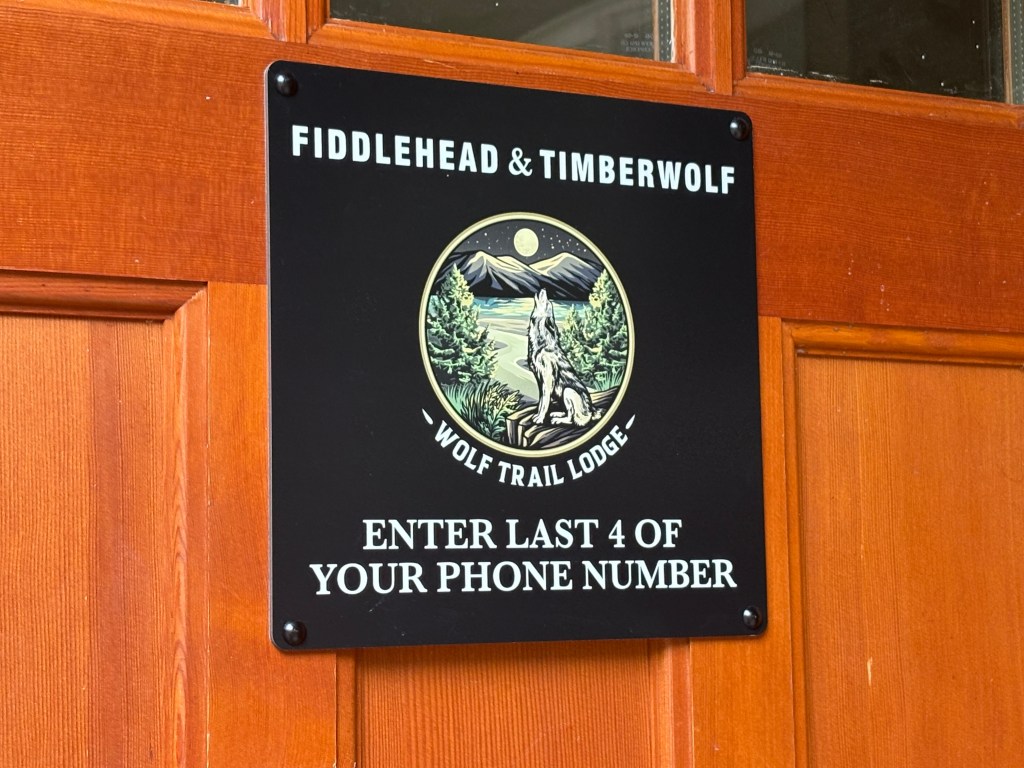
This was on the door to my Airbnb foyer (I was in the Timberwolf suite). They were wrong about the access code but we quickly got it straightened out.

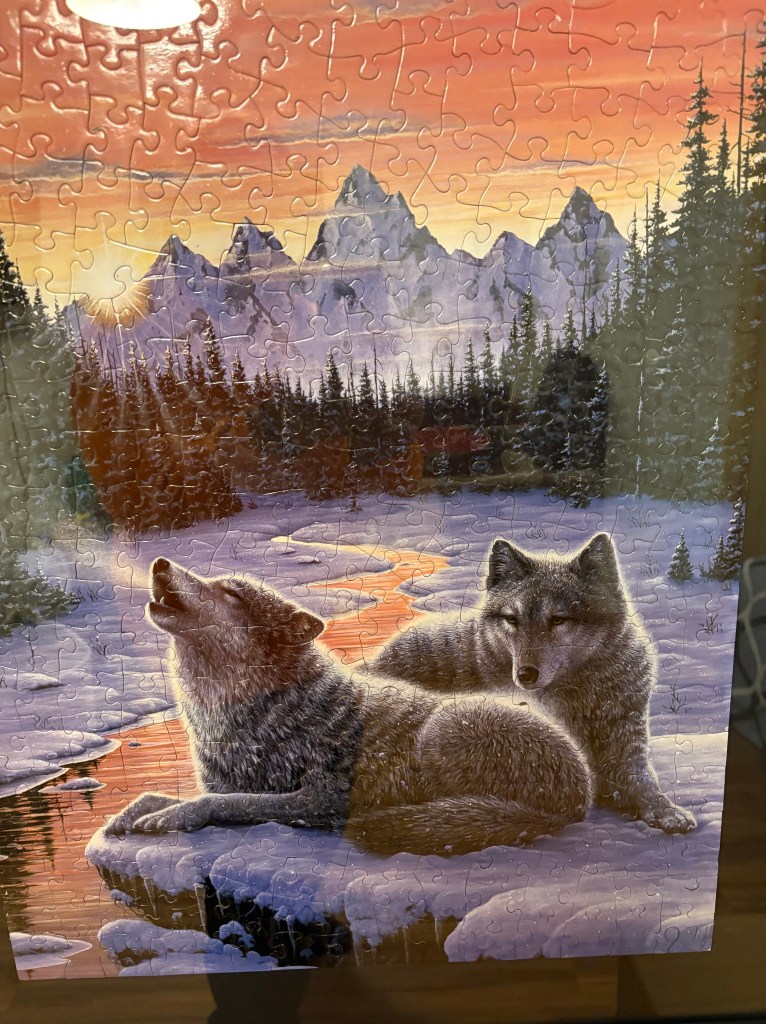
I have friends in Raleigh who are huge jigsaw puzzle fans and I was pleased to see this completed puzzle mounted on the wall inside my suite.

I will go back into town tomorrow morning before going on another excursion for part of the day.

Anchorage to Seward – Part 1 of 2

September 26, 2025

Today I will drive down to Seward – a trip I started to take shortly after arriving in Alaska before I reversed direction to go up and actually see Mt. Denali when it wasn’t shrouded in clouds. Google Maps said this trip should only take 2 hours and 20 minutes but as you will see, I stopped to take lots of photos so it took longer than that.

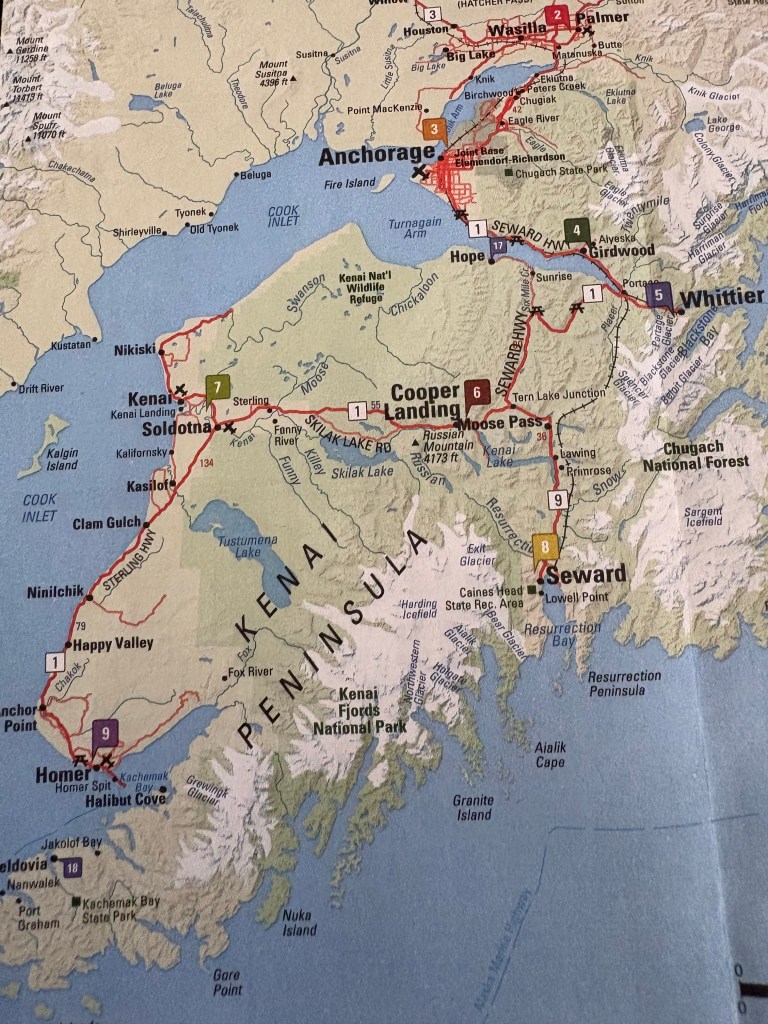
Here are two maps. The first map will cover the next four days. After spending two nights in Seward I will go from there “down” to Homer (by going back up to Hwy 1 and then west and south).

(Photo credit: Alaska.com The Alaska Map)

Here is another map which shows that today, after I leave Anchorage, I will be driving near the bases of mountains the rest of the day.

(Photo credit: Google Maps)

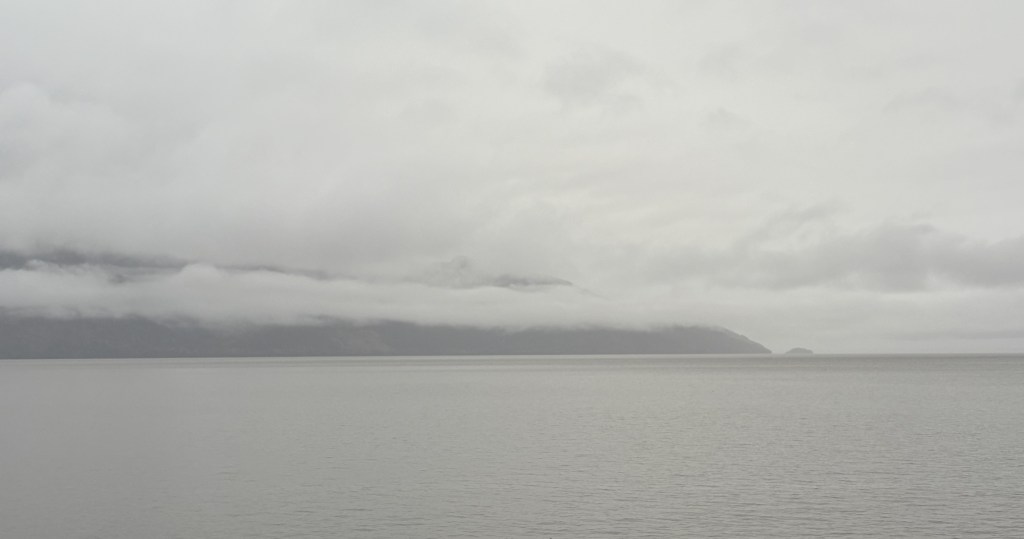
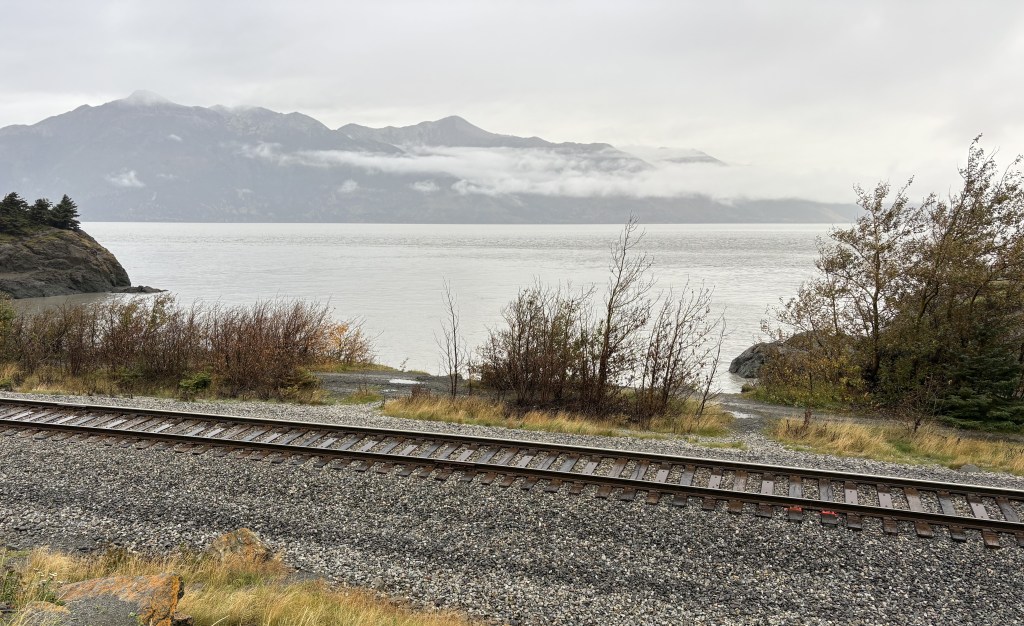
The first part of my drive will be along the Turnagain Arm, a body of water which branches off of Cook Inlet up near Anchorage. As you will see, there were low clouds which resulted in less than ideal photos. When I go back north in a few days it will be a beautiful day and I will get some better shots.

I left the railroad tracks in the shot to illustrate that the Alaska Railroad runs right alongside the highway.

There are beluga whales in this body of water, though I didn’t see any. I also read that in the winter large chunks of ice occupy much of the Turnagain Arm.

The photo above is looking back at some of the mountains I had driven past thus far.

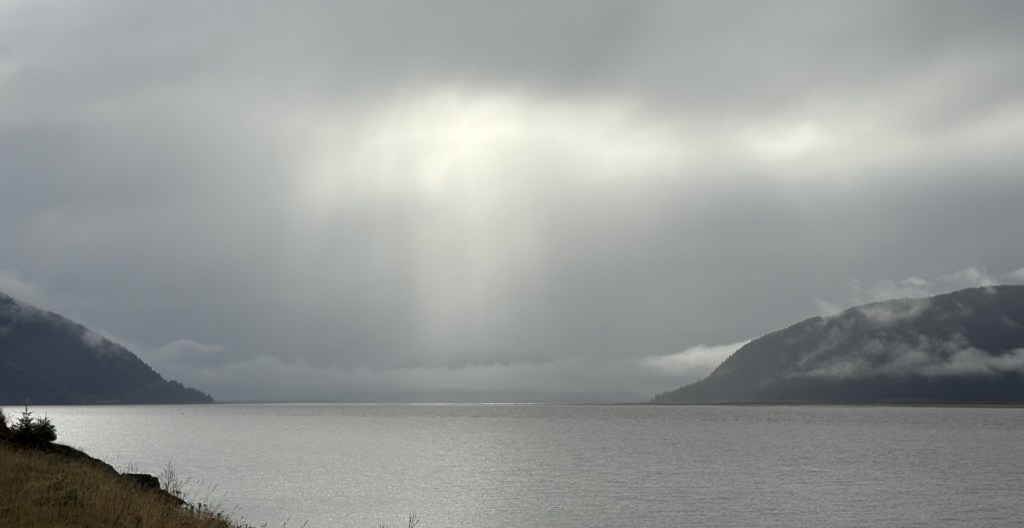
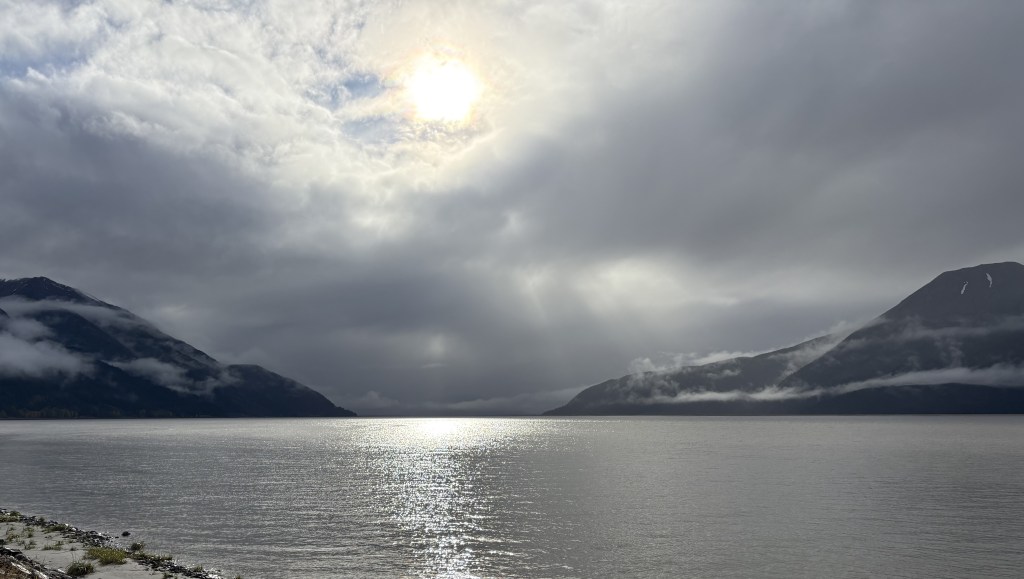
Ahead of me it looked like the sun was trying to break through the clouds above the water.

Further down the highway I reached the point where the road would turn right as part of a brief u-turn around the end of the Turnagain Arm before going southwest, away from the water. That turn is where the small town of Portage USED to be, before it was effectively destroyed by the 1964 earthquake. The quake caused the land to drop 6 feet which put it below the high-tide level, thus rendering it unable to support the town any longer. The only thing that remains is a building inland near the railroad tracks which the Alaska Railroad now uses.

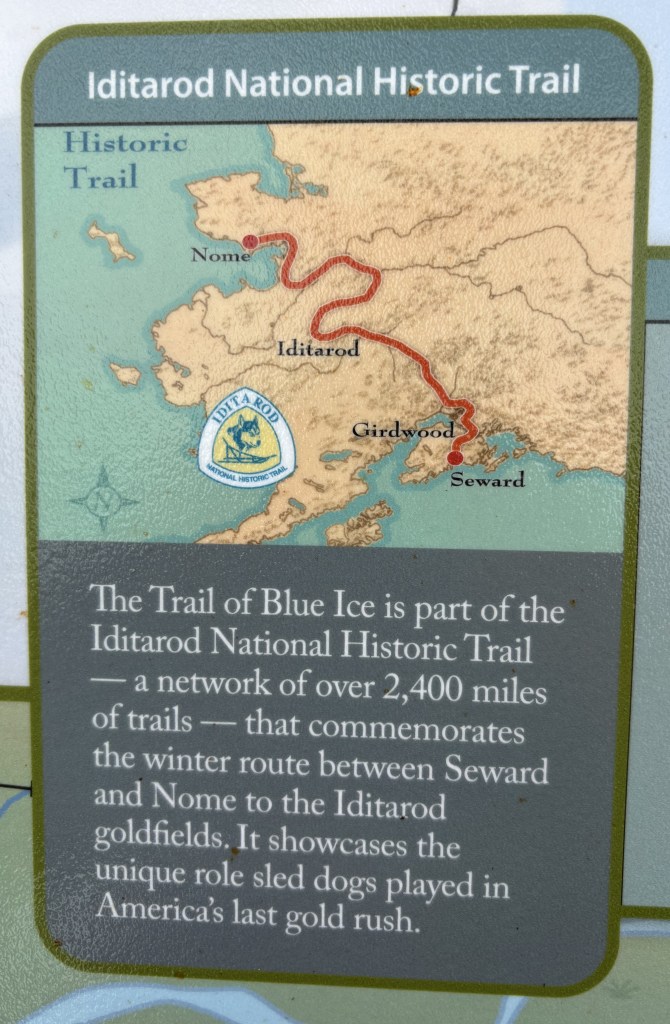
Shortly after passing “Portage” I turned off on Portage Glacier Road. I wanted to visit the Begich, Boggs Visitor Center for some information I might need for later in my trip. Before reaching the Visitor Center I stopped at a parking area called “Moose Flats”. I hung out there for a while, hoping perhaps I might see some moose. I did not. I did see this sign for something called the “Trail of Blue Ice” which is part of a network of trails which go all the way north to Nome, Alaska.

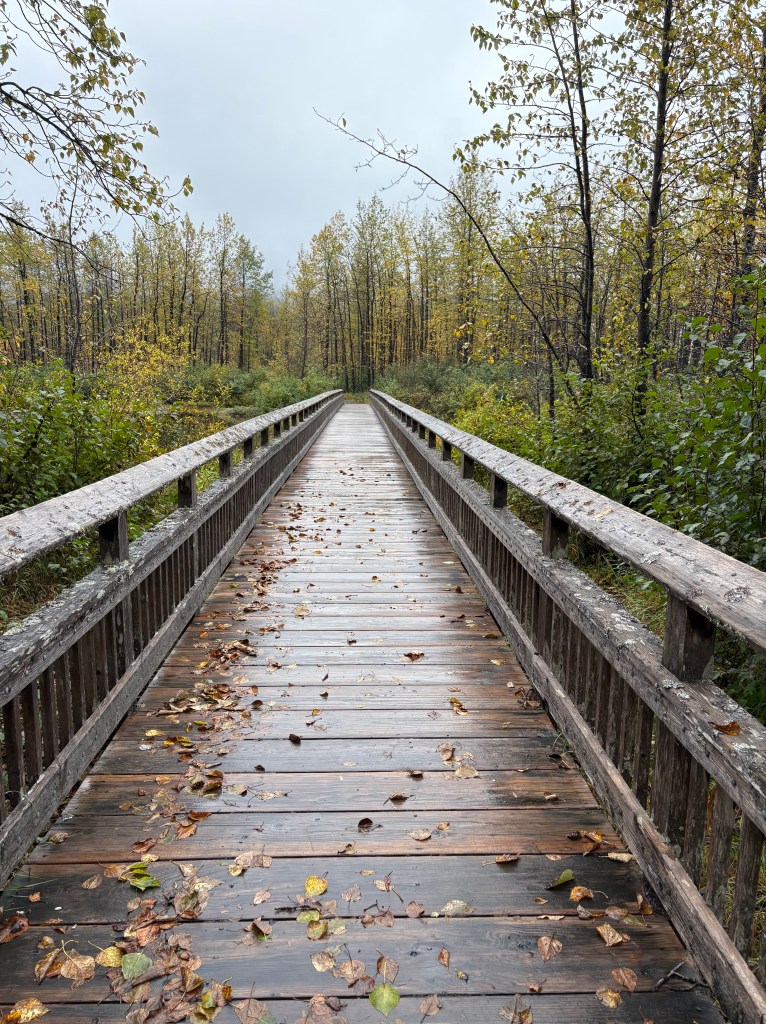
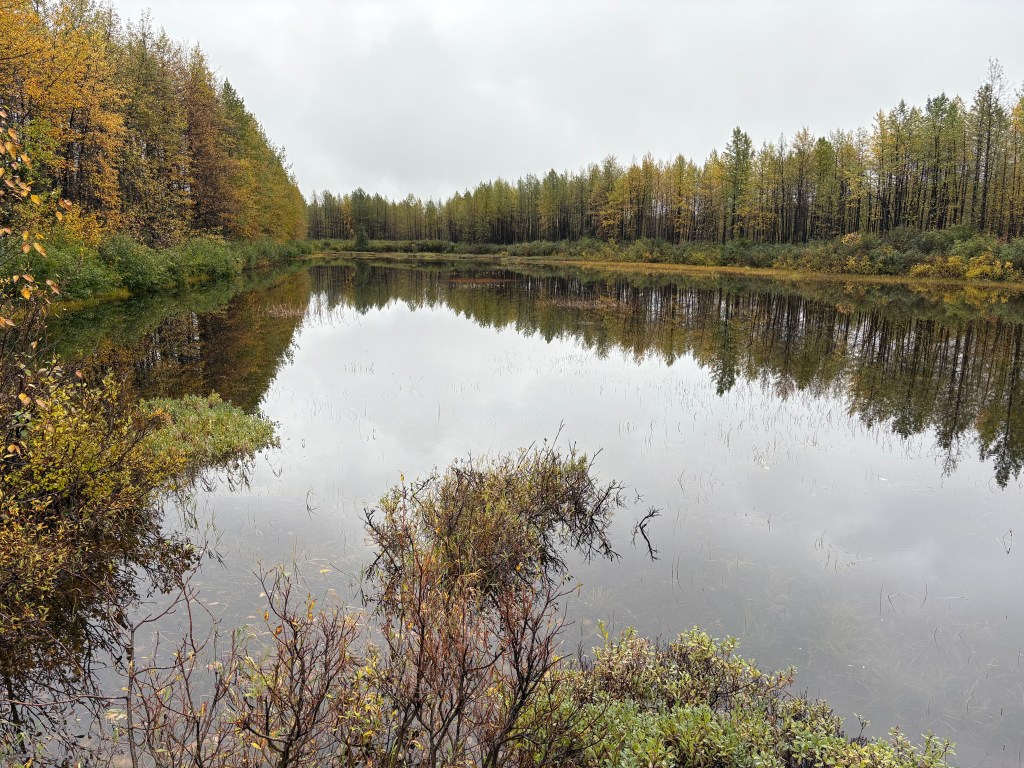
This is a walking bridge which took me away from the parking area and out to a small lake.

After giving on my hope of seeing any moose I drove a few miles away from the main highway to the Visitor Center which, of course, was closed for the season!

I had already exceeded the 2 hour and 20 minute drive time and still had a long ways to go.

(Continued in next post)