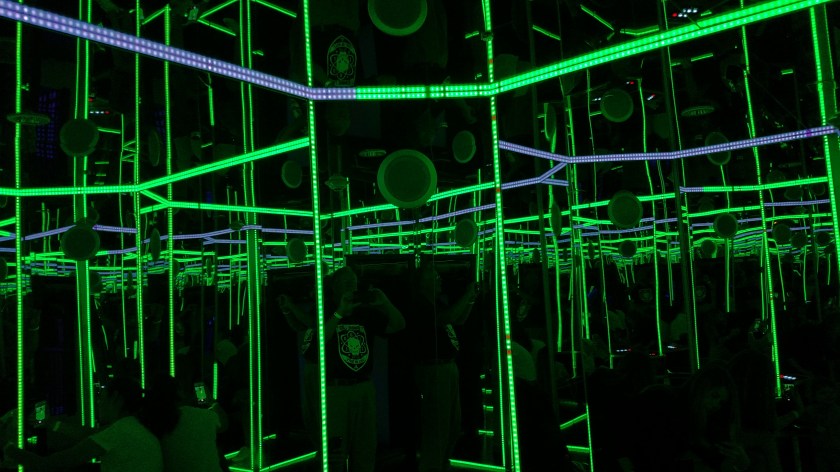
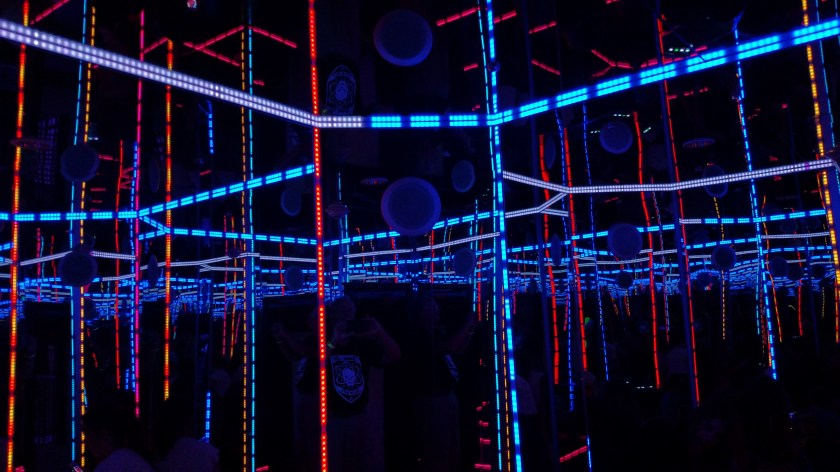
This was what I saw on one wall in one room between 12:18:28 and 12:18:58 pm

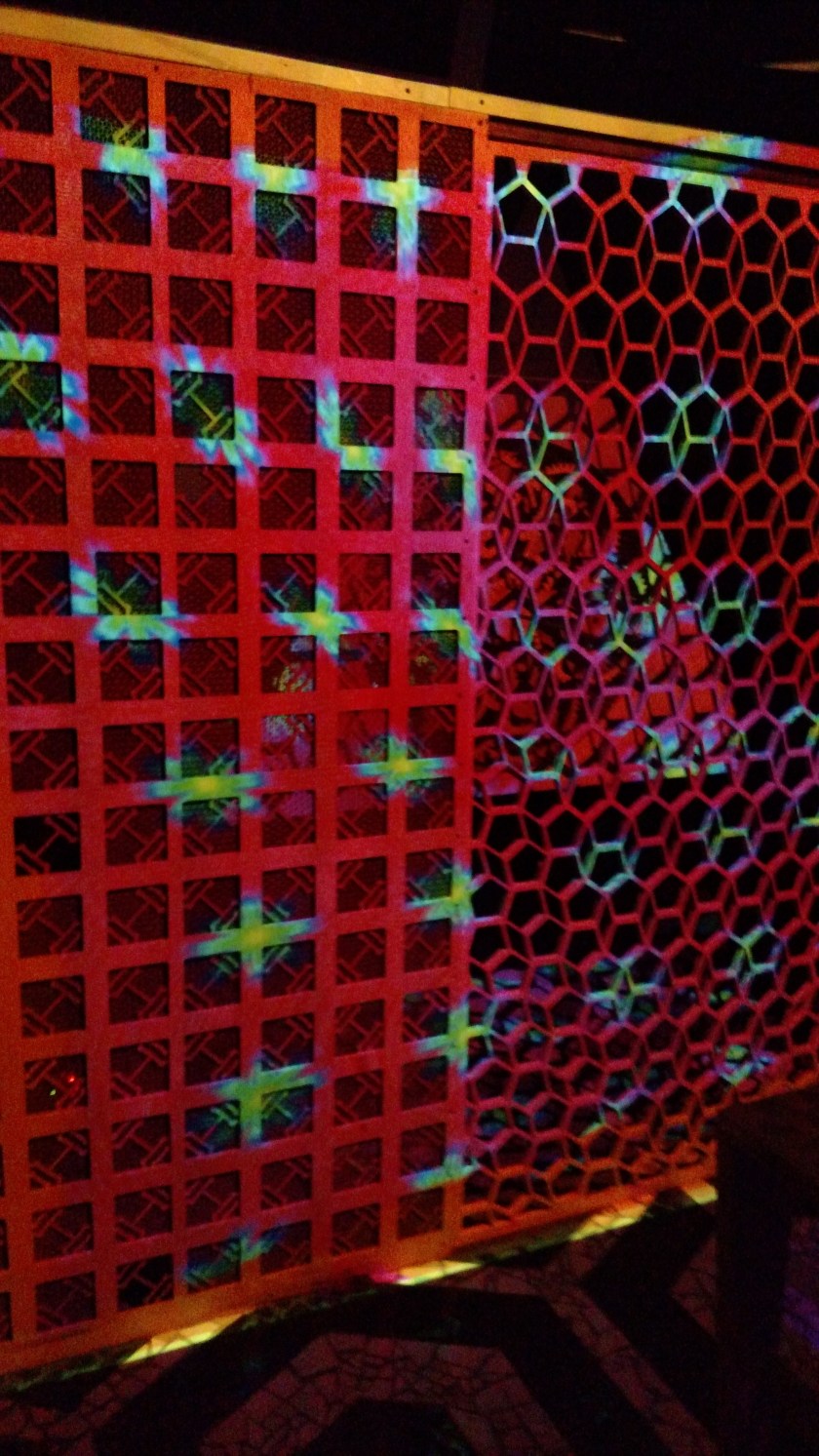
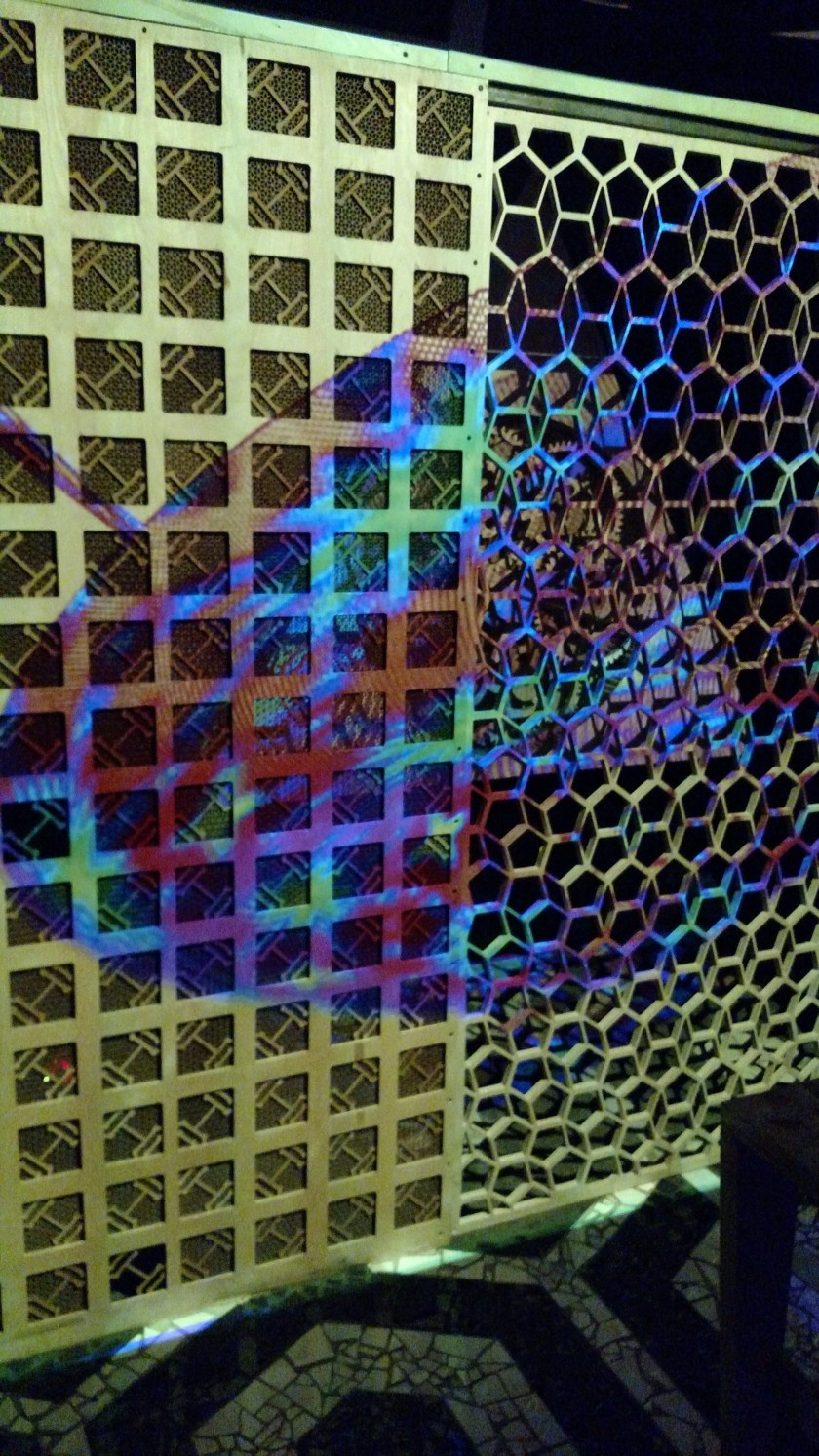
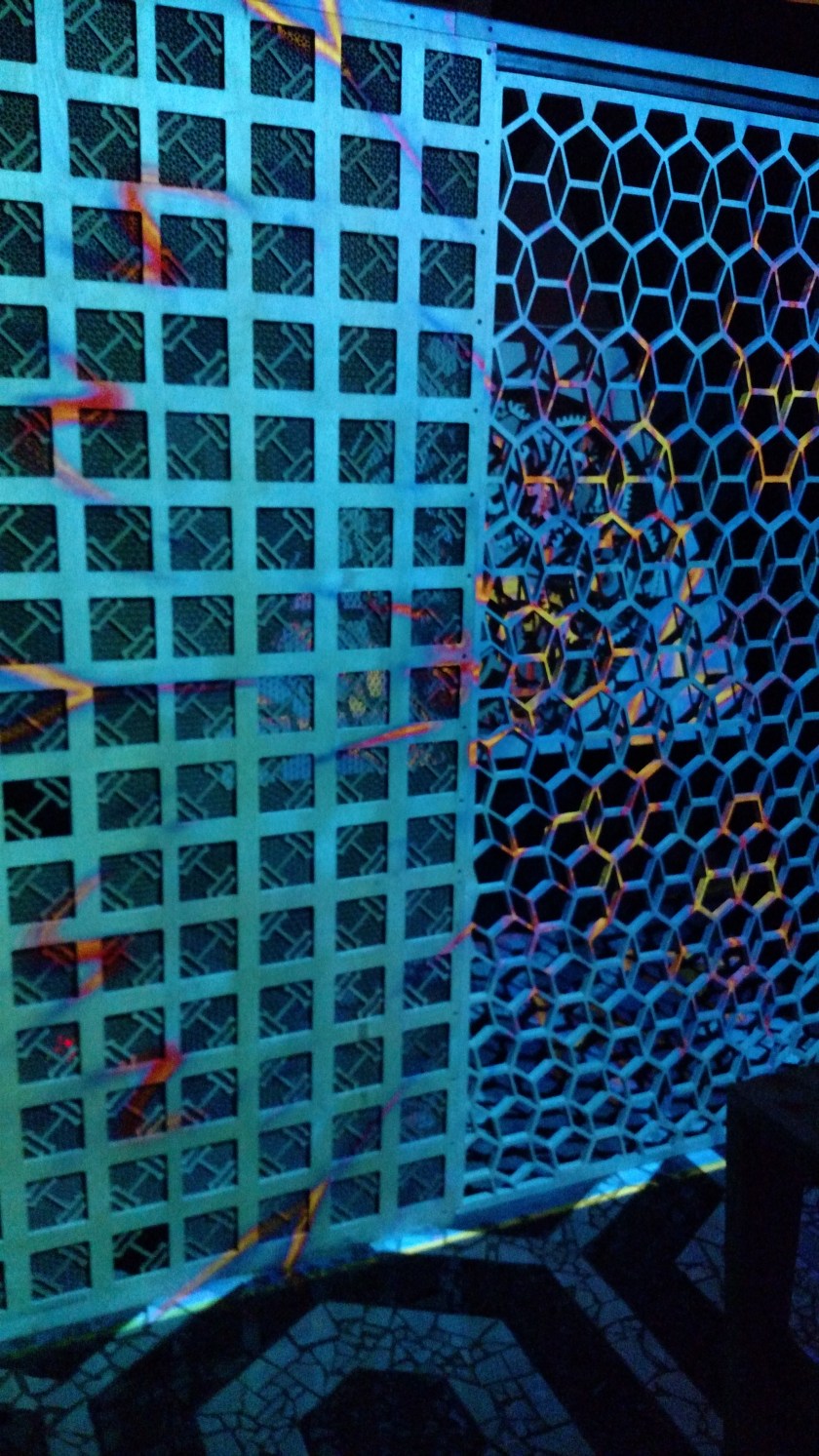

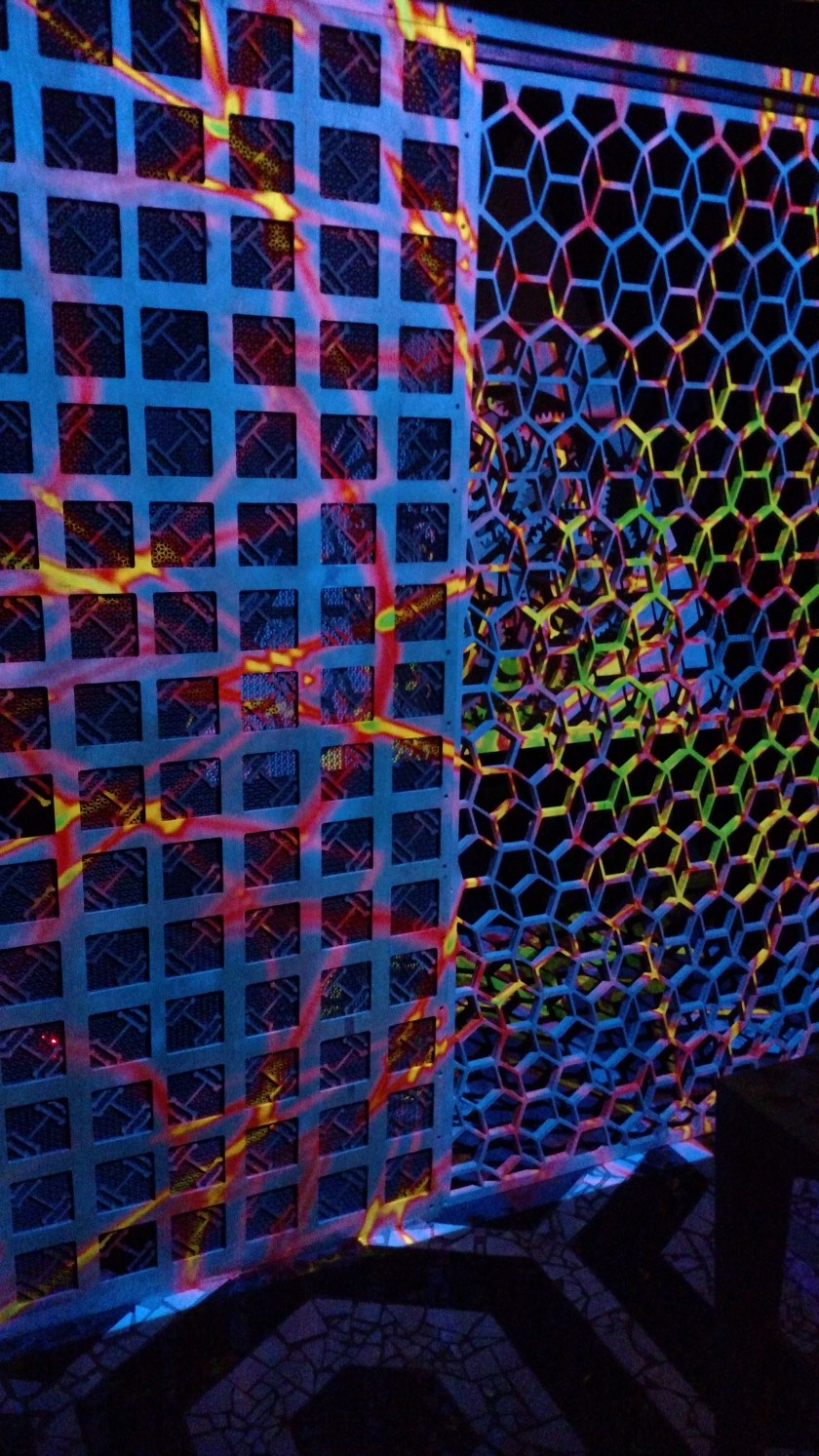
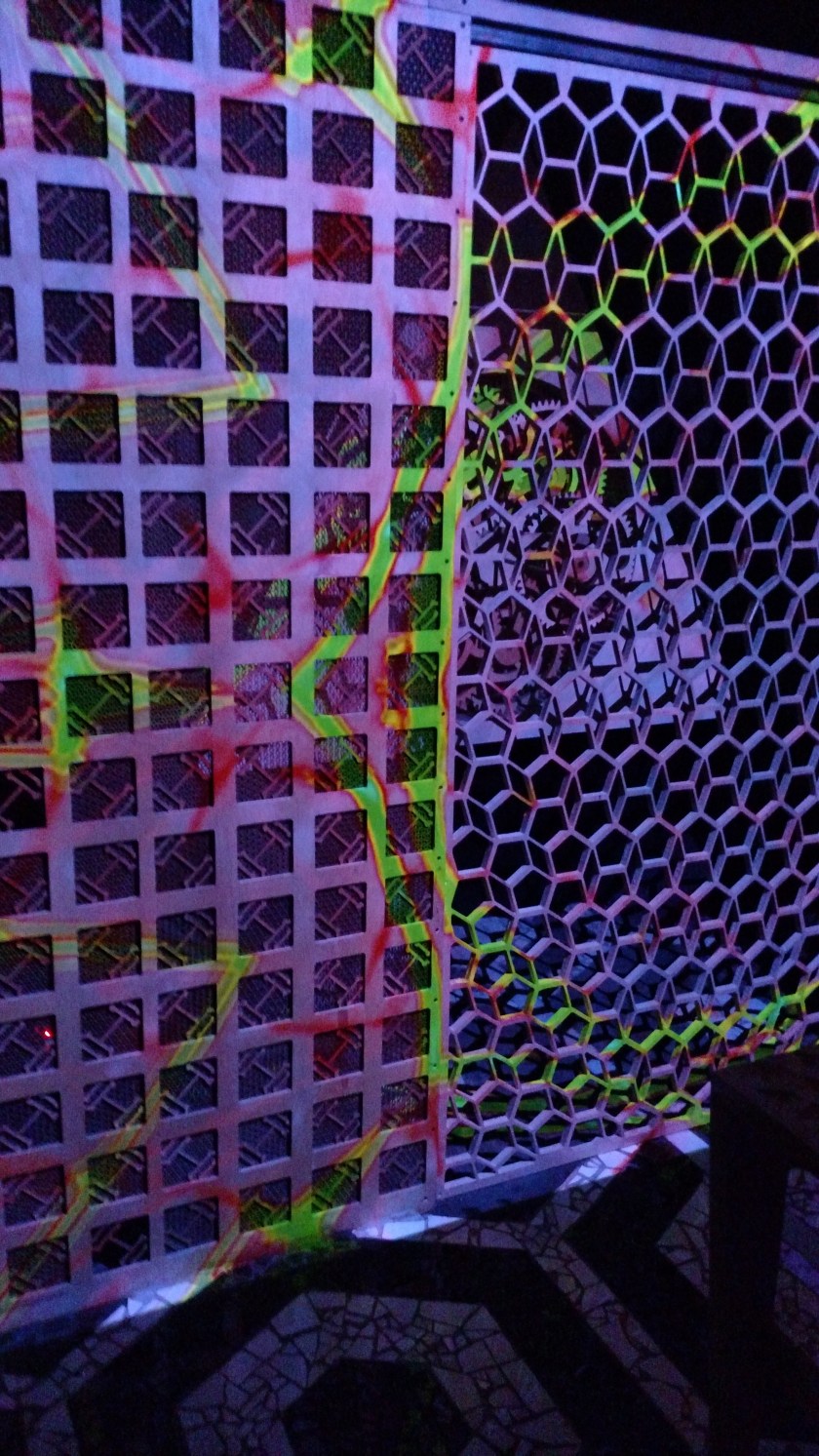
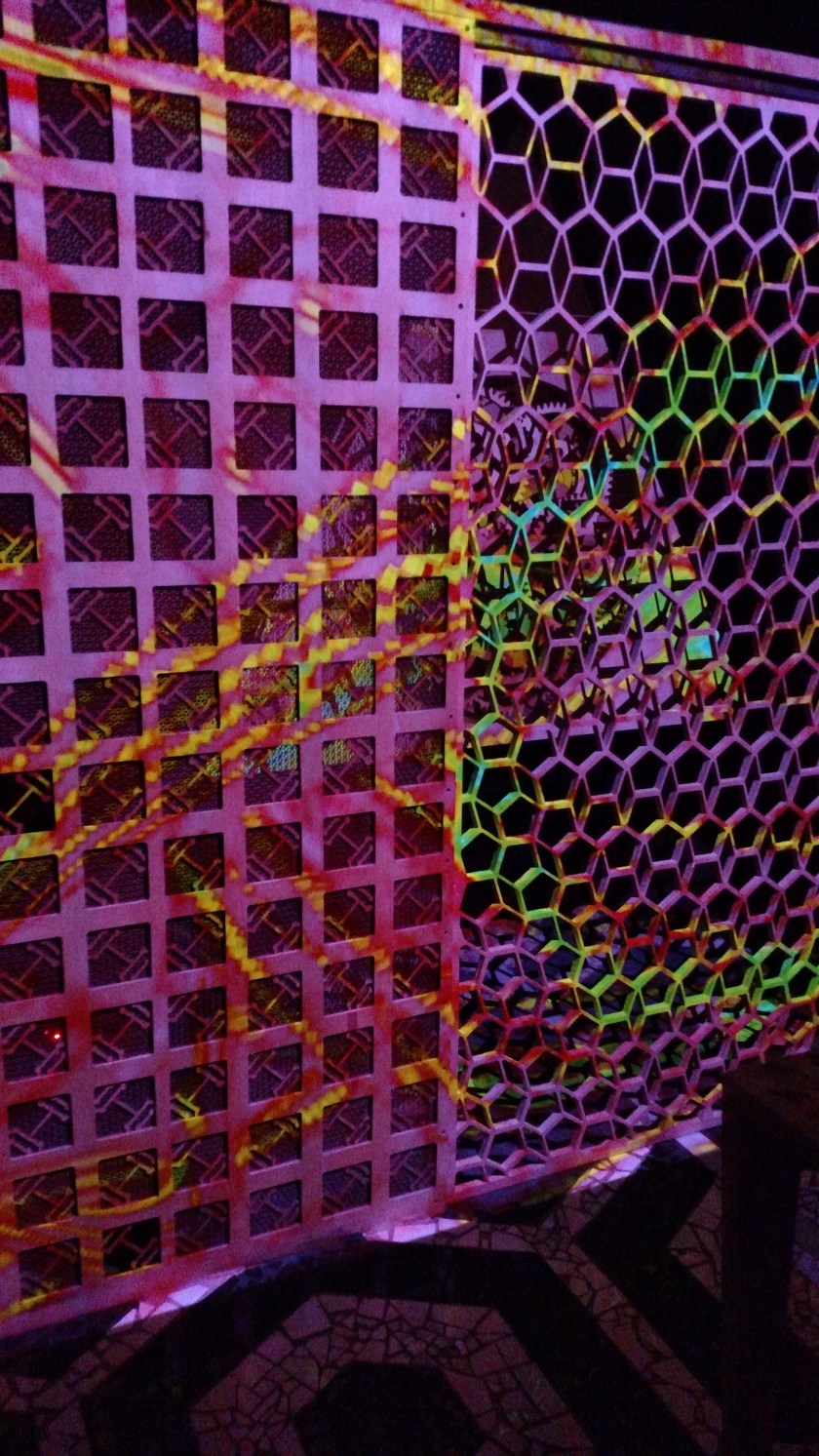
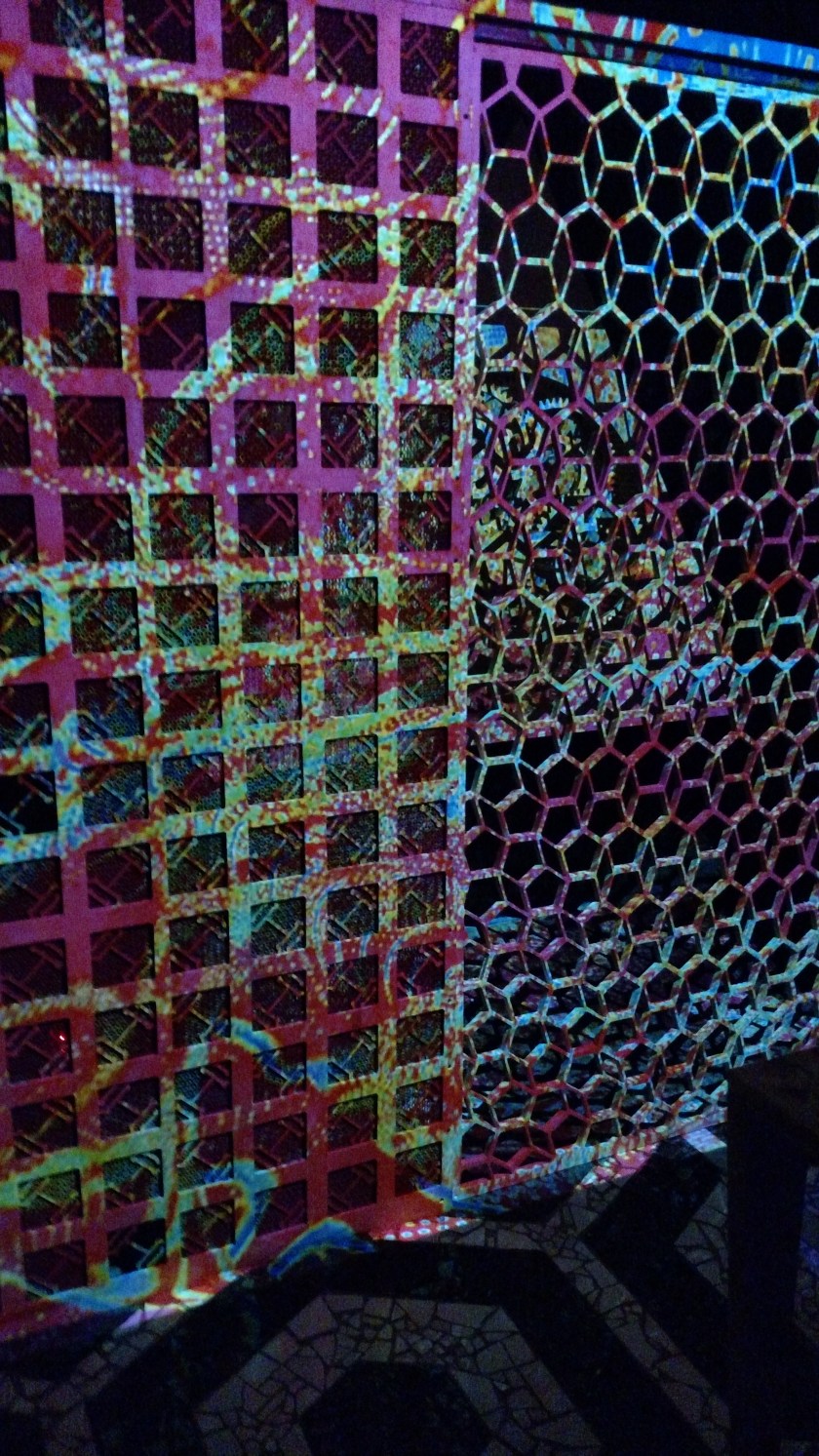
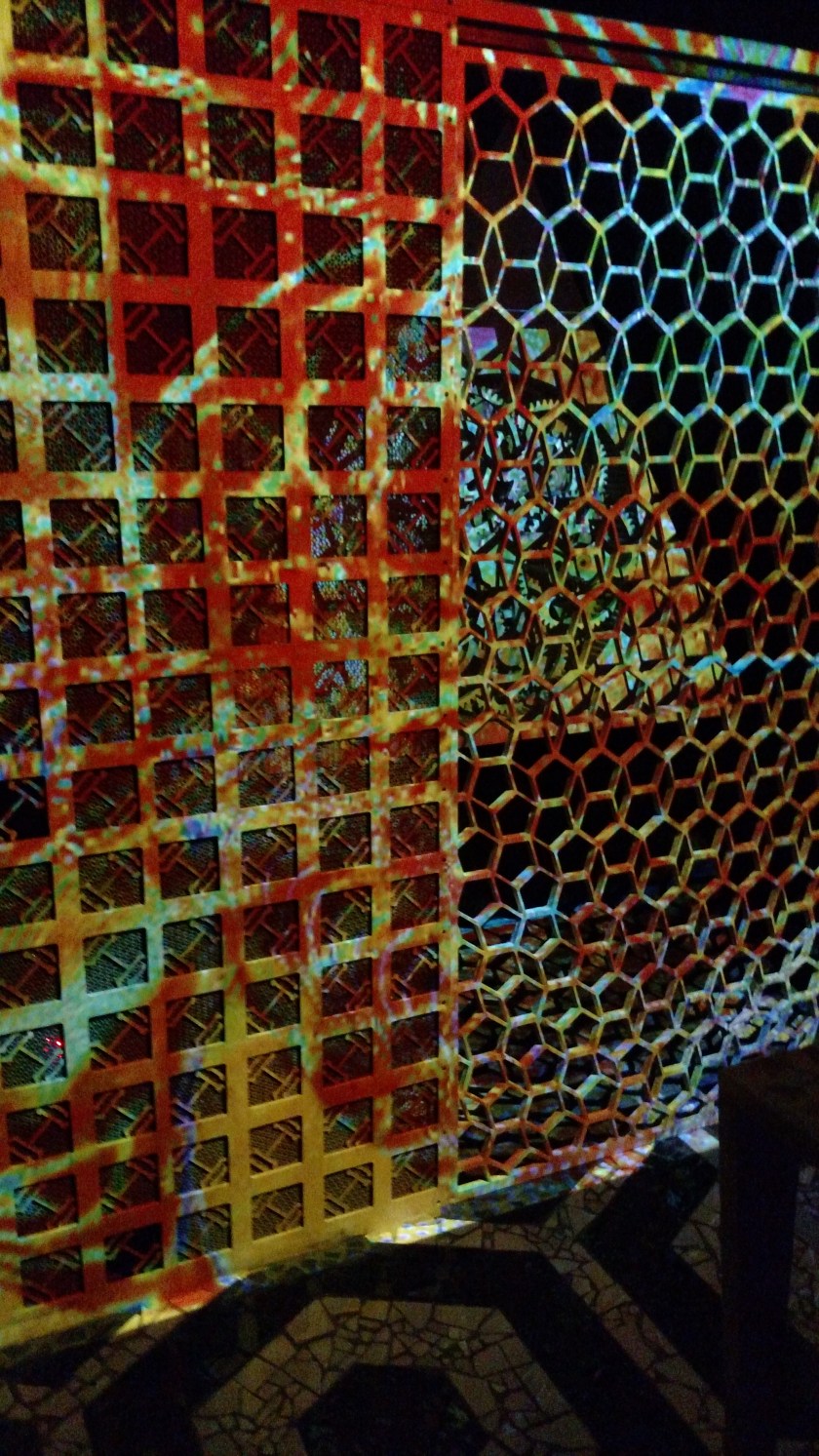
This was what I saw on one wall in one room between 12:18:28 and 12:18:58 pm
Go ahead – climb in that ice cooler…

You are now in a small, mirrored room lined with LED lights. There were two young ladies already in there along with a small (maybe 3 year old) girl. As the young girl pushed some buttons the lights would change color.
I normally don’t like to post food pictures (who cares what I had for lunch) but being in Santa Fe I had to have a Frito Pie, the World Famous (their claim) attraction at the Five & Dime General Store, just off the main plaza in downtown Santa Fe.
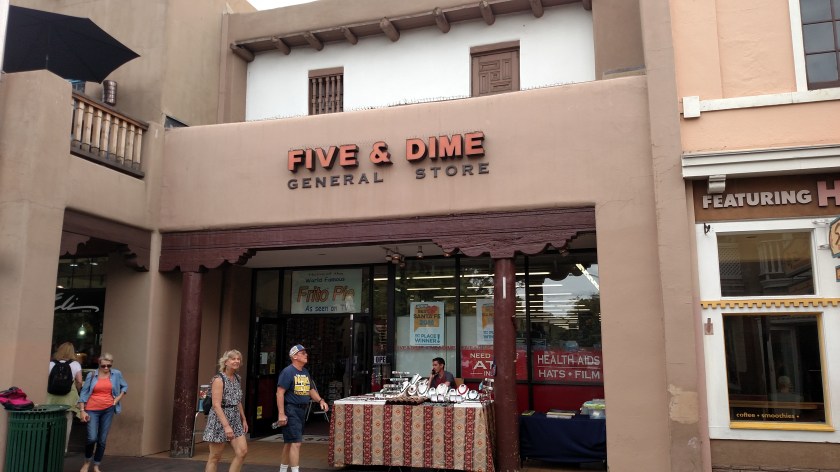
Slit open the side of a small bag of Fritos, add some good chili and cheese, charge a tourist 5 bucks and everyone’s happy.

Mine could have used some jalapenos but I knew I wasn’t going to eat the whole thing so I didn’t spring for the extra 50 cents.
But doctor, it said it was only 320 calories….

About 12 miles north of Abiquiu (which is 53 miles north of Santa Fe, New Mexico) is Ghost Ranch, which was the home and studio of artist Georgia O’Keefe. This 21,000 acre ranch is now mostly owned by the Presbyterian Church and is a retreat and conference center, but remains open to the public. There are also some museums on-site, which is what brought me here.
At the entrance to the ranch is a wooden cabin. No, it wasn’t Ms. O’Keefe’s residence, in fact, it didn’t even exist back in her day. It was constructed for the movie City Slickers, starring Billy Crystal.
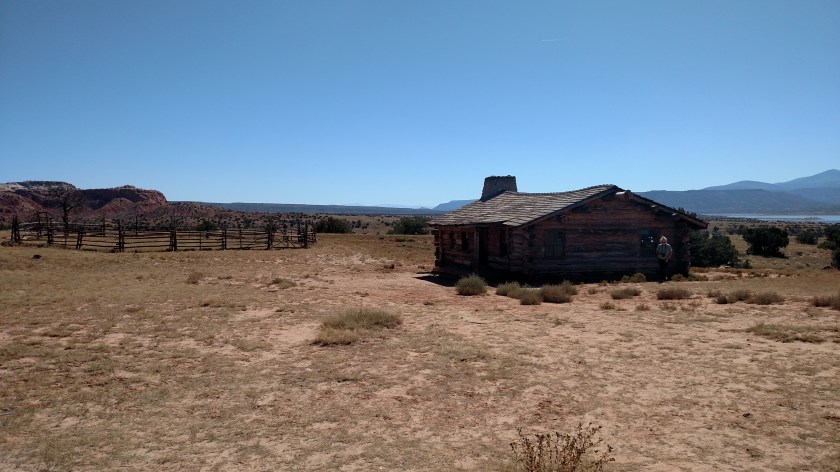
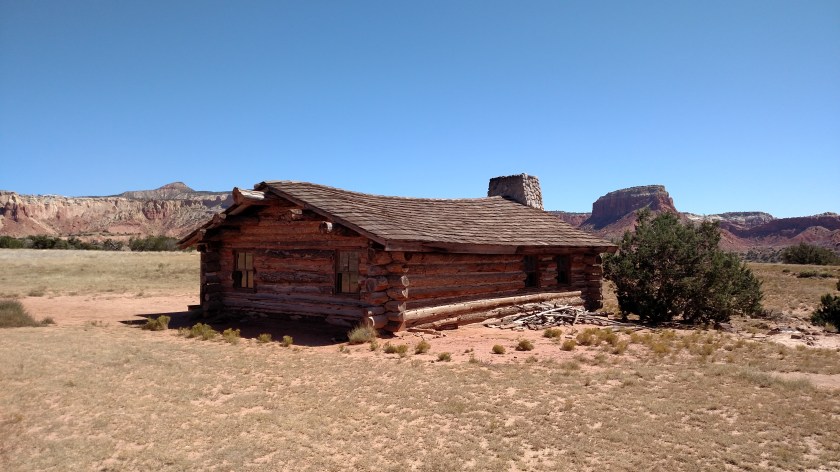

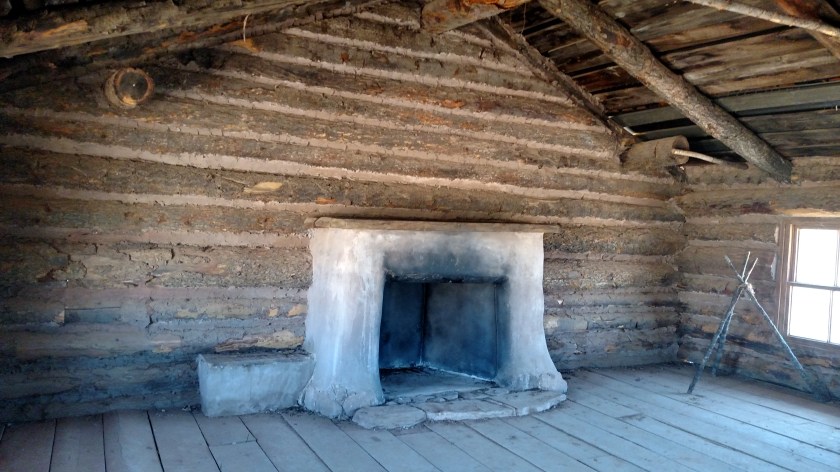
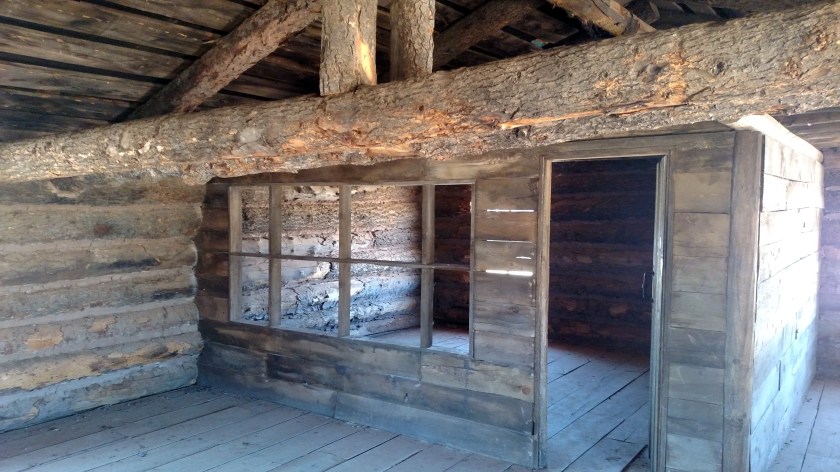
Ah, the magic of Hollywood.
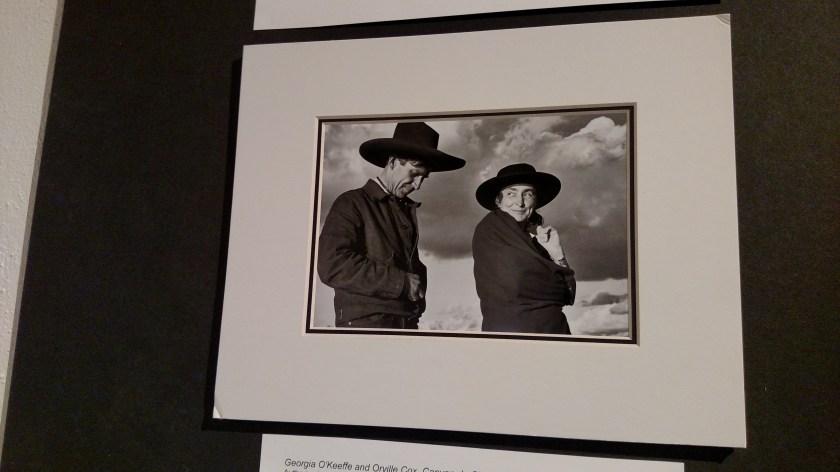
Here is Ms. O’Keefe with Orville Cox in a photo taken by Ansel Adams.
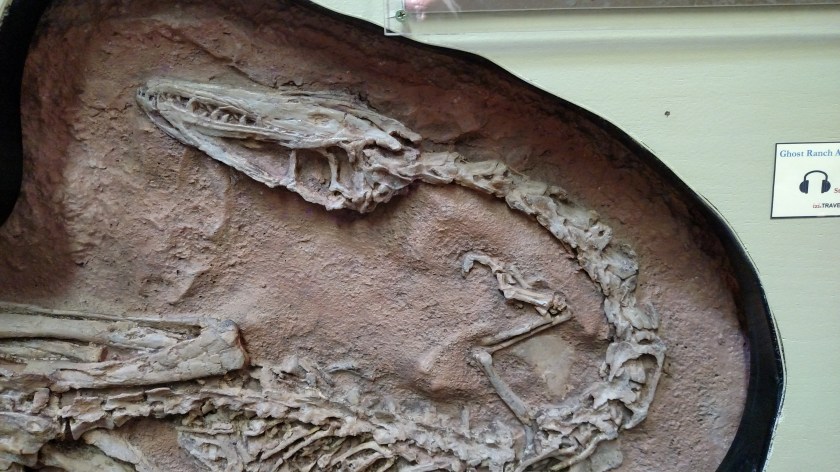
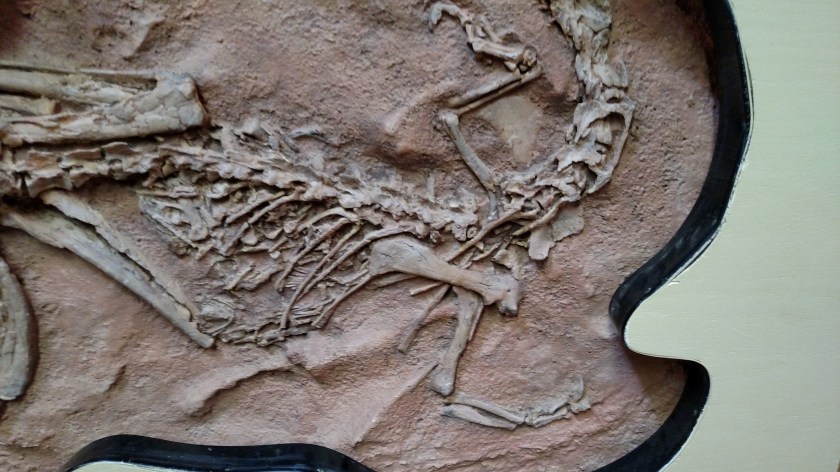
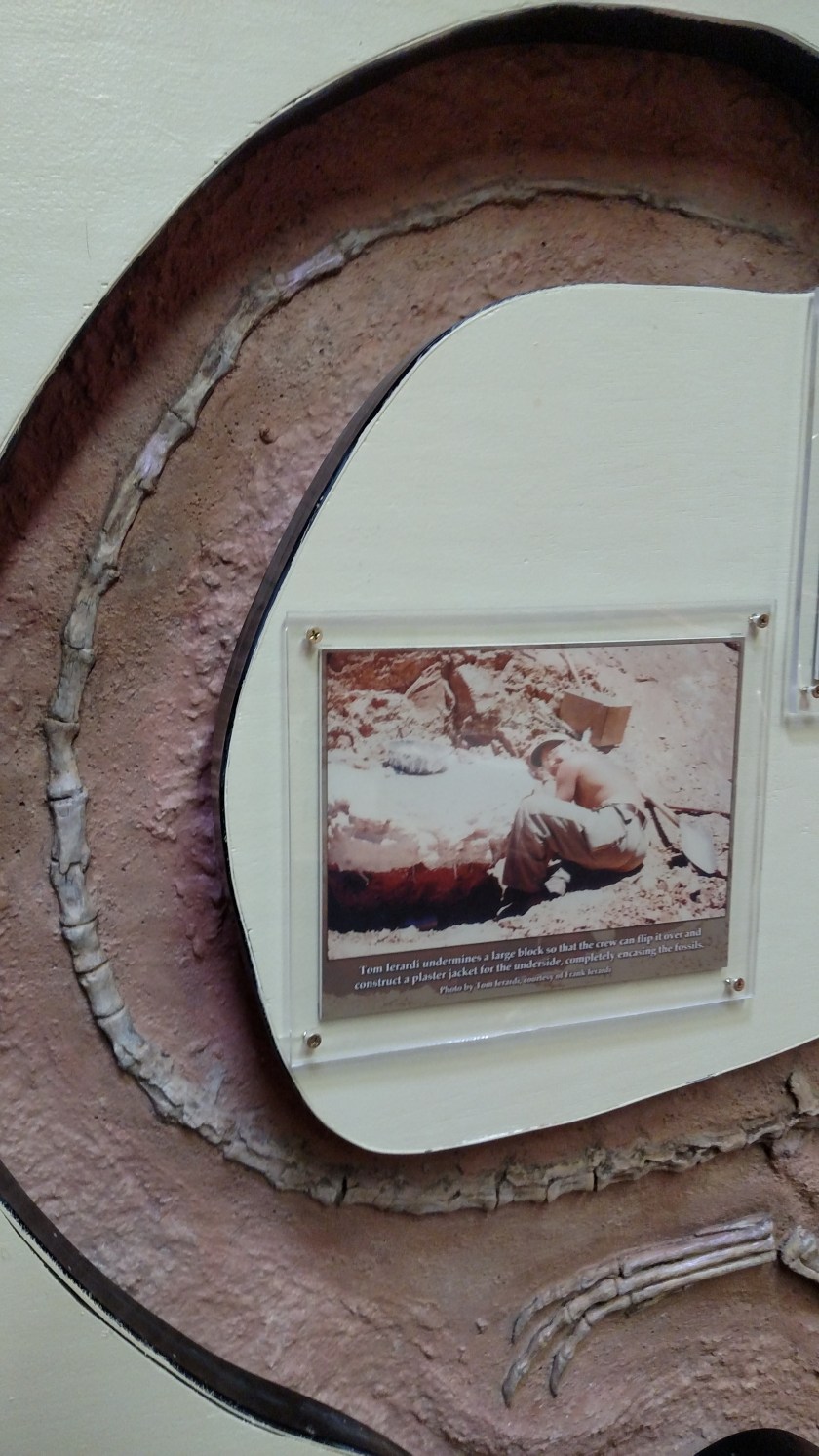
But what brought me to Ghost Ranch was the Ruth Hall Museum of Paleontology, which I learned about from a young man I met at the Petrified Forest National Park in northeast Arizona about a week ago. He was the 15-year old (also named John) who is a budding paleontologist and showed me the cast of the skull of a young Coelophysis (pronounced SEE-low-FY-sis), a dinosaur which lived at that Park, as well as here in New Mexico, over 200 million years ago. In fact, there is a large quarry of Coelophysis bones here at Ghost Ranch which were declared a National Landmark in 1967 and the dinosaur remains were declared the New Mexico State Fossil in 1991.

Not the biggest dinosaur on the block, the Coelophysis was among the smallest of the meat-eating dinosaurs.


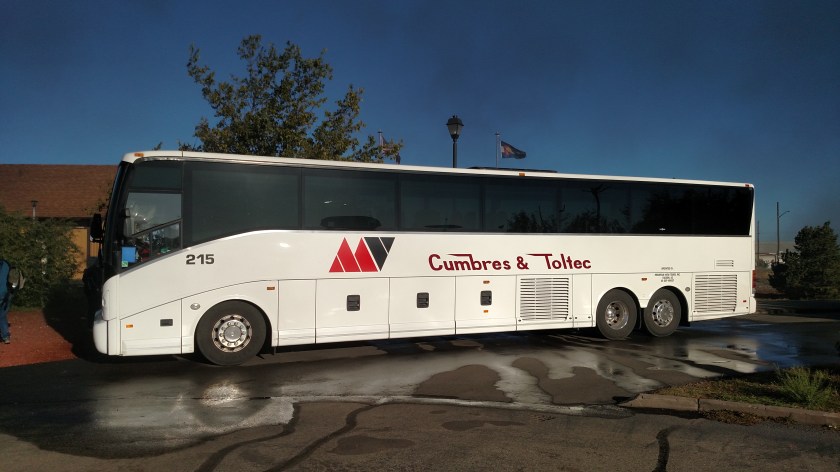
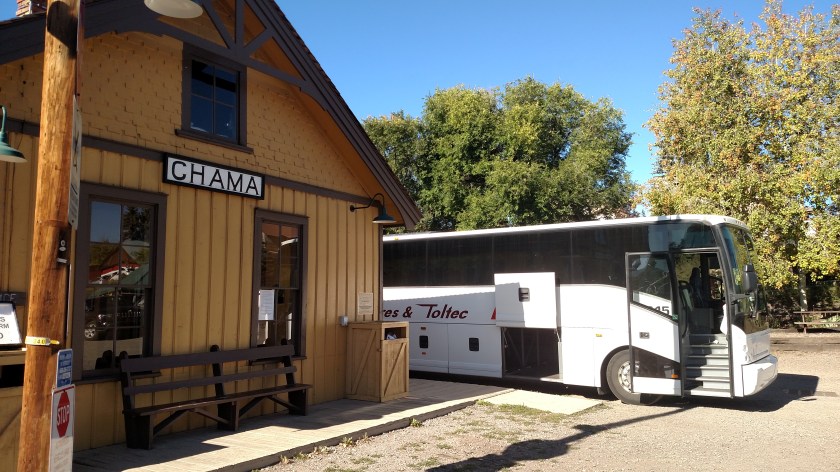
I spent most of today on a train. I got up early so I could leave Taos soon after sunrise for the hour-long drive northwest up to Antonito, Colorado. There I would board a bus for the hour and 15 minute drive west to Chama, New Mexico where I would board the train and take it on the 64 mile ride back to Antonito.
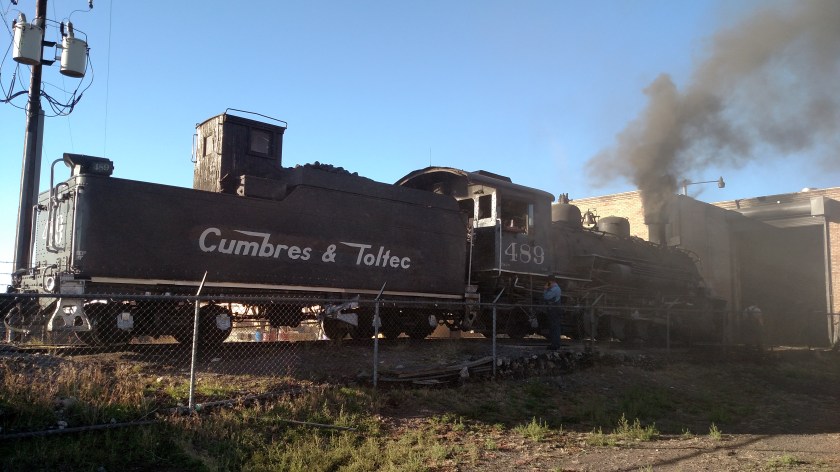
This wasn’t our engine but is the same type.

(Photo credit: Cumbres & Toltec brochure)
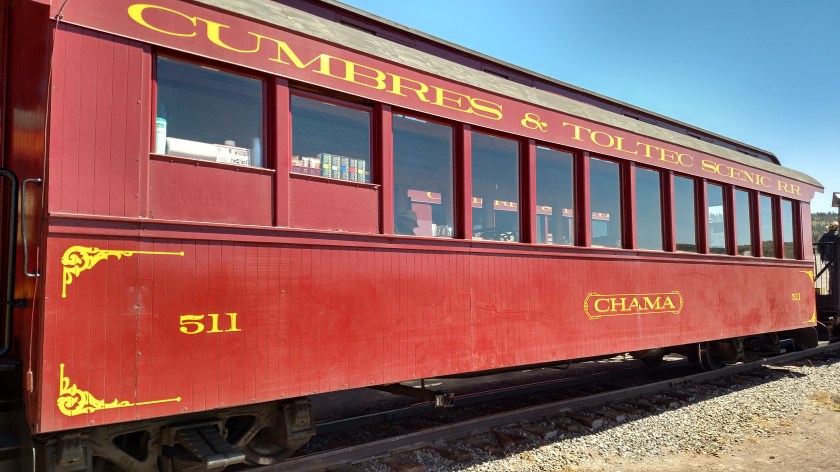
This was the car I would ride in:
And these were some of my travel-mates:
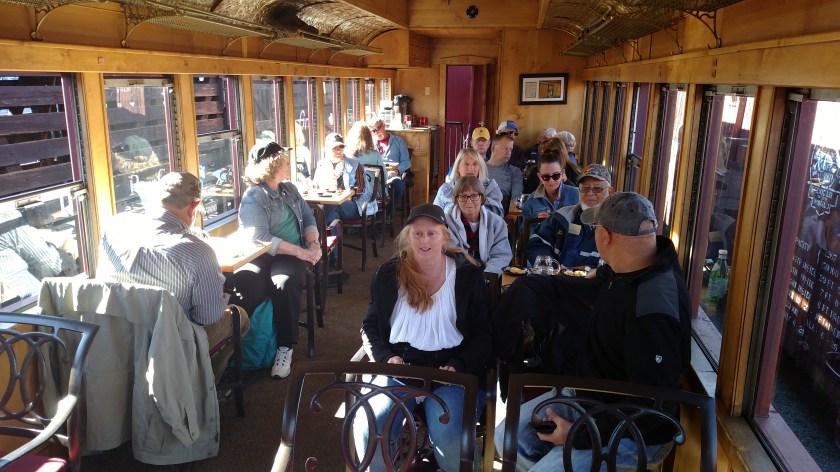
I sat at a small (only one place setting wide) table on the right side of the car as seen here, although it was at the front of the car and on the left side given our direction of travel. The left side as seen here also had tables but only sat one person in each direction. They were all booked by the time I made my reservation a few days ago.
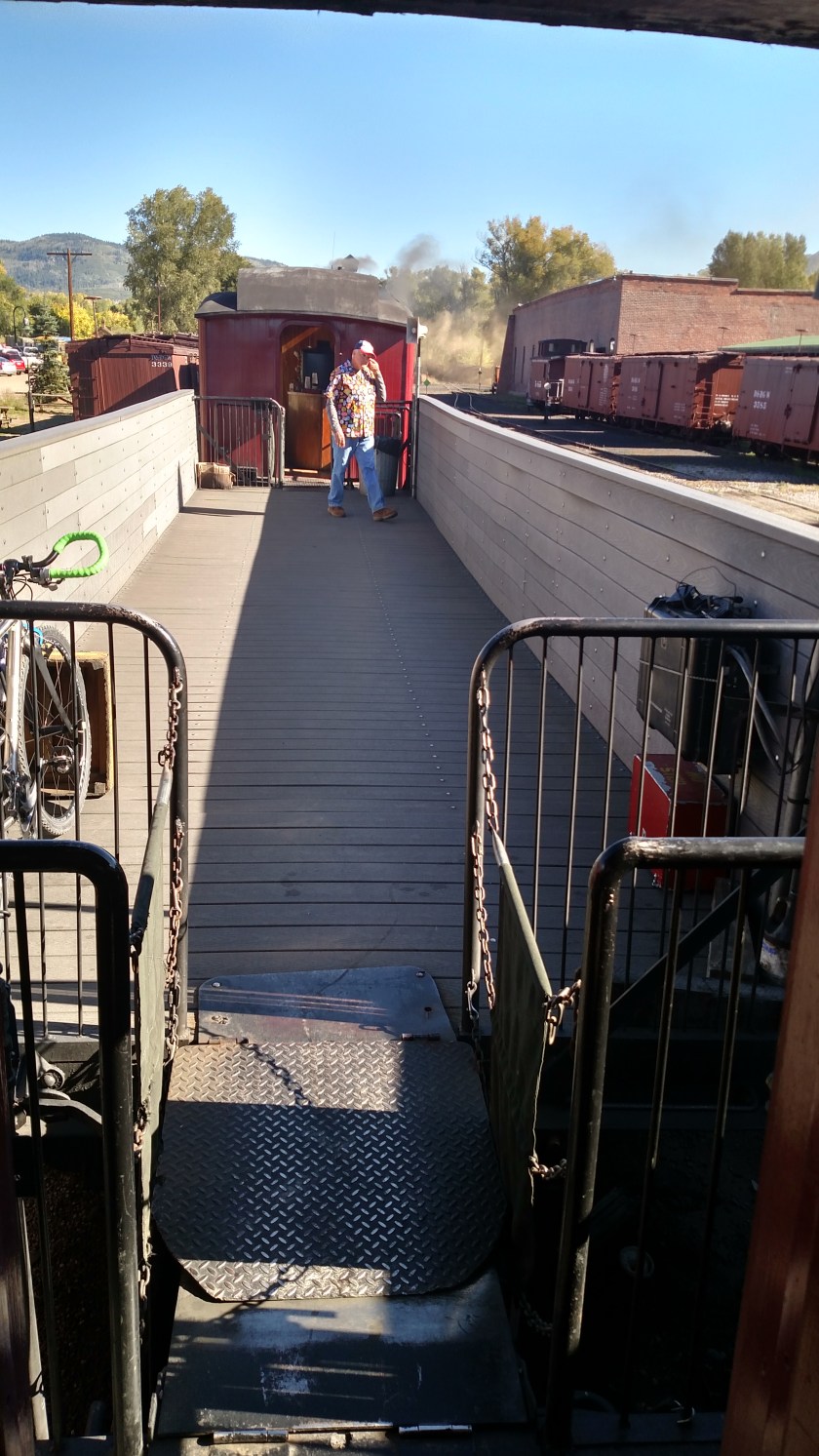
Ours was the next-to-last car on the train. In front of our car was an open “parlor” car which anyone could walk to once we were underway for unobstructed photo ops, although you were then out in the strong wind, generated by nature, not train speed, and were, at times, in the smoke and cinders generated by the engine. I did not go out there at all, opting to takes pictures from the windows (which we could open) in our car.
Looking at the open car through the door in the front of my car:
Once we were underway the open car became populated pretty quickly. I shared a table with the three women in the left/foreground of this photo. The one in the maroon hat lives in Taos, her mother has on the purple hat and her aunt isn’t wearing a hat. Behind her is the train photographer who busily took photos suitable for framing (and for a fee, if you chose to buy it – no pressure, no obligation).

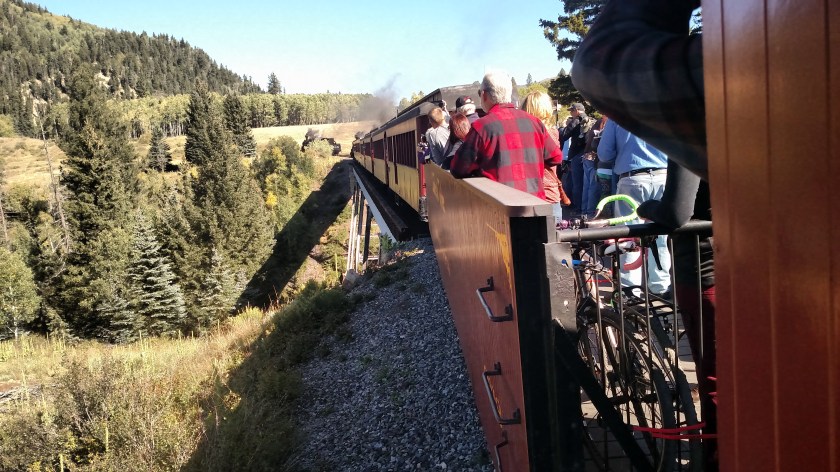
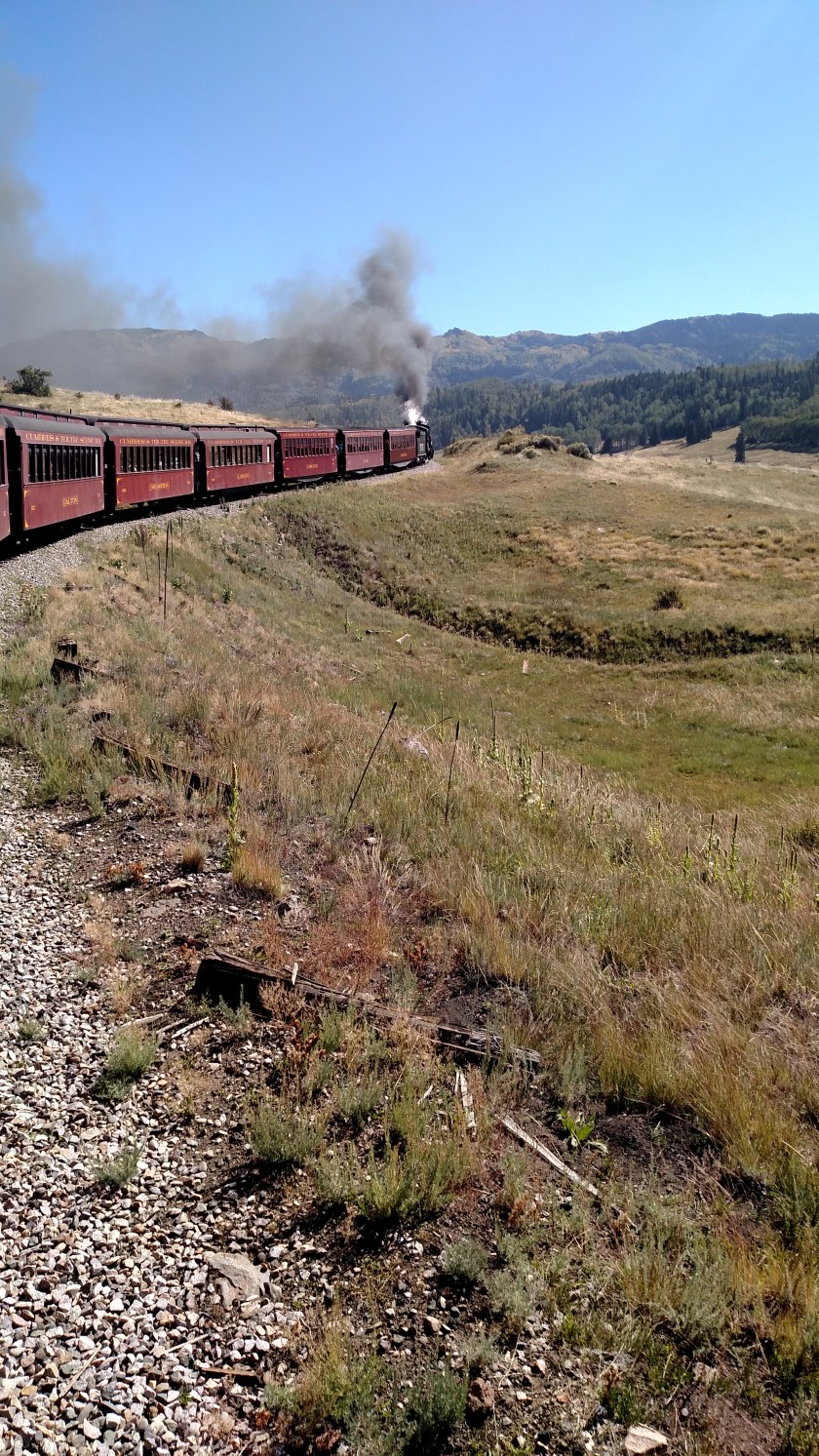
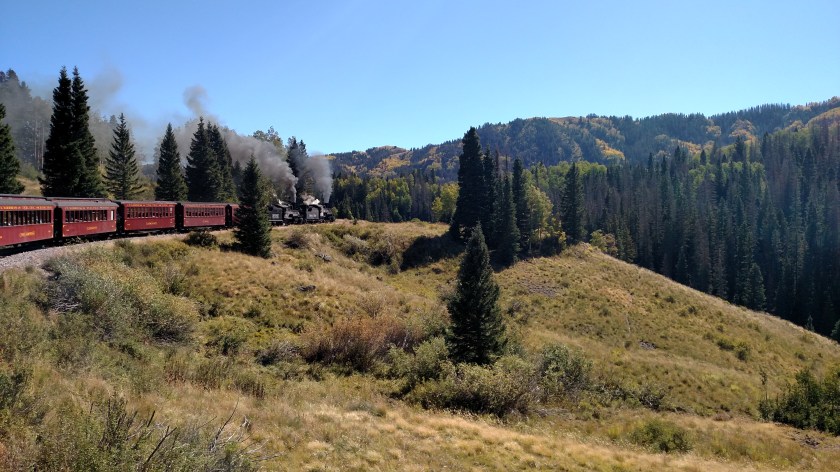
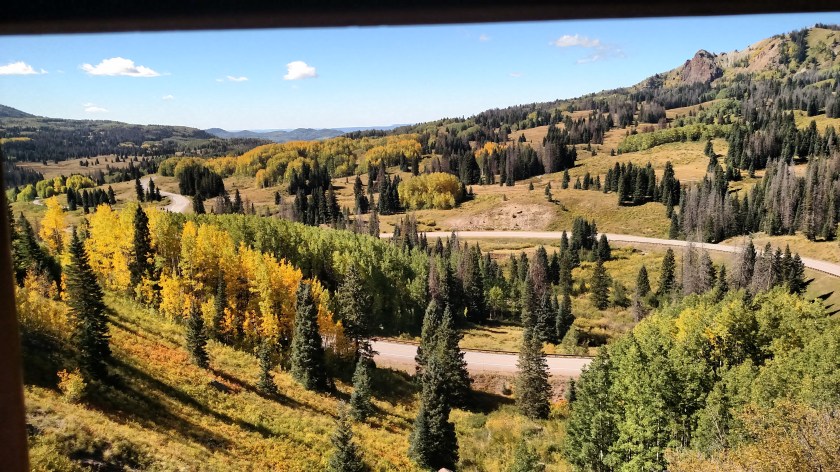
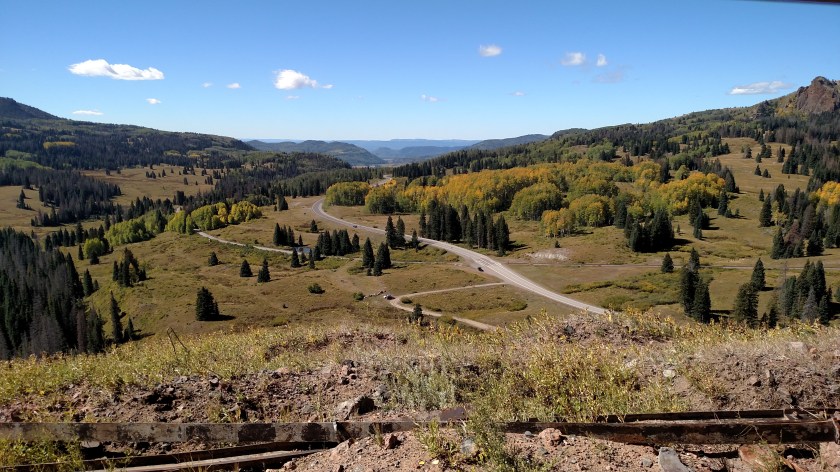
The weather was fantastic and the scenery was spectacular.

And it turns out I had a birthday-girl at my table! It was the woman in the purple vest’s birthday (I’m not very good with names, I think they said it was Johnnie as we were singing to her). It was also the woman (wearing sunglasses) sitting a few rows behind her’s birthday.

Veronica (on the left in the photo below – as we sang to Johnnie), our car attendant for the first half of the ride, served complimentary beverages and snacks and explained where we were and what we were seeing at various points during our trip. Veronica also makes an awesome Bloody Mary, not complimentary but well worth the price!!

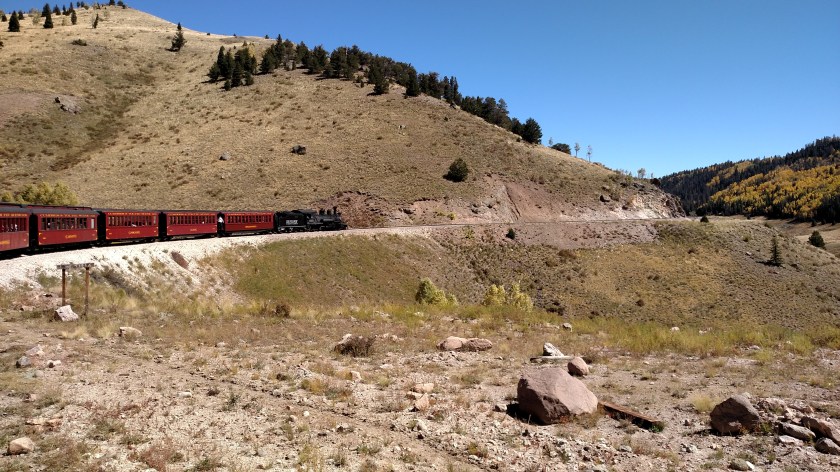

We stopped for lunch (included in the $166 fare, as was a complimentary glass mug) in Osier, about halfway through the ride. I picked turkey with all the trimmings, plus a choice of several desserts (I had 2), and it was excellent.
I took so many pictures with my smartphone during the first half of the trip that I didn’t have enough room on it for the second half. I tried taking some with the digital camera but quickly learned that there was too much movement to allow good pictures while zoomed in even a small amount, so I just put it away and enjoyed the ride. It was a shame because the scenery on the second half of the ride was even more breathtaking that it was on the first half.
I boarded the bus in Antonito at 830am, the train left Chama at 1000, we stopped for over an hour in Osier for lunch, and arrived back in Antonito around 5pm. It was a great day!
I will be taking a similar train ride from Durango to Silverton, Colorado in less than a week. I assure you, I will clear plenty of room for pictures on my phone before taking that ride.
There is a photo gallery on the Cumbres & Toltec website if you want to see more photos. It includes many external shots of the train as it travels the countryside.
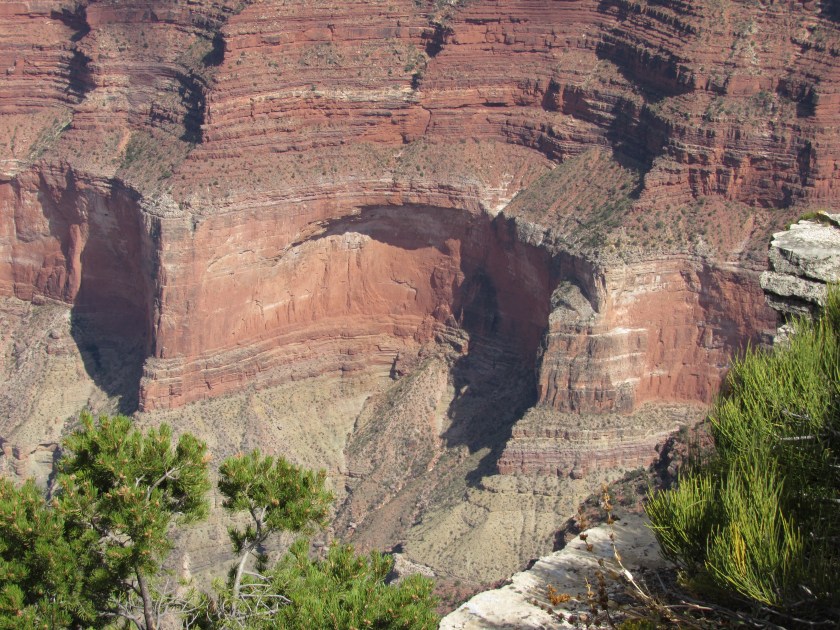
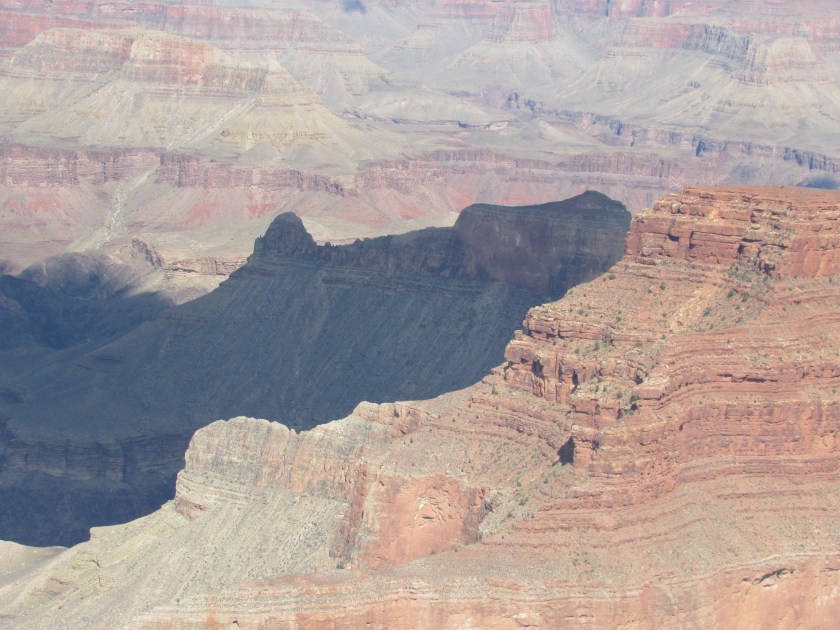
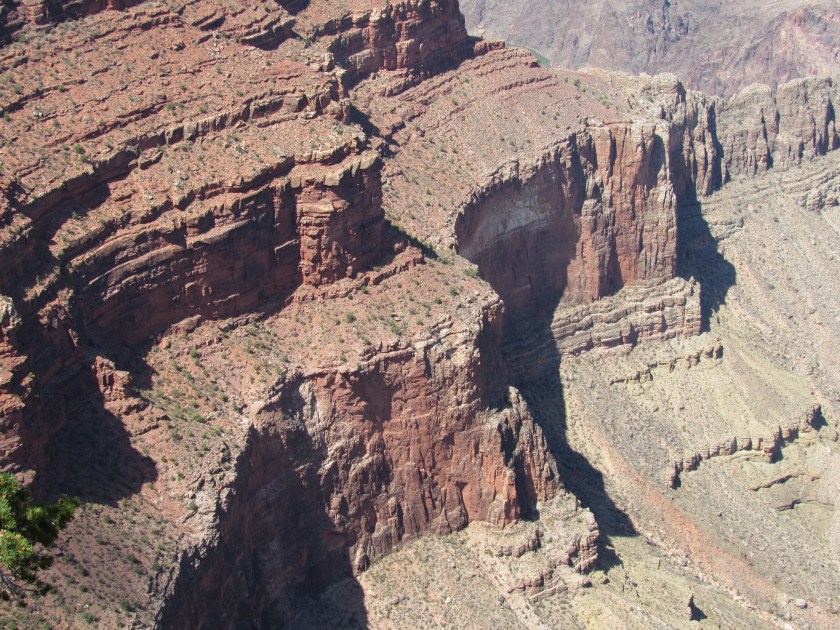
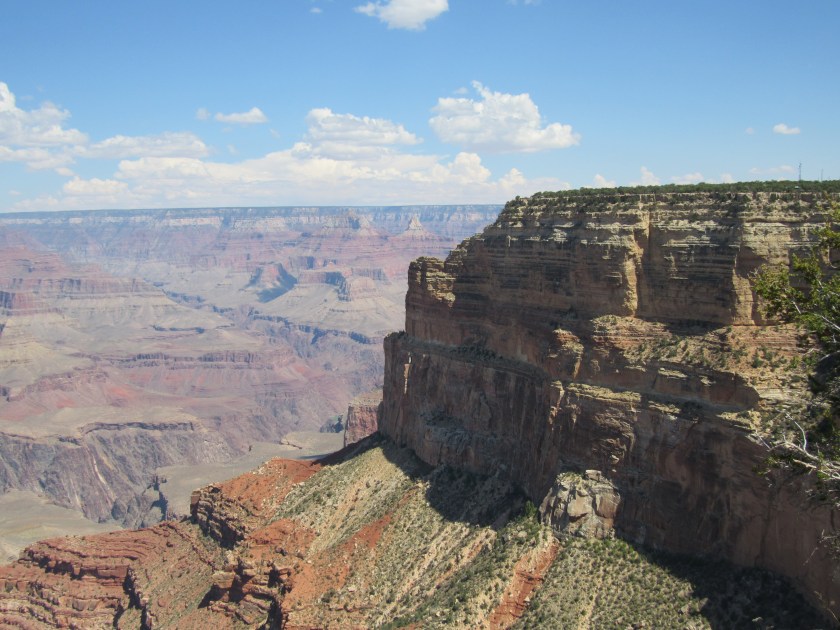
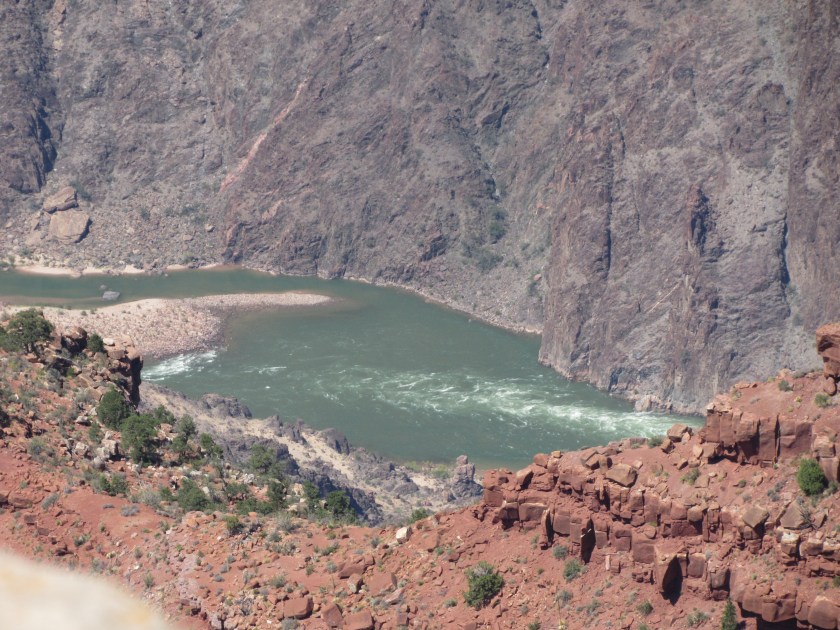
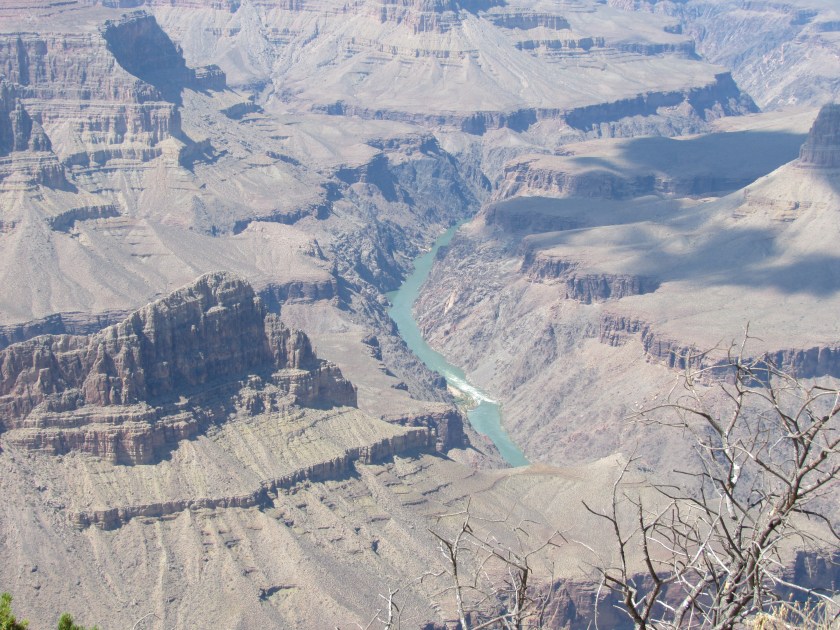
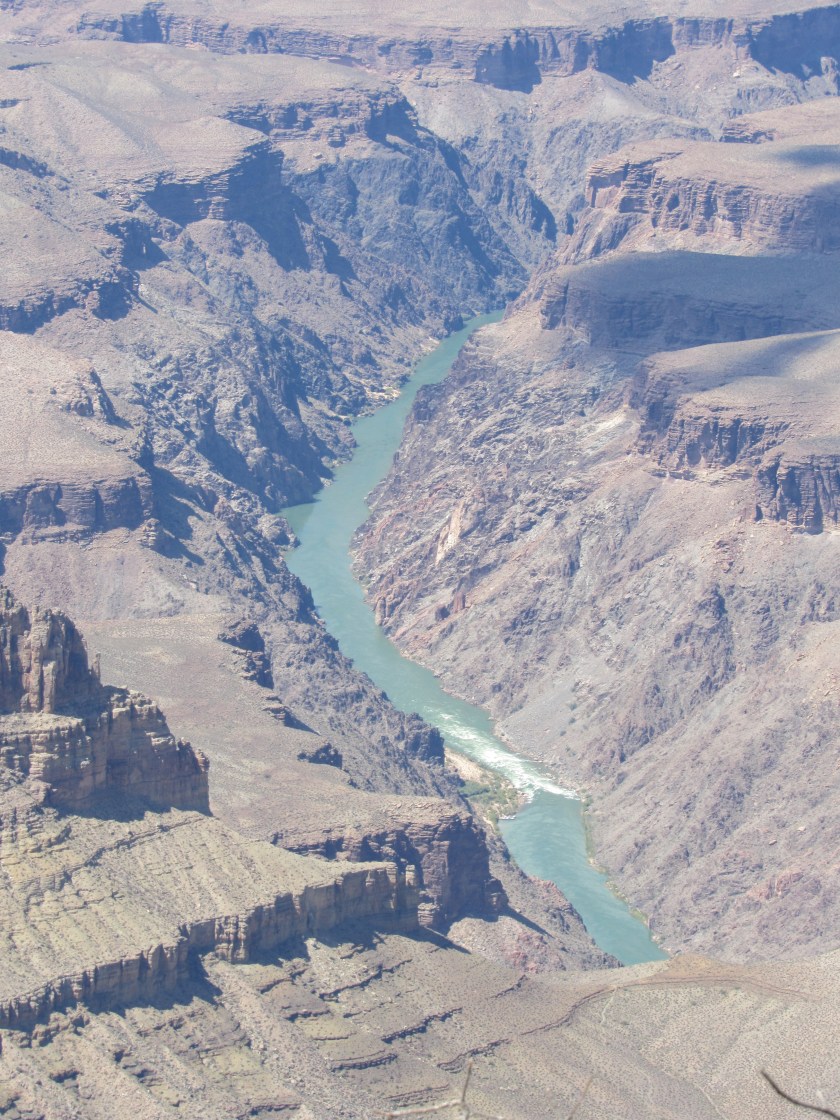
These are more of the photos taken on Day 1 at the South Rim using the digital camera.


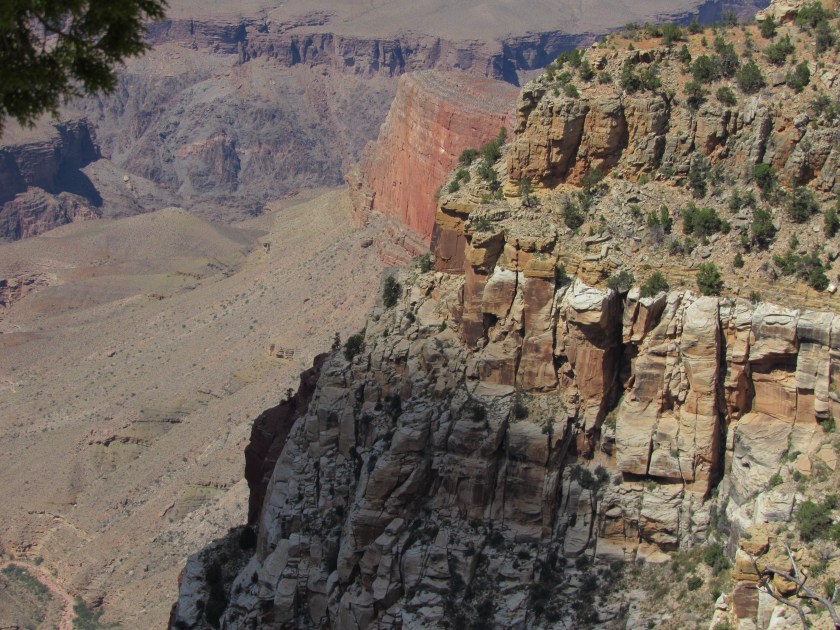
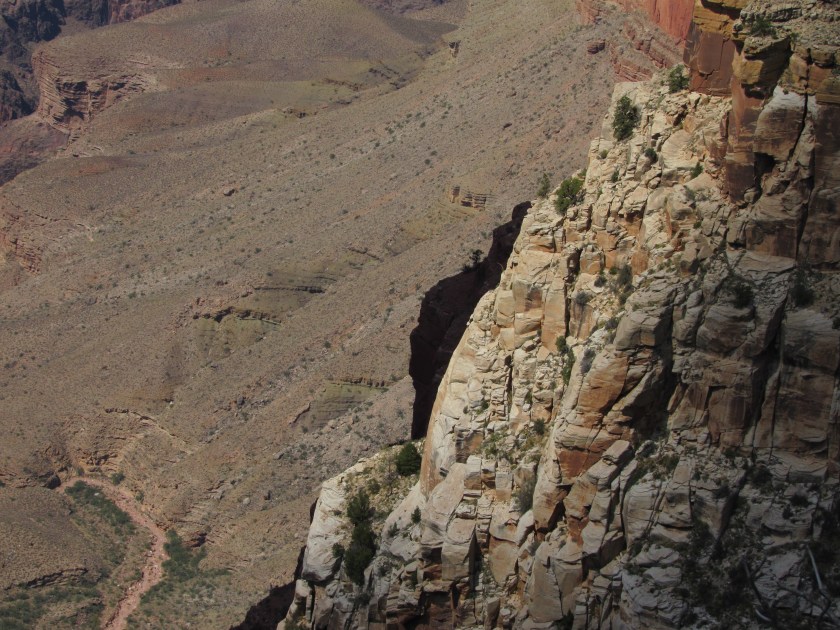
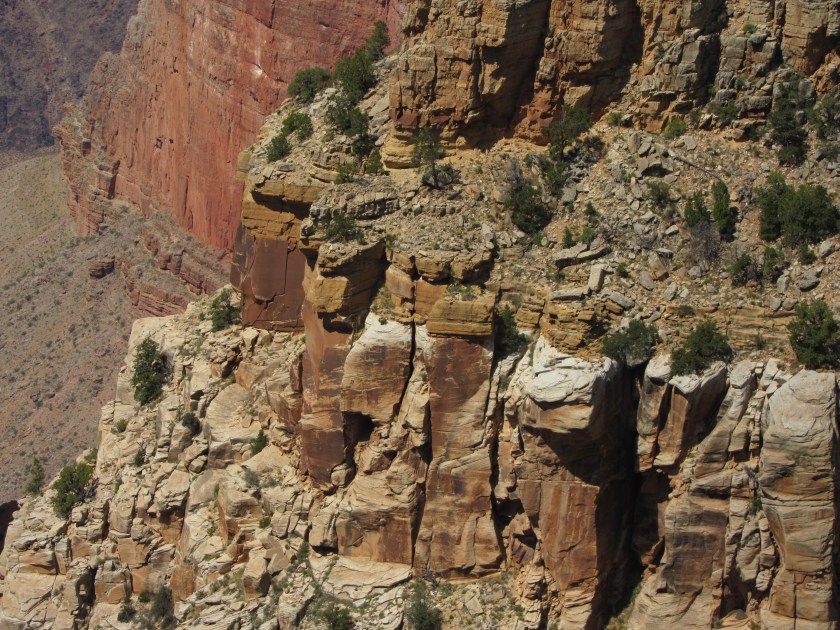
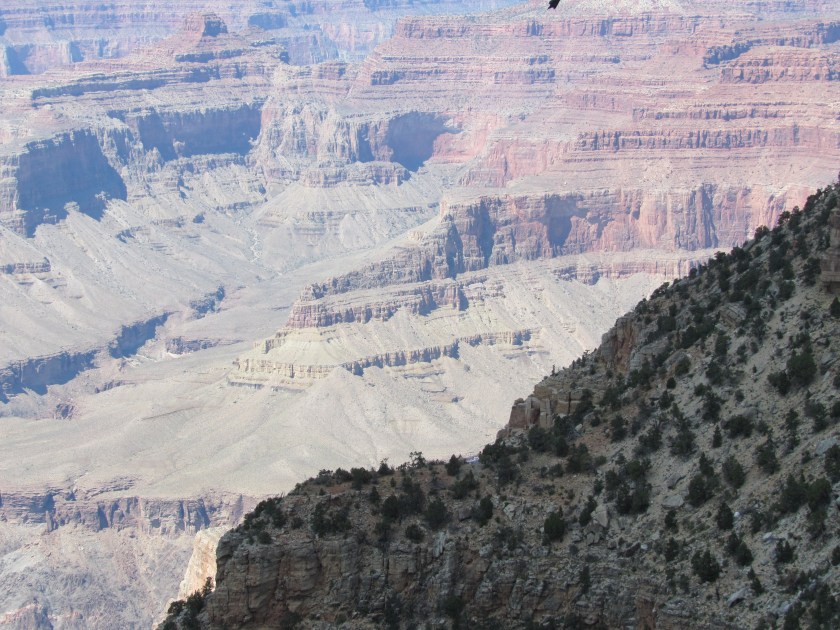

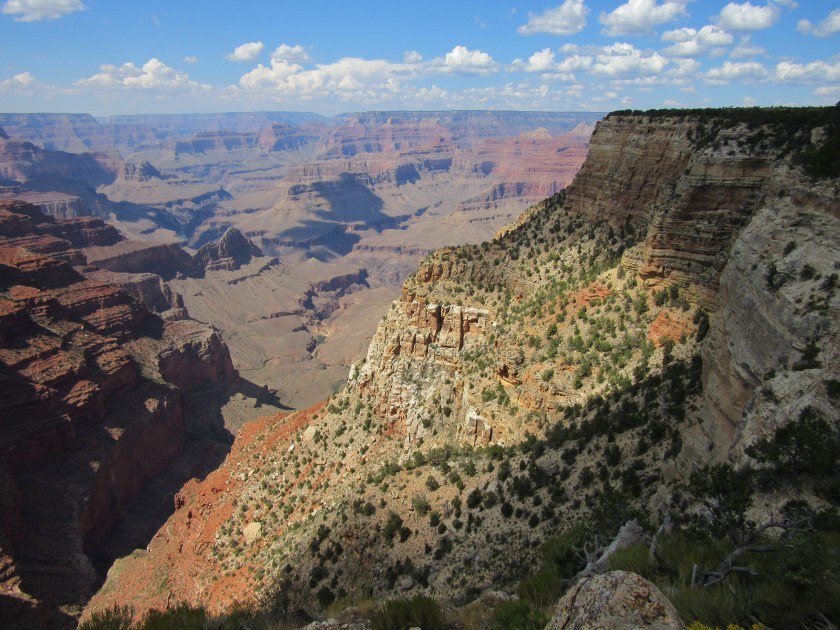

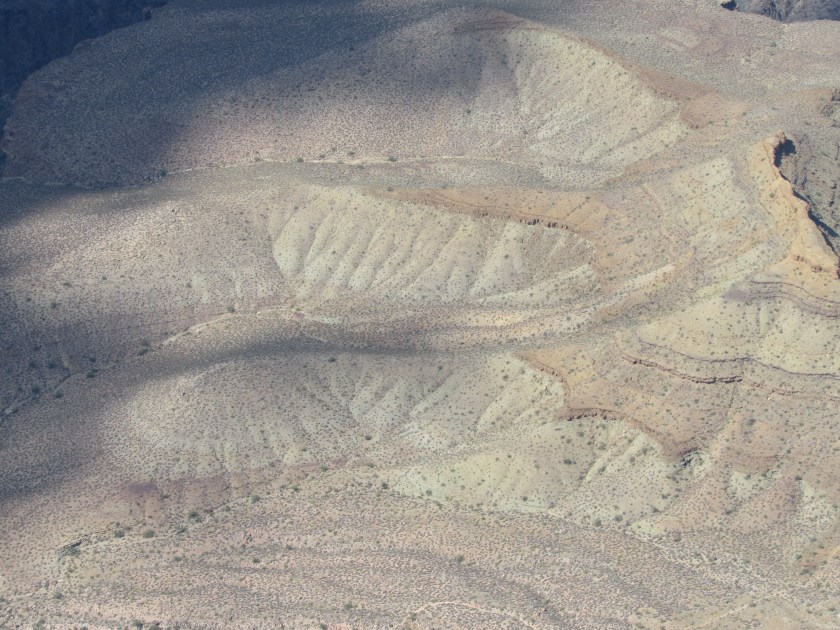
This is the final set of images I took on Day 1 at the South Rim using the digital camera. In future posts I will present close-ups taken on Day 2 which were mainly taken after going in the east entrance to the Park, and will show some new formations (already shown in the smartphone posts).





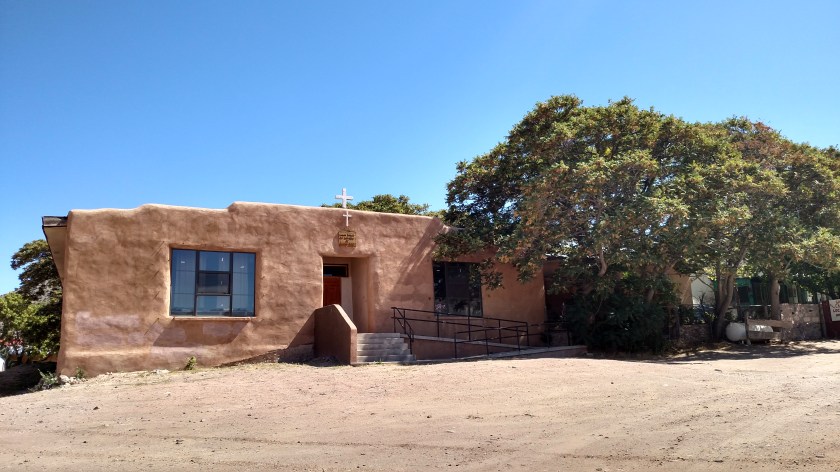
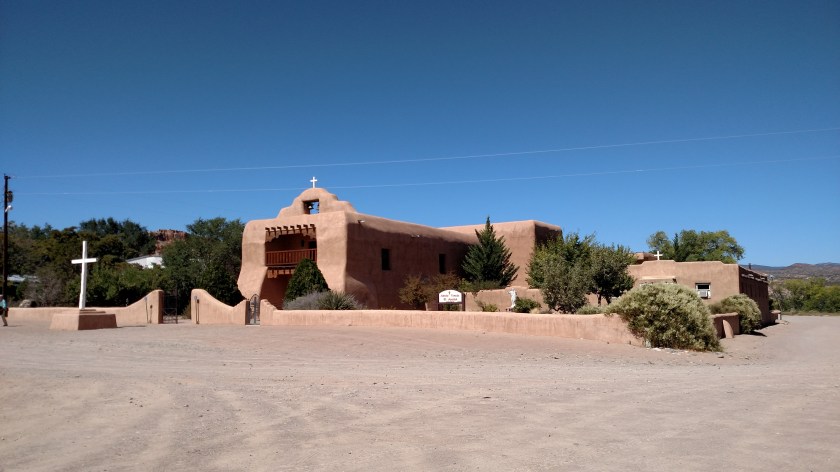
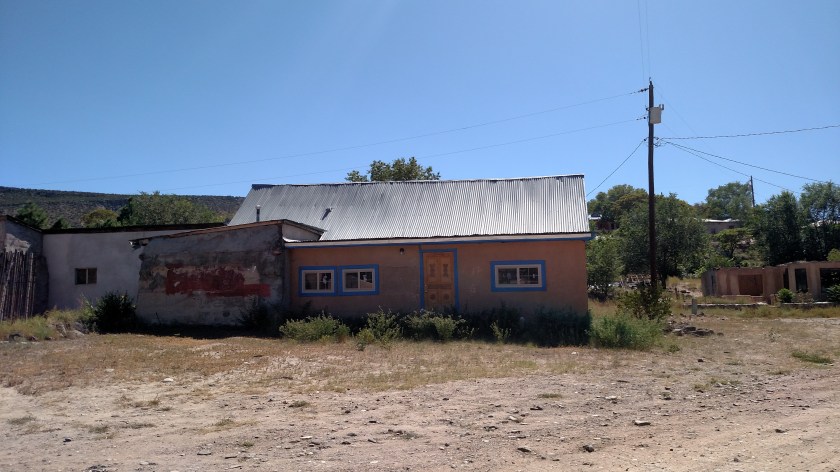
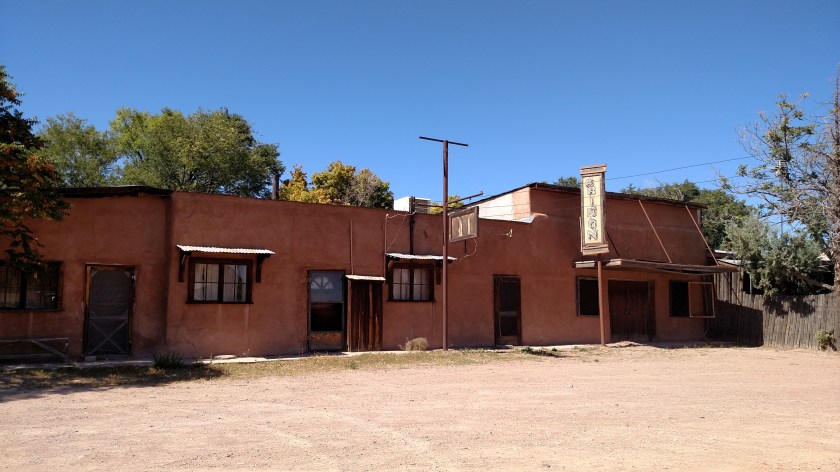
This little town (whose name is pronounced AB-i-cue) is located about 50 miles north of Santa Fe, NM. There is something about 12 miles from here which is what actually brought me here, but I turned off the highway and drove up the hill to what is left of the town itself. I will address that other facility in another post.
Some of these buildings are still used, some are not. Most are churches and residences. There were more homes and buildings nearby but these are located around the “town square,” a popular feature of small, western towns (like once-small Santa Fe and Taos, where I am staying the next 5 nights).



On my way from Show Low, Arizona to Albuquerque, New Mexico on Monday I made a side trip to visit the VLA, located west of Socorro, NM. The VLA is part of the NRAO (National Radio Astronomy Observatory), which is funded largely by the National Science Foundation. The NRAO operates several radio telescope facilities around the world. The two largest facilities are located in Green Bank, West Virginia (right next to my mother’s hometown of Arbovale) and here near Socorro. One of my uncles used to work as a telescope operator at Green Bank. He would sit in a control room and move the scopes to point at various sources following a “script” of what, specifically, the scientists were monitoring each day (or night).
The VLA is a system of 27 identical 82-foot diameter radio telescopes. These telescopes are available to scientists 24 hour a day, 362 days per year (they do not work on the 3 major holidays).


These radio telescopes (similar in design to satellite dishes used to receive TV signals) gather radio pulses from sources in deep space. Scientists from all over the world submit proposals to the NRAO for projects they would like to study (these scopes have helped discover and research quasars, pulsars, black holes, etc).
By having multiple telescopes hooked in to one supercomputer scientists, in effect, are using a much larger single telescope which would be impossible to construct. To achieve this, these 27 telescopes (3 groups of 9) can be moved to 4 different configurations in a ‘Y’ pattern on the desert floor.

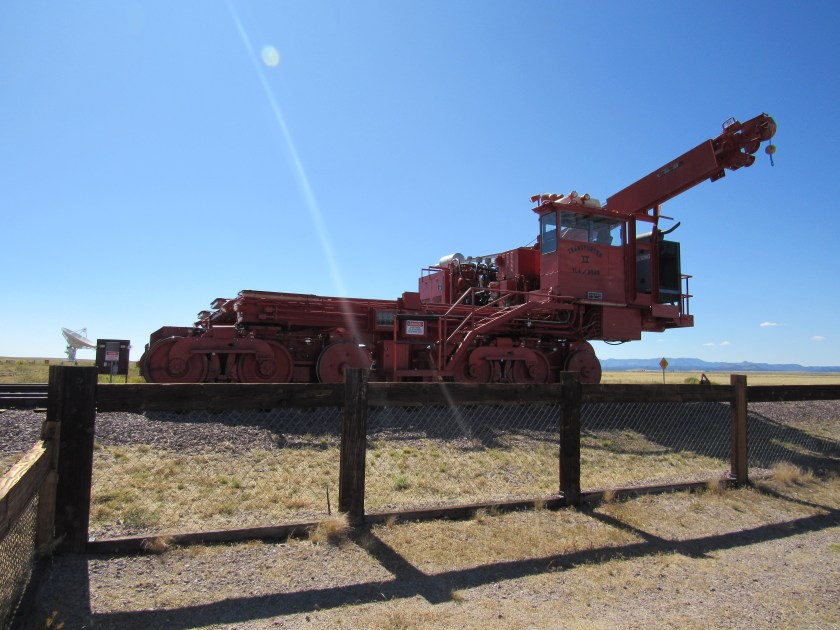
They are moved from location to location on railroad tracks by a huge, orange transporter.

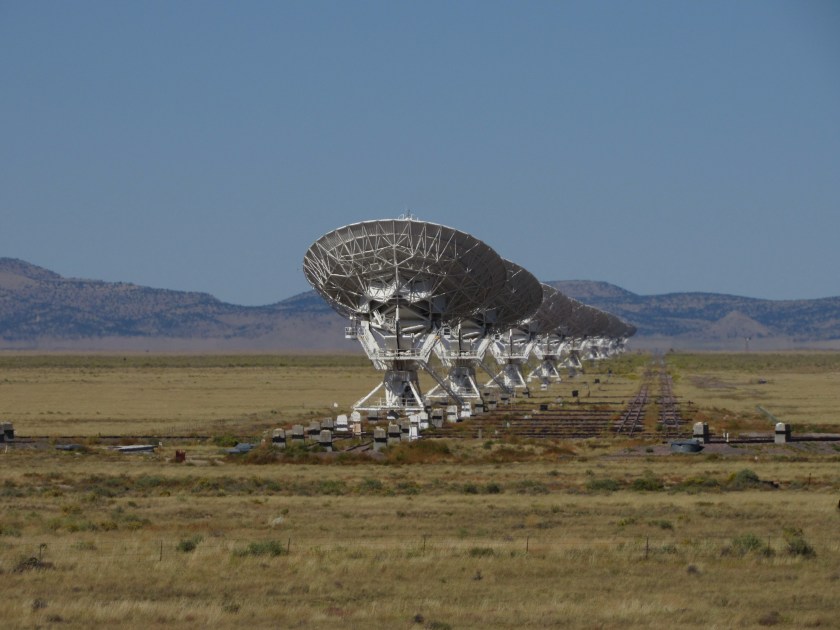
Once in position, their 3 legs are anchored to a concrete base and connected to the custom-made supercomputer by 2,700 miles of fiber-optic cable. That computer is capable of making 16 quadrillion calculations per second in processing the radio signals into usable information.
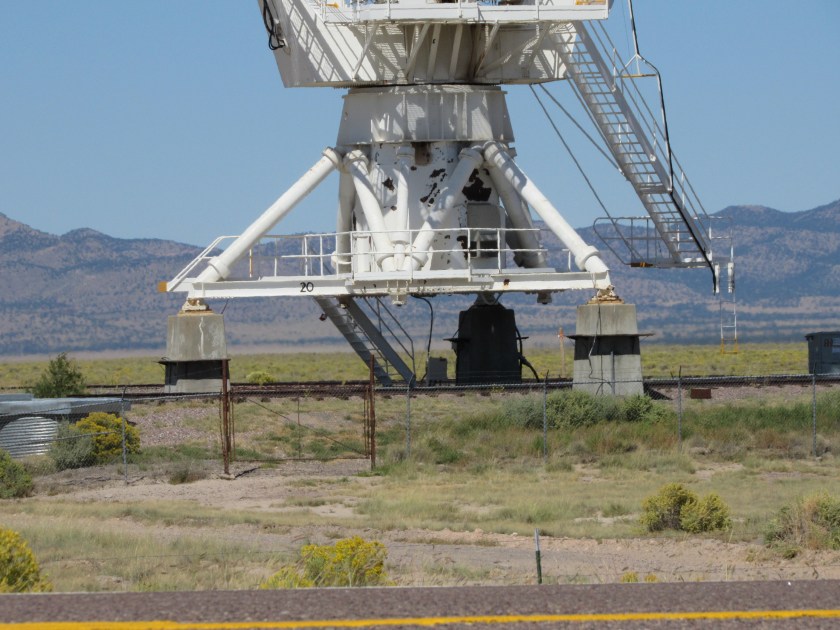
In addition to the current positions you can see other concrete bases built to accommodate the scopes when they are moved to new positions. These configurations range from a diameter of .62 mile up to 22.37 miles.
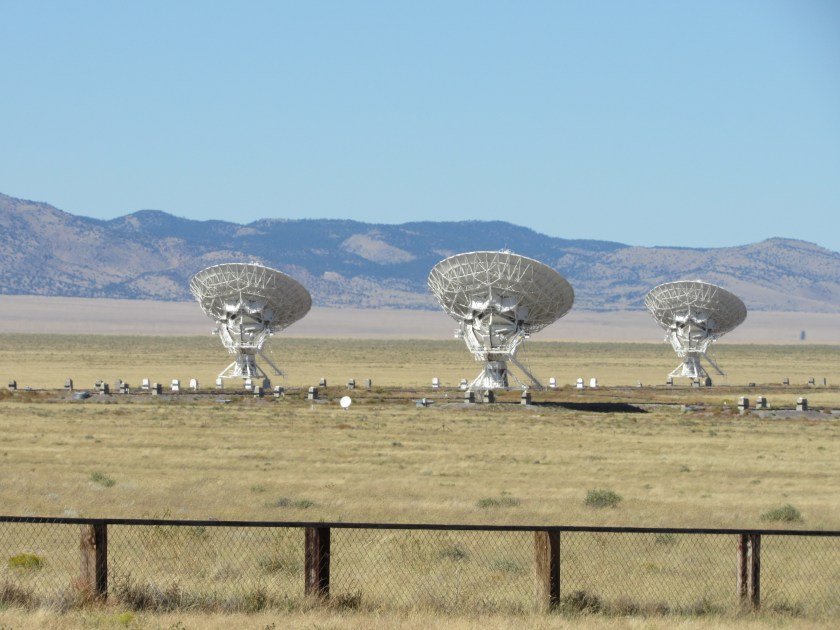
If you visit the VLA you will always see all 27 telescopes pointed at the same source. In Green Bank there are 3 identical 85-foot diameter telescopes, one in a fixed location and the other two on wheels which can be moved up and down a paved runway, which serve the same function. The telescopes are mounted equatorially, meaning they can pivot on one axis which is parallel to the axis on which the Earth rotates. This allows the scopes to be pointed at a source in space when it rises above the horizon and track it across the sky until it drops below the opposite horizon.
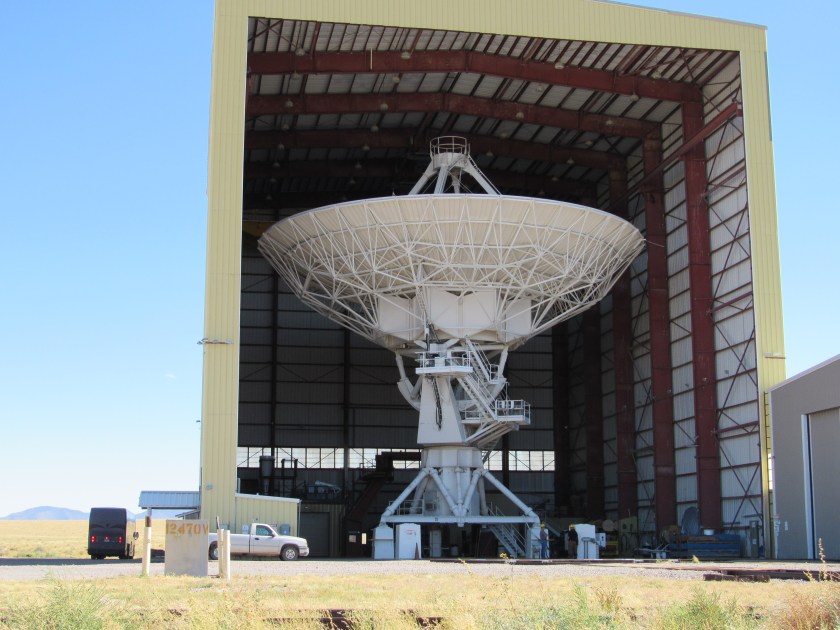
There is a 28th scope which can serve as a replacement if one of the other scopes suffers technical problems. It is stored in a maintenance facility they call “the Barn”. All of the scopes are systematically moved to the Barn for routine maintenance and equipment upgrades.
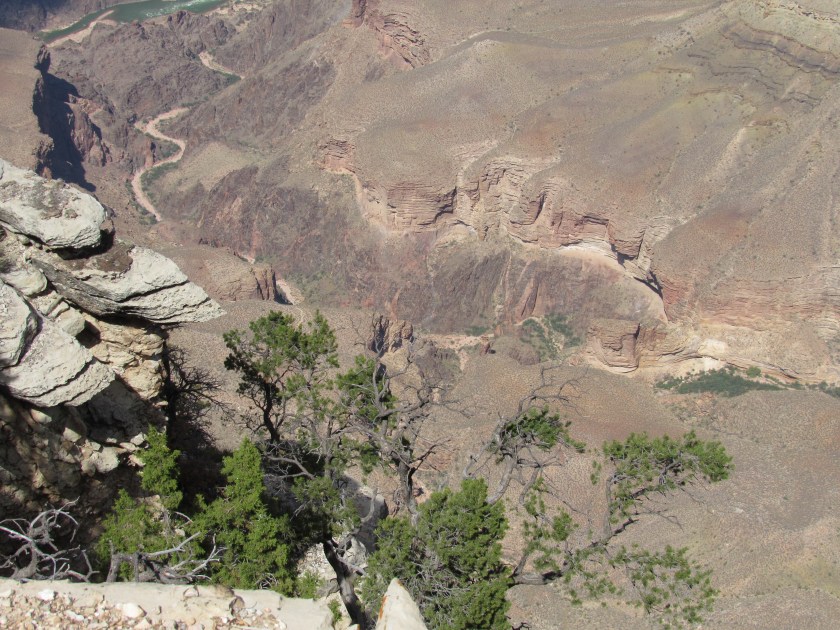
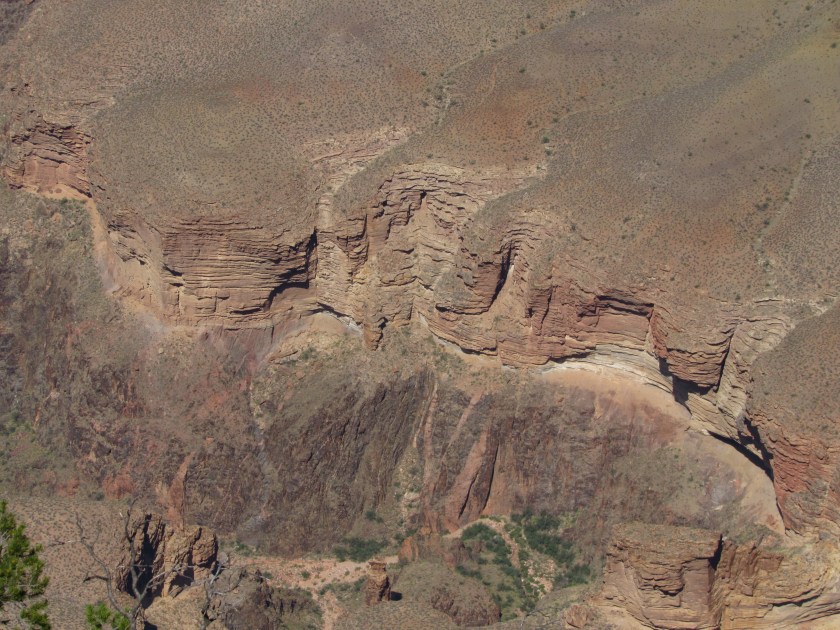
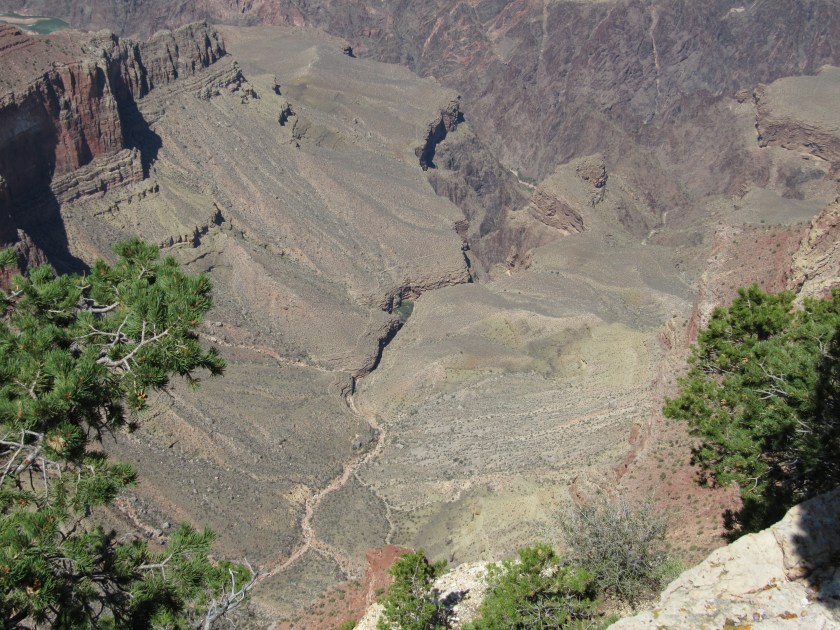
These were all taken on Day 1 from the South Rim using the digital camera.





 johnboystravelblog