Extreme Northwest Oregon

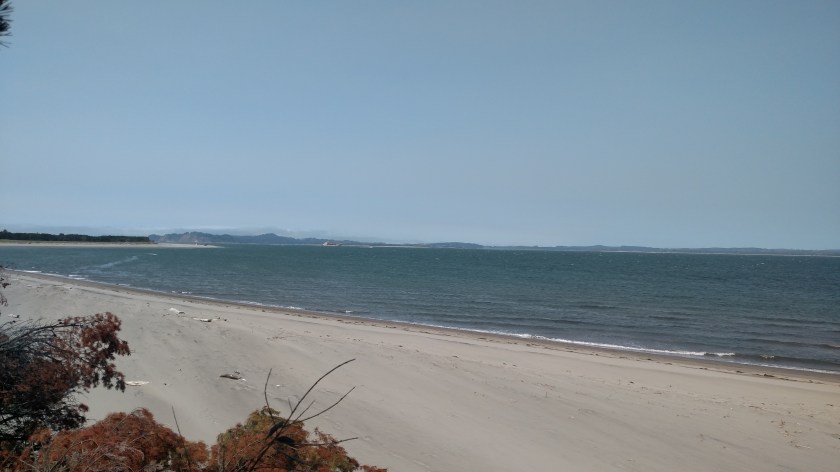
On Tuesday and Wednesday I visited various parts of Fort Stevens State Park, which is as far north and west as one can travel in the state of Oregon.  There was a large wooden viewing platform at one of the parking areas which gave a great view of the ocean and of the “south jetty” which was constructed by the US Army Corp of Engineers to protect the “mouth” of the Columbia River as it dumps into the Pacific Ocean.

This is looking south:

IMG_20180807_154556322

And this is looking north, along the jetty:

IMG_20180807_154644959_HDR

Those were both taken at relatively low tide.

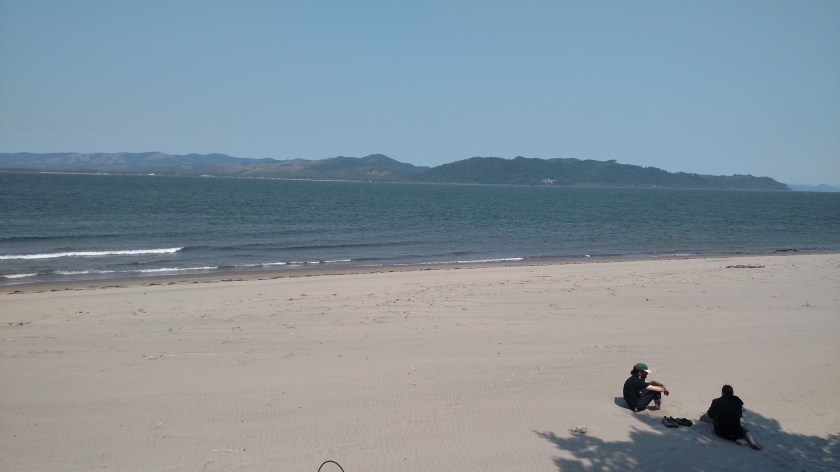
Next I went to another parking area, this time overlooking the first few miles of the Columbia River.  Washington state is on the other side of the river.

IMG_20180807_142737744

IMG_20180807_142718882

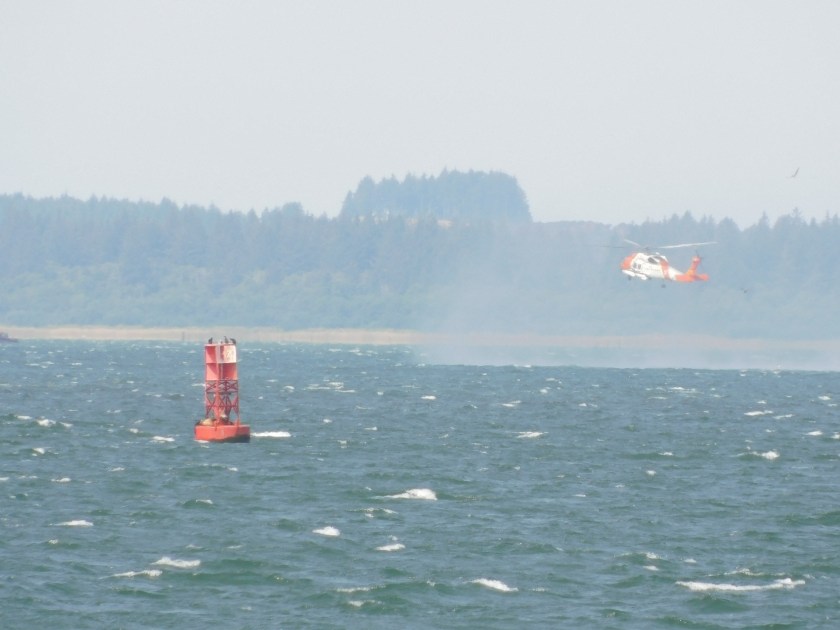
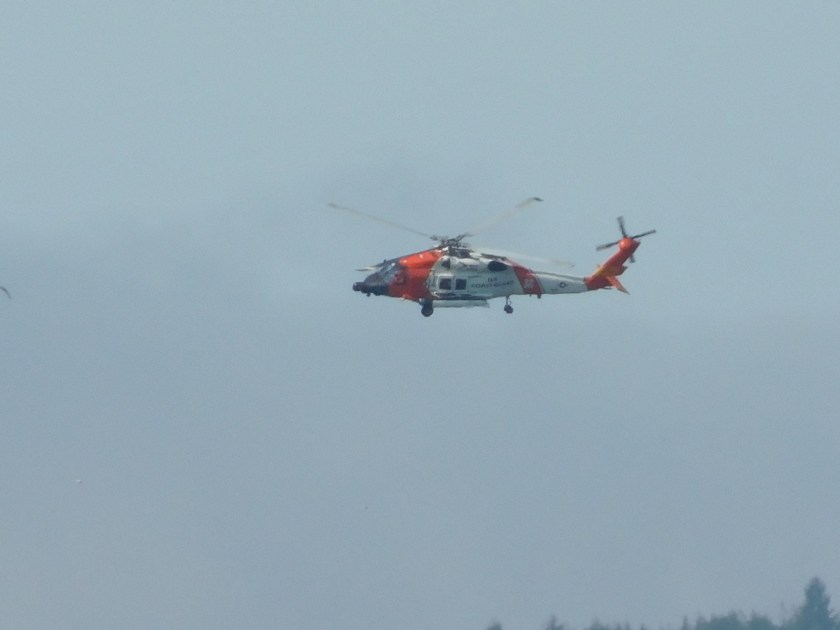
And lo and below, across the river was another US Coast Guard helicopter which appeared to be involved in a training exercise – hovering low over the water.  I didn’t see any divers being raised or lowered as I did further down the coast about a week and a half ago.  From when I first noticed it until it left the area probably close to 45 minutes had elapsed.

DSCN6624

DSCN6648

DSCN6662

At one point the helicopter raised up and made a slow counter-clockwise loop before resuming it’s hovering stance low over the water.

DSCN6677

DSCN6710

I presume this was a training exercise.  Pilots can train on flight simulators all day long but there is no substitute for practice under real-life conditions, especially given the effect that strong and sometimes variable winds near the water can have on an aircraft.

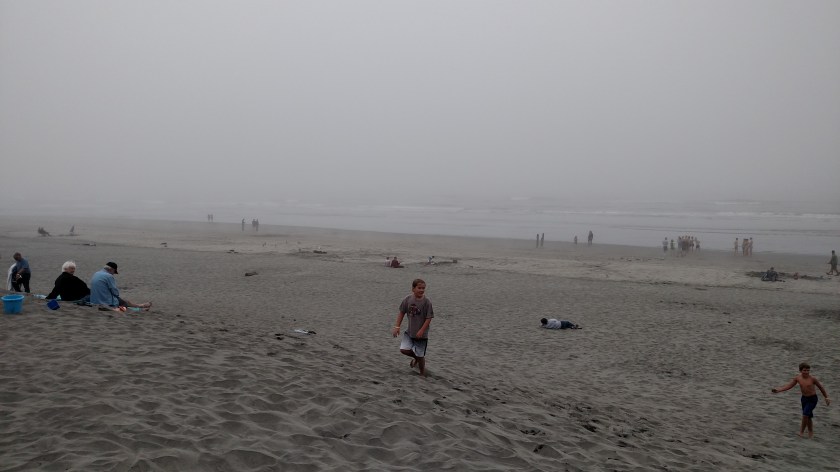
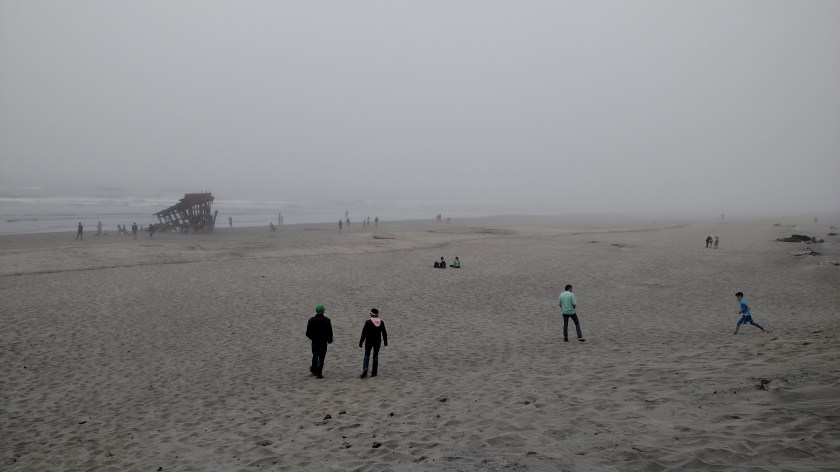
One last stop in Fort Stevens State Park, which I didn’t do until Wednesday because it had gotten so windy the day before, was to another parking area further south in the park, overlooking the ocean.  Unfortunately I wasn’t affected by wind but by fog:

IMG_20180808_123844076

IMG_20180808_123848567

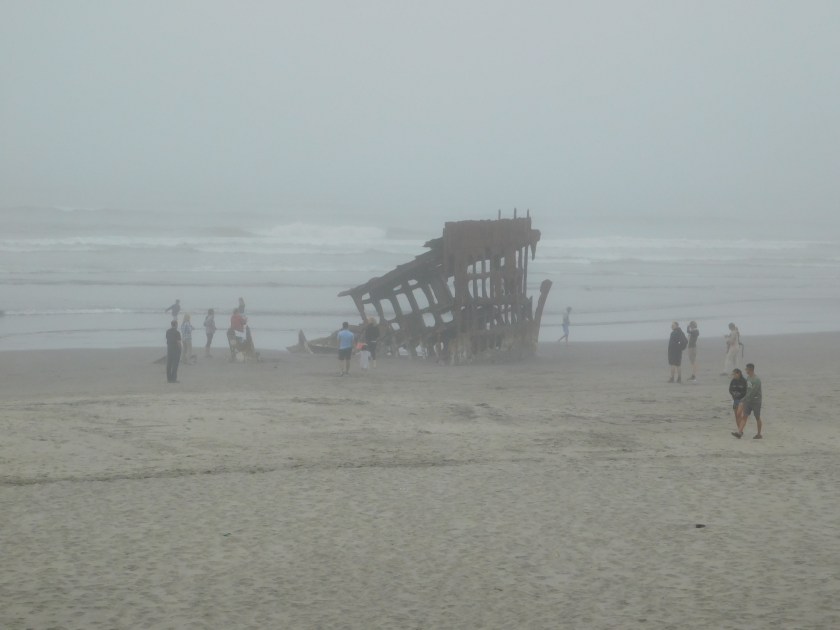
And the thing you see on the left hand side of the bottom photo is part of an old shipwreck.  The ship Peter Iredale ran aground here on October 25, 1906 while attempting to enter the Columbia River.  The ship remained largely intact and all the people on board were successfully removed from it but before it could be pulled back to sea it listed to one side and started to break up with the forces of the ocean acting upon it.

This is all that remains:

DSCN6712

DSCN6714

Columbia River Bar

No, this isn’t a place to hang out with friends after work.  This is an area where the Columbia River (which flows east to west and runs between Washington state to it’s north and Oregon to it’s south) dumps into the Pacific Ocean.

The area off the coast where the western flowing water of the river meets the eastern flowing water of the ocean can create treacherous and sometimes deadly conditions.  This area, about 3 miles wide and 6 miles long, is called the Columbia Bar.  I read this on a sign while I was in Astoria, Oregon on Thursday morning: “The Columbia River Bar is considered by professional mariners to be the most dangerous bar crossing on the planet”.  Since 1792 approximately 2,000 large ships have sunk in this area, often called the “Graveyard of the Pacific”.  I read that conditions along the bar can change from calm to life-threatening in a matter of minutes, depending on the wind and the size of the waves.

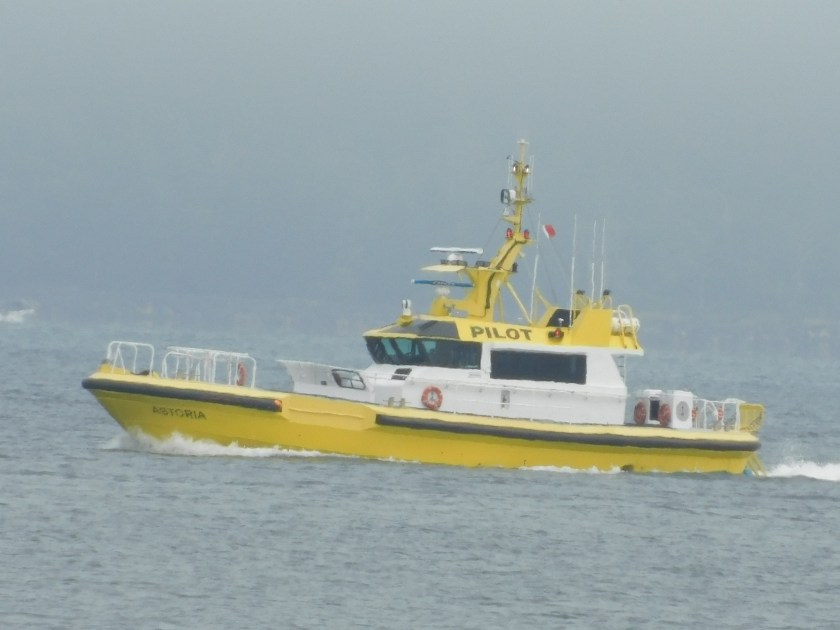
For this reason, professionals called “pilots” are made available to board large cargo and cruise ships which enter and leave the Columbia River and they assume navigational control of the ships.  All large vessels crossing the Columbia Bar are required to utilize a trained pilot.  In favorable conditions, these pilots will board the vessel via a small boat which is attached to another “escort” boat.  The escort will either take the pilot to incoming ships while at sea and accompany them in or will escort the large ships out to sea and then bring the pilots back to port.  In bad weather the pilots board the large ships via helicopter.  There are currently 16 trained “pilots” and they supposedly make close to $180,000 per year.

Here is a pilot boat, the Astoria,  I saw in action on Wednesday:

DSCN6722

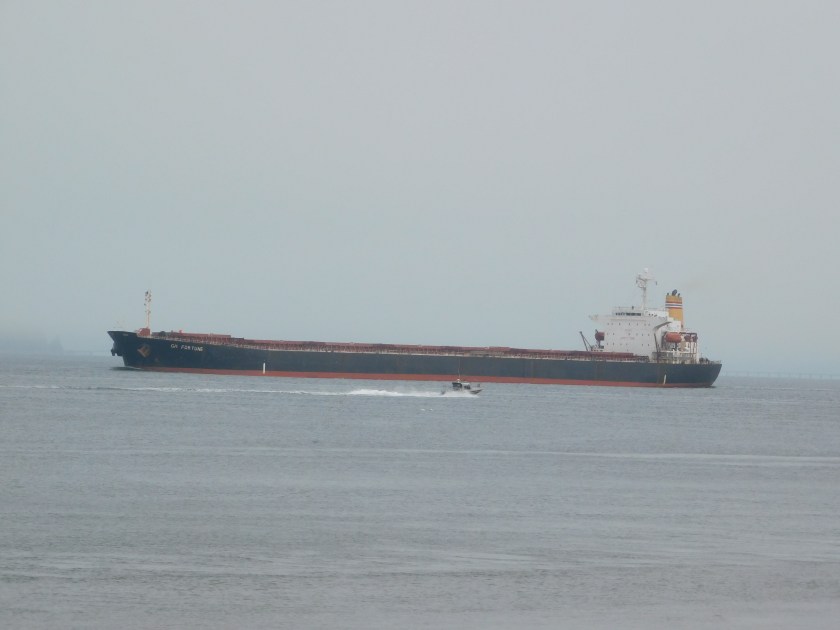
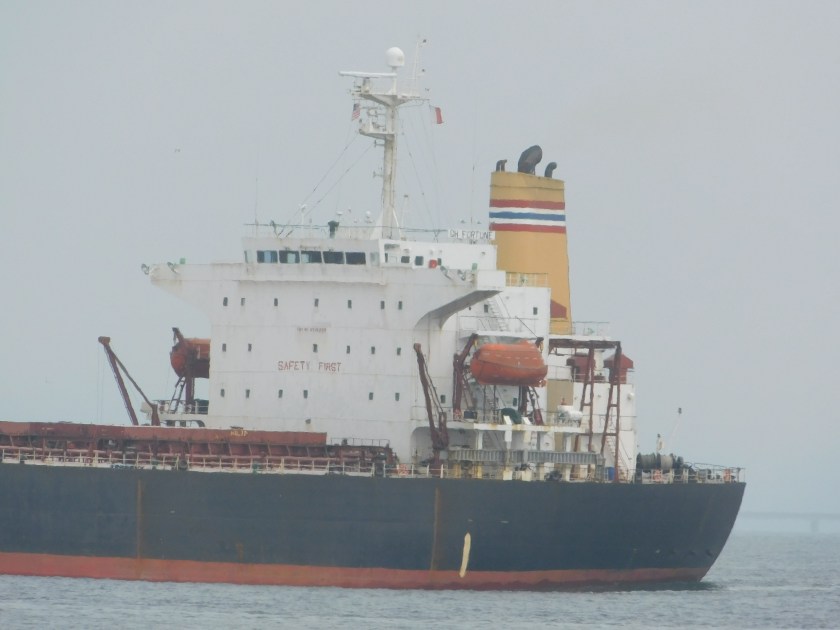
It appeared to be escorting this cargo ship, the GH Fortune, out to sea:

DSCN6730

DSCN6733

DSCN6750

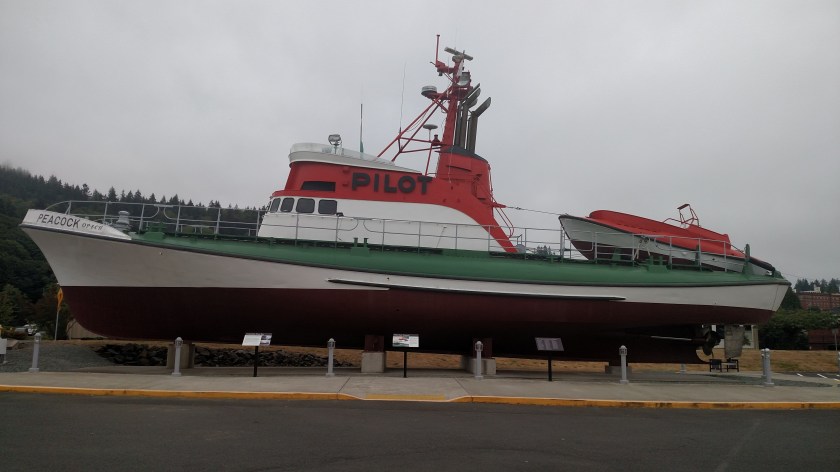
I saw another pilot boat while I was in Astoria, this one on land.  This is the Peacock:

IMG_20180809_103252151

The Peacock was first used in 1967 and over the next 33 years helped pilots board and escort over 120,000 ships.

Columbia River Maritime Museum

Thursday as I traveled from near Seaside, Oregon to Portland (which is inland quite a ways and southeast) I first headed northeast to the town of Astoria, which is along the mighty Columbia River.  I had seen parts of the Columbia River Gorge east of here during my trip last year (search for “Columbia River” on the Home page or use the calendar grid there to look at posts dated 7/30/17 and 8/9/17) but this was my first time seeing the extreme western part of the river.

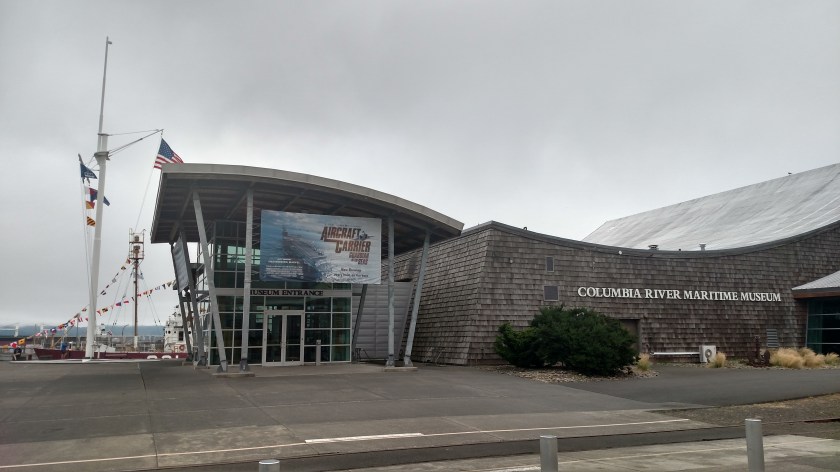
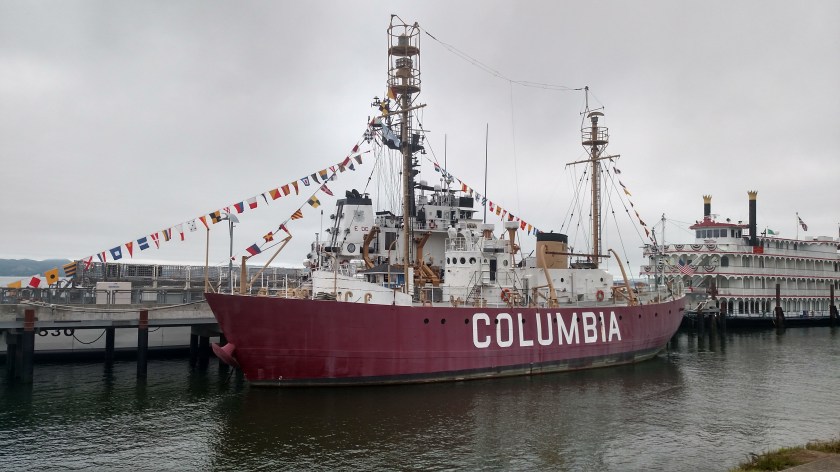
One of the things I stopped at in Astoria was the Maritime Museum.  I didn’t go inside but will probably do that when I pass through Astoria again on Monday on my way up to Washington state.  Here are some photos I took outside the museum:

IMG_20180809_101710843_HDR

IMG_20180809_101847879_HDR

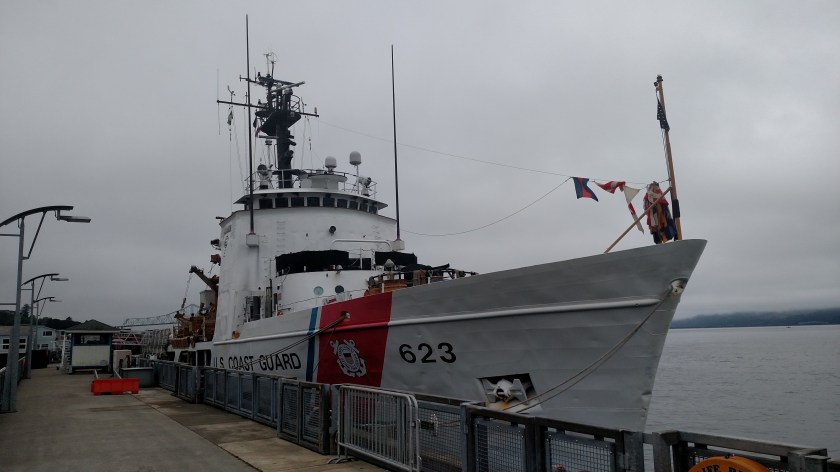
There were two large Coast Guard ships docked in Astoria, the “Steadfast”…

IMG_20180809_102024513

… and the “Alert”

IMG_20180809_102307989

Because of the length of the dock I could only get to the front of one and the back of the other.

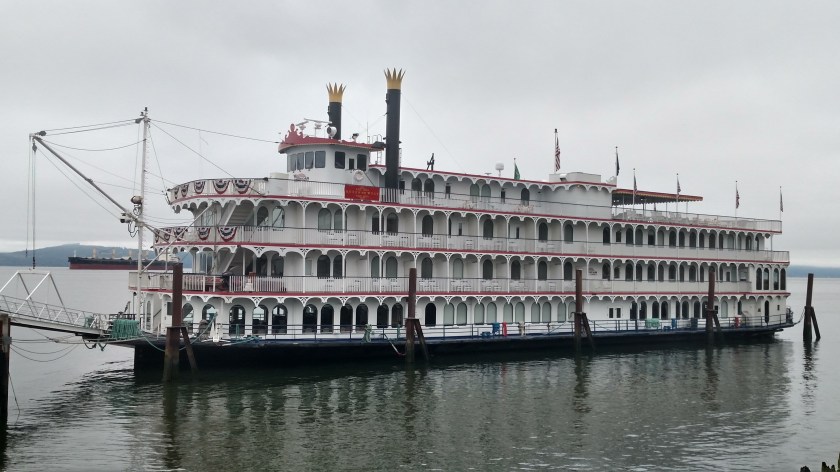
There was also this huge paddleboat, patiently waiting for customers to board for a trip on the river:

IMG_20180809_102559604_HDR

And from the museum I could look west and see part of the Astoria-Megler Bridge, which I will cross on Monday as Highway 101 takes me north into Washington state.

Portland International Raceway

This was a pleasant surprise when I arrived in northern Portland on Thursday morning.  When I was at the Staples store where I had reserved my new laptop computer I saw this facility sitting just to the west of Interstate 5.  I later saw a guy who was working at the track as a volunteer official for a series of SCCA races being held there this weekend!

SCCA is the Sports Car Club of America (whose former president was a guy named Jeff Dahnert – maybe not a direct relative but certainly an indirect one, as there aren’t that many of us in the United States).  Many years ago I worked for a friend of mine when I lived in Pennsylvania and we went to all the SCCA races in the Northeast Region (he raced an open cockpit Porsche speedster), and later to the “Runoffs” which are races for the leaders of their respective regions around the country to compete against each other.  I spent over a year doing that (no direct pay but I had many meals at his house and he paid my room and board when we were on the road at distant races) and we went to events exactly like the one currently being held here in Portland this weekend.  I will post more about that some other day.

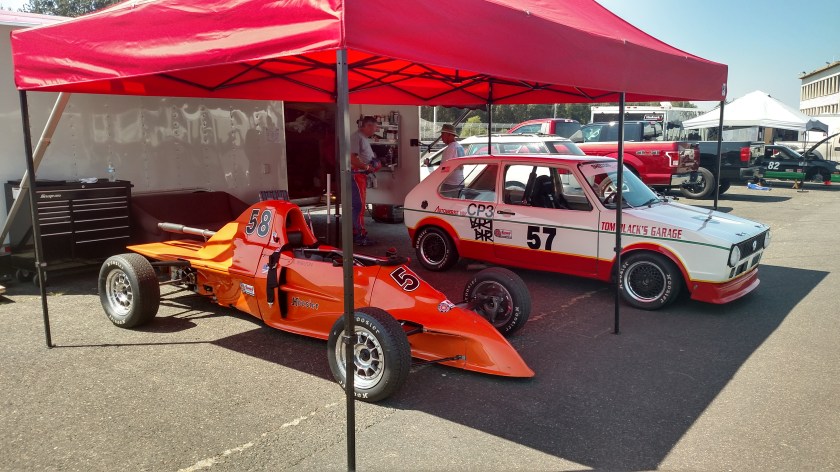
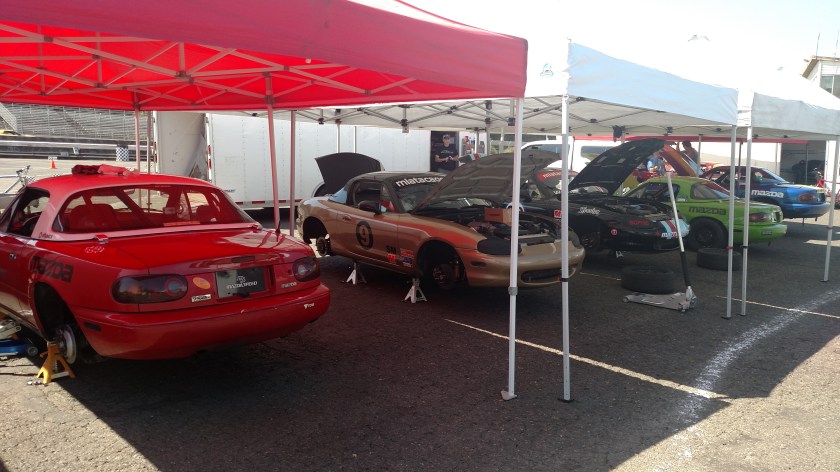
Friday I went to the track and after signing a waiver, roamed around the paddock area looking at the various race cars and the work being done on them.   PIR is a relatively small (in the grand scheme of things) road course.

IMG_20180810_115056080i

IMG_20180810_122231067_HDR

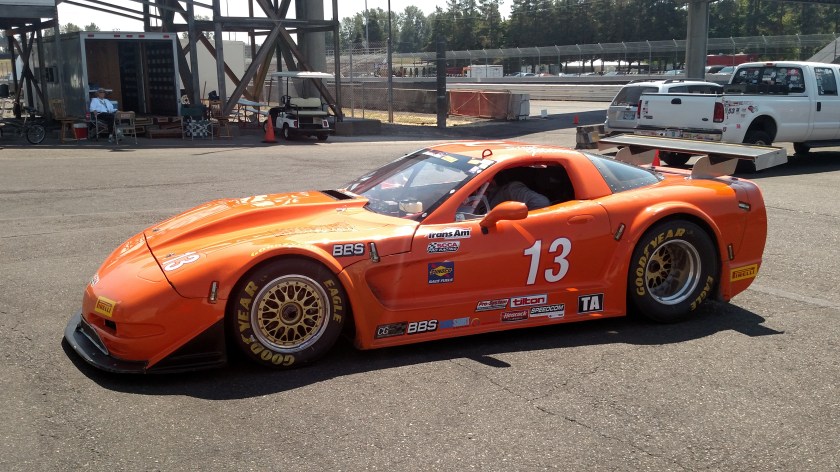
As you will see, all kinds of cars will be competing, some were specifically designed for competition and some are street-legal and can be actually driven to (and hopefully from) the track.  Accidents do happen and there are safety personnel and ambulances scattered at strategic locations around the course.
IMG_20180810_122405494

IMG_20180810_124244529_HDR

Here is the Pace Car, positioned at pit-exit on the main straightaway.  It is always ready to go on the track, if necessary, to slow the cars in the unlikely event of a major accident, and is generally used just to control the field at the start of each race.  SCCA races are usually only 20-30 minutes long and there are multiple “classes” of cars on the track at the same time.

IMG_20180810_123028691

The letters and small numbers on the cars indicate which class they are competing in at this event (for example SRF3 on the red and white car two photos above).  There are usually 7 or 8 actual races (1 for each group) as well as practice sessions for each race group scattered throughout the day, and there are usually races and practice sessions on both Saturday and Sunday.   Friday is usually just to get track time and for the drivers to get oriented on each track’s setup.  Every track they go to is slightly different.
IMG_20180810_124526969

Some people race multiple cars (one at a time, of course!).  This driver has both a modern Nissan, on the left, and a rather old Datsun (which Nissan’s were called many years ago).  IMG_20180810_124425204

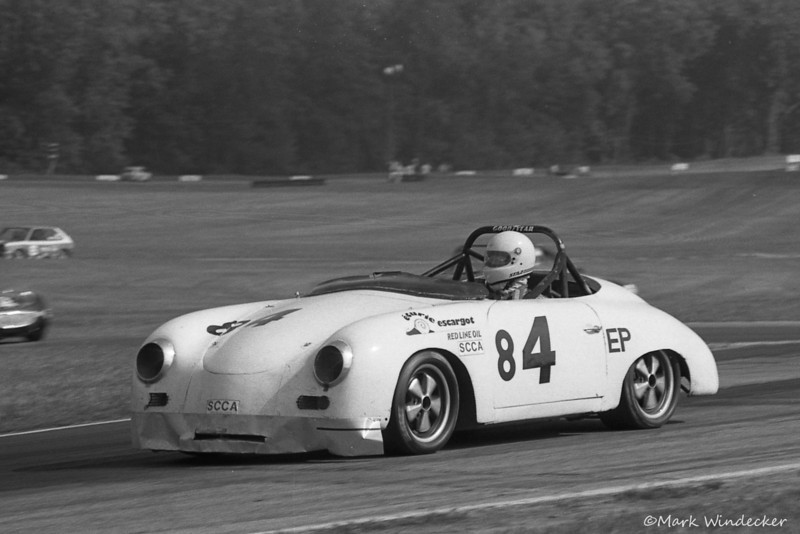
My friend in Pennsylvania (a radiologist who lived just down the road from my boss, who is the one who introduced us) raced a 1956 Porsche speedster.  I found this picture online:
Helmick Speedster

(Photo credit & copyright: Mark Windecker)

Our car number was usually 43, but for this race, held in 1987 at Mid-Ohio race course in Mansfield, Ohio, there was evidently a number 43 already registered in EP (E Production, a class determined by engine size, to keep various makes competitive) so he had to remove the 3 and add an 8, making his number for this event 84.

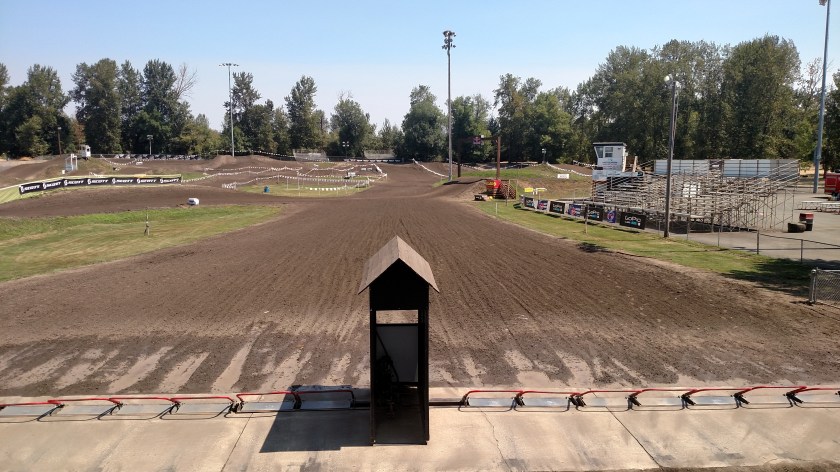
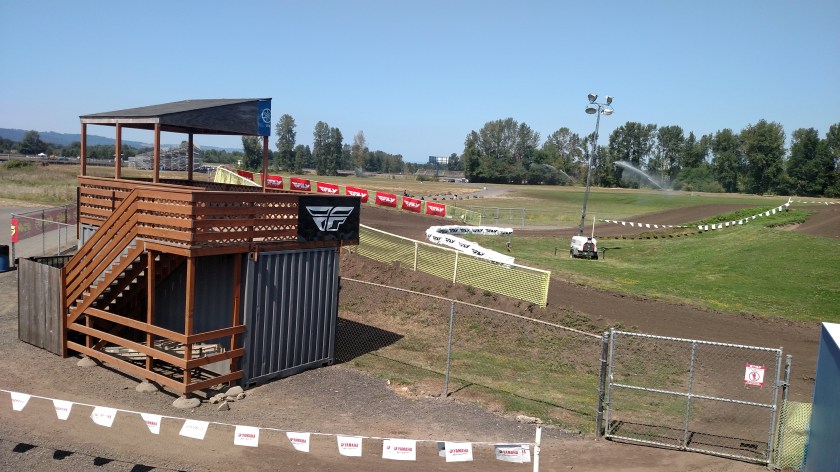
In addition to the road course at Portland International Raceway there is also a dragstrip for that type of racing and a dirt Motocross course for motorcycles.  This is a 3-shot, left to right panorama of it:
IMG_20180810_123305294

IMG_20180810_123312331

IMG_20180810_123335820

In the last shot you are looking at the “starter stand” and the motorcycles line up on both the left and right side behind the red bars (which are raised up off the ground facing where I was standing).  Those bars prevent anyone from getting a “jump start” and are lowered simultaneously when the starter waves the green flag.  Unlike other race tracks, the bikers leave from here but never return during the race.  Once they are on the track they will cross over this area from left to right (in the center of the photo), around a series of turns and up and down hills, until the checkered flag is waved at the designated Finish line.  The rest of the track isn’t nearly this wide.

As I was leaving PIR on Friday, and had walked over the pedestrian bridge above the track, this race group of “Formula” cars had just been released by the pace car and was coming up to speed going on to the main straightaway.

IMG_20180810_124708011

I am posting this at 845am local time Saturday morning and am getting ready to shower and head for the track!

Portland, Oregon (Saturday)

I tried posting something Thursday morning explaining my short absence (Dude, you’re gettin’ a Dell…) but it didn’t go live until Saturday night.  I ended up getting a new laptop Friday when I got to Portland and now have it up and running.  This is my first post using it (well, after getting the Draft from Thursday to go live a few minutes ago).

I am now in Portland for the remainder of the weekend and have the new computer at least to the point where I can use it for basic stuff, and have transferred my trip pictures to it.

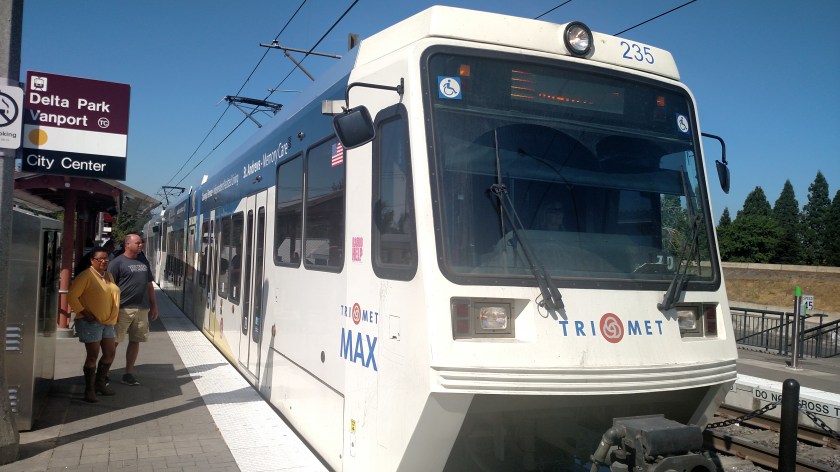
Thursday I drove to Portland, picked up my new computer and was invited to spend the night at the home of my sister-in-law’s brother and his wife who moved to Portland from New Jersey several years ago.  They were leaving Friday for Tucson to visit Susan’s parents so I am now in an Airbnb for the next three nights.  This afternoon I took the Portland light-rail train “MAX” from the northeast side of town where I’m staying to the southeast side of town to have dinner at the restaurant where my niece (who attends college in Portland) is working.  Traffic was crawling on Interstate 5 when I went south – Friday afternoon rush hour – and it was still crawling when I came back north, so I’m glad I took the train.

IMG_20180810_155057651

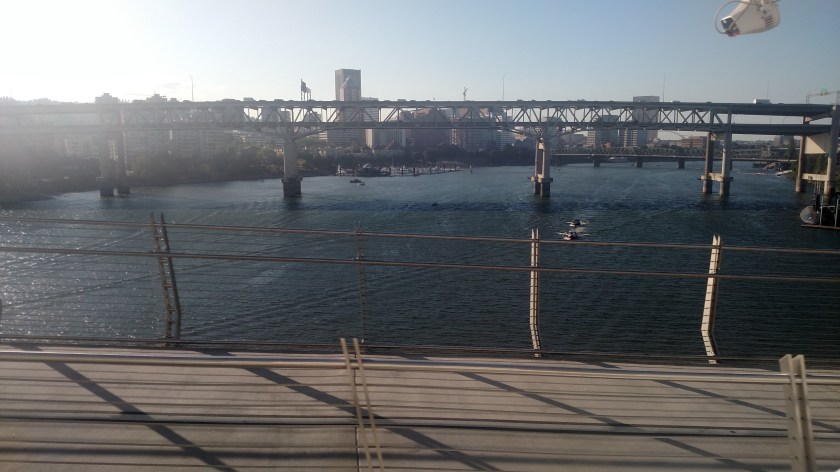
After her break was over and I had finished my meal I hopped on the northbound train to head back to where I’m staying.  This was the view as we crossed the Willamette River from east to west (downtown Portland is in the background)…

IMG_20180810_181736744

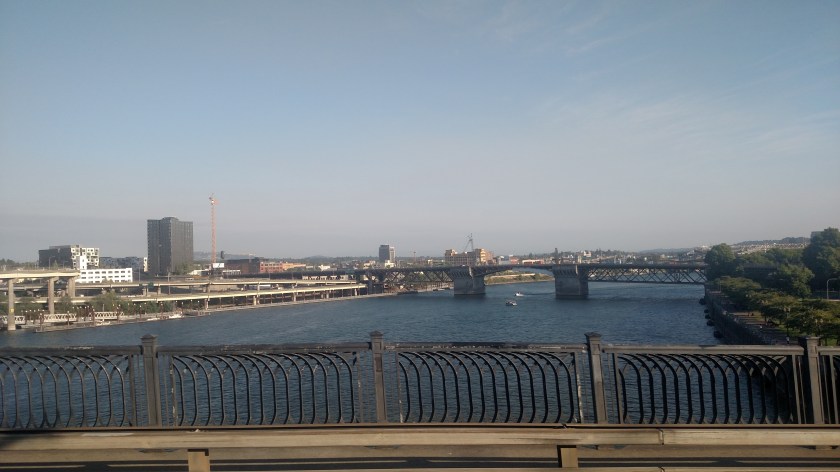
… and then as we crossed it again from west to east about 20 minutes later (after a few stops downtown):

IMG_20180810_183926456

On the far right of the middle photograph you can see the submarine I toured last year while I was visiting Portland (search for “USS Blueback” on the Home page or use the calendar there to go back to posts dated August 9, 2017).

Dude, you’re gettin’ a Dell…..

Actually, I’m getting another Hewlett Packard.  Yesterday, while I was reviewing pictures from the past few days and getting caught up on posting some things, my laptop, which has served me very well for many years, started showing early warning signs of failure.  I have already ordered a new Hewlett Packard laptop and will pick it up in Portland, Oregon when I arrive there later today (Thursday).  It may take me a day or two to get it set up and transfer files and photos from the old machine, which hopefully will continue working throughout that process.  I backup pictures regularly but have other things which I don’t backup that often so I want to get this done before I lose anything crucial.


This has nothing to do with my computer issues but is a lone photo I took on Monday as I returned to little Nehalem, Oregon where I was staying at the time.  This outfit has little “cars” which people can pedal on old, unused railroad tracks!

IMG_20180806_143122725

They are called “Rail Riders” and evidently groups of up to 10 of these vehicles are sent out together (3 groups per day) to pedal through several miles of scenic countryside.  I was talking to some people who were getting ready to go out but the organizers called them together for an orientation and safety meeting so I didn’t stick around to see them off on their journey.

Tillamook Creamery

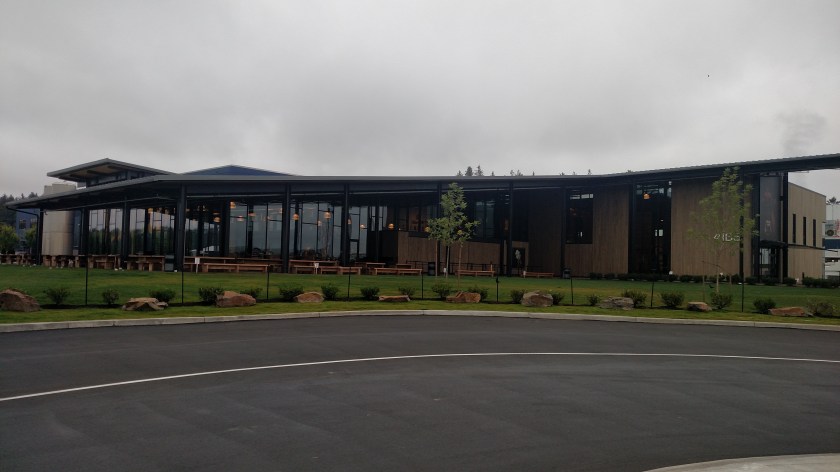
Monday I drove down to Tillamook to tour their factory.  I had driven by the place on Sunday (it’s right next to Highway 101) and it was PACKED.  I hoped that if I got there when they opened at 8am on a weekday it might not be so bad and I was right.  There were probably 20 visitors there when I arrived and that number was considerably higher when I left about an hour later.

IMG_20180806_091518891_HDR

IMG_20180806_081406855

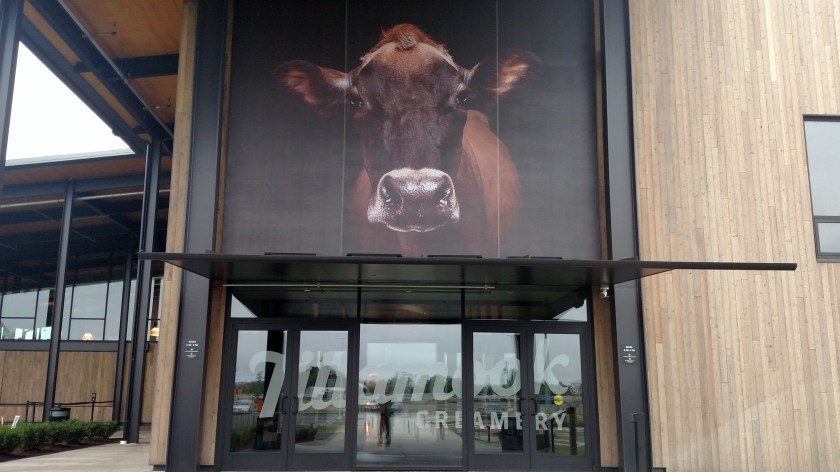
This is who greeted me at the front door:

IMG_20180806_081528007

IMG_20180806_081607754_HDR

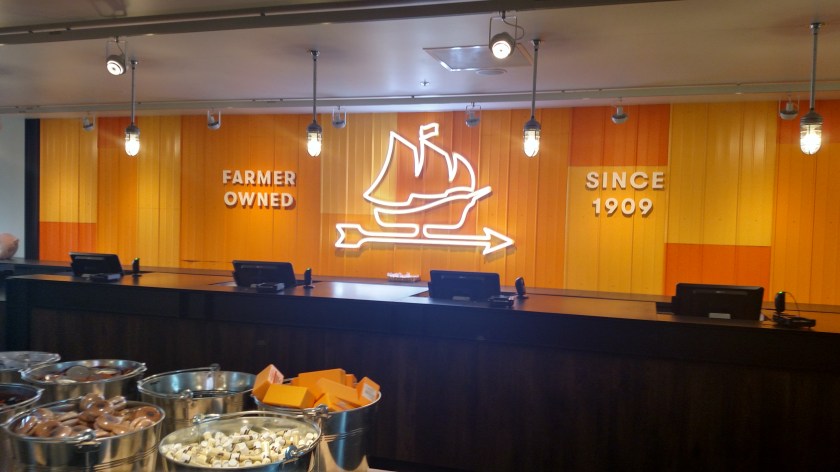
Inside the modern building is an area for buying and consuming food (an upscale cafeteria) and a huge counter to sample and buy many of their delicious ice cream products.  There is also a retail area where you may buy the same products of theirs that  you’d find in a grocery store (cheese, ice cream, yogurt, etc), and of course a gift shop with hats, t-shirts, etc.

After using the restroom I was directed to go upstairs for the self-guided tour.

IMG_20180806_082514184

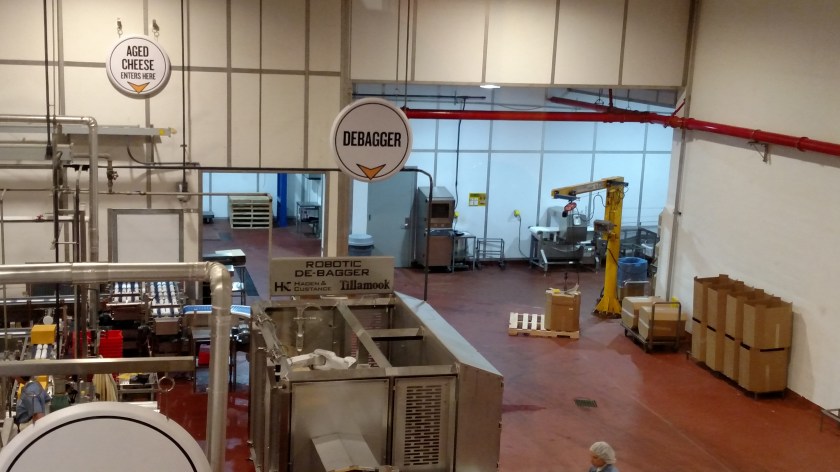
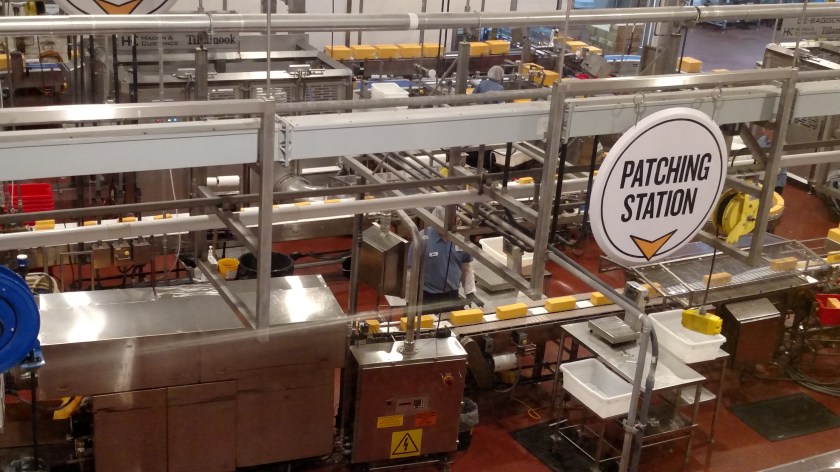
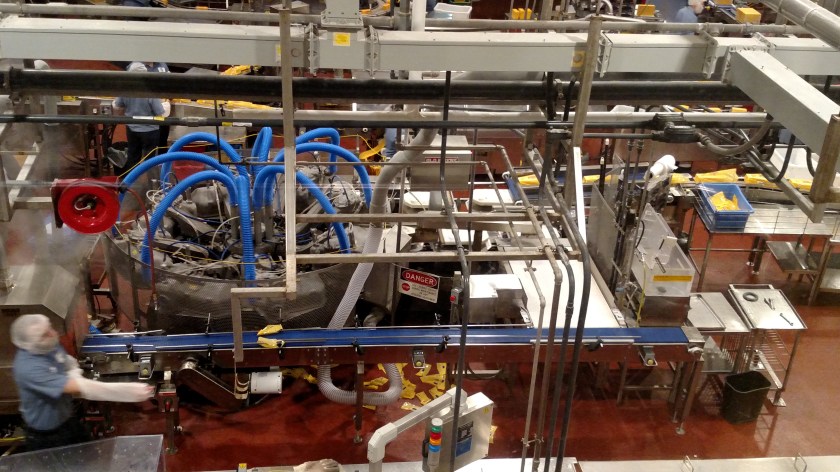
Once upstairs I could look down at most of the assembly-lines in various stages of cheese production.  On the left was the processing of incoming raw milk from local dairies to the shrink-wrapped, 40 pound blocks which are then put in a cooler to age.  There were lots of signs explaining each step and stating other facts and trivia about what they do and how they do it.

It takes 10 pounds of milk to make 1 pound of cheese.  They use only 4 ingredients to make their cheese.  It takes 2 hours to convert the incoming milk to useable curds & whey.  The curds become cheese and the whey, which was discarded years ago,  is now processed down to sweet whey powder which is used in baby formula, protein drinks and energy bars.  The 40 pound blocks are sent to a cooler to age – for various amounts of time depending on what the final product is.  They currently store 1.35 million pounds of cheese at a constant 40 degrees Fahrenheit.

IMG_20180806_082701062

On the right were windows looking down on a robot which opened the shrink-wrapped blocks which had been retrieved out of cold storage and converting them to the packages, in various shapes and sizes, which we buy in the store.

IMG_20180806_083328878

IMG_20180806_083237319

IMG_20180806_083222486

The “blue octopus” re-shrink-wraps the final products for boxing and shipping.

IMG_20180806_083109257

A very efficient and time-tested (over 100 years) process.  The building was originally built in 1949 and underwent a major upgrade in 1990.  They are constantly improving the technology.

Their logo is a ship, which is part of the company history.  Years ago it took too long to get the product out to market over land so they used a wooden ship to take it to Portland.  A replica of the “Morning Star” sit out front of the factory:

IMG_20180806_091816650_HDR

IMG_20180806_091855702_HDR

IMG_20180806_091947220_HDR

And of course, before I could leave I had to buy some of  their ice cream:

IMG_20180806_085956670

I chose Mountain Huckleberry (at 9am).  It was YUMMY!

After I visited other things in the area I drive by the factory again and it was once again, PACKED.  I was glad I was only staying a short distance away and had gotten there early.


Tillamook Road Trip!

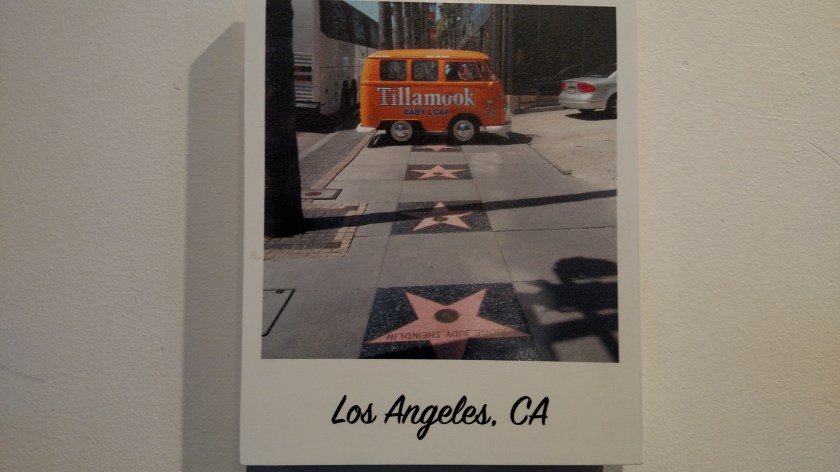
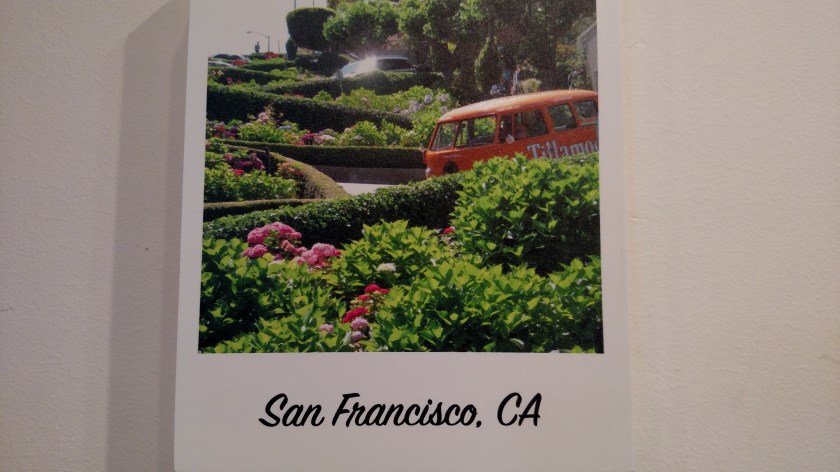
As evidence that Tillamook Creamery is a fun-loving company, they had this mockup of a classic VW bus in their lobby – for photos of the kids, of course.  There were pictures on the wall of some of the many stops their vehicles have made throughout the US promoting their products.  Here are some of my favorites:

IMG_20180806_081651336_HDR

IMG_20180806_081701472_HDR

IMG_20180806_081714578

IMG_20180806_081719604

IMG_20180806_081730472

IMG_20180806_081755551

IMG_20180806_081800670

IMG_20180806_081813128

IMG_20180806_081818464

Tillamook Air Museum

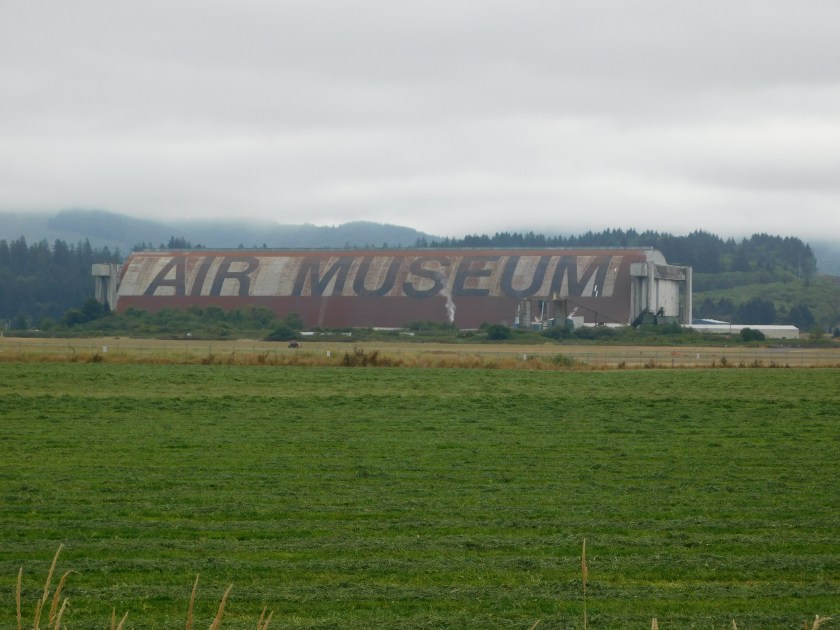
On Sunday when I drove from Yachats to my next stop in Nehalem, Oregon I drove through the town of Tillamook, which I knew was the home of Tillamook Cheese (and Ice Cream!).  I didn’t know this museum was here until I saw this, sitting quite a ways off to the right as I drove up Highway 101:

DSCN6517

Kind of hard to miss….

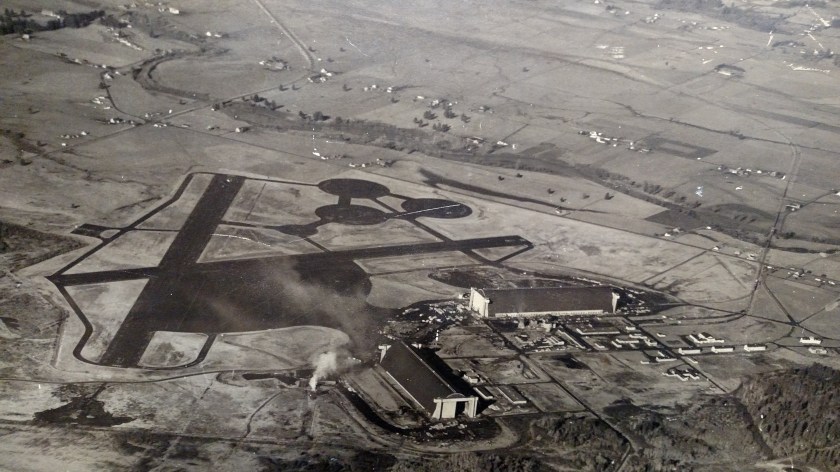
Turns out this was one of 10 blimp bases built by the US Navy in 1942 to house blimps used to detect enemy aircraft and submarines.  There were 3 such bases on the west coast and 7 on the east coast and along the Gulf of Mexico.  There were a total of 17 hangars (combined) at all those locations and today, only 7 remain.  You are looking at “Hangar B” at the former US Naval Base – Tillamook.  There was an identical “Hangar A” until it burned in August of 1992.

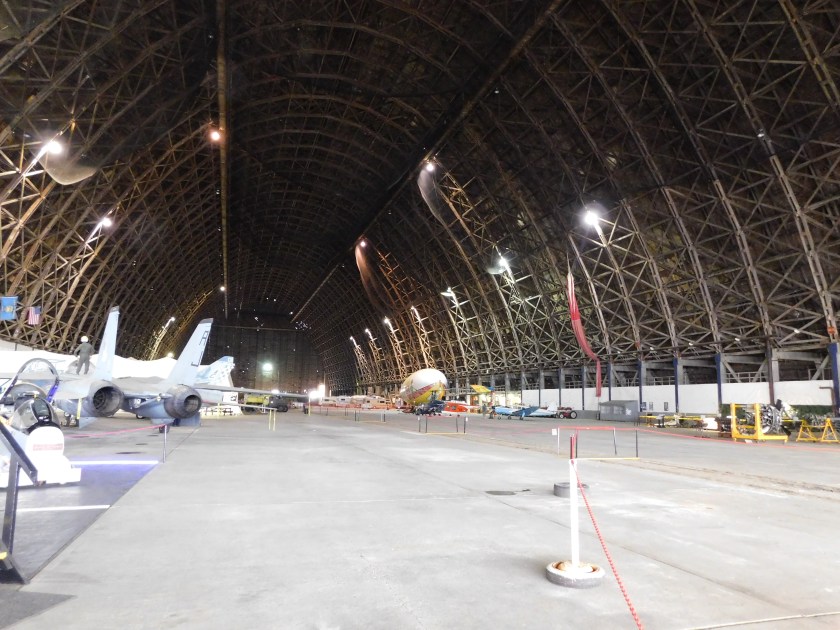
This hangar is huge:  1,072 feet long, 296 feet wide and 192 feet tall at it’s highest point.  And it is made of wood!  To this day, it is the largest free-span wooden structure in the world.

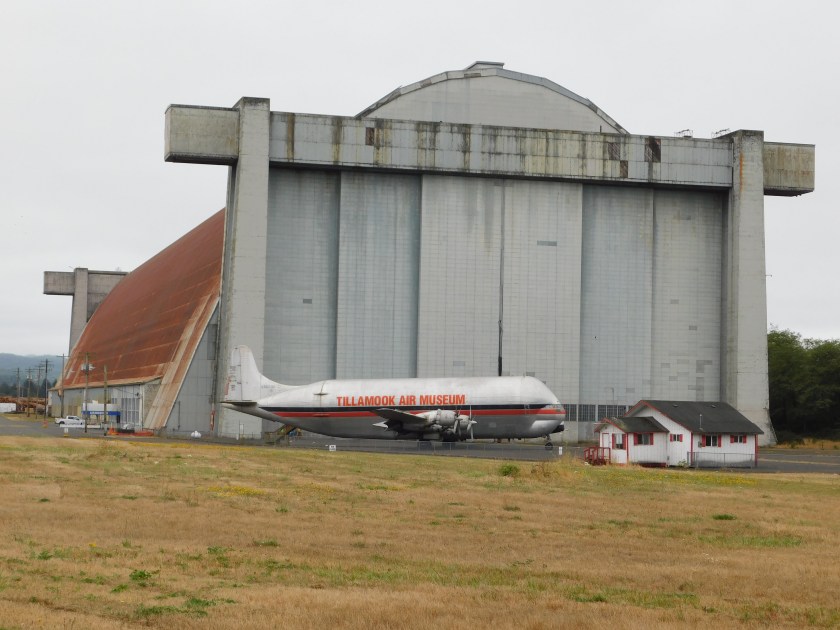
Here are some more photos from outside:

DSCN6499

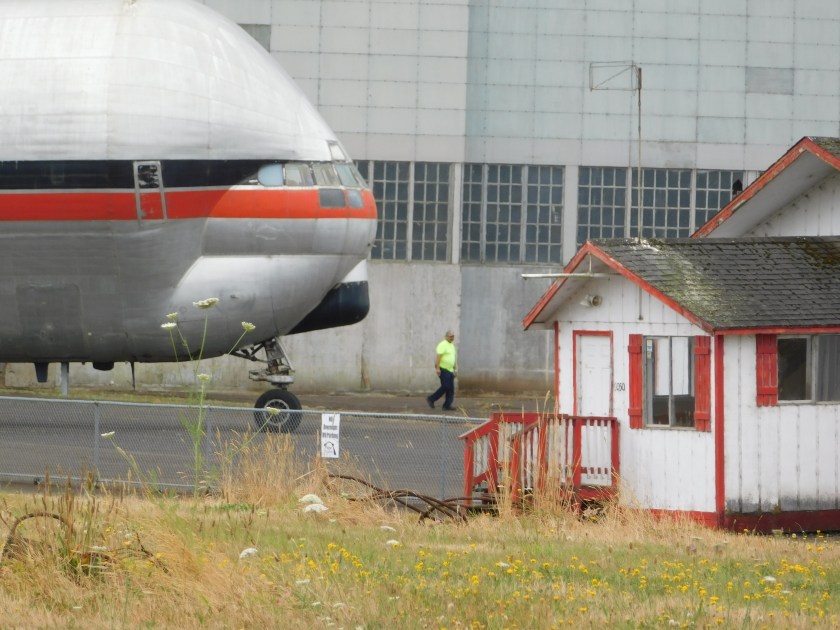
To give some perspective to the photo above, here is a man walking between the airplane and the little white house on the right:

DSCN6503

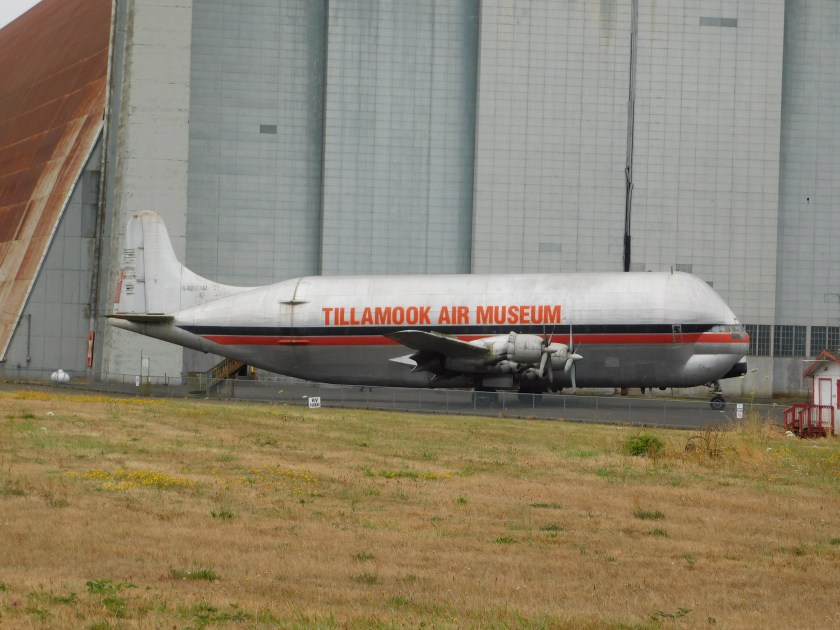
And the aircraft you see is an Aero Spacelines Mini Guppy:

DSCN6500

Here is what the buildings looked like from the air, “back in the day”:

IMG_20180806_102323242

Now let’s pay our money and go inside:

DSCN6510

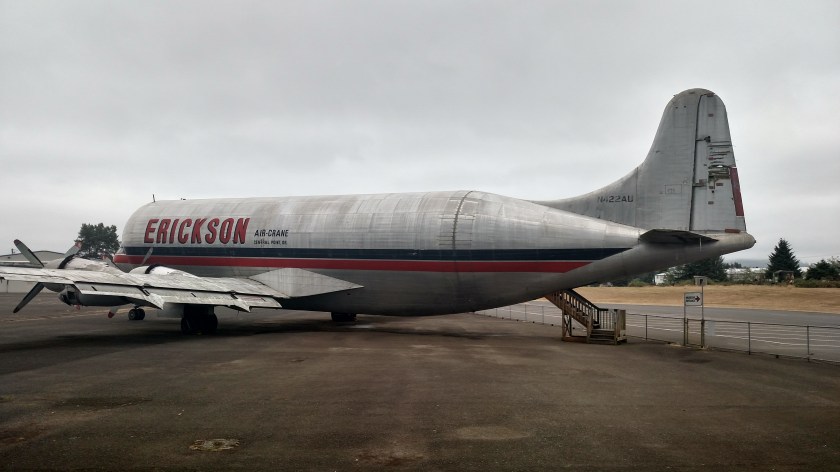
There were several large aircraft inside, military jets, prop planes and ordinary single-engine planes.  There used to be a lot more aircraft here until Mr. Erickson decided to move much of his collection to another location (the big plane with his name on it has 4 flat tires so it is still here…).

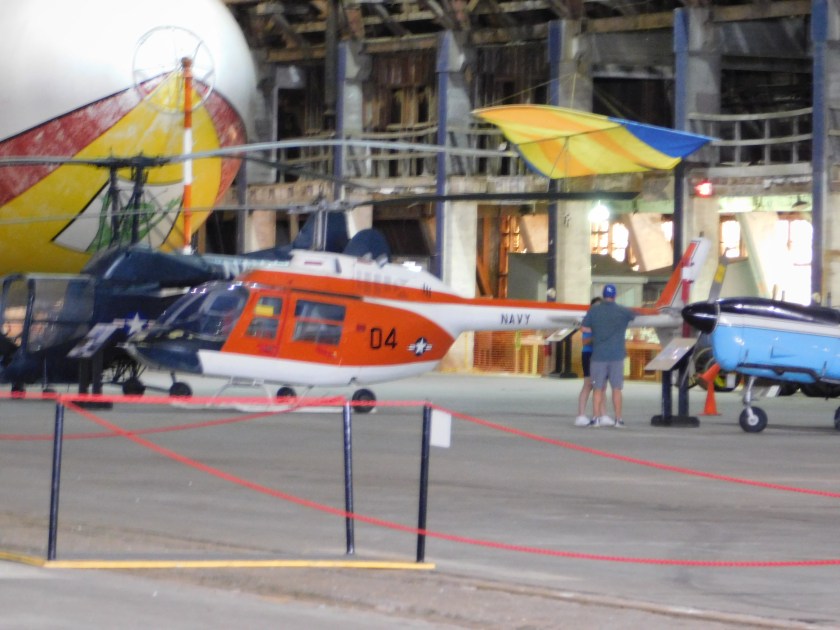
To give you some idea of size, look for the red and white helicopter a little below and to the right of the center of the photo above.  Here’s what you’re looking for:

DSCN6511

That is probably the most identifiable thing that most people can relate to.  It is a Bell TH-57C SeaRanger but is virtually identical to the classic Bell 206 JetRanger that State Police departments all over the country use, as well as many TV news and “scenic flights for tourists” outfits.  That should give you some idea how big this building is.  Let’s look at another example.

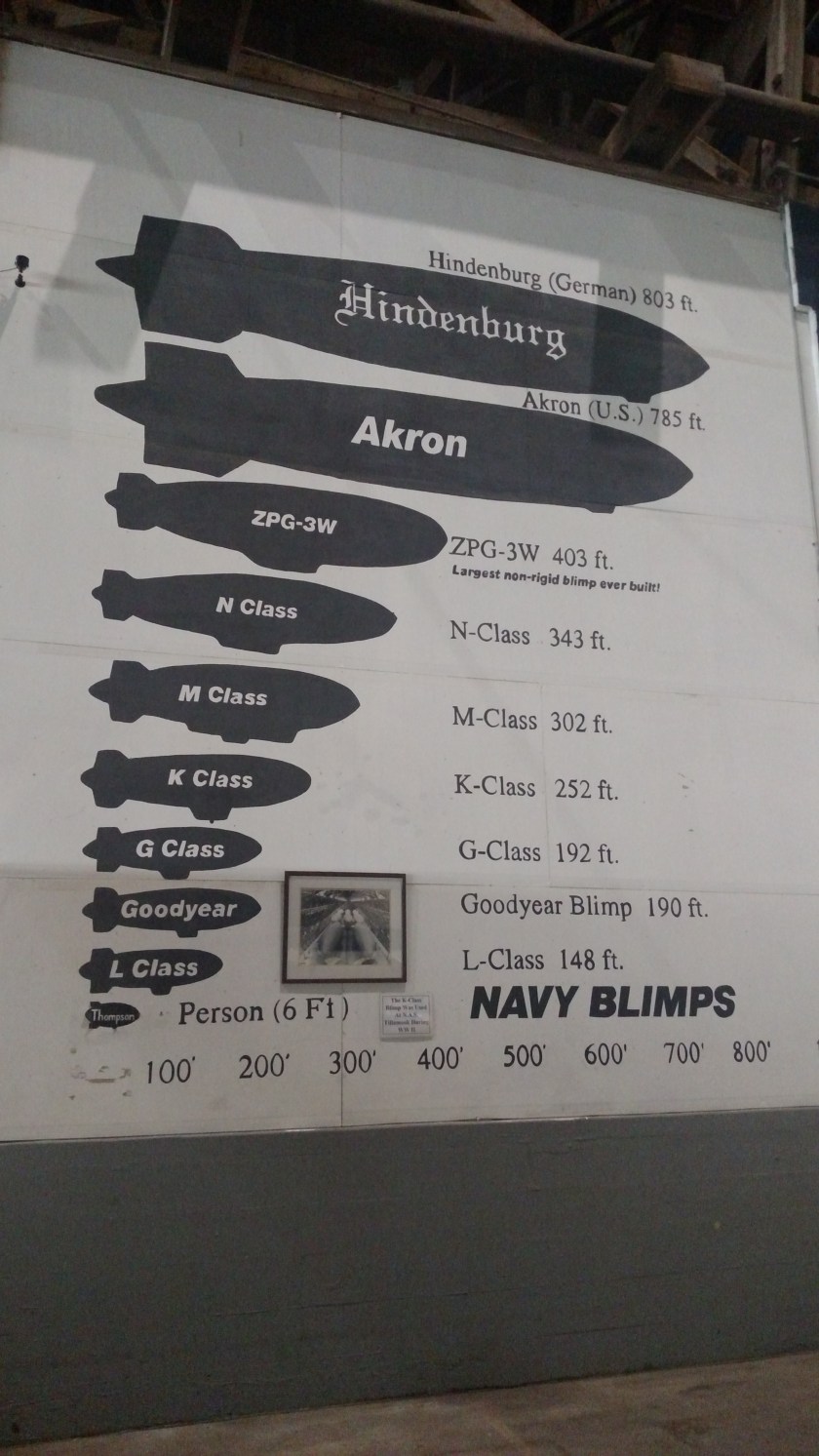
Here is a poster showing the sizes of various blimps:

IMG_20180806_103615073

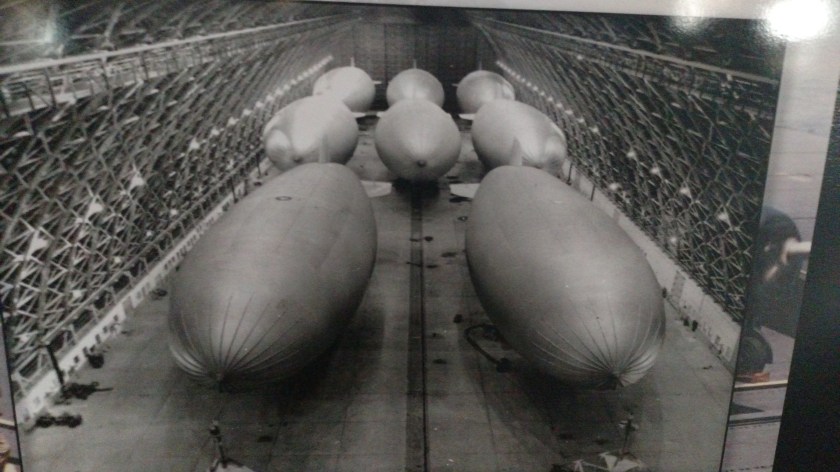
The two most famous are the ill-fated Hindenburg (at the top), and the Goodyear blimp (near the bottom), seen by many people at sporting events around the country.  This Naval station housed K-Class blimps, about 1/4 larger than the (old) Goodyear blimp, and 8 of them could fit inside each of the two buildings here (nine if they had been a little smarter on placement!):

IMG_20180806_105614704

After looking around the inside of the hangar I went outside and took a look at the “Mini Guppy”:

IMG_20180806_103123022_HDR

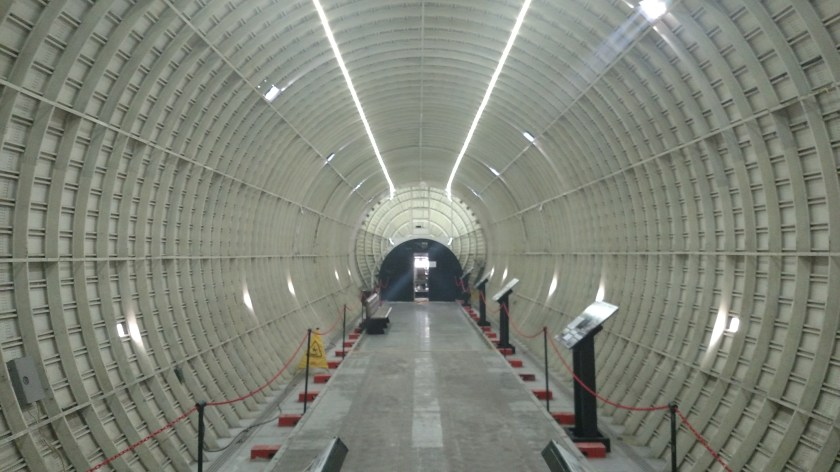
If the name “Erickson” on the side looks familiar, you may have seen it on the TV news coverage of the various wildfires burning around the country lately.  Erickson is a huge sub-contractor of aircraft for construction (huge Sky-Cranes) and fire-fighting (both helicopters and fixed-wing aircraft) to both the National Park and US Forest Service.  Here is what the inside of this plane looks like:

IMG_20180806_103236700

Cape Meares Lighthouse

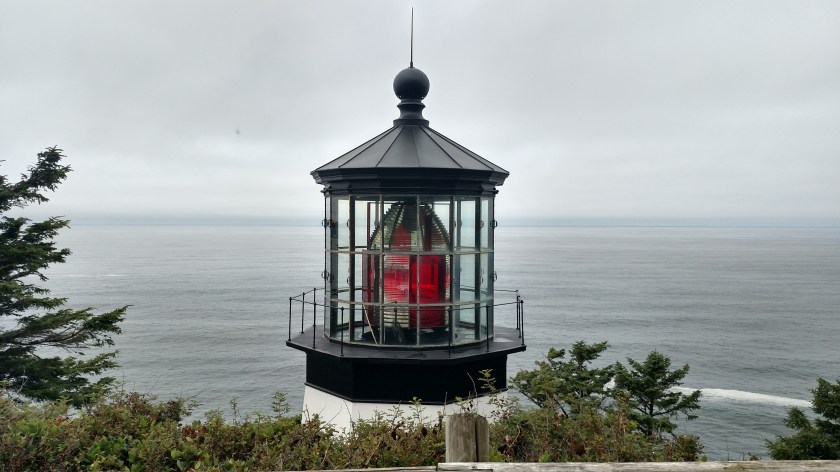
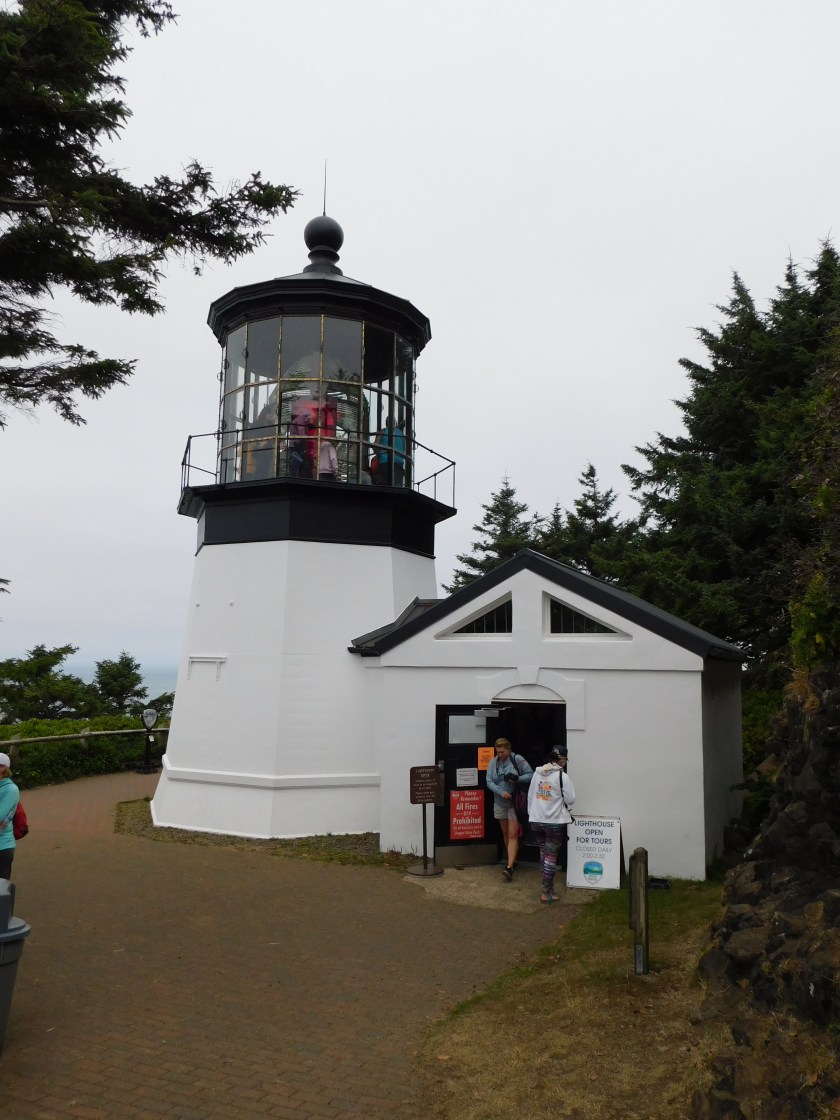
This was all I could see of the Cape Meares lighthouse as I walked the long hill from the parking area:

IMG_20180806_123629199_HDR

And as I learned when I walked down two more shallow ramps, there wasn’t much more to see!

DSCN6525

This is the shortest lighthouse on the Oregon coast, at only 38 feet tall.  It sits 217 above the ocean a little northwest of Tillamook, Oregon.  It was first illuminated  in 1890 and was taken out of service in 1963.  As you may be able to tell from the first picture it also had a red and white lens, similar to the one at Umpqua River.

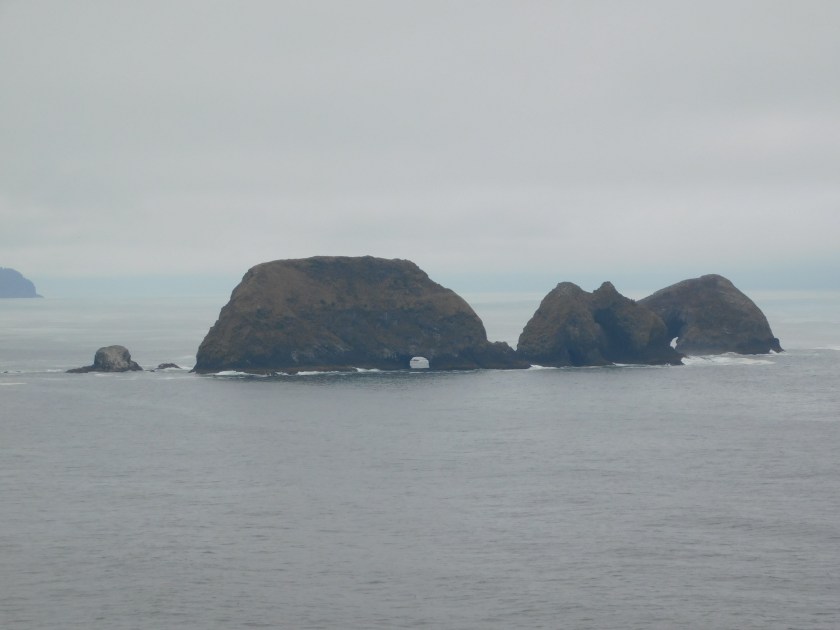
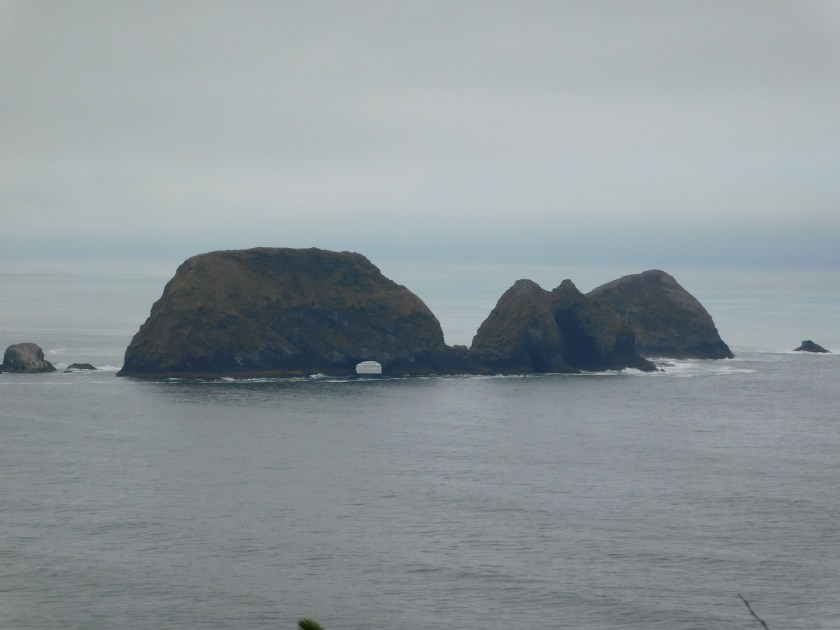
As I walked back up the long hill to my car I saw these large rocks off the coast to the south:

DSCN6537

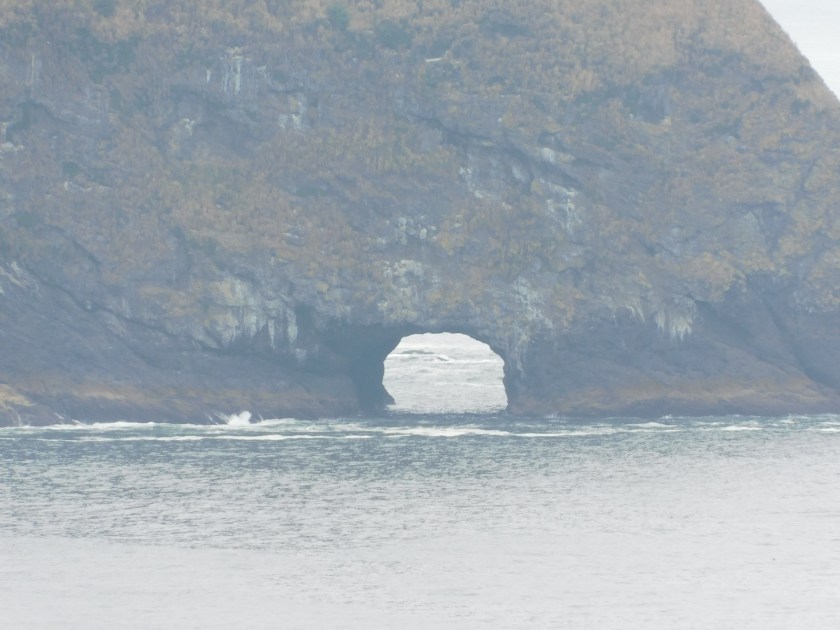
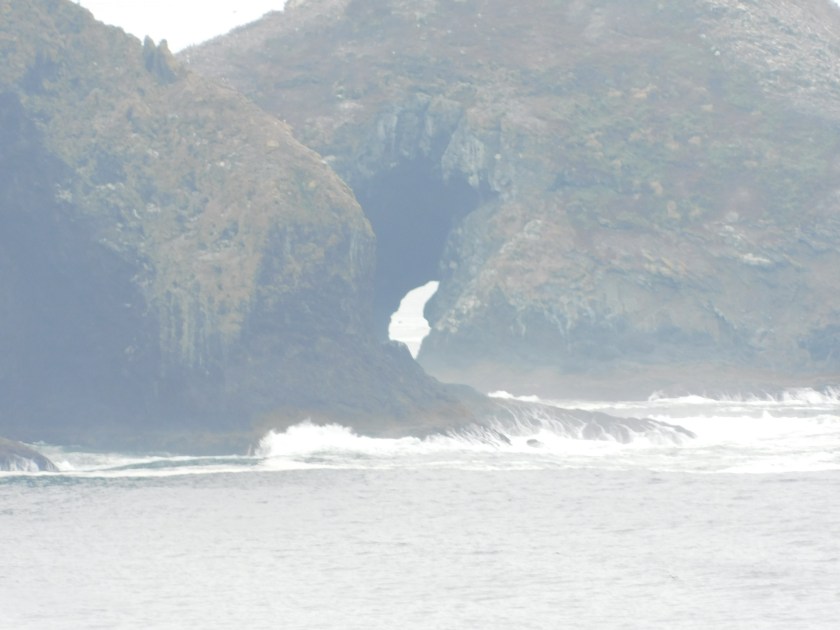
From the first angle I could see two holes under the rocks, one in the largest and one partly visible in the one furthest to the right.

DSCN6539

DSCN6540

By the time I got up to the car the angle had changed slightly so I could only see the hole in the largest rock.

DSCN6547