Tillamook Rock Lighthouse

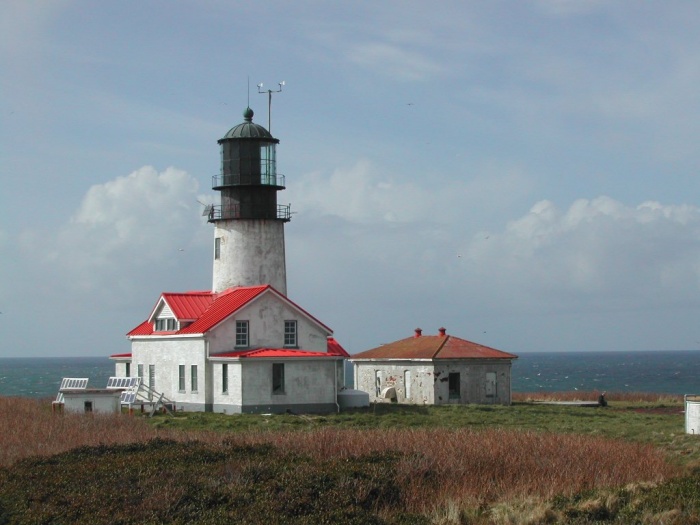
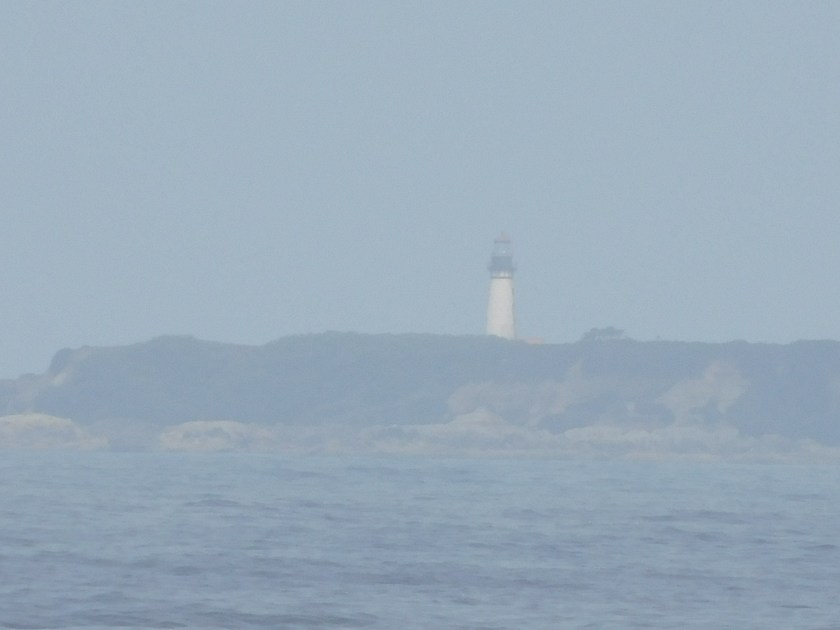
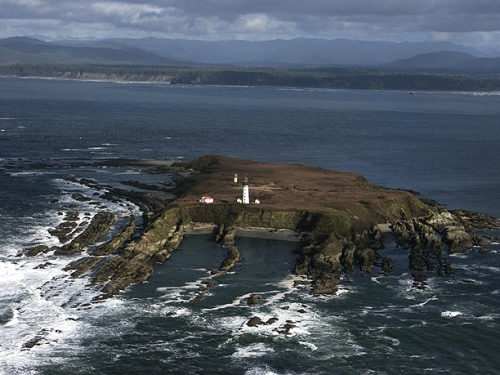
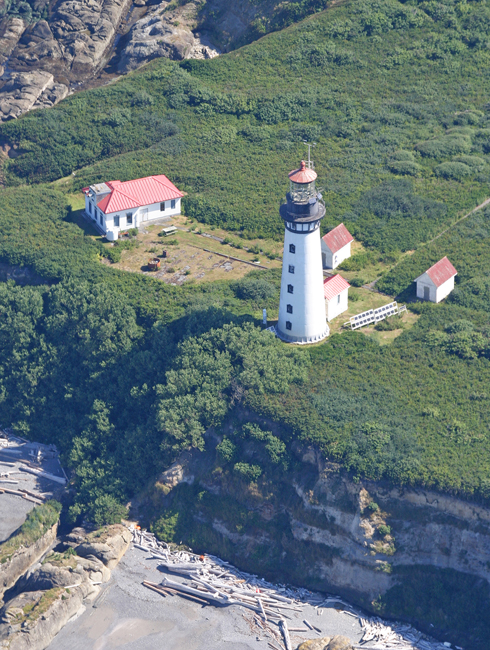
This lighthouse, nicknamed “Terrible Tillie,” is located 1.2 miles off the Oregon Coast, about halfway between Cannon Beach and Seaside.  Because of the harsh conditions at sea and the small size of basalt rock it sits on it took over 500 days to build.  It is 62 feet tall and sits 133 feet above sea level on less than an acre of basalt rock.  It is now only accessible by helicopter.

This was taken from several miles down the coast (making it even further away):
DSCN6550

This was taken from Cannon Beach, a little closer.

DSCN6558

And these were taken from Ecola State Park, a little further north than Cannon Beach, the closest I could get.

DSCN6576

DSCN6579

Less than a month before it would be put into service a ship got too close and crashed, killing all 16 crew members on board.  The light was finally lit on January 21, 1881.  It was knocked out of service by a storm in 1934 with winds of over 100 miles per hour and repairs took over a year to make.  It was taken permanently out of service in 1957 and now has private owners.  For a few years after being converted to private ownership it was a columbarium (a place to store cremated human remains) but the license was revoked in 1999 and has never been renewed.

Here are some other photos of the lighthouse I found online:

Tillamook-Rock-1200x800 dronestragram

(Photo credit: kem5882 dronestragram)

TillamookLighthouse youtube dot com

(Photo credit: youtube.com)

tillamook2_js

(Photo credit: lighthousefriends.com)

Devils Punchbowl

This Oregon State Park is located between Newport and Depoe Bay, Oregon.  The main attraction is the huge, round “bowl” which has an opening at the western base to allow the surf of the ocean to enter it and swirl around before exiting through another hole on the north side.  It is apparently quite a show at high tide.

IMG_20180805_123529508

And here is a view from the south showing that it is, in fact, right next to the ocean:

IMG_20180805_125953736

IMG_20180805_123543676_HDR

DSCN6093

DSCN6098

IMG_20180805_125327094_HDR

DSCN6129

If it looks like a duck…..

Sunday I drove north from Yachats to Depoe Bay and stopped at a State Park called Seal Rock to try my luck at bird watching.  While I was spending some time watching with my binoculars from an overlook two volunteers with the Oregon State Park system set up shop with spotting scopes to help unprepared (or underprepared) visitors see some of the birds up close, and explain exactly what they were looking at.  There had been other volunteers doing the same thing the day before at Yaquina Head Lighthouse.

I explained my frustration with getting bird pictures to one of the volunteers and she pointed out where along the shore I should walk to see something which has eluded me this far – a Harlequin Duck.  I went where she told me and scanned the rocks with my binoculars and finally spotted something:

DSCN6052

DSCN6056

After looking at the pictures I think there is good news and bad news.  I don’t think these were Harlequin Ducks but, instead, were Surf Scoters – another bird which has eluded me this far (and they are both variations of ducks).  Either way, while excited to see something new I am at the same time disappointed because the signs and brochures I have seen featuring both birds indicated they were very colorful.  Something I am learning about birds, including the various Puffins and Cormorants, is that they are often most colorful during mating season (aren’t we all…) and then lose many of their colorful features the rest of the year.

The volunteer suggested I go to the Ocean Aquarium up the road in Newport to see the birds I haven’t seen so far but somehow I feel like that’s cheating.  Not as much fun taking pictures of animals at the zoo as it is seeing them in the wild.

Here are some other birds I saw while at Seal Rock Sunday morning:

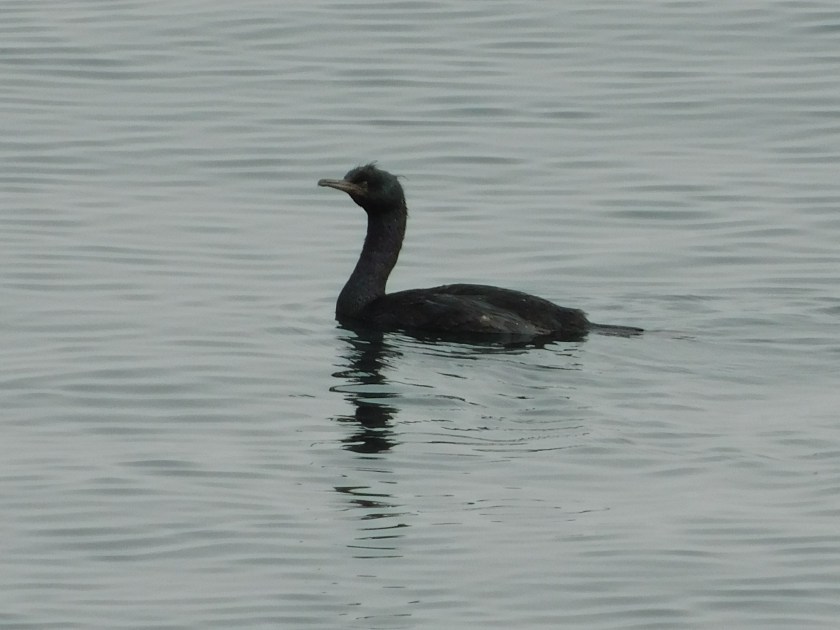
Some Pelagic Cormorants clinging to the side of a rock (where then nest in the crevices)

DSCN5947

DSCN5948

DSCN5950

Some Pigeon Guillemots, showing off their red feet:

DSCN6013

DSCN6015

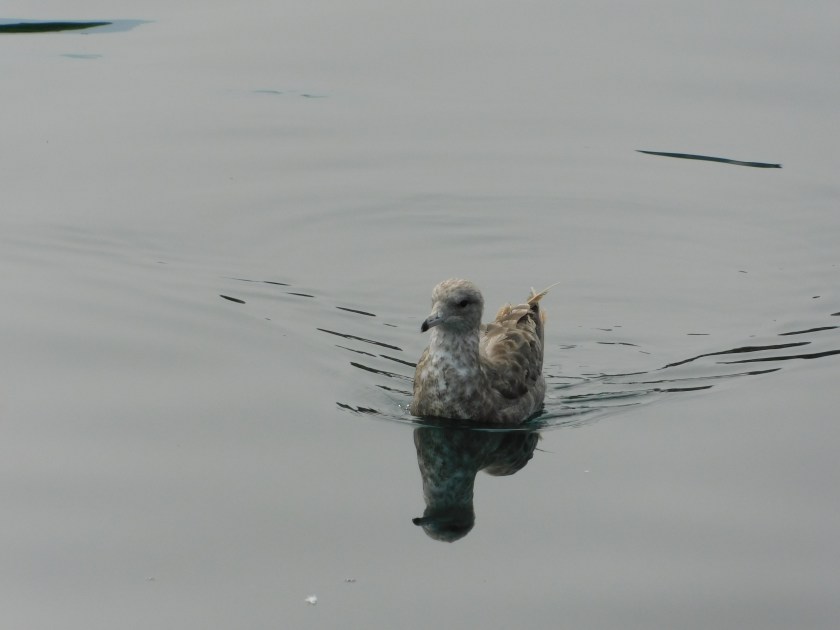
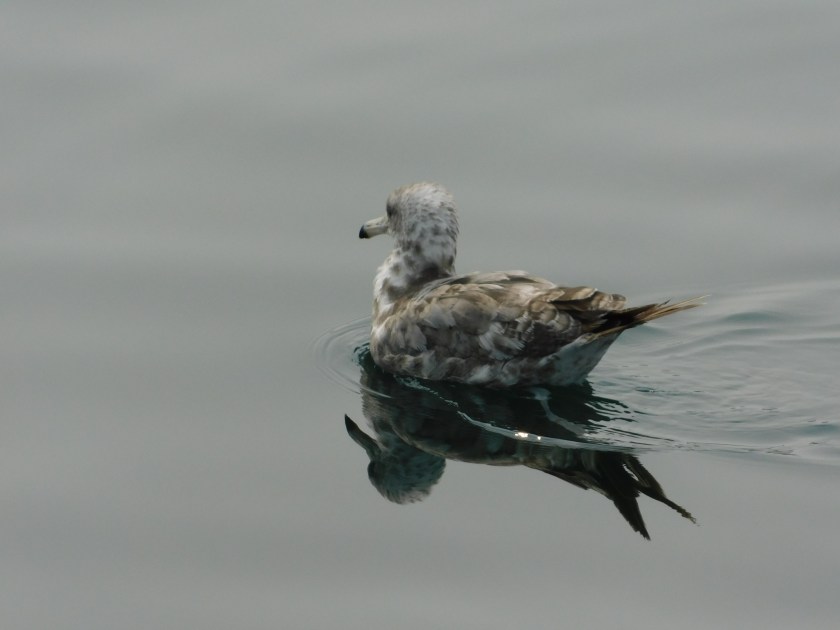
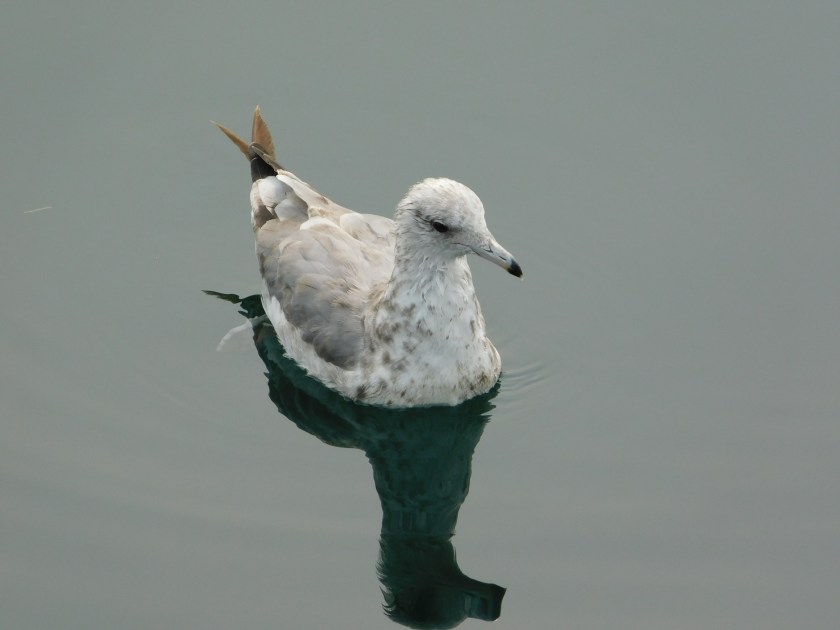
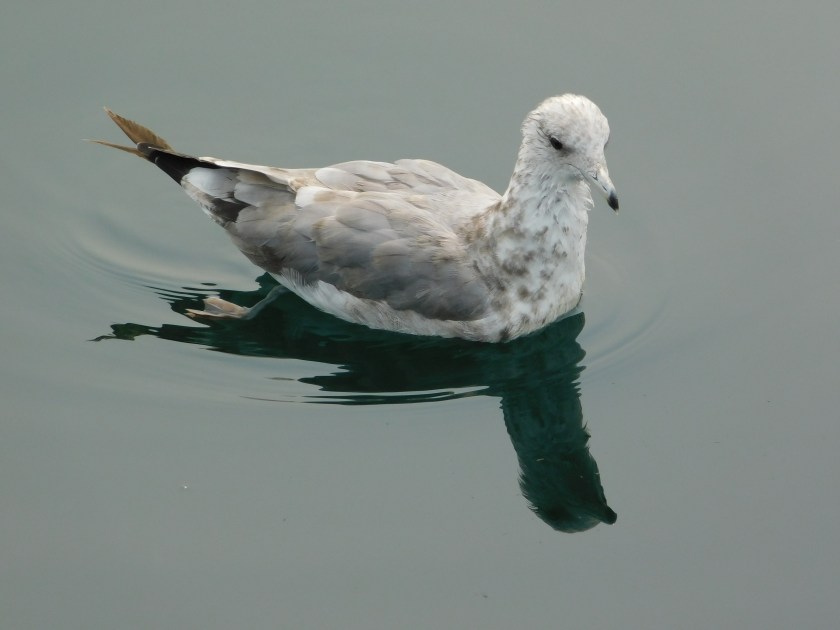
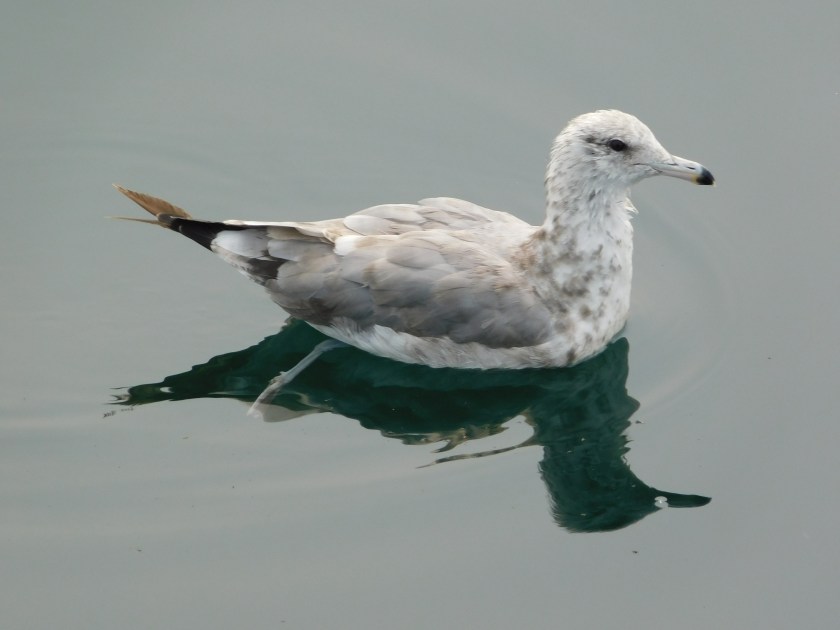
Another young Western Seagull:

DSCN5955

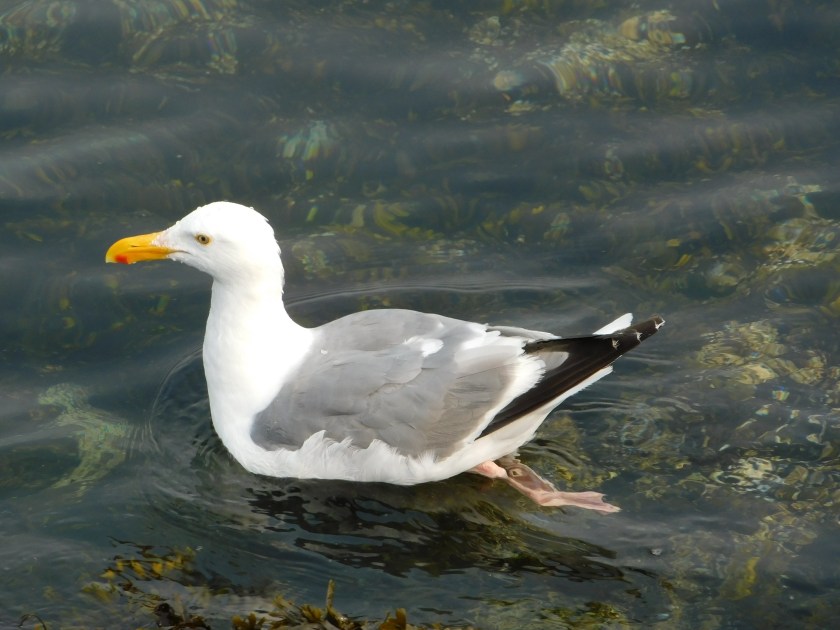
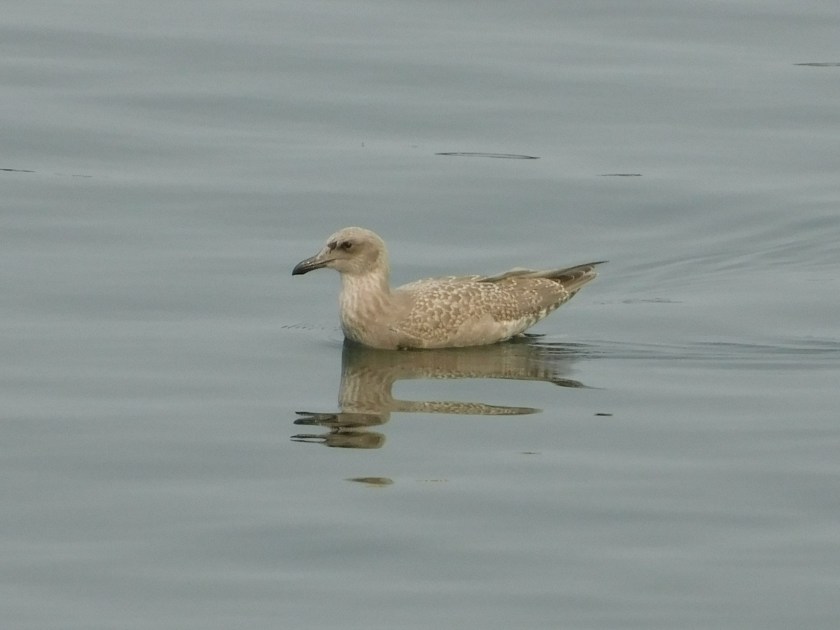
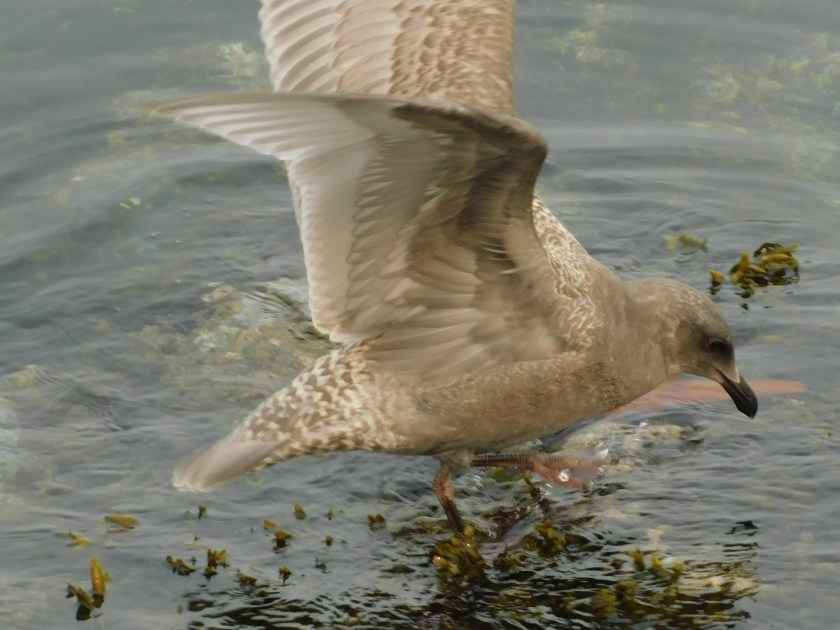
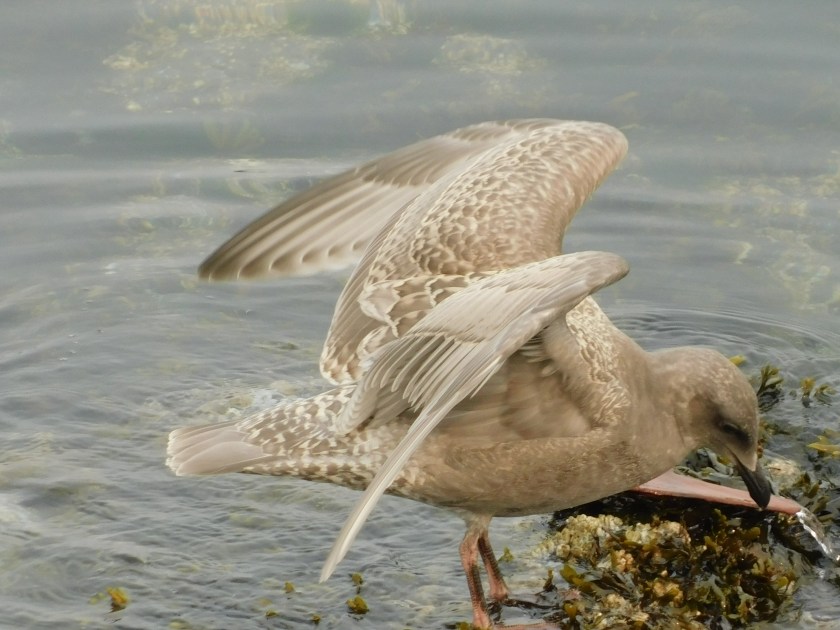
Some of the younger ones I’ve seen looked more like tiny emus with a short neck but this one actually looks like a seagull.  They are mostly brown as youngsters, and some seagulls stay brown, but this is a young Western Seagull which will become mainly white and with some gray and a yellow beak with a red spot on the bottom.

And a Black Oystercatcher, first in the water then after it had flown up onto a rock:

DSCN6064

DSCN6074

DSCN6076

Whales at Depoe Bay

Sunday I returned to the town of Depoe Bay, Oregon.  I was there briefly on Saturday but wanted to return and spend some time watching for whales.  There are pods of gray whales which live in this area year-round and this is a popular spot to see them close to shore.  Don’t get too excited – you really don’t get to see much.  These aren’t whales jumping way out of the water (called breaching) like they do in the Pacific Life commercials.  You wait for the spray of air (spout) being ejected from their blowhole then watch as they arch their back while diving back underwater.

There are several companies which offer “whale watching” trips out onto the water.  Here are a few boatloads of paying customers:

DSCN6290

DSCN6302

DSCN6304

As it turned out, they got a pretty good show.  We took my mother whale watching up in New England many years ago and didn’t see a thing…

Sequence 1 ( 5 shots):

DSCN6294

DSCN6295

DSCN6296

DSCN6297

DSCN6298

And to give you an idea how close to shore this is happening, here are the three boats sitting just offshore.  I was standing on the sidewalk next to Highway 101 and you can see a little of the rocky shoreline which wasn’t too far out in front of me:

DSCN6352

Some of the whales surfaced between where those boats are and where I was.  Unlike the Atlantic Ocean, the Pacific gets very deep, very fast once you get offshore.  When we went whale watching in the Atlantic we had to go way offshore to find water deep enough for big whales.  The three boats in the photo above later went out to sea to try their luck out there.

Sequence 2 (9 shots):

DSCN6329

DSCN6330

DSCN6331

DSCN6332

DSCN6333

DSCN6334

DSCN6335

DSCN6336

DSCN6337

Whales near Yaquina Head Lighthouse

In addition to the various seabirds I saw while visiting Yaquina Head Lighthouse on Saturday I also saw a few whales, but wanted to wait until I had the photos from Sunday at Depoe Bay ready to post.  As I mentioned in that post, don’t get too excited – you really don’t get to see much.  These aren’t whales jumping way out of the water (called breaching) like they do in the Pacific Life commercials.  You wait for the spray of air (spout) being ejected from their blowhole then watch as they arch their back while diving back underwater.  These are gray whales which live in this area year-round.

Sequence 1 (4 shots):

DSCN5691

DSCN5692

DSCN5693

DSCN5694

Sequence 2 (8 shots):

DSCN5817

DSCN5818

DSCN5819

DSCN5820

I didn’t notice it at the time but this whale appears to have a big chuck taken out of it’s back.  I’m guessing maybe it got snagged by the propeller of a large boat.

DSCN5821

DSCN5822

DSCN5823

DSCN5824


Yaquina Lighthouses

And yes, lighthouses plural is correct.  The town of Newport, Oregon has two lighthouses.  Saturday morning, when I arrived in Newport from the south I crossed this bridge to get to the main part of town:

IMG_20180804_100412151

Immediately after getting to the north side of the bridge I got off Highway 101 and headed out to see the Yaquina (pronounced  ya-KWIN-ah) Bay lighthouse.

IMG_20180804_100012264_HDR

This lighthouse (which is shuttered only because it wasn’t open for tours yet) is the second oldest standing lighthouse in Oregon, but was only in use for a few years – from 1871 to 1874.  A taller, brighter lighthouse was built 3 miles further north in 1873.  This lighthouse was reactivated by the Coast Guard (the modern tower you see to the right is a Coast Guard watchtower) in 1996 with a fixed (steady) white light visible for six miles to aid boats getting into the Newport harbor in Yaquina Bay.

I will return to this lighthouse later in the post.

I drove further north of Newport to the newer Yaquina Head lighthouse.  This looks more like the lighthouses I am accustomed to seeing on the east coast.

IMG_20180804_123536759

This lighthouse, first lit in 1873, is 93 feet tall and sits at 162 feet above sea level.  It is still is use.

DSCN5875

DSCN5881

IMG_20180804_115648044

IMG_20180804_115809724

I spent quite a bit of time here, mainly watching birds on the various rock formations just offshore.  On my way back to Yachats later in the afternoon I stopped again at the Yaquina Bay lighthouse, which would now have afternoon sun and would be open for tours.

IMG_20180804_144117056

DSCN5929

This is the only lighthouse in Oregon made of wood, and is the only one where the living quarters for the lighthouse keeper was in the same structure.

And here’s another look at the beautiful Yaquina Bay bridge, now in afternoon sun:

IMG_20180804_144323634

Yaquina Head Lighthouse – Birds

Saturday I went to see both lighthouses which are near Newport, Oregon. The larger one, located north of town, sits right out by the ocean and has some large rocks sitting just offshore which is a great spot to see birds.

On the south side of the lighthouse:

IMG_20180804_115146634

IMG_20180804_115155838

And standing near the late-morning shadow of the lighthouse, looking west-northwest:

IMG_20180804_120132677

The two biggest rocks as seen from those two vantage points held the largest number of birds. The tops of each were literally covered with Common Murres:

DSCN5560

DSCN5610

This area has one of the largest populations of these little penguin-like birds on the west coast. I had seen some down in California but they were too far away to get a good picture of them. And where they gather, they gather en masse. They do not make nests but lay their eggs on flat, bare rock, near a cliff. The eggs have an unusual shape, like a pear, so while they may move around a bit, they won’t roll off the cliff because they roll in a circle. These birds are similar to the Pigeon Guillemot (with the red feet and having bright red inside their mouths) but these are your basic black and white. Unlike penguins, common murres can fly (although they evidently aren’t very agile). Their biggest feature is the ability to dive underwater, often to great depths. And young chicks know how to dive as soon as they hit the water for the first time.

Another bird I saw lots of were cormorants. I have seen many of these in many different places but rarely get blogworthy photos. The ones I saw on Saturday were on rocks which were rather close and with the angle of the sun I was able to get some decent pictures.

DSCN5599

DSCN5602

DSCN5897

These birds have very long necks and when they fly they look sort of like geese (though they are sleeker). They like to hang out on rocks, and often nest in holes on the sides of cliffs. I most often see them floating on the water and they frequently dive underwater, sometimes for over a minute, looking for food. When they get up on land they often stand with their wings spread out – literally to air-dry! They don’t have very efficient water-shedding feathers like ducks.

DSCN3255

Generally when I’ve seen cormorants they appear to be black, but like the ibis I finally saw up close when I was near Klamath Falls, these can have colorful feathers and with a cooperating sun angle I actually captured some shots showing this.

DSCN5842

DSCN5868

This group of cormorants appear to be having a good laugh over something:

DSCN5849

Perhaps the silly man with the red camera, over by the lighthouse.

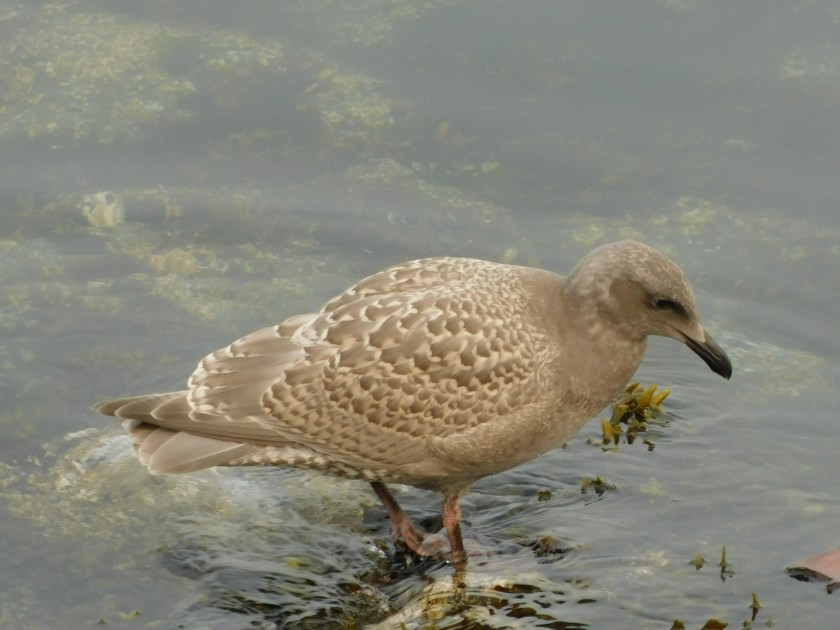
I also spotted some brown birds which I thought were something I hadn’t seen before but later learned they were just young Western Seagulls.

DSCN5615

And although this post is mostly about birds, when I was reviewing my pictures from the day I found I had this interest sequence of a seal on the rocks:

DSCN5569

Then he fanned out his tail (kind of like he was stretching his legs)…

DSCN5570

And rolled on his side to take a nap…

DSCN5573

Depoe Bay, Oregon

Saturday afternoon, after getting my tire issue resolved in Newport, I drove further north to this little town which sits right along the ocean.  While Depoe (pronounced d-po) Bay is small, it has two big things which bring people here.  Actually one big thing and one small thing.  Depoe Bay has the distinction of having the smallest navigable harbor in the world:

IMG_20180804_133239811_HDR

Trust me, that’s it.  I took two more photos, one slightly left and one slightly right but they each show just a tad more water.

The Bay sits just on the land side of the concrete bridge which takes busy Highway 101 over it:

IMG_20180804_133251147

That photo was taken from the pedestrian walkway which people can use to cross under the highway.  Here is a view looking towards the ocean from under the bridge:

IMG_20180804_133350779_HDR

And looking from the outside in:

IMG_20180804_133452129_HDR

And there is a reason why so many people park on the land side of the highway but want to be on the ocean side – and it isn’t to go to the beach.

The big thing Depoe Bay has going for it is REALLY big.  Whales.

The west coast of the United States is a great place to see whales migrate north for the winter and south for the summer.  Several of the places I have already been to in California and southern Oregon have places which are specifically designed to help people whale watch.  The signs I read in those places seemed to indicate that I was “between seasons” and I figured I wouldn’t see any.  Well, it turns out that there is a small population of, maybe 60, gray whales that live in this area year-round and Depoe Bay seems to be their favorite hangout.  There are numerous whale watching companies based here which ferry people out to sea to look for whales.  As I would learn on Sunday when I returned here, you don’t have to be out at sea to see whales.  Several came right into the Bay and I’ll post pictures of them tomorrow.

Here is a 3-shot panorama of the Bay as seen from the pedestrian bridge on the west side of Highway 101:

IMG_20180804_133457028_HDR

IMG_20180804_133504541_HDR

IMG_20180804_133508424_HDR


Florence to Yachats, Oregon

Friday I drove north on Highway 101 from where I had been staying near Florence to the little town of Yachats.  Here are some of the things I saw along the way:

This is the town of Florence as I approached before crossing the bridge you see on the left.

IMG_20180803_083339126_HDR

I had stopped in Florence the day before (when it was overcast) and got this sign in the “Old Town” area which shows the distances to other towns in North America named Florence.

IMG_20180802_120248373

This is from the hill which Highway 101 climbed (to about 450 feet) before descending to the Heceta Head lighthouse.  This is looking at the beach and ocean southward, towards Florence.  This is beyond the Oregon Dunes National Recreation Area so this is mostly just flat, sandy beach.

IMG_20180803_093017949_HDR

IMG_20180803_093035974_HDR

Here is another picture of the beach area about 15 minutes later with different areas getting sunlight (it was mostly overcast over the inland area but mostly clear at the beach itself)

IMG_20180803_094634830

From the other side of the 450 foot hill this is the first overlook from which you can see the Heceta Head lighthouse in the distance.  I took similar pictures when I was here before but it was overcast and now it was mostly sunny.

IMG_20180803_100147699_HDR

And here is a zoomed-in shot of the lighthouse:

DSCN5513

This is a 3-shot panorama, left to right, of another beach a little further up the road (from back down at beach level).

IMG_20180803_101822986

IMG_20180803_101818075

IMG_20180803_101809997


Cape Perpetua Area

Friday I spent some time at various parts of this area just south of Yachats, Oregon.  One of the most popular spots seemed to be Cooks Chasm, a long area with rough rocks and narrow inlets.  This is a VERY popular place at high tide as the water crashing against the rocks puts on quite a show.

IMG_20180803_104620758

IMG_20180803_104626212

One of the spots near the bridge which carries Highway 101 over the deep inlet (seen below) has a naturally developed hole which, under the right conditions, shoots a geyser of water high in the air at high tide.

IMG_20180803_104754142

Another area just north from Cooks Chasm is called Devil’s Churn, and it also puts on a show at high tide.  Look closely at the bottom of the photo and you’ll see some people.

IMG_20180803_110712973_HDR

I just enjoyed the incredible beauty of this area because I was there at low tide (of course).  While it turns out to be just down the road from where I am staying in Yachats, the small parking areas were already full at low tide and I imagine it gets incredibly crowded at high tide so I never came back.  I’m sure there are videos on YouTube.

After looking at things from highway-level I took a two-mile road up a mountain to around 850 feet above sea level which gave me a very different view:

When I first got there I was a little nervous about the view:

IMG_20180803_111730409_HDR

But all I had to do was take a dirt path a short ways out towards the ocean.  Friday was the exact opposite of coastal weather I have experienced during this trip.  Today there was a heavy cloud deck inland but the coast was clear.  (Hmmm… “the coast was clear”… that seems to be a neat phrase – maybe I’ll trademark it).

IMG_20180803_111909977

IMG_20180803_112013423_HDR

IMG_20180803_112241720_HDR

Much better.

I soon came to a little rock cabin, which had an amazing view of the ocean:

IMG_20180803_112822053_HDR

IMG_20180803_112833490_HDR

IMG_20180803_112848138_HDR

Before I went back down to the highway I took one last look south:

IMG_20180803_112908201

And north, towards Yachats:

IMG_20180803_105649248_HDR

And when I got back down to the highway I stopped at the Visitor Center and had this view of the ocean from their deck:

IMG_20180803_114745508