Safely Back at the Coast

It took a while, because of the detour I had to take around the Carr Fire, but I finally made it back to the coast around noon Monday.  The first place I stopped was at a Vista Point (scenic overlook) near the Arcata airport, north of the town of Arcata.

IMG_20180724_115549530

IMG_20180724_115553120

I stayed at the Vista Point for about an hour – watching and listening to the ocean, enjoying the pleasant 57 degree temperature (which was welcome relief after having spent 3 of the last 8 days in Redding, CA with temps over 100), and watching the seals.  If you look closely at the first photo in this post you’ll see the seals down near the water.

DSCN4078

DSCN4079

DSCN4084

They were mostly just napping, but every now and then one would shuffle in to the water and splash around a bit:

DSCN4085

Trinidad, California

Monday after I drove back to the coast I stopped in the little town of Trinidad, which is just north of Arcata where I stayed the previous weekend before heading inland.  I was pretty sure the visibility wouldn’t be very good because of the persistent marine layer which was hugging the coast but I at least wanted to get the lay of the land (or in this case the “lay of the bay”).

This was my first look at Trinidad Bay, looking down from near where I had parked my car:

IMG_20180724_131653207_HDR

This is from a vantage point slightly left of there.  I didn’t realize it at the time but I was now standing where the Trinidad Lighthouse used to be.  You’ll learn more about that in a future post as I plan to return to Trinidad in the next day or two in, hopefully, clearer weather.  In this photo you can barely see a dock in the distance which you’ll see more of shortly.

IMG_20180724_132004033_HDR

I then walked down to where the water is, not directly but by going a few blocks north (right) and descending down to the beach and dock areas.  This was looking right, towards the beach.  The rock formation you see of the left is “Trinidad Head”, a large peninsula which sticks out into the bay:

IMG_20180724_133930524_HDR

And this was looking left, towards the harbor:

IMG_20180724_133926605_HDR

A closer look from beach level of the beach itself:

IMG_20180724_134157723_HDR

And a little to the right of that a group of lifeguards was giving a safety training class to interested citizens:

IMG_20180724_134215793_HDR

I then walked over towards the harbor and dock, and to a long metal fishing pier which lead out to the wooden dock at water level you could (barely) see in the second photo of this post:

IMG_20180724_135234038

And while at the boat launch area I learned that they have a rather interesting boat lift which uses a pulley to bring the boat up away from the water to load onto the trailer.  You can see the lift being returned to water level via the pulley on the right side of the photo:

IMG_20180724_134919039

I’ll document that process more thoroughly in a future post.

Battery Point Light

Not Lighthouse, just Light.  This is located in Crescent City, California which is only a few miles from the Oregon state line.  I arrived in town Monday afternoon and will be staying here for three nights before proceeding further north.

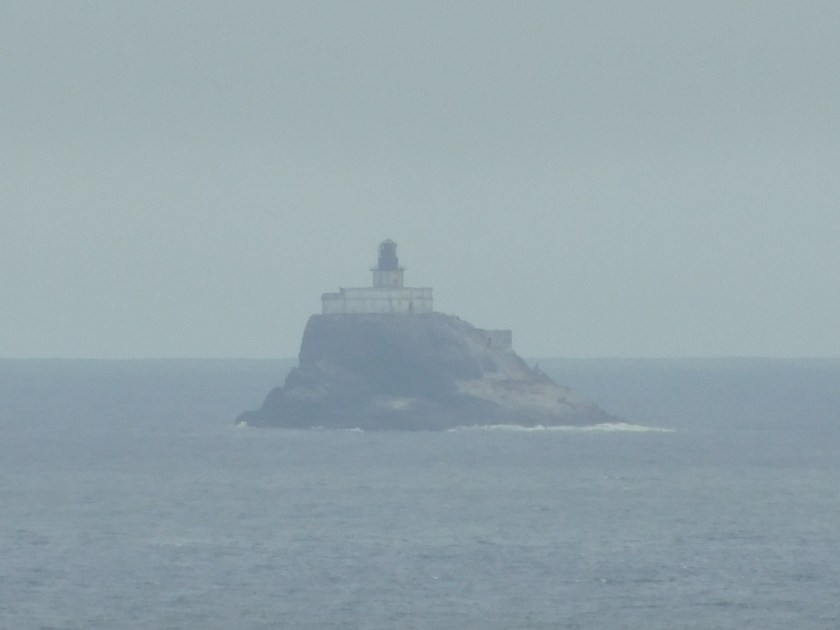
Battery Point Light was built in 1856 and was one of the first lighthouses on the west coast.  This is a photo I took from near the Coast Guard Station which is on a peninsula some distance away:

DSCN4092

That photo was taken late-afternoon when I was arriving in the area.  As you can probably tell, the persistent marine layer was still present right at the coast whereas just a mile or so inland it was sunny and clear.

Around 6 pm I drove out to where the lighthouse itself is, just south of downtown Crescent City.  The lighthouse sits on an islet, basically a tiny island just offshore but close enough so that at low tide one may walk out to it via a connecting isthmus.

This is from “high ground” where I parked the car.

IMG_20180724_182218491_HDR

This was after walking down the ramp to get to beach level, then walking progressively closer to the islet.

IMG_20180724_182424928

IMG_20180724_182630008

IMG_20180724_182431636

You may be able to tell that the tide was coming in and there was just enough water that Mr. Smiley-pants “It’s too cold to get my feet wet” JohnBoy didn’t venture out on to the islet to see the lighthouse up close.  I will be in the area a few days and will have other photos in a future post.


Focus on the Ibis at Tule Lake Wildlife Refuge

I saw lots of these on both Saturday and Sunday out at the Refuge.  At first I thought they were just black birds with long legs and a very long curved beak, but once I managed to get close to a few of them, and in varying sunlight, I discovered they are actually very colorful in their own way:

DSCN3659

DSCN3662

DSCN3749

DSCN3789

DSCN3795

DSCN3797

DSCN3805

DSCN3792

DSCN3803

DSCN3798

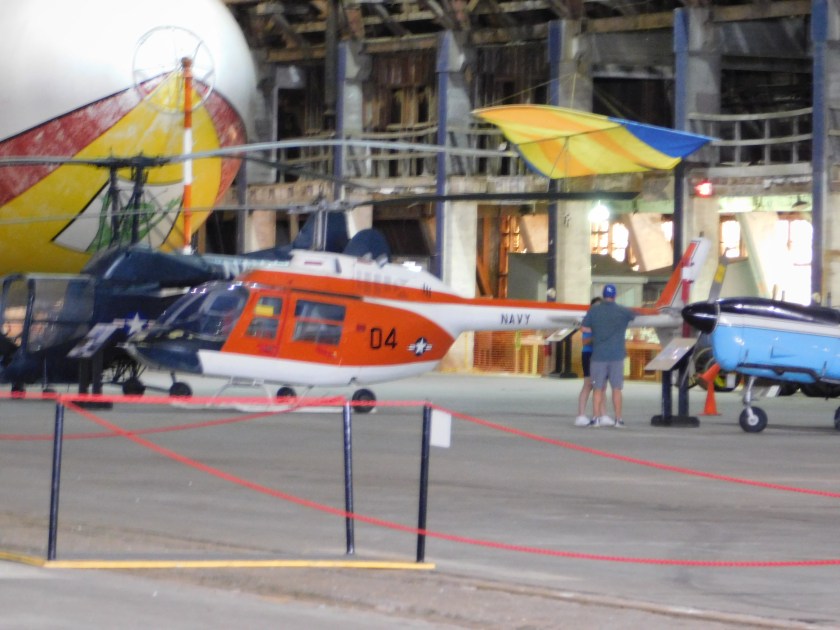
And I was FINALLY able to capture a decent photograph of several of them in flight!  Patience, 007, patience….
DSCN4075

More Birds at Tule Lake National Wildlife Refuge

Sunday I spent about 6 hours out at the Wildlife Refuge which is just north of the Lava Beds National Monument in Northeastern California.  I had pretty good luck the day before getting some pictures of various birds and thought I’d try again.  I was able to capture quite a few different ones than I had seen previously.

I had intended to post these last night but with the excitement of the wildfire which developed while I was in Redding Monday afternoon and evening I kind of got distracted.

These are Black Necked Stilts.  They are not very big but have very long legs which stick out behind them when they fly so they almost look like small herons.  I saw lots of these both days I was out at the Refuge.

DSCN3649

DSCN3668

This is a White Crane, different from the White Heron I posted pictures of on Saturday.

DSCN3671

DSCN3672

DSCN3673

And I always thought the American White Pelicans are pretty much all white but the ends of their wings are actually black, as seen in these two photos:

DSCN4062

DSCN4067

I am particularly excited that I got these pictures.  This is an American Avocet.  I only saw two of them (and I don’t mean the reflection).

DSCN3717

DSCN3718

DSCN3722

These are American Coots.  I only saw these two, swimming away from me.

DSCN3741

Saturday I saw Western Grebe’s (with the red eyes).  I saw lots more of them on Sunday but also saw some of these, which are Eared Grebes (again, with red eyes).

DSCN3892

I believe this was a baby Eared Grebe, which seemed to be hanging out with a male and a female (probably the proud parents).

DSCN3899

I saw several groups of Male/Female/Baby Eared Grebes in one particular area of the Refuge.  Sometimes the babies were riding on Momma’s back (there are actually two riders in each of these next two photos):

DSCN4000

DSCN4001

These are Yellow Headed Blackbirds:

DSCN4021

DSCN4029

And with the help of my Airbnb hostess in Klamath Falls I have learned that this is a Black-Crowned Night-Heron.  She thinks I am very lucky to have seen this because they are not very plentiful.

DSCN4039

DSCN4040

DSCN4042

She also told me this is a Kildeer, which was quite vocal:

DSCN3960

DSCN3961

DSCN3965

DSCN3966

This was a huge flock of American White Pelicans floating on the water way out in one of the big lakes at the Refuge.  This is how they often feed – they’d float in a big group or circle and flap their wings in the water which attracts fish, which they then scoop up with their bills.  I watched with my binoculars and could see lots of water being splashed up in the air.

DSCN3843

Finally, I believe this is a Great Blue Heron which I was able to catch in flight as it flew away from the shore where it had been standing.  The photo I have of it standing on the shore isn’t very good as it was taken through the windshield of my car (it had already flown further away from me once as I approached in the car).

DSCN3928

Another bird I saw on Sunday was an Ibis (and I saw lots of them).  I took lots of pictures, including closeups of their feathers, heads and eyes and will post them separately.

The Carr Fire – Updates at end of post

Monday I traveled back to Redding, California to spend one more night there before heading back out to the coast. At 648pm local time I walked out of the townhouse where my Airbnb is located to get something to eat and saw this:

IMG_20180723_184822398_HDR

You can see the smoke billowing up from the other side of the mountain, above the right-most car below and to the right of the center of the photo. This has now been named the Carr Fire (not Car), because of it’s location near Carr Powerhouse Road at the western end of the Whiskeytown Lake, about 20 miles west of Redding.

The official CalFire website says it was reported at 116pm local time today, and as of the 659pm local time update is listed at 1,500 acres.

Shortly (literally 5 seconds) after I took that photo Tanker 40, a jet which drops fire retardant, flew overhead where I was standing, presumably to go reload:

IMG_20180723_184827604

And since then I have seen at least 4 different Forest Service aircraft.

Part of Highway 299 near Whiskeytown Lake, about 20 miles west of here, is closed. I was planning to take that road out to the coast tomorrow but have already found another route.

At 820pm local time, as I post this, I see less smoke rising although the sun is about to set and it is too dark to have aircraft dropping water (by helicopter) or retardant (by airplane). I can look right at it from my bedroom window.

IMG_20180723_201952722_HDR

I will update this post with additional CalFire information as it becomes available. Evidently there are other fires burning over that way as well, although they hadn’t made the website I have been checking as of this morning before I left Klamath Falls.


UPDATE (well, sort of) – The CalFire site’s latest update was at 905pm Monday local time and still had the fire listed at 1,500 acres. Local TV news reports as of 1030pm, however, say the fire had grown to 2,500 acres and was only 5% contained. I don’t know where they got that information unless it was from a reporter on the scene for the 11 o’clock news. I hit “refresh” on the CalFire website but am not seeing any news later than 905pm. At 148am local time Tuesday at least I don’t see a red “glow” coming from the direction of the fire as I look out my window!

UPDATE #2 – 523am local time. No more information about the Carr Fire, but it is just starting to get light out. CalTrans is not offering detour information but is simply telling motorists to “find an alternate route”.  Thanks, CalTrans!  Just north of the Carr Fire is the Highland Fire, which has been burning since Friday afternoon at 126pm. It is in the “French Gulch” area, further away from Hwy 299.  As of 625pm last night it is listed at 63 acres and 85% contained.  It is being blamed on a campfire at an illegal marijuana growing site in the mountains!  I’m surprised they didn’t call it the “Maryjane Fire” (or perhaps that name was already taken).

I think I’m going to stick to my southern alternate route idea, which runs roughly parallel to Hwy 299 but is a smaller road and will be slower. Another option is going way north into Oregon, since Crescent City is my ultimate destination, but it would take me right past the Garner Complex, a group of smaller wildfires which now totals 11,564 acres and are only 14% contained. They were talking about that group of fires on the radio yesterday morning. They have been burning since July 15 and were started by lightning.

UPDATE #3

N421DF

This is a “screengrab” of FlightTracker, showing recent activity for the Forest Service aircraft with the designation N421DF. It shows the plane taking off from the Redding Municipal Airport and flying circles around the area of the fire. My guess is this might have been the “air traffic control” plane which coordinated the flight paths of other, bigger planes and helicopters. I got the idea of checking this from a Tweet that someone posted last night regarding the fire. I don’t use Twitter but could see other posts in my Google search for information on the Carr Fire.

It is now 604am local time. I can see the mountains where the smoke was coming from last night but it is so smokey that I can’t see much else. It appears that the smoke has settled near the ground overnight (or it could be fog from groundwater sources over in that direction). I do see blue sky overhead.

UPDATE #4

Now 625am. There is enough light and blue sky overhead to see that there is no smoke billowing high up in the air as it was last night, though smoke and low clouds are spread south of the problem area down close to the ground. Still no official updates online and apparently local news is just rehashing the information from last night. I’m going to take a shower and hit the road!

UPDATE #5

At 648am local time here is what I saw from the bedroom window.  The area of the fire is just on the other side of  the mountain range (and streetlight and red truck) on the right side of the photograph.  The smoke appears to have settled near the ground, drifting south (which is left from this vantage point).  The second photograph is looking further left and you basically can’t see anything off in the distance.

IMG_20180724_064814706_HDR

IMG_20180724_064841651_HDR

UPDATE #6

As of 1125am local time Tuesday the fire has affected 3,126 acres and is 15% contained. Officials now think it was started by a travel trailer which had a flat tire and the metal rim created sparks when it pulled off the road, igniting nearby vegetation..

UPDATE #7

Wednesday night CalFire has the fire shown at almost 7,000 acres and Thursday morning it has almost tripled in size to 20,000 acres.  Many more mandatory evacuations of campgrounds and small, mountain towns have been ordered.

UPDATE #8

Thursday night into Friday the fire more than doubled in size again and as of the 845pm Friday CalFire update is listed at 48,312 acres and reduced to only 5% contained.  Two firefighters have lost their lives and numerous homes and boats have been destroyed  (500 structures destroyed and almost 5,000 threatened).  Most radio stations in Redding have been knocked off the air as their transmitters were damaged or destroyed and KRCR, the ABC-TV affiliate in Redding, literally abandoned their studio while doing the evening newscast as staying there was too dangerous.  They are now streaming news to the local residents online.  I saw where their studio was when I was in Redding and the nearby Turtle Bay Exploration Park (right next to the Sundial Bridge which I posted photos of) is closed to help keep roads clear and not endanger their staff members.  The fire is progressing towards Redding and almost 38,000 residents in the area have been ordered to evacuate.  Weather conditions in the area are NOT forecast to be favorable for containment.  The Shasta Dam Visitor Center (where I posted several photos from) and the town of Lake Shasta (where I had some awesome tacos) have been evacuated.

UPDATE #9

Friday night the fire swelled to 80,906 acres (805am Saturday CalFire update).  Firefighters are trying to keep it west of Interstate 5 but they say this fire is behaving very differently than fires before it and is extremely unpredictable.  TV news broadcasts are showing large neighborhoods of burned out homes.

UPDATE #10 (Probably the final update)

One week (and a few hours) after the Carr Fire started, as of the July 30th 721pm CalFire update, the fire has damaged or destroyed 103,772 acres.  818 residences have been destroyed (plus businesses and other structures) and 167 homes have been damaged (plus other structures).  6 people have lost their lives and some are unaccounted for.  The fire is only 20% contained.

FINAL UPDATE – As of the 732pm CalFire update on 8/30/18 the Carr Fire is now considered 100% contained.  The final area affected number was 229,651 acres, which was reached 10 days earlier on August 20.  Over 1,000 houses were destroyed.

Lava Beds National Monument

Saturday I visited this National Monument, located in Northeastern California, about 45 miles south of Klamath Falls, Oregon.

Upon entering the Monument from the north one of the first this I came to was the vast Devil’s Homestead Flow.  This is a large area of volcanic rock created in the same fashion as what has been happening in Hawaii the past three months or so – superheated liquid lava oozes out from a volcanic source, spreads over the land and quickly cools and hardens.

The road I came in on is in roughly the left third of the first photo (you can’t see it)…

DSCN3540

… and the lava field spreads far to the right as seen in these photos.

IMG_20180721_103127522_HDR

Next I caught sight of the Schonshin Butte, which reaches over 5,300 feet elevation and has a fire lookout tower sitting atop it.  If you look closely at both the northeast and south vantage point photos of the butte you can see the tower on top.  This is the south view and the tower is at the top, right.

IMG_20180721_114213885

DSCN3544

DSCN3545

From the northeast view it sits atop the highest point, on the left:

IMG_20180721_115548304

A sign indicated that on a clear day you can see 90 miles from the tower.  This morning, with the heavy wildfire smoke, I doubt of you could have seen 90 YARDS from up there…

Next I went to the Visitor Center (which is at approximately 4,800 feet elevation, as is much of the Monument).  Visitors who plan to enter any of the numerous caves on the property must register for a free permit and must follow “white-nose syndrome” (a disease lethal to bats) safety protocols if they have been in ANY caves previously and are potentially wearing any shoes or clothing items which were in those caves.  I have been in several caves the past 2 or 3 years but chose not to enter any of them here.  If you are interested in caves, however, this would probably be a great place to visit as they have a wide variety of various lengths and skill levels which are accessible year-round.  There are also several caves which have limited access, some restricted to winter-only, and must be ranger guided.

In the Visitor Center I saw this chunk of Obsidian (a dark, volcanic glass), this one having wavy gray areas in it.  This chunk is slightly larger than my fist:

IMG_20180721_105738549

I saw a huge area of obsidian rocks last year when I visited Bend, Oregon (search for “Big Obsidian Flow” on the Home page or use the calendar there to look at posts from 8/1/17 and 8/5/17).

I also learned about Tule (pronounced TWO-lee).  I have been visiting a wildlife refuge called Tule Lake this past weekend, and have driven through the nearby town of Tulelake.  Tule is a reed-like plant, very similar in appearance to the heavier green reeds often seen in lakes and marshes with brown cat-tails.

IMG_20180721_105954471

Tule may be cut and tied together and are sturdy enough to build a small canoe, as demonstrated in this photo of a Modoc Indian (a local tribe) paddling a canoe made from tule.

IMG_20180721_105937327

Also in the Visitor Center was a display of various forms of rock created by the hardening of lava.  These included pumice (remember “Lava” soap?).

IMG_20180721_105820327

I then went out and drove through various areas of the Monument which are accessible by car.  This entrance to a cave indicated it was temporarily closed for a reason other then “white-nose syndrome”:

IMG_20180721_113437782

IMG_20180721_113452157

IMG_20180721_113539825

This is an above-ground formation called “Fleener Chimney”:

IMG_20180721_120309841

And as I was taking the access road back out to the main road I saw this interesting flower growing by the road.  It is called “Smoothstem Blazingstar” and the early afternoon sun was coaxing the blooms to open:

IMG_20180721_121041280

IMG_20180721_121103244

When I got to one overlook area I looked south and saw these various cinder cone formations scattered across the property:

IMG_20180721_122653746_HDR

And finally, I saw this diagram in the Visitor Center indicating that this entire Monument is only one small part of the much bigger “Medicine Lake Shield Volcano” (and you can also see Mount Shasta in the lower left corner of the diagram):

IMG_20180721_121556909


What A Difference 2 Days Makes

Monday morning when I got ready to leave Klamath Falls my Airbnb hostess (who had been outside to walk her dog) commented that the air quality in town was much worse than it had been over the weekend.  I can second that observation when, after driving to the south edge of town on the same route I had taken both Saturday and Sunday mornings when I drove down to the Lava Beds and Tule Lake Wildlife Preserve, visibility had been reduced to maybe a mile and a half (it got a little better further south, but not much).

I verified it when I got to the Lava Beds Visitor Center this morning – it was definitely smoke (and it smelled like smoke), not fog which would “burn off” (no pun intended) later in the day.

Here are some comparisons of what I saw at the Lava Beds Saturday morning and early afternoon versus what I saw between 920 and 955 am this morning.  This morning I tried to replicate the same vantage point as I had used on Saturday.

Looking out over Devil’s Homestead Lava Flow

Saturday:

IMG_20180721_103127522_HDR

Monday:

IMG_20180723_092008539_HDR

Looking north from the same point – Saturday:

IMG_20180721_122604352

Monday:

IMG_20180723_092013579_HDR

Looking south from the same point (at various cinder cones in the distance) – Saturday:

IMG_20180721_122653746_HDR

Monday (Compare about the left 2/3 of the Saturday shot with Monday’s full shot.  I was zoomed in a little on the Saturday shot – look at the gray areas in the foreground of the Saturday shot):

IMG_20180723_092111300_HDR

Looking at the Schonchin Butte (with a Fire Lookout Tower on top) from the northwest – Saturday:

IMG_20180721_115548304

Monday:

IMG_20180723_093250397_HDR

Same butte from the west (closest vantage point) – Saturday:

IMG_20180721_115311038

Monday:

IMG_20180723_093532090_HDR

Same butte from the south – Saturday:

IMG_20180721_114213885

Monday:

IMG_20180723_095535372

Travel Day – More posts this afternoon

IMG_20180721_140531183

IMG_20180721_140532857

Monday I cross the border from Oregon and head back to Redding, CA to begin what will be my last four nights in California on this trip.  I will be taking different series of scenic roads than I took getting up here, the first one going past a series of small wildfires which are also creating smoke which affected the areas south and east of here so I doubt I’ll be doing much “sightseeing” along the way.  When I get to Redding it is forecast to be 106 degrees (better than Merrill, but still…) so after I get my tires rotated and oil changed (it’s that time again) I will probably head for my Airbnb and post Saturday’s photos from the Lava Beds and more wildlife photos I took yesterday at Tule Lake Wildlife Refuge.

Tuesday I head up to extreme northwest California, Crescent City, to visit that part of the coast and Redwoods National Park.  Friday I cross back into Oregon to spend almost two full weeks working my way up the coast, staying in six different little towns along the way before spending a few days in Portland, OR and then moving on to Washington State.


But it’s a dry heat…

I saw this time/temperature device about 9 o’clock this morning as I drove through little Merrill, Oregon.

I am on my way back to the Wildlife Refuge and may need to jump in the water and join the birds!

Look, Mom, there’s an elusive “Bald-spotted Wet-haired JohnBoy”. I thought they were only found in the Southeastern United States…

Actual temperature was a pleasant 66 degrees.