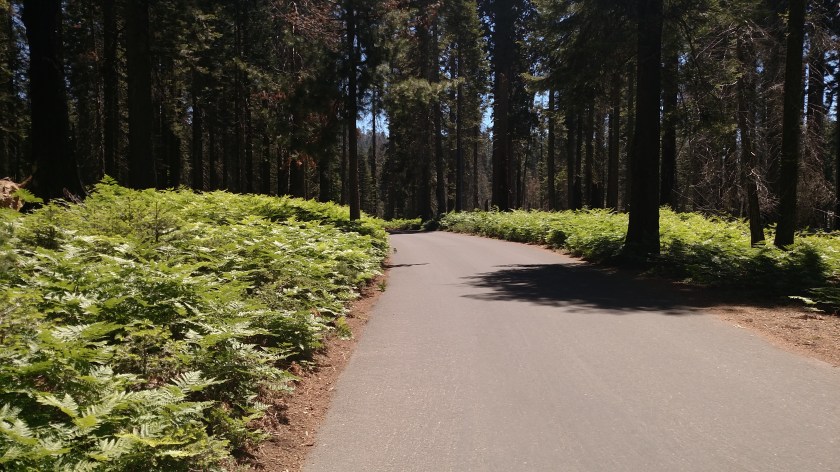
Here are photos taken Wednesday in both Sequoia National Forest and Kings Canyon National Park.
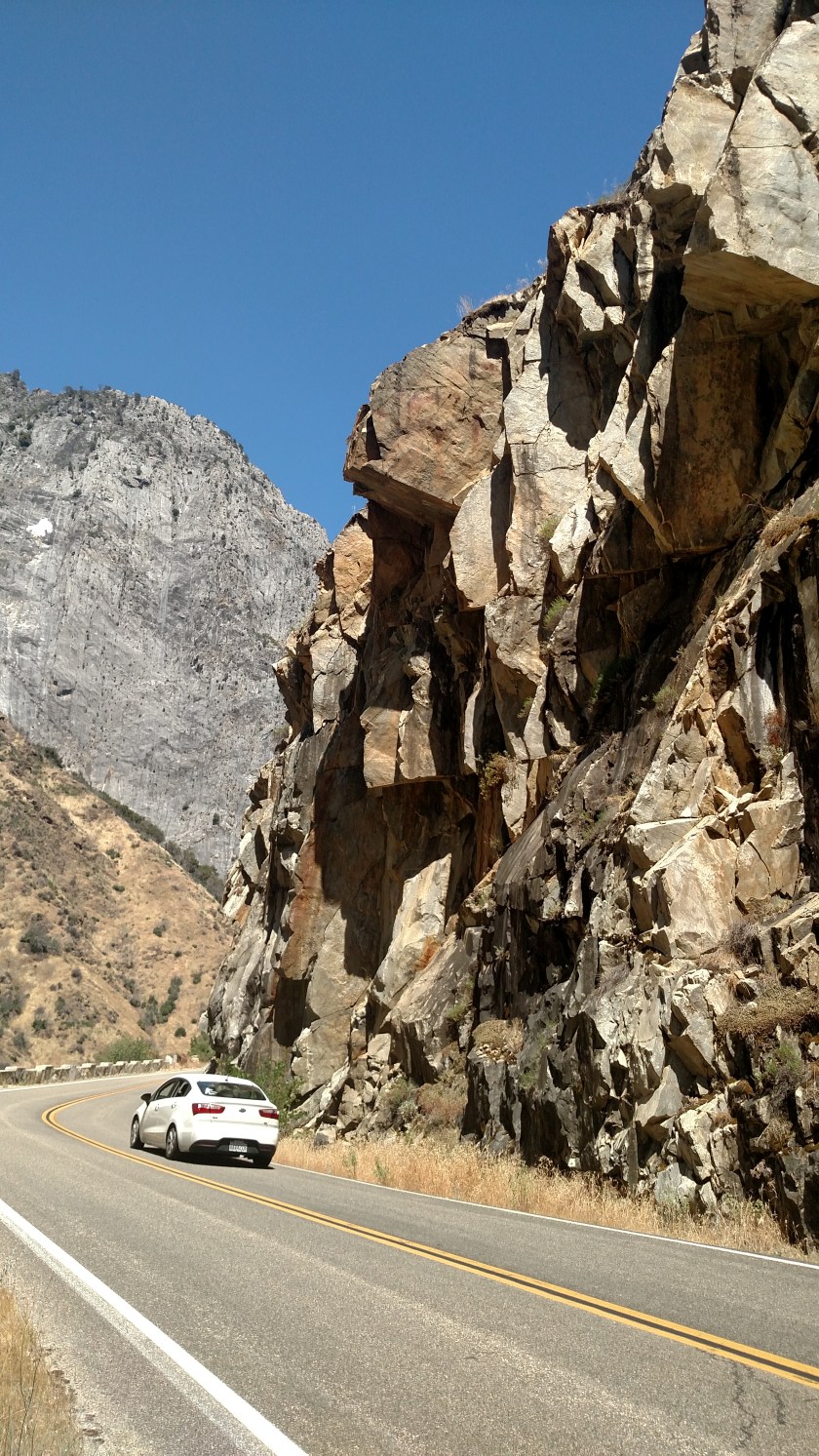
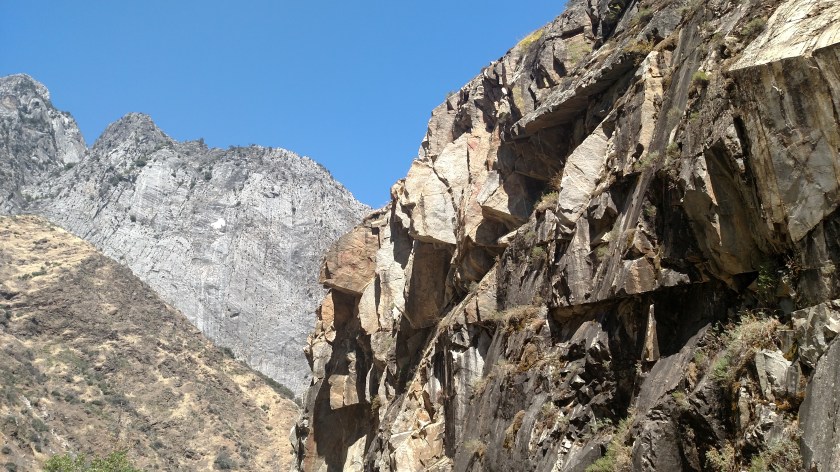
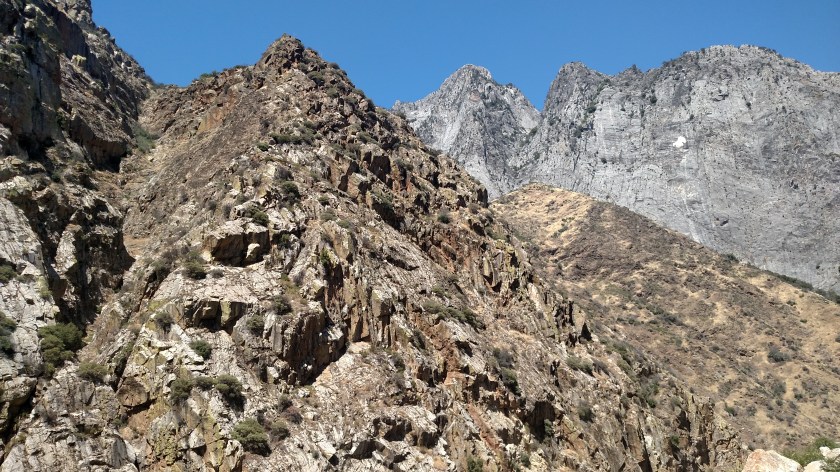
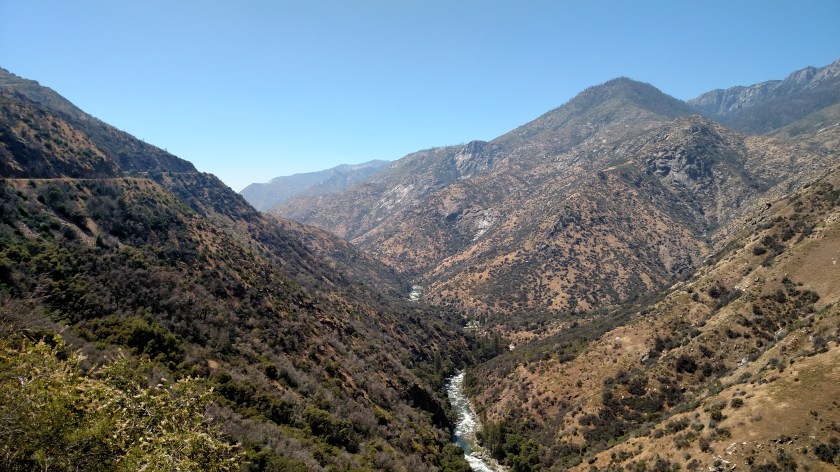

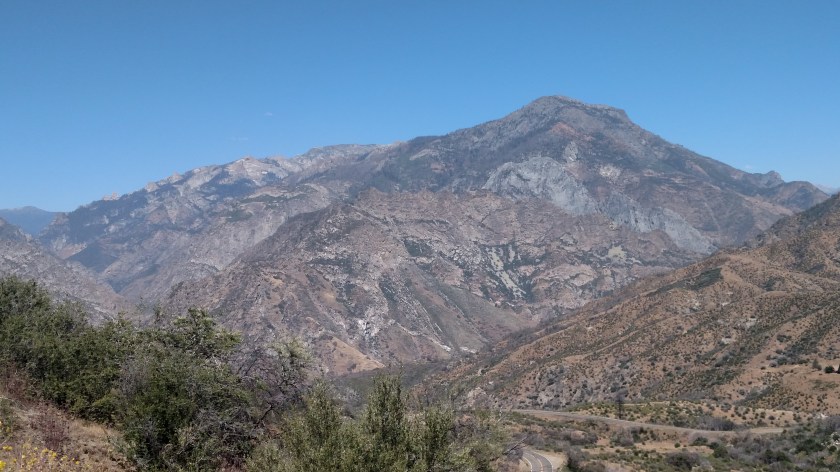
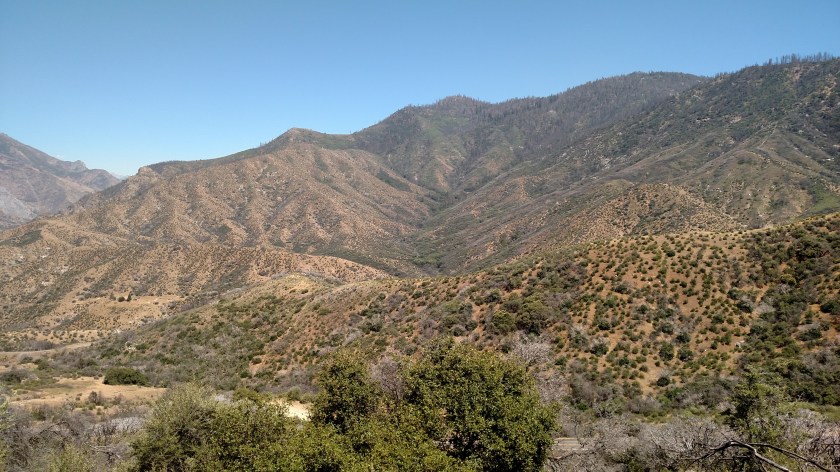
Here are photos taken Wednesday in both Sequoia National Forest and Kings Canyon National Park.
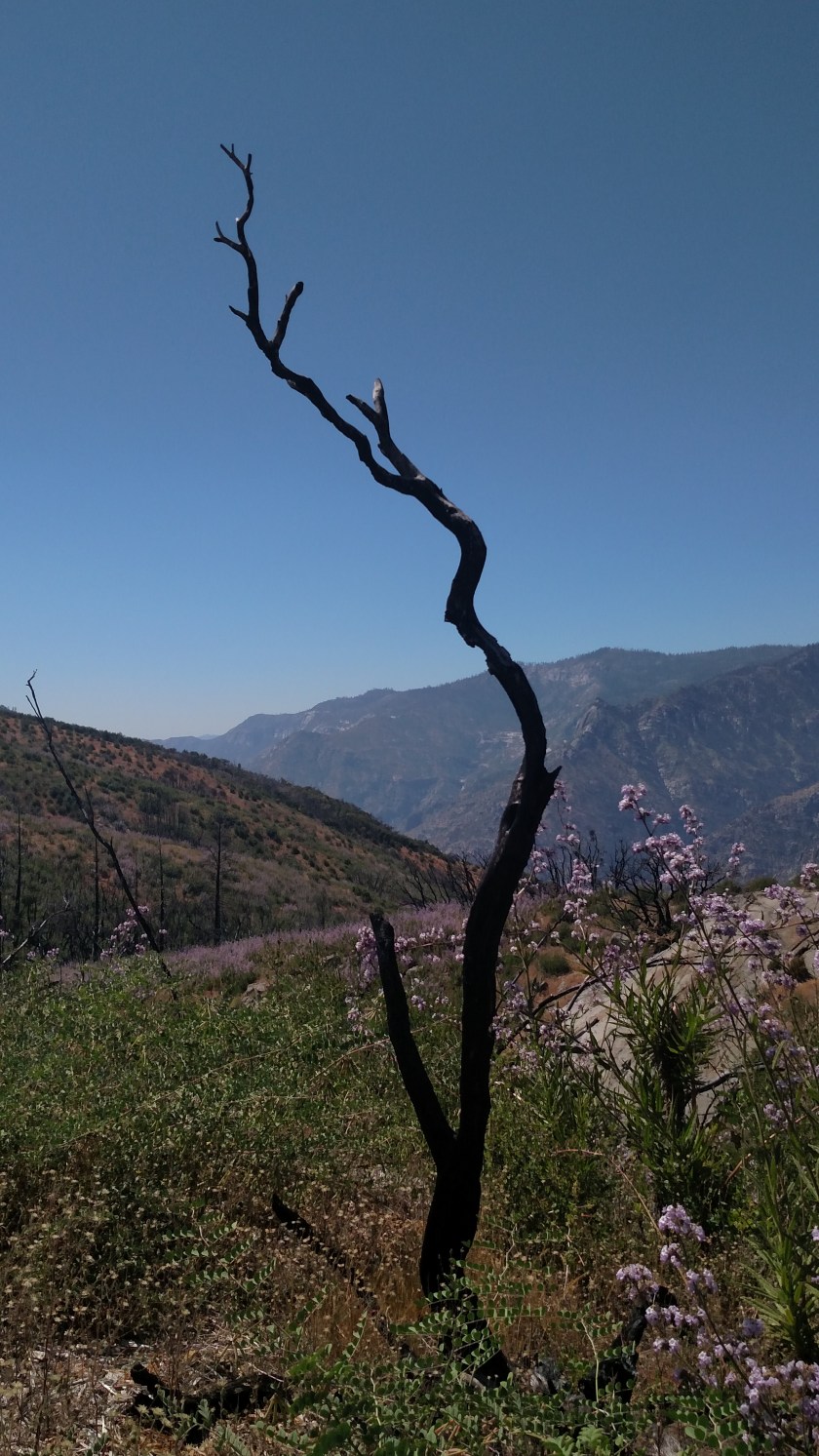
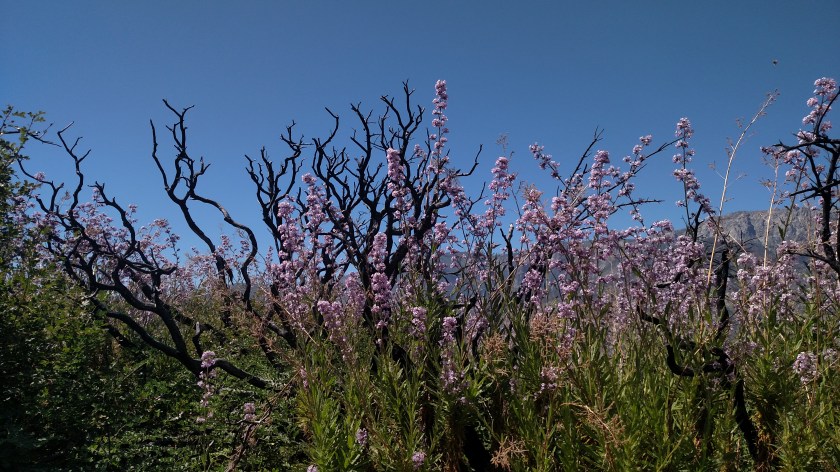
Here are some pictures taken at various places in and around Kings Canyon National Park on Wednesday:
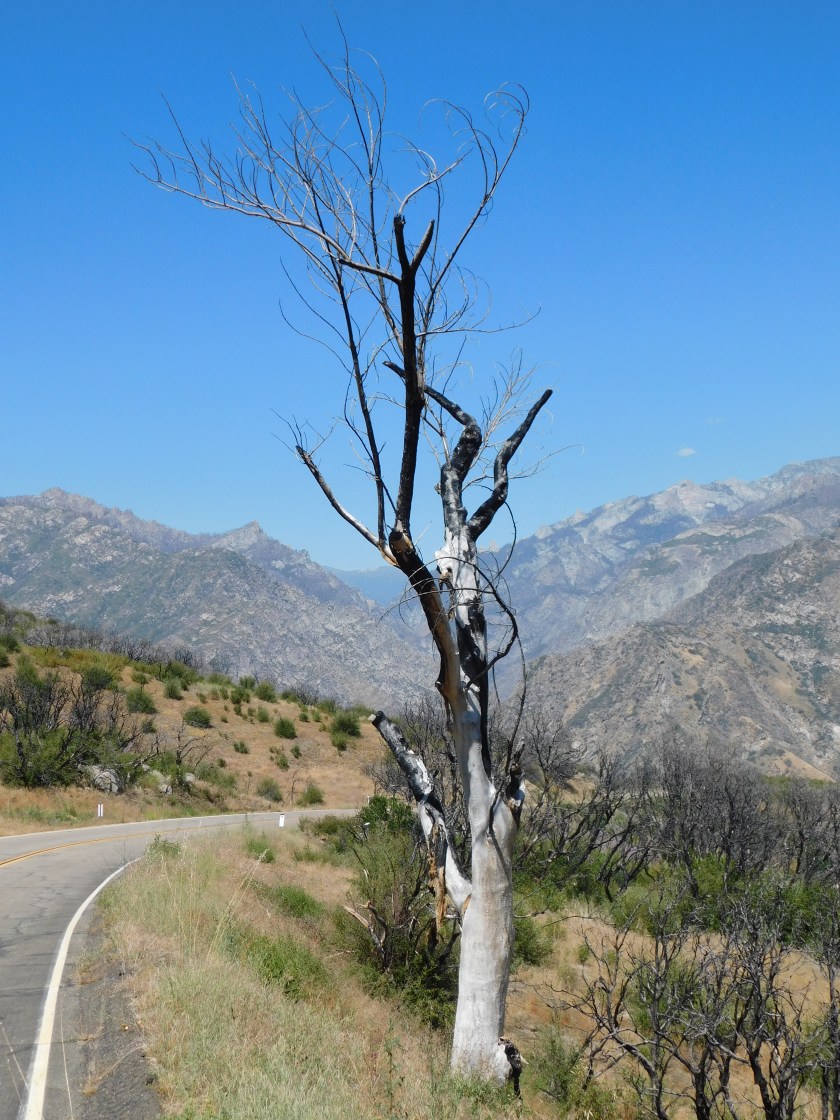
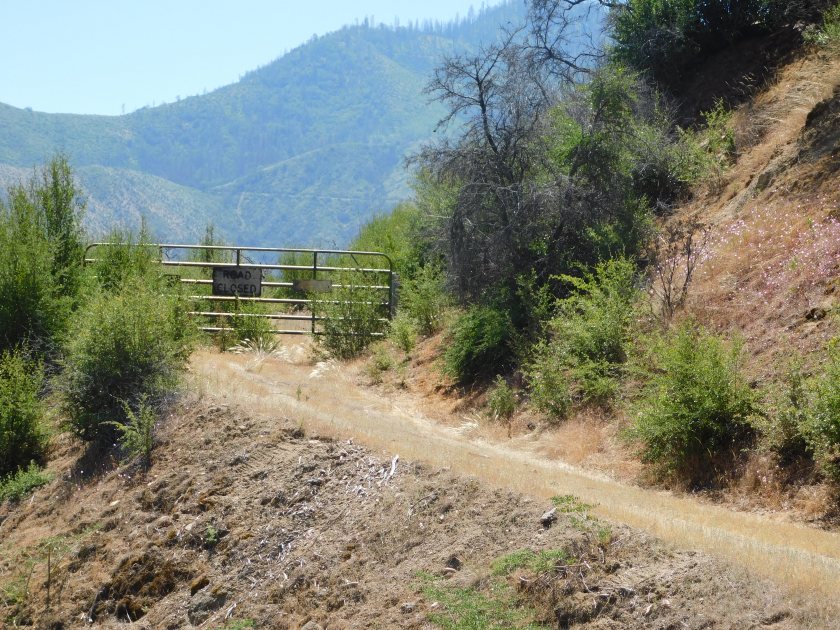


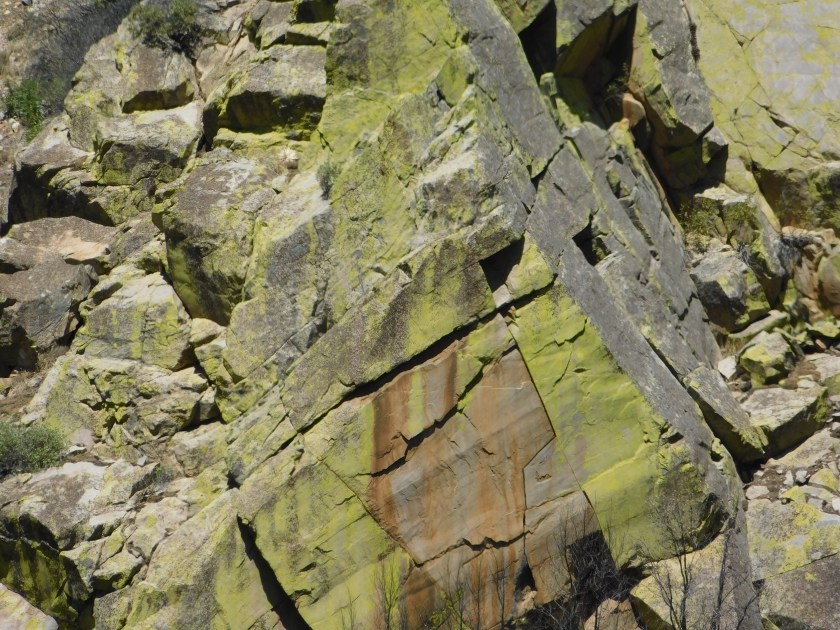

And you can’t see this as well as I could with my sunglasses on (I really need to get a polarized filter for the camera) but the moon was visible above the treeline.

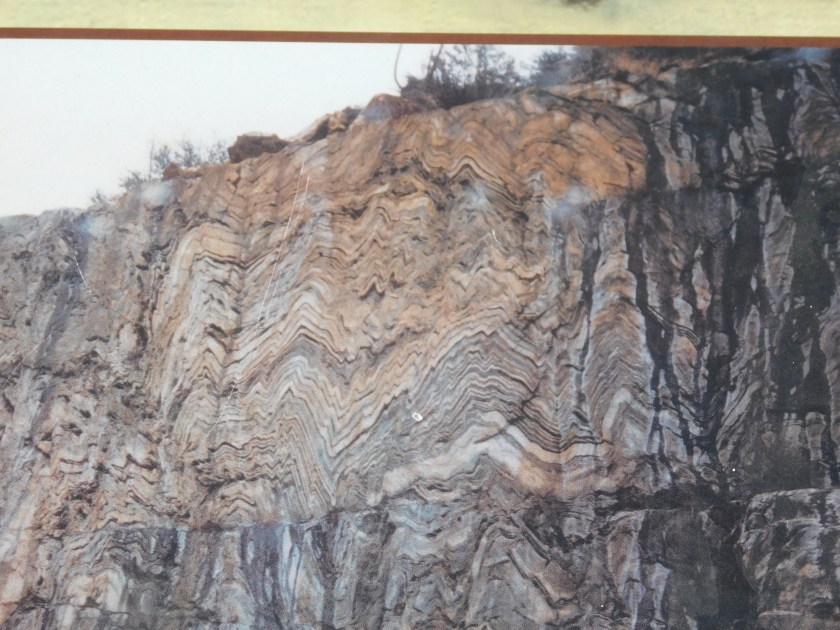
These next two are a picture of a picture on a sign at one of the overlooks. This pattern is on a rock face, evidently somewhere in the Park.

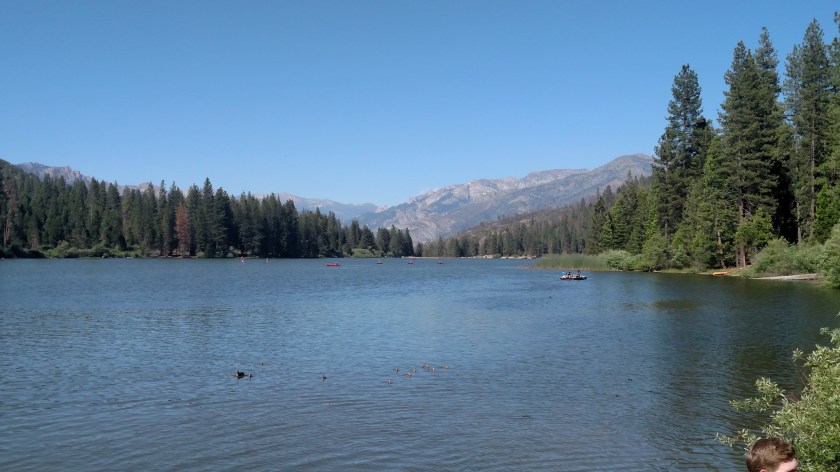
This is Hume Lake. There is a religious retreat based here and there were hundreds of kids of all ages frolicking on some sports fields near the lake, along the shore and in and on the lake itself.
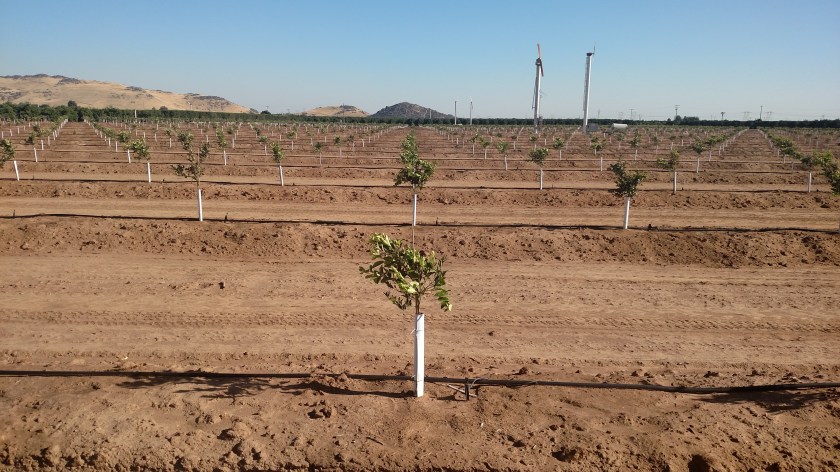
And this is farmland on my way back to Visalia. Southern and Central California have loads of huge farms, growing a wide variety of things. One of the things I find truly fascinating is the precision with which some things are planted. Like the tombstones in Arlington National Cemetery, these trees are planted so that they make perfectly straight lines, both in the rows in which they are planted and also diagonally:
And just about a foot to the left, looking diagonally to the left:
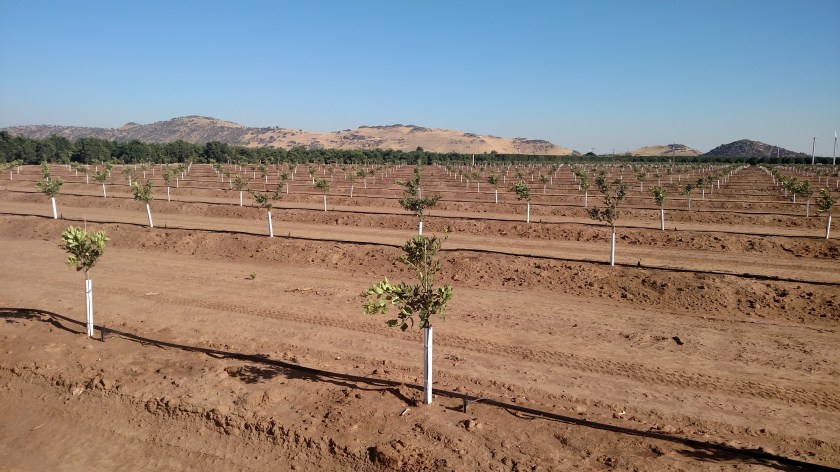
I guess you can see the effect in just the 2nd picture by looking at the lines. Pretty cool. I took some other pictures of new farming methods the other day on my way to Visalia but I am disappointed on how they came out so I’ll try again at another farm.
Since I didn’t go see the General Sherman tree when I was in Sequoia National Park on Tuesday, here’s the next best thing. This Giant Sequoia, located in Kings Canyon National Park, is named after General (and later President) Ulysses S. Grant.
At 267.4 feet in height it is just a tad shorter than General Sherman’s 274.9 feet. This tree has a circumference of 107.6 feet (actually bigger than Sherman’s 102.6 feet) and has a bole volume (a botany term) of 46,608 cubic feet (less than Sherman’s 52,508 Cu Ft.). It is still a mighty big tree. I could actually get back far enough to fit it all in one picture:

Here is a photo to put it in size perspective (although if you look closely at the photo above you can see people to the left of the fence at the base):
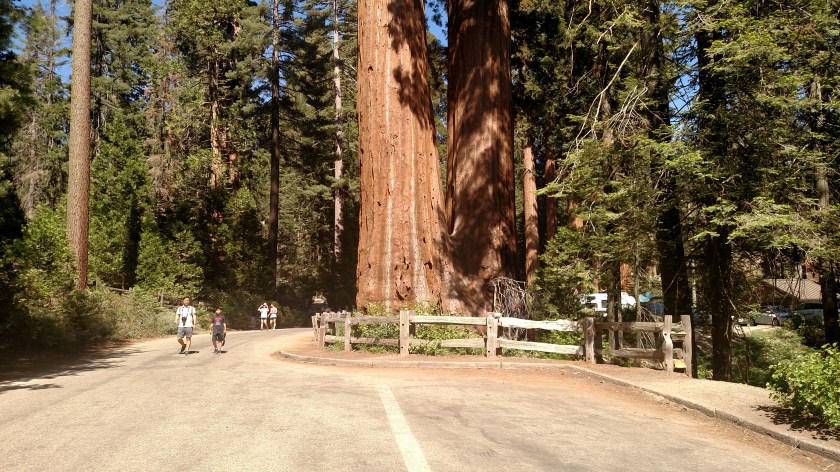
And here are some other Giant Sequoias across the parking lot:
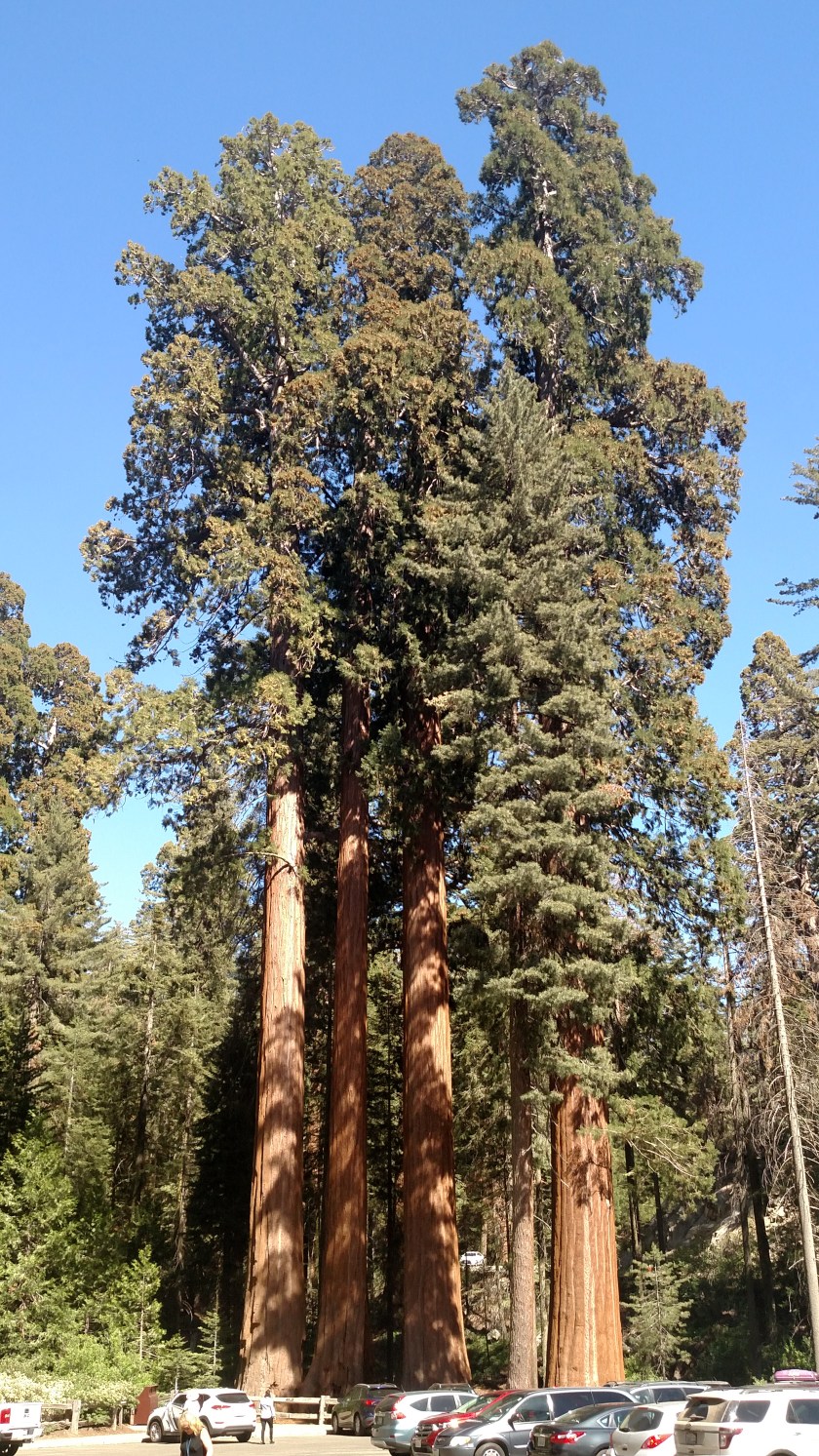
Here is a two shot panorama closer to the Grant tree (top to bottom):

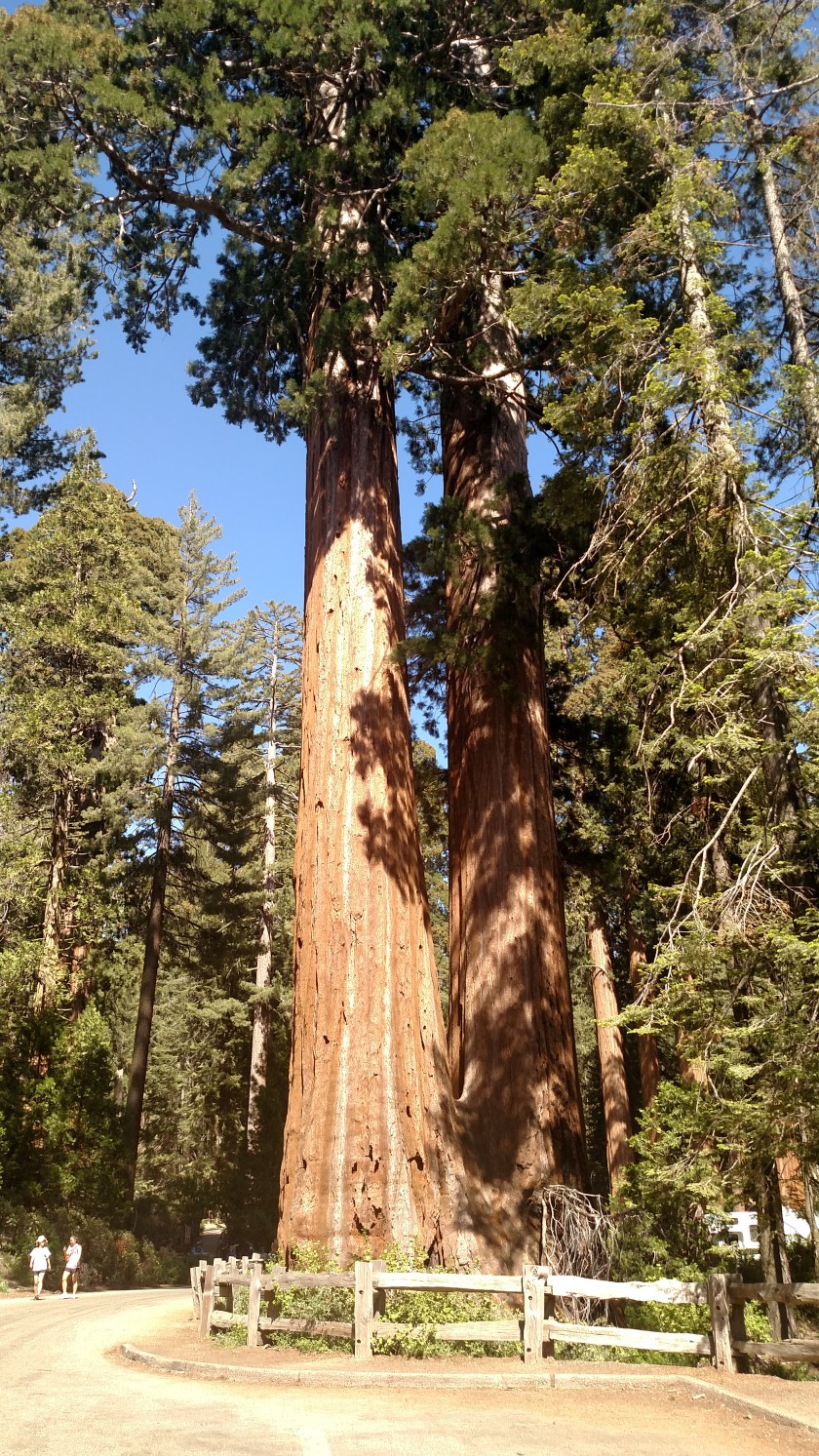
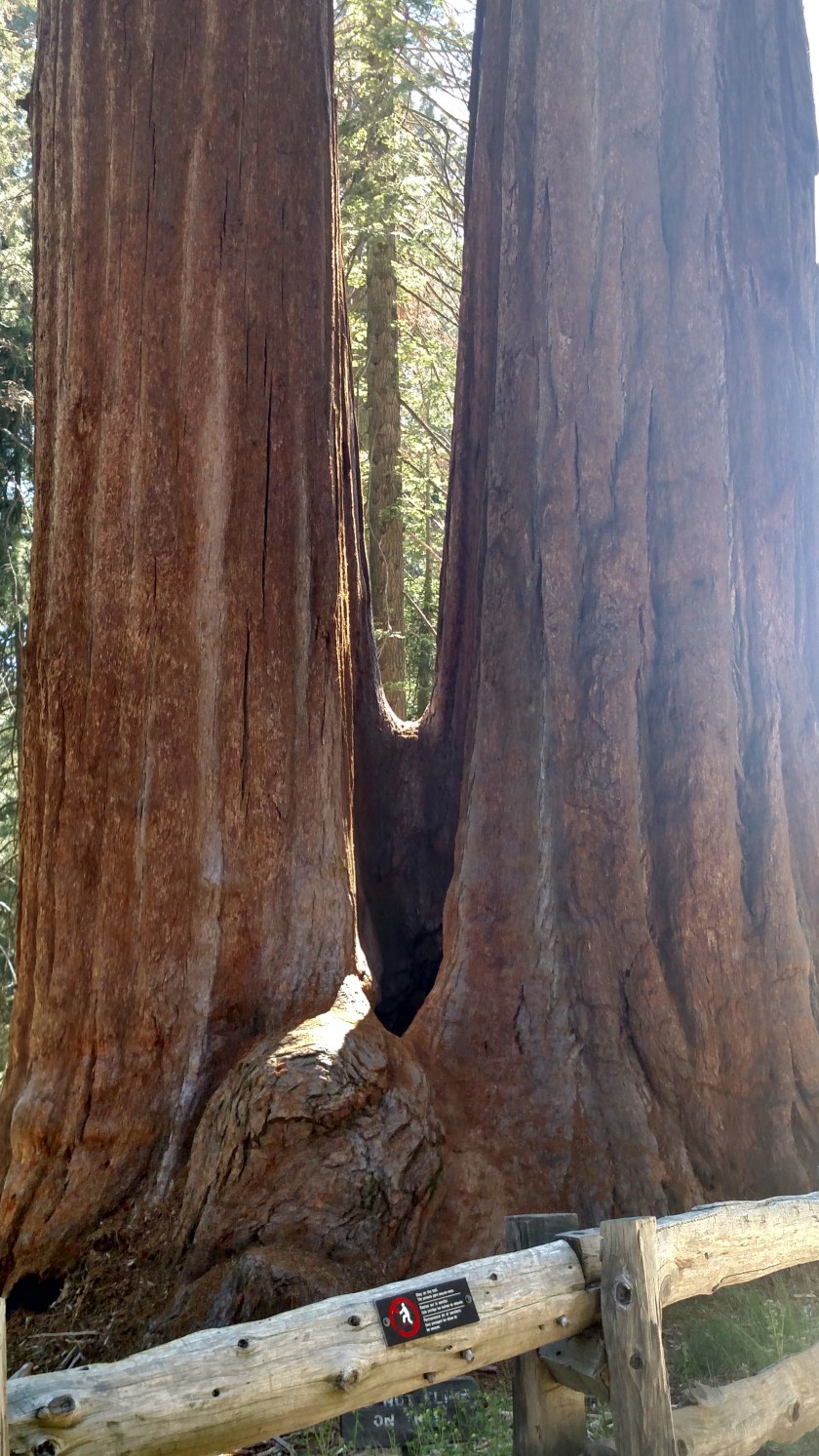
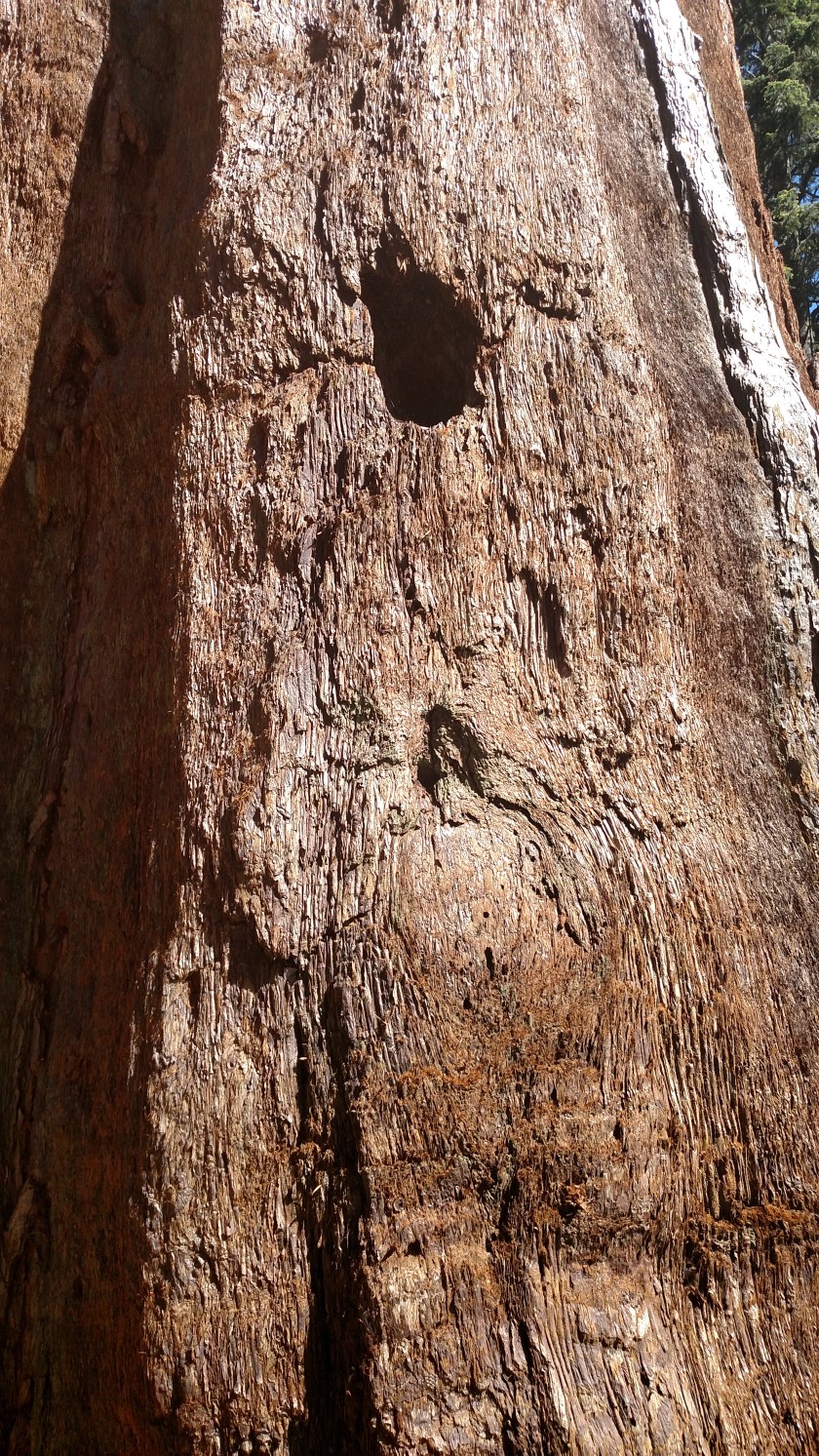
And here are closer looks at the base and the bark:

No photos, please. My nose is still peeling.
As some of you know, yesterday (June 19) was my birthday. My Airbnb hosts in Visalia surprised me with a nice assortment of cupcakes… and a dog!
Just kidding about the dog part, but they do have a very nice Australian Shepherd which I will leave with them at the end of the week when I head up to Yosemite. Believe me, she’ll be happier with them than with me. I will try to get a picture of her tonight. She has the nicest eyes.
Tuesday I drove back up to Sequoia National Park, this time with the intention of actually driving through it! I timed it perfectly to get through the construction zone at 10 o’clock. They are doing major road work and hold traffic for an hour at a time throughout the day.
When the sign said “One Lane Road Ahead” it wasn’t kidding. Once I got in the construction zone the southbound lane was GONE. I don’t know what prompted it but crews have dug down and removed about 30 feet below the road level at which I was driving north. It looks like they are building a new outer retaining wall (this road runs next to a cliff) and will then build up the foundation and surface for a new lane. They close the road from 8pm to 6am (with one pass at 1130 PM as I learned yesterday) and do most of the work at night. There were people there working on Tuesday but the heavy equipment had been moved to the ends of the 1/2 mile stretch they are replacing.
Soon after passing the construction zone I got to the area of the Park called the Giant Forest. This is where the big trees are, and I mean BIG.
This is a two-shot panorama – looking top to bottom (never thought I’d have to do that!).
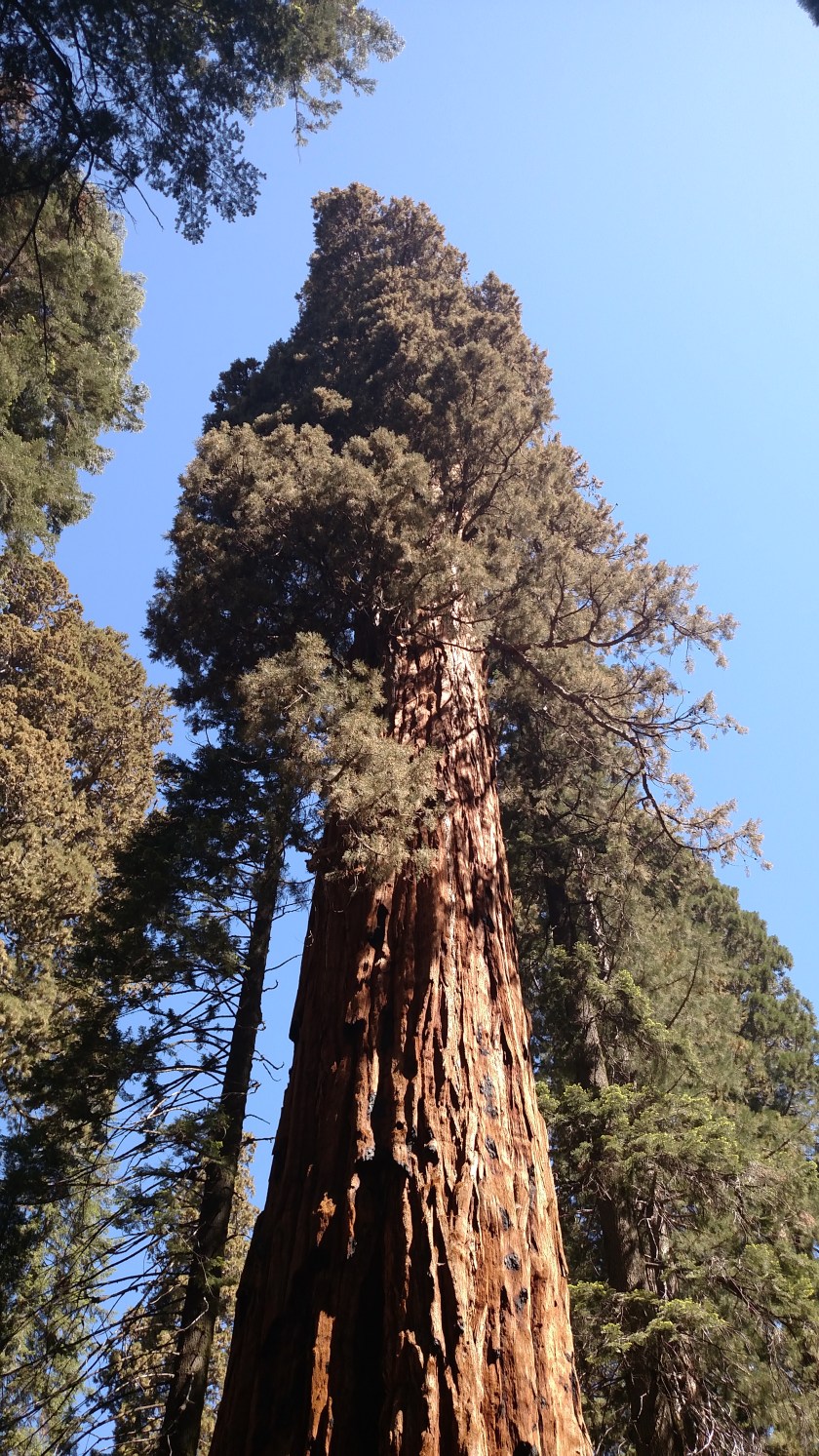

The technical name for these trees is Sequoiadendron Giganteum. Seriously.
When I was going back to Visalia on Monday evening I passed a minivan with North Carolina plates and I waved as I drove by. Well, damned if I didn’t see that same vehicle in the second place I pulled over to park after getting past the construction zone! They are a young couple with three small kids (in North Carolina we call them young’uns). They live is western NC, near Asheville, and are on a month-long tour of some of the National Parks in the western US. They go to Yosemite next (I’ll be there all next week), then the Grand Tetons and Yellowstone. I told them they are in for a real treat.
But now, back to the trees!
This one is a little deceiving. The trunk looks huge but it actually supporting two trees:


And here is another example, this time looking in an up sequence and again using the length of my car as a reference to the size of this double-tree base:

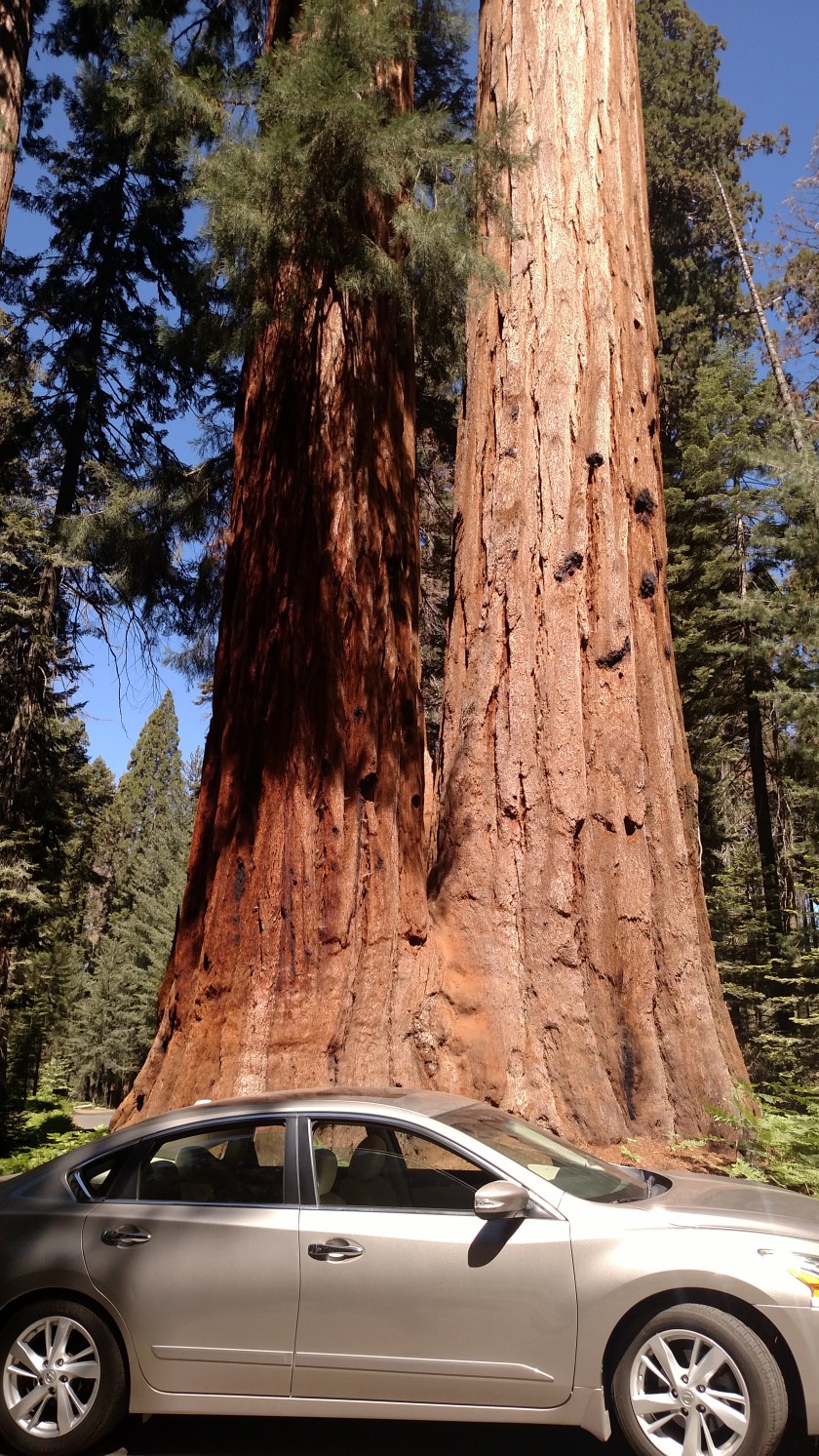
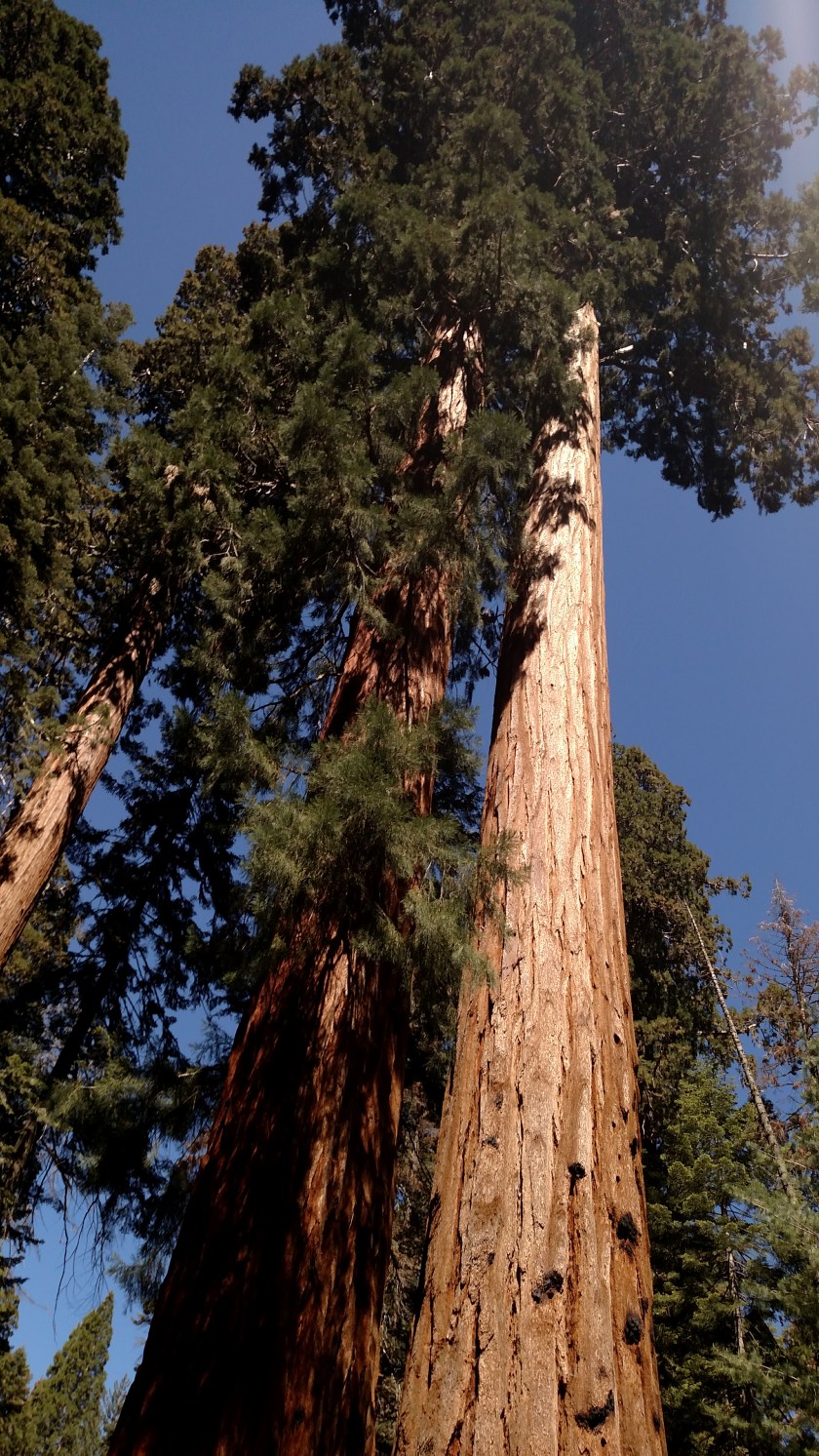
There are many single-trunk trees which truly are gigantic, but they are generally located away from the road and it is hard to get a reference comparison with something “normal”. I did not go see the “General Sherman” tree, which is the largest living thing on the planet, although you can find pictures and dimensions of it online.
Here are some photos taken throughout the day Tuesday at Sequoia National Park in southeastern California.
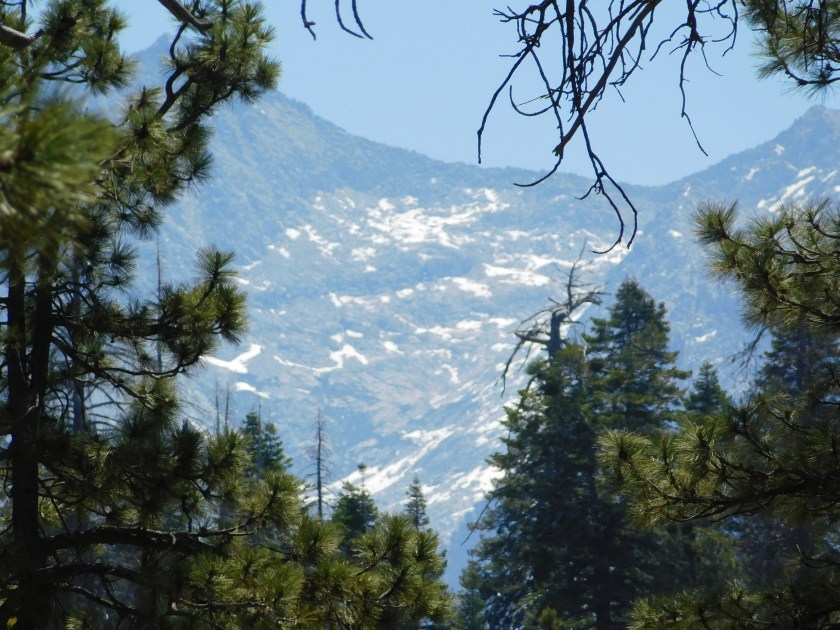
Because everything here is so big I didn’t think I’d be using the digital camera for zoomed-in shots but as I was driving through one part of the Park I could see snow on some high mountain peaks in the distance. Looking at the map I realized that I was at about the same latitude as where I had taken pictures about two weeks ago as I was leaving Death Valley National Park (and had just been to “Star Wars Canyon”). On that date (June 7) I posted pictures of snow on three peaks looking west, including Mt. Whitney, the highest point in California. I was now seeing those mountains as I looked to the east.


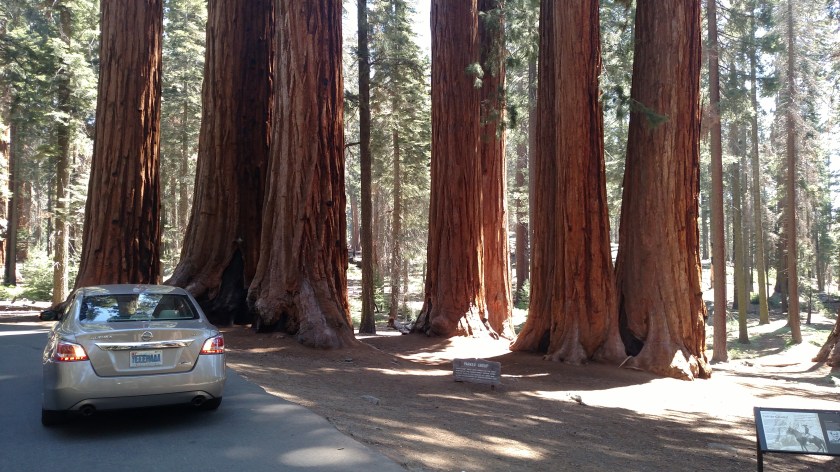
These trees are called “The Parker Group” and are a set of 8 trees named for the family of a former superintendent of the Park in the late 1800’s.
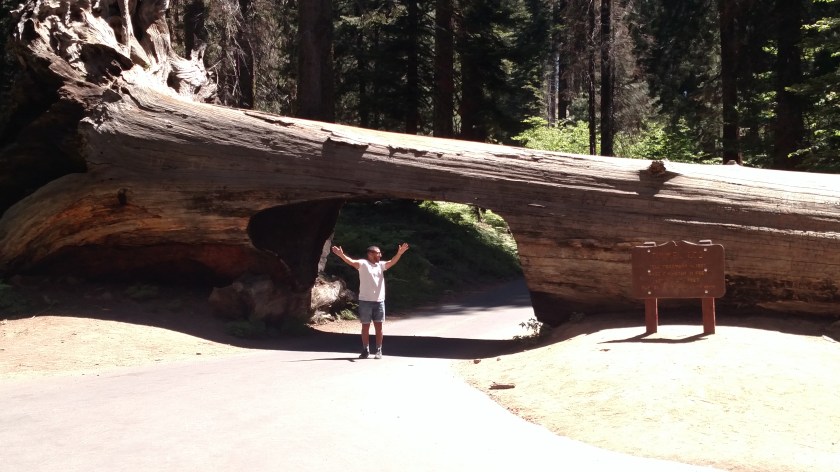
This tree fell in 1937 and has a large notch cut out of it so cars can drive underneath it. That’s not me in the picture.

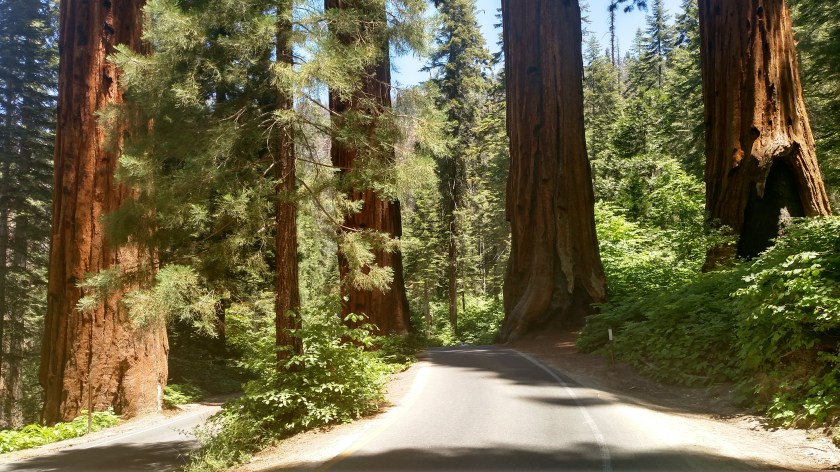
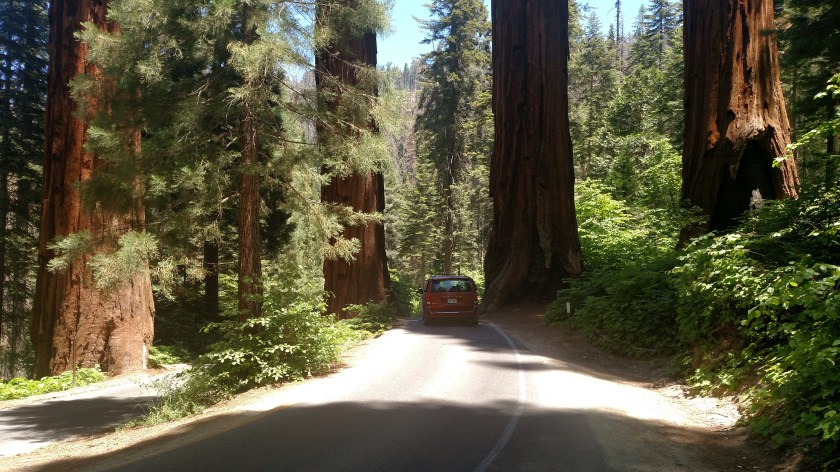
And as I was driving out to the main road I went back through a line of 4 trees that the road goes between. In the second photo you can see a red van exiting. To it’s left is the road coming in to this area (but remember, traffic on the main road was being held at the construction zone so no one would be coming in for a while).
This is the “Buttress Tree” which fell without warning on June 3, 1959. It was a clear day, with no wind. Sequoias can lose their balance and topple for no apparent reason, other than that their shallow root structure has been compromised by fire, erosion or very wet soil. Something for me to ponder as I walk and drive among them for the next few days!

This tree was 272 feet tall and was estimated to have been about 2,300 years old.
Let’s take a look under the hood and see what makes’er tick (well, made her tick…)
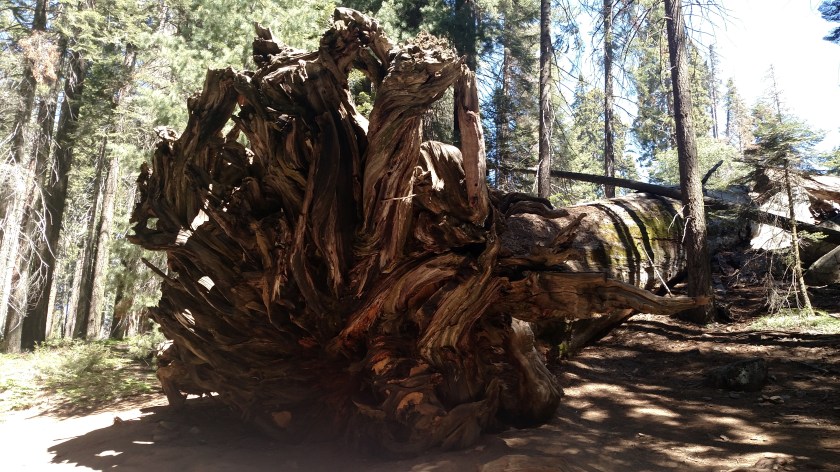


You can see in the photo below that the roots were somewhat slanted and not perpendicular to the trunk, although I would have thought it would have fallen the other way.
If no one was in the forest at the time, I wonder if it made any noise??

The trunk of this young sequoia was lying next to the road and the outer bark has been removed. Sequoias can live to be thousands of years old, but this one was just a youngster. Go ahead – count the rings…
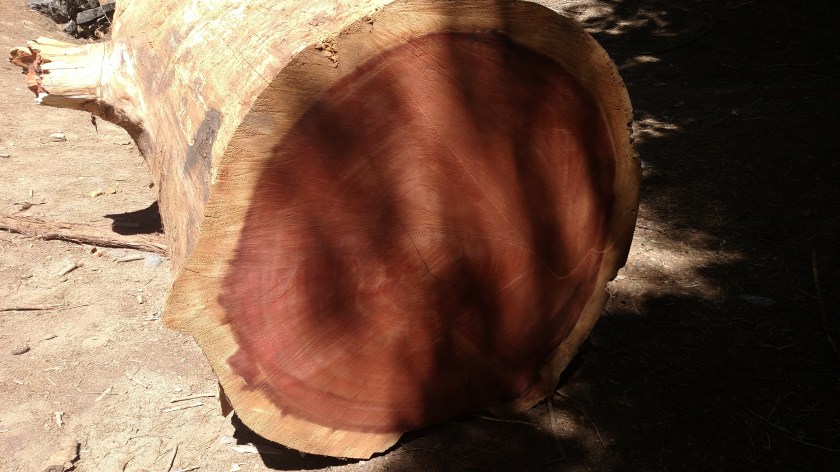
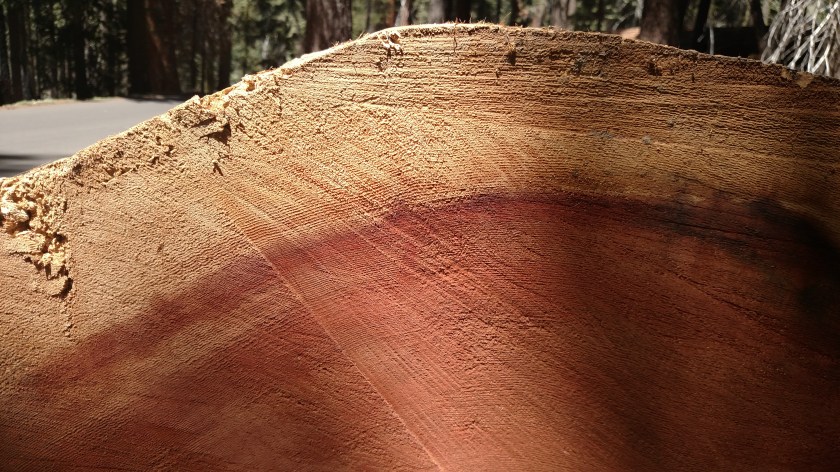

Here it is about an hour later – in full sunshine. That might make your job a little easier.


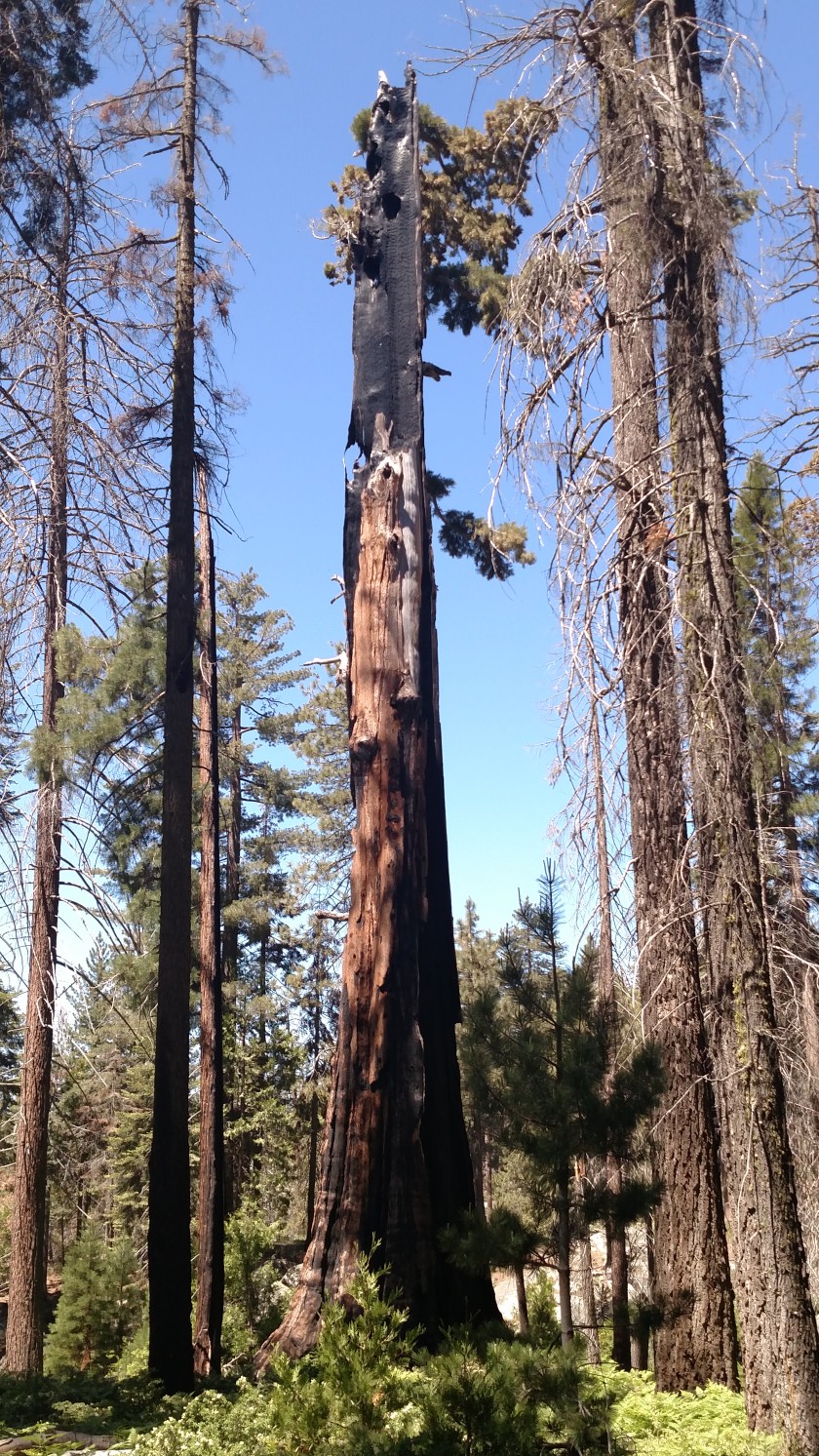
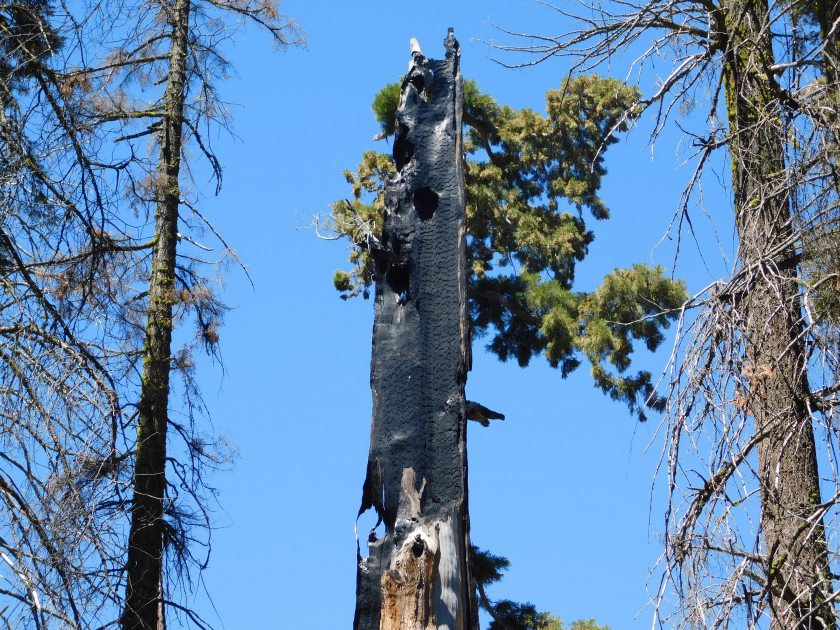
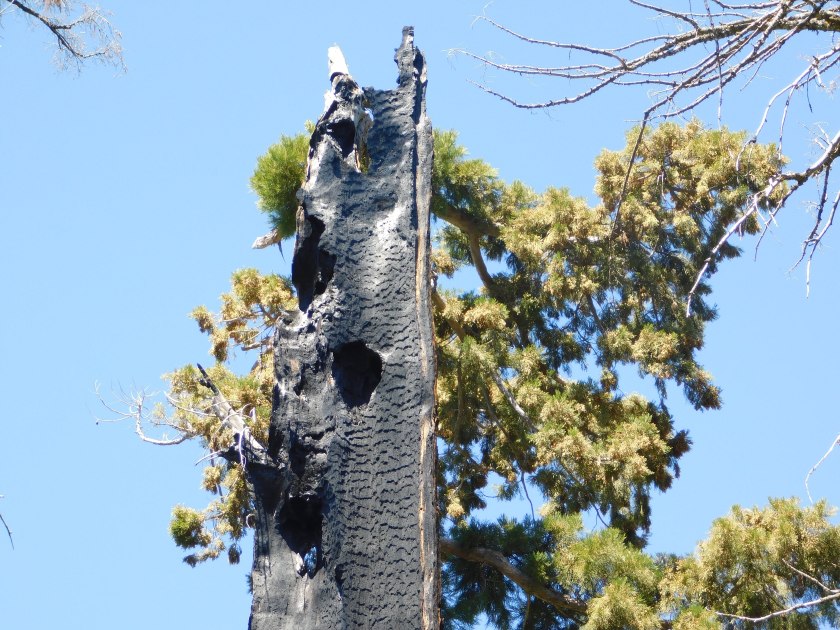
Sometimes fire in forests is a good thing – to help remove ground clutter and encourage new growth. Sequoia’s rely on fire to heat and release seed cones and by clearing the ground beneath them to aid in seed germination. The trunks of sequoias are somewhat fire resistant and they can withstand minor fires without significant injury.
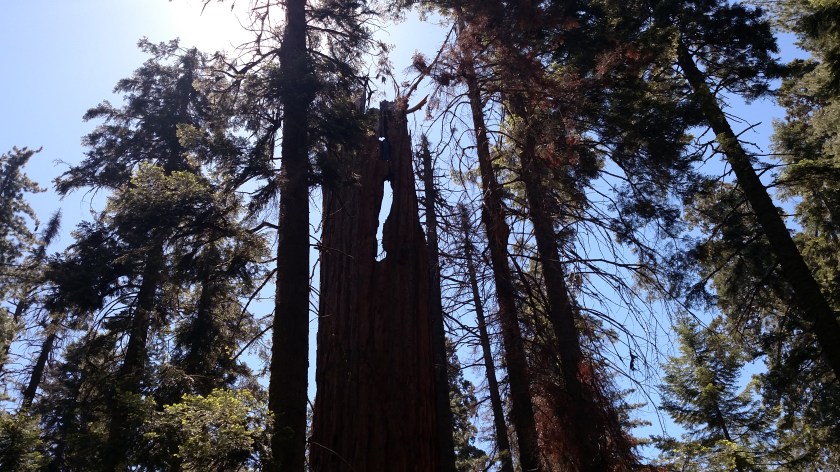
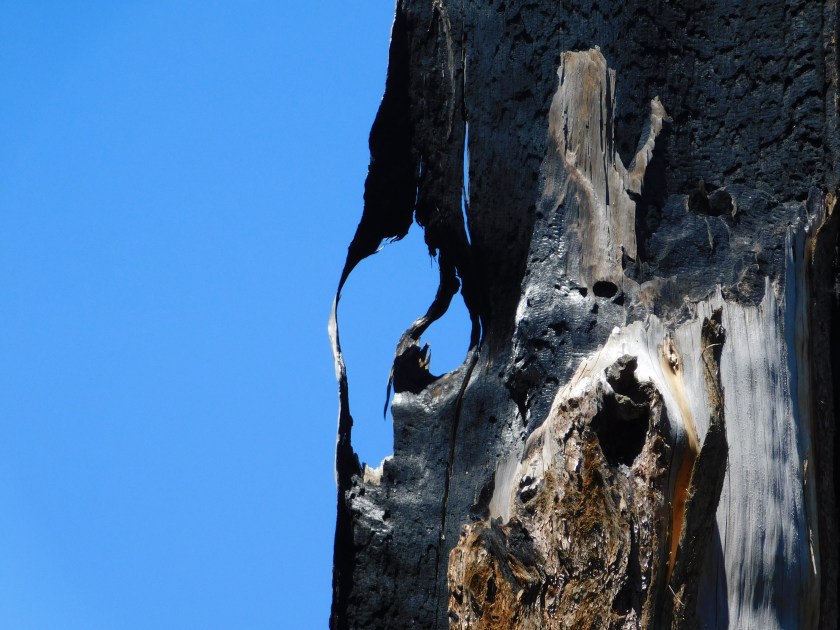
This tree wasn’t so lucky. My guess is it may have been struck by lightning, as the upper portion is burned out and trees (non-sequoia) around it, while stripped of their leaves, appeared to be alive and are not charred.
This log, which is hollowed out, was made into a makeshift cabin by a man named Hale Tharp, thought to be the first non-Native American to enter the Giant Forest in the 1800’s. There is an enclosure with a door at the root-end and inside is a table and some benches.
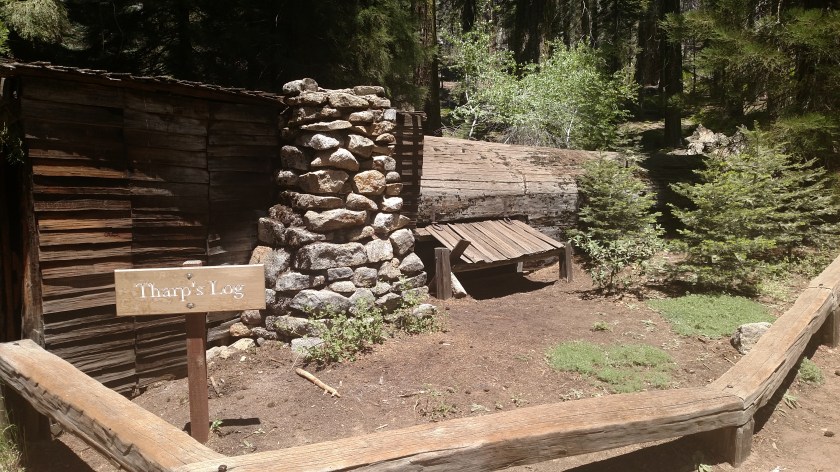


Sorry for the glare in the last photo. There is a hole cut into the side of the fallen tree to allow light in (which it obviously does!). There was a wooden “roof” constructed outside the hole to keep rain out (which you can see in the first photo).
 johnboystravelblog